
Riga Central Market: History, Food, Things to See, and Practical Tips
When you visit Riga, the Central Market is one of those places you cannot miss. It is also one of our first stops when we start exploring the city, and within minutes, we realize why. Instead of polished facades and postcard views, this is Riga in motion: shoppers carrying bags, vendors calling out from their stalls, the smell of smoked fish drifting through the pavilions, and tables piled high with produce.
Spread across several historic market pavilions near the Daugava River, Riga Central Market feels less like a tourist attraction and more like a living part of the city. We come here to look around, taste a few things, and get a sense of what locals actually buy and eat. And with every turn, there seems to be another stall, another smell, or another story waiting to be discovered. So, waddling through Riga Central Market, we set out to see what makes this place such an important part of the city and what you should know before visiting.
- Quick Facts Riga Central Market
- How to Get to Riga Central Market
- A Market Built Inside Zeppelin Hangars
- Why Are There Zeppelin Hangars in the Middle of Riga
- From Europe’s Modern Market to Riga Landmark
- Waddling Through Riga Central Market
- What to Eat at Riga Central Market
- Beyond the Pavilions: The Outdoor Market
- Riga Central Market and Local Life
- Visiting Riga Central Market as a Tourist
- How Long Do You Need
- When Is the Best Time to Visit Riga Central Market
- Tips for Visiting Riga Central Market
- Is Riga Central Market Worth Visiting
- Riga Central Market Facilities and Amenities
Quick Facts Riga Central Market
- Address: Nēģu Street 7, LV-1050, Riga, Latvia
Opening Hours: Monday–Saturday, 7:30–18:00 - Type: Indoor market, outdoor market, and farmers’ market
- Market area: Around 10 hectares, including the pavilions and surrounding trading areas.
- What you can buy: Fresh produce, meat, fish, dairy products, baked goods, prepared food, local products, and seasonal produce
- Getting there: Easily accessible on foot, by bicycle, and by public transport.
- Parking: Visitor parking is available at the market. The first 10 minutes are free; from 8:00 to 17:00, the first hour costs €2 and each additional hour €2.50.
- Sanitary day: On the first Monday of each month, the pavilions close earlier, at 15:00, while the outdoor area continues operating.
- Number of pavilions: 3 main pavilions
- Entrance fee: Free
How to Get to Riga Central Market
Riga Central Market is right beside the city’s Central Station and within easy reach of the Old Town. If you are coming by public transport, one of the simplest options is to take a bus to the “Centrāltirgus” (Central Market) stop. Several routes serve the area, including buses 1, 2, 5, 6, 7, 9, 10, 11, 14, 16, 22, 23, 24, 25, 26, 47, 50, 51, 52, 55, 57 and 59, depending on your starting point.
But honestly, we never needed the bus. Riga is compact, and we waddled there. From the Old Town, Central Market is an easy walk, and walking there lets you see the city shift from historic streets to the busy area around the market and Central Station. The market itself is also well connected by tram, trolleybus and train, so public transport makes sense if you are staying farther away.

A Market Built Inside Zeppelin Hangars
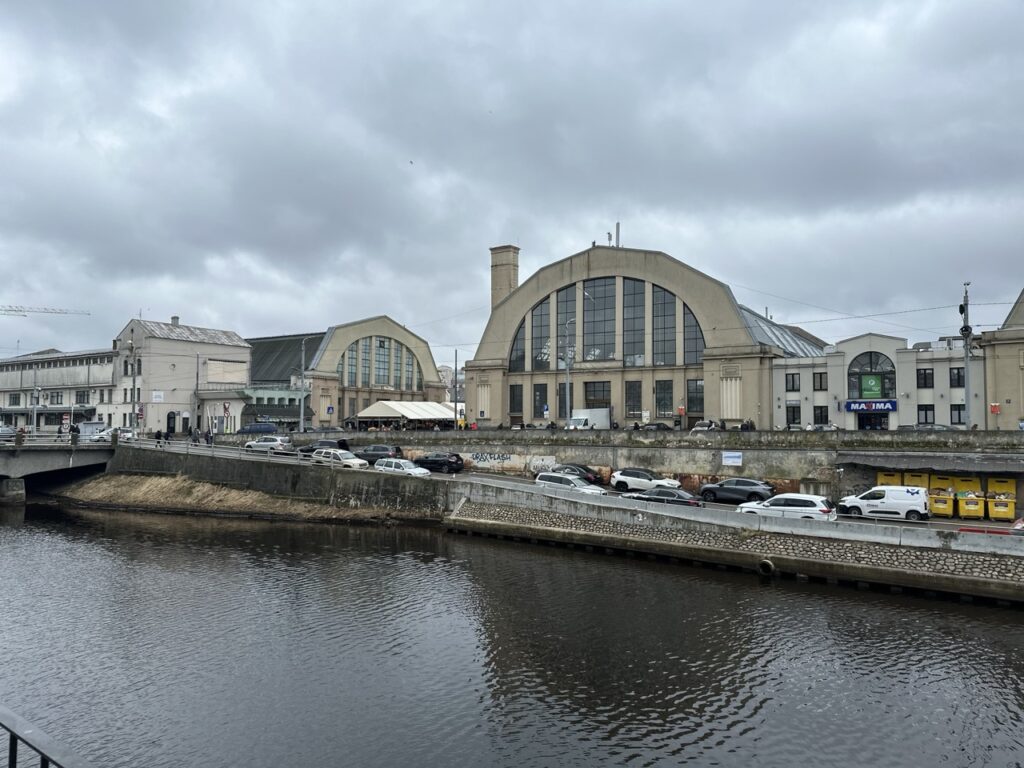
From the outside, Riga Central Market looks like a collection of enormous, slightly unusual market halls. Look a little closer, though, and the buildings reveal one of Riga’s strangest stories. The pavilions began their lives not as markets at all, but as Zeppelin hangars built for the German army in Vaiņode, in western Latvia. When Riga needed a new central food market, the city decided to reuse the structures instead of building from scratch.
The idea for a central market had been discussed since 1909, but Riga City Council did not formally decide to build one until 18 December 1922. The existing Daugavmala market had become too small for a growing city, and construction of the new market began in 1925. After eight years of work, Riga Central Market officially opened on 1 November 1930.


Why Are There Zeppelin Hangars in the Middle of Riga
The original hangars were enormous. They stood 37.4 meters high, 47.2 metres wide and 240 metres long, far too large to drop into the middle of Riga and turn into practical market halls. Architects instead used the upper sections of the hangars and combined them with new brick and reinforced-concrete structures. The resulting pavilions reached 20.5 meters high and 35 meters wide, giving the market its distinctive silhouette.
And the ambition went far beyond simply creating somewhere to sell vegetables and fish. The new market was designed as a modern piece of city infrastructure, with central heating, electric lighting and an underground network of storage spaces, passages and warehouses. Beneath the pavilions was effectively an underground city covering around two hectares, with storage and refrigeration facilities and connections to the canal.
From Europe’s Modern Market to Riga Landmark
When it opened, Riga Central Market was considered one of Europe’s largest and most modern markets. Over the decades, it continued to function through Latvia’s changing political history, including the Soviet period, when it operated as a collective-farm market. In 1997, the market became part of the UNESCO World Heritage-listed Historic Center of Riga, recognizing its importance within the city’s historic urban landscape.
Today, the market still functions as a market rather than simply surviving as a historic monument. That is perhaps the most interesting part of the story. Nearly a century after its opening, people still come here to buy food, meet vendors and do their everyday shopping. At the same time, the city continues renovating the pavilions and finding new uses for them.
Once you know what hides inside those enormous roofs, walking into Riga Central Market feels a little different. What first looks like an unusual collection of market halls turns out to be a piece of aviation history, repurposed into one of Riga’s most recognisable landmarks.
Waddling Through Riga Central Market
We arrive at Riga Central Market on a cold March afternoon, the kind of day when the wind makes you want to get indoors as quickly as possible. After waddling across Riga, stepping inside the market feels like a welcome change. The place is much bigger than we expected, with huge halls, rows of stalls, and plenty of movement around us. We start wandering without much of a plan, simply following whatever catches our eye and seeing where the market takes us.



The First Impression
The first thing that strikes us is Riga Central Market’s sheer size. We step inside expecting a busy food market, but the scale catches us off guard. The ceilings rise high above us, the halls seem to stretch on and on, and there is so much space to waddle between the rows of stalls. The smells change as we walk, from fresh bread and baked goods to smoked fish, meat, spices, and ripe fruit. Around us, shoppers move between vendors, bags fill up with groceries, and the market feels less like a sightseeing stop and more like a city within the city.


- The Fish Pavilion. The Fish Pavilion is one of the first places where the market really starts to smell like the Baltic. Counters are filled with fresh fish, smoked fish, and seafood, with plenty of products we don’t usually see at home. The smoked fish catches our attention in particular, with its rich aroma traveling through the pavilion as we waddle between the stalls. It is the kind of place where you want to stop and inspect what each vendor has on display.


- The Meat Pavilion. Next comes the Meat Pavilion, where the atmosphere changes again. The counters are packed with fresh cuts of meat, sausages, cured products, and ready-to-eat specialties. The variety ranges from everyday ingredients to products that feel distinctly local. We take our time browsing the displays, watching shoppers choose their purchases and catching glimpses of what ends up on Latvian dinner tables.
- The Vegetable and Fruit Stalls. The fruit and vegetable stalls bring a completely different burst of color to the market. We find seasonal produce alongside familiar favorites, with crates and displays stretching across the stalls. Some prices surprise us, especially compared with what we are used to seeing elsewhere in Europe, while the variety keeps us wandering from one stall to the next. Even without planning to buy anything, it is worth taking a slow waddle through this section to see what is in season and what local shoppers are picking up.
-
The Dairy and Bakery Sections. The dairy and bakery sections bring some of the market’s most comforting smells. We find cheeses, milk products, fresh bread and pastries, with plenty of Latvian specialties among the stalls. The bread is particularly tempting, with loaves and baked goods that look made to take back to the hotel and eat later. We also spot different local dairy products, giving us another glimpse into Latvian food traditions. By this point, our slow waddle through the market is turning into a rather dangerous exercise in trying not to buy everything that looks delicious.


What to Eat at Riga Central Market
One thing we especially appreciate about Riga Central Market is that you don’t have to wander around looking at food. You can actually grab something to eat while you are there. After browsing the stalls, it is easy to pick up a snack, try something local, or put together a little market lunch before continuing your exploration of Riga. For us, that makes the market feel more like an experience than just another sightseeing stop.
Latvian Foods Worth Looking For
To make the most of a visit to Riga Central Market, look beyond the familiar and try a few things tied to Latvian food culture. Smoked fish, rye bread, local cheeses, pickles, seasonal berries, and traditional pastries are all worth keeping an eye out for. We also find plenty of other Latvian products and prepared foods as we waddle through the stalls, so there is no shortage of things to taste. Even if you are not planning a full meal, picking up a few small things and trying them as you explore is part of the fun.
The Food Court at Riga Central Market
The food court is where Riga Central Market shifts from a grocery shopping spot to a place where you can actually sit down and eat. After wandering through the pavilions, we can take a break and choose from different stalls serving prepared dishes and snacks. The atmosphere is casual and relaxed, with people stopping for a quick meal, grabbing something to take away, or sitting down with friends.
What we like most is the choice. Instead of committing to one big restaurant meal, you can waddle around, see what catches your eye, and pick something that looks good. It is a convenient spot to refuel before continuing around the market or heading back into Riga’s Old Town.


What We Tried at Riga Central Market
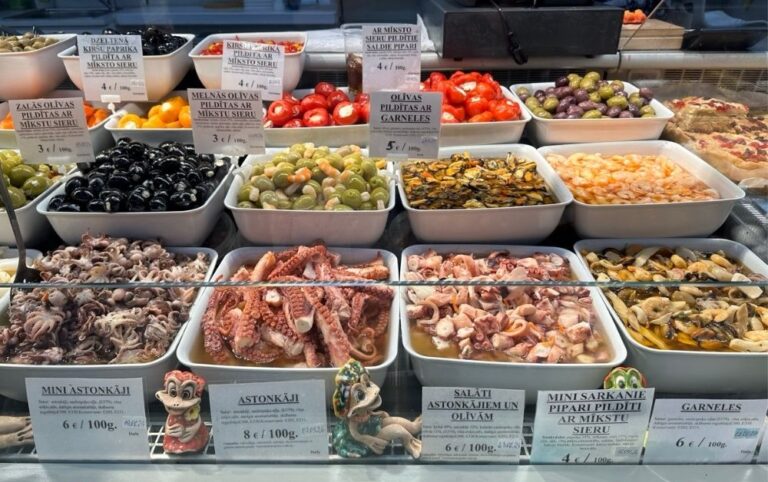
We did not come to Riga Central Market with a specific food hit list, so our tasting experience is more about sampling as we waddle. We try a few small samples from different stalls, including olives, sweets, and other little bites that catch our attention along the way. Nothing stands out as one particular must-eat dish, but that is not really the point for us. The fun comes from seeing what is available, trying something unfamiliar, and getting a taste of the market without turning the visit into a full food tour.
Beyond the Pavilions: The Outdoor Market
Once we step outside the main pavilions, the atmosphere changes. During our March visit, not much is happening outdoors yet, which is hardly surprising given the cold weather. The outdoor stalls feel much quieter than the busy indoor halls, with fewer vendors and shoppers around. In warmer months, this area comes alive with flowers, fruit and vegetables, seasonal produce and other goods, but on our visit, winter is still holding on. We take a quick look around before heading back inside, where there is much more activity and plenty of room to waddle around.
Riga Central Market and Local Life
The easiest way to understand Riga Central Market is to stop thinking of it as a sightseeing attraction. This is where people come to shop. Locals move between the stalls with shopping bags in hand, picking up fish for dinner, bread for the day, or fresh produce for the kitchen. It doesn’t feel like everyone is here for visitors’ benefit. We are simply stepping into a place that already has its own rhythm.
That is what makes the market interesting. Traditional Latvian foods sit alongside familiar modern products, while vendors continue the kind of trade that has made markets part of city life for generations. The result feels very different from a polished tourist food hall, where everything is designed to be photographed and consumed on the spot. Here, food is first and foremost part of everyday life. People don’t come to Riga Central Market to experience “local life”. They are simply living it.
For us, that becomes one of the most interesting things about wandering through the market. Among the enormous pavilions, piles of produce, and busy counters, we get a glimpse of Riga that sightseeing alone cannot really provide.

Visiting Riga Central Market as a Tourist
For a visitor, Riga Central Market is easy to explore without much preparation. You can arrive, wander through the pavilions, and follow whatever catches your attention. No entrance fee, no fixed route, and no need to book anything make it an easy addition to a day exploring central Riga.
We appreciate that the market doesn’t feel overwhelmingly touristy. You will certainly see other visitors with cameras and phones, but you are sharing the space with people doing their regular shopping. The pavilions are spacious, the atmosphere is lively without feeling chaotic, and there is plenty to look at even if you are not planning to buy anything.
As tourists, we feel comfortable taking our time, browsing the stalls and trying a few samples without feeling that we need to rush through. It is also a useful stop if you want to experience Latvian food without sitting down for a formal restaurant meal. You can waddle in, explore, grab a bite, and keep your day going.
How Long Do You Need
You can see the main parts of Riga Central Market in around one to two hours, especially if you are mainly interested in wandering through the pavilions, browsing the stalls, and getting a feel for the place. We recommend allowing yourself some flexibility, though, because this is the kind of market where it is easy to keep waddling from one stall to the next.
If you have more time, you can stay longer and turn your visit into a proper food stop. Grab a snack, sit down for lunch, or even come around dinner time and enjoy some of the prepared food available at the market. No need to rush through the pavilions to tick them off your Riga itinerary. Take your time, look around, and let the market set the pace.
Hotel search from Trip.comShows Trip.com’s own box, which can set Trip.com cookies.
When Is the Best Time to Visit Riga Central Market
No single time is perfect for visiting Riga Central Market. The atmosphere changes throughout the day, so the best time depends on whether you want to see the market at its busiest, browse more slowly, or combine your visit with a meal.
- Early morning: The market feels most connected to everyday Riga, with locals shopping and vendors setting up for the day. You will also find a good selection of fresh produce and other products.
- Late morning: A good middle ground for visitors. The market is still lively, the stalls are well stocked, and you have plenty of time to explore without arriving at the crack of dawn.
- Afternoon: The pace can be quieter, which is nice if you prefer to wander with less activity. However, some stalls may have fewer products later in the day.
- Weekend: Weekends can bring a different atmosphere, with more people coming to shop and spend time around the market. If you enjoy a livelier setting, this can be a good time to experience it.
We visit on a cold March afternoon, so our experience is naturally quieter than what you might find during the warmer months. For the full market atmosphere, we’d aim for the morning or late morning, when there is more movement and the market feels fully awake.
Pro Penguin Tip
Come hungry and give yourself time to waddle through all the pavilions. Riga Central Market is best experienced slowly, with your eyes, nose, and appetite all switched on. Grab a few samples, browse the stalls, and leave some room for an impromptu market lunch.
Tips for Visiting Riga Central Market
Riga Central Market is easy to explore, but a few tips can make your visit more enjoyable. We recommend giving yourself enough time to wander rather than treating it as a quick stop between other sights.
- Go in the morning: The market is liveliest then, and the selection is usually at its best.
- Bring a card and some cash: Cards are widely accepted, but having a little cash is handy for smaller purchases.
- Wear comfortable shoes: The market is large, and you will be doing plenty of waddling between the different areas.
- Take your time: There is much more to see than you might expect, so avoid rushing through the pavilions.
- Explore more than one pavilion: Each section has its own atmosphere and product selection.
- Check opening hours: Hours can vary, particularly around public holidays and sanitary days.
- Look for seasonal produce: What is available changes throughout the year, making each visit slightly different.
- Don’t be afraid to browse: You can look around without buying anything. Take your time and see what catches your eye.
- Keep an eye on your belongings: As with any busy market, keep your bag and valuables close, particularly when the market gets crowded.
- Allow time for the outdoor area: Don’t stop after the main pavilions. The outdoor market is part of the experience, although it can be much quieter in colder months.
- Come hungry: If you have time, grab a snack or meal at the market instead of simply looking at all the food.
Is Riga Central Market Worth Visiting
For us, Riga Central Market is worth including in a city itinerary because it offers something different from Riga’s historic streets, churches, and grand landmarks. The architecture alone makes it interesting, particularly once you know the story behind the enormous pavilions and their Zeppelin-hangar origins. Inside, the variety of food gives us a chance to see and taste a little of Latvia, from smoked fish and rye bread to cheeses, sweets and seasonal produce.
But what stays with us most is the feeling of the place. This is not simply a market arranged for tourists to walk through. People come here to shop, eat and go about their day, and we get to experience a small piece of that everyday rhythm. On our cold March afternoon, the outdoor area is fairly quiet, but inside the pavilions there is plenty of space to waddle around and observe the market at work. Riga Central Market offers a different view of the city, which is exactly why we think it deserves a place on your Riga itinerary.
Riga Central Market Facilities and Amenities
- Food court. Several places to stop for prepared food, snacks, and drinks.
- Toilets. Public toilets are available within the market complex.
- Seating. Seating areas are available around the food and dining areas.
- ATMs. Cash withdrawal facilities are available nearby.
- Card payments. Many vendors accept card payments, although cash can still be useful for smaller purchases.
- Parking. Parking is available close to the market for visitors arriving by car.
- Public transport. The market is well connected by buses, trams, and trolleybuses.
- Outdoor market. Additional stalls operate outside the main pavilions.
- Shops and services. The market complex includes various shops and services alongside the food stalls.
- Accessibility. The main market areas are accessible, although conditions can vary between individual stalls and sections.
Buy Us a Ko-fi

Our Verdict: Would We Waddle Back?
Yes, we would happily waddle back to Riga Central Market. What we enjoy most is that it gives us a different side of Riga. The unusual architecture makes the market worth seeing, but the everyday atmosphere, variety of food, and sheer size make the visit memorable. We like being able to wander without a plan, sample a few things, and watch locals go about their shopping. Our March visit is a little quieter and colder than a summer market experience, particularly outside, but the huge indoor pavilions still give us plenty of space to explore. If we return to Riga, we would happily stop by again, perhaps earlier in the day and with a little more room in our stomachs for a proper market lunch.
Travel Bold. Eat Well. Waddle Wild.
Save This Pin for Later!
This post contains affiliate links. If you click and buy, I might earn a tiny commission, enough to help a penguin keep up its globe-trotting lifestyle. No extra cost to you, just more fish for me. Thank you for supporting the adventure!