Visiting Deoksugung Palace: The Best Time to Go and What to Expect
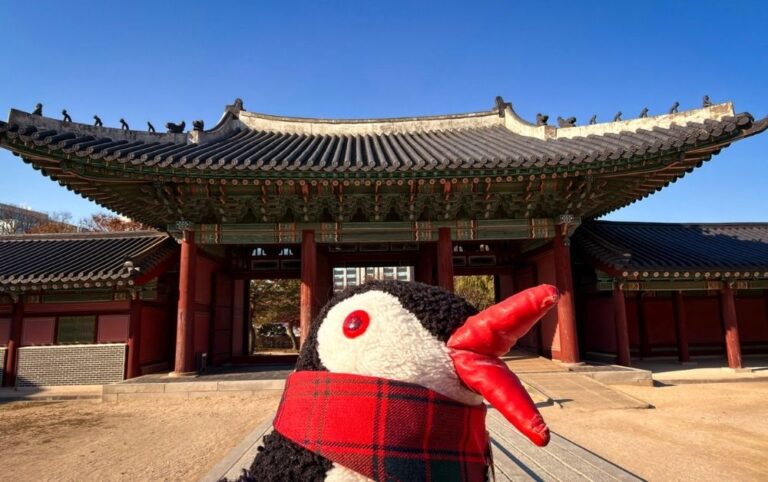
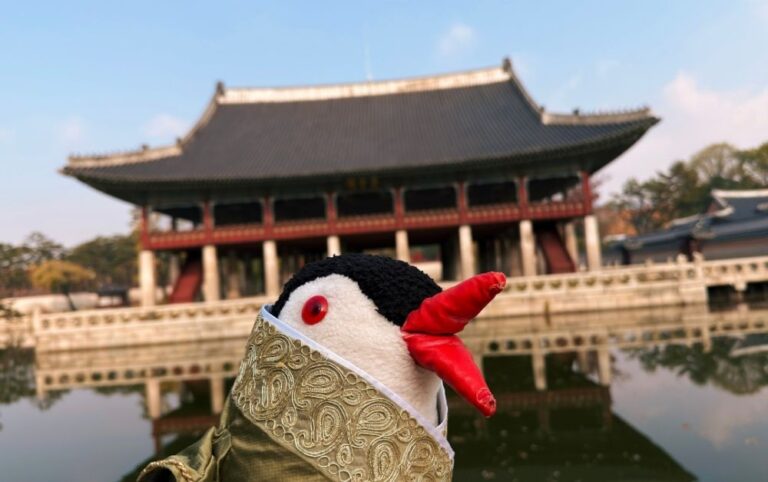
We had a few palaces on our list for that day, but like always, our plans were a little too ambitious. In the end, we managed to visit Gyeongbokgung Palace first and then make our way to Deoksugung Palace, plus a gate somewhere between waddles. As we reached Deoksugung, autumn was in full foliage, and the whole city was glowing in soft gold and red. As we waddled closer, we could already feel that warm little spark of excitement build up. This palace surprised us in the best possible way. It is smaller, calmer, and has this unexpected charm that makes you slow down without even trying.
Continue reading to see why Deoksugung should be on your Seoul bucket list, too.
How to Get to Deoksugung Palace
📍 Address: 99 Sejong-daero, Jung-gu, Seoul, South Korea
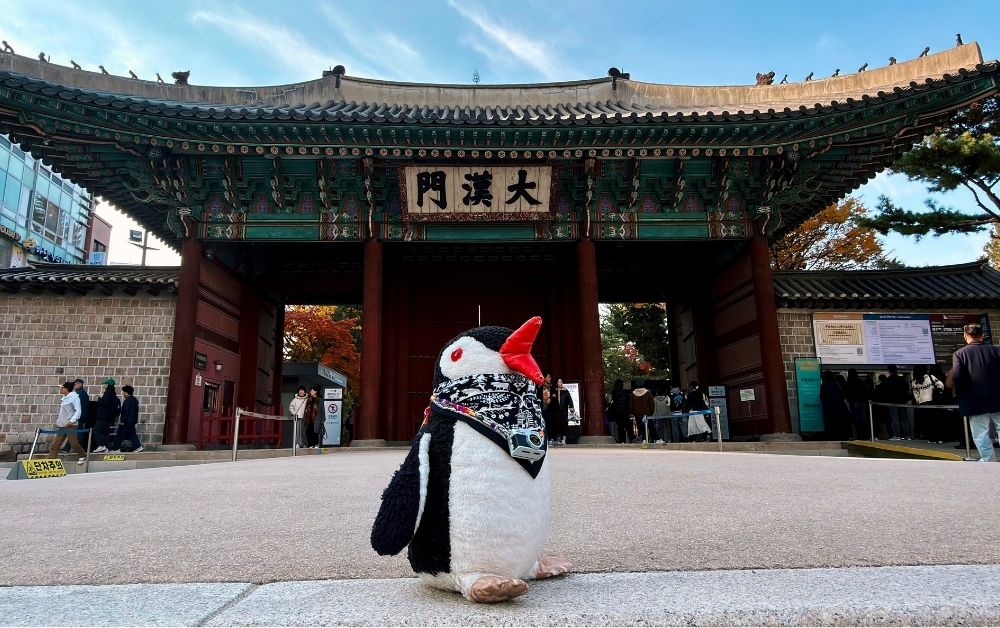
The palace is extremely easy to reach. Take Line 1 or Line 2 to City Hall Station and waddle out of Exit 2 or 12. As soon as you come up to street level, you will spot the famous Deoksugung Stone Wall Road and the palace entrance right across the street. If you are staying near Myeongdong or Namdaemun, it is even within waddling distance for a relaxed stroll.
Opening Hours & Tickets
Deoksugung Palace usually opens at 9:00 AM and stays open until about 9:00 PM, with last admission around 8:00 PM. The palace is closed every Monday, so be sure to plan your visit around that. Hours can change seasonally or for special events, so always check the official site before your visit.
Ticket Prices
- Adults (19 to 64): around 1,000 KRW
- Youth (7 to 18): around 500 KRW
- Kids under 6: free entry
- Seniors (65 and over): free entry
- Visitors wearing hanbok: free entry
- Plushies: free entry as always
Buying Tickets
You can buy tickets at the palace entrance, where an officer sells tickets, or you can use the automated machines right next to the gate. When we arrived, there was a small line, but it moved surprisingly fast, and before we knew it, we were already in front of the machine buying our tickets. The machines accept card payments, and we had no issue paying with our Revolut card, so it was quick and convenient.


And if you are wearing a hanbok, you have free entry to Deoksugung Palace as well. It is not as common to see people waddling around in hanboks here compared to Gyeongbokgung, and we actually did not see anyone wearing one during our visit. But it is still a great perk to know about, especially if you are planning a full palace day and want to dress up for the experience.
Best Time to Visit Deoksugung
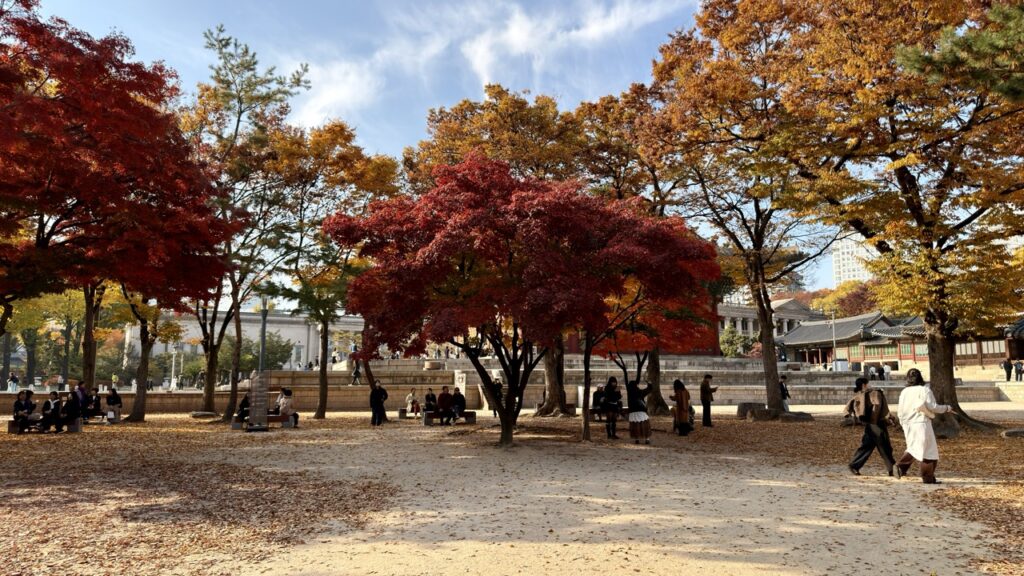
The best time to visit Deoksugung Palace is during spring or autumn, when the whole area transforms with seasonal colours that wrap around the smaller grounds, making everything feel warm and atmospheric. November is especially beautiful, with golden leaves creating a cosy backdrop for a waddle.
Weekday mornings are ideal if you want quiet moments and fewer people, since the palace stays pleasantly busy without ever feeling overwhelming. Just remember that Deoksugung is closed on Mondays, unlike Gyeongbokgung, which closes on Tuesdays, so plan your visit accordingly.


Facilities and Amenities at Deoksugung Palace
-
- Restrooms. Clean restrooms are available in multiple spots inside the grounds.
- Stroller-friendly paths. Most walkways are flat and easy to navigate for families.
- Shaded areas. Plenty of shaded corridors and trees offering relief on warm days.
- Water fountains. Located near rest areas for a quick refresh.
- Gift shop. A small shop near the entrance where you can buy postcards, books, and souvenirs.
- Art Museum. The Deoksugung Art Museum is inside the palace grounds for an extra cultural stop.
- English signage. Helpful information boards throughout the palace explain each hall and building.
- Benches and rest spots. Quiet corners to sit and enjoy the calm atmosphere.
- Cafés and restaurants nearby. Right outside the gates, especially along the stone wall road.
Changing of the Guard Ceremony
Yes, Deoksugung also has its own changing of the guard ceremony, and it is one of the highlights of visiting this palace. The ceremony takes place right in front of the main gate, and compared to the larger performance at Gyeongbokgung, this one feels much more intimate and personal. You can stand closer to the action, hear every drumbeat, and see the details of the guards’ colourful uniforms as they march, rotate positions, and perform their traditional routine.
You can usually watch the ceremony at 11:00 AM, 14:00, and 15:30, though the exact schedule can change seasonally or during special events, so it is always good to double-check before you go. The bright uniforms, traditional instruments, and slow rhythmic movements create a striking contrast with the calm palace grounds behind the gate. Even if you have already seen the ceremony at Gyeongbokgung, the Deoksugung version has its own charm and is absolutely worth stopping for.


Although we did not manage to see the full changing of the guard ceremony because we were already leaving for our next spot, we actually bumped into the guards on our way out of the palace. They were walking towards the main gate in their bright uniforms, and even catching that small moment felt special. It was a pleasant surprise and a fun way to end our visit.
A Short History of Deoksugung Palace
- Originally built in the 15th century as a residence for the royal family, not as a main palace.
- Became the official royal palace in 1593 after the Imjin War, when other palaces were destroyed.
- Served as King Seonjo’s refuge, making it a symbol of survival and continuity during a national crisis.
- Returned to being a secondary palace once Gyeongbokgung was rebuilt.
- King Gojong lived here in the early 1900s, modernizing the complex and adding Western-style buildings.
- The site of key diplomatic meetings as Korea faced political pressure from foreign powers.
- One of the last royal residences before the fall of the Joseon Dynasty.
- Today, it is known for its mix of Korean and Western architecture, making it unique among Seoul’s palaces.
Our Waddle Around Deoksugung Palace
As mentioned, we arrived on foot and bought our tickets on the spot. There was a small line, but it moved quickly, and we were through the entrance before we even had time to think about it. The moment you step inside, the vibe is completely different from the larger royal palaces. Deoksugung feels much more like a peaceful park than a formal palace, with lots of trees, open spaces, and plenty of places to sit and take in the calm atmosphere. It was such a nice contrast to the grand scale of the main palace, making our visit feel slow, relaxed, and genuinely enjoyable.


Basic Facts About Deoksugung Palace
- The palace covers around 61,000 square meters, making it one of the smaller Seoul palaces.
- There are over a dozen major buildings, including traditional halls and Western-style structures.
- It is the only royal palace in Seoul that blends Korean and Western architecture within a single complex.
- It began as a royal family residence, not a main palace.
- It was officially used as the royal palace after the Imjin War in the late 1500s.
- Main halls: Junghwajeon Hall (throne hall), Seokjojeon Hall (Western residence), Jeukjodang Hall (royal living quarters).
- The palace is bordered by the iconic Deoksugung Doldamgil, one of Seoul’s most scenic walkways.
What to See Inside the Palace
Junghwajeon Hall. Junghwajeon Hall is the main throne hall of Deoksugung Palace. It is smaller than the grand halls at Gyeongbokgung, but it has a quiet elegance that sets it apart. The bright dancheong patterns, the raised stone platform, and the royal throne inside give you a clear sense of where official ceremonies once took place. It is one of the best spots to pause and imagine what life looked like during the last years of the Joseon Dynasty.


Seokjojeon Hall. Seokjojeon Hall is the palace’s unique surprise. Built in the early 1900s in a Western architectural style, it looks more like a European mansion than a Korean palace. The building symbolises Korea’s turbulent transition into the modern era and the influence of Western ideas. You can admire its stone facade, long windows, and neat garden, and, if it is open, explore exhibitions inside that explain the relationship between royalty and modernisation.


Jeukjodang Hall. Jeukjodang Hall is one of the most historically meaningful buildings in the palace. This is where King Gojong lived and conducted important affairs after returning from refuge at the Russian Legation. The hall carries a quiet weight, representing a period of political struggle and change. It is simple compared to other buildings, but its history gives it a strong presence.

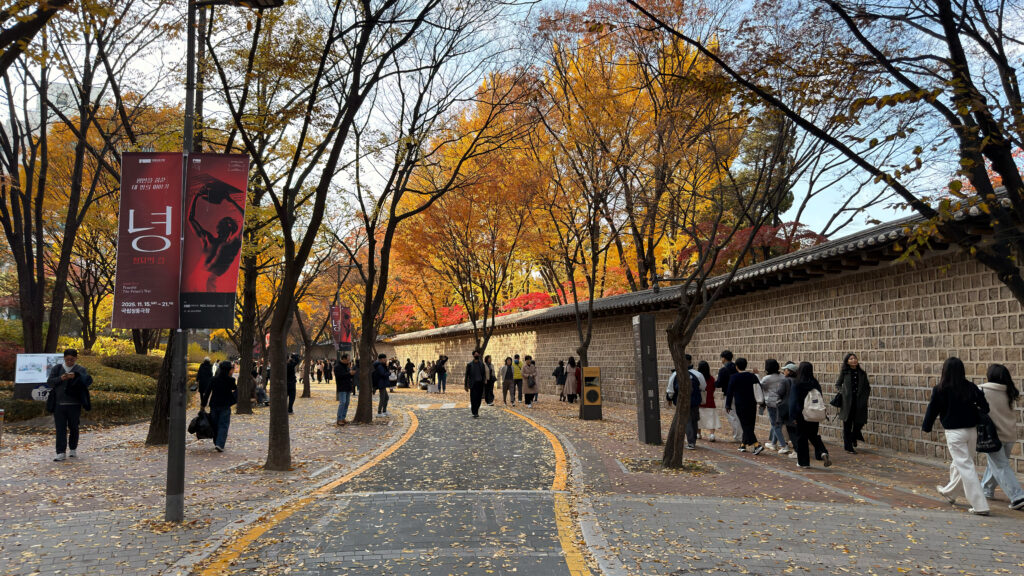
Stone Wall Road (Deoksugung Doldamgil). Just outside the palace walls, you will find the iconic Deoksugung Stone Wall Road, one of the most romantic walkways in Seoul. The long stone wall, lined with trees and warm light, makes this one of the dreamiest strolls in the city, especially in autumn. Even if you only stop by the palace briefly, this road alone is worth the visit.
Art Museum. Inside the palace grounds, the Deoksugung Art Museum is a quiet spot perfect for a cultural break. The exhibitions change regularly and often feature modern Korean art. It is a great place to wander through after exploring the palace halls, especially if you enjoy mixing history with contemporary creativity.


A Lesser-Known (and Darker) Historical Fact
Many visitors do not realise that Deoksugung Palace became the center of royal life during one of the most turbulent periods in Korean history. After the tragic assassination of Empress Myeongseong at Gyeongbokgung, King Gojong fled and took refuge at the Russian Legation before eventually moving into Deoksugung. This palace became his haven and later his official residence during Korea’s final years as an independent kingdom. The palace walls witnessed political pressure, foreign intervention, and the gradual loss of royal authority. It is a quieter place today, but its history carries a deep emotional weight, tied to the last chapters of the Joseon Dynasty.
Tours and tickets from KlookShows Klook’s own box, which can set Klook cookies.Tours and tickets in Seoul on KlookKlook’s box can’t load on this device (an ad blocker often stops it). This opens Klook’s own page.Open Klook
Deoksugung Palace is famous for its unexpected Western-style touches, which also surprised us, including a European-looking stone building and the elegant fountain in front of it. These features belong to Seokjojeon Hall, which was built in the early 1900s when Korea was rapidly modernising and opening up to Western influence. King Gojong wanted to introduce modern architecture, diplomacy, and lifestyle elements into the palace, so he commissioned a Western-style residence designed by a British architect. The fountain and the surrounding garden were added to match the aesthetic, creating a space that feels completely different from traditional Korean palaces.


Although Deoksugung is much smaller than the main palace, we really enjoyed our time there. You can clearly see that locals use it almost like a park, strolling around the paths, sitting under the trees, and enjoying the calm atmosphere. There is so much greenery inside the walls that it feels more like a peaceful garden than a royal complex. The Western-style buildings were a surprise too, adding a unique twist that you do not find in the other palaces. Overall, it felt smaller, more intimate, and definitely less crowded than Gyeongbokgung, which made our visit slow, relaxed, and really special.
Pack your bags and explore Deoksugung Palace!

This post contains affiliate links. If you click and buy, I might earn a tiny commission, enough to help a penguin keep up its globe-trotting lifestyle. No extra cost to you, just more fish for me. Thank you for supporting the adventure!