Things to Know Before Visiting Spain: Spain Travel Tips & Facts
Before waddling off to Spain, a few things are worth knowing beyond the obvious sunshine, tapas, and sangria. We’ve traveled to Spain several times and even spent time studying there, so we’ve had the chance to experience it beyond the usual tourist trail. Spain is one of those countries where every region can feel like a completely different destination. From Barcelona and Madrid to Andalusia, the Basque Country, Galicia and the Canary Islands, Spain has its own languages, traditions, food and landscapes waiting around almost every corner. Whether you are planning your first city break, a road trip through Andalusia, a beach holiday, or a longer adventure across the country, here’s what we think you should know before visiting Spain, based on our own experiences and plenty of time spent exploring the country.
Basic Facts About Spain
- Official name: Kingdom of Spain (Reino de España)
- Capital: Madrid
- Land area: approximately 506,000 km²
- Population: approximately 49 million
- Official language: Spanish (Castilian)
- Other co-official languages: Catalan, Galician, Basque and Valencian in their respective regions
- Currency: Euro (€)
- Government: Constitutional monarchy
- Administrative divisions: 17 autonomous communities and 2 autonomous cities
- Time zone: Central European Time, with the Canary Islands one hour behind
- Driving side: Right
- EU member: Yes
- Schengen Area: Yes
- Religion: Spain has no state religion; Roman Catholicism is the largest religious tradition.
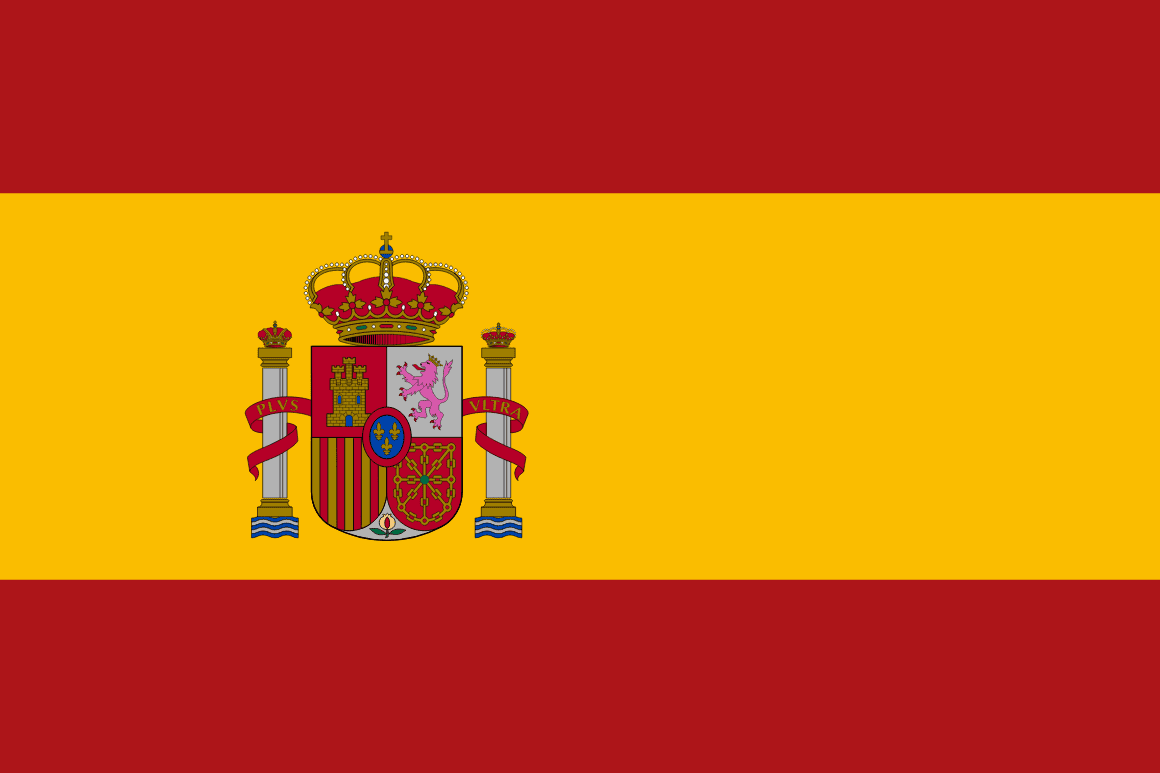
- Flag of Spain: Three horizontal stripes of red, yellow, and red, with Spain’s coat of arms positioned towards the hoist side. The red and yellow colors are traditionally associated with strength, courage, and generosity. At the same time, the coat of arms represents Spain’s history and the different kingdoms that came together to form the country.
Spain is one of those countries that is almost impossible to see properly in a single trip. You can spend a weekend wandering through Madrid’s grand boulevards, eat your way through San Sebastián, explore Gaudí’s Barcelona, admire Moorish architecture in Granada, drive through white villages in Andalusia, or disappear onto an island in the Mediterranean.
And that is exactly the problem.
Every time you think you have “seen Spain”, another region gives you a completely different reason to come back.
Spain’s History in a Nutshell
- Prehistoric Spain: Human settlement in the Iberian Peninsula goes back hundreds of thousands of years.
- Romans: Much of present-day Spain became part of the Roman Empire and was known as Hispania.
- Visigoths: After the decline of Roman rule, the Visigoths established a kingdom across much of the peninsula.
- 711: Muslim forces crossed from North Africa and conquered large parts of the Iberian Peninsula.
- Al-Andalus: Muslim-ruled territories became an important center of science, architecture, culture, and learning.
- Reconquista: Christian kingdoms gradually expanded southward over several centuries.
- 1492: Granada, the last major Muslim kingdom in Iberia, fell to Ferdinand II of Aragon and Isabella I of Castile.
- 1492: Christopher Columbus’s first voyage across the Atlantic was financed by the Catholic Monarchs.
- 16th century: Spain became one of the world’s most powerful empires.
- 19th century: Spain experienced political instability and gradually lost most of its overseas colonies.
- 1936–1939: The Spanish Civil War devastated the country.
- 1986: Spain joined the European Economic Community, now the European Union.
- Franco era: Francisco Franco ruled Spain as dictator from 1939 until he died in 1975.
- Modern Spain: Spain transitioned to democracy and adopted its current constitutional system.
31 Interesting Facts About Spain
#1: Spain Is the Fourth-Largest Country in Europe
Spain covers more than half a million square kilometers, making it one of Europe’s largest countries. Despite its size, many visitors experience only a tiny corner of it.
#2: Spain Has 17 Autonomous Communities
Spain isn’t divided into provinces alone. It has 17 autonomous communities, each with its own Government and distinctive identity. That is one reason travelling from Catalonia to Galicia or Andalusia can feel like entering a completely different cultural world.
#3: Spain Has Several Official Languages
Spanish is the country’s official language, but it isn’t the only language you will encounter. Catalan, Galician and Basque have official status in their respective regions, while Valencian is officially recognized in Valencia. So don’t be surprised when road signs, menus and public information suddenly look very different from the Spanish you learned in school.
#4: Spain Has More Than 8,000 Kilometers of Coastline
Spain is surrounded by an enormous variety of coastlines, from the Mediterranean to the Atlantic and the Cantabrian Sea. It has glamorous Mediterranean resorts, wild Atlantic beaches, northern cliffs, and the volcanic shores of the Canary Islands.
#5: Spain Has 16 National Parks
Spain’s landscapes go far beyond beaches. The country has national parks that cover everything from volcanic landscapes and wetlands to mountains, forests, and coastal ecosystems. One of the most famous is Teide National Park in Tenerife, home to Spain’s highest mountain.
#6: Spain Is Home to Europe’s Highest Mountain Outside the Alps
Mount Teide rises to 3,715 meters above sea level on Tenerife. That makes it Spain’s highest point and one of the country’s most dramatic landscapes. And yes, technically you can stand above the clouds without leaving Spain.
#7: Spain Has One of the World’s Most Famous Pilgrimage Routes
The Camino de Santiago has been attracting pilgrims for centuries. The routes cross northern Spain before reaching Santiago de Compostela in Galicia, where tradition holds that the remains of Saint James the Apostle are buried. You don’t have to be religious to walk it. Today, people undertake the Camino for spiritual, cultural, sporting and personal reasons.
#8: Spain Has the World’s Oldest Restaurant
Madrid’s Sobrino de Botín, commonly known simply as Botín, dates back to 1725 and is recognized by Guinness World Records as the world’s oldest continuously operating restaurant. So if you like your dinner with several centuries of history, Spain has you covered.
#9: Spain Is Famous for Its Late Meals
Dinner at 6 PM? You might struggle. Spanish meal times are generally later than many visitors from Northern and Central Europe are used to. Lunch often happens in the early afternoon, while dinner usually comes much later. The official Spanish tourism website notes that breakfast typically falls between 07:00 and 12:00, while midday tapas and drinks are common before lunch.
#10: Siesta Doesn’t Mean Everyone Goes to Sleep
The famous Spanish siesta is often misunderstood. The traditional midday break is connected to Spain’s climate, working patterns and long lunch traditions, but modern Spain isn’t simply shutting down every afternoon for a nap. Some smaller businesses may close for several hours, particularly in warmer regions, while major shops, attractions and businesses in larger cities often operate continuously.
#11: Spain Has More Than 2,000 Castles
From medieval fortresses to enormous royal palaces, Spain is packed with castles. Some sit dramatically on hilltops, while others dominate the center of historic cities. And this is one country where you don’t have to look very hard to find one.
#12: Barcelona’s Sagrada Família Is Still Unfinished
Antoni Gaudí’s extraordinary basilica has been under construction since 1882. Gaudí died in 1926, and the project continued without him. More than a century later, the Sagrada Família remains one of the world’s most famous unfinished buildings.
#13: Spain Has a Desert
You don’t have to leave Europe to find desert landscapes. The Tabernas Desert in Andalusia is considered Europe’s only true desert and has been used as a filming location for countless movies and television productions. Its landscapes have famously doubled for the American Wild West.
#14: Spain Is One of the World’s Biggest Olive Oil Producers
Olive oil is not simply an ingredient in Spain. It is deeply woven into Spanish food culture. Andalusia is particularly important to the country’s olive oil production, with vast olive groves stretching across the landscape.
#15: Paella Comes From Valencia
Paella is often treated internationally as Spain’s national dish, but its roots are specifically associated with the Valencia region. Traditional Valencian paella developed around ingredients such as rice, beans, vegetables, and meat. And if someone tells you that every rice dish served in Spain is paella, a Valencian will probably have something to say.


#16: Spain Is One of the World’s Largest Wine Producers
Spain has thousands of wineries and an enormous variety of wine-producing regions. Rioja, Ribera del Duero, Priorat, Rías Baixas, and Jerez are just a few of the names wine lovers will encounter.
#17: Madrid Is Europe’s Highest Capital City
Madrid sits at around 650 meters above sea level, making it the highest capital city in the European Union. That elevation also helps explain why Madrid can have surprisingly cold winters despite Spain’s sunny reputation.
#18: Spain Has Two Cities in Africa
Spain isn’t entirely located on the Iberian Peninsula. The autonomous cities of Ceuta and Melilla are located on the North African coast. That makes Spain a country with territory on two continents.
#19: The Canary Islands Are Volcanic
Volcanic activity created the Canary Islands, and their landscapes still show it. Tenerife, Lanzarote, Gran Canaria, La Palma and the other islands each offer their own combination of volcanoes, beaches, cliffs and unusual rock formations.
#20: Spain Has Some Very Strange Festivals
Spain is famous for festivals that can seem wonderfully bizarre to outsiders. Giant papier-mâché figures, tomato throwing, human towers, fire festivals, and enormous religious celebrations. The country knows how to turn a normal calendar into something memorable.
#21: Valencia Has a Festival Where Giant Figures Burn
Every March, Valencia celebrates Las Fallas. Huge artistic sculptures are displayed around the city before many are ceremonially burned during the festival’s spectacular finale.
#22: Human Towers Are a Spanish Tradition
In Catalonia, groups known as castellers build enormous human towers by climbing on top of one another. The tradition is so distinctive that UNESCO has recognized it as intangible cultural heritage.
#23: Spain Is Home to One of Europe’s Most Famous Gothic Quarters
Barcelona’s Barri Gòtic contains a maze of historic streets, squares and buildings in the heart of the city. Despite its name, not everything you see there is genuinely medieval, with parts of the quarter having been modified or reconstructed over time.
#24: Spain Has Four Seas Around Its Territory
Depending on how you count Spain’s surrounding waters, you’ll find the Mediterranean Sea, the Atlantic Ocean, the Cantabrian Sea, and the waters around the Canary Islands. In practical travel terms, that means an extraordinary variety of coastal landscapes.
#25: Spain Is Much More Than Madrid and Barcelona
This might be the most important fact of all. Spain is a country of dramatically different regions. Andalusia does not feel like Galicia. The Basque Country does not feel like the Canary Islands. Valencia does not feel like Asturias. If you visit only one or two major cities, you see only a fraction of what Spain offers.
#26: Spain Is a Kingdom
Spain is officially the Kingdom of Spain and is a parliamentary monarchy. The country has a royal family headed by King Felipe VI, with Queen Letizia and their two daughters, Princess Leonor and Infanta Sofía. The monarchy is constitutional, meaning the King is Head of State but does not govern the country. The Government holds executive power, while the elected Parliament makes legislation.
#27: Spanish Is One of the World’s Most Widely Spoken Languages
Spanish is much more than the language of Spain. It is an official language in around 20 countries and is spoken across Europe, Latin America, and other parts of the world. Spanish has more than 500 million native speakers, while hundreds of millions more use it as a second or additional language. It is also one of the six official languages of the United Nations.
#28: One of Spain’s Most Famous Writers Created Don Quixote
Miguel de Cervantes wrote Don Quixote, one of the most influential works in Western literature. The novel follows a man who becomes convinced he is a knight and sets off on increasingly chaotic adventures.
#29: Spain Has Invented More Than You Might Think
Spain has contributed some surprisingly useful inventions to everyday life. Spanish engineer Manuel Jalón developed the mop-and-bucket system in the 1950s, while Isaac Peral designed one of the world’s early electrically powered submarines in the 19th century. Spain is also credited with inventions and innovations including the modern stapler, the classical guitar as we know it today, the autogyro, an early ancestor of the helicopter, and important developments in digital calculation and medical technology. Not bad for a country better known for tapas and siestas!
#30: Spain Has Produced Some Very Famous People
Spain has given the world an impressive list of artists, writers, scientists, and cultural icons. Pablo Picasso and Salvador Dalí transformed modern art, Francisco Goya became one of the most influential painters of his era, and Miguel de Cervantes wrote Don Quixote, one of the most celebrated novels in Western literature. Architecture lovers know Antoni Gaudí, while Santiago Ramón y Cajal won the Nobel Prize for his groundbreaking work on the nervous system. Spain has also produced famous figures in cinema, sport and music, including Pedro Almodóvar, Penélope Cruz, Rafael Nadal and Julio Iglesias.
#31 Spain Has a Long Bullfighting Tradition
Bullfighting, or corrida de toros, is one of Spain’s most recognizable traditional spectacles and has been part of Spanish culture for centuries. A traditional corrida involves a matador facing a bull in a formalized performance with several stages. Today, however, bullfighting is controversial, and its popularity varies considerably across Spain. Some regions and municipalities have restricted or banned it, while others continue to hold bullfights as part of their cultural traditions. So while you may see bullfighting associated with Spain everywhere, from postcards to festivals, it does not represent the views or traditions of every Spaniard.

These are just a few interesting and useful facts to know before visiting Spain. There is, of course, much more to discover once you start waddling beyond the obvious, from regional traditions and quirky festivals to local food, history, and everyday Spanish life. Consider this your starting point, not the end of the adventure.
Practical Facts for Travelers Coming to Spain
A little practical knowledge can save you from some very unnecessary waddling around.
- Visa Requirements. Spain is part of both the European Union and the Schengen Area. Entry requirements depend on your nationality, so check the current rules before traveling. Spain’s official tourism website provides current information on passports, visas, and border requirements.
- Currency. Spain uses the euro (€). Cards and contactless payments are widely accepted, especially in cities and tourist areas, though having some cash can still be useful for smaller shops and markets.
- Language. Spanish is the official national language. However, several regions have their own co-official languages. In Barcelona, for example, you will see both Spanish and Catalan. Don’t worry if you don’t speak Spanish. English is widely used in tourist areas, although learning a few basic Spanish phrases is always appreciated.
- Time Zone. Most of Spain uses Central European Time, while the Canary Islands are one hour behind mainland Spain.
- Plug Sockets. Spain uses Type C and Type F plugs and 230 V electricity. If you are traveling from most European countries, you probably won’t need an adapter.
- Driving in Spain. Spain drives on the right-hand side of the road. An EU or EEA driving license is valid in Spain as long as it remains valid. Drivers from outside the EU/EEA should check whether they need an international driving permit.
- Public Transport. Spain has an extensive railway and bus network. High-speed trains make it surprisingly easy to travel between major cities. For longer journeys, trains can often save considerable time compared with driving.
Hotel search from Trip.comShows Trip.com’s own box, which can set Trip.com cookies.Search hotels on Trip.comTrip.com’s box can’t load on this device (an ad blocker often stops it). This opens Trip.com’s own hotel search.Open Trip.com
- Tap Water. Tap water is generally safe to drink in Spain. Bring a reusable bottle and refill it rather than buying bottled water throughout your trip.
- Tipping. Tipping isn’t compulsory in Spain the way it can be in some countries. Leaving some extra money for particularly good service is appreciated, but you generally don’t need to add a large percentage to every restaurant bill automatically.
- Restaurant Opening Hours. This is one of the biggest adjustments for visitors. Lunch and dinner are generally served later than many international visitors expect. Some restaurants may not even open for dinner until around 20:00 or later. Don’t panic if you’re hungry at 18:00. Tapas are your friend.
- Shops and Siesta. Opening hours vary by region and business.
- Smaller shops may close in the afternoon, while shopping centers and many larger stores tend to have longer continuous opening hours.
- Emergency Number. The emergency number in Spain is 112. You can use it for police, fire, and medical emergencies.
- Mobile Data. If you have an EU mobile plan, you can generally use mobile data in Spain under EU roaming rules, subject to your provider’s fair-use policy.
- Public Toilets. Public toilets are available at major attractions, museums, shopping centers and transport hubs. In smaller towns, cafés and restaurants are often your easiest option. And as everywhere in Europe, expect to pay a small fee.
- Drinking Age. The legal age for purchasing and consuming alcohol in Spain is generally 18.
- Safety. Spain is generally considered a safe destination, but standard city precautions still apply. Watch your belongings in crowded areas, especially on public transport and around major tourist attractions. Spain’s official tourism guidance specifically recommends extra attention in crowded places such as public transport and shopping centers.
Best Time to Visit Spain
Spain is a year-round destination, but the best time depends heavily on where you are going.
- Spring (March–May). Spring is one of the most appealing times to explore many parts of Spain. Temperatures are generally comfortable, flowers are blooming, and major cities are easier to explore before the peak summer heat. Andalusia can be particularly beautiful in spring.
- Summer (June–August). Summer means beaches, long evenings, and plenty of sunshine. But it can also mean very high temperatures, particularly inland and in southern Spain. If you’re planning a city sightseeing trip to Seville, Córdoba or Madrid, be prepared for the heat.
- Autumn (September–November). September can still feel like summer in many parts of Spain, while October and November bring cooler temperatures and fewer visitors. Autumn can be particularly lovely for city breaks, wine regions and northern Spain.
- Winter (December–February). Winter is not necessarily cold everywhere. The south can remain relatively mild, while the mountains offer skiing and northern Spain can be much cooler and wetter. And then there are the Canary Islands, where winter can feel completely different from mainland Spain.
How Much Time Do You Need in Spain
This is where Spain gets complicated. You can absolutely visit for a long weekend, but Spain rewards longer trips because the country is so spread out.
- 2–3 days. Perfect for a city break. Choose one city, such as Madrid, Barcelona, Seville, or Valencia, rather than trying to see half the country.
- 4–5 days. Enough for a city plus a couple of nearby day trips. This works particularly well for destinations such as Seville and Córdoba or Madrid and Toledo.
- 7 days. A week gives you enough time for a small regional itinerary. You could explore part of Andalusia, combine Madrid with surrounding destinations, or focus on Barcelona and Catalonia.
- 10–14 days. Now Spain starts to open up. You can create a proper road trip or combine several cities and regions without spending the entire holiday moving from one hotel to another.
- 3 weeks or more. If you really want to explore Spain rather than visit Spain, three weeks gives you considerably more freedom. You can combine major cities with smaller towns, beaches, nature, and countryside.
One Important Thing to Know: Spain Is Not One Experience
Perhaps the biggest mistake you can make when planning a Spanish trip is treating Spain as one destination. Spain is enormous in travel terms.
The architecture, food, language, climate, traditions, and landscapes can change dramatically from one region to another. So instead of asking “How many days do I need for Spain?”, ask: “Which part of Spain do I want to discover first?” That one question makes planning the trip considerably easier.
Buy Us a Ko-fi

Spain has beaches, mountains, historic cities, medieval villages, world-famous architecture, incredible food, wine regions, islands, and some seriously spectacular landscapes. But what makes it particularly interesting is the variety. You can spend the morning admiring Moorish architecture in Andalusia, the afternoon eating pintxos in the north or wake up on a volcanic island in the Atlantic. We wouldn’t try to see all of Spain in one trip. Instead, choose one region, slow down, and let it surprise you. Because Spain isn’t really a country you “finish” exploring.
It is a country you keep finding reasons to return to.
Travel Bold. Eat Well. Waddle Wild.

This post contains affiliate links. If you click and buy, I might earn a tiny commission, enough to help a penguin keep up its globe-trotting lifestyle. No extra cost to you, just more fish for me. Thank you for supporting the adventure!