Things to Know Before Visiting Milan: A First-Time Visitor’s Guide
Milan catches us somewhere between grand architecture, elegant streets, and the everyday rhythm of northern Italy. We come for the Duomo, but soon find ourselves lingering over aperitivo, wandering through neighborhoods and looking beyond the city’s famous fashion scene. Before you set off, here’s what we wish we had known.
Basic Facts About Milan
- Established: Around 590 BC
- Population: Around 1.4 million
- Area: 182 km²
- Location: Northern Italy, Lombardy
- Time Zone: CET (GMT+1), GMT+2 in summer
- Airports: Malpensa, Linate, Bergamo
- Known For: Fashion, design, art and architecture
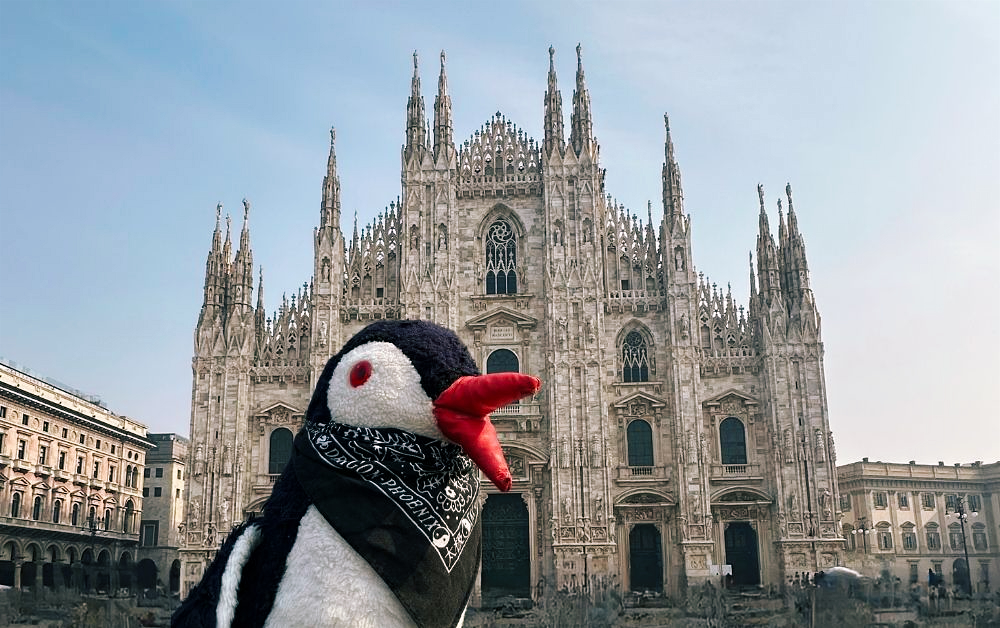
- Famous Landmark: Milan Cathedral (Duomo)
- Local Specialties: Risotto alla Milanese, cotoletta and panettone
- Nickname: Italy’s fashion and design capital
Why Visit Milan
Milan is the kind of city that keeps changing as you waddle through it. One moment, we stand beneath the marble spires of the Duomo; the next, we watch trams rattle past elegant façades or sit down for an aperitivo as the city shifts into evening. Fashion lovers come for the designer names, history lovers for centuries of art and architecture, and food lovers for everything from saffron risotto to a perfect Milanese cotoletta.
That’s exactly why we think Milan is worth visiting. It is not a city that asks you to choose between old and new, culture and everyday life, grand landmarks and neighborhood discoveries. You can admire Leonardo da Vinci in the morning, browse Brera in the afternoon, and end the day beside the Navigli canals with a drink in hand. Milan gives you plenty to see, but just as importantly, plenty of reasons to slow down and enjoy being there.
Milan’s History in a Nutshell
- 590 BC. The Celtic Insubres founded Milan.
- 222 BC. Romans conquer Milan and call it Mediolanum.
- 286 AD. Milan becomes the capital of the Western Roman Empire.
- 313 AD. The Edict of Milan grants religious tolerance to Christians.
- 1386. Construction of the Duomo begins.
- 1450. The Sforza dynasty takes control of Milan.
- 1495. Leonardo da Vinci begins painting The Last Supper.
- 1805. Napoleon is crowned King of Italy in Milan’s Duomo.
- 1848. The Five Days of Milan uprising challenges Austrian rule.
- 1861. Milan becomes part of the newly unified Kingdom of Italy.
- 1915. Italy enters World War I, with Milan becoming an important center of the war effort.
- 1945. Benito Mussolini is captured and killed near Milan in the final days of Fascist Italy.
- 1950s–1960s. Milan grows into Italy’s major economic, industrial, and design center.
- Today. Milan is Italy’s fashion and design capital, known for art, architecture, business, food, and culture.
The Legend of Milan
Milan’s story begins with a little legend. According to tradition, the Celtic prince Bellovesus crossed the Alps and founded a settlement here around the 6th century BC. The Romans later arrived, renamed it Mediolanum, and turned it into one of the most important cities in northern Italy.
Another symbol waits to be noticed as we explore the city: the Biscione, the serpent that appears in Milan’s heraldry and is closely associated with the powerful Visconti family. Somewhere between these old stories, Roman ruins and Renaissance masterpieces, Milan reveals how much of its identity has been built over centuries. We may come for the fashion and the Duomo, but the city’s oldest stories still weave through what we see today.
xx Interesting Facts About Milan
#1: Milan Was Once a Roman Capital
Known to the Romans as Mediolanum, Milan became a capital of the Western Roman Empire in the 4th century. Its location in northern Italy made it a key center of politics, trade, and military power, drawing emperors and influential figures to the city. The Roman era left a lasting mark on Milan, with archaeological remains still scattered beneath and around the modern city. Today, visitors can discover fragments of this ancient past alongside Renaissance churches, grand palaces, and contemporary architecture.
#2: The Golden Madonnina Watches Over Milan
Standing at the highest point of the Duomo, the gilded copper statue of the Virgin Mary has watched over Milan since 1774. Known as the Madonnina, she has become one of the city’s most recognizable symbols, and for centuries Milan’s skyline followed an unwritten rule: no building should rise higher than her. Even today, modern skyscrapers respect her symbolic place above the city.
#3: The Edict of Milan Was Issued Here
In 313 AD, Milan became the setting for a decision that changed the course of European history. Roman emperors Constantine I and Licinius agreed on a policy of religious tolerance, allowing Christians and followers of other religions to practice their faith openly. The agreement helped end official persecution of Christians across the Roman Empire and marked an important turning point in the history of Christianity.
#4: Milan Was Ruled by the Powerful Sforza Family
The Sforza family came to power in Milan in 1450, when Francesco Sforza became Duke of Milan. Under the Sforzas, the city flourished as a center of Renaissance art, culture, architecture, and intellectual life. Their court attracted some of the period’s greatest minds, including Leonardo da Vinci, who spent almost two decades in Milan working for Ludovico Sforza. The family also transformed Castello Sforzesco into a magnificent ducal residence, helping shape the Milan we still explore today.
#5: The Duomo Has More Stories Than You Might Expect
Milan’s Duomo took centuries to build, with construction beginning in 1386 and continuing across generations. Today, its enormous Gothic façade and roof are covered with around 3,400 statues, 135 spires, and countless marble details. One of its statues, La Legge Nuova, even bears a striking resemblance to New York’s Statue of Liberty, despite predating it by decades.


The details continue inside. A brass meridian line, installed in 1786, works as a solar clock and zodiac calendar. The cathedral’s famous marble was transported towards Milan by water through the city’s historic canals. At the same time, the golden Madonnina was covered with rags during World War II to make her less visible to Allied bombers. Even after more than six centuries, the Duomo still has plenty of stories hidden in its marble.
#6: Leonardo da Vinci Spent Almost 20 Years in Milan
Leonardo da Vinci spent almost 20 years in Milan, making the city one of the most important chapters of his life. He arrived in 1482 at the court of Ludovico Sforza and worked not only as a painter, but also as an engineer, architect, inventor, and designer. His influence reached far beyond the canvas, from studying Milan’s canals and designing machines to working on ambitious architectural projects. His time in Milan helped shape the city’s Renaissance identity, and his ideas still echo through its art, engineering, and architecture.
#7: The Last Supper Is Not a Fresco
Leonardo’s The Last Supper is one of Milan’s most famous treasures, painted on the wall of the Dominican refectory at Santa Maria delle Grazie. Despite its appearance, it is not technically a fresco. Leonardo experimented with a different technique that allowed him more time to work on the details. Still, it also meant the painting began deteriorating much sooner than a traditional fresco would. Centuries of restoration followed, and in 1980, Santa Maria delle Grazie and The Last Supper were together declared a UNESCO World Heritage Site.
#8: Milan Is One of the World’s Fashion Capitals
Milan is recognized alongside Paris, London and New York as one of the world’s great fashion capitals, but its fashion identity goes far beyond luxury boutiques. The city’s fashion industry grew alongside its manufacturing, media, design, and creative industries, making style an important part of Milan’s wider culture and economy. Twice a year, Milan Fashion Week brings designers, models, buyers, journalists, and fashion lovers from around the world to the city.
But you don’t need an invitation to experience Milan’s style. Fashion is part of the city’s everyday rhythm, from beautifully dressed locals on the streets to historic fashion houses and carefully designed shop windows. In Milan, the streets themselves often feel like part of the runway.
#9: Milan Gave Italy Some of Its Biggest Fashion Names
At the heart of Milan’s fashion scene is the Quadrilatero della Moda, or Fashion Quadrilateral, centered around elegant streets such as Via Montenapoleone and Via della Spiga. This is where some of the world’s most recognizable fashion houses have built their Milanese identities. Prada has called Milan home since 1913, when Mario Prada opened the original luxury goods business. Giorgio Armani founded his fashion company in Milan in 1975, while Gianni Versace established his fashion house here in 1978. Together, these names helped turn Milan into a global fashion capital and made the city’s name inseparable from Italian style.
#10: Milan Has a Remarkable Musical and Literary Legacy
Milan’s cultural influence extends far beyond fashion. Teatro alla Scala opened in 1778 and became one of the world’s most prestigious opera houses, welcoming generations of celebrated performers. Giuseppe Verdi enjoyed major success here, with his Nabucco becoming a triumph in 1842, while legendary singers including Maria Callas and Luciano Pavarotti also performed on its stage. Milan was equally important to literature. Alessandro Manzoni, one of Italy’s most celebrated writers and the author of The Betrothed, lived much of his life here. Over the centuries, the city has continued to attract and inspire musicians, writers, artists, architects and designers.
#11: Milan Is a City of Architecture and Design
Milan’s skyline is a conversation between centuries. Gothic churches, Renaissance palaces, Art Nouveau Liberty buildings and contemporary skyscrapers stand surprisingly close together, creating a cityscape where old and new constantly meet. This mix is part of what makes Milan feel so distinctive. The city is also one of Italy’s great design centers, with institutions such as Triennale Milano and the ADI Design Museum celebrating Italian creativity and innovation. In Milan, design is not confined to galleries. It shows up in buildings, furniture, fashion, interiors, and the city’s everyday details.
#12: Milan Has a Vertical Forest
Bosco Verticale, meaning “Vertical Forest,” is one of Milan’s most recognizable modern landmarks. The two residential towers in the Porta Nuova district are covered with hundreds of trees and thousands of plants, creating the impression of a forest rising into the skyline. The greenery changes with the seasons, giving the buildings a different appearance throughout the year while bringing an unexpected sense of nature into one of Milan’s most modern neighborhoods.
#13: The Galleria Vittorio Emanuele II Has a Secret Tradition
Opened in 1867, the Galleria Vittorio Emanuele II is one of the world’s oldest shopping arcades and one of Milan’s most beautiful architectural landmarks. Its soaring glass-and-iron roof, mosaics, and ornate façades were designed to create a grand covered street connecting Piazza del Duomo with Piazza della Scala.
Look down at the mosaic floor to find the bull of Turin, part of the gallery’s famous zodiac mosaics. Tradition says that spinning once on the bull’s testicles with your heel brings good luck. The original mosaic became so worn from the ritual that the spot has been repaired several times. Today, watching visitors perform the little spin is almost as much a part of the Galleria experience as looking up at its spectacular glass roof.


#14: Milan Once Had a Huge Network of Canals
Milan may not be the first city that comes to mind when you think of canals, but water once played a surprisingly important role in its story. The Navigli are the surviving parts of a much larger canal network that connected Milan with rivers and lakes, allowing goods and materials to move around the city. Most famously, the canals helped transport the marble used to build the Duomo. And Leonardo da Vinci was fascinated by them. During his years in Milan, he studied the city’s waterways and worked on ideas to improve its canals, locks, and water management. Today, the remaining Navigli are lined with restaurants, bars and cafés, making what was once an essential transport system one of Milan’s most atmospheric places to spend an evening.
#15: Milan Has a “Devil’s Column”
Just outside the Basilica of Sant’Ambrogio stands an ancient Roman column with a rather unusual story. Known as the Devil’s Column, it has two deep holes near its base that local legend connects to Saint Ambrose and the Devil. According to the tale, the Devil tried to tempt Ambrose and attacked him with his horns, but missed and struck the marble column instead, leaving the marks behind. The story is, of course, a legend, and the holes have a much more ordinary historical explanation. But standing beside the ancient column and looking at those mysterious marks, it is easy to see why the story has survived for centuries.
#16: Milan Invented a Cocktail by Accident
One of Milan’s most famous cocktail stories begins with a simple mistake. At Bar Basso, bartender Mirko Stocchetto is said to have accidentally reached for a bottle of prosecco instead of gin while preparing a Negroni. The result was lighter and sparkling, and the Negroni Sbagliato was born. The word sbagliato means “mistaken” or “wrong” in Italian, making the name a perfect description of the happy accident that created it. Today, the cocktail is closely associated with Milan and remains a favorite aperitivo drink.
#17: Milan Has Pink Flamingos
Yes, really. Hidden behind the elegant walls of Villa Invernizzi in the Palestro neighborhood, a small colony of pink flamingos lives in a private garden. You cannot visit the garden, but you can sometimes spot them from the street, making this one of Milan’s most unexpected little surprises.
#18: The Madonnina Has Reached Mount Everest
Milan’s beloved Madonnina has traveled far beyond the Duomo. Replicas of the golden statue have been placed in different parts of the world, including Mount Everest, carrying one of Milan’s most recognizable symbols far beyond Italy. Even the original statue has a practical detail hidden in plain sight: the halberd she holds also functions as a lightning conductor, helping protect the cathedral’s highest point. A tiny detail with a rather important job.
#19: Milan Has Houses Shaped Like Igloos
Milan’s architecture gets wonderfully unusual in the Maggiolina neighborhood, where a group of small homes looks more like a collection of igloos than traditional Italian houses. Known as the Case Igloo, or Igloo Houses, they were designed by architect Mario Cavallè in the 1940s, after World War II, as an imaginative solution to post-war housing needs. Their rounded shapes, tiny gardens, and unusual appearance make them one of Milan’s most unexpected residential corners.
#20: Milan Has a Legendary Secret Tunnel
According to local tradition, a secret underground tunnel once connected Castello Sforzesco with Santa Maria delle Grazie, allowing Milan’s rulers to move discreetly between the two locations. The story is closely tied to the Sforza family and the castle’s mysterious past, though no confirmed evidence shows the tunnel existed as described. Still, it is an irresistible legend for a city already filled with Renaissance intrigue, especially given Leonardo da Vinci’s connection to both places.
#21: Milan Has a Chapel Decorated With Human Bones
Hidden near Milan’s center, San Bernardino alle Ossa contains one of the city’s most unusual and haunting interiors. The small ossuary chapel is decorated with human skulls and bones, arranged in intricate patterns across the walls. The tradition dates back centuries, when the space housed bones from nearby burial grounds that could no longer accommodate them. It is an unexpectedly macabre sight in a city better known for fashion, design, and the Duomo, and one that stays in your memory long after you leave.
#22: Milan Lives and Breathes Football
Football is deeply woven into Milan’s identity, with AC Milan and Inter Milan sharing one of Europe’s most famous football homes. Both clubs have built long and celebrated histories, creating a rivalry that has shaped the city’s sporting culture for more than a century.
Their shared stadium, San Siro, opened in 1926 and has hosted generations of legendary players, major domestic matches, and international football. Its scale and atmosphere have earned it the nickname “La Scala of football,” a fitting comparison in a city already famous for its opera house.
#23: Milan Is Italy’s Financial Powerhouse
Milan is not only Italy’s fashion and design capital. It is also the country’s financial powerhouse and one of its most important business centers. The city is home to Borsa Italiana, Italy’s main stock exchange, reinforcing Milan’s role at the heart of the country’s financial world.
This economic influence helps give Milan its distinctly modern character. Alongside centuries-old churches, Renaissance masterpieces and grand palaces, the city is filled with banks, international companies, business districts and contemporary architecture. It is a place where Italy’s history and its modern economy meet every day.
#24: What Does the Name Milan Mean
The name Milan comes from the ancient Roman name Mediolanum, which the Romans used for the city after conquering it in 222 BC. The name is generally understood to come from Celtic roots, with medio meaning “middle” and lanum meaning “plain” or “open land.” Together, it is often interpreted as “in the middle of the plain.” The name fits Milan surprisingly well. The city sits in the heart of the Po Valley, one of northern Italy’s great plains. Over the centuries, Mediolanum evolved into Milano in Italian, while the English name became Milan.
Practical Facts for Travelers Coming to Milan
- Tap Water. Tap water in Milan is safe to drink, so you generally do not need to buy bottled water. Bring a reusable bottle and refill it at your accommodation.
- Getting Around. Milan is relatively compact in the center, making many major sights easy to reach on foot. For longer distances, the metro, trams and buses are convenient options.
- Waddling. The Duomo, Galleria Vittorio Emanuele II, La Scala, Brera and many central attractions are close enough to combine on foot. Comfortable shoes are essential because you can easily cover several kilometers in a day.
- Public Transport Tickets. Milan’s public transport network uses integrated tickets across the metro, buses and trams. You can buy tickets at metro stations, authorized retailers, and through the official ATM Milano system. Check the current ticket options before traveling.
- Validate Paper Tickets. If you use a traditional paper public transport ticket, follow the current validation rules. Digital and contactless tickets work differently.
- Metro. The Milan Metro is one of the easiest ways to move around the city. It connects the historic center with farther-out neighborhoods, and several major sights have metro stations nearby.
- Cash or Card. Cards are widely accepted in Milan, including in restaurants, cafés and shops. Carrying a small amount of cash is still useful for smaller purchases or places where card payment is unavailable.
- Aperitivo. Aperitivo is part of Milanese daily life and usually takes place in the early evening. Many bars offer a drink accompanied by snacks or a buffet, making it an easy way to experience the city’s social culture.
- Reservations. Book popular attractions in advance, particularly Leonardo da Vinci’s The Last Supper, where visitor numbers are strictly limited. The Duomo and other major attractions can also become busy during peak periods.
- Dress Code. Milan is a fashionable city, but churches have their own rules. When visiting religious sites, shoulders and knees should generally be covered.
- Weather. Milan experiences hot summers and colder winters, while spring and autumn can bring changeable weather. Pack comfortable shoes and a light waterproof layer if you plan to spend most of your day outdoors.
- Taxis. Official taxis in Milan are white and operate from designated taxi ranks. You can also book them through authorized services or apps.
- Tourist Tax. Milan charges a tourist tax on overnight stays. The amount depends on the type of accommodation and current local regulations, so check whether it is included in your booking price.
- Day Trips. Milan makes a convenient base for exploring northern Italy. You can reach Lake Como, Lake Maggiore, Bergamo, Pavia, and other destinations by train, making it easy to combine Milan with a day outside the city.
- The Duomo Roof Is Worth Planning Around. Visiting the cathedral and visiting the rooftop terraces are separate parts of the experience. Give yourself enough time for both rather than treating the Duomo as a quick photo stop.
- Milan Has a Strong Coffee Culture. Drinking coffee at the counter is often cheaper and quicker than sitting at a table. Prices can vary depending on where you have it.
- Watch Your Belongings in Crowded Areas. Take normal city precautions around busy metro stations, major attractions and crowded public spaces.

Scams and Pickpockets: What to Watch Out For in Milan
Milan is generally easy to explore, but its busiest tourist areas also attract people looking to take advantage of distracted visitors. Around the Duomo, Galleria Vittorio Emanuele II, metro stations, and other crowded spots, keep your belongings close and stay aware of your surroundings. We found that simply slowing down and observing the crowd for a few minutes makes you notice how some people move through busy areas looking for distracted tourists.
- Pickpockets Around the Duomo. The area around the Duomo is one of Milan’s busiest places, making it particularly attractive to pickpockets. Keep your phone and wallet somewhere secure and avoid leaving anything in an open backpack or coat pocket.
- Be Careful in Crowds. Pickpockets often take advantage of moments when people are distracted, such as when boarding the metro, taking photographs, or navigating through a crowded square. If someone suddenly bumps into you or creates an unusual distraction, check your belongings immediately.
- Don’t Let Strangers Put Things on You. Around major tourist attractions, someone may approach you offering a bracelet, string, flower, or other small item and then demand payment once you accept it. A simple “No, grazie” and continuing on your way is usually enough.
- Be Wary of “Free” Gifts. Something presented as a gift may quickly turn into a request for money. Don’t accept objects from strangers just because they say they are free.
- Watch for Distraction Techniques. Scams can involve more than one person. Someone may engage you in conversation while another person gets close to your belongings. If an interaction feels unusually persistent or confusing, step away.
- Be Careful With Unofficial Helpers. Around transport hubs and tourist attractions, someone may offer unsolicited help with tickets, luggage, or directions and then expect payment. Use official ticket machines, information desks and transport staff instead.
- Metro Escalators and Entrances. Crowded metro stations are particularly easy places to become distracted. Keep your bag closed and in front of you, especially when entering or leaving trains.
- Protect Your Phone. Avoid placing your phone on café tables near the edge or leaving it beside you on outdoor seating. Keep it secure when photographing busy attractions.
- Check Taxi Prices. Use official taxis or reputable booking services rather than accepting unsolicited offers from people approaching you around airports or stations.
- Use ATMs Carefully. Choose ATMs attached to banks or other reputable locations, and don’t accept help from strangers while withdrawing cash. Shield your PIN and check the amount before confirming a transaction.
- Don’t Let Someone Rush You. Many scams work because they happen quickly. If someone pressures you to decide, pay immediately, or follow them somewhere, step away and take your time.
How Long Do You Need to Explore Milan
We recommend spending at least three days in Milan to experience the city’s major landmarks without rushing from one sight to the next. Two days can cover the highlights, including the Duomo, Galleria Vittorio Emanuele II, La Scala, Brera, and The Last Supper. Still, three days give you more time to explore neighborhoods such as Navigli and Porta Nuova, enjoy an aperitivo and discover some of Milan’s less obvious corners. If you have four or five days, you can slow the pace even further and add a day trip to places such as Lake Como, Bergamo or Lake Maggiore. For a first visit, three full days strike a good balance between sightseeing and actually enjoying Milan’s rhythm.
Best Time to Visit Milan
For us, spring and autumn are the sweet spots for visiting Milan. April, May, September and October generally offer a comfortable balance for spending long days outdoors, exploring the city on foot and enjoying its neighborhoods without the intense summer heat. Milan’s official tourism site also highlights spring for its blooming parks and outdoor events, while autumn brings colorful foliage, warm days and a different atmosphere around Brera and the Navigli.
Summer can be hot and humid, but the city comes alive in the evenings with outdoor dining, aperitivo and events. Winter is colder, but it can be a lovely time for museums, shopping and Christmas in Milan, particularly around December. Keep in mind that Milan’s major fashion and design events can make the city much busier, so check the event calendar before booking your trip.
Buy Us a Ko-fi

Milan catches us between the grand and the everyday. We come for the Duomo, Leonardo da Vinci, and the fashion, but it is the smaller moments that stay with us: an aperitivo in the early evening, trams rattling through elegant streets, quiet corners away from the crowds, and the simple pleasure of wading through a city where centuries of history meet modern Italian life. Milan is polished without feeling untouchable, busy without losing its character, and full of stories hiding in plain sight. It is a city we leave with the feeling that there is still more to discover.
Travel Bold. Eat Well. Waddle Wild.

This post contains affiliate links. If you click and buy, I might earn a tiny commission, enough to help a penguin keep up its globe-trotting lifestyle. No extra cost to you, just more fish for me. Thank you for supporting the adventure!