Lupča Castle: What We Found During Our Visit
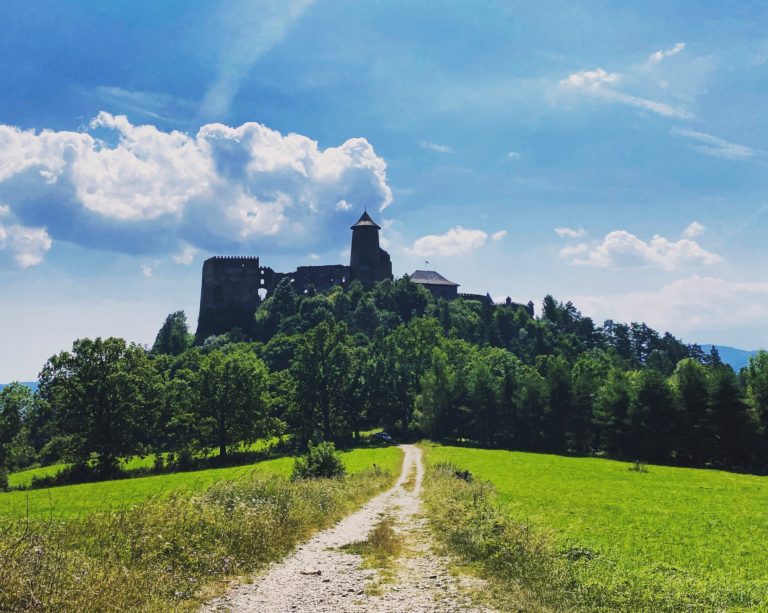
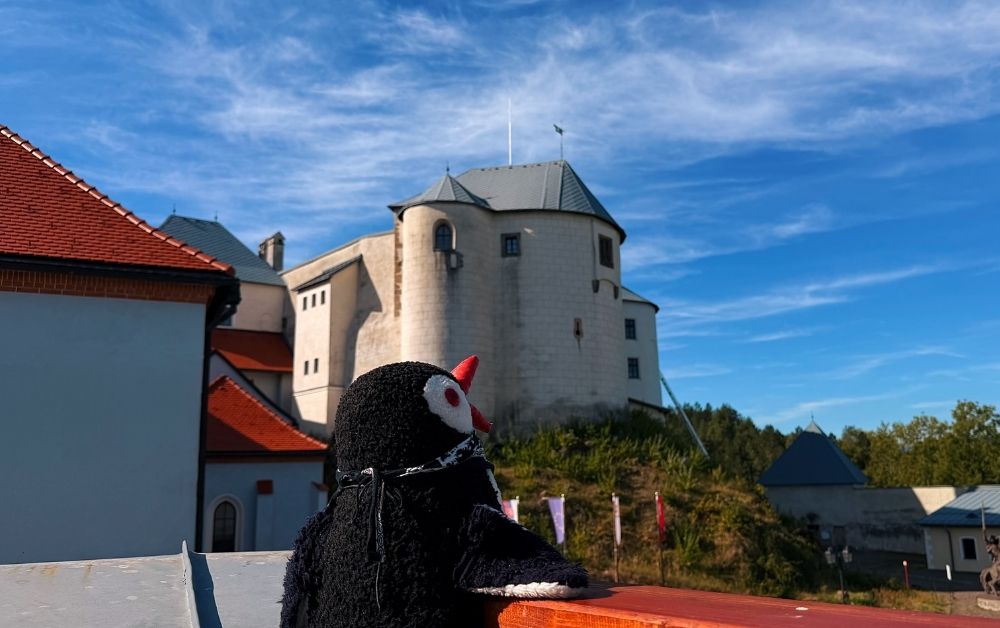
Lupča Castle has caught our eye countless times from the R1 as we travel from Bratislava towards eastern Slovakia. Its bright white walls stand out against the surrounding landscape, making it hard to miss. For years, we passed by, always saying we’d stop one day. This time, we finally did, stepping off the road and into the history we had been watching from a distance. In this post, we take you inside Lupča Castle, from its historic courtyard and interiors to its towers, architecture, and some of the smaller details we discovered along the way. We’ll also share what to expect from a visit and why this castle is worth seeing beyond the motorway view.
Quick Facts About Lupča Castle
- Location: Pod zámkom 531, 976 13 Slovenská Ľupča, Slovakia
- Opening Hours: March–June and September–November, 10 AM–3 PM; July–August, 10 AM–4 PM. Closed Mondays. The castle is closed December–February.
- Tickets: From €4 for adults for the self-guided Lower Castle route; €8 for the guided Upper + Lower Castle tour. Reduced tickets are available.
- Visit Time: Around 30 minutes for the Lower Castle route or 60 minutes for the guided Upper Castle tour.
- Parking: Free parking is available directly below the castle, with space for approximately 30 cars. Additional parking is available in the center of Slovenská Ľupča.
- Accessibility: The castle has stairs and uneven historic surfaces, so some areas may be difficult to access.
- Tours: The guided Upper Castle tour includes the courtyard, medieval donjon, Gizelin House, chapel, historical chambers, and a well with a secret escape passage.
- Website: Hrad Ľupča Official
How to Get to Ľupča Castle
Ľupča Castle sits in Slovenská Ľupča, about 14 kilometers east of Banská Bystrica, making it an easy stop if you are traveling through central Slovakia. By car, the castle is straightforward to reach. If you are coming from Bratislava on the R1, take the exit towards Banská Bystrica and Brezno, then continue towards Slovenská Ľupča. Once in the village, follow the signs for “Hrad Ľupča”, which lead you up to the free car park directly below the castle. The official site says the car park holds around 30 cars.
If you are traveling by public transport, regional buses 464 and 465 run from Banská Bystrica to Slovenská Ľupča, with buses stopping at Slovenská Ľupča, Pod hradom, just a short walk from the castle. Another option is bus 470, which also serves Slovenská Ľupča. From the Pod hradom stop, the castle is approximately 400 meters away, or a six-minute walk.
For us, the car was the obvious choice, especially as Ľupča Castle makes such a convenient detour from the R1 when traveling between Bratislava and eastern Slovakia.
Parking at Ľupča Castle
There is parking available in the village of Slovenská Ľupča, but we decided to drive right up to the castle and park beside the entrance. The car park is quite small, with only a handful of spaces, but the good news is that parking is free. We found a spot without trouble, left the car there while exploring the castle, and when we returned, everything was still fine. If the small castle car park is full, you can leave your car in the village and walk up to the castle instead.


Opening Hours and Admission
Opening hours
Hrad Ľupča is open from March through November, but the schedule changes with the season. From March to June and September to November, the castle is open from 10 AM to 3 PM and is closed on Mondays. On weekdays, visitors can explore the Lower Castle independently, while guided tours are available on weekends and public holidays, starting every hour. In July and August, the castle is open from 10 AM to 4 PM, except on Mondays, with guided tours every 30 minutes and the last tour starting at 3:30 PM. The castle is closed from December through February.
Tickets and Tour Options
You can explore Ľupča Castle in two ways. You can visit the Lower Castle (Dolný hrad) independently for €4 per adult; it takes about 30 minutes. It includes 12 information stops and three exhibitions: the hunting salon and an exhibition about the castle’s restoration. The Upper + Lower Castle (Horný + Dolný hrad) is a guided tour costing €8 per adult and lasting approximately 60 minutes. It takes visitors into the upper courtyard, medieval donjon, Gizelin House, chapel, historic chambers, and even a well with a secret escape passage.
For our visit, the guided option is best if you want to see more of the castle and hear the stories behind it, while the Lower Castle works well if you are short on time or visiting on a weekday.
Plushies have free entry, of course.
We arrived at around 10:30 AM and decided to add the guided tour of both the Upper and Lower Castle to our visit. The tour cost us just €8 per person, and because the next guided tour started half an hour later, we had enough time to explore part of the castle on our own before the guide arrived. It worked out nicely, as we could take our time in the Lower Castle first and then continue with the guided tour upstairs.
Before you go, check the official Hrad Ľupča website for the latest opening hours, guided tour times, and ticket information. The schedule can vary by season, and guided tours have specific start times, so checking ahead can save you from an unnecessary wait or a missed tour.
Hotel search from Trip.comShows Trip.com’s own box, which can set Trip.com cookies.Search hotels on Trip.comTrip.com’s box can’t load on this device (an ad blocker often stops it). This opens Trip.com’s own hotel search.Open Trip.com
Facilities and Amenities at Lupča Castle
- Coffee shop. Coffee and light refreshments are available at the castle buffet.
- Toilet. Free toilet available.
- Ticket office. Tickets available at the castle entrance.
- Castle stamp. Free souvenir stamp available.
- Souvenirs. Small selection of castle souvenirs available.
- Parking. Free parking available below the castle.
- Information. Staff available to help with tickets and visit information.
The White Lady of Lupča Castle
Like many Slovak castles, Ľupča has its own legend, and this one comes with a ghost. The story tells of Verona, the cousin of the castle steward Selecký’s wife, who fell in love with him and urged him to kill his wife so they could be together. He refused, and when the affair was discovered, Verona was imprisoned in one of the castle towers. Haunted by guilt, she eventually lost her mind and jumped from the tower to her death. According to the legend, her story did not end there. On moonlit nights, Verona is said to return to the castle in white clothes, wandering its corridors and searching for the man she loved. The legend is still part of the castle’s guided stories and even inspired its night tours.
That gives the castle another layer of history: beneath the architecture, royal stories, and restoration work, there is also a tale passed down through generations. And perhaps it explains why an old castle feels a little different once the sun goes down.
Our Waddle Up to Lupča Castle
Our adventure at Lupča Castle begins before we reach the entrance. If you are arriving by car, be prepared for the final approach: the road winding up to the castle is very narrow, essentially wide enough for one car. If another vehicle appears coming the other way, someone may have to reverse until there is enough room to pass, so it is not exactly the most relaxing castle approach. Once we reach the top and park, however, things become much easier. Just beside the entrance, a small wooden gazebo serves as the ticket booth, and the woman selling the tickets is wonderfully friendly, informative, and helpful. She explains the different visit options and helps us decide how to make the most of our time at the castle.
Penguin Pro Tip: Don’t Miss the Castle Stamp
Before you head through the castle gates, take a quick wander to the right of the ticket gazebo. There you’ll find a castle stamp, and if you know us, you can probably guess what happens next. We love collecting little souvenirs from the places we visit, and this one is quite pretty. It makes a lovely addition to a travel journal or postcard, so definitely take a moment to stamp something before you start your waddle through the castle.


Lupča Castle Through the Centuries
- 13th century. Lupča Castle was established in the mid-13th century, most likely during the reign of King Béla IV, following the Mongol invasion of 1241–1242.
- 1258. Béla IV was already issuing royal documents from Lupča, showing the castle was an important royal site by then.
- 14th century. The castle became one of the residences used by Hungarian kings and served as a base for royal hunting trips.
- 15th century. A major earthquake in 1443 damaged the medieval castle, prompting significant rebuilding and structural changes.
- 16th–17th centuries. The castle underwent further architectural changes, with Renaissance and later Baroque elements becoming part of the complex.
- 18th century. Lupča Castle continued to be adapted, reflecting changing tastes and functions rather than remaining solely a medieval fortress.
- 19th–20th centuries. The castle passed through different owners and uses before eventually becoming state property.
- 2002. Železiarne Podbrezová became the owner and began a major restoration and preservation program.
- Today. The castle continues to be restored and opened to visitors, allowing you to see architectural layers dating from several different periods of its history.
Through the Gates of Lupča Castle
Once we have our tickets, we are directed to the castle entrance, where a small doorway sits beside the much larger gateway that once accommodated horses and carriages. Today, visitors slip through the smaller door, where another staff member checks our tickets and points us to the meeting place for the guided tour. We have about half an hour before it begins, giving us time to explore the Lower Castle first. Our immediate impression is how clean and well-maintained everything feels. The bright white walls, tidy courtyard, and carefully preserved buildings make a striking first impression as we leave the modern road behind and step into the castle grounds.


Exploring the Lower Castle at Our Own Pace
With half an hour before our guided tour, we start exploring the Lower Castle alone, and this turns out to be a great way to begin the visit. With no group to follow and no guide rushing us from one room to the next, we can wander, stop when something catches our attention, and take everything in at our own pace. The route leads through several rooms and exhibition spaces, with information panels providing context about the castle and the people who lived here. We particularly enjoy being able to linger over the details rather than feeling as though we have to keep moving.
One highlight is the chance to climb to the upper platform, where the castle opens into a completely different experience. From above, we get a beautiful view across the surrounding countryside and Slovenská Ľupča, giving us a chance to appreciate why this location was historically so important. Inside, each room has something different to look at, from historic paintings and decorative details to objects connected to the castle’s past. The architecture itself becomes part of the exhibition, with old stonework, doorways, and other details revealing the different periods the castle has passed through.


We appreciate the freedom of the Lower Castle route most. You can take your time and explore at your own pace, rather than simply following a prescribed path behind a tour group. For us, that makes the first part of the visit feel less like ticking rooms off a list and more like slowly discovering what is hidden inside the castle walls.
The View From the Other Side
One of the most unexpected parts of the Lower Castle is what waits if you waddle straight through and around to the other side. Suddenly, the castle opens onto a small terrace with a view back toward the road below, and there it is: the very stretch of the R1 we have seen Lupča Castle from so many times. It is a satisfying change of perspective, finally looking down at the road from the castle rather than looking up at the castle from the road. Nearby stands a magnificent 700-year-old tree, adding another layer of history to the grounds, while a statue of Matej Bel provides an interesting focal point. Together, the tree, statue, and sweeping view create one of our favorite angles of the entire visit.


Into the Upper Castle: The Guided Tour Begins
As 11 AM approaches, people begin gathering at the meeting point for the guided tour, and we know that the second part of our visit is about to feel rather different. Before entering the Upper Castle, everyone needs to have their small plastic token ready. You receive it when you pay for the guided tour and hand it to the guide as proof that you are part of the group. As more and more visitors arrive, the group quickly grows large, and we realize this part of the castle will not be as relaxed as our independent exploration of the Lower Castle. Still, we are curious to see what lies beyond the next doorway, so we join the group and head inside.


The guided tour takes approximately one hour, and it turns out to be a very informative way to see the Upper Castle. Our guide gives us plenty of context about the castle, its architecture, and the people connected with it, adding details that would be easy to miss when exploring independently. Keep in mind, however, that Lupča Castle is still undergoing reconstruction, so not every room is currently accessible to visitors. There is still plenty to see, with several historic rooms, architectural details, and spaces open along the route to make the tour worthwhile.
Gizela’s House
The first stop on the guided route is Gizela’s House, the youngest building in the castle complex. Built in 1893, it was added as part of the transformation of Ľupča Castle into a workers’ orphanage, established in 1873. The new three-story building was designed to increase the orphanage’s capacity to 100 children, and the shorter wing contained a gymnasium.
We enter through a doorway into a room set below the level of the windows, their frames sitting high in the walls. Standing there, it is difficult to imagine the space as a place where children once lived and studied, let alone exercised. Yet that is part of what makes this stop interesting. The building was not simply added to the castle as another residence. It became part of a completely different chapter in the castle’s history, when its medieval walls were being adapted to serve a social purpose. The official history notes that the interior still preserves stenciled wall decoration.
That history follows us through the room as the guide explains how the castle kept changing long after its defensive role had disappeared. Gisela’s House now hosts cultural and social events, but its walls still bear traces of the period when the castle became home to workers’ children.


The Social Hall
Up on the second floor, the tour leads us into the former social hall, a room that immediately feels different from the spaces below. The walls, ceiling, and floor sit within a palette of beige and muted tones, while the room’s proportions make it easy to imagine it used for gatherings rather than everyday living. The decoration is restrained, with the architecture doing most of the work. We linger here for a moment, taking in the details and the sense of a room that has retained its character through the different chapters of the castle’s history. The room also once displayed a portrait of Archduchess Gisela by Dominik Skutecký, connecting the space directly to the person after whom Gizelin House is named.


Up Through the Castle
From the social hall, we continue up the stone staircase, following the route deeper into the castle. The stairs narrow as they rise, with the walls closing in around them and the light changing with each level. Before we reach the courtyard, the route takes us through a small room with a window overlooking the surroundings. It is the kind of space you could easily pass through without much thought, but from here we get another glimpse of the landscape outside and a sense of how the castle is built into the slope. Then the route turns again, and we step out toward the courtyard.


Inside the Upper Courtyard
Stepping into the Upper Courtyard gives us a completely different sense of the castle. Its distinctive lens-shaped plan reflects several stages of construction, with a two-story arcade running around the courtyard and connecting the Upper Castle’s rooms. The medieval donjon dominates the space, while the surrounding walls bring together elements from the castle’s different building periods.
One detail that catches our attention is the clock tower, which rises above the courtyard and gives the space a clear focal point. The courtyard also contains details that are easy to miss when you focus on the larger structures. The castle’s restoration team has incorporated the line of an earlier, now-lost defensive wall into the paving, marking its former position with a different type of stone. Standing there, you can quite literally follow part of the castle that no longer exists by tracing it under your feet.


This is also where the castle’s scale becomes easier to understand. From the middle of the courtyard, the different buildings meet around you, from the medieval structures to later additions, each revealing another stage in Ľupča’s development.
From the courtyard, the tour continues into another of the castle’s historic rooms, where a long table stands at the center, and the windows carry a detail that immediately catches our attention: seals and heraldic markings incorporated into the decoration. The room offers another glimpse into the castle’s administrative side, when documents, correspondence, and matters of ownership were part of everyday life here. The official visitor route doesn’t give this room a separate name, so rather than guess, I’d describe it by what you actually see. It is one of those stops where the smaller details get more interesting the longer you look, especially the markings around the windows and how the historic room has been preserved.


The Chamber of Mária Séči
We continue through the castle to the Chamber of Mária Séči, one of the most personal stops on the guided route. The room has been restored with a replica of Mária Séči’s bed, based on research and a historical bed identified in Červený Kameň Castle’s collections. A tiled stove, recreated from archaeological finds, completes the room. But the detail that gives the space its story is the oriel window. From here, Mária Séči could look out over the surrounding land and, according to the castle’s interpretation, keep an eye on the people working below. The castle has preserved this connection between the room and the view, so when we stand at the window, we are looking out from almost the same vantage point she once had.


The Castle Chapel
Next is the castle chapel, where the history of Ľupča becomes tangible. The chapel dates from the Renaissance period and is one of only two fully preserved Renaissance chapels in Slovakia, according to the castle. Its restoration revealed wall paintings hidden beneath later layers of paint and plaster, and dated the timber used for the decorative ceiling in the sacristy to 1480–1489. The chapel was extensively restored between 2007 and 2009, and the work received the Fénix Cultural Monument of the Year award in 2008.
Look more closely, and you’ll find details that make the room worth slowing down for. The chapel’s original wooden altar, dedicated to the Purification of the Virgin Mary, had left the castle in the 20th century and was held by the Central Slovak Museum in Banská Bystrica. After professional restoration in 2022, it returned to its original place at Ľupča Castle.
Another detail is a painting of Jesus that changes in appearance depending on where you stand. From one side, his gaze seems directed towards you, while from another angle, the effect changes. It is the sort of small visual trick that is easy to miss if you waddle through the chapel, but once the guide points it out, we find ourselves moving from side to side to see it for ourselves.


The Sculptures of Professor Kulich
The guided route continues to an exhibition of sculptures by Professor Ján Kulich, one of Slovakia’s recognized sculptors and a professor at the Academy of Fine Arts and Design in Bratislava. The works add a different dimension to the castle interiors, placing modern Slovak sculpture within rooms that carry centuries of history. Rather than simply passing through another historic chamber, we stop to look at the individual sculptures and how they sit against the castle’s walls. The exhibition is part of the official Upper Castle tour, alongside the Chapel, Mária Séči’s chamber, and the medieval donjon.


The Torture Chamber
The final stop on our tour takes us down to the torture chamber, a room that brings the castle’s darker history into focus. From here, the route soon leads us back towards the exit, marking the end of the guided tour. Our guide has been one of the strongest parts of the experience: she knows the history, explains the details in context and takes the time to answer our questions rather than simply following a script. The castle’s history also continues well beyond its medieval and aristocratic chapters. In the second half of the 20th century, Ľupča Castle served as a charity home, and from 1957 it housed religious sisters under the communist-era state program that relocated nuns to such institutions. The last sisters left the castle in December 1988, when the charity officially closed there.


One of the strangest stories our guide tells us comes right at the end of the tour. She explains that the torture chamber was still used for prisoners in recent times, and that psychological testing was carried out there. The timing makes the story even harder to reconcile with the room itself: a space that looks as though it belongs to the Middle Ages was reportedly still connected with prisoners until around 2023. A 2025 report also states that the last prisoners left the castle’s torture chamber about two years earlier. Standing there, it is one of those moments when the distance between the castle’s medieval past and its much more recent history suddenly feels surprisingly small.
The Well and Its Secret Escape Passage
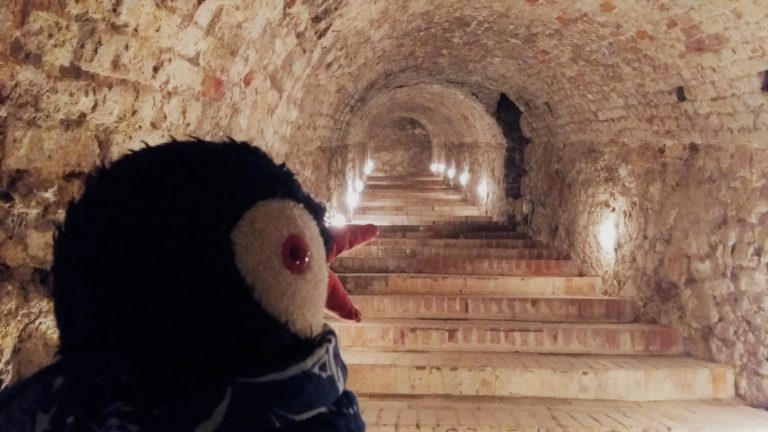
One of the details we are most curious about comes when the guide points out the castle well and the passage hidden behind it. The well was not simply a source of water. According to the castle’s history, it was connected to a secret escape route leading beyond the castle walls, giving those inside a possible way out if the castle came under attack. The passage was later blocked and is no longer accessible, but knowing it once provided a hidden route changes how we see the well. Standing beside it, we wonder how many people knew about the passage and whether anyone ever used it to escape.
By the end of our visit, one thing is clear: Lupča Castle is a work in progress. The areas already restored are carefully finished and give a real sense of what the castle can become, but you can still see signs of ongoing reconstruction throughout the complex. Doors marked “Do Not Enter” lead to areas where work is still underway, while some of the rooms open to visitors look as though the restoration was only recently completed. Our guide tells us that the castle expects to need another one and a half to two years to finish the remaining rooms. Keep that in mind when planning a visit. If you are happy to explore the restored sections and see a castle that is still evolving, there is plenty to discover now. But if you want to see more of the interiors once the restoration is complete, it may be worth waiting. We are already putting Lupča Castle back on our bucket list for a return visit in a couple of years, when we can see what’s changed and waddle through the parts currently behind those doors.


How Much Time Do You Need at Lupča Castle
For the Lower Castle alone, we recommend about 20 to 30 minutes. If you move through the route without stopping to read every information panel in detail, you can comfortably see the main rooms, exhibitions, terrace, and views in around 20 minutes. If you like to take your time and read everything, allow closer to 30 minutes.
If you are doing both the Lower and Upper Castle, including the guided tour, we recommend allowing at least 1.5 hours. This gives you enough time to explore the Lower Castle independently, wait for the guided tour and then spend roughly an hour with the guide exploring the Upper Castle. For us, that felt like the right amount of time to see the castle without rushing through it.
The Best Time to Visit Lupča Castle
For a quieter visit, we would aim for the first guided tour of the day. We arrived for the 11 AM tour, after the castle opened at 10, and by the time we gathered, the group was already quite large. It was harder to move through the rooms at our own pace and take in the details without other visitors around us. During the summer season, guided tours run every 30 minutes, which gives you more options, but we would still recommend arriving right at opening time and joining the first tour. The earlier you arrive, the better your chances of having a smaller group and a more relaxed experience inside the castle.
Buy Us a Ko-fi

Our Waddle-Worthy Verdict on Lupča Castle
For us, Lupča Castle is a waddle-worthy stop, especially if you enjoy places where the smaller details can be as interesting as the main attraction. We loved the 700-year-old tree, the little inner courtyards, and the views that suddenly open up between the castle buildings. There is also something appealing about visiting while the restoration is still underway. Some of the castle remains behind closed doors, but that also means a return visit in a couple of years should feel like discovering a different place. Once the remaining work is finished, we can already imagine the courtyards and interiors looking as though they have stepped out of a fairy tale. Add that the castle is an easy detour from the R1, and we think it earns a spot on the itinerary, especially if you can join the guided tour.
Our Verdict: Would We Waddle Back?
Lupča Castle is one of those places we had seen dozens of times from the road, always catching a glimpse of its white walls as we traveled east. This time, we finally decided to pull off the R1 and see what was behind them, and it turned out to be a very nice stop. The visit can be as short or as long as you make it: around 20 to 30 minutes is enough for the Lower Castle, while adding the guided Upper Castle tour makes it a longer experience. What stayed with us most were the smaller discoveries along the way, from the 700-year-old tree and the inner courtyards to the stories hidden inside the castle. And because restoration is still underway, we know we have another reason to return. For us, Lupča Castle went from “the white castle we always see from the R1” to a place we are glad we finally stopped to explore.
Travel Bold. Eat Well. Waddle Wild.

This post contains affiliate links. If you click and buy, I might earn a tiny commission, enough to help a penguin keep up its globe-trotting lifestyle. No extra cost to you, just more fish for me. Thank you for supporting the adventure!