Visiting Lednice Castle: What to See, Tickets & Our Experience
We’ve visited Lednice Castle twice, and somehow it’s taken us until now to sit down and write about it finally. Our first visit was in late November, when the gardens looked completely different, and there were hardly any people around. Then we returned in mid-August and got to experience the same place in full summer mode.
Even on our second visit, we still found Lednice Castle fascinating. There was more to explore than we remembered, and seeing it in two different seasons gave us a good comparison of what a visit can look like. So, if Lednice is on your list, here’s everything you need to know before you go.
- Lednice Castle Quick Facts
- How to Get to Lednice Castle
- Opening Hours & Admission To Lednice Castle
- Facilities & Amenities at Lednice Castle
- A Short History of Lednice Castle
- Local Legends of Lednice Castle
- Our Waddle Through Lednice Castle
- The Palm House at Lednice Castle
- Waddling Through the Lednice Castle Gardens
- Lednice Castle Gardens Quick Facts
- Other Things to Do at Lednice Castle
- Best Time to Visit Lednice Castle
- How Long Do You Need at Lednice Castle
- Nearby Attractions
Lednice Castle Quick Facts
- Location: Lednice, South Moravia, Czech Republic — around 8 km from Valtice.
- First historical record: 1222, when a Gothic fort stood on the site.
- Main family: The Liechtenstein family, who gained control of Lednice toward the end of the 13th century.
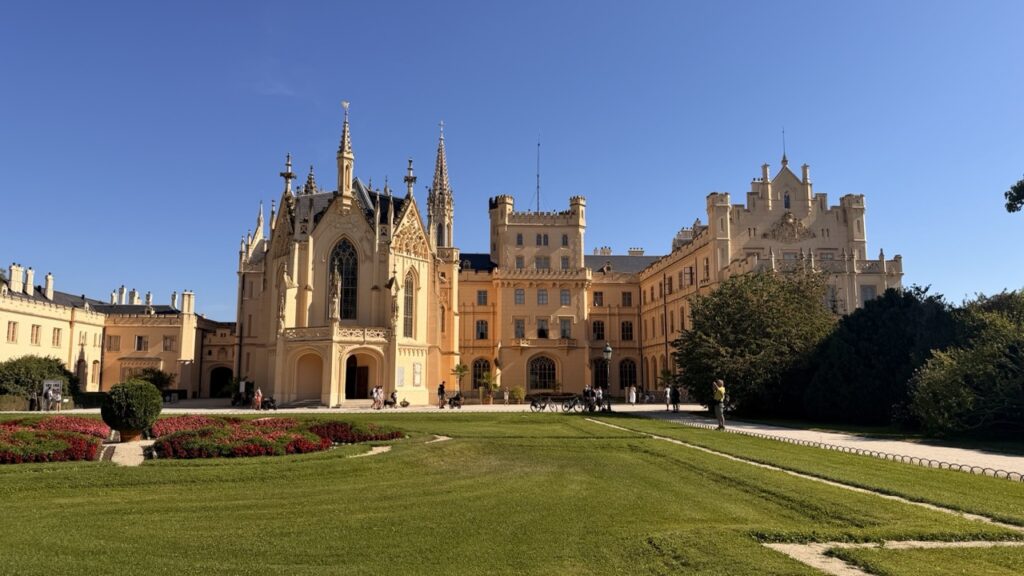
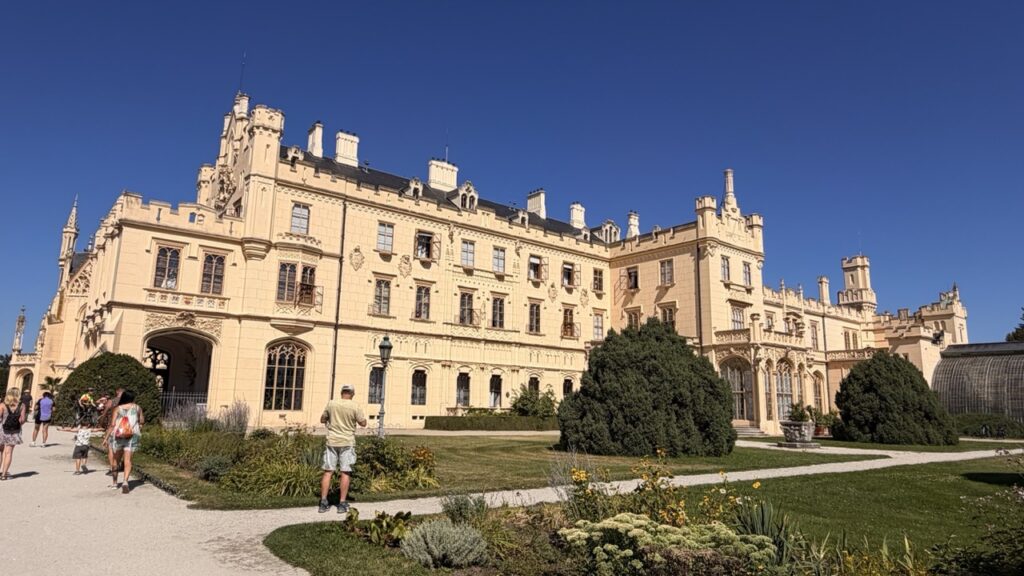
- Castle as we see it today: mainly dates from 1846–1858, when Prince Alois II of Liechtenstein had the residence rebuilt in an English Neo-Gothic style.
- Castle park: Almost 200 hectares.
- UNESCO: Lednice is part of the Lednice–Valtice Cultural Landscape, which covers almost 300 km² and has been listed as a UNESCO World Heritage Site since 1996.
- Palm Greenhouse: Built between 1843 and 1845.
- Minaret: Built around the turn of the 18th and 19th centuries for Alois Josef I of Liechtenstein.
- Opening hours: During July and August, open daily from 9:00–17:00. Autumn and winter hours are reduced.
- Park opening hours: The castle park is accessible daily from 7:00–22:00.
- Main castle tour: Around 45 minutes, with a maximum of 45 people per tour.

How to Get to Lednice Castle
Lednice Castle sits in South Moravia, close to both the Slovak and Austrian borders, making it a convenient day trip from Bratislava or Vienna. From Bratislava, it is around 90 km (56 miles) by car and takes roughly 1 hour and 10 minutes, depending on traffic. From Vienna, the drive is around 95 km (59 miles) and takes about 1 hour and 20 minutes. Public transport is possible, but it takes longer. From Bratislava, you can take a train to Břeclav and continue to Lednice by local bus; the journey takes around 20 minutes. From Vienna, the easiest option is to take a train to Břeclav and then a local bus to Lednice. For a simple day trip, though, having a car gives you much more flexibility, especially if you also want to explore Valtice and other places around the Lednice–Valtice area.
We came from Bratislava by car, which is definitely the easiest option for us. The drive is around 90 km (56 miles) and takes just over an hour, so Lednice is close enough for an easy day trip. We also like having the freedom to arrive when we want, stay as long as we want, and add a few extra stops in South Moravia along the way.
Where to Park at Lednice Castle
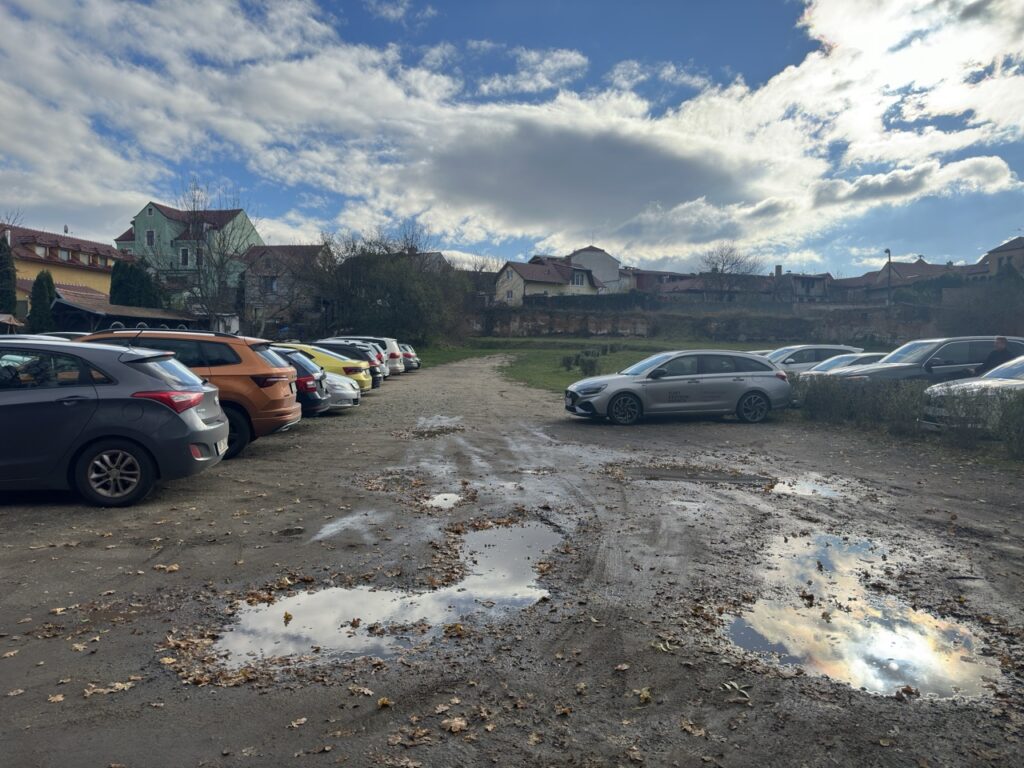
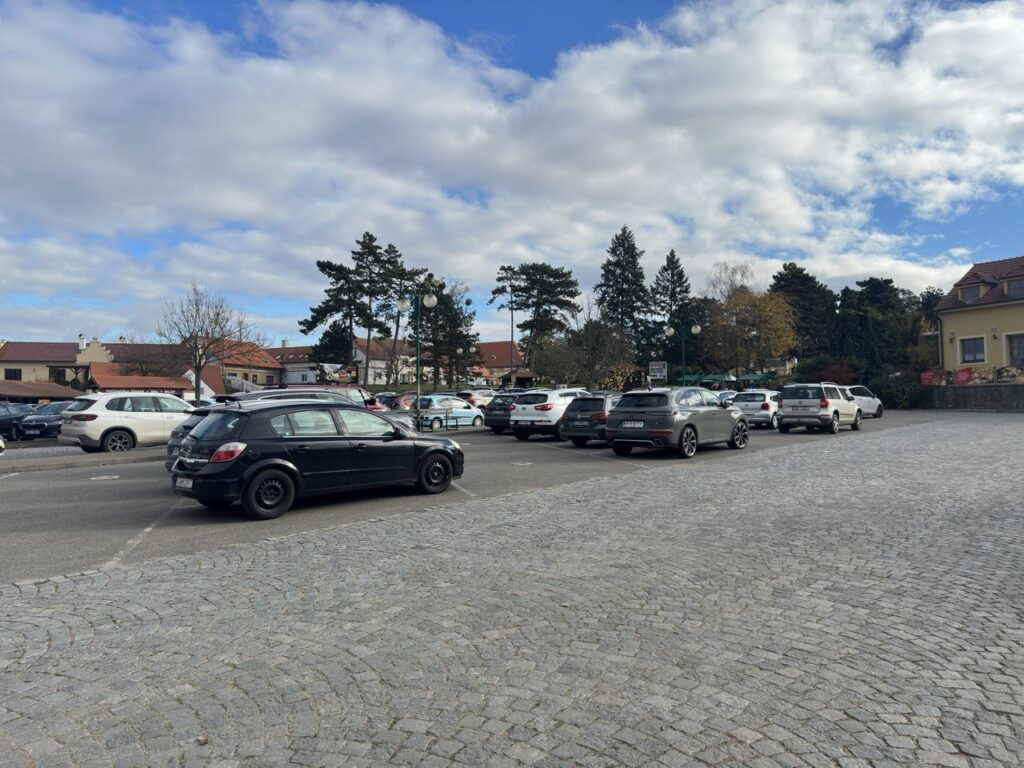
If you’re coming by car, parking at Lednice Castle is easy. There is a large dedicated paid parking area close to the castle, so from there it’s only a short waddle to the entrance and the park. One thing to keep in mind if you visit in summer: there isn’t much shade on the main parking area. We left our car there for several hours in August, and when we came back, it was basically an oven on four wheels. So, if you spot a shaded space, grab it; your future self will thank you. 😅 For the latest visitor information, check the official Lednice Castle website before you go.
Opening Hours & Admission To Lednice Castle
Opening Hours
Generally, Lednice Castle is open from around 9:00 to 17:00 during the main season, with shorter and more limited opening hours in autumn and winter. July and August have the longest opening times, while from September onward, the schedule gradually becomes more limited.
Keep in mind that there are several different tour routes and attractions, including the Representative Rooms, Private Princely Apartments, Grotta, greenhouse, and Minaret. Each has its own opening schedule, so not everything may be accessible on the day of your visit.
We definitely recommend checking the official Lednice Castle opening hours shortly before you go, especially if you’re visiting outside the summer season. We’ve been to Lednice in both late November and August, and what you can see and access varies quite a bit depending on the time of year.
Keep in mind: If you want to see the interior of Lednice Castle, you need to join a guided tour. You cannot simply buy a ticket and wander through the rooms on your own. There are several tour routes to choose from, each covering a different part of the castle and lasting a different amount of time. Tours are available in Czech, while foreign-language options and printed or audio information may be available depending on the route and season, so we recommend checking the language options when buying your ticket.
Tickets & Admission
There is no single ticket for everything at Lednice Castle. Instead, you choose what you want to visit and buy a separate ticket for each tour route or attraction. The Representative Rooms, Private Princely Apartments, Grotta, greenhouse, and Minaret all have different prices. There are also reduced rates for children, students, and seniors.
For the main Representative Rooms tour, current admission is:
-
-
- Adults: 300 CZK
- Children (6–17): 90 CZK; children under 6 are free
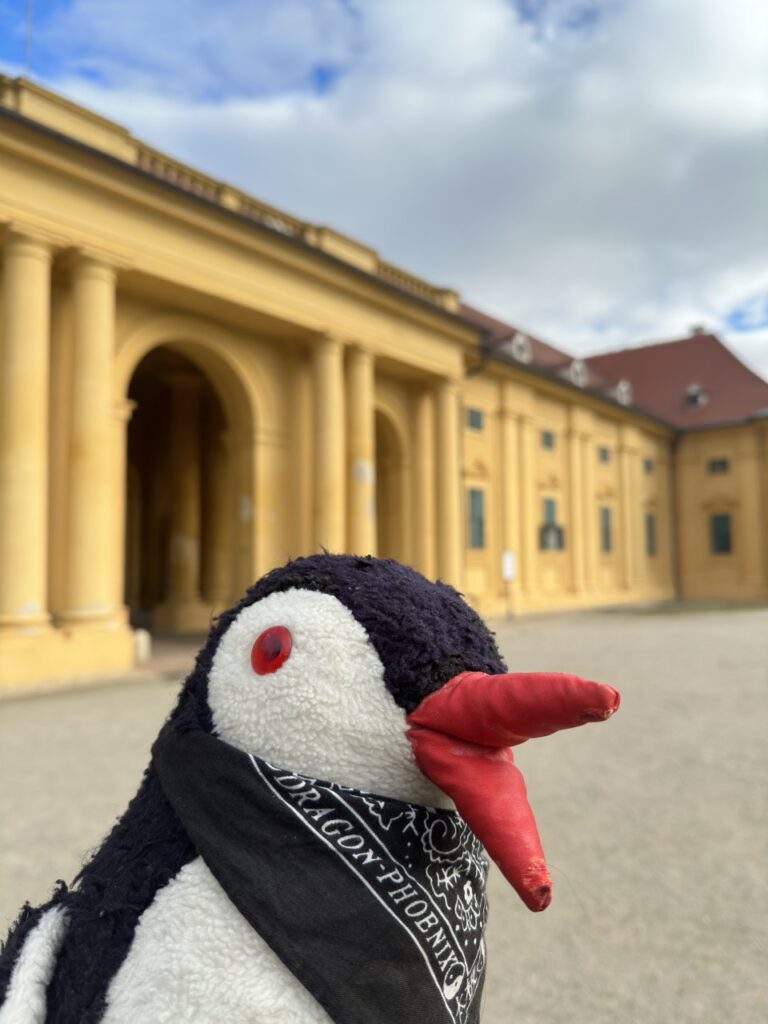
- Plushies: Free, as always
-
Other attractions are cheaper; for example, the greenhouse costs 140 CZK for adults, while climbing the Minaret tower costs 100 CZK. So, how much you spend really depends on how much of Lednice you want to explore.
We recommend checking the official Lednice Castle admission page before visiting for the latest prices and to decide which routes you want to take.
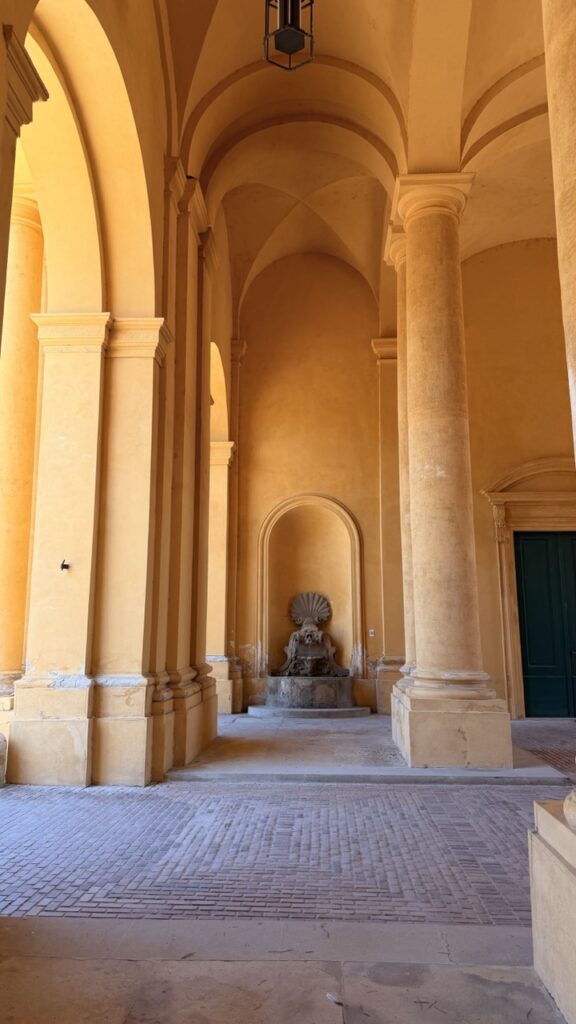
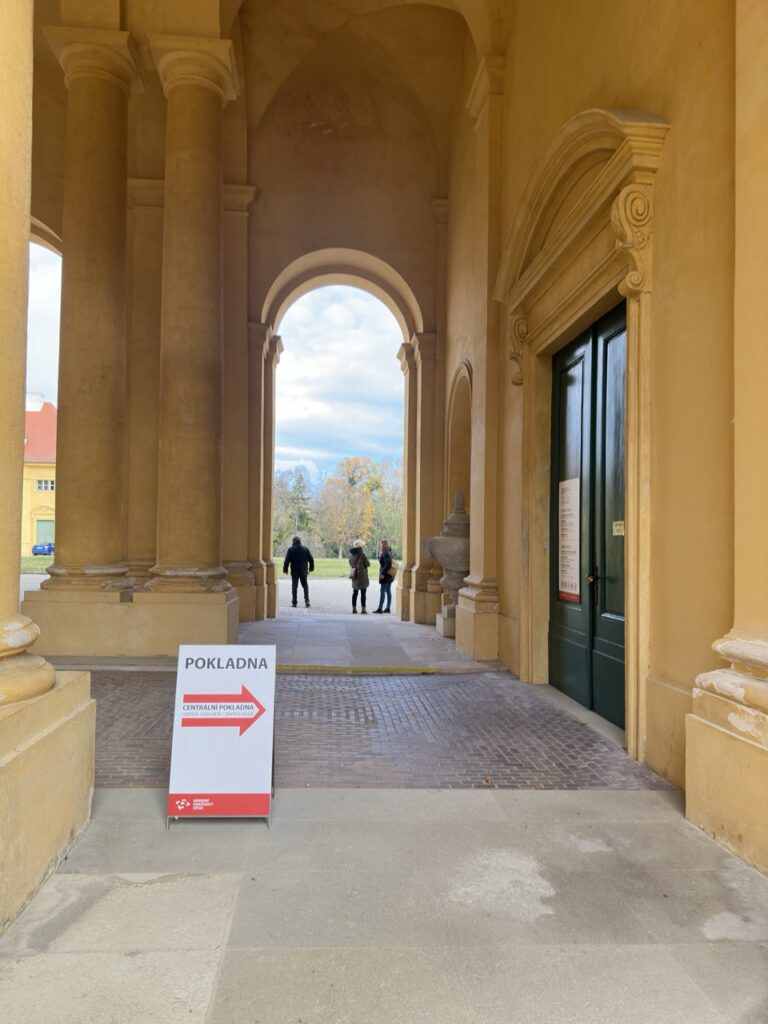
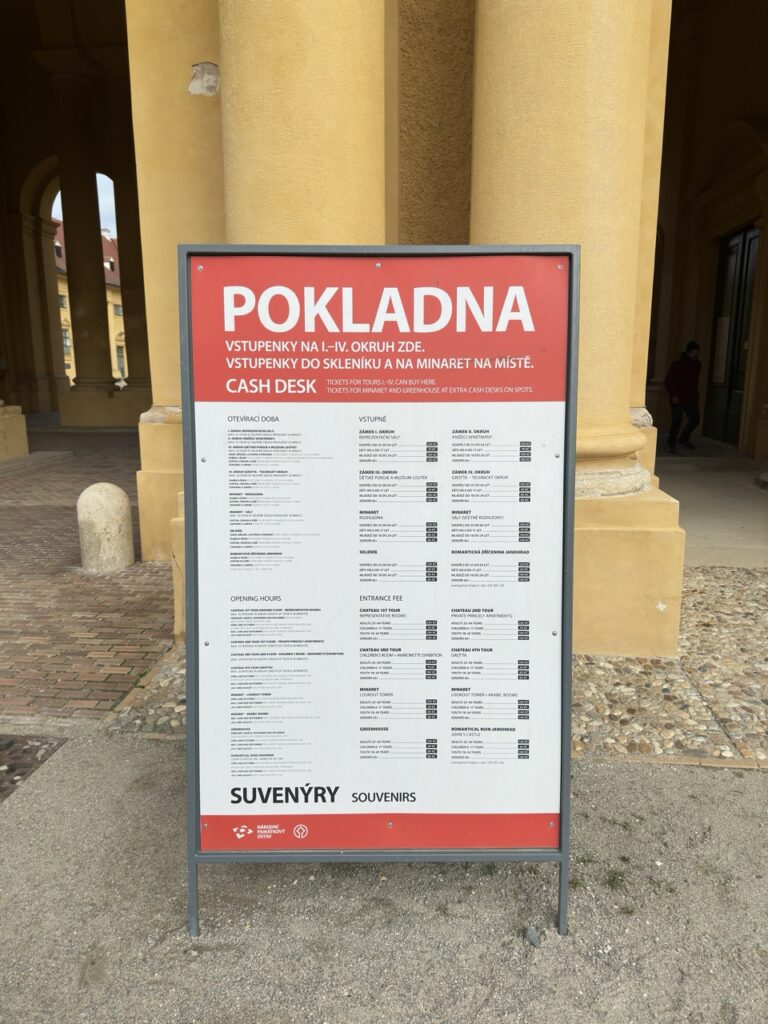
Facilities & Amenities at Lednice Castle
- Toilets: Available within the castle complex and park area; a small fee is required.
- Food & Drinks: Several cafés, restaurants and small refreshment stands can be found around the castle and in Lednice.
- Parking: Large paid parking area within a short waddle of the castle.
- Ticket Office: Tickets for castle tours and individual attractions can be purchased on-site.
- Souvenirs: Souvenir shops are available around the castle complex.
- Picnic Areas: Plenty of space throughout the park to sit down, take a break, or have a picnic.
- Dogs: Dogs are allowed in parts of the outdoor park but are not allowed in most castle interiors.
- Accessibility: Parts of the complex are accessible, but some castle routes, stairs, and attractions such as the Minaret can be difficult or inaccessible for visitors with limited mobility.
- Boat Trips: Seasonal boat trips operate through the castle park and can also be used to reach the Minaret area.
- Bike Access: The Lednice–Valtice area is popular for cycling, with bike routes connecting Lednice with surrounding sight

A Short History of Lednice Castle
- 1222. Lednice is first mentioned in historical records, with a Gothic fortress standing on the site.
- Late 13th century. The Liechtenstein family takes control of Lednice and remains connected to the estate for almost 700 years.
- 16th century. The original medieval fortress is gradually transformed into a Renaissance residence.
- 17th century. Lednice is rebuilt again, this time as a Baroque palace, with gardens developing around the residence.
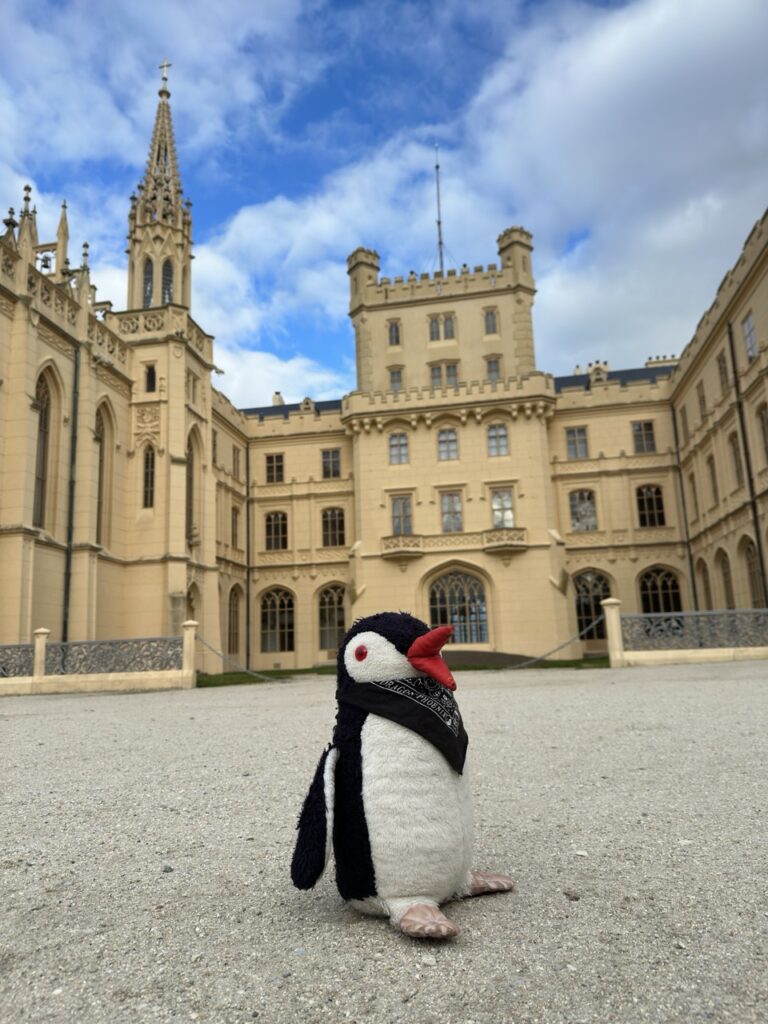
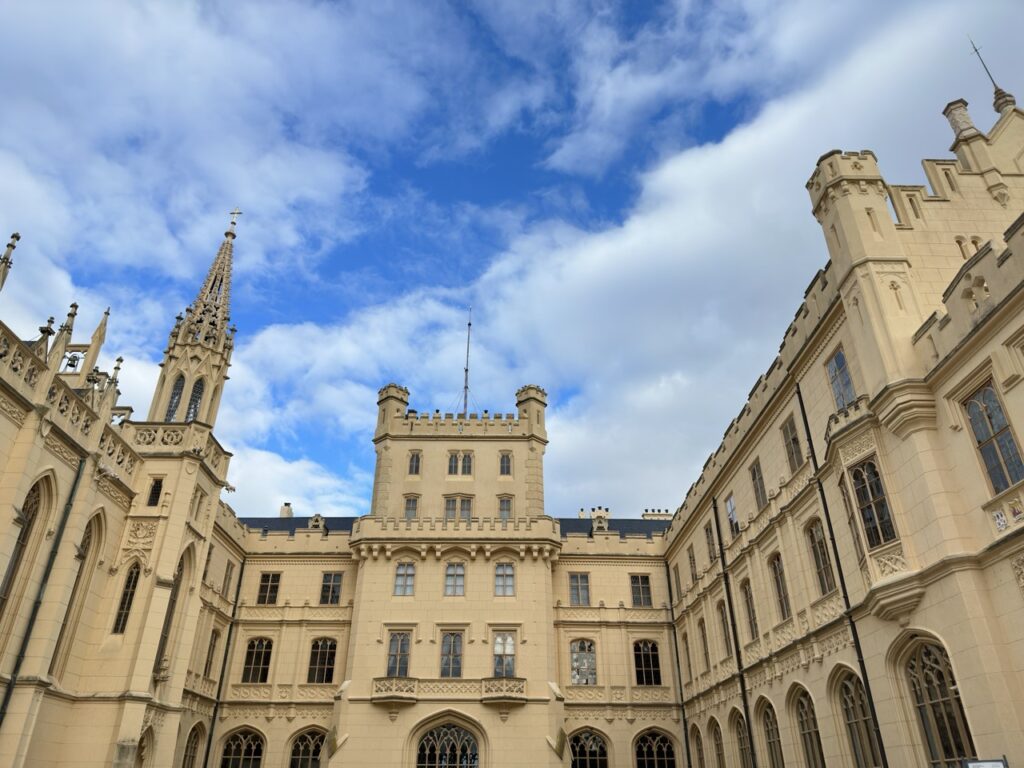
- 1846–1858. Prince Alois II of Liechtenstein has Lednice rebuilt into the Neo-Gothic castle we see today.
- 19th century. The Liechtensteins continue to develop the surrounding landscape, adding buildings, ponds, paths, and structures such as the Minaret.
- 1945. The Liechtenstein family loses the property when the Czechoslovak state confiscates it.
- 1996. Lednice becomes part of the Lednice–Valtice Cultural Landscape, which is added to the UNESCO World Heritage List.
- Today. Lednice Castle is a state-owned monument and one of the most visited castles in the Czech Republic.
Local Legends of Lednice Castle
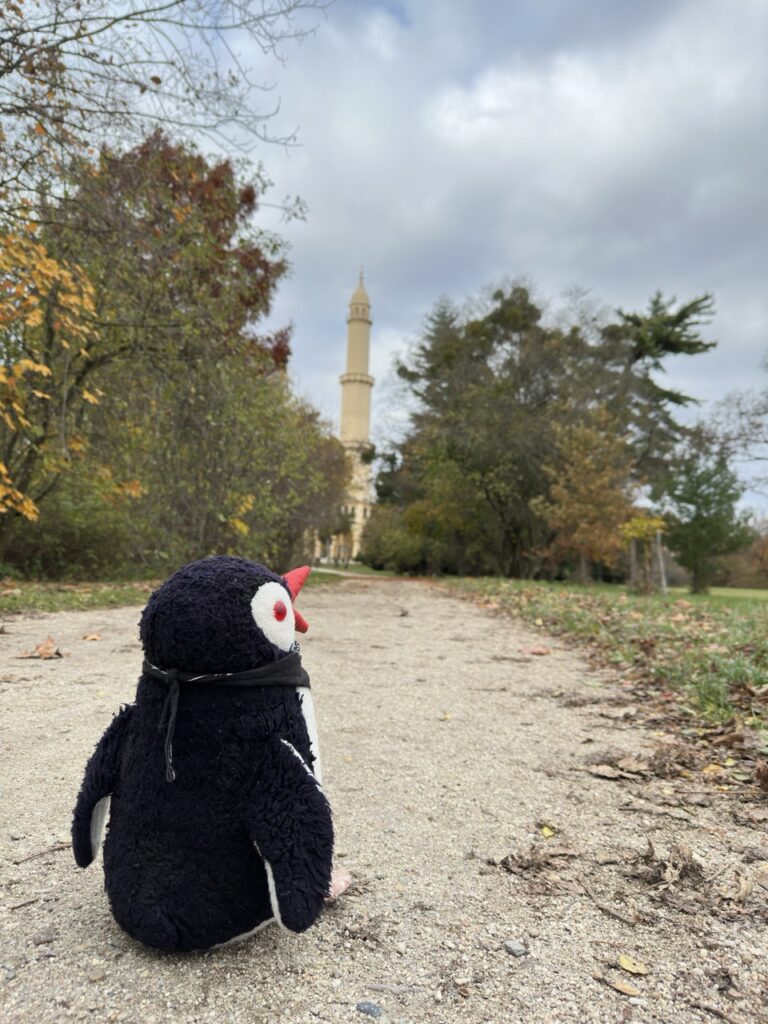
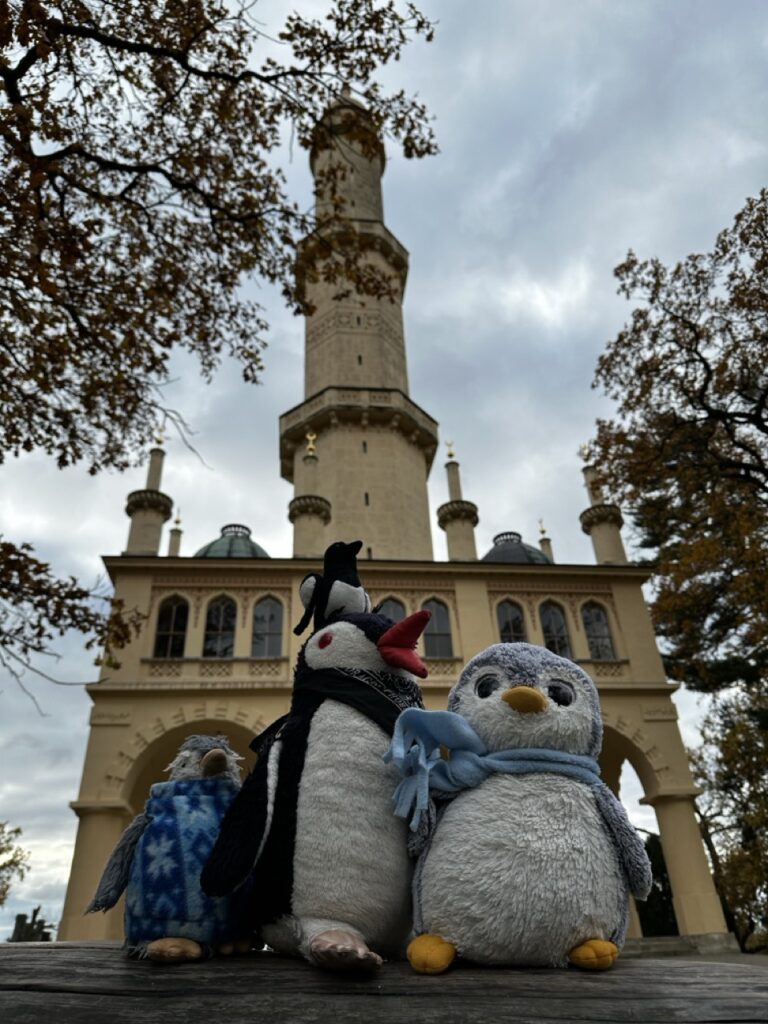
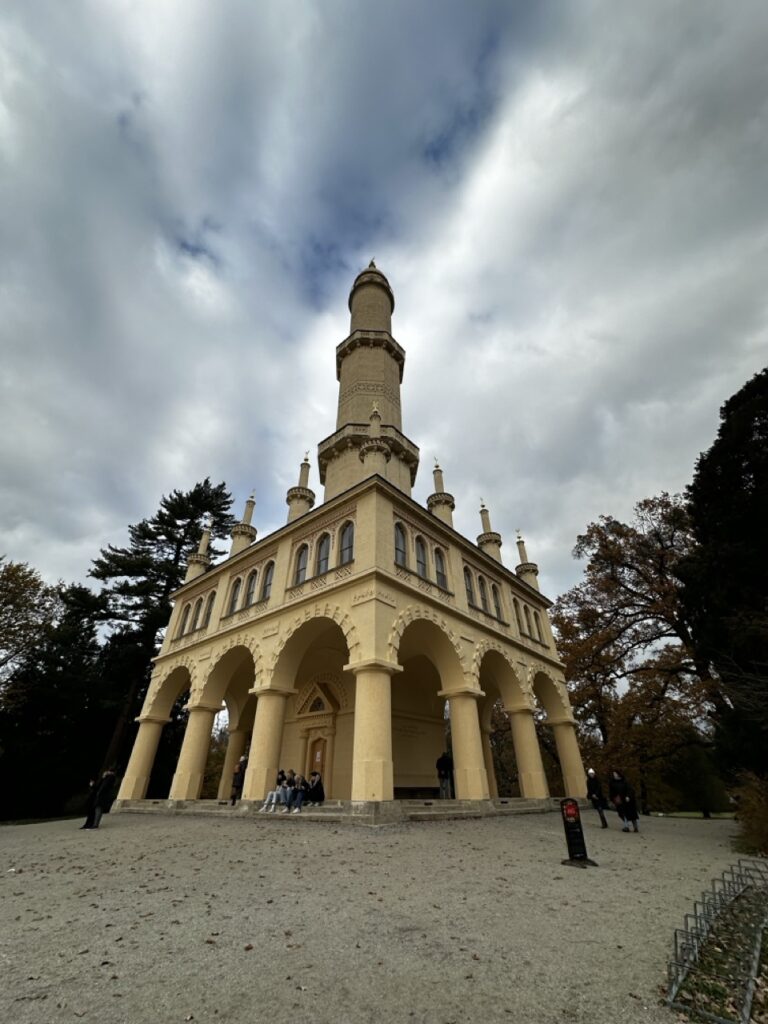
Lednice has its share of stories, but one of the best-known legends is connected to the Minaret standing in the castle park. According to the tale, Prince Alois I of Liechtenstein wanted to build a church in Lednice, but he couldn’t reach an agreement over where it should stand. Annoyed by the whole situation, he supposedly decided that if he couldn’t build his church, he would build a mosque with a Minaret instead.
The story gets even better because the planned mosque was never completed. The ground near the river was too soft and unstable for such a large structure, so only the Minaret was built. Whether the story is true is another question. The official castle history confirms that the Minaret was commissioned by Prince Alois I and built by architect Josef Hardtmuth between 1797 and 1801. Still, it presents it as a lookout tower inspired by similar exotic structures appearing in European landscape gardens at the time. So, the angry-prince-and-his-mosque story is best treated as a local legend rather than historical fact.
Our Waddle Through Lednice Castle
We’re actually quite glad that we managed to visit Lednice Castle in two completely different seasons. It gave us a chance to see how much the experience changes throughout the year and, in a way, get to know the castle a little better.
Let’s start with our first visit, which was a couple of years ago at the end of November. With fewer people around and a much quieter park, it was very different from the Lednice we later experienced in summer. During this visit, we decided to explore the castle and booked the Representative Rooms tour, which takes you inside some of the main rooms of Lednice Castle.
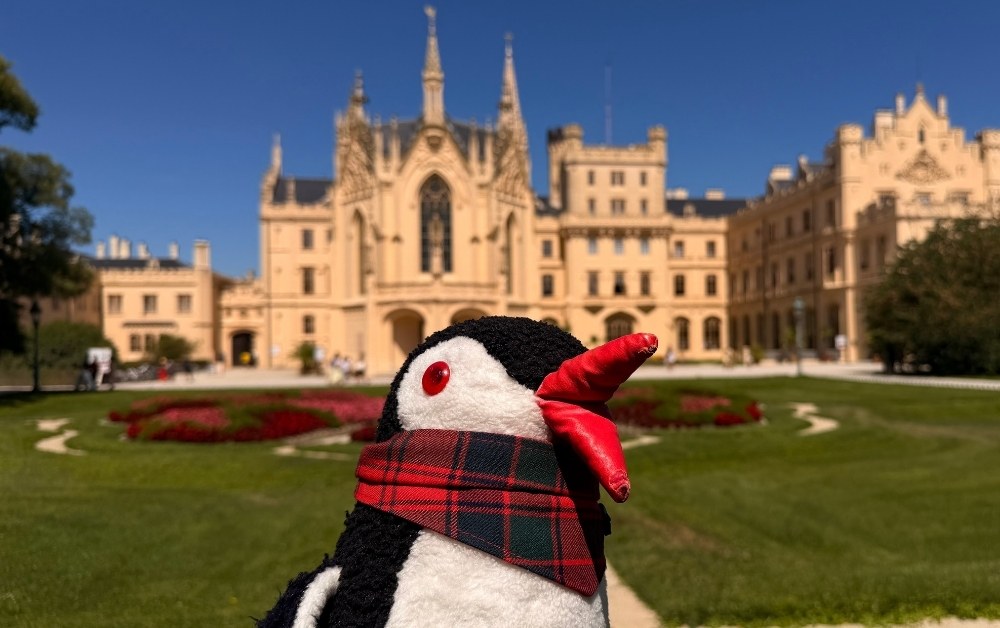
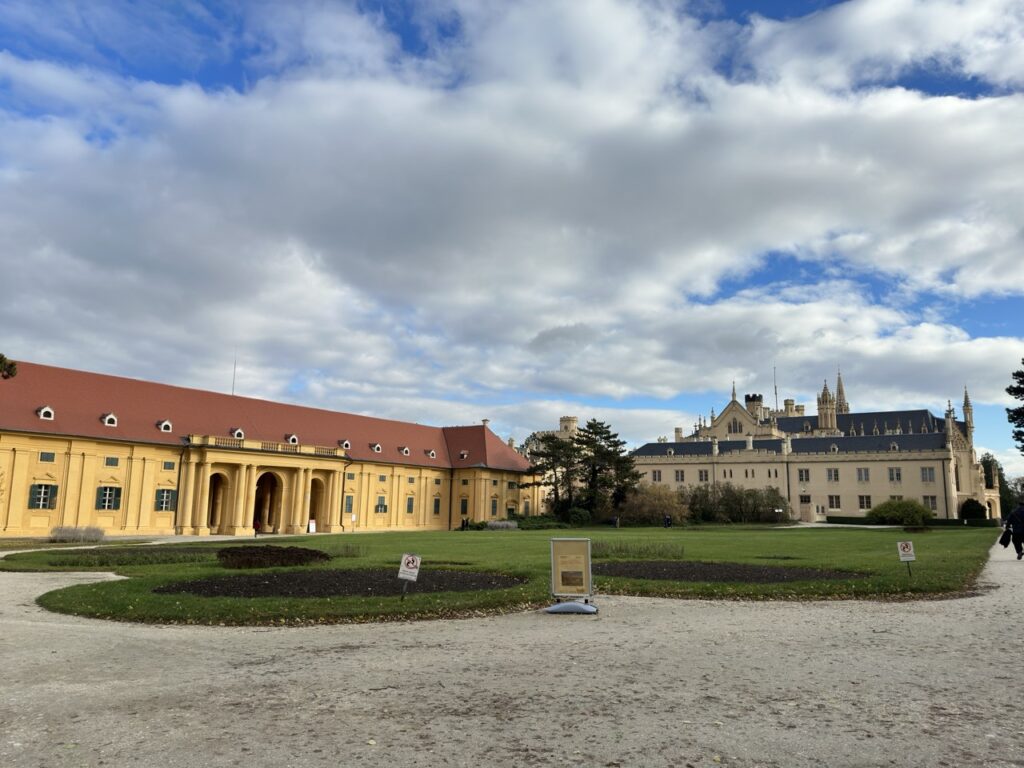
As soon as we park the car and start waddling towards the castle grounds, we can already see part of Lednice Castle peeking through, and we know this is going to be an epic visit. The closer we get, the more of the castle comes into view, and there is definitely a moment when we stop and take it all in. One thing to keep in mind is that each castle tour runs at specific time slots, so it’s worth checking the schedule and planning your arrival around the tour you want to take.
Inside Lednice Castle: The Representative Rooms
Once our time slot finally comes around, we head inside for the Representative Rooms tour. The route takes around 45 minutes and stays on the ground floor of the castle, where the Liechtenstein family once hosted guests, social events, and balls. It’s a good route to choose if this is your first time at Lednice, as it gives you a look at the main ceremonial spaces and some of the rooms the castle is best known for.
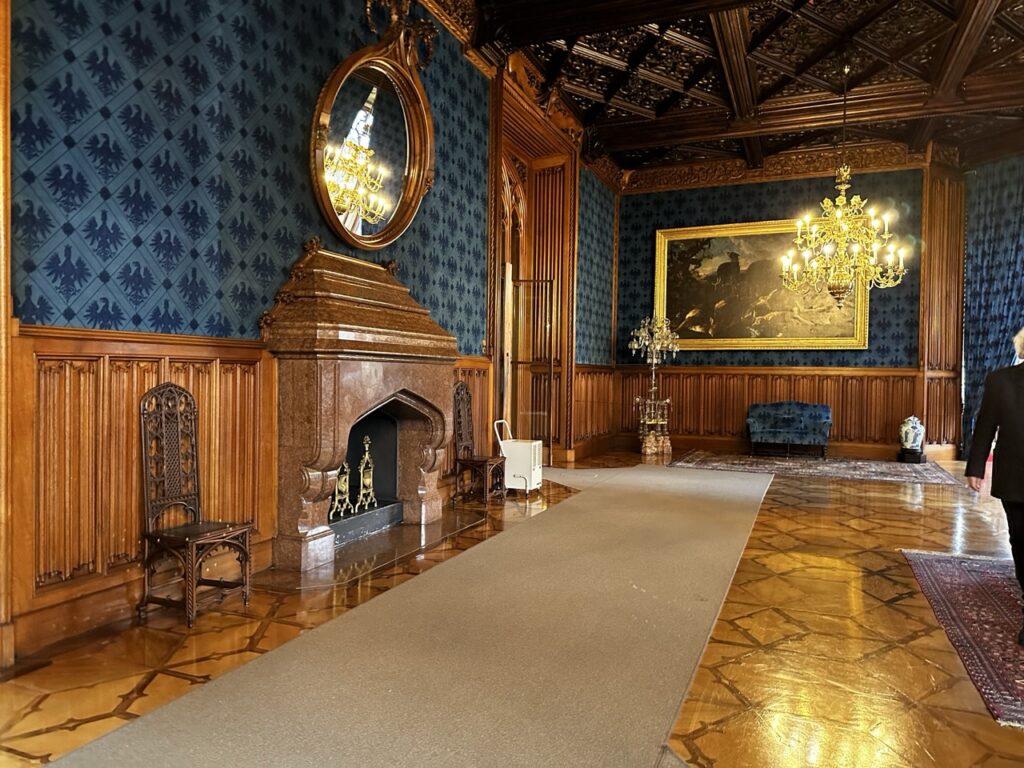
During the tour, you move through the Entrance Hall, Hunting Room, Blue Room, ladies’ bedroom, Chinese Room and cabinet, Knightly Hall, dining hall, library, Turquoise Social Hall, Red Smoking Room and Blue Dancing Hall. There is quite a mix along the way, from bedrooms and social rooms to spaces used for dining, smoking and entertaining guests. For us, one of the highlights is simply seeing how much detail went into the interiors, especially the woodwork and the library. The tour finishes in the Blue Dancing Hall, giving you a pretty good idea of how the representative side of Lednice Castle once worked.
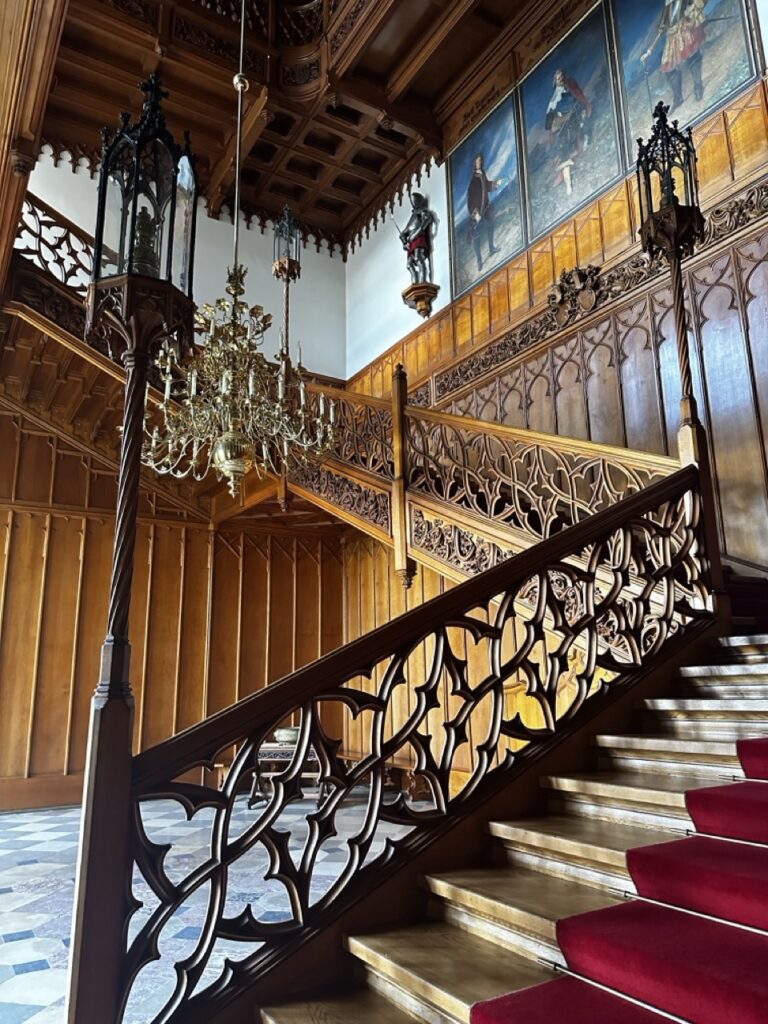
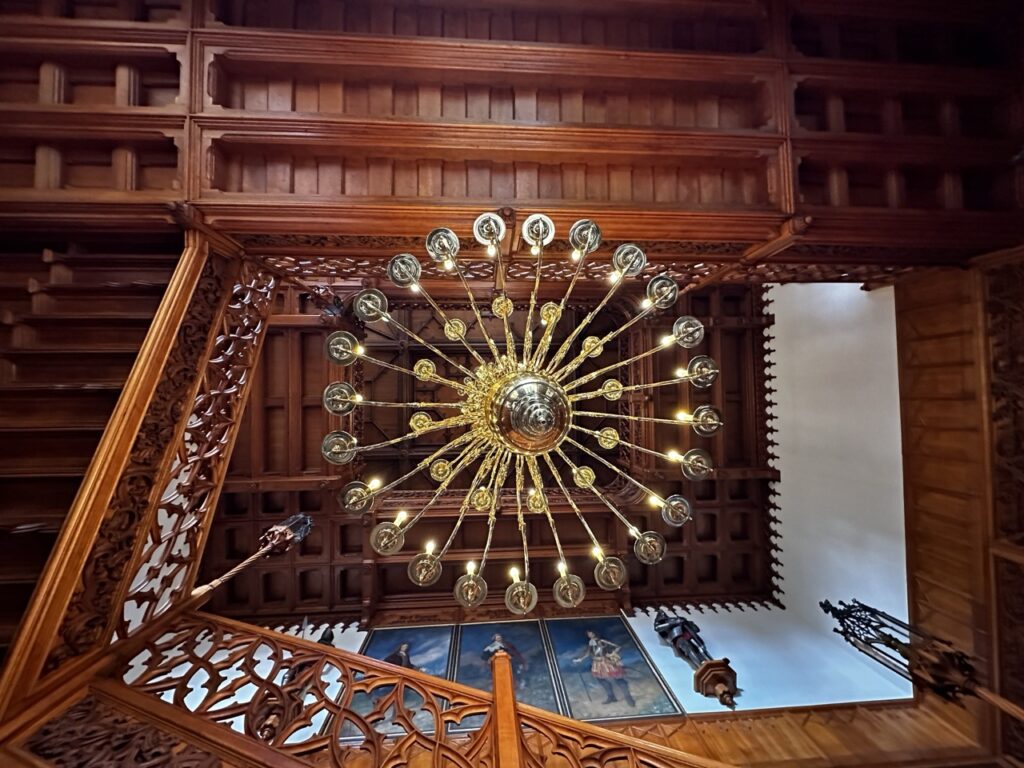
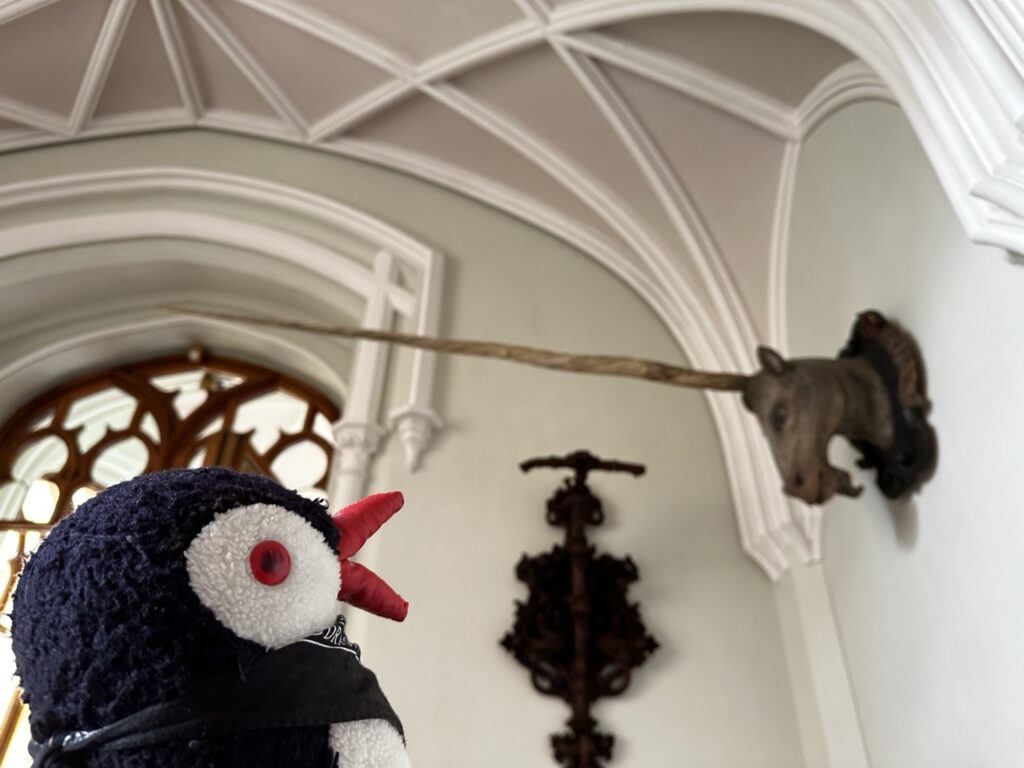
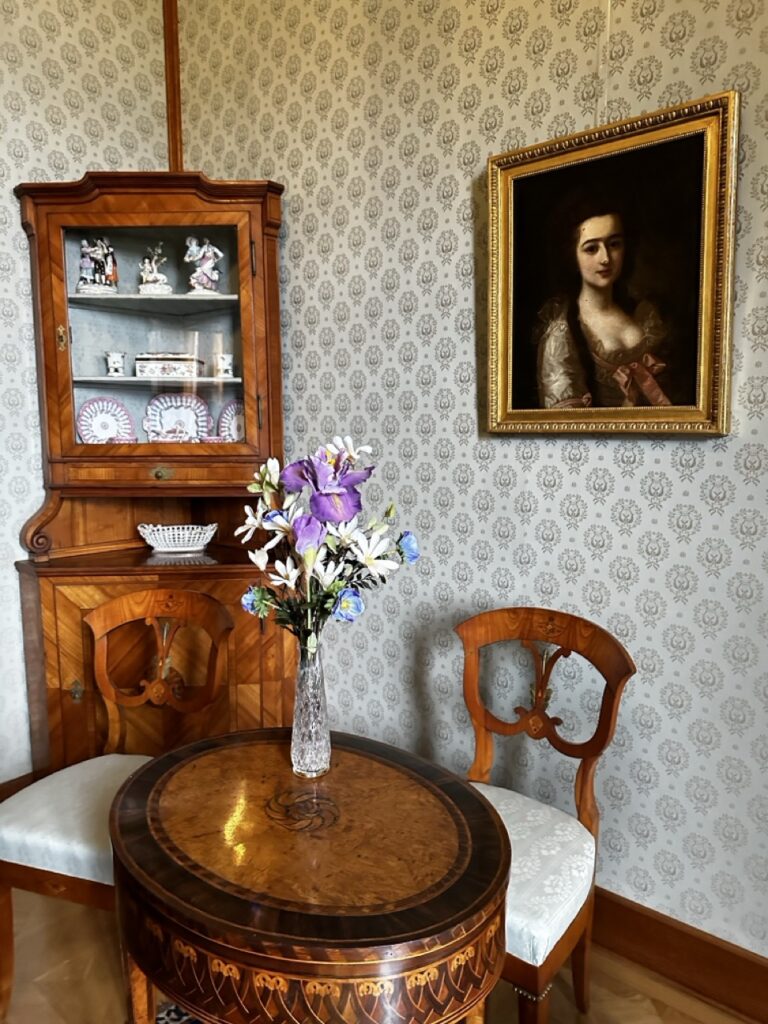
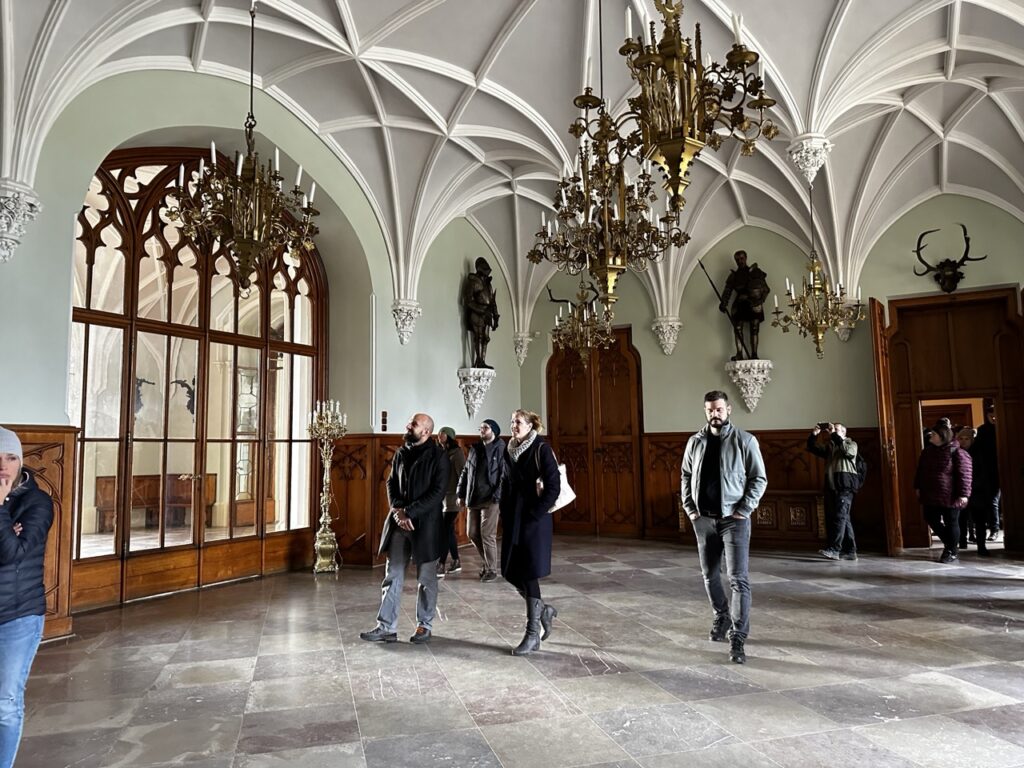
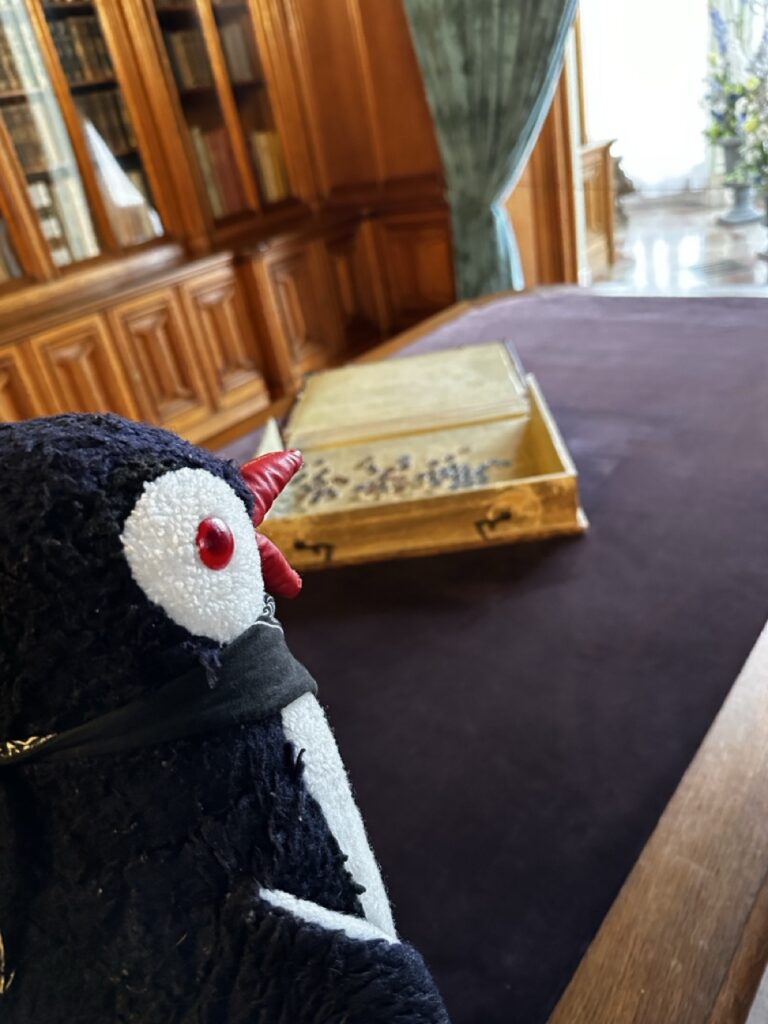
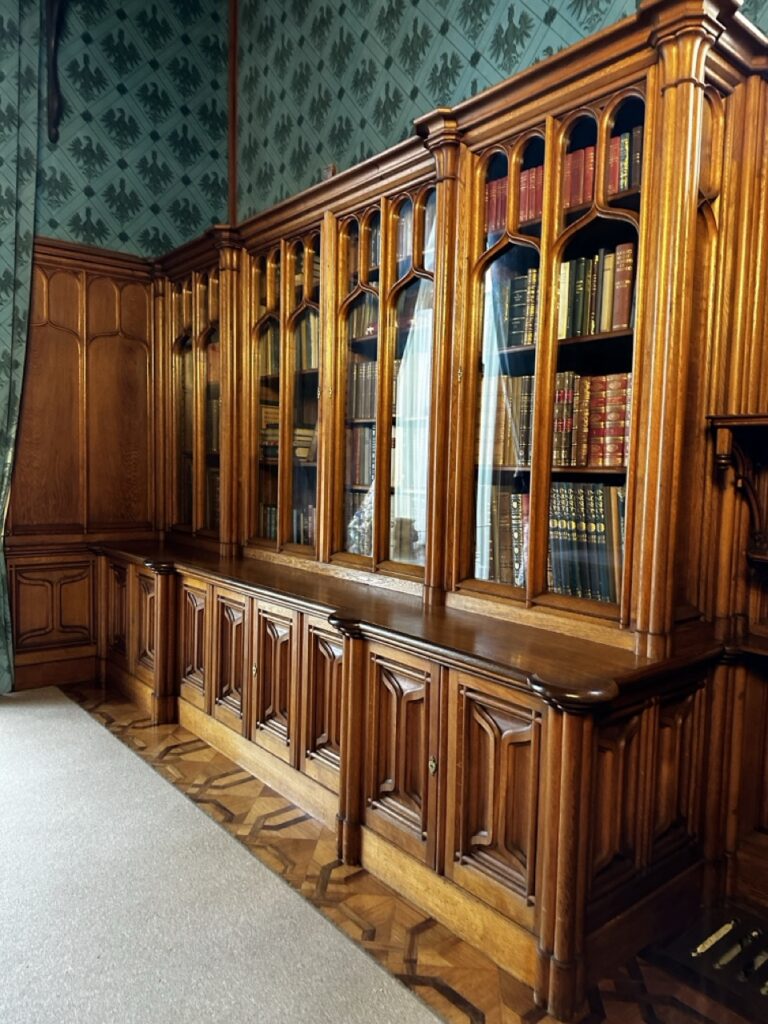
As we moved from room to room, it felt like each one was more impressive than the one before. There is so much to look at that we barely know where to focus first: carved wooden walls, ceilings, furniture, paintings, and small details tucked into every corner. The library especially makes us slow down and look around for a while. Even the smell of old wood and the quieter atmosphere inside add to the experience. Out of everything we’ve seen at Lednice so far, the Representative Rooms are probably our favorite route. It’s one of those castle interiors where the rooms themselves are the reason to visit, and we really enjoy every part of the tour.
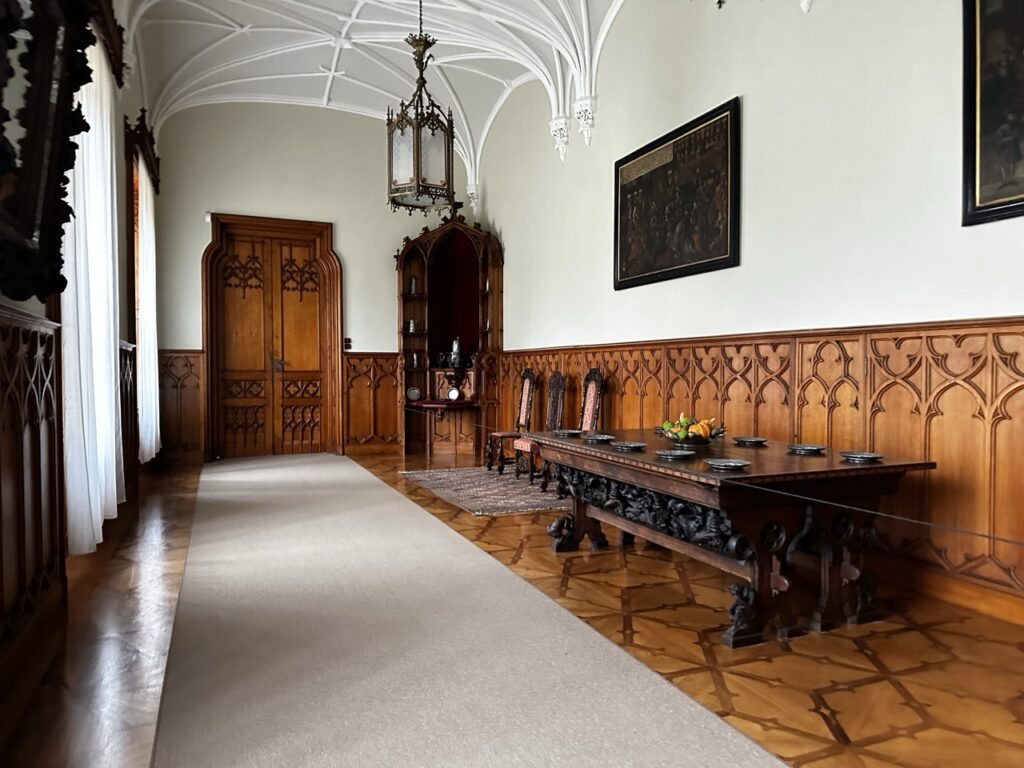
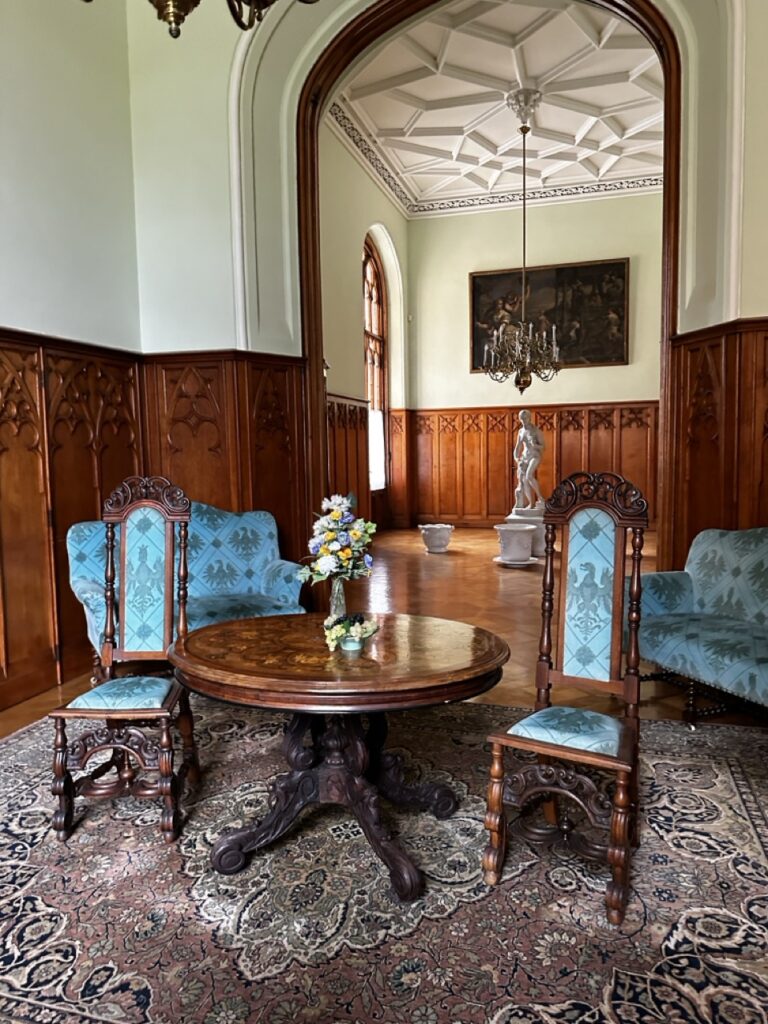
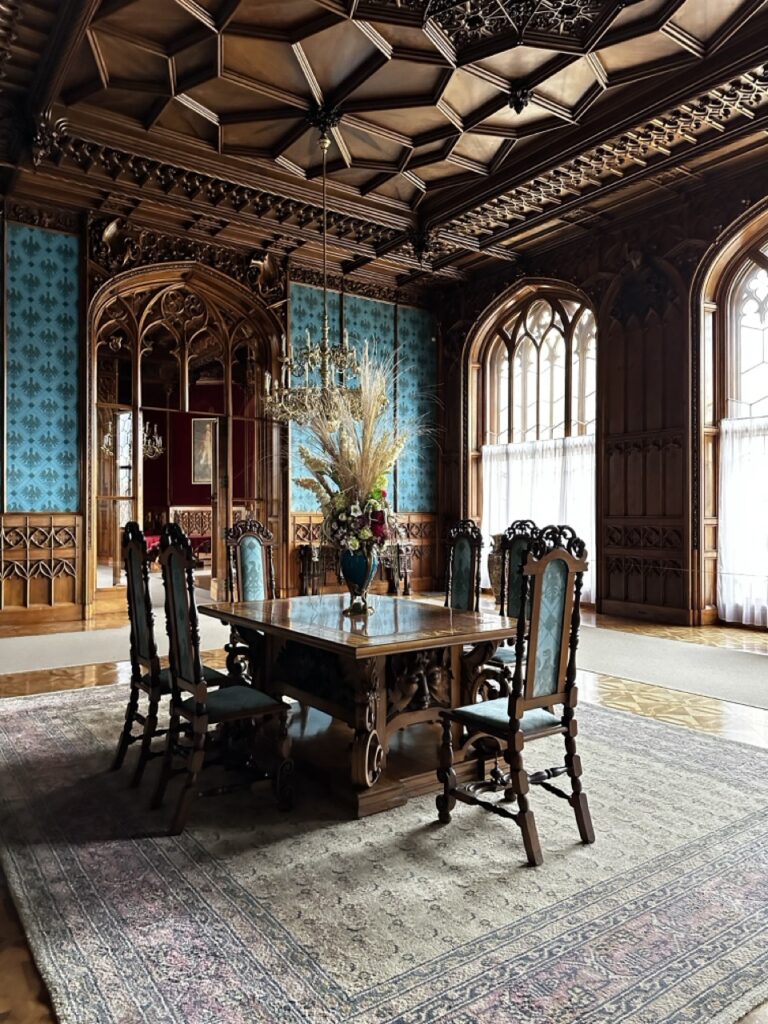
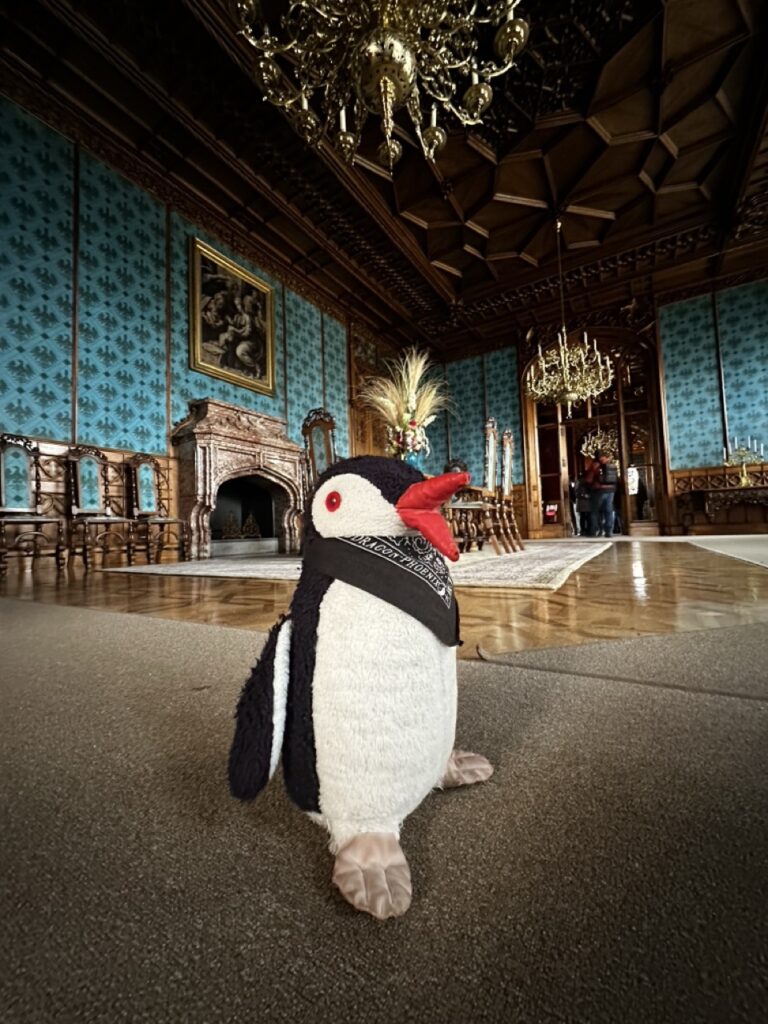
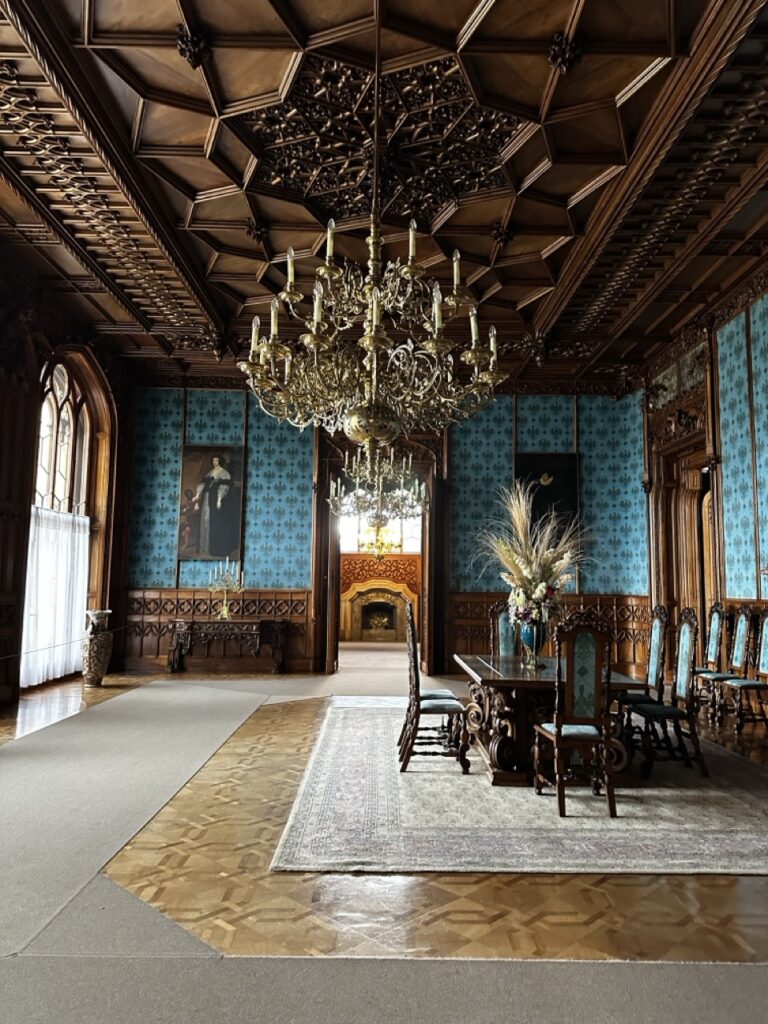
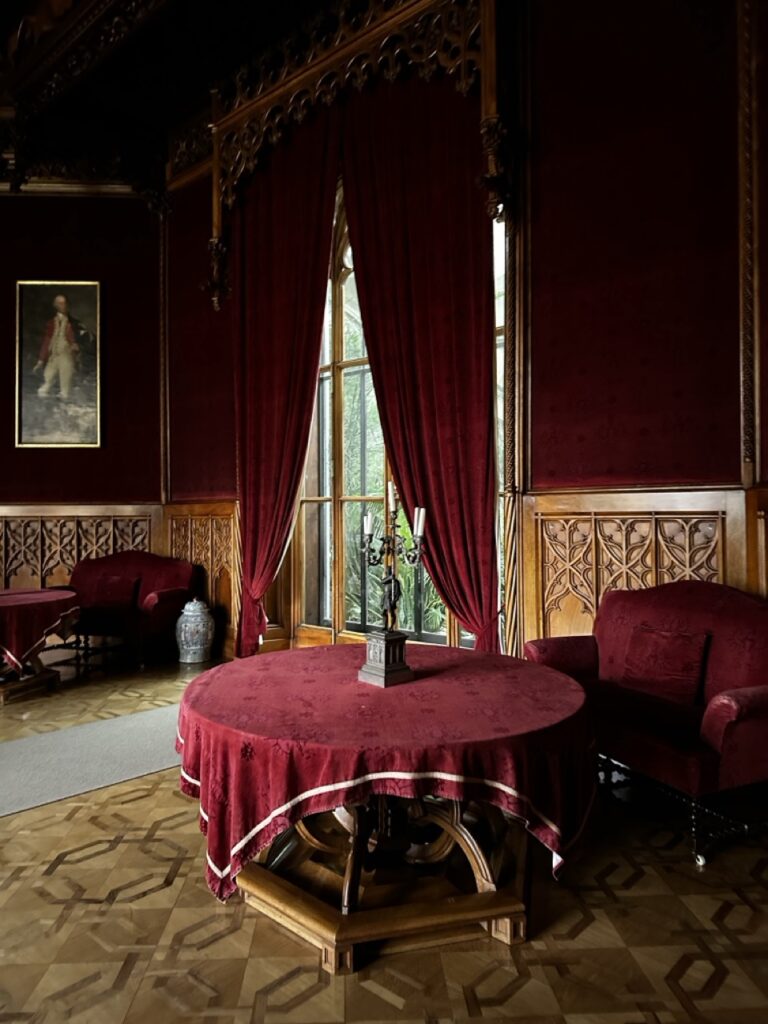
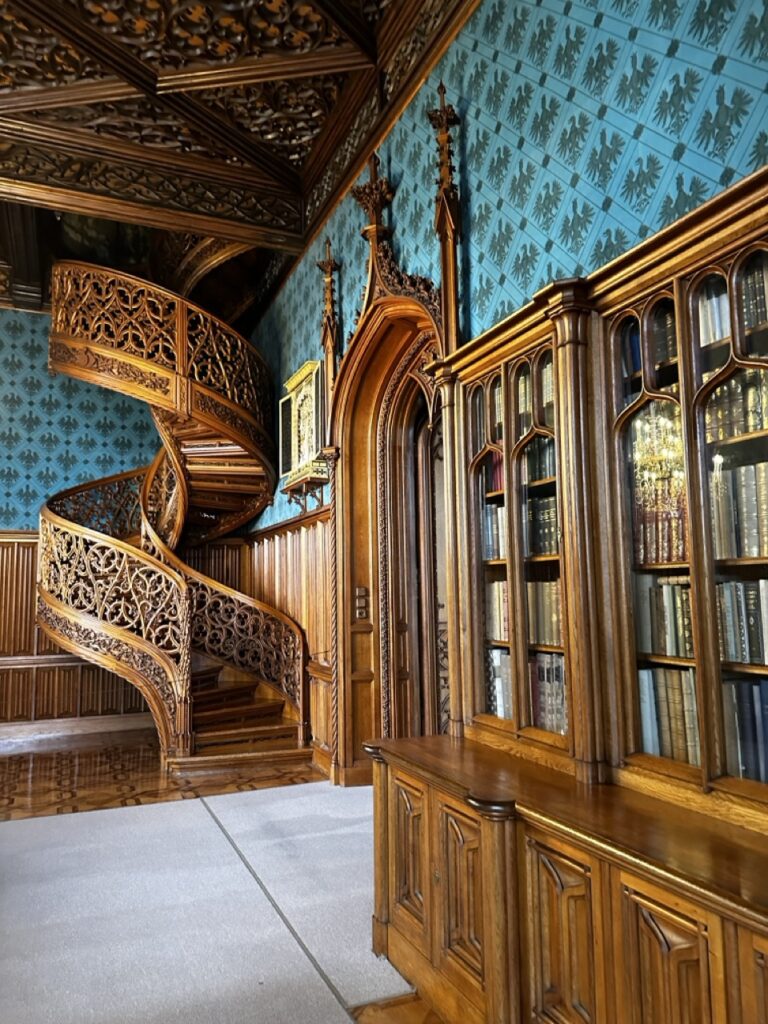
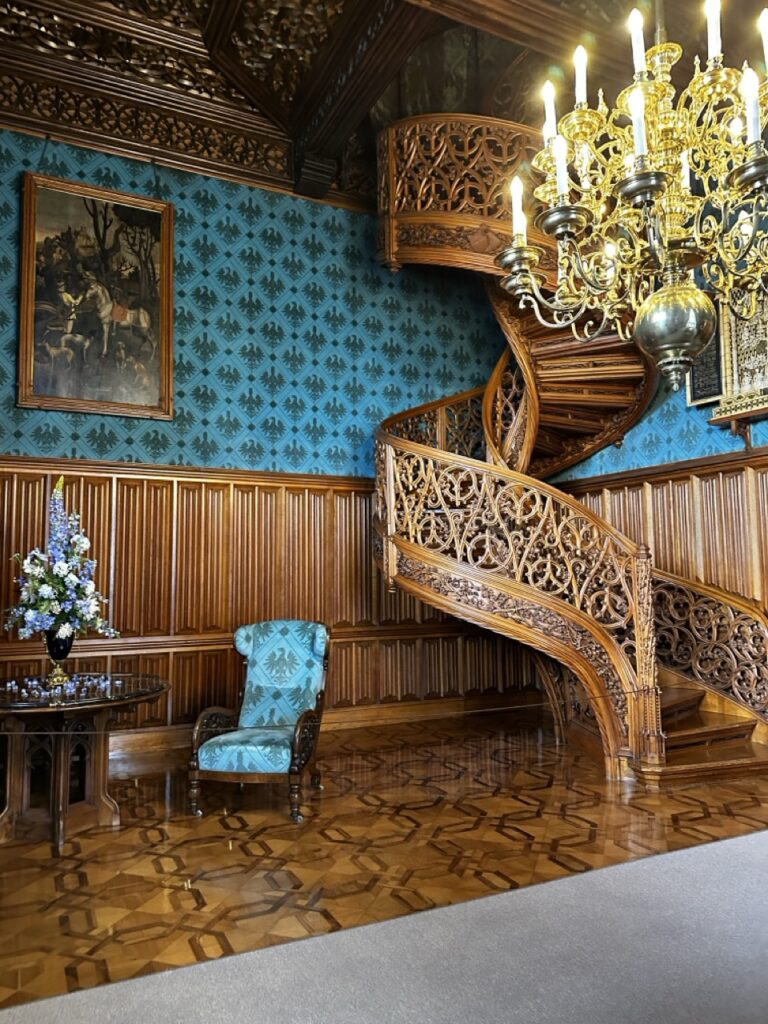
The library is our favorite room of the entire tour, and a big reason for that is the wooden spiral staircase in the corner. Surrounded by dark oak, old books, and softer blue tones, it immediately pulls our attention. But it becomes even more impressive once we learn how it was made. The staircase was completed in 1851 in the workshop of Carl Leistler and, according to tradition, was created from the trunk of a single oak tree. The trunk was cut into pieces for carving, then reassembled without a single iron nail. The staircase is also self-supporting and leads up to the first-floor gallery. Look closely at the carvings, and there is another fun detail: a frog, bird, and lizard are hidden in the woodwork. Of course, that immediately becomes a bit of a challenge to find all three. With the darker wood, carved details, books surrounding us and that staircase twisting upwards, this is easily the room that stays with us the most.
Inside the Private Princely Apartments
When we return to Lednice Castle for our second visit in summer, we decide there is no point doing the same thing again. This time, we choose the Private Princely Apartments tour, which takes us into a completely different part of the castle. While the Representative Rooms show us the more formal side of life at Lednice, this route offers a look at the rooms the Liechtenstein family actually used in their everyday lives. It feels like a natural next step after our first visit and gives us another side of the castle to explore.
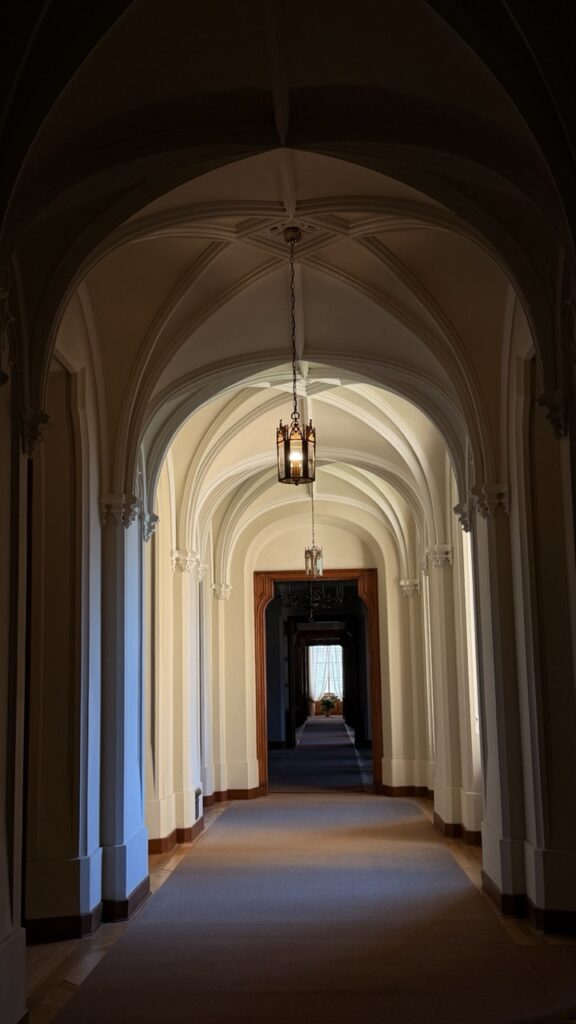
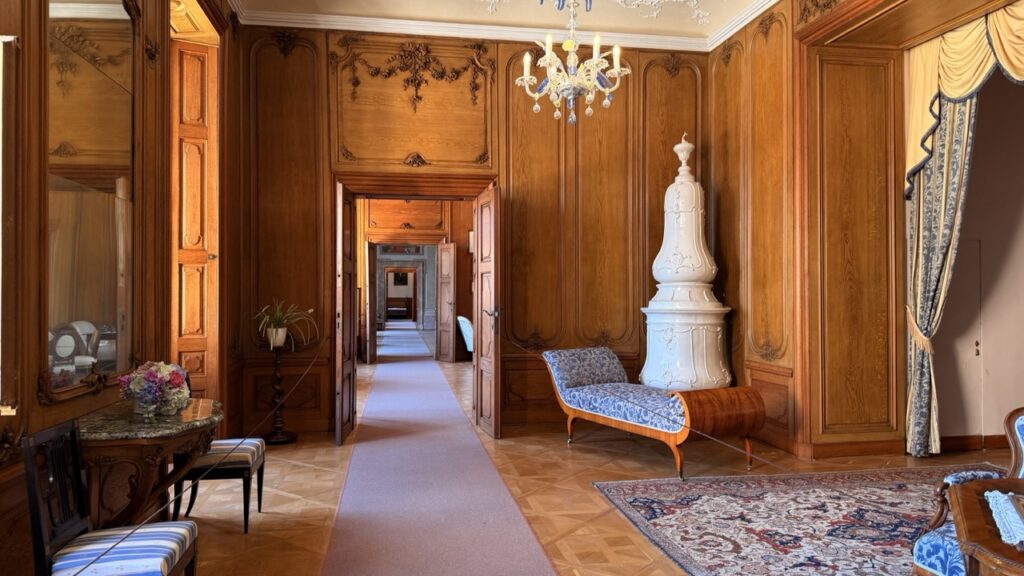
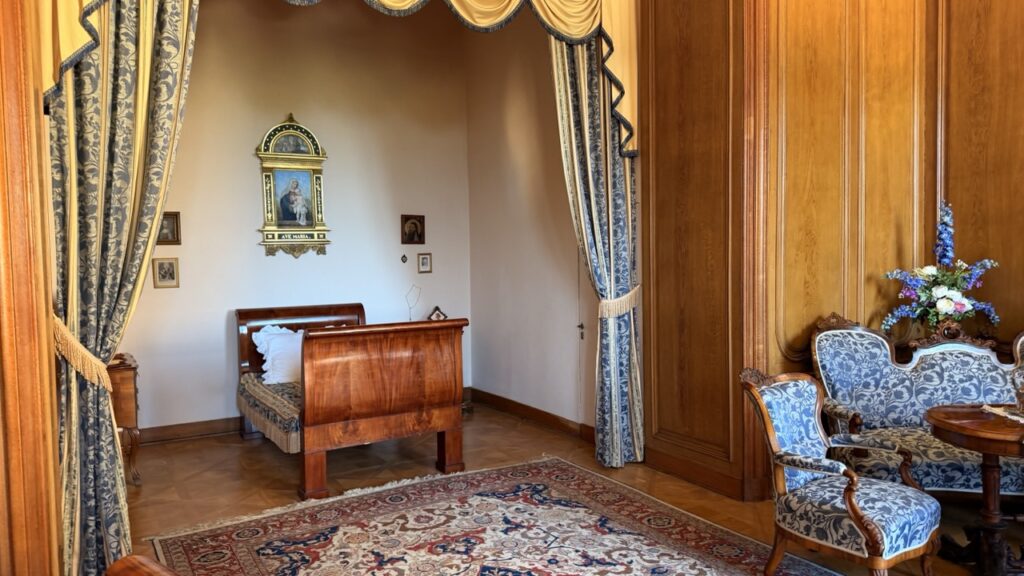
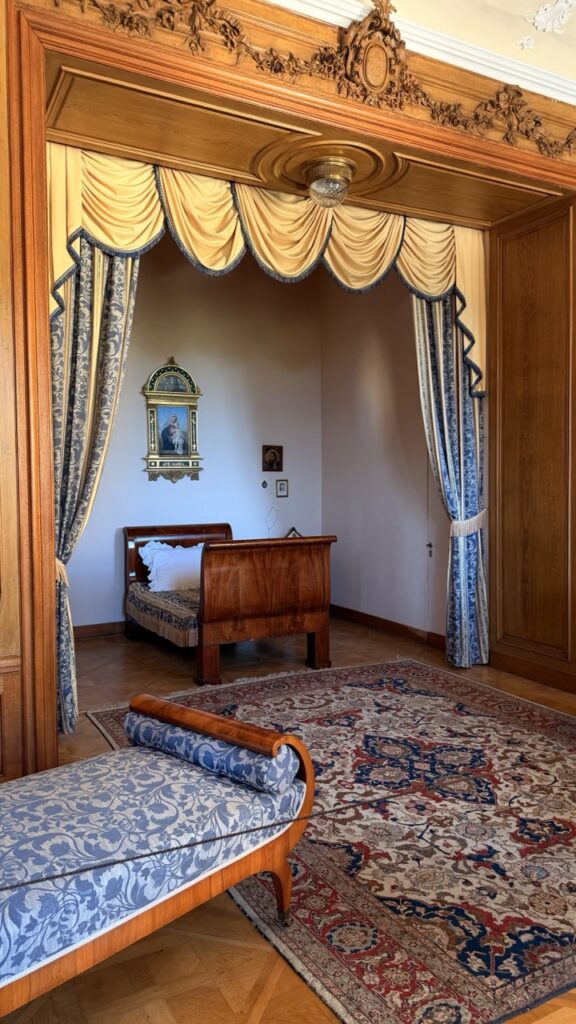
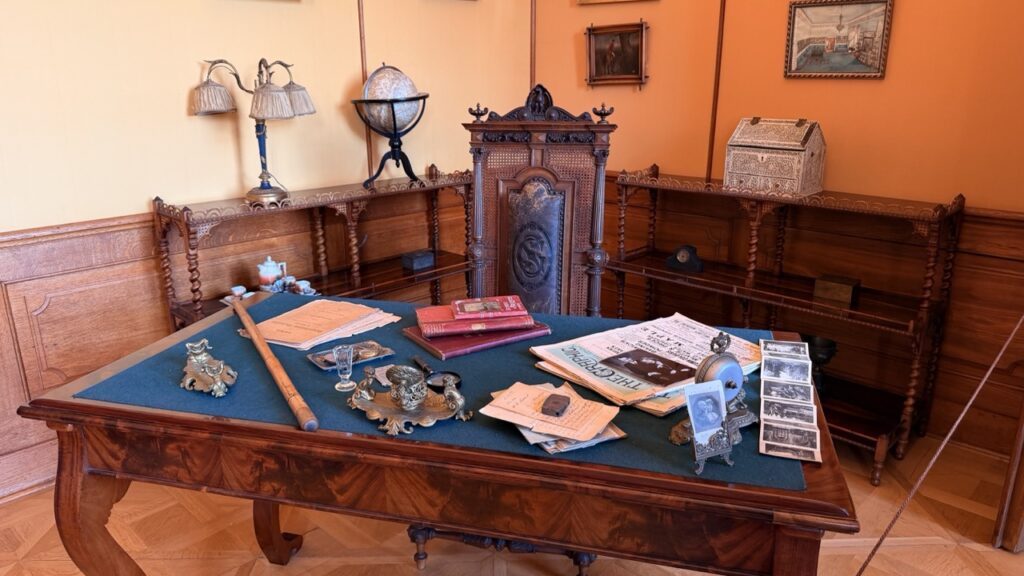
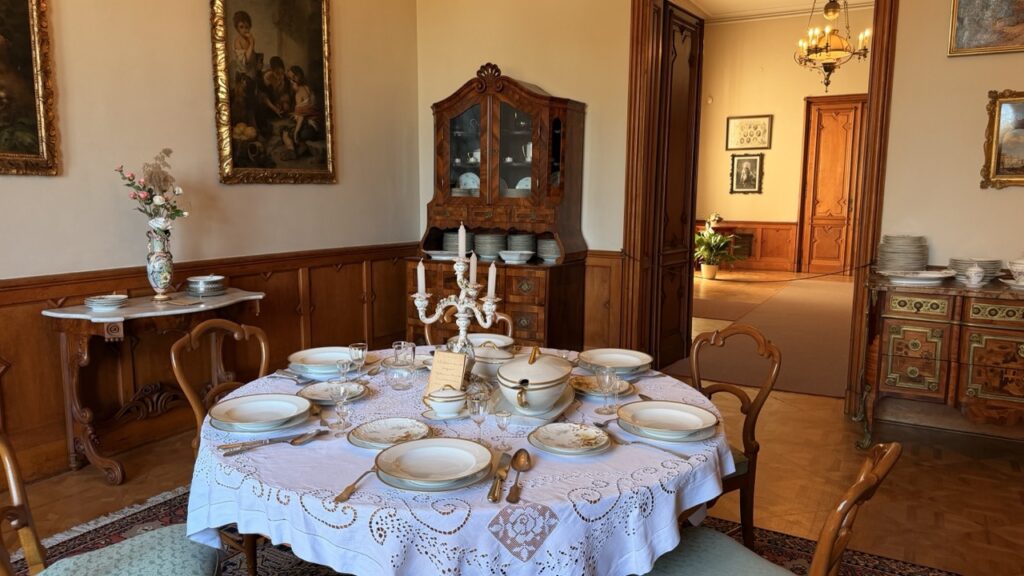
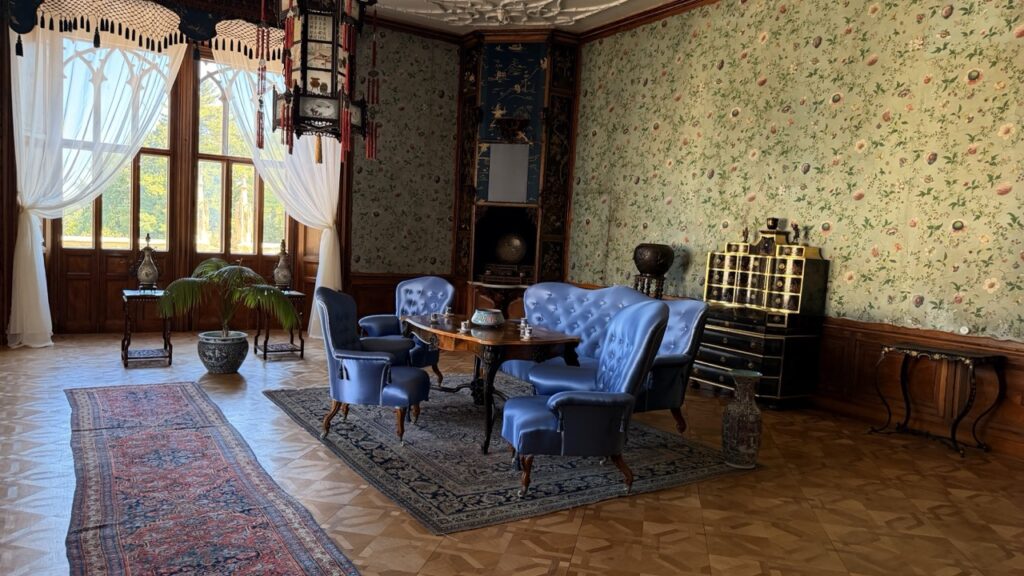
The Private Princely Apartments feel quite different from the Representative Rooms. They aren’t as grand, but that’s exactly what makes this route interesting. Instead of seeing where balls and official events took place, we get a glimpse into the private lives of the Liechtenstein family. We walk through bedrooms, studies, a dining room, the Chinese Drawing Room and even the princess’s bathroom. There is also a family hall and a view into the Chapel of St. James the Elder from the private princely oratory.
What makes the route even more interesting is that these rooms were actually used by the princely family until 1945. We see the apartments of Sofia Esterházy, Prince Franz and Princess Františka, wife of the ruling Prince Alois II. The rooms also have quite a story after the Liechtensteins left: from the 1950s until 2001, this part of the castle housed exhibitions of the Agricultural Museum. Since 2001, the apartments have been restored using original furnishings and historical inventories to bring them closer to how they looked when the family lived here.
We especially enjoy seeing the study rooms and more everyday spaces. Standing beside the desks, beds, and personal furniture makes it much easier to imagine that this wasn’t always a museum; people actually slept here, worked here, ate here, and went about their daily lives. For us, that makes this tour different from the Representative Rooms. It may not have the same wow factor as the first route, but it offers a much more personal look at life inside Lednice Castle.
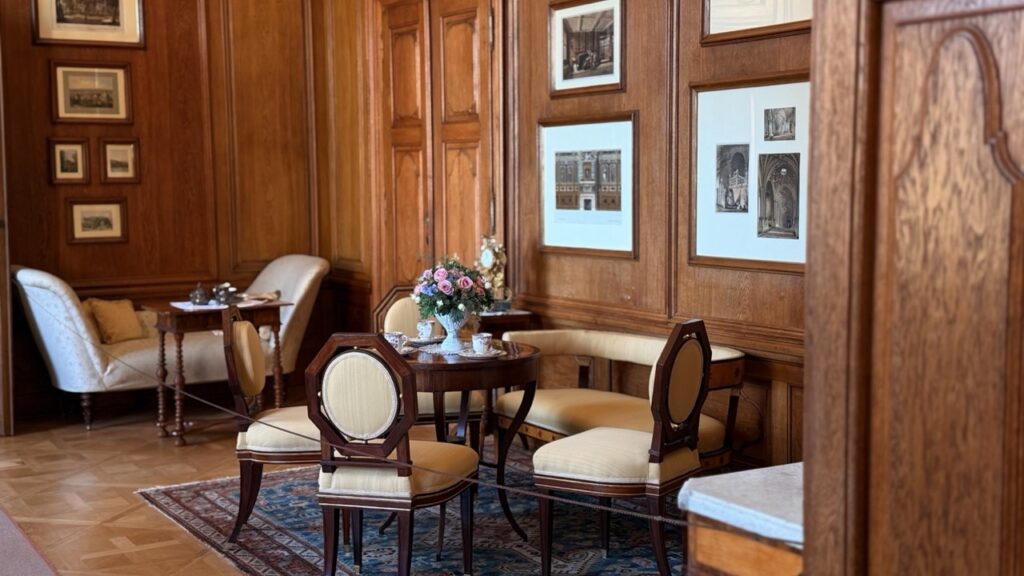
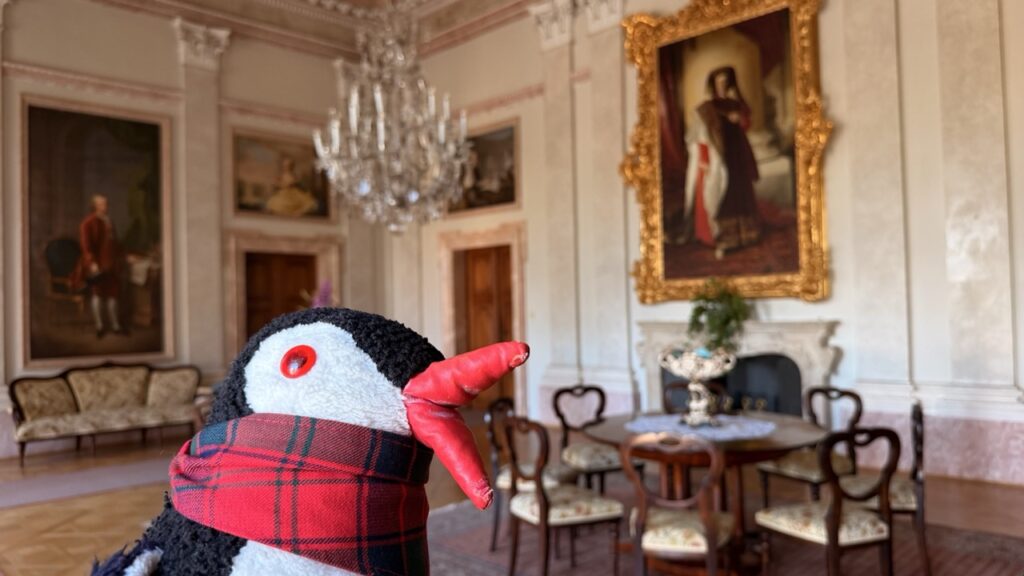
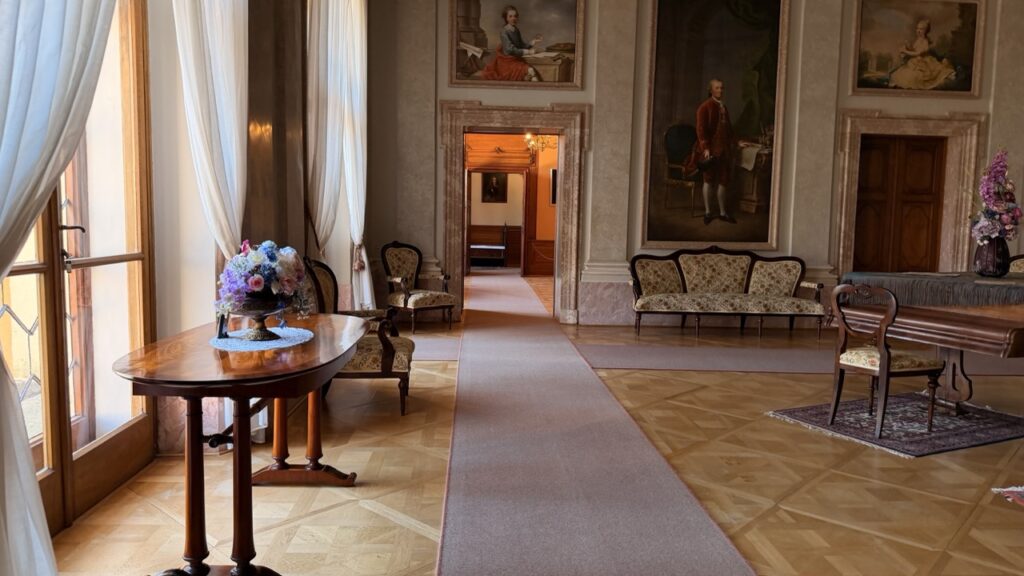
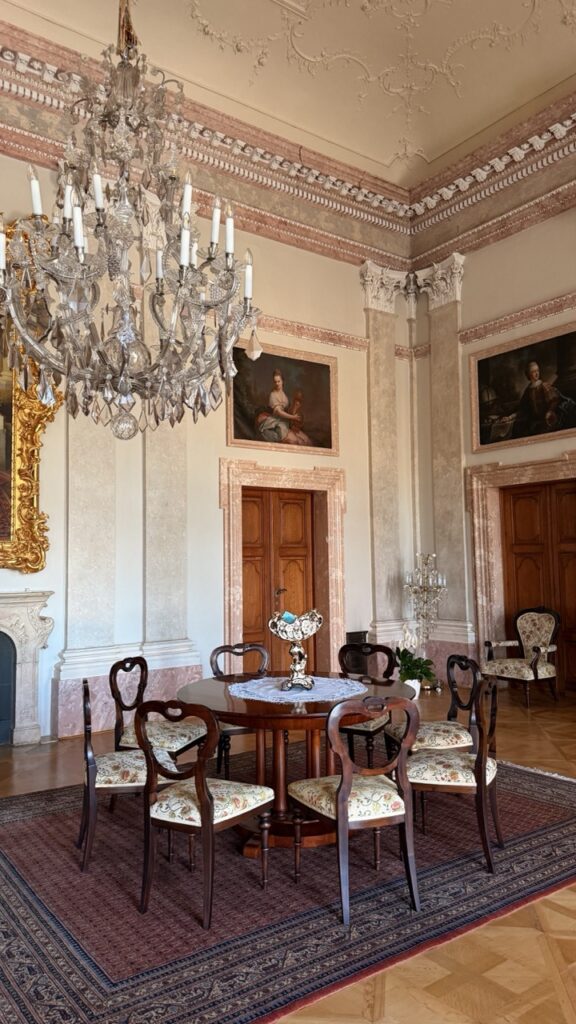
The Private Princely Apartments tour is guided and takes around 50 minutes. The route leads through the private rooms on the castle’s first floor, including the family hall, the apartment of Sofia Esterházy, Prince Franz’s study, Princess Františka’s study and bedroom, bathroom, Chinese Drawing Room, private dining room, Prince Alois II’s bedroom and other connecting living spaces. You also get to look into the Chapel of St. James the Elder from the private princely oratory. Compared with the Representative Rooms downstairs, this route feels much more focused on how the family actually lived inside Lednice rather than how they presented the castle to their guests.
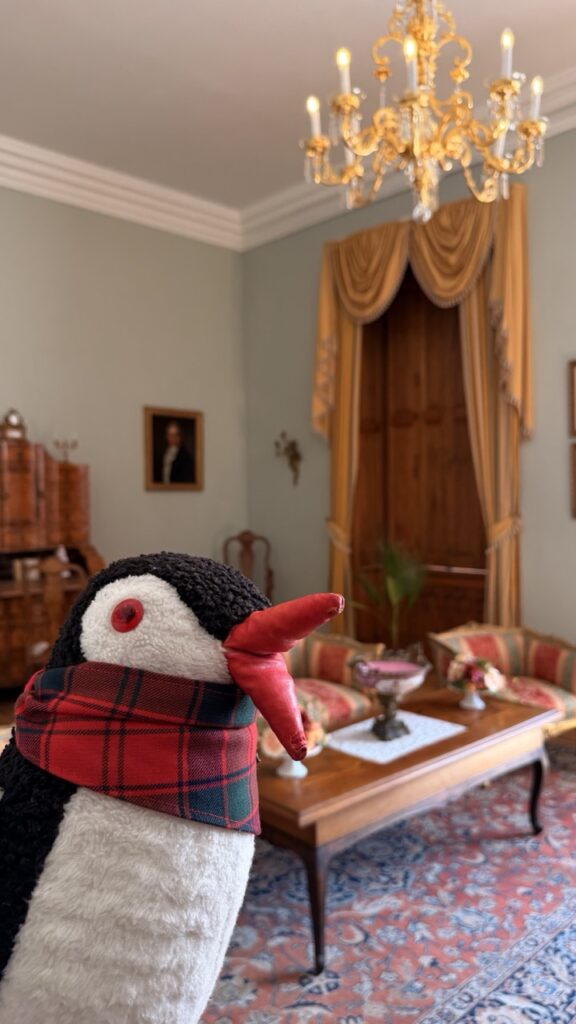
Representative Rooms vs. Private Apartments: Which Tour Should You Choose
Having done both routes, we’re glad we got to see two very different sides of Lednice Castle. The Private Princely Apartments are interesting if you want to learn more about the Liechtenstein family and see the rooms connected to their everyday lives. At the same time, the Representative Rooms are much more about the castle itself, the carved wood, decorated halls, library, and that staircase we still talk about. If you have time, we recommend doing both. But if you’re visiting Lednice Castle only once and have to choose just one tour, we would definitely go for the Representative Rooms. For us, it has more of that wow factor and gives you the best first introduction to the castle interior.
Tours and tickets from KlookShows Klook’s own box, which can set Klook cookies.Tours and tickets in Prague on KlookKlook’s box can’t load on this device (an ad blocker often stops it). This opens Klook’s own page.Open Klook
The Palm House at Lednice Castle
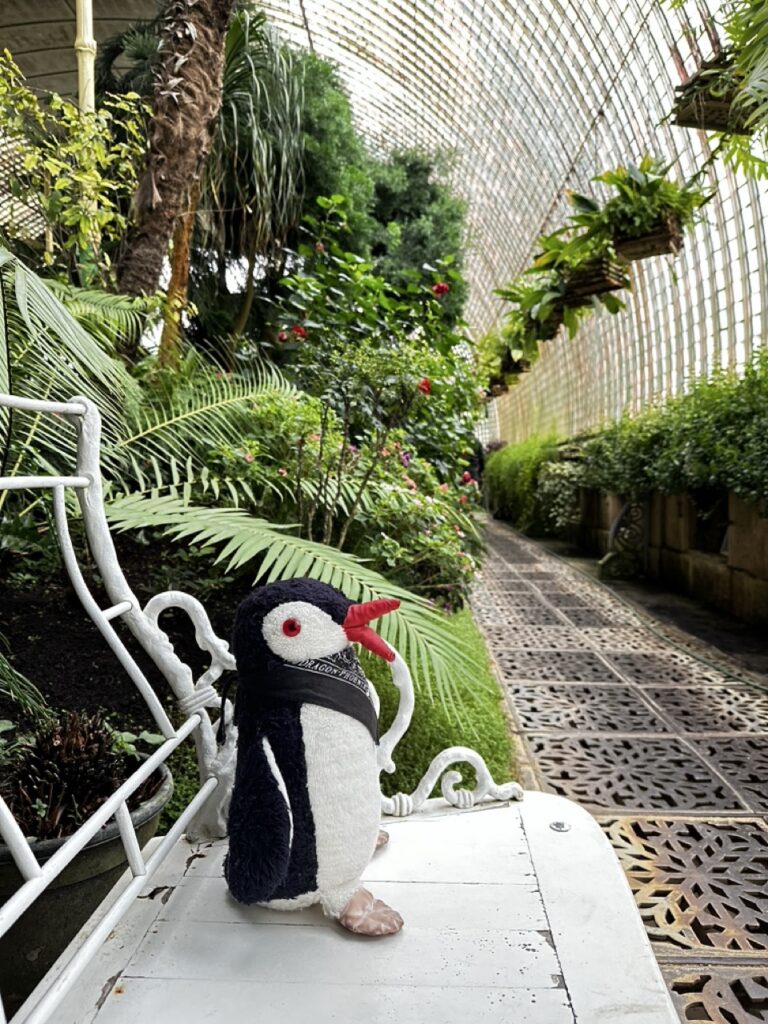
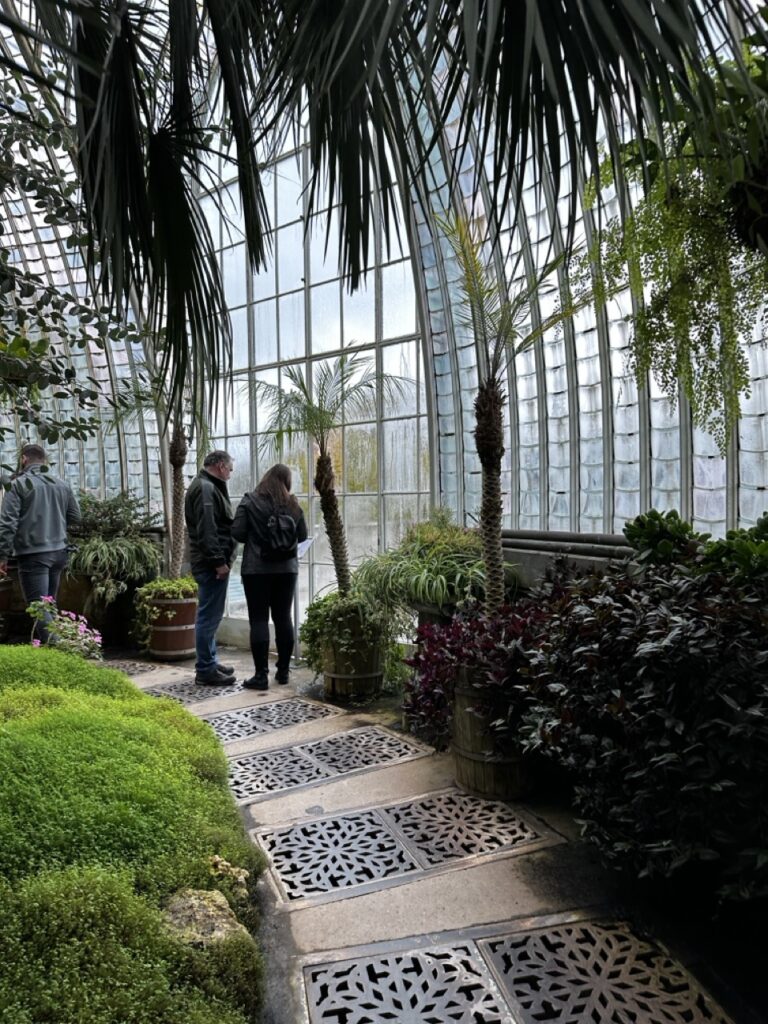
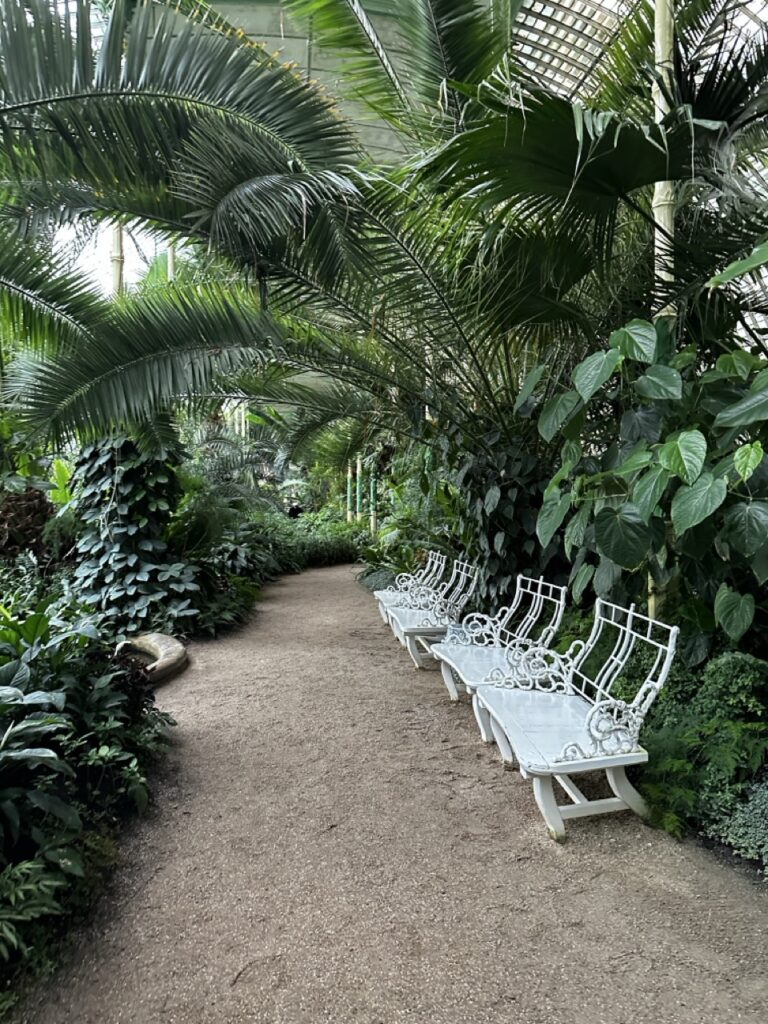
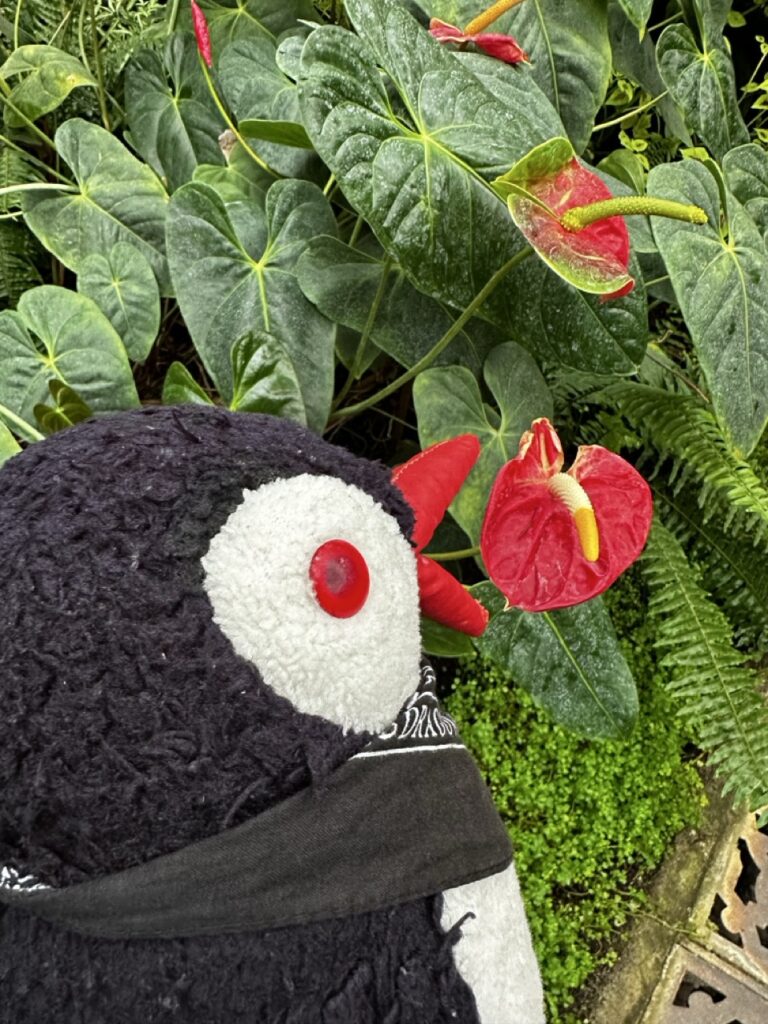
During our November visit, we also managed to step inside the Palm House, and we definitely recommend adding it to your visit. The moment we waddled through the doors, the temperature change hit us, outside it’s late November and cold, while inside it feels warm and humid. Glass surrounds us, huge leaves hang over the paths, and suddenly winter feels very far away. It’s a nice place to slow down and wander for a while, especially when it’s cold outside. When we return in the middle of summer, though, we don’t dare to go inside. It’s already hot enough outside, so adding a tropical greenhouse to the day feels like a step too far.
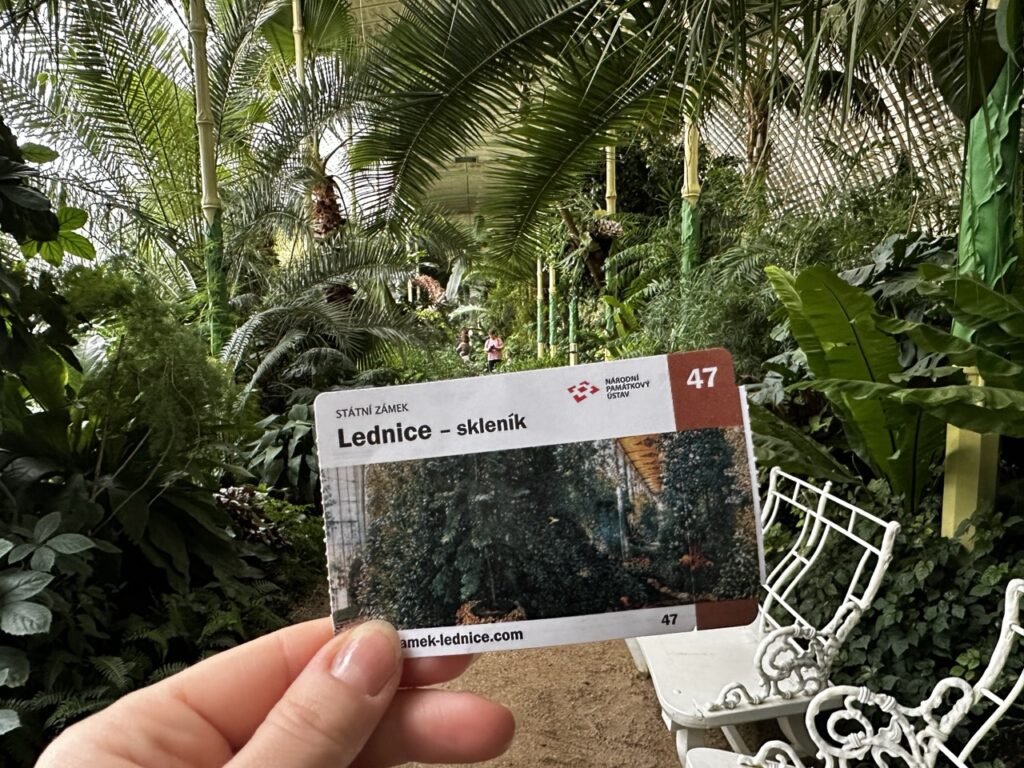
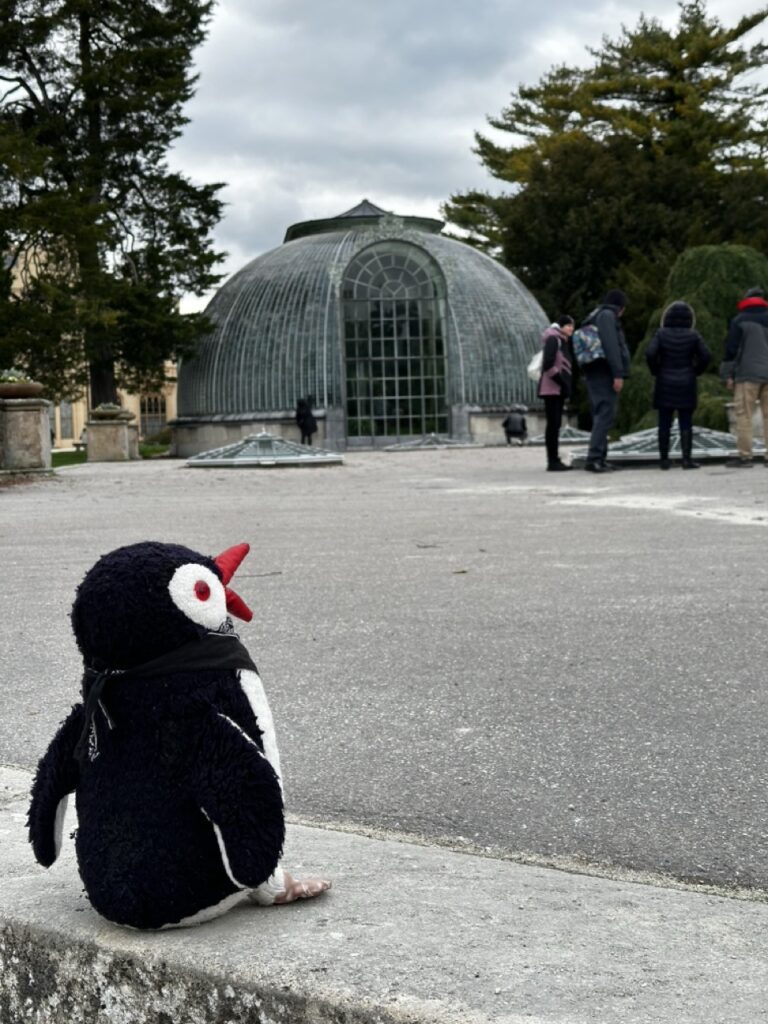
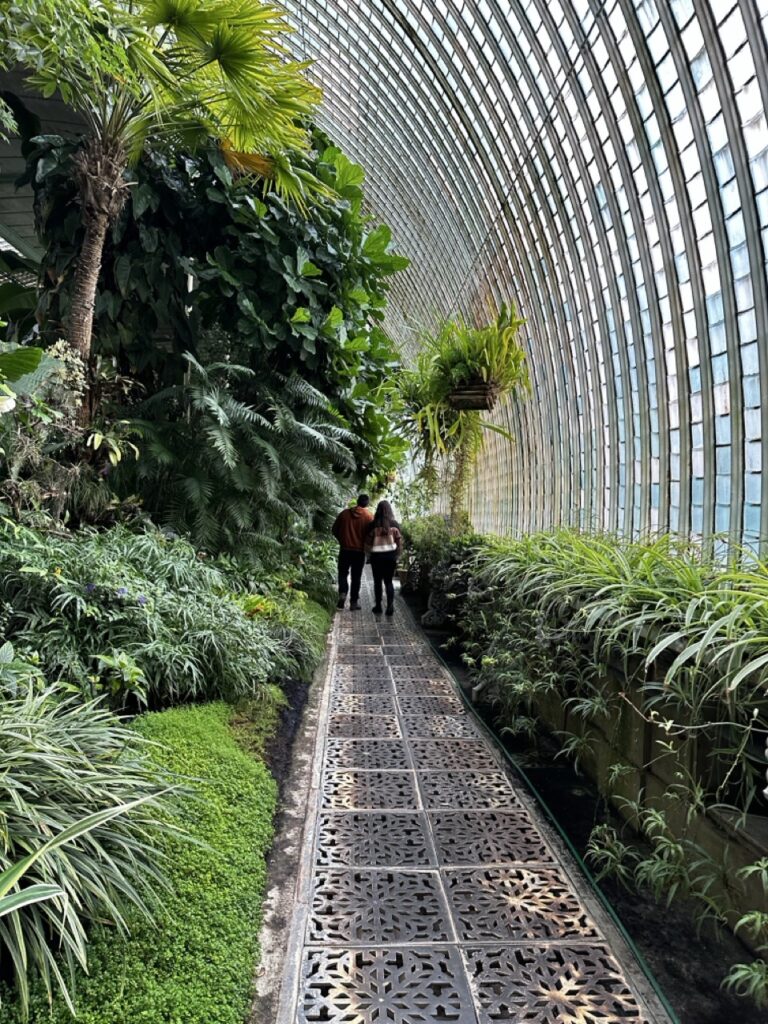
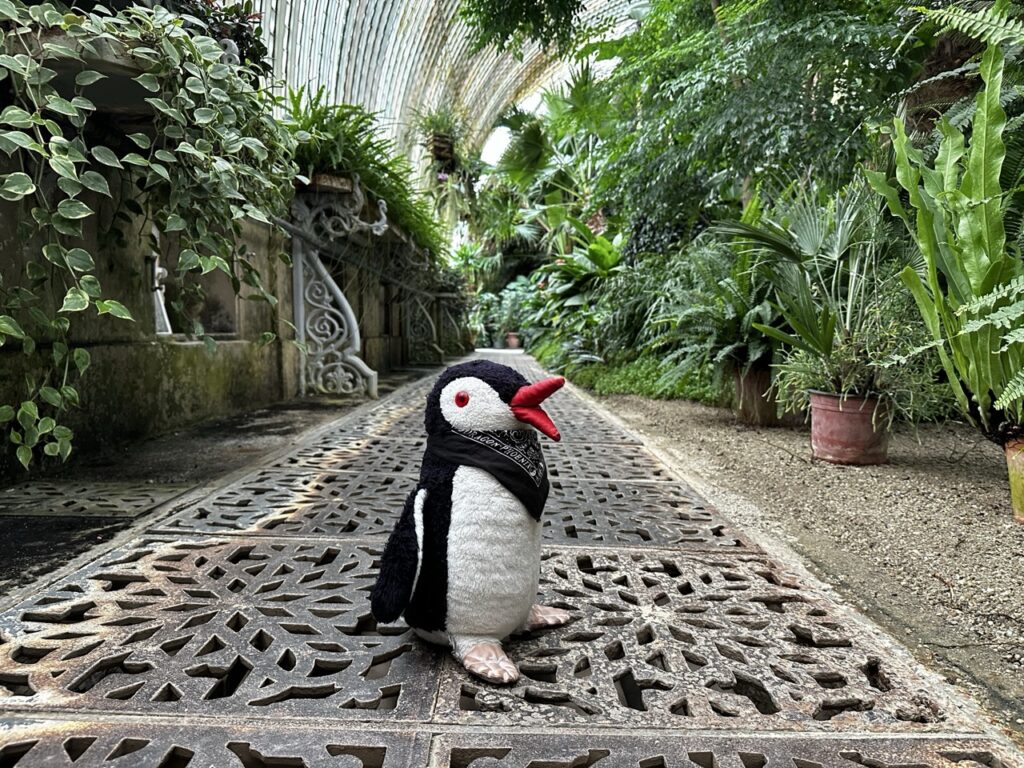
The Palm House, or Palm Greenhouse, was built between 1843 and 1845 during the time of Prince Alois II of Liechtenstein, based on plans by English architect Peter Hubert Desvignes. The structure is around 92 meters (302 ft) long, 13 meters (43 ft) wide, and 10 meters (33 ft) high, with a cast-iron frame covered by glass. It was created as part of the Liechtensteins’ transformation of Lednice and allowed them to grow tropical and subtropical plants that could never survive the Moravian winter outdoors. Inside, you waddle among hundreds of tropical and subtropical plants, including palms, cycads, bananas, tree ferns and other species collected from different parts of the world. One of its best-known plants is a cycad that is several centuries old, making the greenhouse almost as interesting for its plants as for the building itself. It feels less like another castle room and more like stepping into a small tropical world in the middle of Lednice.
There is also a more personal story behind the Palm House that we hear during our visit. According to our guide, Prince Alois II had it created as a gift for his wife, Princess Franziska Kinsky, who gave birth to 11 children. Whether you come for the story, the plants, or to escape the cold for a while, it adds another layer to the Lednice experience. Knowing that little detail also makes us look at the greenhouse differently as we walk through it, although after 11 children, we think she definitely earned more than a few palm trees.
Waddling Through the Lednice Castle Gardens
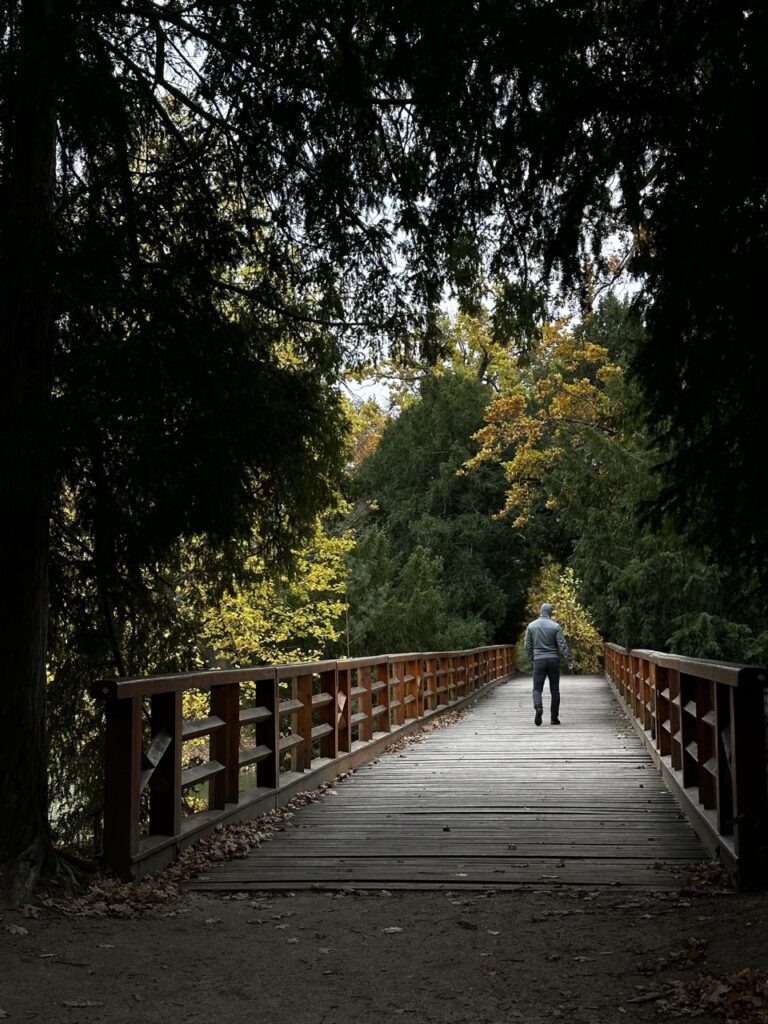
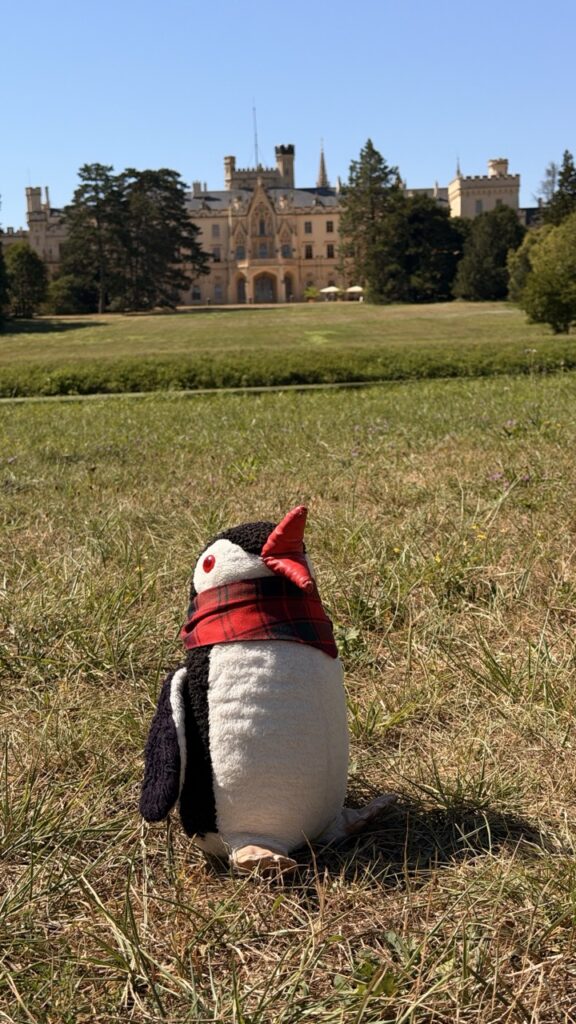
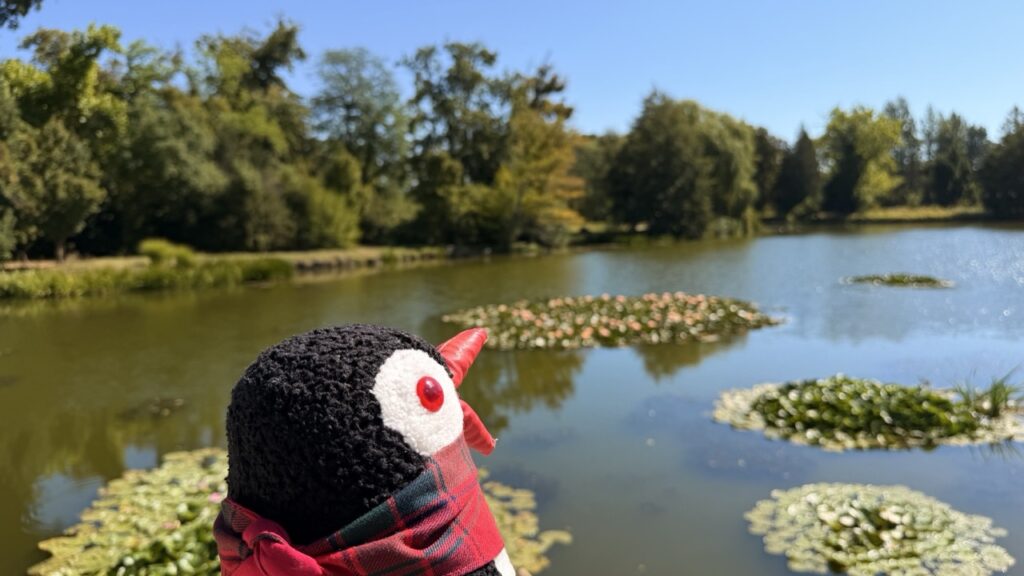
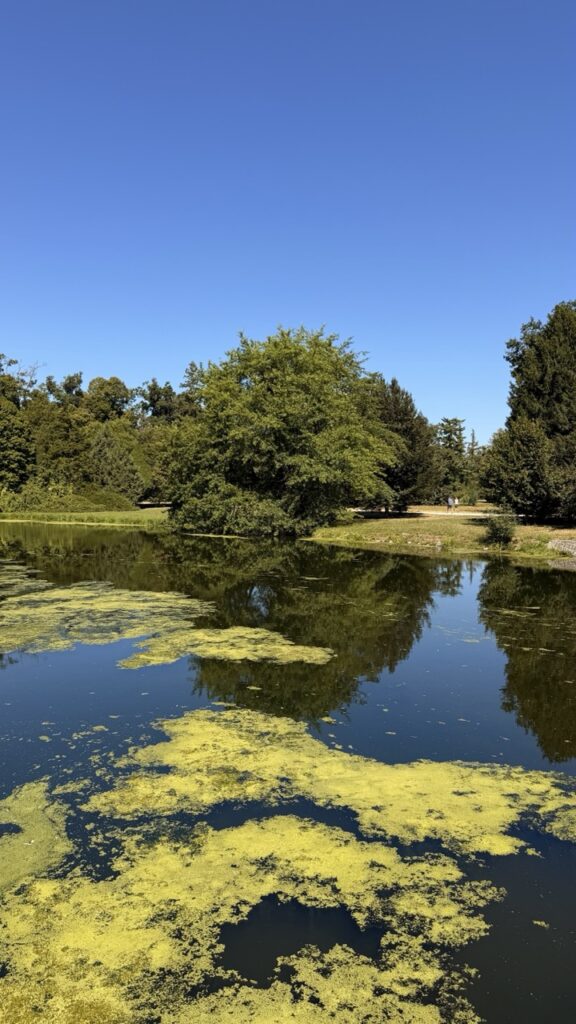
The castle itself is only part of the Lednice experience. The park and gardens are huge, with paths running around ponds, across bridges and through open green spaces, so we definitely recommend leaving enough time for a proper waddle. We end up doing a loop around the grounds on both of our visits, which also means we get to experience the park in two completely different seasons.
The first time, at the end of November, the trees are almost bare, the paths are quiet, and there are barely any people around. It’s peaceful, but there is one small problem: we were freezing. 😂 We kept waddling partly because we wanted to explore and partly because stopping for too long definitely isn’t an option.
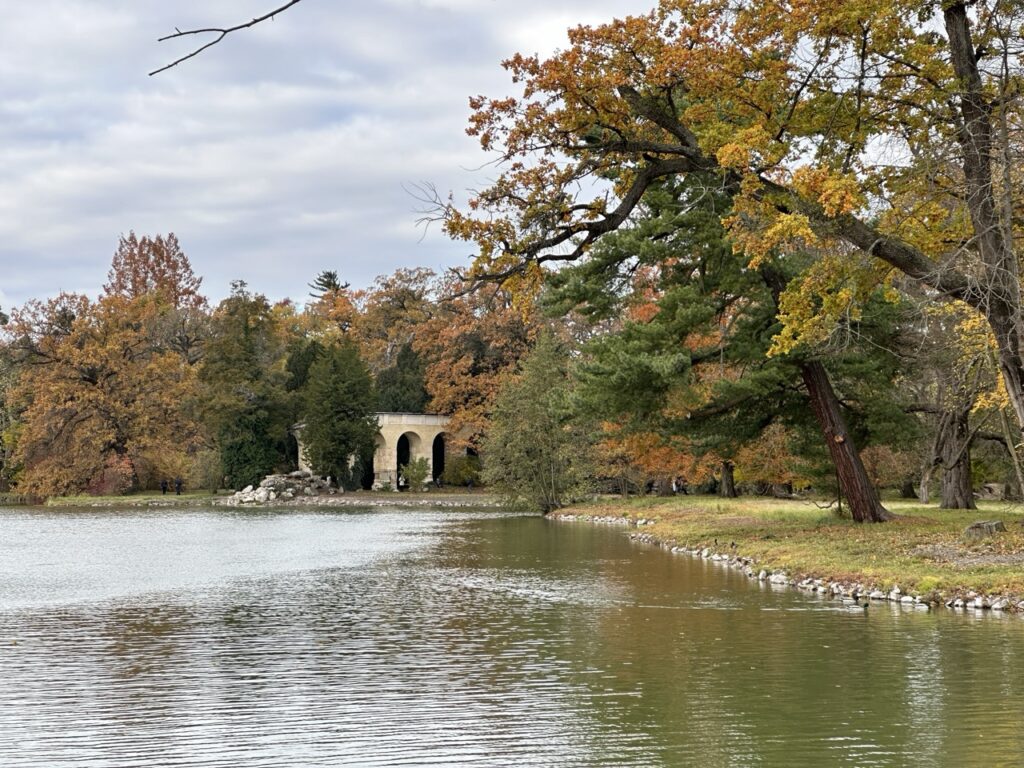
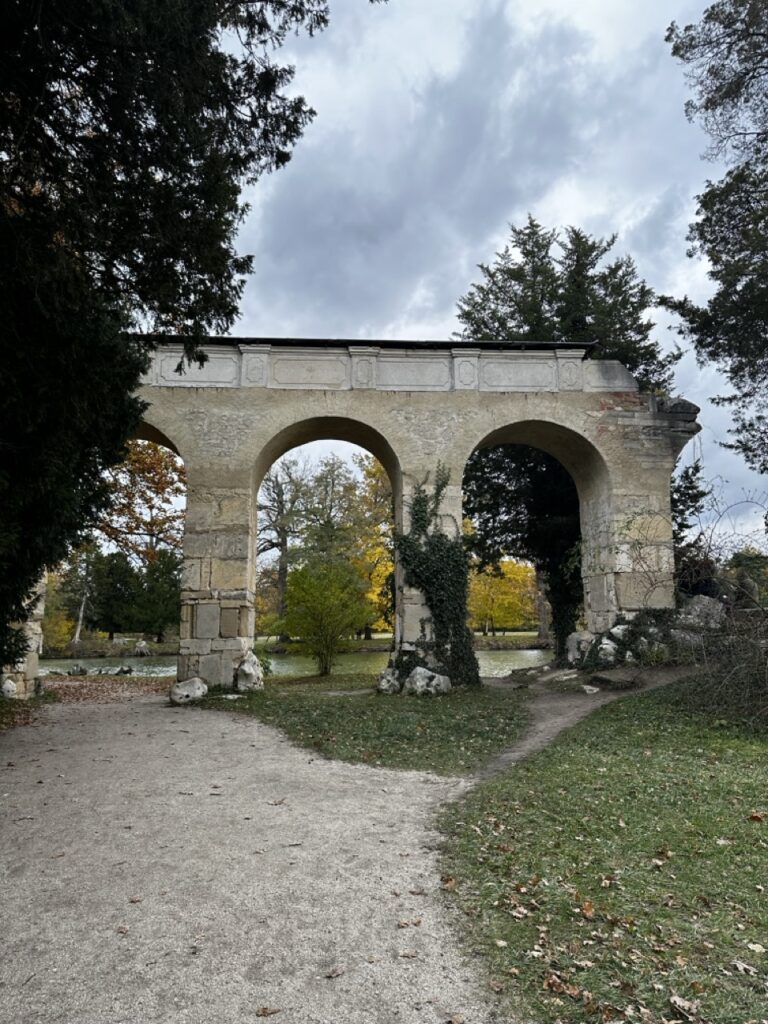
Then we come back in the middle of August and get the exact opposite experience. Everything is green, the park is full of people, and the sun is out in full force. This time, instead of being too cold, we are way too warm. Apparently, we are incapable of choosing a normal temperature for our Lednice visits. 😄 Still, waddling the gardens in both seasons gives us a completely different view of the estate, and we’re glad we do the loop both times.
Lednice Castle Gardens Quick Facts
- Size: Around 200 hectares (494 acres)
- Origins: Gardens have existed here since at least the 16th century
- Style: Mainly an English landscape park
- Main park loop: ~ 6–7 km (3.7–4.3 miles), depending on the paths you choose
- Waddling time: Around 1.5–2 hours for a relaxed loop without long stops
- Castle to Minaret: About 2 km (1.2 miles) one way
- Entrance: Free to walk around the park
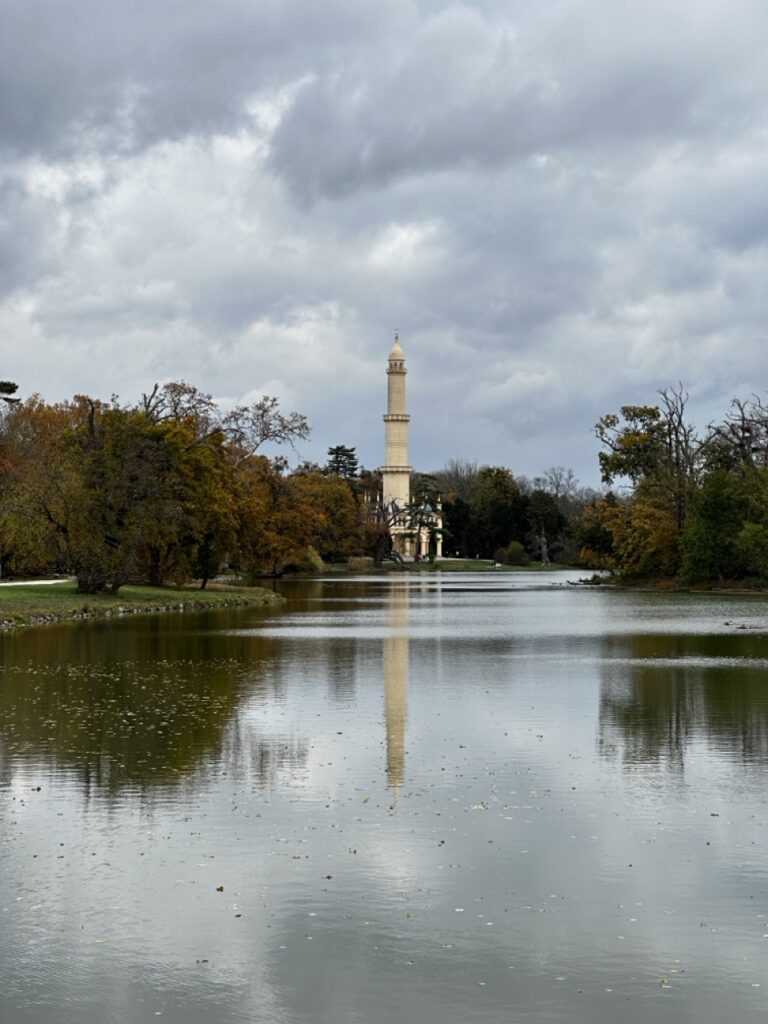
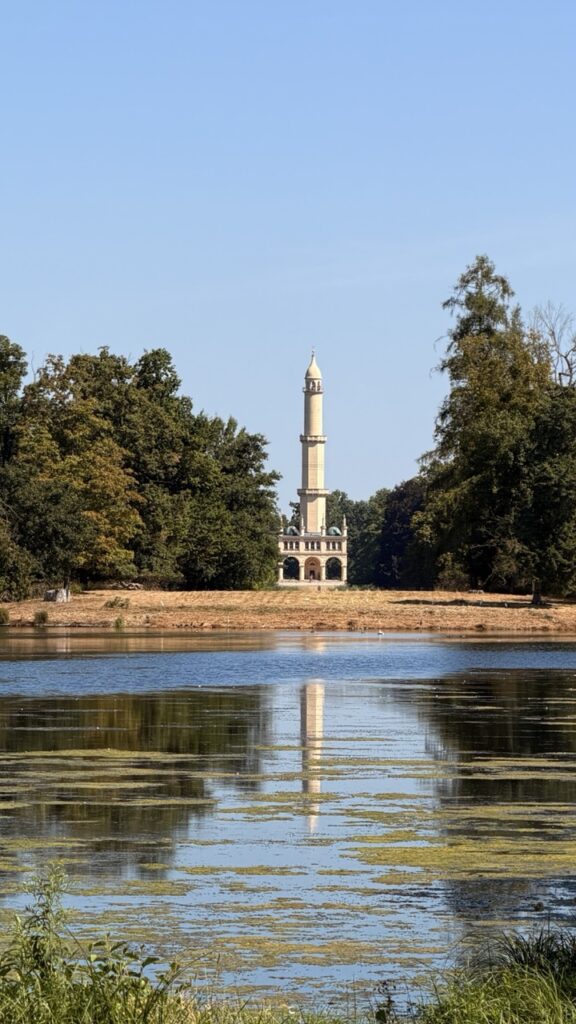
Both times, we follow the classic loop through the park towards the Minaret and back, and this is probably our favorite way to experience the Lednice gardens. Once we leave the castle behind, the path quickly takes us through what feels almost like a forest, with tall trees above us, water running alongside parts of the trail, and plenty of shade in summer. We cross small wooden bridges, follow the ponds and canals, pass the Aqueduct and Moorish Waterworks, and now and then catch another glimpse of the Minaret between the trees. On one of our waddle, we even spot a deer running through the park, which makes us stop in our tracks for a moment. You hear birds, leaves moving above you, and the occasional splash from the water, and despite the size of the estate, parts of the walk feel surprisingly quiet. It’s an easy, relaxing waddle where the scenery keeps changing until the Minaret finally comes fully into view.
The Lednice Minaret
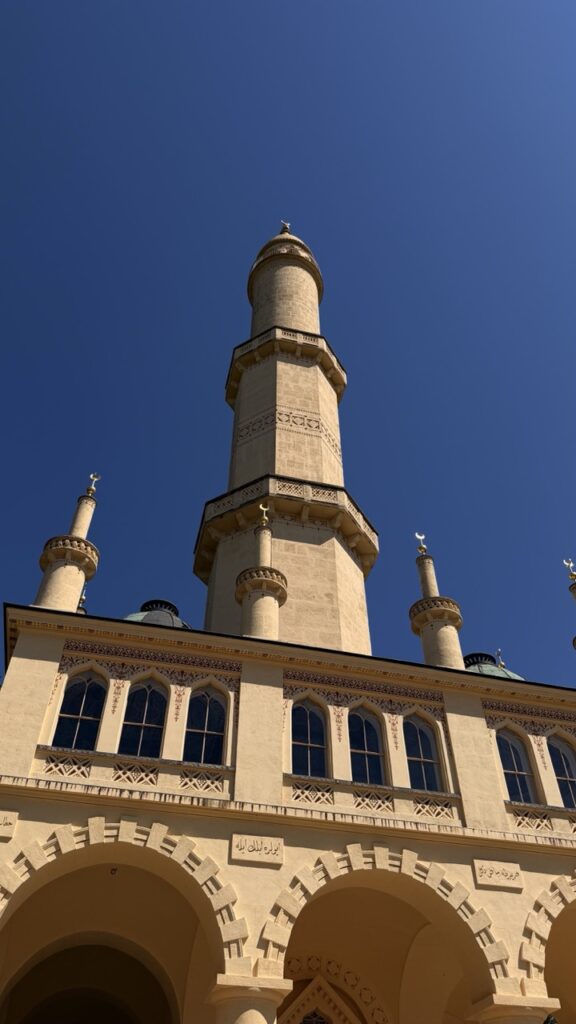
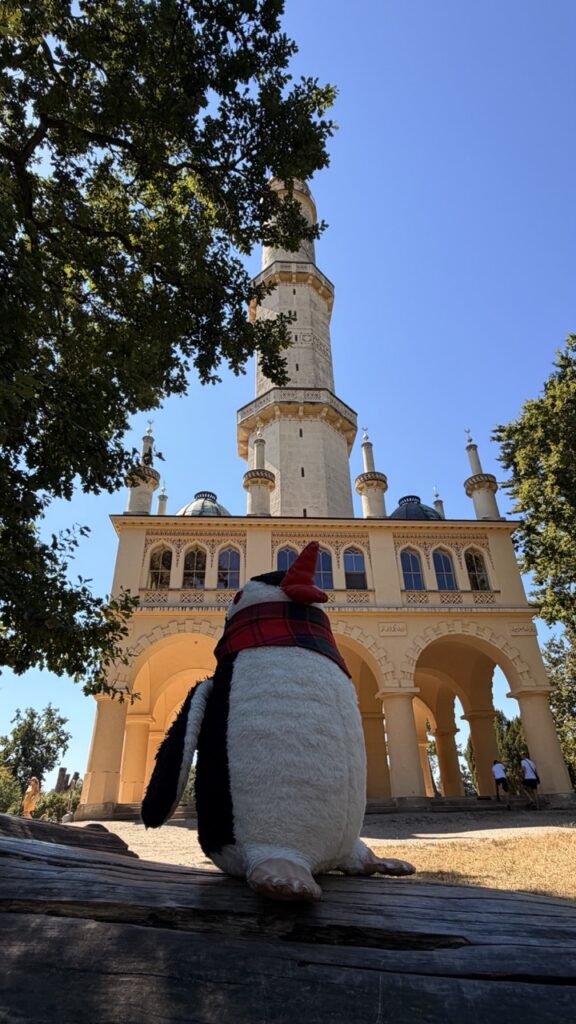
Eventually, our waddle through the park brings us to the Lednice Minaret, which we already mentioned in the local legend above. It was built between 1797 and 1801 for Prince Alois I of Liechtenstein and designed by architect Josef Hardtmuth as part of the Lednice park landscape. Standing around 60 meters (197 ft) tall, it is considered one of the tallest structures of its kind outside the Islamic world. Despite its appearance, it was never used as a mosque; it was built as a decorative park structure and lookout tower, reflecting the interest in exotic architecture found in European landscape gardens at the time. The Minaret has three viewing galleries, and to reach the top, you need to tackle 302 steps. Even from the ground, though, it’s an unusual sight, especially after spending the last part of the walk catching little glimpses of it through the trees.
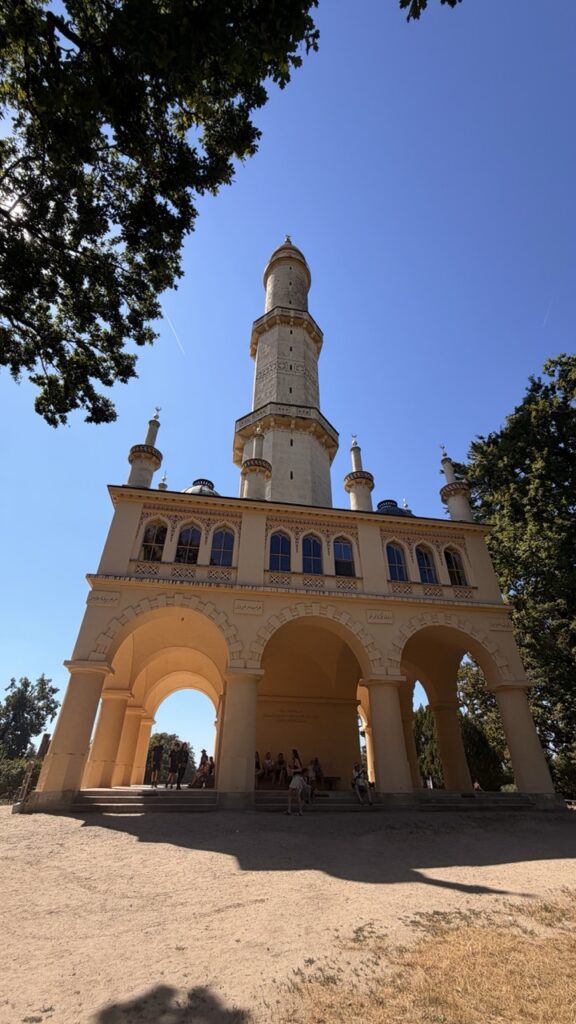
There is a separate entrance fee if you want to climb the Minaret, as it isn’t included with your castle tour ticket. Adult admission is 100 CZK, with reduced tickets available for children and other eligible visitors. Tickets are purchased separately at the Minaret. There is also a small refreshment stand/buffet next to it, a good place to grab a cold drink, a snack, or ice cream before continuing your waddle.
After taking more than enough photos of the Minaret, we have one more important mission before heading back; hiding a penguin stone. And not just any penguin stone. This one is the 1000th one that was hidden, which makes this stop a little extra special for us. With the stone hidden and the Minaret ticked off, we start our waddle back through the park towards Lednice Castle, following the paths, bridges and water once again.
We decide not to climb the Minaret this time and leave those 302 steps for our next visit. We also save the Children’s Rooms and Museum of Puppets, as well as the grotto route for next time, so we have another reason to return to Lednice. Apparently, even after two visits, we’re still not quite done with this place.
Other Things to Do at Lednice Castle
Waddling through the castle and gardens can easily fill a big part of your day, but there are also a few other activities around the Lednice estate if you want to stay longer. Some are seasonal, particularly during the warmer months so that availability can change throughout the year.
- Take a boat ride. Cruise along the waterways through the castle park, with routes connecting the castle area with the Minaret and other parts of the grounds.
- Ride in a horse-drawn carriage. Explore part of the Lednice park by carriage instead of walking the entire way.
- Try archery. During the main season, you can sometimes find archery and other small activities around the castle grounds.
- Rent a bike. Lednice is part of a large network of cycling routes, making it easy to continue towards Valtice and other sights in the area.
- Visit Janův hrad. Continue deeper into the Lednice–Valtice landscape to this artificial castle ruin, which has its own guided tour.
- Have a picnic. Bring some food, find a spot in the park and take a break between all that waddling.
- Explore more of the Lednice–Valtice area. If you still have energy, you can continue beyond the main castle park and discover more of the wider cultural landscape.
During special periods, the program can be even bigger. For example, the official castle program has included birds-of-prey demonstrations, especially in the summer months.
Buy Us a Ko-fi

Best Time to Visit Lednice Castle
Having visited Lednice in both late November and the middle of summer, we can say that each season has something going for it. In winter, the park feels much quieter, with fewer people on the paths and plenty of space to waddle around at our own pace. The downside is the cold, shorter days and more limited opening hours, with some attractions closed for the season. Summer is the complete opposite. The gardens are green, seasonal activities are underway, and much more is happening around the estate, but there are also many more visitors.
Interestingly, our experience inside the castle is the opposite. Our summer Private Apartments tour has fewer people than our November Representative Rooms tour. So visiting outside the main season doesn’t necessarily mean your castle tour will be empty.
If we had to choose the best time, we would probably go for late spring or early autumn. You get more of the summer experience without the strongest heat and peak crowds. But if you don’t mind the cold and prefer a quieter waddle through the park, Lednice in late autumn has its own charm too.
How Long Do You Need at Lednice Castle
How long you need at Lednice depends on what you want to see. You can easily spend half a day here, especially if you choose one castle tour, visit the Palm House, and take a waddle through the gardens to the Minaret and back. If you want to add another castle route, climb the Minaret, take a boat ride, watch the birds-of-prey show, or explore the park without rushing, you can easily spend a full day at Lednice. Based on our two visits, we recommend setting aside 4–5 hours, but if you have a full day available, you definitely won’t run out of things to do.

Nearby Attractions
If you have more time, Lednice is a good base for exploring more of South Moravia and the wider Lednice–Valtice area.
- Valtice Castle. Another former Liechtenstein residence, around 10 km (6 miles) from Lednice.
- Janův hrad (John’s Castle). A romantic artificial castle ruin hidden in the landscape, which you can reach on foot, by bike or by boat from Lednice.
- Temple of Apollo. A small Neoclassical temple overlooking Mlýnský Pond and a good quick stop between Lednice and nearby sights.
- Three Graces. A semicircular Neoclassical colonnade with a sculpture of the Three Graces in front.
- Mikulov. Around 15 km (9 miles) away, with Mikulov Castle, the old town, Holy Hill and plenty of wine stops.
- Pálava: Head here for hiking, vineyards, limestone hills and views across South Moravia.
- Lednice–Valtice Cultural Landscape. There are plenty of smaller monuments, ponds and trails between Lednice and Valtice, making the area especially good to explore by bike.

After two visits, in two completely different seasons, we can definitely say that Lednice Castle is worth visiting. From the castle interiors and the wooden staircase in the library to the Palm House, gardens and long walk towards the Minaret, there is enough here to keep you busy for hours. We also love that our two visits feel different; one has us freezing in an almost empty park, while the other has us trying not to melt in the middle of summer.
And somehow, we’re still not finished. We haven’t climbed the Minaret, and the Children’s Rooms are still waiting for us, so it looks like a third visit is already on the cards. If you’re traveling through South Moravia or looking for an easy day trip from Bratislava or Vienna, Lednice gets a big penguin yes from us.
Travel Bold. Eat Well. Waddle Wild.

This post contains affiliate links. If you click and buy, I might earn a tiny commission, enough to help a penguin keep up its globe-trotting lifestyle. No extra cost to you, just more fish for me. Thank you for supporting the adventure!