Discover the Flavors of Scotland with Must-Try Dishes, Traditional Drinks, and Irresistible Desserts
Scotland might not be the first place that comes to mind when talking about culinary experiences, but you’re in for a treat—literally. From traditional meals to sweet indulgences and world-famous whiskies, Scottish cuisine is a rich blend of history, culture, and comfort. Whether you’re exploring the Highlands, strolling through Edinburgh‘s cobbled streets, or venturing out to the Hebrides, food is a central part of the Scottish experience. Here’s a deep dive into what you should eat and drink when in Scotland.
Scottish Food: More Than Just Haggis
Scottish food is hearty, comforting, and deeply connected to the country’s landscapes and traditions. While many people immediately think of haggis, Scotland’s cuisine goes far beyond its most famous dish. Fresh seafood, high quality beef, locally sourced lamb, smoked salmon, and rich soups all play an important role in Scottish cooking. Thanks to its rugged coastline and fertile countryside, Scotland has access to some of the best natural ingredients in the United Kingdom.
One thing you’ll quickly notice is that Scottish food is designed to keep you going, whether you’re exploring the Highlands, wandering through Edinburgh, or hiking along the coast. Traditional dishes tend to be filling and simple, focusing on quality ingredients rather than complicated recipes. Scotland is also world-famous for its whisky, with hundreds of distilleries producing some of the most recognizable spirits. If you arrive expecting only haggis and deep-fried snacks, you’ll likely be surprised by the variety and quality of food you’ll find across the country.
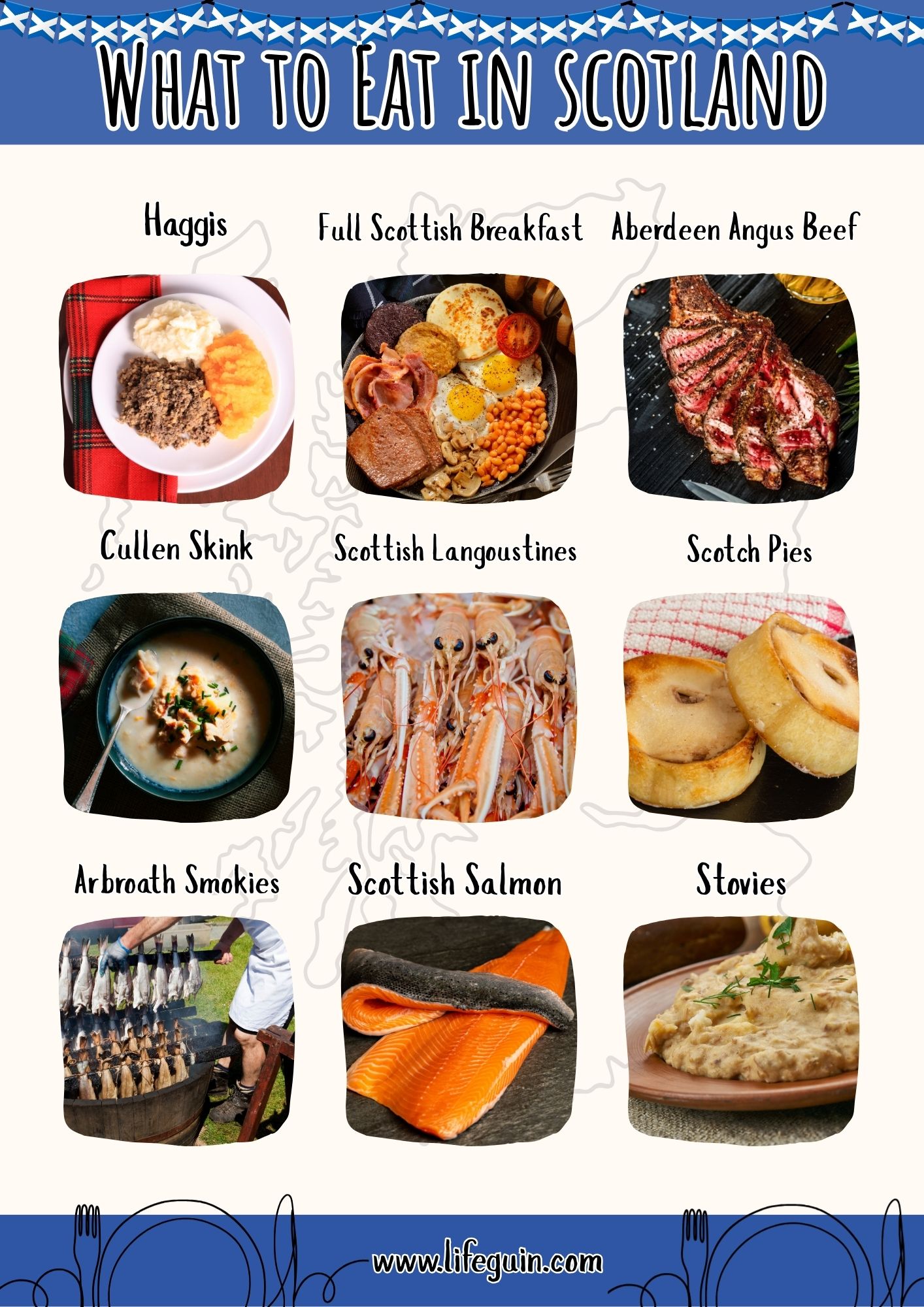
9 Scottish Dishes You Shouldn’t Miss
- Haggis: The National Dish of Scotland. Let’s start with the national dish. No culinary journey through Scotland is complete without trying haggis. It’s beloved by locals and cherished as a cornerstone of Scottish heritage. Haggis is a savory pudding made from sheep’s offal (heart, liver, and lungs), onions, oatmeal, suet, spices, and salt, traditionally encased in the animal’s stomach. Despite its humble ingredients, haggis is surprisingly delicious, boasting a rich, peppery flavor and a crumbly texture. It is usually served with “neeps and tatties” (mashed turnips and potatoes) and often accompanied by a whisky sauce. If you’re visiting around January 25th, don’t miss Burns Night, when haggis takes center stage during a spirited celebration of poet Robert Burns.
- Full Scottish Breakfast. Yes, there is also a Scottish breakfast, not just an English one. Kickstart your day the Scottish way with a full breakfast that goes above and beyond the usual fare. A traditional Scottish breakfast typically includes: bacon, lorne sausage (square sausage), black pudding, fried egg, grilled tomato, potato scone (tattie scone), and toast or fried bread. Some variations also feature baked beans or mushrooms. It’s a hearty meal that prepares you for a day of hiking, sightseeing, or just enjoying the stunning scenery.
- Aberdeen Angus Beef. Aberdeen Angus beef, native to northeast Scotland, is one of the country’s most prized meats. Known locally as “Doddies” or “Hummlies” for their naturally hornless breed, these cattle date back to the 19th century, with pioneers like Hugh Watson shaping their quality through selective breeding. Rich in iron, zinc, and marbled fat, Aberdeen Angus beef is incredibly flavorful and juicy—perfect for a steak dinner or gourmet burger. Its reputation for quality has made it a staple in steakhouses around the world.
- Cullen Skink. This creamy, comforting soup hails from the northeast fishing town of Cullen. Cullen skink is made with smoked haddock, potatoes, onions, and cream. It’s thicker and more indulgent than many fish soups, making it perfect for warming up on a chilly Scottish day. Try it with a hunk of crusty bread at a local pub or seaside café.
- Scottish langoustines. Scotland’s native langoustines are a true seafood treat. Caught mainly off the west coast and in the North Sea, these sweet, succulent prawns are a staple on seafood platters across the country. Often boiled or grilled, they’re best enjoyed with a simple dipping sauce at a seaside shack or local restaurant.
- Scotch Pies and Savory Pastries. In Scotland, pies aren’t just for dessert. Scotch pies are small, double-crust meat pies traditionally filled with minced mutton, though modern versions often use beef. These are popular as on-the-go snacks, especially at football matches. You can also find bridies (beef and onion in a flaky pastry) and Forfar bridies, a regional variation. Sausage rolls and other savory baked goods are widely available in bakeries across the country.
- Arbroath Smokies. A delicacy with a Protected Geographical Indication (PGI) status, Arbroath smokies are smoked haddock prepared using traditional methods in the fishing town of Arbroath. The fish is salted, dried overnight, and then smoked over hardwood fires in barrel-like smoking pits. The result is a tender, flavorful fish that is best enjoyed fresh from the smoker.
- Scottish Salmon and Seafood. Scotland is famous for its pristine waters and excellent seafood. Scottish salmon is a globally recognized delicacy, often served smoked, grilled, or poached. You can also indulge in fresh scallops, mussels, langoustines, and oysters. Head to the west coast or islands like Skye and Mull for the freshest catches.
- Stovies. Stovies are the epitome of Scottish comfort food. This one-pot dish varies from household to household but generally includes potatoes, onions, and leftover roast meat, all slow-cooked together. It’s a simple yet satisfying meal, especially on a rainy evening.
Traditional Scottish Desserts
Scotland also satisfies the sweet tooth. Here are a few must-try desserts:
-
- Cranachan. It is a traditional dessert made with whipped cream, whisky, honey, fresh raspberries, and toasted oatmeal. It’s a celebration of local ingredients and is often served on special occasions.
- Sticky Toffee Pudding. Though originally English, this rich dessert has become a staple in Scottish restaurants. It features a moist sponge cake made with dates, served with a luscious toffee sauce and a scoop of vanilla ice cream.
- Cloutie Dumpling. A dense fruit pudding boiled in a cloth (or “clout”) and packed with dried fruits, spices, and suet. Traditionally served during holidays or special events.
- Shortbread. Scotland’s most famous biscuit is known for its crumbly texture and buttery flavor. Often enjoyed with tea or gifted in decorative tins.

Drinks to Try in Scotland
No guide to Scottish cuisine is complete without mentioning the country’s legendary drinks.
-
- Whisky (Scotch). Scotland’s most iconic drink, whisky, is more than a beverage; it’s a national treasure. Each region has its own distinct style:
-
- Islay: Peaty and smoky
- Highlands: Bold and varied
- Speyside: Fruity and complex
- Lowlands: Light and floral
- Campbeltown: Maritime and briny
-
- Scottish Ales and Craft Beers. Scotland’s beer scene is vibrant and growing, from traditional ales like Belhaven to modern craft brews. Try a pint at a local pub or join a brewery tour.
- Irn-Bru. Known as Scotland’s “other national drink,” Irn-Bru is a bright orange soda with a unique, indescribable flavor. It’s beloved across the country and often recommended as a hangover cure.
- Scottish Gins. In recent years, gin has seen a resurgence in Scotland, with artisanal distilleries popping up across the nation. Many feature botanicals that are native to the Scottish Highlands.
- Whisky (Scotch). Scotland’s most iconic drink, whisky, is more than a beverage; it’s a national treasure. Each region has its own distinct style:
Buy Us a Ko-fi

Scotland offers a culinary adventure as dramatic and delightful as its landscapes. Whether you’re enjoying a dram of whisky by a roaring fire or savoring fresh seafood by the sea, every bite and sip tells a story. Scottish cuisine is the ultimate in comfort food. It’s not just about nourishment—it’s about tradition, warmth, and a deep connection to the land and sea. So come hungry and leave with a full belly and a heart full of memories.
Travel Bold. Eat Well. Waddle Wild.

This post contains affiliate links. If you click and buy, I might earn a tiny commission, enough to help a penguin keep up its globe-trotting lifestyle. No extra cost to you, just more fish for me. Thank you for supporting the adventure!