Galéria Nedbalka Bratislava: A Guide to Slovakia’s Modern Art Gallery
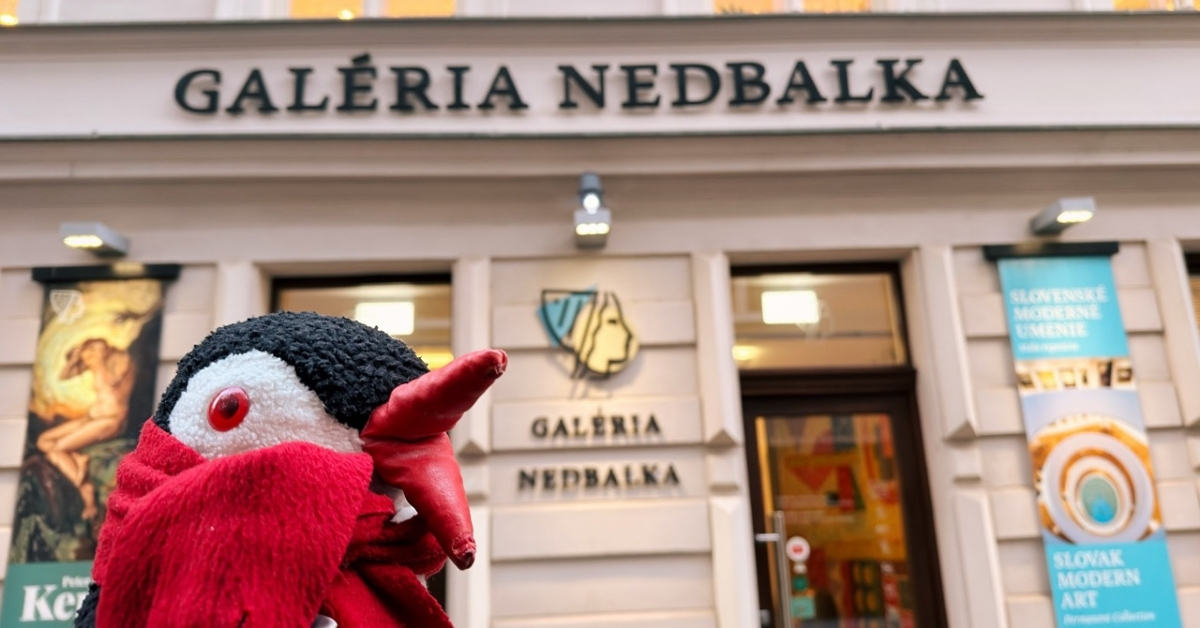
Bratislava has its fair share of galleries and museums, and we finally managed to tick Galéria Nedbalka off our list. Tucked away in the Old Town, this art gallery was a lovely surprise and a welcome addition to our Bratislava explorations. We came curious about its famous architecture and left with a new appreciation for Slovak art.
- Galéria Nedbalka Practical Information
- How to Get to Galéria Nedbalka
- Opening Hours and Tickets
- Galéria Nedbalka: A Little Background
- Our Waddle: Discovering Bratislava’s Little Guggenheim
- How Much Time Do You Need
- Best Time to Visit Galéria Nedbalka
- Is Galéria Nedbalka Worth Visiting
- What to See Near Galéria Nedbalka
Galéria Nedbalka Practical Information
📍 Location: Nedbalova 17, Bratislava – Google Maps
🕒 Opening Hours: Tuesday–Sunday, 13:00–19:00. Closed Mondays
🎟️ Tickets: Adults €8. Discounts for seniors and students
⏱️ Time Needed: 1–1.5 hours
🌐 Website: nedbalka.sk
📱 Instagram: @galerianedbalka
How to Get to Galéria Nedbalka
Galéria Nedbalka is on Nedbalova Street in Bratislava’s Old Town, making it easy to reach on foot or by public transport. If you’re already exploring the city center, we recommend waddling through the Old Town streets. The gallery is within waddling distance of Hlavné námestie and other central attractions. If you’re coming from further away, take a tram or bus to Šafárikovo námestie or Námestie SNP, then walk a few minutes.
Opening Hours and Tickets
Opening Hours
Galéria Nedbalka is open from Tuesday to Sunday, 13:00–19:00, and closed on Mondays. The gallery is open to visitors in the afternoon, so plan your visit accordingly.
Admission and Tickets
Admission prices depend on age and visitor category:
- Adults: €8
- Seniors (62+): €7
- Students: €4
- Children under 6: Free entry
- Plushies: Free entry
You can pay for your tickets in cash or by card.
We didn’t book or pay for our tickets in advance. We arrived at the gallery, bought them at the ticket counter, and headed inside. It was quick and easy, so you don’t need to reserve your visit beforehand. Opening hours and ticket prices may change, so always check the official website before visiting.
Facilities and Amenities
- Café. Enjoy coffee, tea, fresh juices, and cakes in the gallery café.
- Art Shop. Books, art catalogs, posters, postcards, and souvenirs.
- Free Wi-Fi. Available throughout the gallery.
- Digital Guide. Included with your admission ticket.
- Accessibility. Lift access to all exhibition floors.
- Toilets. Available on-site, including accessible facilities.
- Photography. Personal photography is permitted without flash.
- Lockers. Lockers are available for visitors to store coats, bags, and personal belongings during their visit.
- Parking. No dedicated parking, but paid garages are available nearby.
Hotel search from Trip.comShows Trip.com’s own box, which can set Trip.com cookies.Search hotels on Trip.comTrip.com’s box can’t load on this device (an ad blocker often stops it). This opens Trip.com’s own hotel search.Open Trip.com
Galéria Nedbalka: A Little Background
The story of Galéria Nedbalka began with a passion for collecting Slovak art and a desire to make it accessible to the public. Founded by philanthropists Miloslava and Peter Paško, together with art collector Artúr Bartoška, the gallery opened its doors in October 2012. Their idea was simple: bring important works of Slovak fine art out of private collections and make them available to everyone, right in the heart of Bratislava.
The gallery occupies a historic building at Nedbalova 17, one of the oldest streets in Bratislava’s Old Town. The building dates to the early 19th century and originally served as a residential property, later housing a restaurant. Following several transformations, it underwent a complete reconstruction before becoming an art gallery. Its exterior retains a classical appearance, while the interior reveals an entirely different architectural experience.


The name Nedbalka comes from Nedbalova Street, where the gallery is. The street itself has a long history, connecting Laurinská and Uršulínska streets and following the route of former medieval city fortifications.
Today, the gallery’s mission is to introduce visitors to Slovak visual art and the artists who shaped its development from the late 19th century to the present day. Its collection includes paintings and sculptures by generations of Slovak artists, alongside temporary exhibitions, educational programs, and cultural events.
One reason Galéria Nedbalka attracts so much attention is its distinctive architecture. The circular interior, arranged across several floors around a central atrium, resembles the famous Solomon R. Guggenheim Museum in New York. This resemblance earned it the nickname the Slovak Guggenheim. Once you step inside, it is easy to see why.
Our Waddle: Discovering Bratislava’s Little Guggenheim
We had seen photographs of the gallery’s unusual interior before our visit, but seeing it in person was something else. From the outside, the building looks like a traditional part of Bratislava’s Old Town. Nothing gives away what awaits behind its doors. But once we stepped inside, the central atrium and its sweeping curved balconies immediately caught our attention. We looked up, following the circular lines from one floor to another, and got ready to explore the Slovak art collection waiting around each corner.


We stepped inside and headed straight to the ticket counter, where we bought our tickets without booking in advance. Since we visited in the winter months, we also used the on-site lockers. We left our jackets and bags behind instead of carrying everything around the gallery, which made the visit much more comfortable. The gallery has both stairs and an elevator connecting the different floors, so visitors can choose how they prefer to explore the building, making the exhibitions accessible to people with different mobility needs. With our hands free and ready to explore, we headed further inside to see what Galéria Nedbalka had in store.
First Impressions: An Unusual Building in Bratislava’s Old Town
The moment we stepped further inside Galéria Nedbalka, our attention shifted from the artwork to the building itself. The central atrium catches your eye, with its curved white balconies wrapping around the open space and connecting the different exhibition floors. It is quite different from what you might expect behind the historic façade on Nedbalova Street. The architecture feels distinctly modern, with clean lines, rounded edges, and a beautiful spiral layout that draws your eyes upward.
We decided to start on the top floor and slowly make our way down through the exhibitions. From up there, we had one of the best views of the gallery’s interior. Looking down into the central atrium, you can see the different levels unfolding around the spiral staircase, with each floor forming another part of the architectural composition. We spent a few moments admiring the space before turning our attention to the artwork. It is one of those interiors that makes you want to stop, look around, and take a few photographs before even beginning the actual gallery visit.


The Famous Spiral Interior
The architectural highlight of Galéria Nedbalka is undoubtedly its central atrium. The moment you look up, you see a series of curved white balconies wrapping around the open space, creating a continuous spiral that connects all four exhibition floors. The smooth walls, rounded edges, and clean lines give the interior a sense of movement, almost as if the entire building gently winds upward. From the top floor, we could look down through the center and see how each level follows the same flowing shape, while looking up reveals the balconies stacked one above another.
This distinctive layout earned Galéria Nedbalka comparisons with the famous Solomon R. Guggenheim Museum in New York. Both buildings use a central open space and curved exhibition levels to create a visual connection between architecture and art. Rather than moving through a series of traditional rectangular rooms, visitors experience the collection within a space that feels connected from beginning to end. We particularly enjoyed seeing the gallery from different heights, as every floor offered another perspective of the spiral. And, of course, it made us stop more than once to admire the architecture before continuing our waddle through the exhibitions.


The gallery’s distinctive spiral layout originated with the building’s extension, designed by Slovak architects Viktória Cvengrošová and Virgil Droppa in the early 1990s. Their design received the prestigious Dušan Jurkovič Award in 1995. During the gallery’s complete reconstruction in 2012, architect Jarmila Kusá adapted the interior for its new purpose as an exhibition space while preserving its distinctive architectural concept.
Exploring the Gallery Floor by Floor
We started our visit on the top floor and slowly made our way down, following the gallery’s spiral layout. The permanent exhibition is arranged chronologically, taking visitors through more than a century of Slovak art, from the late 19th century to the present day. Across four exhibition floors, you encounter around 160 paintings and sculptures, with each level focusing on a different period in the development of Slovak modern art. We liked this approach because the visits feel like a journey through the country’s artistic history rather than simply moving from one painting to another.
Fourth Floor: The Origin of Modern Fine Art in Slovakia
We began with the earliest part of the collection, exploring works from the late 19th and early 20th centuries. This section introduces the artists who helped shape the beginnings of modern Slovak fine art, as traditional artistic approaches gradually gave way to new ideas. Among the artists represented are Ladislav Mednyánszky and Dominik Skutecký. The paintings offer a glimpse into how artistic expression developed as Slovakia entered a period of significant social and cultural change.


Third Floor: Modern Art in Slovakia
Moving one floor down, we entered the period between the two World Wars. This was a time of experimentation, with artists exploring new styles, subjects, and ways of representing the world around them. The collection features important Slovak artists such as Martin Benka, Ľudovít Fulla, Mikuláš Galanda, Miloš Alexander Bazovský, and Imrich Weiner-Kráľ. Here, the paintings reflect the changing times, balancing traditional influences with modern artistic movements.


Second Floor: The Mikuláš Galanda Group
The next level focuses on the Mikuláš Galanda Group, an important artistic movement established in 1957. Its members played a significant role in shaping Slovak modern art, bringing together artists who wanted to develop their own creative approaches while challenging established artistic conventions. Among the names represented is Vincent Hložník. No, the collection includes Andrej Barčík, Vladimír Kompánek, Rudolf Krivoš, Milan Laluha, Milan Paštéka, and Andrej Rudavský. The works show different interpretations of modernism, with individual artistic styles coming together under one movement.


First Floor: Personalities and Phenomena
As we went on, we reached the section dedicated to Slovak art from the second half of the 20th century onward. This floor brings together works by artists who helped shape the direction of Slovak visual art in recent decades. Among them are Július Koller, Jozef Jankovič, Alex Mlynárčik, Rudolf Uher and Viera Žilinčanová. The collection moves beyond traditional painting and sculpture, introducing different artistic approaches and ideas. It was interesting to see how much artistic expression had changed compared with the works we encountered on the top floor.


Ground Floor: Temporary Exhibitions
Finally, we returned to the ground floor, where Galéria Nedbalka hosts temporary exhibitions featuring Slovak artists and a range of artistic themes. Unlike the permanent collection upstairs, these exhibitions change over time, giving visitors a reason to return and see something new. Depending on when you visit, you might encounter a solo exhibition, a thematic collection or works from the gallery’s wider art collection. Check the current exhibition program before your visit.


What to Look Out For
As you make your way through Galéria Nedbalka, slow down and look beyond the larger, more noticeable paintings. The collection brings together different artistic movements, techniques, and interpretations of Slovak life, landscapes, and culture. Some works immediately catch your attention because of their colors and composition, while others reveal their details only when you stand a little closer.
Here are a few things we’d recommend looking out for during your visit:
- Ladislav Mednyánszky: Look for his atmospheric landscape paintings, particularly his depictions of nature, rivers, and changing seasons.
- Martin Benka: Notice his distinctive representations of Slovak landscapes and rural life, often featuring traditional figures and countryside scenes.
- Mikuláš Galanda: Look for his modernist approach, expressive figures, and simplified forms.
- Ľudovít Fulla: Pay attention to his use of color, folk influences, and geometric compositions.
- Miloš Alexander Bazovský: His paintings offer another interpretation of the Slovak countryside and everyday life.
- Sculptures: Don’t focus exclusively on the paintings. The collection also includes sculptures that introduce different textures, materials, and artistic perspectives.
We also recommend taking a moment to look back towards the central atrium as you move between exhibitions. The artwork and architecture work together, and the curved white walls create an interesting backdrop for the paintings. Sometimes, the best view isn’t necessarily the artwork directly in front of you, but the way the entire gallery comes together around it.
One of our favorite things about the visit was seeing how Slovak art developed over more than a century. Even without knowing every artist or artistic movement, you can notice the changing styles, colors, and subjects as you move from one floor to another.


How Much Time Do You Need
We recommend setting aside around 1–1.5 hours for Galéria Nedbalka. This should give you enough time to explore all four exhibition floors, admire the spiral architecture, and take a closer look at the permanent collection. We enjoyed taking our time, moving from the top floor down and stopping whenever a particular painting or sculpture caught our attention. If you also want to explore the temporary exhibitions or enjoy a coffee in the gallery café, allow another 30 minutes. No need to rush, especially if you want to appreciate both the artwork and the building itself.
Best Time to Visit Galéria Nedbalka
Since Galéria Nedbalka opens in the afternoon, plan your visit for early afternoon or shortly after opening at 13:00. Weekdays are generally a good choice if you prefer a quieter experience, while weekends can attract more visitors. We recommend avoiding busier periods if you want to photograph the famous spiral interior and enjoy the exhibitions at your own pace. Allow yourself enough time to explore all four floors without rushing.
A few tips:
- Best time of day: Shortly after opening, around 13:00.
- Best days: Tuesday to Friday for a potentially quieter visit.
- Weekends: Can be busier, particularly during popular exhibitions.
- Photography: Arrive early if you want to capture the central atrium with fewer people around.
Hotel search from Trip.comShows Trip.com’s own box, which can set Trip.com cookies.Search hotels on Trip.comTrip.com’s box can’t load on this device (an ad blocker often stops it). This opens Trip.com’s own hotel search.Open Trip.com
Is Galéria Nedbalka Worth Visiting
Penguin-approved gallery! We think Galéria Nedbalka is worth adding to your Bratislava itinerary, even if you’re not particularly interested in art. The €8 adult admission includes a coffee or tea at the gallery café, which is even better value. What sets this gallery apart from many other museums in Bratislava is its unusual spiral architecture and extensive collection of Slovak modern art. You don’t need to be an art expert to enjoy it. The building itself is an attraction, and exploring the different floors gives you an interesting insight into Slovakia’s artistic history.
What to See Near Galéria Nedbalka
One of the best things about visiting Galéria Nedbalka is its location. Right in the heart of Bratislava’s Old Town, the gallery is surrounded by historic squares, churches, palaces and charming cobbled streets.
- Hlavné námestie (Main Square). Just a short stroll from the gallery, Bratislava’s Main Square is one of the city’s central meeting points. Admire the historic buildings, stop by Maximilian’s Fountain and enjoy the cafés surrounding the square.
- Old Town Hall. Standing right beside the Main Square, the Old Town Hall is one of Bratislava’s oldest historic buildings. Today, it houses the Bratislava City Museum, where you can learn more about the city’s past. Don’t miss the tower if you fancy a panoramic view over the Old Town.
- Primate’s Palace. Located on Primaciálne námestie, this elegant Neoclassical palace is known for its pink façade and historic interiors. Inside, you can admire the famous collection of six 17th-century English tapestries.
- St. Martin’s Cathedral. Continue towards the western edge of the Old Town to find this Gothic cathedral, once the coronation church of the Kingdom of Hungary. Between 1563 and 1830, eleven Hungarian kings were crowned here. Look up at the tower, topped with a replica of the Hungarian royal crown.
- Michael’s Gate. One of Bratislava’s most recognizable landmarks and the only surviving medieval city gate. Its distinctive tower rises above Michalská Street, and you can visit the exhibition inside and enjoy views from the upper terrace.
You don’t need public transport to explore these attractions. Wear comfortable shoes and enjoy a leisurely walk through Bratislava’s Old Town. Most of these landmarks are just a few minutes apart.
Buy Us a Ko-fi

Galéria Nedbalka was a lovely addition to our Bratislava explorations. We came for its unusual architecture but stayed for the art, discovering a collection that offers a fascinating glimpse into Slovakia’s artistic history. The spiral interior, curved balconies, and exhibitions spread across several floors make the visit different from a traditional museum experience. Whether you’re an art enthusiast or simply curious about discovering another side of Bratislava, we’d definitely recommend adding it to your itinerary. For us, it was a lovely reminder that sometimes the most interesting discoveries are hiding behind an unexpected door in the Old Town.
Travel Bold. Eat Well. Waddle Wild.

This post contains affiliate links. If you click and buy, I might earn a tiny commission, enough to help a penguin keep up its globe-trotting lifestyle. No extra cost to you, just more fish for me. Thank you for supporting the adventure!