Dwejra Bay, Gozo: A Guide to Exploring Malta’s Dramatic Coastline
We had just one day to explore Gozo, so we wanted to see as much of the island as possible. With so many places on our list, we had to choose our stops carefully. We chose Dwejra Bay as one of our first stops, ready to see what this part of Gozo had to offer.
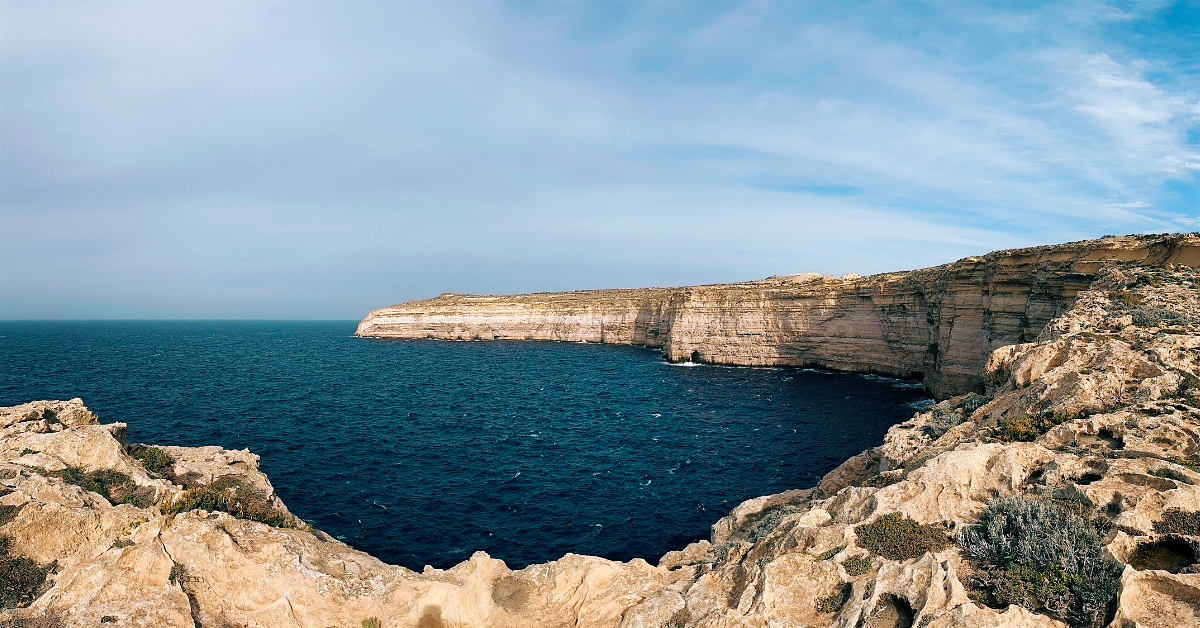
For the first time, we decided to take a hop-on, hop-off bus to explore Gozo, and we highly recommend it if you only have one day on the island. One of our first stops was Dwejra Bay, where we hopped off and realized there was plenty to explore. Several boat rental operators lined the area, offering trips out onto the water, while the rocky coastline stretched out towards some of Gozo’s most recognizable landmarks. The landscape felt raw and exposed, with limestone formations rising above the sea and the wind sweeping across the bay. It was a different side of Gozo from the sandy beaches you might expect, and we slowly made our way towards the most interesting spots, curious to see what lay ahead.
Things To Do and See at Dwejra Bay at a Glance
What Is Dwejra Bay Famous For
There’s plenty to see around Dwejra Bay, and when you first arrive, you might wonder where to start. We certainly did! From unusual rock formations to natural swimming spots and boat trips, the area offers plenty to explore. To make the most of your visit, here are the main sights to look out for as you waddle around this part of Gozo.
The Inland Sea
The Inland Sea, locally known as Il-Qawra, is one of Dwejra Bay’s most distinctive spots. Surrounded by limestone cliffs, this small lagoon looks almost enclosed from the shore, but a natural tunnel through the rock connects it to the open Mediterranean. The passage stretches about 80 meters, carved and enlarged over time by natural forces.
One of the best ways to experience the Inland Sea is to take a boat trip through the tunnel and out towards the open water. Local fishermen operate small boats that take visitors along the rocky coast, past caves and towering cliffs, offering a different perspective on the landscape. These trips depend on sea conditions, so they may not run when the wind and waves pick up. However, we visited in December, outside the main tourist season, and unfortunately, we couldn’t find any boats operating during our visit. If a boat trip is on your list, check availability in advance, especially if you’re visiting Gozo in the quieter winter months.


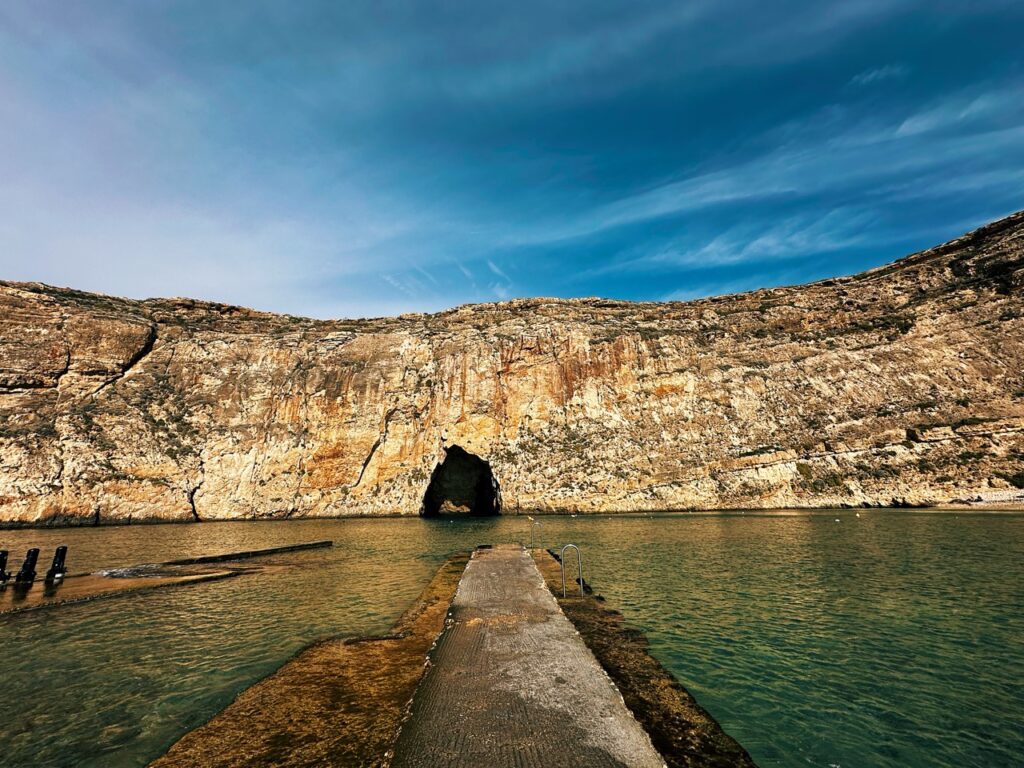
The lagoon has long been connected to Gozo’s fishing community. Before it became a popular visitor attraction, local fishermen used it as a sheltered cove, and some traditional boathouses still stand beside the water. Today, you can wander along the shore, watch boats come and go, photograph the cliffs, or swim when conditions are suitable.
An interesting fact: The Inland Sea is more than just a pretty lagoon. Geologists consider it an important example of how limestone coastlines change over time. Geological processes, including rock collapse, formed the depression, while waves gradually widened the passage connecting it to the sea.
If you have time, don’t just stop for a quick photo. The contrast between the sheltered lagoon and the waves beyond the tunnel is part of what makes this corner of Gozo so fascinating. Just keep an eye on the weather, as the exposed coastline can become dangerous in rough conditions.
Fungus Rock
We continued exploring Dwejra Bay, and the next landmark was the Fungus Rock. Rising about 60 meters above the sea, this limestone islet stands near the bay entrance and has a history far more unusual than its appearance suggests. But before you focus entirely on the rock, take a look around. The surrounding coastline is just as striking, and you can spot the small Chapel of St Anne nearby, built in 1963.
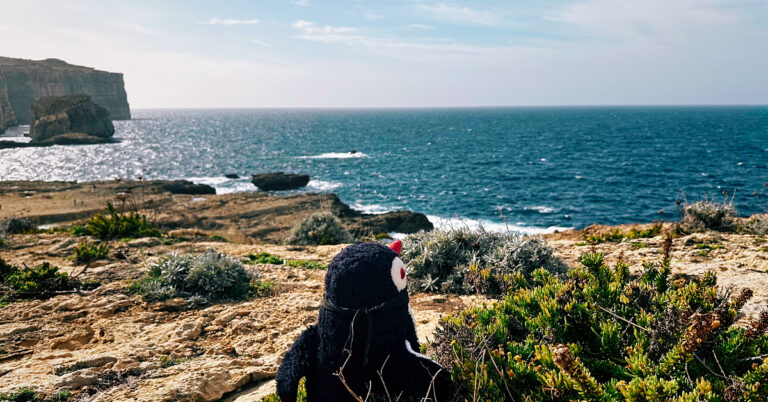
We visited in December, and the wind made this part of Gozo quite an adventure. It was so strong that we genuinely felt as if we might get blown away! Between the gusts and the exposed, rocky landscape, we had to watch our footing while taking in the views. It certainly wasn’t the kind of peaceful coastal stroll we had imagined, but it made the place even more memorable.


And now for the curious story behind the name. Fungus Rock is also known as Il-Ġebla tal-Ġeneral, or General’s Rock. Its English name comes from a plant called Cynomorium coccineum, traditionally known as the Maltese fungus. Despite the name, it isn’t a fungus at all, but a parasitic flowering plant that was once believed to have powerful medicinal properties. The Knights of St John prized it so highly that, in 1746, Grand Master Manuel Pinto prohibited access to the rock. Guards watched over it, its steep sides made it even harder to climb, and anyone caught trespassing risked severe punishment, including years of rowing in the Order’s galleys.
Here’s another surprising detail: the plant wasn’t exclusive to Fungus Rock, as people once believed, and no strong scientific evidence supports the healing powers attributed to it. Nevertheless, its reputation helped protect this little islet for centuries. Today, Fungus Rock is a protected nature reserve, so visitors admire it from the shore rather than climbing onto it.
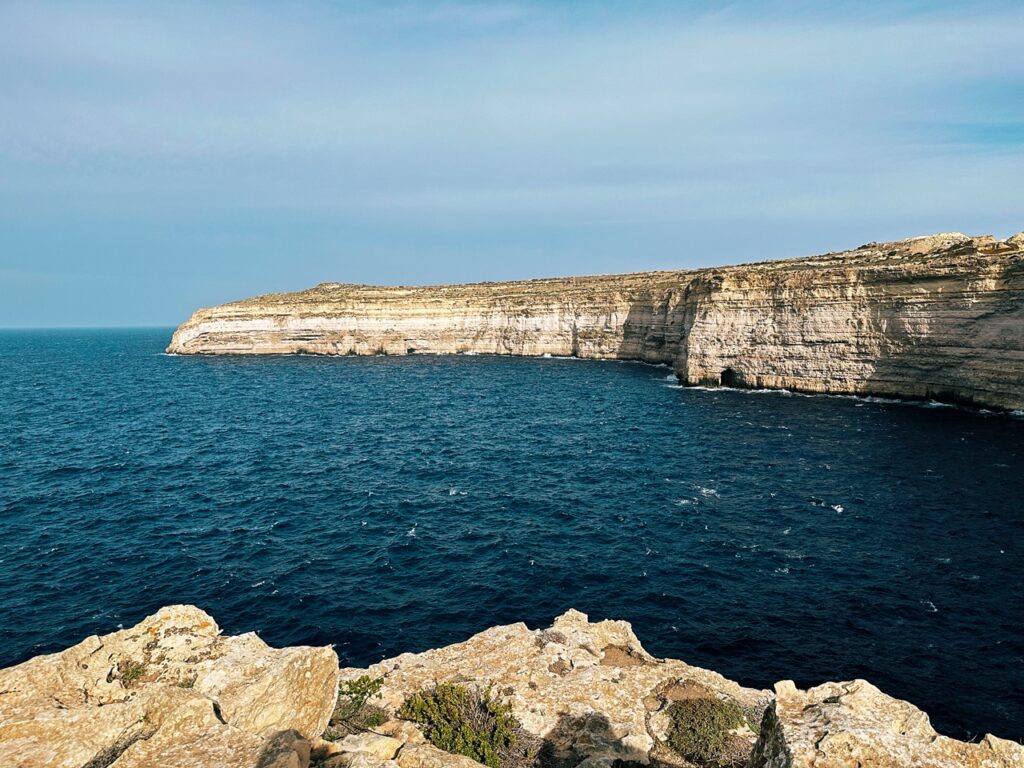
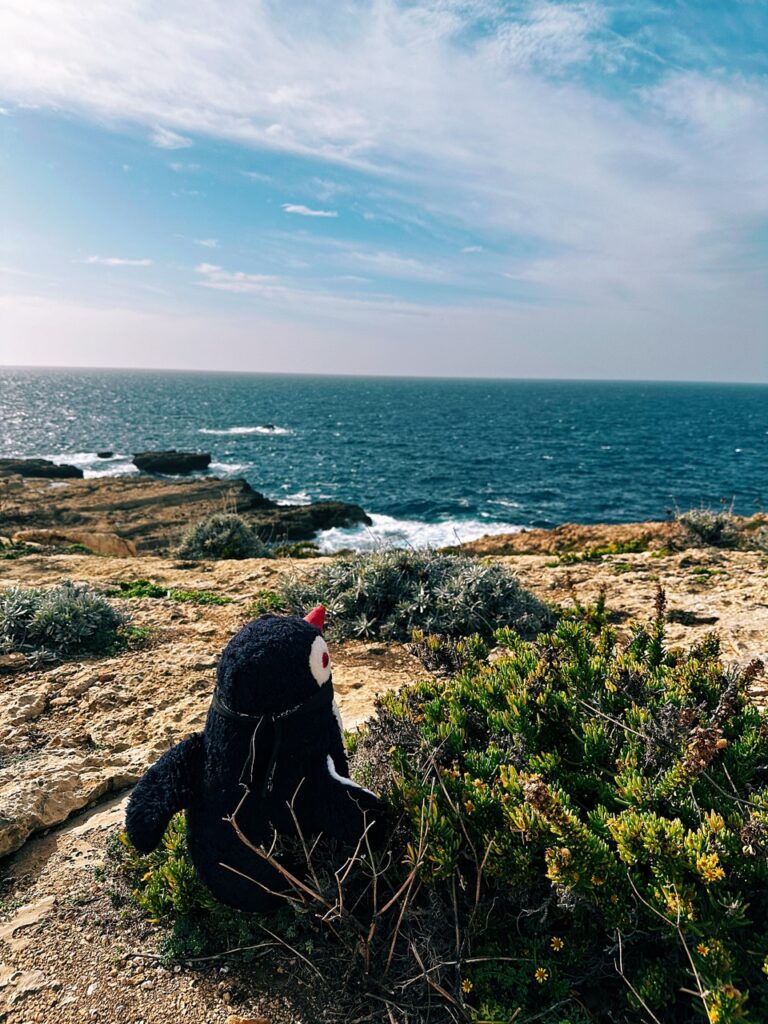
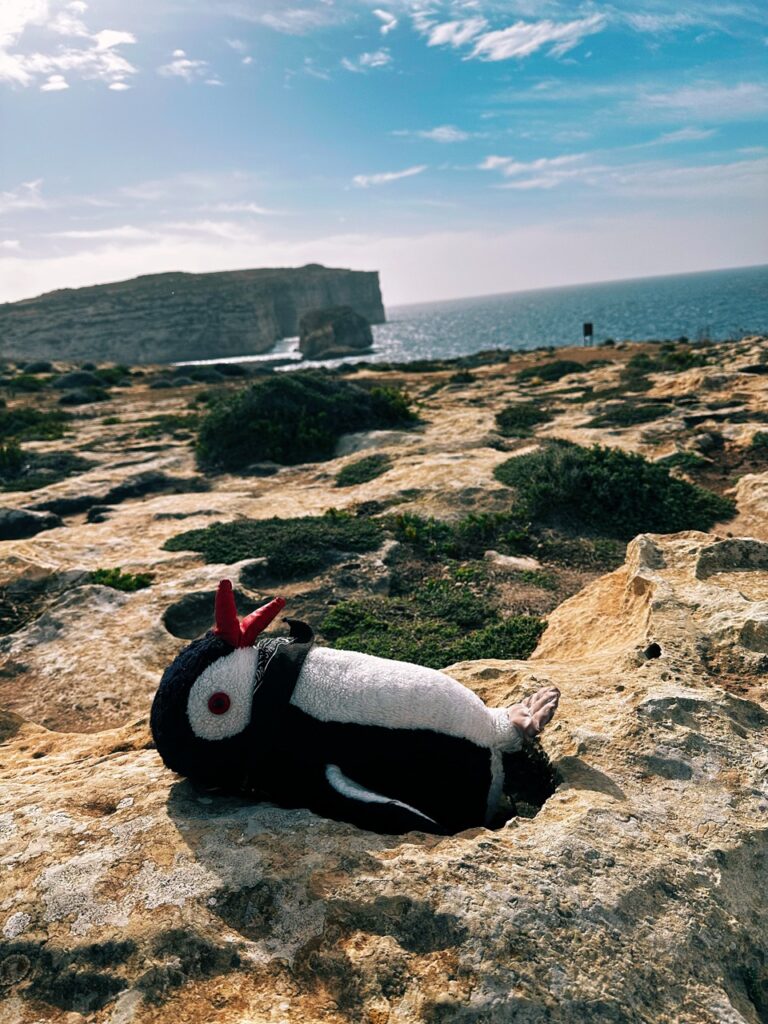

Our tip? Take time to take in the whole scene, not just the famous rock. With its unusual history, small chapel, rugged limestone, and relentless December wind, this corner of Gozo has plenty of character. Just hold on to your hat, and perhaps your penguin, if you’re visiting on a windy day!
The Blue Hole
The Blue Hole is one of Gozo’s best-known natural landmarks, particularly among scuba divers. We didn’t go diving during our visit, but we had heard about this famous spot and wanted to see what all the fuss was about. It’s close to the former Azure Window site; the Blue Hole is a natural pool carved into the limestone coastline, where the rock formations meet the clear Mediterranean Sea.
The Blue Hole is interesting because of how it formed. Over thousands of years, wind and waves gradually eroded the limestone, creating a deep, circular opening and a natural underwater arch that leads to the open sea. Below the surface, divers can explore caves, rock walls, and underwater passages, which help explain why this site has become one of Gozo’s most celebrated diving locations.
Even if, like us, you’re not planning to scuba dive, the surrounding landscape is worth exploring. The Blue Hole sits among the same rugged limestone formations that make Dwejra Bay so distinctive, with views across the Mediterranean and the remains of the former Azure Window nearby. Just be careful around the exposed rocks, especially on windy days when the sea can get rough.
The Former Azure Window
You may have seen photos of the Azure Window without realizing it was in Gozo. This enormous natural limestone arch was once one of Malta’s most recognizable landmarks, drawing visitors to see the dramatic rock formation rising above the Mediterranean. Unfortunately, the arch collapsed into the sea on 8 March 2017 after years of natural erosion and storm damage.
Although the Azure Window is no longer standing, the surrounding coastline is still worth exploring. You’ll find the Blue Hole in the same area, and the landscape remains full of limestone formations, deep blue water, and rugged coastal scenery. You can waddle along the rocky shore, take in the views, and imagine what the famous arch looked like before it disappeared.


While we couldn’t see the Azure Window that had appeared in so many photographs, we could still appreciate the natural forces that shaped this part of Gozo. It’s also a reminder that even the most famous landmarks aren’t permanent. The sea and wind keep reshaping the coast, sometimes dramatically.
If you’re looking for photographs of the original Azure Window, remember that any image showing the complete arch was taken before March 2017.
Things to Do at Dwejra Bay
Dwejra Bay is more than a place to stop for a few photographs. Even if you only have a day to explore Gozo, you can spend plenty of time wandering its rocky coastline, discovering natural landmarks, and enjoying views across the Mediterranean.
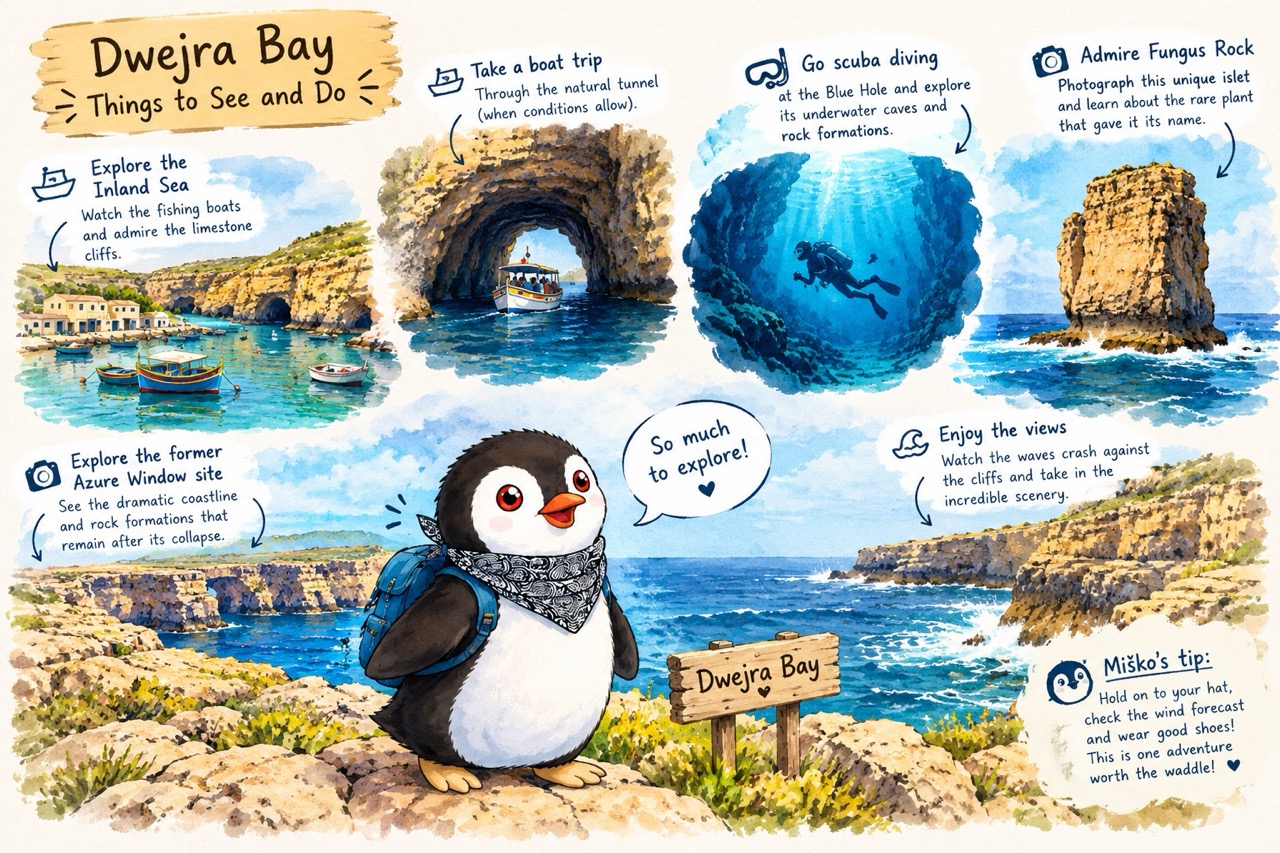
- Explore the Inland Sea. The Inland Sea is a natural lagoon surrounded by limestone cliffs, connected to the Mediterranean through a narrow tunnel in the rock. It’s a great place to begin exploring Dwejra Bay, with fishing boats bobbing on the water and traditional boathouses lining the shore. Take some time to wander the lagoon and watch the boats come and go.
- Take a Boat Trip Through the Natural Tunnel. If the weather cooperates, a boat trip through the tunnel connecting the Inland Sea to the open Mediterranean is one of the area’s main attractions. Local boat operators will take you along the coast, passing caves and rock formations that look quite different from the water.
- Admire the Blue Hole. The Blue Hole is a natural limestone formation known worldwide among scuba divers. Be careful on the exposed rocks, particularly when the wind picks up or the sea is rough.
- Photograph Fungus Rock. Fungus Rock rises from the Mediterranean near the entrance to Dwejra Bay. Its unusual shape and fascinating history make it one of the area’s most recognizable landmarks. Admire it from the shore and learn about the rare flowering plant that gave the rock its name.
- Explore the Rocky Landscape. One thing we enjoyed about Dwejra Bay was exploring its unusual landscape. The pale limestone, jagged formations, and open sea create a setting quite different from Gozo’s sandy beaches. Wear shoes with a good grip, as the limestone can be uneven and slippery in places. Avoid venturing too close to cliff edges, especially in strong winds.
- Enjoy the Sea Views. Sometimes, the best thing to do is stop and look out to sea. Dwejra Bay’s exposed coastline offers views across the Mediterranean, with waves crashing against the rocks when conditions are rough. If you enjoy photography, allow extra time to capture the coastline from different angles.
- Try a guided boat excursion. Discover Dwejra’s coastline from the water and enjoy a different perspective of Fungus Rock, the cliffs, and nearby sea caves. Availability depends on the season and sea conditions.
- Try snorkeling. When the sea is calm and conditions are safe, experienced swimmers can explore the underwater landscape around suitable coastal spots. Always check local advice before entering the water.
Pro Penguin Tip: If you’re exploring Gozo on a day trip, allow at least one to two hours for Dwejra Bay. You may want more time if boat trips are running or if you prefer a slower pace along the coastline. We used the hop-on hop-off bus to get around the island, which made it easier to include this stop in our busy itinerary.
What Is It Like to Visit Dwejra Bay
After exploring Valletta, Dwejra Bay felt like stepping into a completely different part of Malta. Instead of narrow streets, historic buildings and city squares, we found ourselves surrounded by rugged limestone, open sea and a coastline shaped by the elements. It reminded us how much variety Gozo offers, even though the island is only a short trip from Malta.
The landscape stood out to us most. Seeing the rock formations up close and discovering how the different landmarks fit together around the bay was fascinating. The strong gusts added drama to the experience, and we quickly realized this wasn’t the kind of place where you could stroll without paying attention to your surroundings.
Dwejra Bay is also quite different from a typical beach destination. You won’t find a stretch of soft sand where you can settle down for the afternoon. Instead, it’s a place to explore, take in the views, and appreciate the natural scenery. We recommend wearing comfortable, grippy shoes, bringing water, and giving yourself enough time to explore without rushing from one landmark to the next.
Is Dwejra Bay Worth Visiting
We give Dwejra Bay a penguin-approved stamp. If you’re visiting Gozo and want to see more than beaches and charming villages, this stretch of coastline deserves a place on your itinerary. We’d recommend Dwejra Bay to anyone who enjoys natural landscapes, photography, geology, or simply discovering a different side of the Maltese islands.
Keep in mind that boat trips depend on sea conditions and may be unavailable outside the main tourist season. The rocky terrain can also be uneven, so wear shoes with a good grip and keep a safe distance from cliff edges, especially in strong winds.
Practical Information for Visiting Dwejra Bay
- Location: Dwejra Bay is on Gozo’s western coast, near the village of San Lawrenz, Malta.
- Entrance Fee: Visiting the coastal area is free. Boat trips and diving activities cost extra.
- Time Needed: Allow around 1 to 2 hours to explore the main sights. If you plan a boat trip, go scuba diving, or explore the coastline at a slower pace, set aside more time.
- Getting There: You can reach Dwejra Bay by car, taxi, or public transport. We explored Gozo using the hop-on hop-off bus, which allowed us to stop at Dwejra Bay as part of our day trip. Check the current bus routes and seasonal schedules before traveling.
- Best Time to Visit: Spring and autumn offer milder weather for exploring. Early morning and late afternoon are good options for photography. Winter can be quieter, but strong winds and rough seas may affect boat trips and outdoor activities.
- What to Bring: Wear comfortable, grippy shoes for the uneven limestone terrain. Bring water, sun protection, and your camera. A light jacket can also come in handy, particularly when the wind picks up.
- Accessibility and Safety: The terrain around Dwejra Bay is rocky and uneven, with exposed coastal areas. Take care near the water and cliff edges, and avoid venturing onto exposed rocks in rough weather. Boat trips and water activities depend on sea conditions, so check availability before your visit.
Buy Us a Ko-fi

Dwejra Bay showed us a completely different side of Gozo, from the Inland Sea’s sheltered waters to the rugged coastline and unusual limestone formations. Even without sandy beaches or a boat trip, we found plenty to explore. Would we recommend adding it to your Gozo itinerary? Absolutely!
Travel Bold. Eat Well. Waddle Wild.

This post contains affiliate links. If you click and buy, I might earn a tiny commission, enough to help a penguin keep up its globe-trotting lifestyle. No extra cost to you, just more fish for me. Thank you for supporting the adventure!