How to Spend 3 Days in Oslo: A Complete Travel Itinerary
We arrived in Oslo on Friday around lunchtime and left on Monday afternoon, giving us three full days to explore Norway’s capital. From iconic landmarks and fascinating museums to panoramic viewpoints and Norwegian food, we packed plenty into our visit. Here’s everything we did, brought together in one practical 3-day Oslo itinerary to help you plan your own adventure!
Our Oslo Trip at a Glance
- Time in Oslo: 3 days / 4 nights
- Trip: Friday to Monday
- Season: Autumn
- Getting around: Waddling and public transport
- Best for: City breaks, museums, architecture, and Norwegian culture
- Our highlight: Waddling across the roof of the Oslo Opera House and enjoying the city views
Our Oslo Itinerary at a Glance
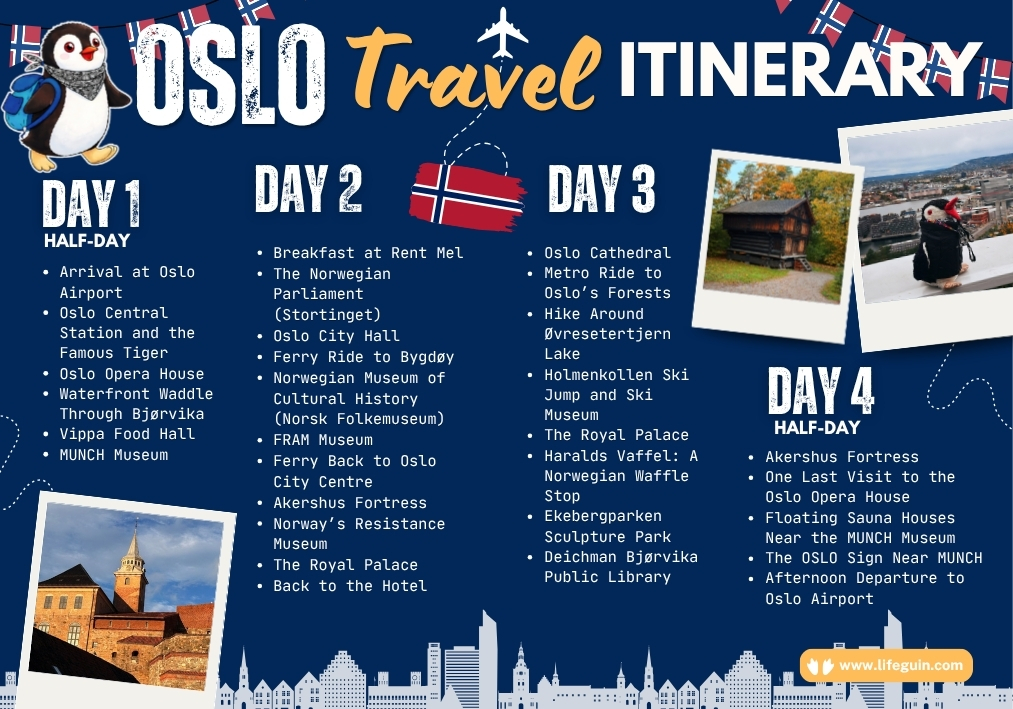
Our Oslo Itinerary: Day by Day
Day 1: Our First Waddle Through Oslo
We arrived in Oslo on Friday around lunchtime, dropped off our luggage, and headed straight out to explore Norway’s capital. With only half a day ahead, we focused on the waterfront, some of Oslo’s most recognizable landmarks, and a museum we had been looking forward to visiting. Not a bad start to our Norwegian adventure!
Oslo Central Station and the Tiger
Our Oslo adventure began at Oslo Central Station, the city’s main railway hub. Right outside, we met one of Oslo’s most recognizable characters: the famous tiger statue. Oslo has long been nicknamed the Tiger City, and this bronze feline has become one of its best-known landmarks. Naturally, we stopped for a photo before starting our first waddle through Oslo.


Oslo Opera House
Next, we headed to the Oslo Opera House, one of the city’s most striking architectural landmarks. Its distinctive white roof rises from the waterfront, inviting visitors to waddle to the top for views across the Oslofjord. We explored the building from the outside, but saved the top for later.


Waterfront Waddle
From the Opera House, we continued along Oslo’s waterfront, taking in the modern architecture, harbor views, and the relaxed atmosphere around Bjørvika. This part of the city is perfect for a leisurely stroll, with plenty of photo stops and chances to watch the boats on the water.
Vippa Food Hall
By then, it was time to eat, so we headed to Vippa, a harbor-side food hall with a variety of street-food options. It is a lovely place to take a break, grab something to eat, and enjoy views of the water. With different cuisines to choose from, it is also a handy stop if everyone in your travel group fancies something different.


MUNCH Museum
We ended our first day at the MUNCH Museum, dedicated to the Norwegian artist Edvard Munch. The museum houses an extensive collection of his works, including multiple versions of his famous painting The Scream, along with exhibitions exploring his life and artistic legacy. We visited in the evening, which gave us time to explore its galleries and interactive exhibits before wrapping up our first Oslo adventure.
If you are planning a visit, allow around two hours to explore the museum without rushing. Read more in our dedicated guide to the MUNCH Museum in Oslo.


And just like that, our first half-day in Oslo waddle was complete! From meeting the famous tiger at Central Station to exploring the Opera House, enjoying the waterfront, grabbing a bite at Vippa, and diving into Edvard Munch’s world, we had made the most of our half-day in the city. With Oslo already making a great first impression, we were ready to see what the next day had in store!
Day 2: Museums, Norwegian History and a Harbor Adventure
After our first afternoon exploring Oslo’s waterfront, we were ready for a full day of sightseeing. We started with breakfast, then headed into the city center to admire some of Oslo’s most important buildings. Then we hopped on a ferry to Bygdøy, where Norwegian history came to life through traditional buildings and fascinating stories of polar exploration. Back in the old town, we finished the day with a waddle through Oslo’s historic fortress area before heading back to our hotel.
Breakfast at Rent Mel
Every good sightseeing day needs a good breakfast, so we started our morning at Rent Mel. It was the perfect opportunity to fuel up before a busy day of exploring Oslo, with plenty of history and museums on our itinerary.
The Norwegian Parliament
Our first sightseeing stop was the Norwegian Parliament, also known as Stortinget. Located along Karl Johans gate, this impressive building houses Norway’s legislative assembly. Its distinctive architecture makes it worth stopping to admire, even if you are not particularly interested in politics. We paused to appreciate the building before continuing our waddle through the city center.
Oslo City Hall
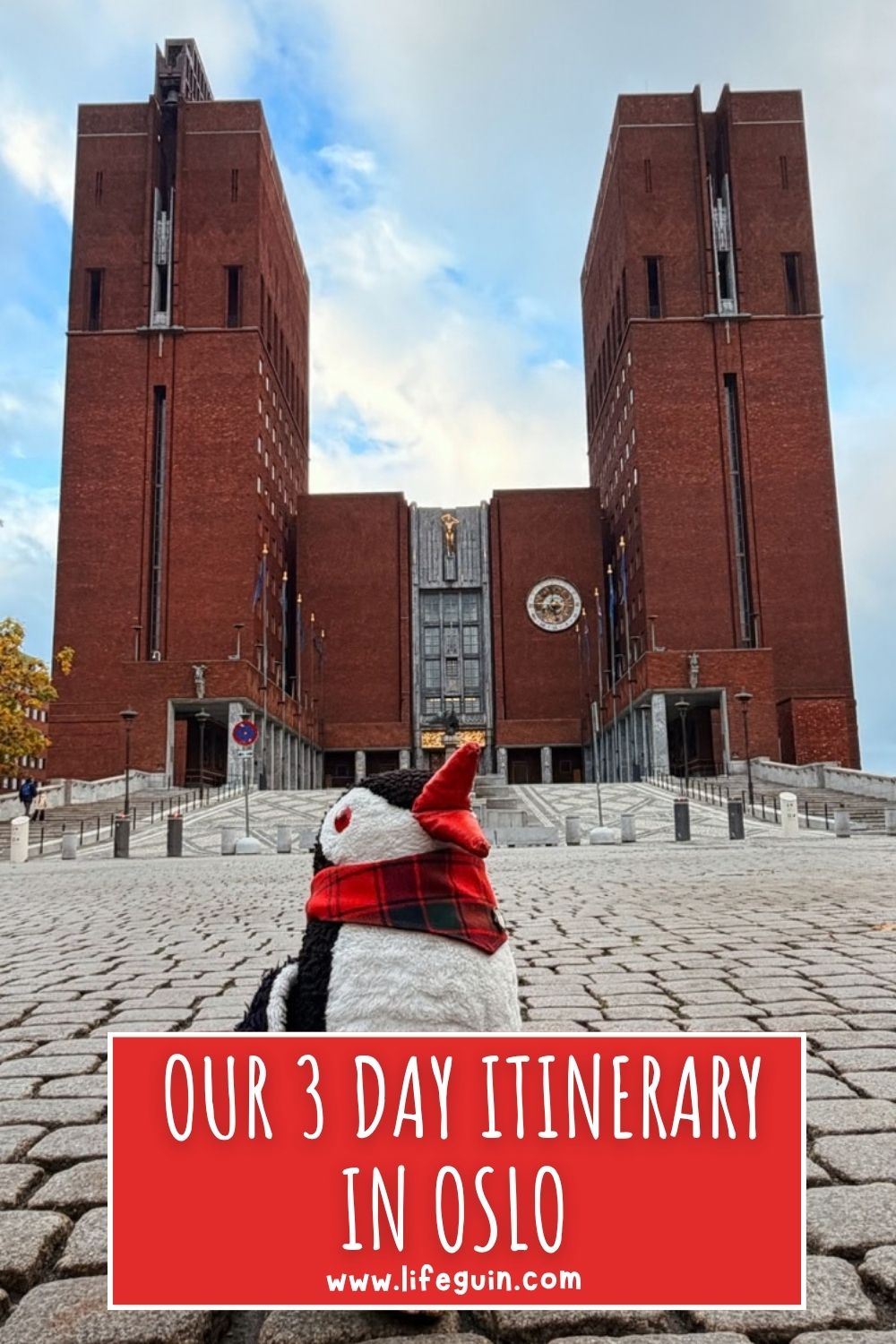
Next, we headed to Oslo City Hall, one of the city’s most recognizable landmarks. Its distinctive brick towers stand close to the harbor, and the building hosts the Nobel Peace Prize ceremony each year. Beyond its imposing exterior, the interior features murals and artworks depicting Norwegian history, culture, and everyday life. It is well worth adding to your Oslo itinerary if you enjoy architecture and art.


Ferry to Bygdøy
With the city center explored, it was time to head across the water. We took a ferry to Bygdøy, a peninsula known for its museums, green spaces, and maritime history. The ferry ride itself is a lovely part of the experience, offering a different perspective on Oslo from the water. It also makes getting to the museums feel like a little adventure.
Norwegian Museum of Cultural History
Our first museum stop on Bygdøy was the Norwegian Museum of Cultural History (Norsk Folkemuseum). This open-air museum explores how people lived in Norway over the centuries, with historic buildings transported from across the country. One of its best-known attractions is the traditional Gol Stave Church, with its distinctive wooden architecture. It is a wonderful place to learn more about Norwegian traditions, rural life, and the country’s architectural heritage.
FRAM Museum
Next, we continued to the FRAM Museum, dedicated to Norway’s polar exploration history. The main attraction is the Fram, a famous expedition ship Norwegian explorers used on journeys into the Arctic and Antarctic. Inside, you can explore the vessel and learn about the challenging conditions polar expeditions faced. Even if you are not usually a museum enthusiast, the stories of these daring journeys make this one a particularly memorable stop.


Back to Oslo’s Old Town
After our Bygdøy adventures, we took the ferry back towards the city center and continued exploring Oslo’s historic side. It was time to trade museum exhibits for stone walls, historic buildings, and stories from Norway’s past.
Akershus Fortress
Next, we visited Akershus Fortress, a medieval fortress overlooking Oslo Harbor. Built in the late 13th century, it has played an important role in Norway’s history, serving as a defensive stronghold and royal residence. Today, visitors can explore its grounds, admire the historic architecture, and enjoy views across the harbor. We loved the contrast between the old fortress and the modern waterfront surrounding it.
Norway’s Resistance Museum
While exploring the fortress grounds, we also visited Norway’s Resistance Museum, which tells Norway’s story during World War II, particularly the German occupation from 1940 to 1945. Through photographs, artifacts, and exhibits, the museum explains how Norwegians resisted occupation and how the war affected everyday life. It adds an important historical perspective to a visit to Akershus Fortress.
The Royal Palace
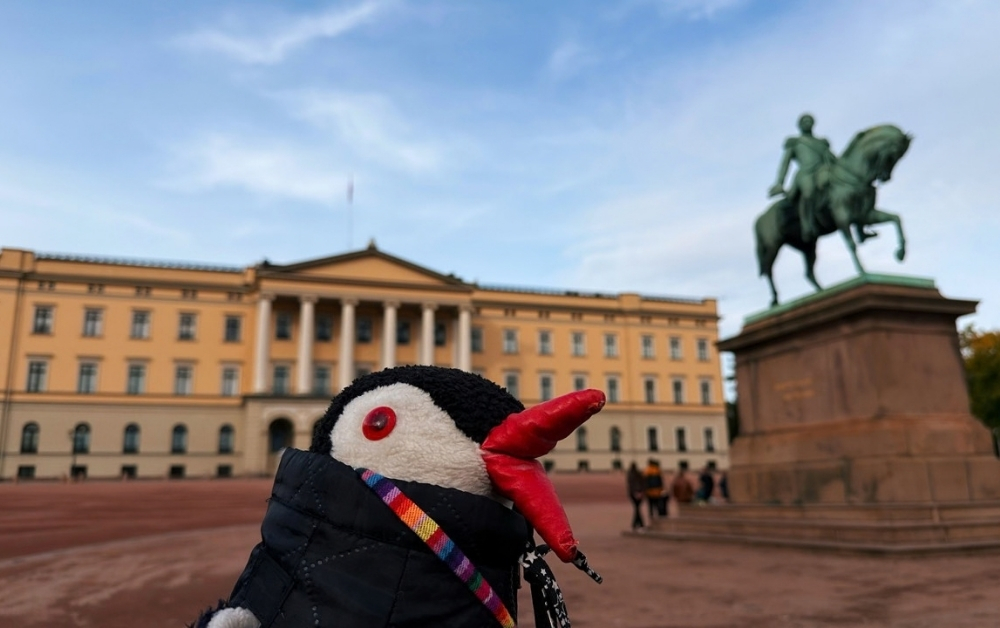
We also visited the Royal Palace, the official residence of the Norwegian monarch. Set at the top of Karl Johans gate, the palace is surrounded by gardens and open grounds, making it a pleasant place to admire from the outside. Its elegant architecture offers another side of Oslo’s history, blending the city’s royal traditions with its modern capital-city atmosphere.


After a packed day of ferries, museums, and Norwegian history, we finally headed back to our hotel to rest our feet. We had covered quite a lot, from traditional Norwegian life and polar exploration to medieval fortifications and the Second World War. Oslo was certainly giving us plenty to think about!
Day 3: Forest Hikes, Ski Jump Views and Norwegian Waffles
For our third day in Oslo, we wanted to experience a different side of the Norwegian capital. Beyond the museums and historic buildings, Oslo has forests, lakes, hiking trails, and viewpoints that make it feel wonderfully close to nature. We started in the city center, hopped on the metro into the forest, visited one of Norway’s most famous ski landmarks, and finished the day with waffles, sculpture-filled parkland, and a visit to Oslo’s impressive public library.
Oslo Cathedral
We began our morning at Oslo Cathedral, a historic church in the city center. Dating back to the late 17th century, it features a distinctive brick exterior and an interior decorated with beautiful ceiling paintings and stained glass. Its central location makes it an easy stop on an Oslo itinerary, especially if you are already exploring the city center.
Metro to the Forest: Øvresetertjern
One thing we love about Oslo is how quickly you can leave the busy city streets behind and find yourself surrounded by nature. We hopped on the metro toward the forest and headed to Øvresetertjern, a small lake surrounded by woodland near Holmenkollen.
We spent some time hiking around the lake and enjoying the peaceful scenery. It was a welcome change of pace after several days of sightseeing, with fresh air, forest trails, and a chance to see how close Oslo’s outdoor adventures are to the city. If you enjoy hiking, leave room in your Oslo itinerary for a little nature escape.
Holmenkollen Ski Jump and Ski Museum
From the forest, we continued to Holmenkollen Ski Jump, one of Norway’s most iconic landmarks. This impressive structure towers above the surrounding landscape and has a long history as a venue for international ski-jumping competitions.
We also explored the Holmenkollen Ski Museum, which tells the story of skiing from its early origins to modern winter sports, alongside tales of polar expeditions and Norway’s close relationship with snow. Even if you are not a skiing enthusiast, the combination of sporting history and panoramic views makes Holmenkollen well worth visiting.


The Royal Palace
Back in the city center, we headed to the Royal Palace. Set within Palace Park, this elegant building is the official residence of Norway’s monarch. We enjoyed seeing it up close and taking in the green surroundings, which offer a welcome break from the busier streets nearby.
The palace pairs well with other central Oslo attractions, so it fits neatly into a day of exploring on foot.
A Waffle Stop at Haralds Vaffel
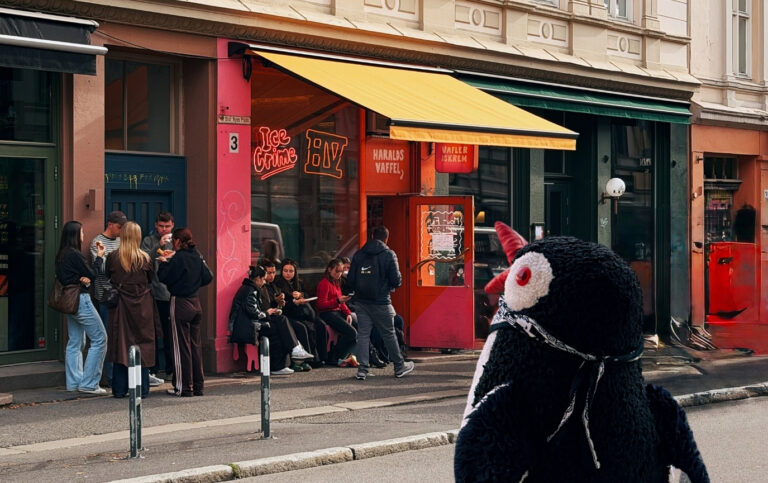
No Norwegian adventure is complete without a traditional waffle, so we stopped at Haralds Vaffel. Norwegian waffles are typically heart-shaped and thinner than Belgian waffles, often served with toppings like brown cheese, sour cream, jam, or butter.
It was the perfect excuse to take a break and enjoy a little Norwegian food culture. After a morning of hiking and sightseeing, we certainly felt that a waffle was a well-deserved reward!
Ekebergparken Sculpture Park
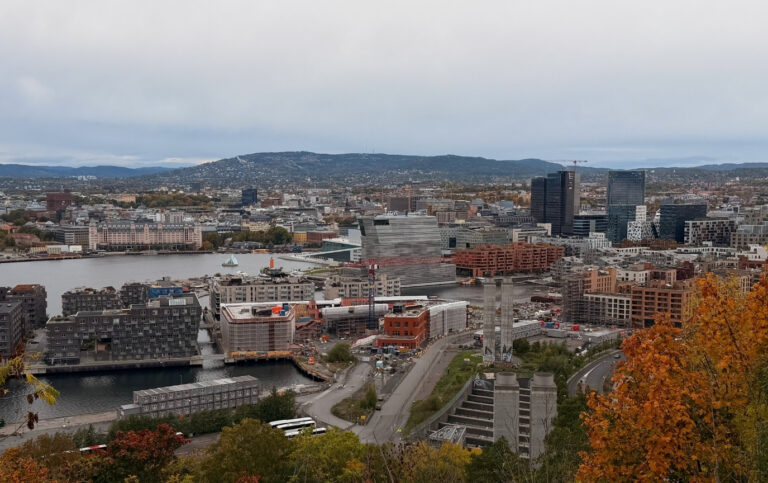
Next, we headed to Ekebergparken, a sculpture park set on a wooded hillside overlooking Oslo. The park combines contemporary and historic artworks with forest paths and beautiful views across the city and the Oslofjord.
We enjoyed discovering art along the way rather than moving from one gallery room to another. As you waddle along the trails, sculptures appear between the trees, making the experience feel a little like an outdoor treasure hunt. Allow some time here if you want to explore the paths and enjoy the viewpoints without rushing.
Deichman Bjørvika: Oslo Public Library
We rounded off our sightseeing at Deichman Bjørvika, Oslo’s striking main public library near the waterfront. The modern building features bright interiors, open spaces, and several floors dedicated to books, culture, and community activities.
Even if you are not planning to borrow a book, it is worth stepping inside to admire the architecture and explore the different levels. We always enjoy discovering places that offer a glimpse into everyday local life, and this library provides a lovely contrast to Oslo’s historic landmarks and museums.


After another day of exploring, we experienced a wide range of what Oslo has to offer, from waterfront architecture and fascinating museums to forest trails, panoramic views, Norwegian waffles, and outdoor art. It was a fitting end to our Oslo adventure, and we left with plenty of new memories from Norway’s capital.
Day 4: One Last Waddle Through Oslo
Our final day in Oslo was only a half-day, as we had an afternoon flight to catch. Still, we had time for a few last stops before saying goodbye to Norway’s capital. From one more look at the waterfront to the floating saunas near the MUNCH Museum, we squeezed in a little extra sightseeing before heading to the airport.
Our final day in Oslo was only a half-day, as we had an afternoon flight to catch. Still, we had time for a few last stops before saying goodbye to Norway’s capital. From one more look at the waterfront to the floating saunas near the MUNCH Museum, we squeezed in a little extra sightseeing before heading to the airport.
Akershus Fortress
We started the morning with another visit to Akershus Fortress, giving ourselves more time to take in its historic walls and harbor views. It is a lovely spot for a final wander, especially if you enjoy Oslo’s mix of medieval history and modern waterfront scenery.
One Last Look at the Oslo Opera House
Of course, we could not leave Oslo without returning to the Oslo Opera House. After all, its distinctive sloping roof and waterfront setting had made such a strong impression on us during our first afternoon. We took one last look at this architectural landmark and enjoyed the views across the harbor before continuing our final waddle through Oslo.


The Floating Saunas Near MUNCH
Next, we headed towards the floating sauna houses near the MUNCH Museum. These waterfront saunas are a distinctive part of Oslo’s modern bathing culture, letting visitors combine a traditional sauna experience with fjord views. Even if you are not planning to take a sauna, the colorful floating structures are worth seeing as you explore the harbor.
The Oslo Sign
Before leaving, we also stopped by the OSLO sign near the MUNCH Museum for a fun photo op to mark the end of our Norwegian adventure. Naturally, we had to capture a few final memories before saying goodbye to the city.


Off to the Airport
And just like that, our Oslo adventure came to an end. In the afternoon, we headed to the airport, taking with us memories of beautiful waterfront architecture, fascinating museums, forest trails, Norwegian waffles, and plenty of penguin-worthy discoveries. Three full days, plus two half-days, gave us a wonderful introduction to Norway’s capital, and we would happily return for another waddle someday!
Our 3-Day Oslo Itinerary on a Map
Is 3 Days in Oslo Enough
Not really, but three days are certainly better than none! We saw many of Oslo’s highlights, from its impressive waterfront architecture and fascinating museums to forest trails and panoramic viewpoints. However, we still had to make choices and leave some places for another visit. Three days give you a good introduction to Norway’s capital, but if you want to explore at a more relaxed pace, visit more museums, or venture beyond the city, we would recommend staying a little longer. Oslo has plenty to offer, and an extra day or two would make your trip even better!
Hotel search from Trip.comShows Trip.com’s own box, which can set Trip.com cookies.
How We Got Around Oslo
Getting around Oslo was relatively easy, as we combined walking, trams, buses, the metro, and ferries to explore the city and its surroundings. We enjoyed walking through the city center, while public transport took us farther afield, including to the forests around Holmenkollen and the museums on Bygdøy. The ferry rides were particularly lovely, offering a different perspective on Oslo from the water. For more practical information about tickets, zones, and how the system works, check out our guide to public transport in Oslo.

What We Would Change About Our Oslo Itinerary
Looking back, we would probably add at least one more day in Oslo. Our itinerary was quite packed, especially on the second and third days, when we combined several museums, historic landmarks, and outdoor adventures. More time would have let us slow down and explore more thoroughly. One thing we would definitely do differently is book a sauna session in advance. Oslo’s floating saunas are popular, and we left it too late to book, so we didn’t get to experience one during our trip. If a fjord-side sauna is on your Oslo wish list, reserve your spot ahead of time! Still, we are happy with what we experienced, and if you only have three days, this itinerary is a great starting point for your own Oslo adventure.
Buy Us a Ko-fi

And that wraps up our Oslo adventure! From waterfront landmarks and fascinating museums to forest hikes, panoramic views, and Norwegian waffles, we experienced many sides of Norway’s capital in just three days. Would we have loved more time? Absolutely! But if you are planning a long weekend in Oslo, we hope our itinerary helps you make the most of every waddle.
Travel Bold. Eat Well. Waddle Wild.
Save This Pin for Later!
This post contains affiliate links. If you click and buy, I might earn a tiny commission, enough to help a penguin keep up its globe-trotting lifestyle. No extra cost to you, just more fish for me. Thank you for supporting the adventure!