Akershus Castle, Oslo: Inside Norway’s Medieval Royal Castle
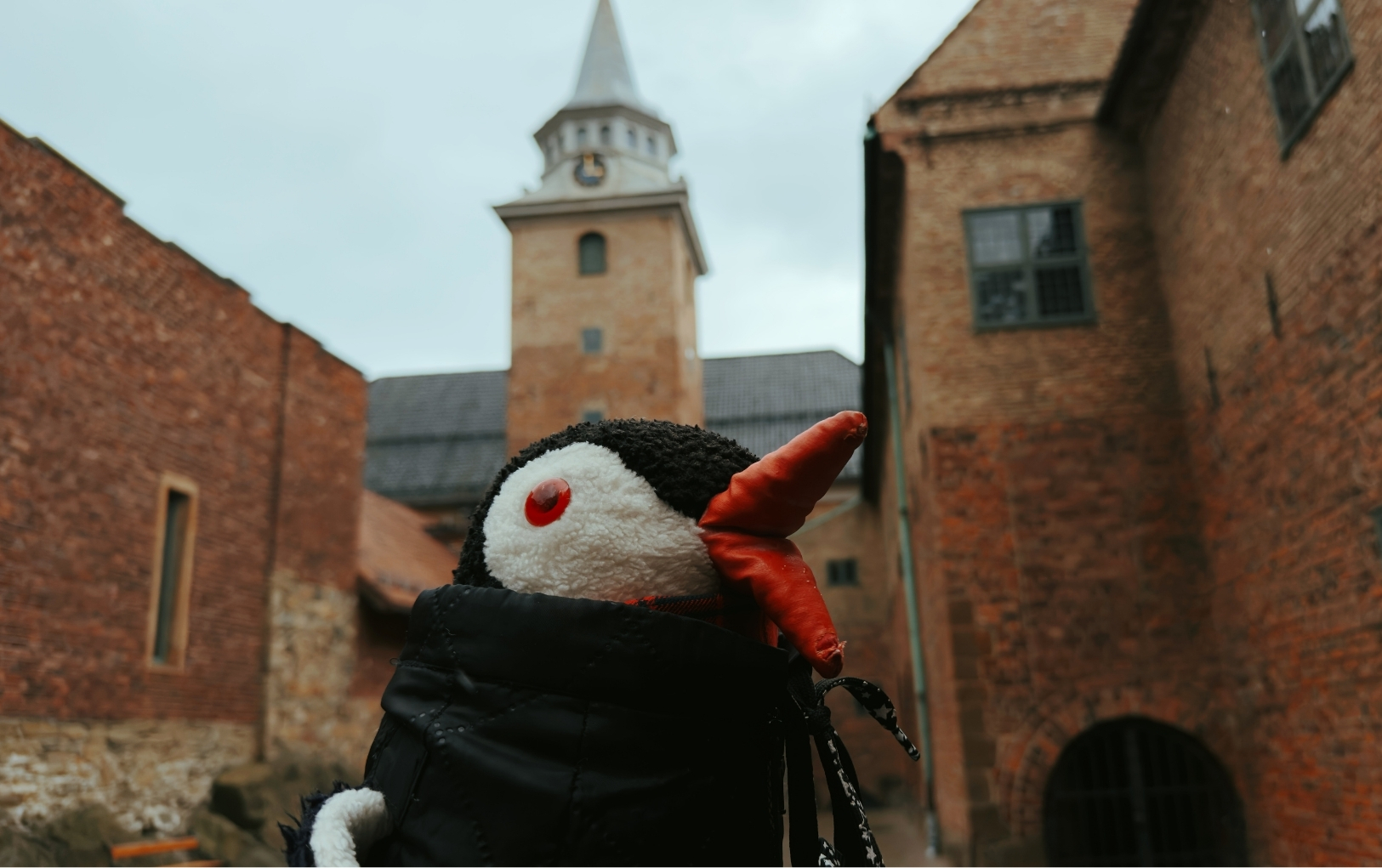
We knew Akershus was one of Oslo’s most famous historic landmarks, but we weren’t quite sure what to expect from the fortress itself. There was plenty to explore around it, but then we spotted the castle. And once a castle is involved, of course we have to explore it.
Akershus Castle has stood here since the Middle Ages, although what we see today is the result of centuries of rebuilding and transformation. What began as a medieval royal residence later became a Renaissance castle, and its historic rooms are still used today for official government receptions. So we leave the fortress walls behind and step through the castle doors, curious to see what has been hidden inside for centuries. And honestly, stepping inside feels very different from simply looking at Akershus from the outside.
Where Is Akershus Castle
Akershus Castle sits at the heart of Akershus Fortress, on a headland above the Oslofjord in central Oslo. From here, the castle has had a front-row seat to the city’s history for more than 700 years.
But one small detail is worth knowing before you visit. Akershus Fortress and Akershus Castle are not quite the same thing. The fortress is the much larger historic complex, while the castle is the royal residence tucked inside its walls. So when we arrive, we are not simply looking for the fortress. We are following the signs for Akershus slott, heading deeper into the complex until the castle itself comes into view.
Akershus Castle Quick Facts
- Location: Akershus Fortress, Oslo, Norway
- Norwegian name: Akershus slott
- Origins: 1299
- Medieval castle: Completed during the 1300s
- Renaissance reconstruction: 1637–1648
- Highlights: Historic halls, castle church, Royal Mausoleum and government reception rooms
- Time needed: Around 45–90 minutes
- Adult ticket: 160 NOK
- Oslo Pass: Free entry
- Interesting Fact: Still used today for official government receptions and state functions.
How to Get to Akershus Castle
Remember, Akershus Castle sits inside Akershus Fortress, so you need to enter the fortress first and then follow the signs to Akershus slott.
On foot: From Oslo Central Station, it takes around 15 minutes. From Oslo City Hall, Aker Brygge, or the waterfront, it is also an easy waddle.
By public transport:
- Tram: Take tram 12 or 13 to Kontraskjæret, then waddle to the fortress.
- Metro: Take any metro line to Stortinget or Nationaltheatret, then take a short waddle.
- Bus: Several central bus routes serve the area, with connections changing periodically, so check Ruter for the best route from your starting point.
Fortress entrances: Akershus Fortress has several entry points, so you may enter from different sides depending on where you are coming from. Once inside, follow the signs towards the castle.

Opening Hours and Tickets
Opening Hours
Akershus Castle has seasonal opening hours and is not open year-round. In summer, it is open Monday to Saturday from 10:00–16:00 and Sunday from 12:00–16:00.
Tickets
The current listed admission prices are:
- Adults: 160 NOK
- Children: 80 NOK
- Seniors: 110 NOK
- Oslo Pass: Entry included
- Plushies: Free entry
Akershus Castle can close at short notice for official events, so always double-check the official website before your visit and plan accordingly.
Akershus Castle History in a Nutshell
- 1299. Construction of Akershus Castle begins under King Håkon V as a medieval fortress and royal residence.
- 1300s. The castle is completed and becomes an important royal stronghold, strategically positioned to protect Oslo from attacks.
- 1530s. After the Reformation, the castle’s role begins to change as Norway’s medieval Catholic era ends.
- 1592. Akershus is developed into a stronger fortress as military technology and warfare evolve.
- 1637–1648. King Christian IV transforms the medieval castle into a Renaissance residence, adding grander interiors and more elegant architectural features.
- 1800s. The castle gradually loses its role as a royal residence and falls into periods of neglect.
- 1890s–1900s. Restoration work begins, with efforts to preserve Akershus as an important piece of Norway’s architectural and national heritage.
- Today. Akershus Castle remains one of Oslo’s most important historic buildings, while some of its rooms are still used for official government receptions and state functions.
Waddling Inside Akershus Castle
We had already spent some time waddling around Akershus Fortress, taking in the old walls, viewpoints, and the different museums scattered around the grounds. There is quite a lot to see here, and it would be easy to spend hours exploring without ever stepping inside the castle itself.
But the castle is exactly what we came for.
We had deliberately saved it for later because we really wanted to see what was waiting behind those doors. After wandering around the fortress in the crisp Oslo weather, we finally made our way inside.
The entrance leads us straight into the gift shop and ticket area. We show our Oslo Pass, get our entry sorted, and are then directed towards the first stop on our castle visit.
And this is where the atmosphere changes. Outside, everything feels defensive and imposing, with thick stone walls and centuries of military history. Inside, the mood becomes much more royal. Suddenly, we are surrounded by historic rooms, grand halls, and details that remind us that this was not simply a fortress. This was once a royal residence.
The Royal Mausoleum
One of the most important stops inside Akershus Castle is the Royal Mausoleum, the final resting place of Norway’s modern royal family. Completed in 1948, it holds the sarcophagi of King Haakon VII and Queen Maud, as well as King Olav V and Crown Princess Märtha. More recently, King Harald V was laid to rest here in September 2026, in a newly designed sarcophagus inspired by his close connection with the sea.
This is a quiet, solemn part of the visit, and we are asked to respect the atmosphere. Photography is not allowed here, so we put the cameras away and take a moment to look around. It feels like one of those places where the history suddenly becomes much more personal.
The Castle Church
From the solemn Royal Mausoleum, we continue through a series of narrow passageways and tunnels before emerging into the Castle Church, one of the oldest and most atmospheric spaces inside Akershus. After the darker, enclosed corridors, the church feels like a complete change of pace. Its historic interior is quieter and more intimate, with centuries of royal and religious history packed into a relatively small space.
The church is still used for services and royal ceremonies, and its connection to Norway’s royal family makes it much more than a beautiful historic room. After wandering through the castle’s grand halls, stepping into this peaceful corner feels like discovering a quieter chapter of Akershus, one hidden behind those thick medieval walls.


Waddling Through the Castle Rooms
From the church, we continue deeper into the castle, moving from one historic room to the next. The first room immediately catches our attention with a beautifully lit tapestry, its colors standing out against the darker surroundings. The lighting is particularly atmospheric here, drawing our eyes straight to the artwork and making the room feel almost theatrical.
From there, we drift from room to room, letting the castle unfold around us. There is no need to rush. We waddle through the historic spaces, looking up at the ceilings, studying the walls and noticing the small details that make each room feel different from the last.


Romerikssalen
From the narrower rooms and passageways, stepping into Romerikssalen feels like entering a completely different world. The room suddenly opens up around us, and after the more intimate spaces, its size is almost surprising.
Several tables fill the hall, giving us an immediate sense of the grand gatherings and formal occasions once held here. The whole space feels elegant without being overly ornate, and we slow down for a moment to take it all in before continuing through the castle.


The Writing Rooms
Next, we step into the Writing Rooms, and the atmosphere becomes more intimate again. After the impressive scale of Romerikssalen, these rooms feel much more personal, with restored interiors and historic details that offer a glimpse into everyday life at the castle.
We slow down here, looking at the furniture, walls, and smaller details that are easy to miss when moving through the grander halls. These quieter rooms make the castle feel less like a monument and more like a place where people actually lived, worked, and made decisions.


Christian IV’s Hall
Then we step into Christian IV’s Hall, and once again the scale changes. This is one of the castle’s grand representative rooms, and it is easy to imagine it filled with people for formal dinners, meetings, and royal occasions. The hall as we see it today largely reflects a restoration carried out between 1728 and 1744, while its Renaissance character connects it to the castle’s transformation under Christian IV.
What really catches our attention, though, is the long dining table set out in the room. A closer look at the table and the historic furnishings makes the room feel tangible. And the best part is knowing these beautifully furnished halls aren’t simply preserved as museum displays. Akershus Castle is still used by the Norwegian government for official receptions and functions today. Maybe next time we should arrange an official state visit too. Having dinner in a castle sounds like a pretty good plan to us.


Olav V’s Hall
When we think the castle cannot get any grander, we step into Olav V’s Hall. The room immediately feels more theatrical, with its high ceiling, elegant architecture, and the enormous rose window by Norwegian artist Emanuel Vigeland dominating the space. The window was reconstructed and unveiled again in 2023, bringing one of the hall’s most striking artistic features back to life.
The large window is not simply decoration. Its coloured glass creates a beautiful play of light across the room, changing the atmosphere depending on the light outside. The hall is sometimes referred to as the “Love Square”, a name tied to the space’s romantic symbolism and artistic character. We stop here for a while, because after moving through medieval corridors and royal halls, this feels like the castle suddenly decided to put on a show.


Overall, the castle tour is not particularly long, which we actually enjoy. Each room feels like stepping into a slightly different castle, with its own atmosphere, architecture, and story. What surprises us most is how cozy the whole experience feels. Castles often feel grand, cold, or imposing, but Akershus somehow feels warm and welcoming, making it easy to slow down and enjoy wandering from room to room.
Pro Penguin Tip: Don’t Miss the Audio Guide
One thing we only realize later is that many of the rooms have their own audio guide. Look for the QR code, scan it with your phone, and listen to a short story connected to that room. It adds another layer to the visit, giving you more context about the people, objects, and history surrounding you.
We definitely recommend taking your time and scanning the codes as you go. We missed this on our first pass, so if you want to get the full experience, don’t just waddle from room to room. Stop, scan, and listen.
You can also access the Akershus Castle Visitor Guide on DigitaltMuseum before or during your visit.
The Ghost of Akershus Castle
With more than 700 years of history behind its walls, it’s no surprise that Akershus Castle has a few ghost stories of its own. The most famous is Malcanisen, the ghostly dog, a legend that has been haunting the fortress for centuries.
According to the story, a dog was buried alive inside the fortress walls during the castle’s construction, supposedly as a supernatural guardian. Its spirit was later said to roam the dark passageways near the old entrance. And this is where the story gets considerably less cute: legend says anyone who encounters Malcanisen will die soon after. The tale became particularly famous after Peder Hanssøn Litle, one of Norway’s most powerful men, reportedly encountered the ghost around 1550 and died only months later.
Whether you believe in ghost dogs or not, wandering through the castle’s medieval passageways after hearing this story definitely makes the shadows feel a little more interesting.
How Much Time Do You Need
Allow around 45 minutes to 1.5 hours to explore Akershus Castle itself. It is not a particularly long visit, but there is enough to see to make it worth taking your time.
If you use the room-by-room audio guide, scan the QR codes, and listen to the stories along the way, we would allow a little more time. There is much more detail to discover when you stop and listen rather than simply moving from room to room.
And remember, this covers only the castle interior. If you also want to explore the surrounding Akershus Fortress, its museums, viewpoints and grounds, you can easily turn the visit into a several-hour stop.
Best Time to Visit Akershus Castle
For the best experience, we recommend visiting in the morning, when the castle first opens, and the historic rooms are generally quieter. This gives you plenty of time to move through the rooms at your own pace and stop for the audio guides without feeling rushed.
Weekdays are also a good choice if you want a more peaceful visit. If you are visiting Oslo in summer, keep in mind the castle can be busier with tourists, while spring and autumn offer a lovely balance of fewer crowds and atmospheric weather.
We visited in October, and the crisp autumn air outside made the warm, historic interiors feel even cozier.
Hotel search from Trip.comShows Trip.com’s own box, which can set Trip.com cookies.
Is Akershus Castle Worth Visiting
With so many things to see inside Akershus Fortress, from museums to historic buildings and viewpoints, it can be tempting to wander around the grounds and move on. But we would definitely put Akershus Castle on your guest list.
The fortress tells the story of defense and military history, while stepping inside the castle takes you into a very different world of royalty, power, ceremonies, and everyday life. Each room feels like another little chapter of Oslo’s history, from its medieval beginnings to its Renaissance transformation and its continuing role in official Norwegian life.
It is also not a particularly long visit, making it easy to fit into your Oslo itinerary. And after wandering around the fortress, stepping through those castle doors gives you a completely different perspective.
So yes, if you are already at Akershus Fortress, we say go inside. Your waddling team will thank you.
Buy Us a Ko-fi

After wandering through medieval passageways, quiet chapels, grand halls, and rooms that still play a role in Norway’s official life, we leave Akershus Castle with a very different impression of the fortress we first waddled into. Something surprisingly cozy about the castle. Every room feels like a little journey of its own, and with the audio stories, historic details, and centuries of royal history, it is easy to lose track of time.
With so many museums and things to explore around Akershus Fortress, you could easily skip the castle. Don’t skip it. If you are already here, take the extra time to step through the doors and see what is waiting inside. And who knows, perhaps one day we will return for an official state dinner. We already know where we would like to sit.
Travel Bold. Eat Well. Waddle Wild.
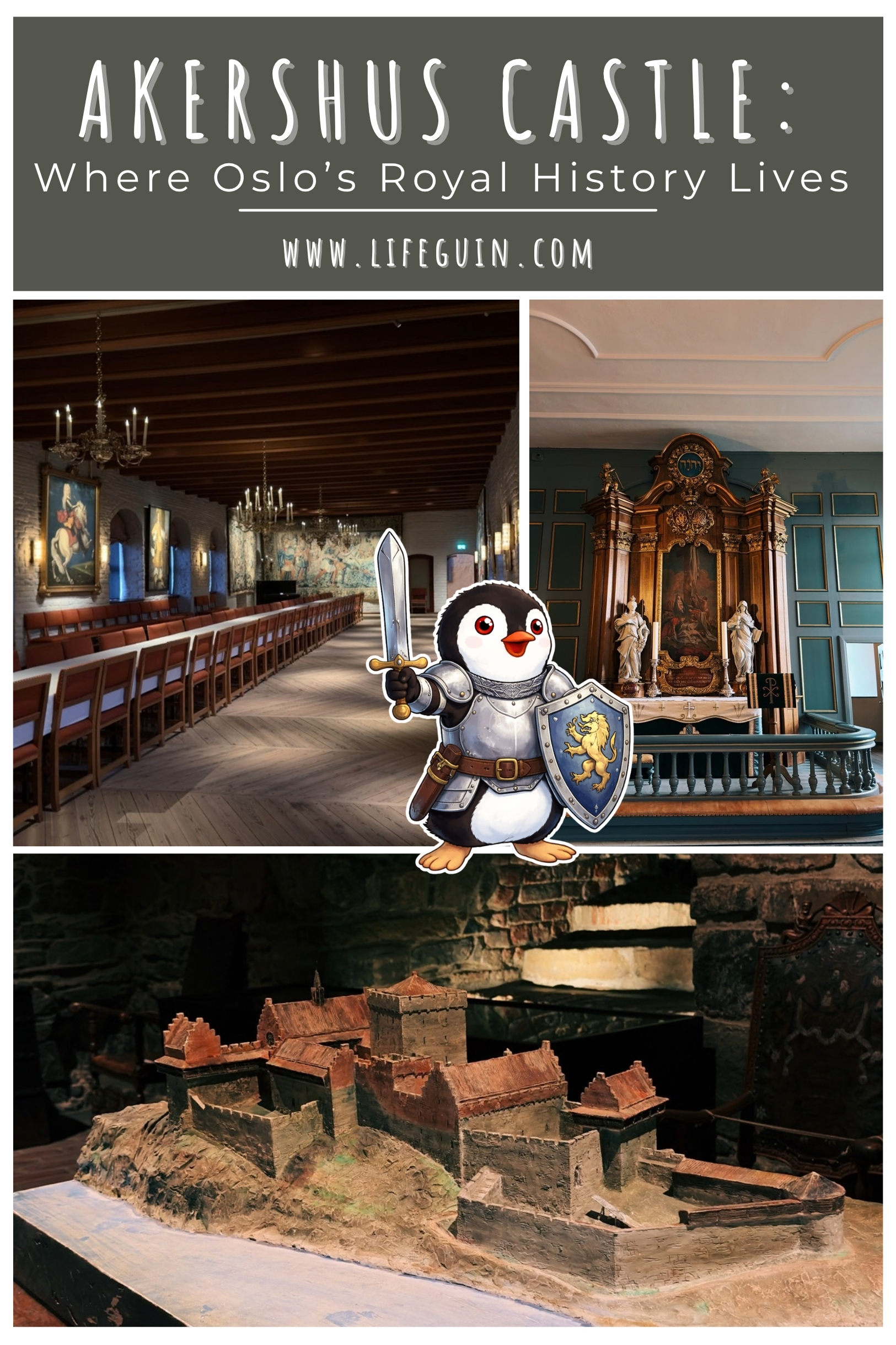
Save This Pin for Later!
This post contains affiliate links. If you click and buy, I might earn a tiny commission, enough to help a penguin keep up its globe-trotting lifestyle. No extra cost to you, just more fish for me. Thank you for supporting the adventure!