Why the Oslo Opera House Is One of the Best Places to Visit in Oslo
The Oslo Opera House is probably one of the first landmarks you will come across when you start planning your trip to Oslo. Rising from the waterfront like a giant piece of white marble, it immediately catches your eye. But you don’t just admire this building from the outside. You can actually waddle up its roof, explore the architecture, and take in the views across Oslo and the fjord.
- The Oslo Opera House Is Not Just an Opera House
- Basic Facts About Oslo Opera House
- Architecture Designed to Be Experienced, Not Just Admired
- An Iceberg in the Heart of Oslo
- Why Can You Walk on the Roof of the Oslo Opera House
- Waddling to the Top of the Oslo Opera House
- The View From the Roof Changes With Every Step
- An Opera House for People Who Don’t Like Opera
- A Rooftop Bigger Than You Expect
- The Opera House Gets Even Whiter After a Clean
- When Architecture Becomes the Attraction
- A Sneak Peek Inside the Opera House
- The Small Details You Might Miss
- How the Opera House Helped Transform Oslo’s Waterfront
- How Much Time Do You Need at the Oslo Opera House
- The Best Time to Visit the Oslo Opera House
- Is the Oslo Opera House Worth Visiting
The Oslo Opera House Is Not Just an Opera House
The Oslo Opera House is the kind of building that makes you stop before you even realize you have arrived. At first glance, it looks like a giant sheet of white marble rising from the waterfront, its sloping roof stretching towards the Oslofjord. But this is not an opera house you admire from a distance. The roof is a public space, designed to be climbed, explored and enjoyed. You can waddle all the way to the top, sit on the angular surfaces and look back across Oslo. Here, architecture is not something standing between you and the city. It becomes part of the experience.
Basic Facts About Oslo Opera House
- Location: Kirsten Flagstads plass 1, 0150 Oslo
- Opened: 12 April 2008
- Architect: Snøhetta, the Norwegian architecture firm
- Construction: Took about five years to build
- Cost: Approximately NOK 4.3 billion
- Size: Around 49,000 m², containing approximately 1,100 rooms.
- Performance Spaces: Three halls for opera, ballet, and concerts.
- Capacity: The Main Stage seats more than 1,300 people.
- Materials: White Carrara marble, oak, aluminum, and large glass facades are the key materials.
- Signature Feature: Its sloping roof is designed as a public space that visitors can waddle across, connecting the city with the Oslofjord.
- Interesting Fact: The world’s first opera house where visitors can walk on the roof.
- Opening Hours: The foyer is generally open Monday–Saturday, 11:00–16:00, and Sunday, 12:00–16:00, or until the end of a performance.
- Official Website: Norwegian National Opera & Ballet
Architecture Designed to Be Experienced, Not Just Admired
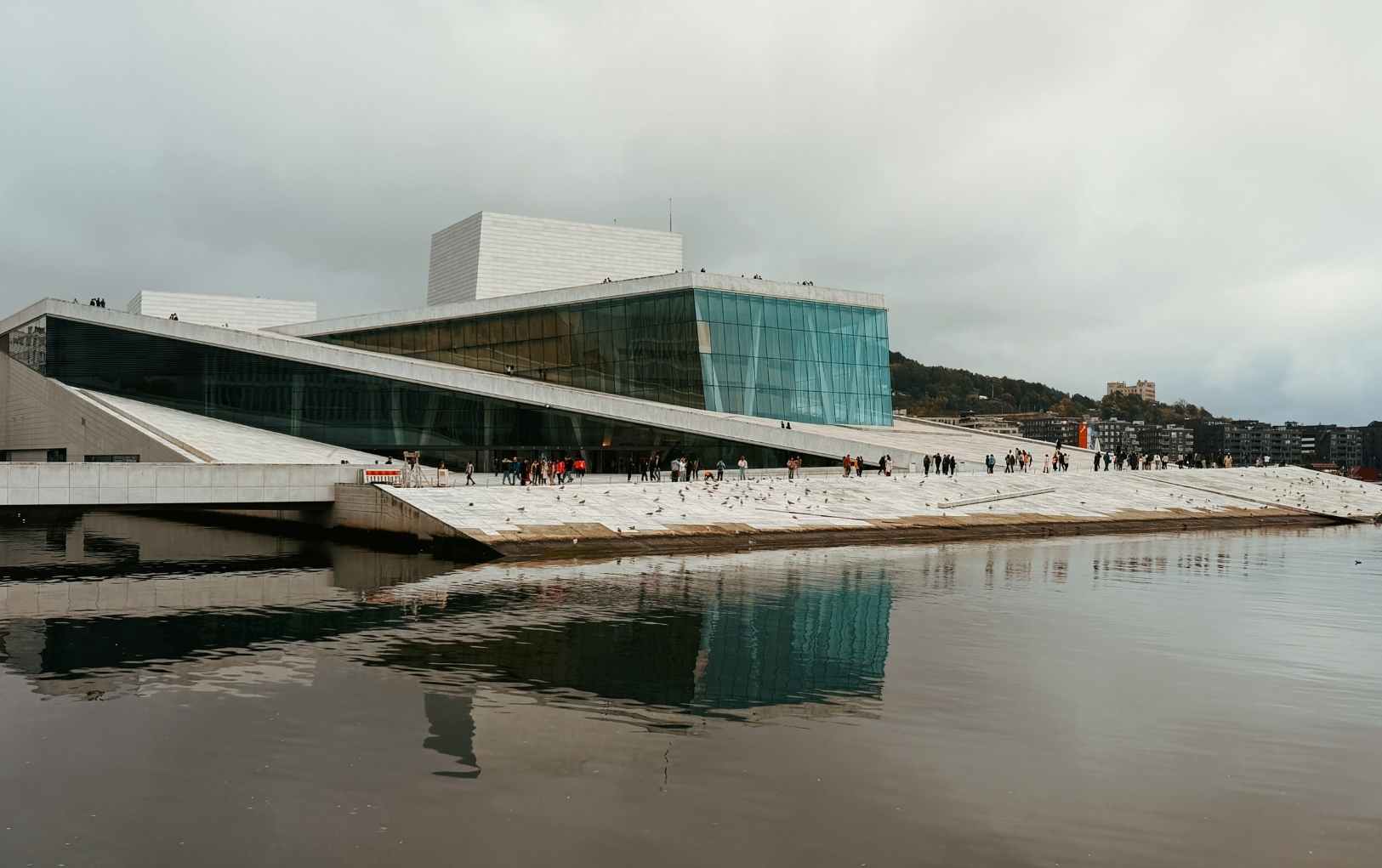
The Oslo Opera House does not look like a traditional opera house, and that is precisely the point. Designed by the Norwegian architecture firm Snøhetta, the building appears to emerge directly from the Oslofjord, with its vast white roof extending from the waterfront like a sheet of ice. The architects used white Carrara marble for the sloping surfaces, creating the impression that the building is both architecture and landscape. The roof is made up of angular planes that gradually rise from the ground, allowing you to waddle across the building rather than look at it. Large glass panels open the interior to the waterfront, while warm oak and aluminum contrast with the cool white exterior. The result is a building that feels remarkably open and public. You can sit on the roof, watch the boats, look across the fjord, or use it as a route through the city. The architecture is not a backdrop to the experience. It is the experience.


The Oslo Opera House’s striking whiteness is no accident. Around 36,000 slabs of Italian Carrara marble cover its exterior, creating the building’s almost iceberg-like appearance. The slabs face different directions, so they catch the light differently as you move around the building. On a sunny day, the surface can look almost dazzling, while under cloudy skies it blends beautifully with the pale Nordic light. We also saw parts of the building being cleaned during our visit, and it was fascinating to see how much brighter the already-white marble looked afterward. It is one of those details you might not notice until you start paying attention to the building itself.
An Iceberg in the Heart of Oslo
The first thing that strikes you about the Oslo Opera House is how much it looks like an iceberg that has drifted into the city. Its vast white surfaces rise from the waterfront, while the sloping roof appears to slide straight into the Oslofjord. This was very much intentional. Snøhetta designed the building to blur the boundary between architecture and landscape, making it feel less like an object placed beside the water and more like an extension of the fjord itself.
The architects drew inspiration from the Norwegian landscape, particularly where land, sea, and ice meet. The white Carrara marble reinforces that feeling, while the angular surfaces create changing reflections and shadows throughout the day. From a distance, the building can look almost like a frozen landscape. Up close, its geometry becomes much more obvious.


The iceberg-like shape also hides a clever idea. Instead of creating a monumental building that people look at, Snøhetta wanted to make the architecture accessible. The roof slopes gradually upwards from the waterfront, turning what would normally be an inaccessible surface into a public promenade. You can climb the “iceberg”, stand on top of it, and look back at the city. In Oslo, the building is not simply inspired by the landscape. It becomes part of it.
Why Can You Walk on the Roof of the Oslo Opera House
Its roof is not designed to be something you look up at. It is an extension of the public space, deliberately shaped so you can climb onto it, sit down, take in the fjord and, of course, waddle your way to the top.
Snøhetta’s idea was to break down the usual barrier between an iconic building and the people around it. Instead of creating a grand opera house that feels separate from the city, they turned the building itself into a landscape. The marble surfaces rise gradually from the waterfront, creating a surprisingly easy route upwards. No grand entrance ceremony or ticket is required for this part of the experience. You step onto the slope and start waddling.


As you climb higher, the city falls away behind you. The fjord opens up in front, boats move across the water, and Oslo’s skyline slowly changes with every step. It feels less like climbing onto a building and more like walking up a piece of the landscape.
And that was exactly the point. The Opera House was designed to give the waterfront back to the public, turning architecture into a place where people could actually waddle, sit, meet, and linger. It is one of those rare landmarks where the best way to experience the architecture is not to stand in front of it, but to climb on it.
Waddling to the Top of the Oslo Opera House
We visited the Oslo Opera House twice, and each visit felt completely different. The first time, we arrived as daylight faded. The white marble took on a softer glow, the city lights began to appear around Bjørvika, and the Oslofjord gradually became a dark silhouette beyond the waterfront. From the roof, Oslo feels remarkably open. You are above the street, but you are not separated from it.


There is something slightly surreal about standing on top of an opera house. Instead of looking up at an impressive building, you are standing on it. People sit on the sloping surfaces, take photographs, watch the boats, and enjoy the view. And because the roof is angled rather than flat, the perspective keeps changing as you waddle higher.
We returned during the day to experience it again. The weather was cloudy, so we did not get the dramatic blue-sky panorama you might imagine from photographs, but that almost made the building itself more interesting. Under the soft northern light, the marble looked enormous, almost blending into the grey sky and water.
And that is perhaps the best thing about the Opera House roof: it does not require perfect weather or a special occasion. You can turn up and experience it.


The View From the Roof Changes With Every Step
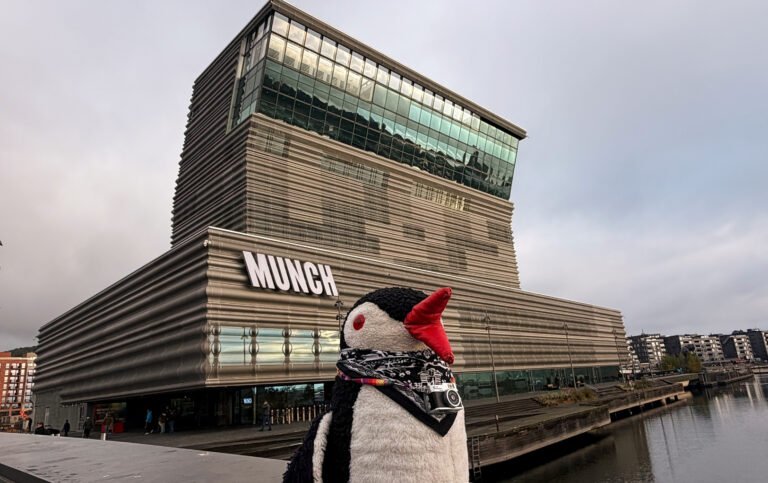
From the higher sections of the roof, the view opens across Bjørvika and the Oslofjord. The waterfront stretches around you, while the distinctive MUNCH Museum and the Barcode skyline create a backdrop that makes it immediately clear how much this part of Oslo has changed.
But the view is not one fixed panorama. Every few steps give you a slightly different perspective. Look one way, and you see the water. Turn around, and the city rises behind you. Look back towards the building and the angular geometry of the roof becomes the view itself.
It is one of those places where you might plan to spend ten minutes and end up staying much longer.
An Opera House for People Who Don’t Like Opera
You do not need to attend an opera or ballet performance to enjoy the Oslo Opera House. In fact, you do not even need to go inside.
For us, the roof was the main attraction. We waddled up from the waterfront, explored the different levels and stopped whenever the view caught our attention. That accessibility is what makes the building such a successful piece of public architecture. It belongs to the city rather than feeling reserved only for people holding a theatre ticket.
The Opera House is therefore as much a place to meet, sit, photograph, watch the sunset, or take in the fjord as it is a venue for performances.


A Rooftop Bigger Than You Expect
One of the things that surprised us most was just how huge the rooftop actually is. From the waterfront, the Opera House looks like a simple white slope rising out of the fjord. Once you start waddling across it, though, you realize you are standing on an enormous public landscape. The marble roofscape covers around 18,000 square meters, giving you plenty of space to wander, sit, and find your own viewpoint.
And this is only the roof. The entire Opera House has around 49,000 square meters of floor space and approximately 1,100 rooms, making it one of Norway’s most ambitious cultural buildings. From above, however, it does not feel like you are standing on top of a building that size. It feels more like someone has laid a giant piece of white landscape beside the fjord and invited Oslo to use it. We could keep waddling, stopping for the views, changing direction and discovering another angle of the city each time.


The Opera House Gets Even Whiter After a Clean
We also happened to visit at a particularly interesting moment: the Opera House was undergoing maintenance and cleaning. At first, it seemed almost unnecessary. The building already looked strikingly white against the waterfront. But watching sections of the marble being cleaned made the difference surprisingly obvious. Once the work was finished, the already pale surfaces looked noticeably brighter and cleaner.
The whiteness is not simply a visual trick. The exterior is clad in Carrara marble, a material chosen for its distinctive pale appearance. Keeping such a large, exposed surface clean is part of maintaining the architectural effect, particularly in a city where the building is constantly exposed to weather, dirt, and the elements.


Seeing the maintenance in progress also offered a glimpse of something visitors rarely think about: iconic architecture needs upkeep. The pristine white roof that looks almost effortless in photographs takes work to keep that way.
When Architecture Becomes the Attraction
The Oslo Opera House is a rare example of architecture that asks you to participate rather than look at it. You do not stand outside and admire the facade before moving on. You climb it, sit on it, photograph it, and use it as a vantage point over the city. We experienced it twice, in fading evening light and beneath a cloudy daytime sky, and both visits offered something different. That is what makes the roof worth putting on your Oslo itinerary. You are not just visiting an opera house. You are waddling across one.


A Sneak Peek Inside the Opera House
We didn’t actually go inside the Oslo Opera House during our visit, but that didn’t stop us from taking a peek through the enormous windows. From the outside, the contrast is immediately noticeable. The cool, white marble exterior gives way to a much warmer interior, where oak is a defining material, adding a deep, natural feel to the otherwise monumental space.
Inside, the architecture becomes more theatrical. Huge glass windows bring the waterfront into the building, while the warm oak surfaces create a striking contrast with the pale exterior. The Opera House is home to three performance spaces, plus rehearsal rooms, workshops, and extensive backstage facilities that keep the Norwegian National Opera & Ballet running behind the scenes. Even from our little window peek, it was easy to see that the interior has a completely different personality from the vast, almost icy landscape outside.
Hotel search from Trip.comShows Trip.com’s own box, which can set Trip.com cookies.
The Small Details You Might Miss
The Oslo Opera House rewards you for slowing down and looking beyond the big white roof. As you waddle around the building, the huge glass windows offer little glimpses into the world behind the performances. We could spot the costume workshops, giving us a rare peek at the work that happens long before an actor or dancer steps onto the stage.
The architecture itself also hides plenty of detail. The combination of marble, glass, oak, and aluminum changes depending on where you stand, while artworks are integrated into different parts of the building rather than hung on the walls. Take your time here. The Opera House is designed to be experienced from every angle, and some of its most interesting stories are happening just behind the glass.
How the Opera House Helped Transform Oslo’s Waterfront
It is hard to imagine this part of Oslo as an industrial waterfront now, but Bjørvika was once dominated by roads, port activity, and working harbor infrastructure. The opening of the Oslo Opera House in 2008 became an important first step in changing that. Designed as a building that people could climb onto and waddle across, it helped reconnect the city center with the fjord and put this stretch of the waterfront firmly on Oslo’s cultural map.
Since then, Bjørvika has developed around it into one of the city’s most recognizable modern districts, with the MUNCH Museum, Deichman Bjørvika and the Barcode buildings adding new layers to the waterfront. Standing on the Opera House roof today, you can almost read that transformation in the skyline. What was once a working edge of the city has become somewhere people come to meet, explore, eat, look at art and, quite literally, waddle towards the fjord.
How Much Time Do You Need at the Oslo Opera House
You do not need half a day to experience the Oslo Opera House, especially if, like us, you are mainly coming for the rooftop. We would allow around 30–60 minutes to waddle across the roof, take in the views, and explore the building from different angles. If you are stopping for photographs, sitting down for a while, or visiting around sunset, you can easily stretch that to 1–1.5 hours. We visited twice, once around dusk and again during the day, and both visits felt completely different. If you are planning to see a performance or take a guided tour, you’ll naturally want to allow considerably more time.


The Best Time to Visit the Oslo Opera House
The Oslo Opera House looks good at almost any hour, but the experience changes dramatically with the light. We visited during the day, when the white marble and angular architecture were easiest to appreciate, and even beneath a cloudy sky, the building looked striking against the water. But we also came back as evening arrived, and the atmosphere was completely different. As daylight faded, the lights of Oslo began to appear across the waterfront, turning the rooftop into a wonderful spot to watch the city transition from day to night. For the best of both experiences, come around sunset and stay as the city lights begin to take over.
Is the Oslo Opera House Worth Visiting
Absolutely. This is an Oslo landmark I wouldn’t skip. Even if you have no plans to see an opera or ballet, the Opera House is worth adding to your itinerary simply for the experience of waddling across its roof and watching the city unfold around you. It feels less like visiting a traditional attraction and more like discovering one of Oslo’s most unusual public spaces.
The great thing is that Oslo is wonderfully compact, so you do not have to choose just one moment to visit. If you are staying in the city for a couple of days, you can easily stop by in the morning, return during the day when you are exploring Bjørvika, and come back again in the evening for the city lights. We did exactly that, visiting both during the day and around dusk, and the Opera House felt completely different each time. So yes, put it on your itinerary. And if you have time, waddle back more than once.
Buy Us a Ko-fi

The Oslo Opera House fits easily into an Oslo itinerary because it sits in the heart of Bjørvika, one of the city’s most walkable waterfront areas. Wear comfortable shoes, especially if you want to waddle across the sloping roof. The marble can also be slippery when wet, so take a little care after rain. The rooftop itself is open to the public and does not require an admission ticket.
The Opera House is also a great starting point for exploring the neighborhood on foot. You can combine it with the MUNCH Museum, just a few minutes away, or continue towards the Deichman Bjørvika library and the distinctive Barcode buildings. The waterfront promenade makes it easy to keep exploring, and you can also walk towards Sørenga for more views across the fjord. If you are planning a day around Bjørvika, you can comfortably see several of these places without needing public transport.
One little tip from us: don’t rush away after reaching the top. Walk around the entire roof and look back at the Opera House itself. The building changes dramatically depending on where you stand, and some of the best views are actually of the architecture rather than from it.
The Oslo Opera House is one of those rare landmarks that stays with you because you do not simply see it; you experience it. You waddle across its marble roof, watch Oslo and the fjord change with the light, peek into the world behind the performances, and see how architecture can become part of everyday city life. Whether you visit for ten minutes or return several times, it is easy to understand why this striking white building has become such an important part of Oslo’s waterfront. Our advice? Put it on your itinerary, climb to the top, and let Oslo unfold beneath your feet.
Travel Bold. Eat Well. Waddle Wild.
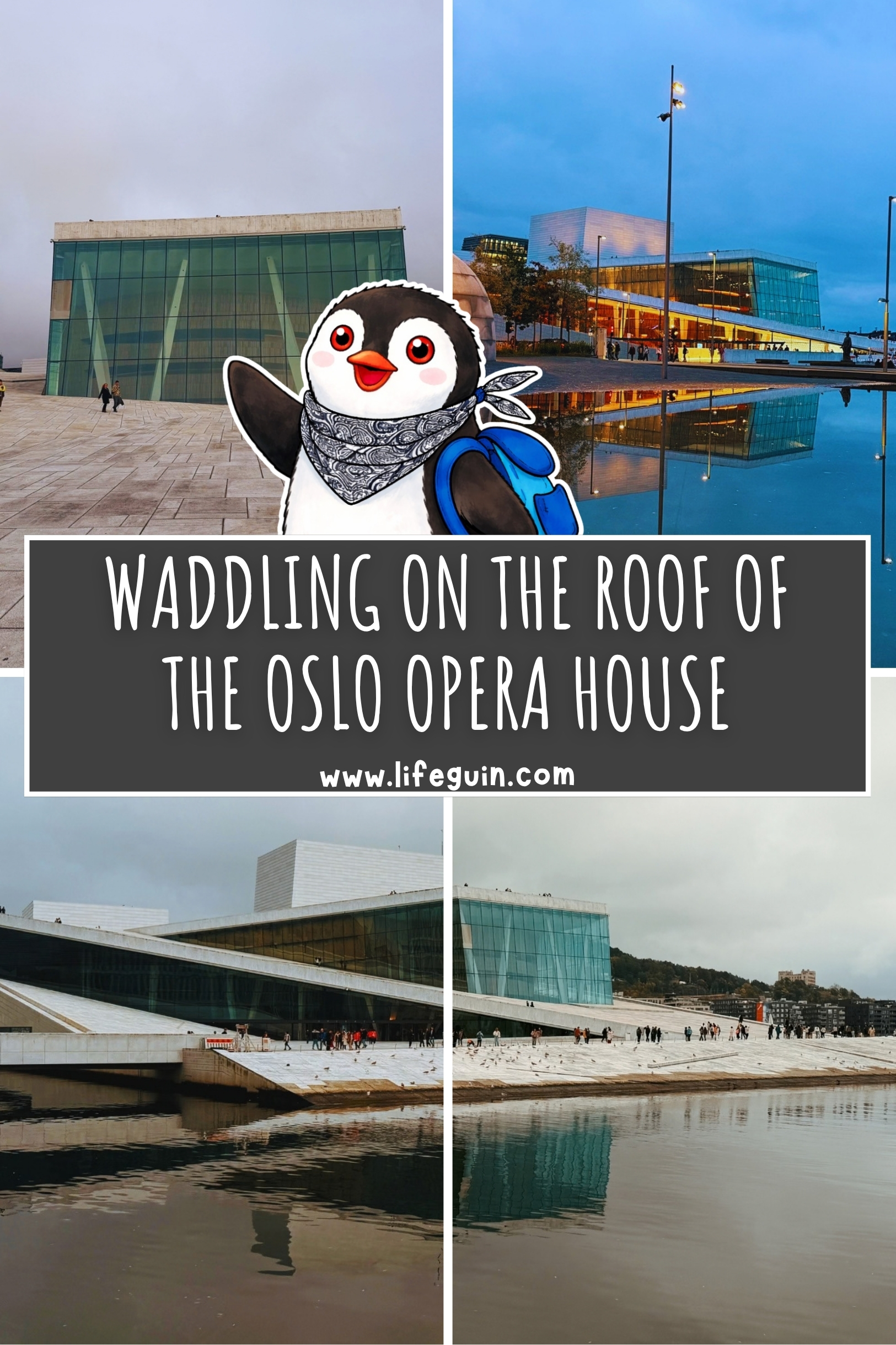
Save This Pin for Later!
This post contains affiliate links. If you click and buy, I might earn a tiny commission, enough to help a penguin keep up its globe-trotting lifestyle. No extra cost to you, just more fish for me. Thank you for supporting the adventure!