Norwegian Food: The Best Traditional Dishes to Try in Norway
Norway might be famous for its fjords, mountains and northern lights, but there is plenty to discover on the plate too. Norwegian cuisine is shaped by the country’s long coastline, mountains, forests, farms and changing seasons, so expect plenty of seafood, lamb, game, dairy products, berries and hearty dishes designed to keep you warm after a day outdoors. Some Norwegian foods are instantly approachable, while others are a little more adventurous. You can start with a heart-shaped waffle and brown cheese, then work your way towards reindeer, fermented fish or even sheep’s head if you are feeling particularly brave. Here are the traditional Norwegian foods to look out for while traveling around the country.
What to Expect from Norwegian Cuisine
Norwegian cuisine is shaped by the country’s long coastline, mountains, forests, and cold climate, so expect food that is simple, seasonal, and often hearty rather than heavily spiced. Fish and seafood are central, especially salmon, cod, herring, trout, and king crab, while lamb, reindeer, and other game appear regularly in traditional dishes. Potatoes, cabbage, carrots, root vegetables, rye bread, and dairy products are common staples, with berries such as cloudberries and lingonberries adding sweetness. Norwegian cooking generally relies on salt, pepper, herbs, and the natural flavor of the ingredients rather than lots of chili or complex spice blends. Some dishes, particularly traditional stews, cured meats, and winter foods, can feel quite rich and filling.
In contrast, fresh seafood, open sandwiches, salads, and lighter bakery foods offer plenty of less-heavy options. And then there is brunost, Norwegian brown cheese, which brings a distinctive sweet, caramel-like flavor to breakfasts, snacks, and waffles. Overall, Norwegian food is less about bold spices and more about quality ingredients, preservation, seasonality, and comfort, with many dishes reflecting the landscape they come from.
Regional Differences in Norwegian Cuisine
Norway is long and geographically diverse, so Norwegian food isn’t the same everywhere. The further north you travel, the more you will encounter Arctic seafood, reindeer, and Sámi food traditions, while the central regions are known for farms, dairy, game, and freshwater fish. Western Norway leans heavily on seafood, lamb, fruit, and fjord produce, while Southern Norway combines coastal seafood with a milder agricultural tradition. Even within these broad regions, individual towns and valleys have their own specialties, so eating locally is one of the best ways to experience Norway.
- Northern Norway: Think Arctic seafood, reindeer, and traditional Sámi cuisine. King crab is particularly associated with Kirkenes and Varanger, while skrei and tørrfisk are closely connected with Lofoten and Vesterålen. Reindeer is particularly important in Finnmark.
- Trøndelag: This central region is one of Norway’s major food-producing areas. Expect reindeer, moose, venison, seafood, shellfish, freshwater fish, dairy products, and local cheeses. Røros is particularly known for dairy and cheese, while Hitra and Frøya are famous for crab and other seafood.
- Eastern Norway: Around Oslo and into the mountain and inland regions, you will find plenty of game, trout, lamb, berries, mushrooms, and dairy products. Mountain farms and lodges are especially known for hearty food made with ingredients from the surrounding countryside.
- Western Norway: With its enormous coastline and fjords, Western Norway is a natural place for fresh seafood, but it is also famous for lamb, cured meats, fruit and dairy. The Hardanger region is particularly known for apples, apple juice and cider, while Voss and Hardanger are associated with smalahove and fenalår.
- Southern Norway: The country’s southern coast has a milder climate and a strong connection to the sea. Expect plenty of fresh prawns, mussels, and other seafood, especially in coastal towns such as Kristiansand, along with produce from local farms and markets.
So, if you are traveling through Norway rather than simply staying in Oslo, don’t order the same things everywhere. Try king crab in the north, local cheese in Røros, cider in Hardanger, seafood on the coast, and mountain food in the inland regions. It is essentially the same country, but your plate changes with the landscape.
Traditional Norwegian Foods You Should Try
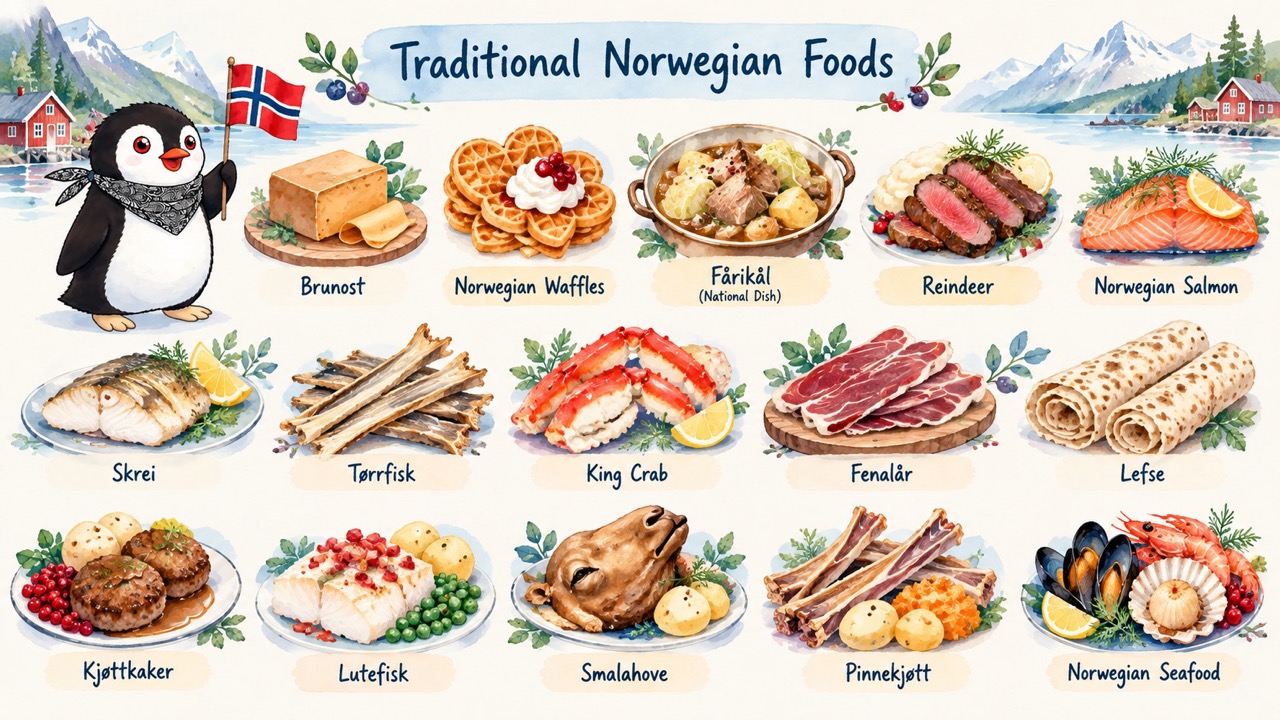
Norwegian food is all about simple ingredients, traditional cooking methods and flavors that reflect the country’s landscape. Seafood naturally plays a major role, but you will also find lamb, reindeer, cured meats, potatoes, vegetables, and plenty of dairy. Here are some of the traditional Norwegian foods worth trying while traveling through the country.
- Brunost. Norwegian brown cheese with a distinctive sweet, caramel-like flavor. It is usually sliced thinly and served on bread, crispbread, or waffles. Goat’s milk varieties tend to have a stronger flavor.
- Norwegian Waffles. Thin, soft, and traditionally heart-shaped, Norwegian waffles are commonly served with jam, sour cream, or brunost. They are a classic example of kos, the Norwegian idea of enjoying something cozy and comforting.
- Fårikål. Norway’s national dish is a simple but hearty stew of lamb and cabbage, seasoned with salt and whole black peppercorns and served with boiled potatoes. It is particularly popular in autumn.
- Reindeer. Reindeer meat is strongly associated with Northern Norway and Sámi cuisine. It can be served roasted, dried, or in stews, including bidos, a traditional Sámi dish made with reindeer, potatoes, and carrots.
- Norwegian Salmon. Salmon is one of Norway’s most famous foods and can be found smoked, grilled, cured or baked. It is an essential part of the country’s seafood culture.
- Skrei. Skrei is a migratory Atlantic cod that travels to the Norwegian coast to spawn. It is particularly associated with Lofoten and Vesterålen and is a seasonal specialty, traditionally available from winter into spring.
- Tørrfisk. Norwegian stockfish is cod dried naturally without salt. Particularly famous in Lofoten, it has been produced for centuries and can be eaten cooked or even as a crunchy snack.
- King Crab. Especially popular in Northern Norway around Kirkenes and Varanger, king crab has sweet, delicate meat that is often compared with lobster. You can even combine a meal with a king crab safari.
- Fenalår. This traditional cured leg of lamb is salted and dried, creating a Norwegian specialty similar in concept to jamón or prosciutto. It is often served thinly sliced with bread and other accompaniments.
- Lefse. A traditional Norwegian flatbread available in wide regional varieties. It can be savory or sweet and is often rolled or folded with different fillings.
- Kjøttkaker. Norwegian meat patties made from minced meat, traditionally served with potatoes, vegetables, gravy, and sometimes lingonberry jam. It is classic Norwegian comfort food.
- Lutefisk. A traditional, unusual dish made from dried fish that is rehydrated and treated with lye. It is particularly associated with Christmas and is commonly served with potatoes, peas, and bacon.
- Smalahove. A traditional western Norwegian specialty made from a salted, dried, and cooked sheep’s head. It is particularly associated with the Voss and Hardanger region.
- Norwegian Seafood. Beyond salmon and cod, Norway’s coastline offers an enormous variety of seafood, including herring, trout, mackerel, shrimp, mussels, and other shellfish. In coastal towns, ordering the local catch can be one of the simplest ways to experience Norwegian cuisine.
- Pinnekjøtt. A traditional Norwegian Christmas dish made from salted and dried lamb ribs, usually steamed and served with potatoes and mashed rutabaga. It is especially associated with Western Norway and is one of the country’s most important festive foods.
Traditional Norwegian Desserts
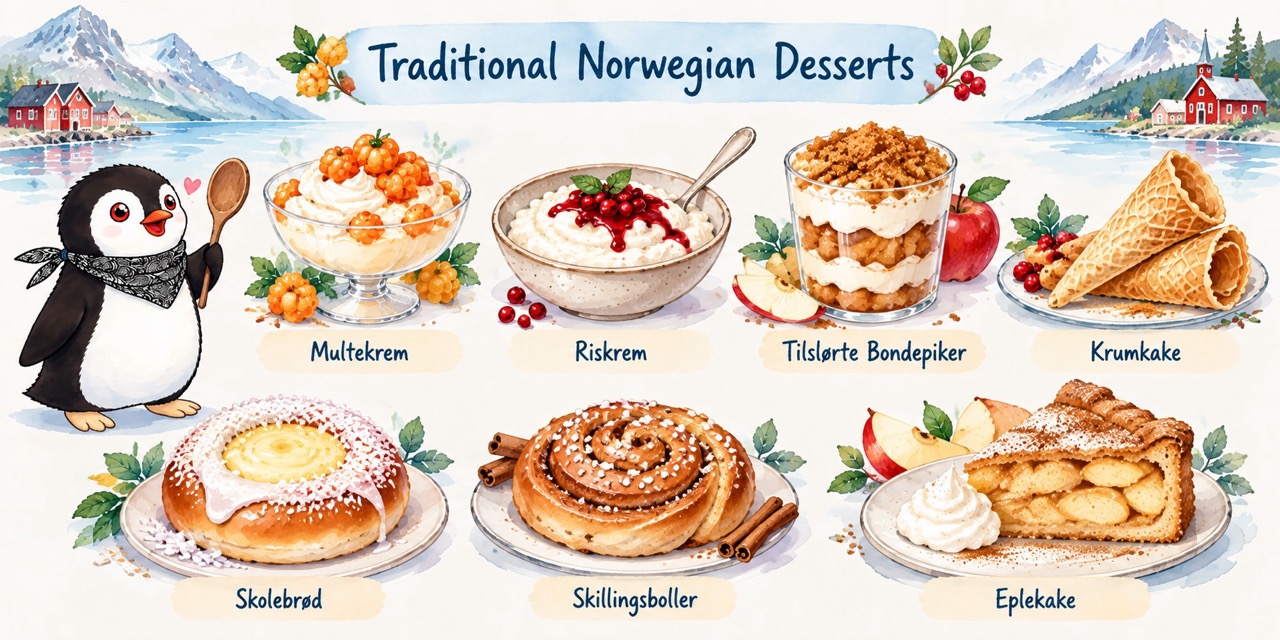
Norwegian desserts are often simple, comforting, and made with ingredients like berries, cream, cinnamon, cardamom, and dairy. You will find plenty of sweet pastries in bakeries, but traditional desserts also make good use of Norway’s wild berries and long-standing home-cooking traditions. Here are a few worth trying.
- Multekrem. A traditional dessert made with cloudberries and whipped cream. The golden berries give it a slightly tart, fruity flavor and make it especially associated with festive meals.
- Riskrem. A creamy rice pudding traditionally made with whipped cream and served cold, often with a red berry sauce. It is particularly popular around Christmas.
- Tilslørte Bondepiker. A classic layered Norwegian dessert made with sweetened apple, whipped cream, and crispy breadcrumbs or crushed biscuits. The name roughly translates to “veiled peasant girls.”
- Krumkake. A delicate, crisp waffle cookie made in a special patterned iron and traditionally rolled into a cone. It is often filled with whipped cream and served around Christmas.
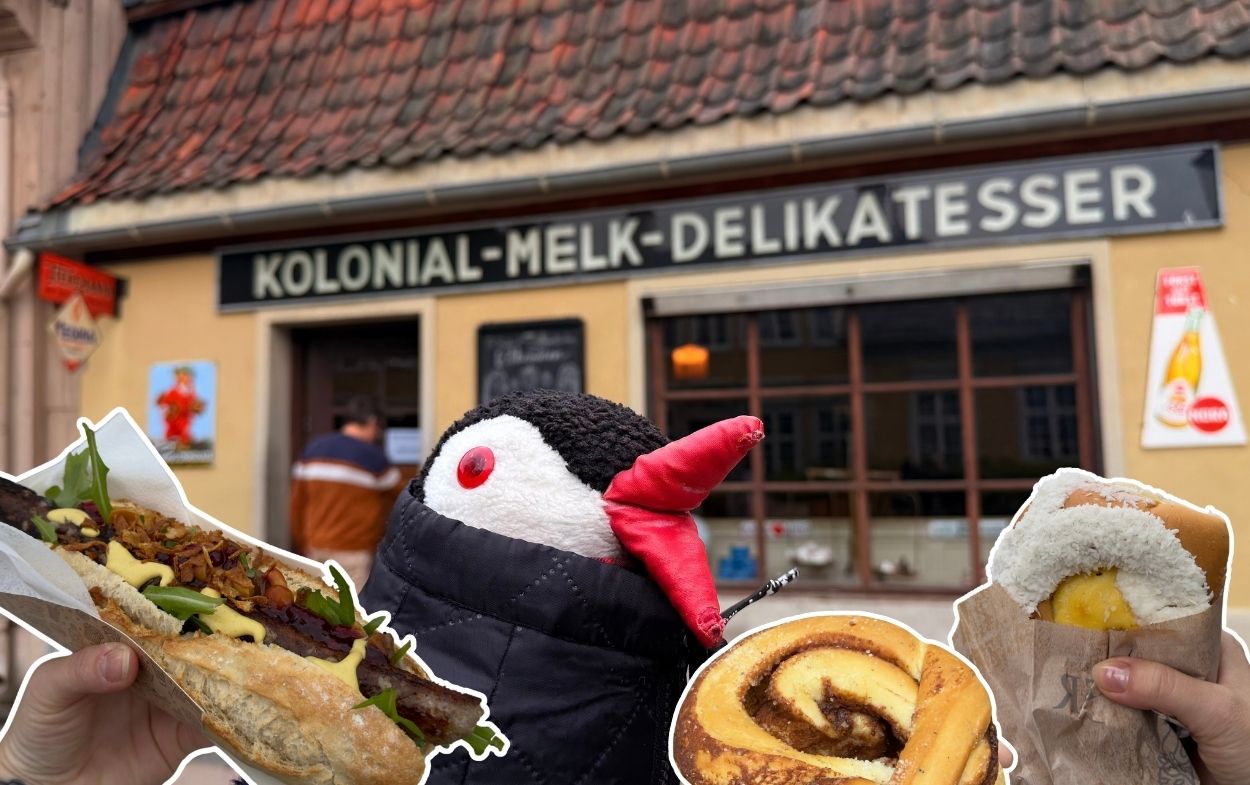
- Skolebrød. A soft sweet bun filled with vanilla custard and topped with icing and coconut. The name means “school bread,” although it’s more of a bakery treat than a school lunch.
- Skillingsboller. A soft, sweet cinnamon bun particularly associated with Bergen. Made with cinnamon, sugar, and butter, it is the perfect companion to a cup of Norwegian coffee.
- Eplekake. Norwegian apple cake made with sliced apples, cinnamon, and a soft cake batter. A classic autumn dessert, often served warm with cream, whipped cream, or ice cream.
Traditional Norwegian Drinks
Norwegian drinks range from everyday coffee and refreshing fruit-based drinks to traditional alcoholic beverages rooted in the country’s food culture. Coffee is an important part of Norwegian social life, while apples and berries feature in many non-alcoholic options. If you drink alcohol, you will also encounter aquavit, Norway’s best-known traditional spirit, as well as locally produced cider and beer.
- Norwegian Coffee. Coffee is a huge part of everyday life in Norway and is often enjoyed alongside cakes, pastries, or waffles. A coffee break is the perfect excuse for a little kos.
- Apple Cider. The fjord region around Hardanger is particularly famous for its apple production. Local cider ranges from sweet and fruity to dry and sparkling, and it pairs well with Norwegian food.
- Apple Juice. Norwegian apple juice, particularly from the Hardanger region, is a delicious non-alcoholic option. The country’s cool climate and long summer days help produce flavourful apples.
- Aquavit. Norway’s traditional spirit is made from grain or potatoes and flavored with botanicals such as caraway and dill. It is particularly associated with festive meals and is often served alongside traditional foods such as lutefisk and pinnekjøtt.
- Norwegian Beer. Norway has a long brewing tradition and a growing craft beer scene. You will find everything from traditional lagers to locally brewed IPAs and seasonal beers.
- Berry Drinks. Norway’s wild berries, including cloudberries, blueberries, and lingonberries, are used in juices, syrups, and other refreshing drinks. They are a lovely way to taste some of the flavors of the Norwegian landscape without ordering alcohol.
Practical Tips for Dining in Norway
Eating out in Norway is generally relaxed and straightforward, but it can be expensive, especially in larger cities and tourist areas. Restaurants tend to focus on quality ingredients rather than complicated preparation, and opening hours can be more limited than you might expect, particularly outside the cities. A little planning helps, especially if you want to try traditional dishes or eat somewhere popular.
- Reservations: Book ahead for popular restaurants, especially in Oslo, Bergen and Tromsø, and during busy travel periods. For casual cafés and bakeries, you can usually waddle in.
- Meal times: Lunch is generally around 11:00–14:00, while dinner often starts from around 17:00. In smaller towns, restaurants may close earlier than you expect.
- Prices: Norway is an expensive country for dining out. A casual meal can still add up quickly, while fine dining and alcohol can be particularly costly. Supermarkets and bakeries are useful if you want to keep food costs down.
- Tipping: Tipping is not compulsory in Norway. A service charge is generally included, and leaving something extra for particularly good service is optional.
- Water: Tap water is safe to drink, and restaurants will usually provide it if requested. Ask for “vann” if you need water.
- Alcohol: Alcohol is considerably more expensive than in many European countries. Beer and wine are widely available in restaurants, but stronger alcohol is subject to stricter sales regulations.
- Traditional food: If you want to try Norwegian specialties such as fårikål, reindeer, lutefisk, pinnekjøtt or brunost, check the menu before choosing a restaurant. Traditional dishes are not necessarily served everywhere.
- Seafood: Coastal towns are great places to find fresh local seafood. Salmon is famous, but don’t overlook cod, skrei, king crab, shrimp, and other seasonal catches.
- Cafés and bakeries: These are some of the easiest places to eat affordably. Look for boller, skillingsboller, waffles, and open sandwiches, and don’t forget a Norwegian coffee.
- Set menus: Some restaurants offer lunch menus or daily specials that can be better value than ordering several dishes individually.
- Payment: Cards and contactless payments are widely accepted, so you will rarely need much cash.
- Remote areas: If you are traveling through fjords, mountains or smaller villages, check restaurant opening hours in advance. Your options can become surprisingly limited outside the main towns.
- Food shops: Supermarkets are useful for breakfast, picnic lunches and road trips. If you are traveling by car, picking up food before heading into remote areas can save both money and time.
- Book special experiences: Popular food experiences, king crab safaris, food tours, and fine-dining restaurants can fill up, particularly during summer, so reserve ahead when something is high on your list.
The 5 Norwegian Foods You Should Try
If you don’t have time to work your way through the entire Norwegian food scene, these are the five I would put at the top of the list. Together, they give you a good taste of Norwegian cuisine, from its national dish and famous seafood to its much-loved sweet treats.
- Fårikål. Norway’s national dish and a classic comfort food. This simple lamb-and-cabbage stew is hearty, warming, and traditionally served with potatoes.
- Norwegian Salmon. You cannot visit Norway without trying its famous salmon. Have it smoked, grilled, cured, or prepared in a way that lets the fish’s quality shine.
- Brunost with Norwegian Waffles. Technically two foods, but they belong together. The combination of a soft, heart-shaped waffle with sweet, caramel-like brown cheese is one of the easiest ways to discover a very Norwegian flavor.
- Reindeer. Particularly if you are traveling in Northern Norway, try reindeer served as a steak, stew, or traditional bidos. It offers a taste of the country’s northern food culture and its connection with Sámi traditions.
- Skillingsboller. Finish with a Norwegian cinnamon bun, particularly if you are visiting Bergen, where this sweet, spiced pastry is a local favorite. Pair it with a cup of Norwegian coffee for the perfect kos moment.
Buy Us a Ko-fi

Norwegian food surprised us with how simple, hearty, and varied it can be. From fresh seafood and reindeer to brunost, waffles, and cinnamon buns, there is something for every kind of traveler. We loved trying the local specialties along the way. If you are traveling around Norway, we definitely recommend eating your way through the regions rather than sticking to the same dishes everywhere.
Travel Bold. Eat Well. Waddle Wild.
Save This Pin for Later!
This post contains affiliate links. If you click and buy, I might earn a tiny commission, enough to help a penguin keep up its globe-trotting lifestyle. No extra cost to you, just more fish for me. Thank you for supporting the adventure!