
Lithuania Travel Tips You Should Know Before You Go
Before heading to a new country, it always helps to know a little about the place you are about to explore. A few facts, practical tips, and local quirks can make the journey smoother and help you see more beyond the obvious sights. Here are a few things worth knowing before you start waddling through Lithuania.
Basic Facts About Lithuania
- Name: Republic of Lithuania (Lietuvos Respublika)
- Capital: Vilnius
- Land area: approximately 65,300 km²
- Population: approximately 2.9 million
- Official language: Lithuanian
- Official currency: Euro (€)
- Religion: There is no state religion; Roman Catholicism is the largest religious tradition in Lithuania.
- Administrative divisions: 10 counties and 60 municipalities.
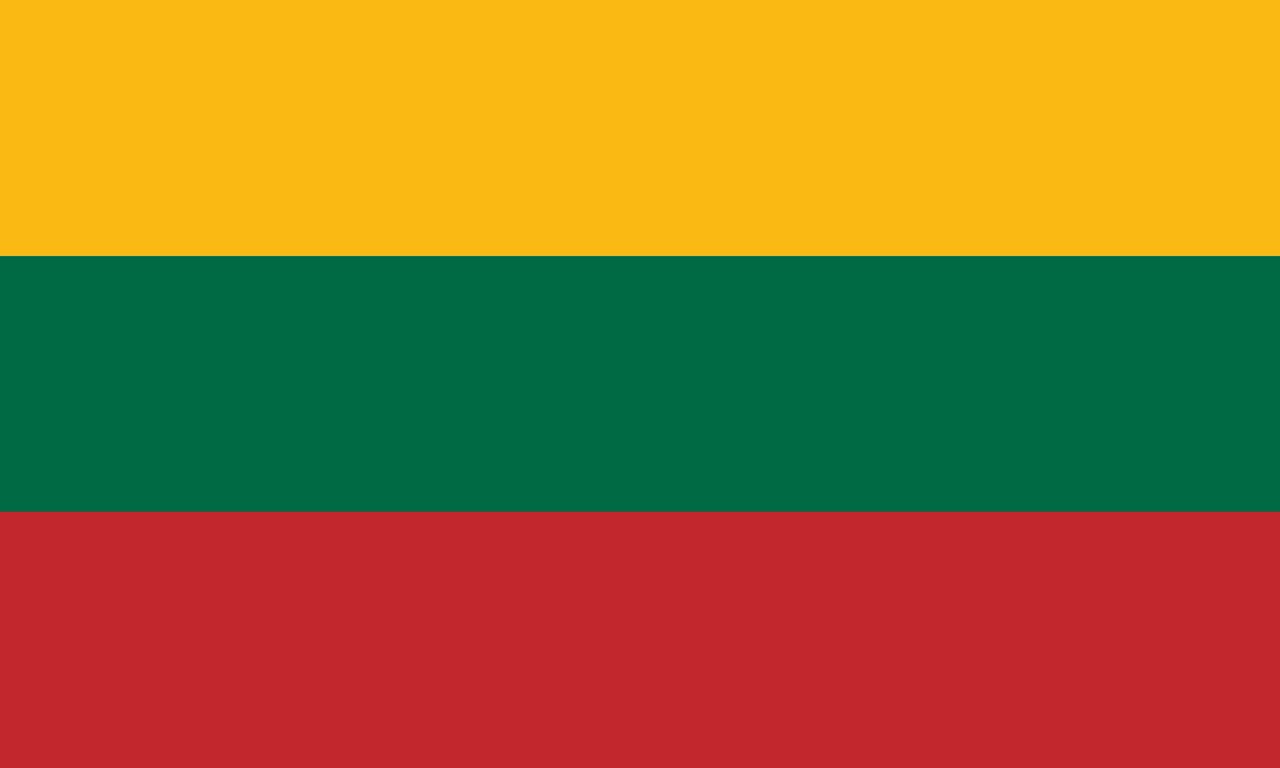
- Flag of Lithuania: The Lithuanian flag has three equal horizontal bands: yellow on top, green in the middle, and red at the bottom. The colors are traditionally associated with the country’s landscape and national identity: yellow with the sun, light, and prosperity; green with nature, freedom, and hope; and red with the earth, courage, and the bloodshed in the struggle for Lithuania’s freedom. Lithuania officially adopted the current tricolor in 1918 and restored it after regaining independence.
Why Lithuania Made It Onto Our Travel List
For years, we have to admit, Latvia and Lithuania were constantly getting mixed up in our heads. Same region, similar names, and one too many moments of “Wait, which one is which?” But after finally making it to Latvia, we found only one sensible solution: go to Lithuania and check it out for ourselves. Since we were already exploring the Baltics, adding Lithuania to the travel list felt like the perfect excuse to stop confusing the two countries and actually get to know them. Turns out, Lithuania definitely deserves a spot on the map beyond its very similar-sounding neighbor.
Lithuania’s History in a Nutshell
- Early beginnings: Lithuania’s history stretches back thousands of years, with Baltic tribes settling across the region long before the country became a unified state.
- The Grand Duchy of Lithuania: In the 13th century, Lithuania emerged as a powerful medieval state. By the 14th and 15th centuries, the Grand Duchy of Lithuania had become one of Europe’s largest states.
- A major medieval power: At its height, the Grand Duchy covered huge territories across present-day Lithuania, Belarus, Ukraine, and parts of Poland and Russia.
- The Polish-Lithuanian Commonwealth: In 1569, Lithuania and Poland formed the Polish-Lithuanian Commonwealth, creating one of Europe’s major political powers.
- Partitions and Russian rule: Neighboring powers gradually divided the Commonwealth in the late 18th century. Most of Lithuania became part of the Russian Empire.
- Independence in 1918: Lithuania declared independence on 16 February 1918, establishing the modern Lithuanian state.
- Soviet occupation: During the Second World War, Lithuania was occupied first by the Soviet Union, then Nazi Germany, and again by the Soviet Union in 1944.
- Life under the Soviet Union: Lithuania remained part of the USSR for almost five decades. Repression, deportations, and restrictions on Lithuanian national identity marked the period.
- The Singing Revolution: In the late 1980s, Lithuania became a key part of the peaceful independence movements across the Baltic states. In 1990, it became the first Soviet republic to declare the restoration of its independence.
- Modern Lithuania: Lithuania joined NATO and the European Union in 2004 and adopted the euro in 2015, becoming part of the European Union’s euro area.
28 Interesting Facts About Lithuania
#1: Lithuania Is the Largest of the Baltic States
Lithuania is the largest of the three Baltic states by both land area and population, though the differences can be easy to overlook on a map of the region. Covering around 65,300 square kilometers, Lithuania is slightly larger than Latvia and considerably larger than Estonia. It is also home to nearly 3 million people, making it the most populous of the three. The country stretches from the Baltic Sea in the west to its borders with Latvia, Belarus, Poland and Russia, giving it a surprisingly varied landscape of forests, lakes, rivers, farmland and coastline.
#2: Lithuania Has the Geographical Center of Europe
Here is a fun one: the geographical center of Europe is in Lithuania. In 1989, France’s National Institute of Geography calculated a point near the village of Purnuškės, about 26 kilometers north of Vilnius, as the continent’s geographical center. Today, you can visit the site, marked by a monument surrounded by countryside, and even get a certificate proving you stood at the center of Europe. Not a bad little travel brag to add to your Lithuania trip.
#3: Lithuania Was Once Europe’s Largest State
It may be hard to imagine today, but Lithuania was once the heart of one of Europe’s largest states. At its medieval height, the Grand Duchy of Lithuania stretched across much of Eastern Europe, covering territories now in Lithuania, Belarus, Ukraine, and parts of Poland and Russia. At its greatest extent in the 14th and 15th centuries, it was a major political and military power, making modern Lithuania much smaller than medieval Lithuania.
#4: Lithuania Was the Last Pagan Country in Europe to Adopt Christianity
Lithuania holds a remarkable place in European history: it was the last country in Europe to adopt Christianity officially. The Grand Duchy of Lithuania accepted Christianity in 1387, long after most of the continent had converted. Before then, Lithuanians followed a pagan belief system centered on nature, multiple gods, and sacred groves. Even after the official conversion, many traditional beliefs and customs continued to influence Lithuanian culture for centuries.
#5: Lithuanian Is One of Europe’s Oldest Surviving Languages
Lithuanian is considered one of the oldest surviving Indo-European languages, and its unusual connection to ancient languages makes it fascinating for linguists. It has preserved features that have disappeared from many other Indo-European languages, giving researchers valuable clues about how these languages developed thousands of years ago. So while Lithuanian may look completely unfamiliar to visitors, it carries a surprisingly deep connection to Europe’s linguistic past.
#6: Around a Third of Lithuania Is Covered by Forest
Lithuania is a surprisingly green country, with around a third of its land covered by forests. Much of the landscape is made up of pine and mixed woodland, alongside lakes, rivers, wetlands and open countryside. These forests are an important part of Lithuania’s natural landscape and provide plenty of opportunities for hiking, wildlife spotting and escaping into nature. For a relatively compact country, there’s plenty of green space to explore.
#7: Lithuania Has Thousands of Lakes
Glaciers shaped Lithuania’s landscape during the last Ice Age, leaving a patchwork of forests, wetlands, rolling hills, and thousands of lakes. Many of the lakes are surrounded by peaceful woodland and countryside, making them popular for swimming, kayaking, fishing, and hiking. The country’s lake-filled landscape is especially noticeable in eastern Lithuania, where nature takes center stage, and the scenery feels wonderfully wild and unhurried.
#8: Lithuania Has a Beautiful Baltic Coastline
Despite being a relatively small country, Lithuania has a beautiful stretch of Baltic Sea coastline, with sandy beaches, pine forests and dramatic dunes. The star of the coast is the Curonian Spit, a narrow peninsula shared by Lithuania and Russia, famous for its enormous shifting dunes. The Lithuanian section is part of a UNESCO World Heritage Site, where forests, lagoons, beaches and dunes create one of the country’s most distinctive landscapes.
#9: Lithuania Is Famous for Baltic Amber
Lithuania has a long connection with amber, often called the “gold of the Baltic.” People have collected amber along the Baltic coast for thousands of years, and you can still find pieces washed up on Lithuanian beaches, especially after storms. The warm golden stone has become an important part of Lithuanian culture and craftsmanship, with amber jewelry, ornaments, and souvenirs widely associated with the country. So if you are looking for a small piece of Lithuania to take home, amber is about as fitting as it gets.

#10: Lithuania Is Crazy About Basketball
In Lithuania, basketball is much more than just a sport. It’s deeply woven into the country’s culture and national identity, with generations of Lithuanians growing up watching and playing the game. The national team has a long history of success in international competitions, while basketball clubs attract passionate support across the country. Walk into a Lithuanian city during a big game, and you quickly realize that this is serious business.
#11: Vilnius Has Its Own “Republic”
Inside Vilnius, you can wander into Užupis, an artsy neighborhood that famously declared itself an independent republic in 1997. It has its own constitution, flag, anthem, president, and even a symbolic army, though Lithuania and the rest of the world still reasonably consider it part of Vilnius. The whole thing is deliberately playful, and crossing into Užupis feels a little like stepping into a tiny country that decided to have a sense of humor.
#12: Užupis Has a Very Unusual Constitution
Užupis takes its “republic” joke surprisingly seriously, including a constitution displayed on walls throughout the neighborhood. Instead of lengthy political language, its articles contain wonderfully quirky ideas about everyday life, including the right to be happy, the right to be unhappy and the right to make mistakes. It is less about declaring actual independence and more about celebrating creativity, freedom and the slightly eccentric spirit of Užupis.
#13: Vilnius Has a Frank Zappa Statue
Here is a wonderfully random one: Vilnius has a statue of Frank Zappa, even though the American musician apparently had no connection to Lithuania and never visited the country. The monument was unveiled in 1995, only a few years after Lithuania regained independence. So why Zappa? The story is connected to Lithuania’s post-Soviet cultural atmosphere and a desire to embrace something unexpected and unconventional. Today, the statue has become one of the city’s more unusual landmarks.
#14: Vilnius University Is More Than 450 Years Old
Founded in 1579, Vilnius University is one of the oldest universities in Central and Eastern Europe and one of Lithuania’s most important historic institutions. Its beautiful historic campus sits in the heart of Vilnius Old Town, with courtyards, arcades, and buildings that have developed over centuries. Walking through it feels less like wandering around a university and more like exploring another historic corner of the city.
#15: Vilnius Has a Legend About an Iron Wolf
According to one of Vilnius’s most famous founding legends, Grand Duke Gediminas once dreamed of a giant iron wolf howling from a hill. A pagan priest interpreted the dream as a prophecy that a great city would one day stand on that spot. Gediminas supposedly followed the advice and established Vilnius, giving the city a rather dramatic origin story involving a wolf, a dream, and a future capital.
#16: You Can Fly a Hot-Air Balloon Over Vilnius
Vilnius is one of the few European capitals where you can take to the sky in a hot-air balloon and see the city from above. When conditions are right, balloons rise over rooftops, church towers, green spaces, and the surrounding countryside, offering a completely different perspective on the Lithuanian capital. It is certainly not the usual way to go sightseeing, but that is exactly what makes it memorable.
#17: Vilnius Is Surprisingly Green
For a European capital, Vilnius has an impressive amount of greenery. Around 61% of the city’s territory is green space, according to Go Vilnius, with forests, parks, hills, and rivers woven into the urban landscape. You can spend the morning exploring the historic center and, surprisingly quickly, find yourself surrounded by trees and nature.
#18: Trakai Castle Sits on an Island
One of Lithuania’s most recognizable sights looks almost like something from a fairytale. Trakai Island Castle sits in the middle of Lake Galvė, surrounded by water and forests just outside Vilnius. The red-brick medieval castle was an important stronghold of the Grand Duchy of Lithuania and today is one of the country’s most popular historic attractions. Its setting makes the castle particularly spectacular, especially when viewed from the water.
#19: Vilnius Was Once Known as the “Jerusalem of the North”
Lithuania has a long and important Jewish history, especially in Vilnius, once known as the “Jerusalem of the North.” The city became an important center of Jewish scholarship, religious life, and culture, attracting scholars from across Europe. Before the Second World War, a large part of Vilnius’s population was Jewish, and the city’s Jewish heritage remains an important part of its history today.
#20: A Japanese Diplomat Saved Jewish Refugees in Lithuania
During the Second World War, Chiune Sugihara, Japan’s consul in Kaunas, issued transit visas to Jewish refugees fleeing Nazi persecution. He continued writing visas despite instructions from the Japanese government, helping thousands of people escape through Lithuania. Today, Lithuania and beyond remember his actions, and the former Japanese Consulate in Kaunas is home to a museum dedicated to his story.
#21: Lithuania Has No Mountains
If you are hoping to climb some serious mountains in Lithuania, you might be waiting a while. The country’s highest point, Aukštojas Hill, rises just 293.84 meters above sea level. Instead of dramatic peaks, Lithuania offers a landscape of gently rolling hills, forests, lakes, and wide-open countryside, making it a very different kind of destination for nature lovers.
#22: Lithuania Celebrates Midsummer With Bonfires and Magic
One of Lithuania’s biggest traditional celebrations is Joninės, also known as Rasos, held around the summer solstice. The celebration brings together bonfires, singing, dancing, flower wreaths, and traditional rituals that date back to Lithuania’s pre-Christian past. According to tradition, the shortest night of the year is also a time to look for magical fern flowers, although finding one is easier said than done.
#23: Lithuania Has Produced Some Remarkable Artists
Lithuania has produced a surprising number of internationally recognized artists, writers, and musicians. One example is Czesław Miłosz, the Polish-Lithuanian poet and writer who received the Nobel Prize in Literature in 1980 and studied at Vilnius University. His connection to Vilnius reflects the city’s complicated and multicultural literary history.
#24: One of the 20th Century’s Greatest Violinists Grew Up in Vilnius
Jascha Heifetz, widely regarded as one of the 20th century’s great violinists, was born in Vilnius in 1901. He was a child prodigy who went on to build an extraordinary international career, performing worldwide and becoming famous for his technical precision. His early connection to Vilnius further highlights the city’s remarkable musical history.
#25: Romain Gary Was Born in Vilnius
The famous French writer and diplomat Romain Gary was born in Vilnius in 1914. He later became one of France’s best-known literary figures and remains particularly famous for winning the Prix Goncourt twice, something that is officially impossible under the prize’s rules. The twist? He won a second time under the pseudonym Émile Ajar, with his true identity revealed only later.
#26: Lithuania Has Become a European Fintech Hub
Lithuania has developed a surprisingly strong reputation in fintech and technology, particularly in Vilnius. The country has attracted international financial technology companies and built an ecosystem around startups, digital services, and innovation. For a country with fewer than three million people, its presence in Europe’s modern technology scene is considerably bigger than you might expect.
#27: You Cannot Take Photos in Train Stations
One slightly unexpected rule in Lithuania is that photography can be restricted in certain railway facilities, particularly where security or railway operations are involved. For travelers, this means it is worth paying attention to signs before taking photographs inside stations or around railway infrastructure. That beautiful train-platform shot may not always be as innocent as it looks!
#28: Alcohol Sales Stop at 8 PM
Lithuania has strict rules on when shops can sell alcohol. Retail sales of alcoholic drinks are generally permitted from 10 AM to 8 PM Monday to Saturday, while Sunday sales end even earlier, at 3 PM. So if you are planning to pick up a bottle for the evening, remember to shop before the clock catches up.
Practical Facts for Travelers Coming to Lithuania
A little practical knowledge can make any trip easier, especially when you are visiting a country for the first time. From money and transportation to language, weather, and everyday customs, here are a few useful things to know before you start exploring Lithuania.
- Visa Requirements. Lithuania is part of the Schengen Area. EU, EEA, and Swiss citizens can enter without a visa, while citizens of many other countries can visit visa-free for up to 90 days in any 180 days. Requirements depend on your nationality, so check the current rules before traveling.
- Passport and ID. EU citizens can generally travel to Lithuania with a valid passport or national identity card. Travelers from outside the EU should check the passport validity requirements for their nationality.
- Currency. Lithuania uses the euro (€). The country adopted the euro in 2015, replacing the Lithuanian litas.
- Card Payments. Cards and contactless payments are widely accepted across Lithuania, particularly in Vilnius, Kaunas and other larger towns. It is still useful to carry some cash for markets, small businesses, or more remote areas.
- ATMs. ATMs are widely available in cities and towns, but check the fees your bank or card provider charges before withdrawing cash.
- Language. The official language is Lithuanian. English is widely spoken in tourist areas, especially among younger people, and some people also speak Russian and Polish.
- Time Zone. Lithuania uses Eastern European Time (EET, UTC+2) and switches to Eastern European Summer Time (EEST, UTC+3) during daylight saving time.
- Socket Plugs. Lithuania uses Type C and Type F plugs, with a standard voltage of 230 V and 50 Hz. Travelers from countries with different socket types may need an adapter.
- Driving Side. Cars drive on the right-hand side of the road, with the steering wheel generally on the left.
- Public Transport. Lithuania has a strong bus and train network connecting its main cities and towns. Vilnius and Kaunas also have extensive local bus networks, making it possible to explore the cities without renting a car.
- Getting Around Vilnius. Vilnius is easy to explore by public transport, with buses and trolleybuses covering much of the city. The historic center is also compact enough to explore comfortably on foot.
- Intercity Travel. Trains and buses connect Vilnius with destinations such as Kaunas, Klaipėda, and Šiauliai. Buses can be particularly useful for reaching smaller towns and attractions.
- Drinking Water. Tap water is generally safe to drink in Lithuania, so you usually don’t need to buy bottled water for everyday drinking.
- Tipping. Tipping is not compulsory, but leaving around 5–10% for good service in restaurants and cafés is appreciated. Check the bill first to see whether a service charge has already been included.
- Opening Hours. Shops and supermarkets generally have long opening hours, although smaller businesses may close earlier, particularly outside the major cities.
- Emergency Number. The emergency number in Lithuania is 112, which you can use for police, fire, and medical emergencies.
- Wi-Fi and Mobile Data. Lithuania has good mobile coverage and widely available Wi-Fi, particularly in cities, hotels, restaurants, and cafés. EU visitors can generally use their domestic mobile plans under EU roaming rules.
- Weather. Lithuania experiences cold winters and mild to warm summers, with changeable conditions during spring and autumn. Pack layers and a waterproof jacket if you are traveling outside the summer months.
- Best Way to Explore. For Vilnius, Kaunas and other larger cities, public transport and walking are usually enough. A car becomes more useful if you want to explore Lithuania’s forests, lakes, smaller towns and countryside at your own pace.
- Tap Water. Tap water is generally safe to drink in Lithuania. You can comfortably refill your bottle in most places, although the taste can vary depending on the local water supply or plumbing.
- Mobile Roaming. Travelers with an EU SIM card can generally use their domestic mobile allowance in Lithuania under EU roaming rules, subject to their provider’s fair-use policy.
- Drinking Age. You must be 20 or older to buy or consume alcohol in Lithuania.
- Public Toilets. You can find public toilets at shopping centers, transport stations, museums, and tourist attractions. Some may charge a small fee, so it helps to keep a few coins handy.
- Sunday Opening Hours. Most supermarkets, shopping centers, and larger businesses open on Sundays, although smaller shops and businesses outside the main cities may have shorter opening hours.
- European Union and Schengen. Lithuania has been a member of the European Union and NATO since 2004 and is part of the Schengen Area, making travel to neighboring Latvia and Poland straightforward for travelers who meet Schengen entry requirements.
Best Time to Visit Lithuania
Lithuania is a year-round destination, but the experience changes quite dramatically with the seasons. Summer brings long days and warmer weather, while winter transforms the country into a colder, quieter landscape. Spring and autumn offer a nice balance, with fewer crowds and plenty of opportunities to explore.
- Spring (March–May). Spring brings gradually warmer temperatures, longer days, and nature coming back to life. April and May are particularly pleasant for exploring cities, parks, and the countryside, although the weather can still be unpredictable.
- Summer (June–August). Summer is the warmest and brightest time to visit, with long daylight hours and generally comfortable temperatures. It is a great season for exploring Lithuania’s lakes, forests and Baltic coastline, although popular places can be busier and accommodation prices can be higher.
- Autumn (September–November). Autumn brings colorful forests, crisp air and fewer visitors. September can still feel pleasantly mild, while October is particularly atmospheric as the leaves begin to turn. By November, temperatures drop, and daylight becomes noticeably shorter.
- Winter (December–February). Winter is cold and can bring snow, especially from December onwards. Days are short, but Lithuania’s cities can feel particularly atmospheric during the festive season, with Christmas markets, decorations, and cozy cafés offering plenty of reasons to explore despite the cold.
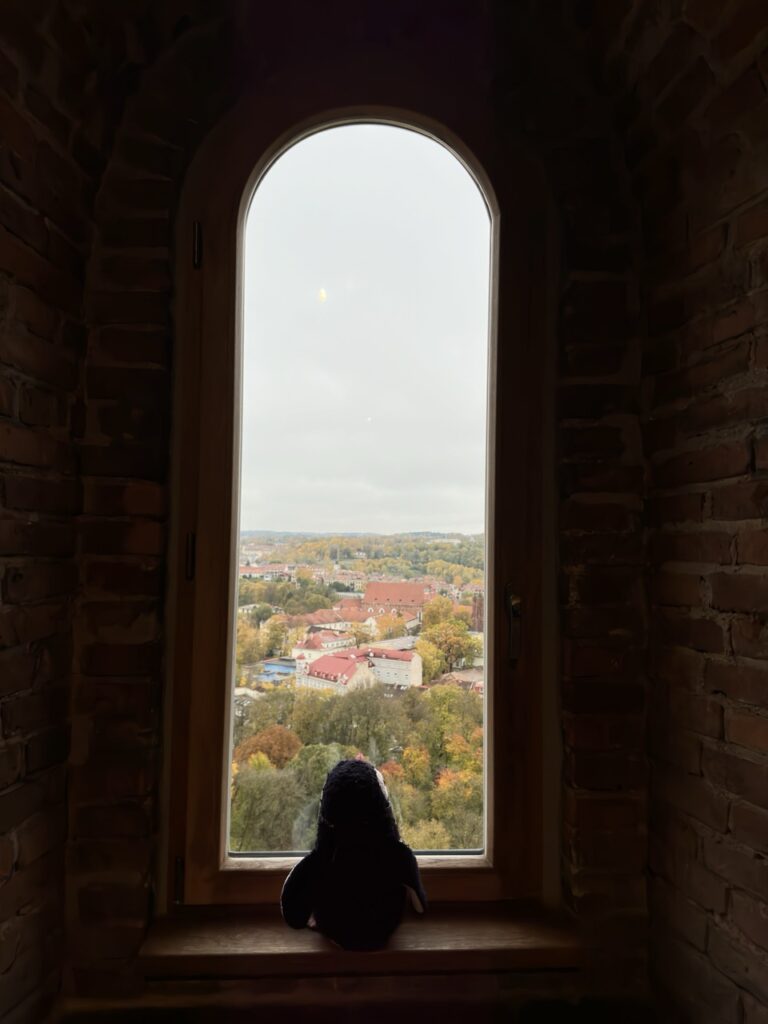
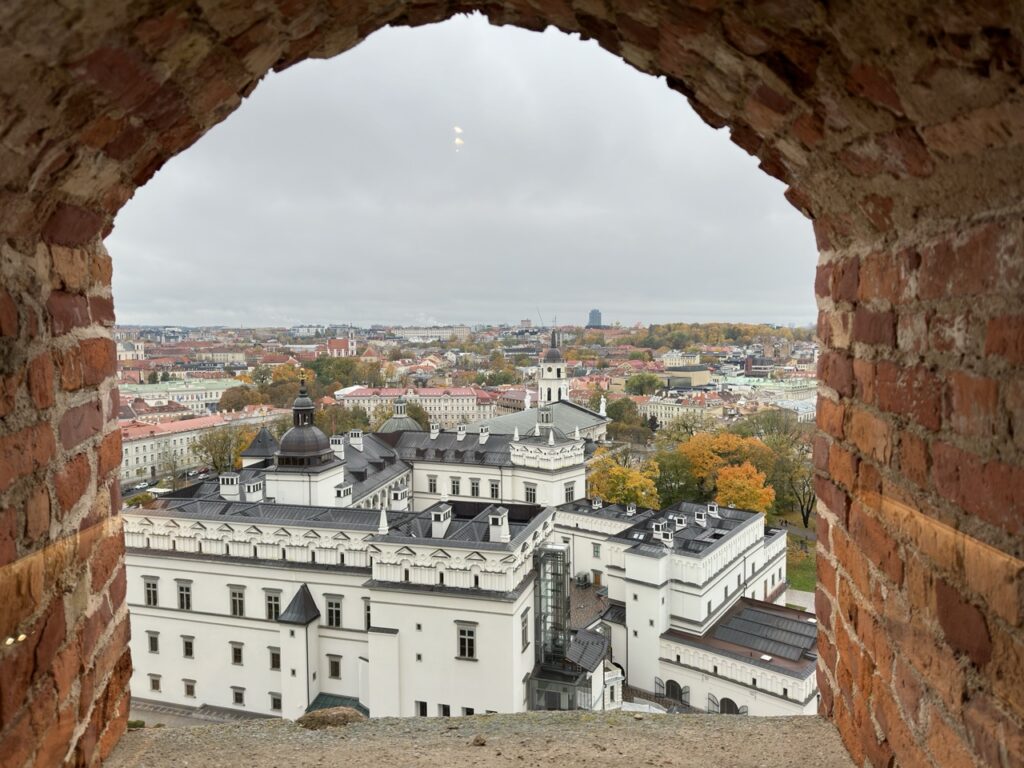
We traveled to Lithuania in October, and it turned out to be quite pleasant. The temperatures were comfortable enough for sightseeing, the autumn colors added plenty of atmosphere, and we avoided the busier summer period. For us, it was a lovely time to explore Lithuania at a slower pace.
Buy Us a Ko-fi

How Much Time Do You Need in Lithuania
You do not need weeks to get a taste of Lithuania. We spent 3 days and 2 nights in the country, and managed to experience some of its highlights without turning the trip into a race. Three days work particularly well for a short break, especially if you focus your time on Vilnius and one or two nearby attractions.
- 2 days: Enough for a quick introduction to Vilnius, with time for the Old Town, Užupis, Gediminas Castle and some of the city’s main sights.
- 3 days: Our choice. With three days, you can explore Vilnius at a comfortable pace and take a day trip to somewhere like Trakai. It is short enough for a weekend getaway but long enough to feel like you have actually seen something of Lithuania.
- 4–5 days: Gives you more breathing room and allows you to combine Vilnius with Kaunas, Trakai, or other nearby destinations without constantly watching the clock.
- 6–7 days: A week gives you the chance to venture further, including the Baltic coastline, Klaipėda and the Curonian Spit, while still leaving time to enjoy the cities.
Lithuania surprised us in all the right ways. We came for a short trip, with just three days and two nights, but found a country with far more history, nature, and character than we expected. From the winding streets of Vilnius and the quirky spirit of Užupis to medieval castles, forests and the Baltic coast, there is plenty here to keep you waddling from one discovery to the next. And perhaps the best part? Lithuania finally gave us a chance to stop mixing it up with Latvia. After already exploring its Baltic neighbor, we had to see what Lithuania was all about for ourselves. Three days only scratched the surface, but it was enough to leave us curious about what is waiting beyond the places we managed to visit. Lithuania may have started as the country we kept confusing with Latvia, but it certainly did not stay that way.
Travel Bold. Eat Well. Waddle Wild.
Save This Pin for Later!
This post contains affiliate links. If you click and buy, I might earn a tiny commission, enough to help a penguin keep up its globe-trotting lifestyle. No extra cost to you, just more fish for me. Thank you for supporting the adventure!