How to Visit the Temple of Heaven in Beijing: Tickets, Hours & Tips
The Temple of Heaven was the very first place we visited after landing in Beijing, and what a way to start the trip! Still a little jet-lagged but full of excitement, we waddled straight into one of China’s most beautiful and historically significant sites. Located in the southern part of the city, this massive complex of ancient ceremonial buildings instantly swept us into another world. You could easily spend half a day (or more) exploring its peaceful paths and intricate temples. It’s truly one of those “if you haven’t been here, you haven’t been to Beijing” kind of places. Read on to find out everything you need to know before visiting, from tickets and opening hours to what not to miss inside this incredible UNESCO World Heritage Site.
- How to Get to the Temple of Heaven
- Temple of Heaven Opening Hours
- Tickets to the Temple of Heaven
- Best Time to Visit the Temple of Heaven
- Why Visit the Temple of Heaven
- How Long to Spend at the Temple of Heaven
- A Little Bit of History about The Temple of Heaven
- Legends and Beliefs of the Temple of Heaven
- Our Waddle to The Temple of Heaven
- What to See in the Temple of Heaven
- More Fascinating Facts About the Temple of Heaven
- Nearby Attractions


How to Get to the Temple of Heaven
Getting to the Temple of Heaven is simple; it’s well connected by Beijing’s metro and easy to find, even if it’s your first day in the city. The temple complex sits in the southern part of Beijing, within the Tiantan Park area, surrounded by peaceful greenery and historic walls.
- By Metro: Take Line 5 and get off at Tiantandongmen Station (Exit A) — this is the East Gate, the main and most popular entrance for visitors. You can also enter from the South Gate or West Gate, but the East Gate offers the most direct access to the Hall of Prayer for Good Harvests, the temple’s main structure.
-
- Take Metro Line 5 to Tiantan East Gate Station, exit from Exit A, and walk for 5 minutes to get there directly.
- Take Metro Line 8 to Tianqiao Station, exit from Exit C, and walk for 10 minutes to get there.
-
- By Bus: Several bus routes stop nearby, including lines 6, 34, 35, 36, and 72, depending on where you’re coming from.
-
-
- South Gate: Take bus 36, 53, 122, 525, 958, Te 3, Te 11, Te 12, or Yuntong 102 to Tiantan Nanmen Station.
- West Gate: Take bus 2, 17, 20, 36, 53, 71, 72, 93, 120, 622, Brt 1 or Te 11, and get off at Tiantan Ximen Station.
- North Gate: Take bus 6, 34, 35, 36, 72, 106, or 110, and get off at Tiantan Beimen Station.
-
-
- By Foot or Taxi: If you’re staying near the city center or Tiananmen Square, it’s about a 15–20-minute taxi ride or a pleasant walk through local streets.
Pro Penguin Tip
Start your visit from the East Gate in the morning — it’s less crowded, and you’ll have the best light for photos as you waddle toward the main hall.
Temple of Heaven Opening Hours
The Temple of Heaven Park is open daily from early morning until evening, but the exact hours depend on the season. Generally, the park gates open around 6:00 AM and close around 10:00 PM, while the main temple buildings, including the Hall of Prayer for Good Harvests, are open roughly from 8:00 AM to 5:00 PM. The last entry is usually about an hour before closing.
If you’re visiting early, you’ll get to see locals practicing tai chi, dancing, or playing cards in the surrounding park before the main halls open, one of the most authentic experiences in Beijing.
Pro Penguin Tip: Visit early in the morning for soft light, cooler weather, and fewer crowds. If you go too late in the afternoon, some inner halls may already be closed to visitors.
Opening Hours at Glance
April 1 – October 31 (Peak Season):
- Park Gates (North, East, South, West): 06:00 – 22:00
- Main attractions inside (Hall of Prayer, Echo Wall, Altars, etc.): 08:00 – 18:00 (last entry around 17:30)
November 1 – March 31 (Off-Peak / Winter Season):
- Park Gates: 06:30 – 22:00
- Main attractions inside: 08:00 – 17:00 (last entry around 16:30)
Tickets to the Temple of Heaven
Visiting the Temple of Heaven requires a small entrance fee, which depends on how much of the complex you want to explore. You can either buy a Park Entrance Ticket (for access to the outer grounds) or a Through Ticket that also includes entry to the main attractions inside — such as the Hall of Prayer for Good Harvests, the Imperial Vault of Heaven, and the Circular Mound Altar. The through ticket is definitely worth it if you want to experience the full site.
Tickets can be purchased at the entrance gates, but the easiest way (especially during busy seasons) is to book online through the official Tiantan Park WeChat mini program or via authorized travel apps like Trip.com. Most payment systems now accept foreign bank cards through these platforms.
Peak Season (April 1 – October 31):
- Entrance/park ticket: 15 CNY
- Combined/full-access ticket (Hall of Prayer + Echo Wall + Circular Mound Altar, etc.): 34 CNY
Off-Peak Season (November 1 – March 31):
- Entrance/park ticket: 10 CNY
- Combined full-access ticket: 28 CNY
- General ticket for adults, children, etc.: 10-15 CNY
- Plushies: free entry
Prices and policies can change; always verify on the official Temple of Heaven website or the Beijing government tourism site before your visit.
Pro Penguin Tip
Please bring your passport, as it’s required when purchasing tickets or scanning into the park. And if you’re visiting early in the morning, grab your ticket at the East Gate; it’s usually the quickest and least crowded entry point.
Best Time to Visit the Temple of Heaven
The best time to visit the Temple of Heaven is early in the morning between 7:00 and 9:00 AM, when the park is alive with locals practicing tai chi, dancing, or playing music, yet still calm enough to soak in the peaceful atmosphere. The light is soft, the air is cooler, and it’s the perfect time for photos before the tour groups arrive.
Season-wise, spring (April–May) and autumn (September–October) are ideal, offering pleasant temperatures and clear skies. Summer can be hot and crowded, while winter brings chilly air but far fewer visitors, giving the temple an extra serene vibe.

Why Visit the Temple of Heaven
The Temple of Heaven is a window into China’s spiritual and cultural heart. Built in the early 1400s, this vast complex was where emperors of the Ming and Qing dynasties came to pray for good harvests, believing their connection with heaven ensured harmony between the earth and sky. Walking through its perfectly symmetrical design, surrounded by cypress trees and ancient stone altars, you can feel the calm and precision that once defined imperial rituals.
It’s also one of the best places in Beijing to see local life in action, from morning tai chi sessions to old friends playing cards in the park.
How Long to Spend at the Temple of Heaven
Plan to spend about 2 to 3 hours exploring the Temple of Heaven. That gives you enough time to wander through the park, visit the Hall of Prayer for Good Harvests, test the acoustics at the Echo Wall, and stand on the Heart of Heaven Stone at the Circular Mound Altar.
If you enjoy a slower pace, watching locals play cards, dance, or practice tai chi, you could easily spend half a day here. The park is large, peaceful, and full of small corners worth exploring.
A Little Bit of History about The Temple of Heaven
The Temple of Heaven has a long and fascinating history that reflects China’s imperial past and spiritual traditions. Here are some key moments that shaped this remarkable site:
- Construction (1406–1420). Built during the reign of the Yongle Emperor of the Ming Dynasty, around the same time as the Forbidden City.
- Purpose. Served as the venue for annual ceremonies where emperors prayed to heaven for good harvests and prosperity.
- Expansion and Renovation. During the reign of the Qianlong Emperor (18th century), the complex underwent large-scale renovations, adding intricate details and restoring its grand structures.
- Opened to the Public. In 1918, after centuries of imperial use, the Temple of Heaven was transformed into a public park, allowing visitors to experience its history firsthand.
Legends and Beliefs of the Temple of Heaven
- The Emperor’s Secret Conversations with Heaven. Locals long believed that when the Emperor stood on the Heart of Heaven Stone (the center of the Circular Mound Altar), his prayers could travel directly to the heavens. People said that only there could he “speak with Heaven” and be heard. Today, visitors still stand on that same stone to test its echo; it’s said that the clearer your voice sounds, the purer your heart is.
- The Whispering Wall. Around the Imperial Vault of Heaven, there’s a circular wall famous for its perfect acoustics. According to local lore, imperial priests could “whisper messages to Heaven” along the wall, and their voices would travel around to reach the other side. Couples today like to test it, believing that if your words reach your partner clearly, your love is blessed by Heaven itself.
- The Sky Connection. The temple’s design, circular halls on square foundations, symbolizes Heaven meeting Earth. Some locals believe that walking from the outer square paths toward the central round altar brings balance and harmony, as if you’re journeying closer to Heaven step by step.

Our Waddle to The Temple of Heaven
When we first arrived, we thought one ticket would cover everything, but halfway through our waddle, we discovered another ticket booth blocking the way to the main temples. It turns out the first ticket only grants access to the outer park area. At the same time, the inner attractions, including the Hall of Prayer for Good Harvests, the Circular Mound Altar, and the Imperial Vault of Heaven, require an additional ticket.
To save time (and avoid surprises mid-visit), it’s best to buy the combo or “through” ticket right at the entrance. It includes access to both the park and all the key historic sites within, allowing you to explore freely without needing to stop for another purchase. Trust us, it makes the visit much smoother, and lets you focus on soaking up the beauty of the place instead of queueing twice!

Once we finally had all the tickets in hand, the rest of the visit was pure joy. We could waddle around freely, taking our time to explore every corner without worrying about another checkpoint. The park’s wide pathways, ancient cypress trees, and soft hum of locals chatting or playing music created a peaceful rhythm that made us forget the earlier ticket hassle completely.
What to See in the Temple of Heaven
The Temple of Heaven is divided into two main sections, the Inner Altar and the Outer Altar. The Inner Altar is where you’ll find the most significant historical buildings and ceremonial sites, including the Hall of Prayer for Good Harvests, the Imperial Vault of Heaven, and the Circular Mound Altar. The Outer Altar, on the other hand, surrounds it with peaceful parkland, ancient cypress trees, and smaller auxiliary structures that once supported the temple’s rituals.
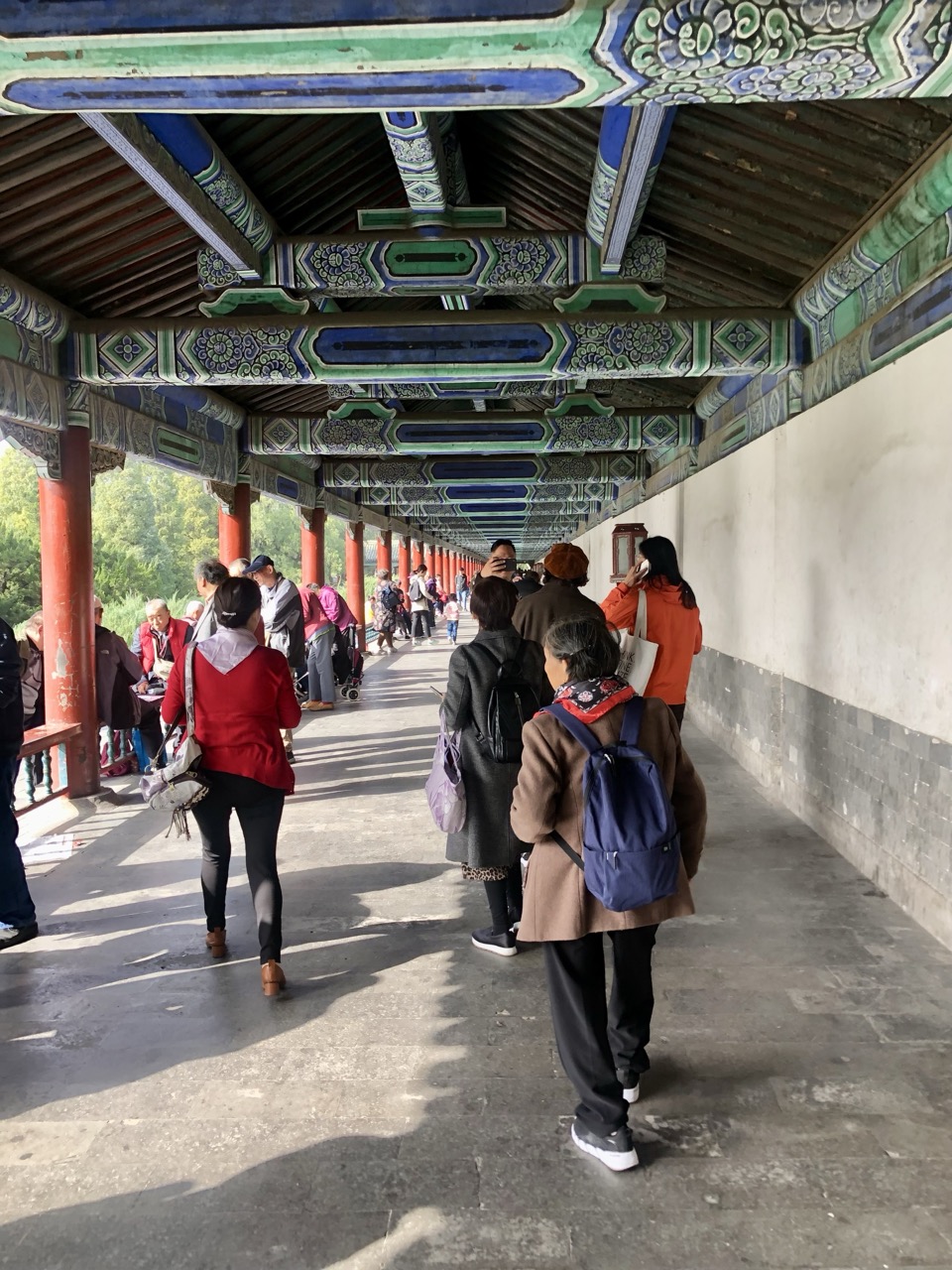
The Seventy-two Corridors
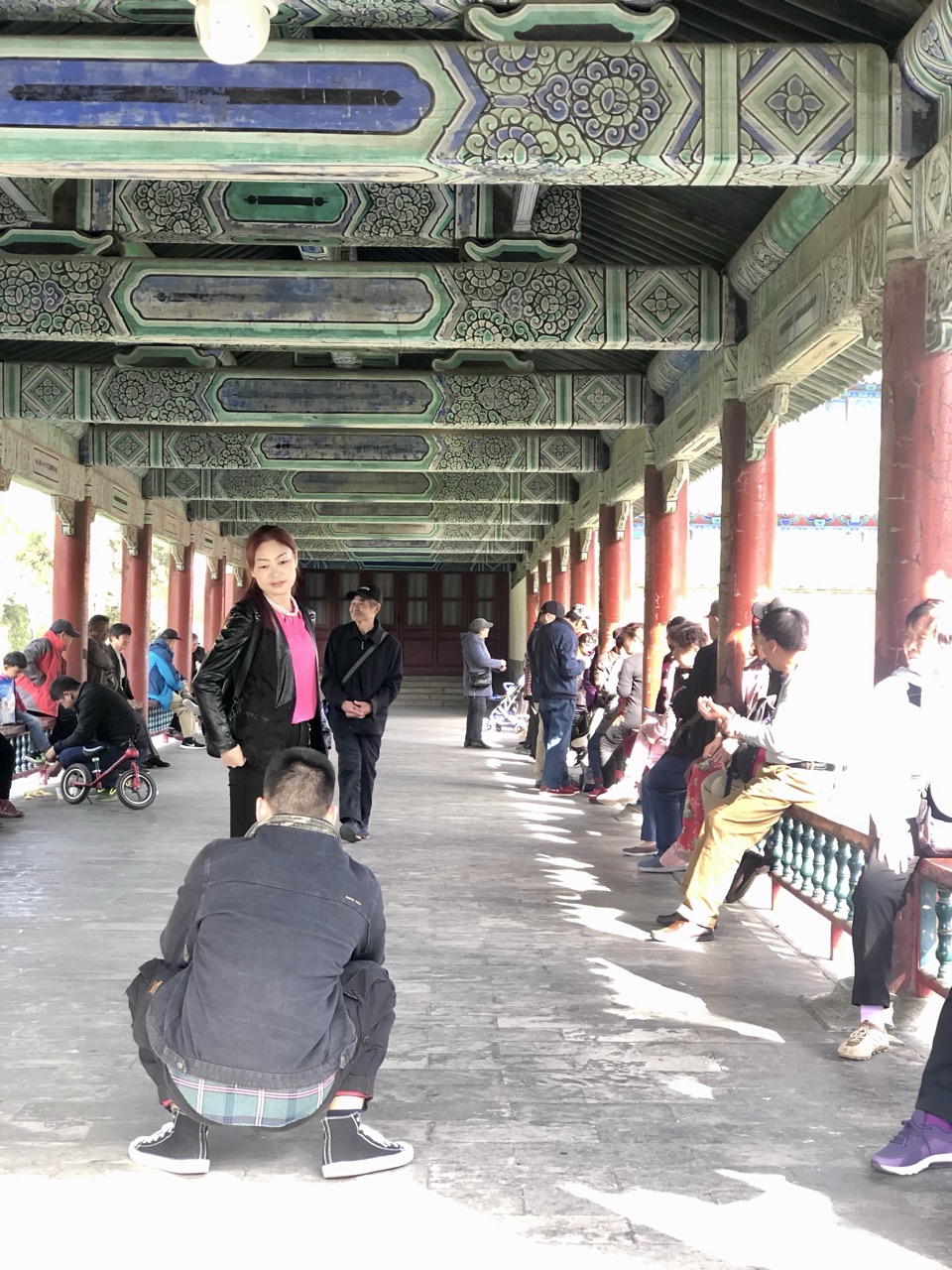
The Seventy-two Corridors, located to the east of the Hall of Prayer for Good Harvests, are L-shaped structures that connect the Hall of Prayer for Good Harvests with the Kitchen Courtyard. They were originally built in the 18th year of the Yongle reign during the Ming Dynasty (1420) as a passage for transporting sacrificial offerings. After renovations in 1937, the corridors were opened to tourists as a resting area. The corridor is 5 meters wide and 350 meters long, featuring a total of 72 rooms.
The Hall of Prayer for Good Harvests
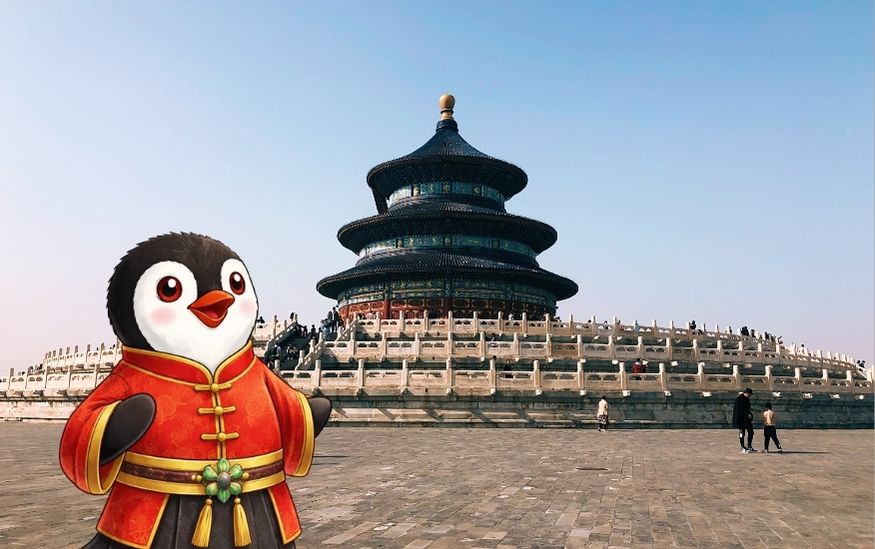
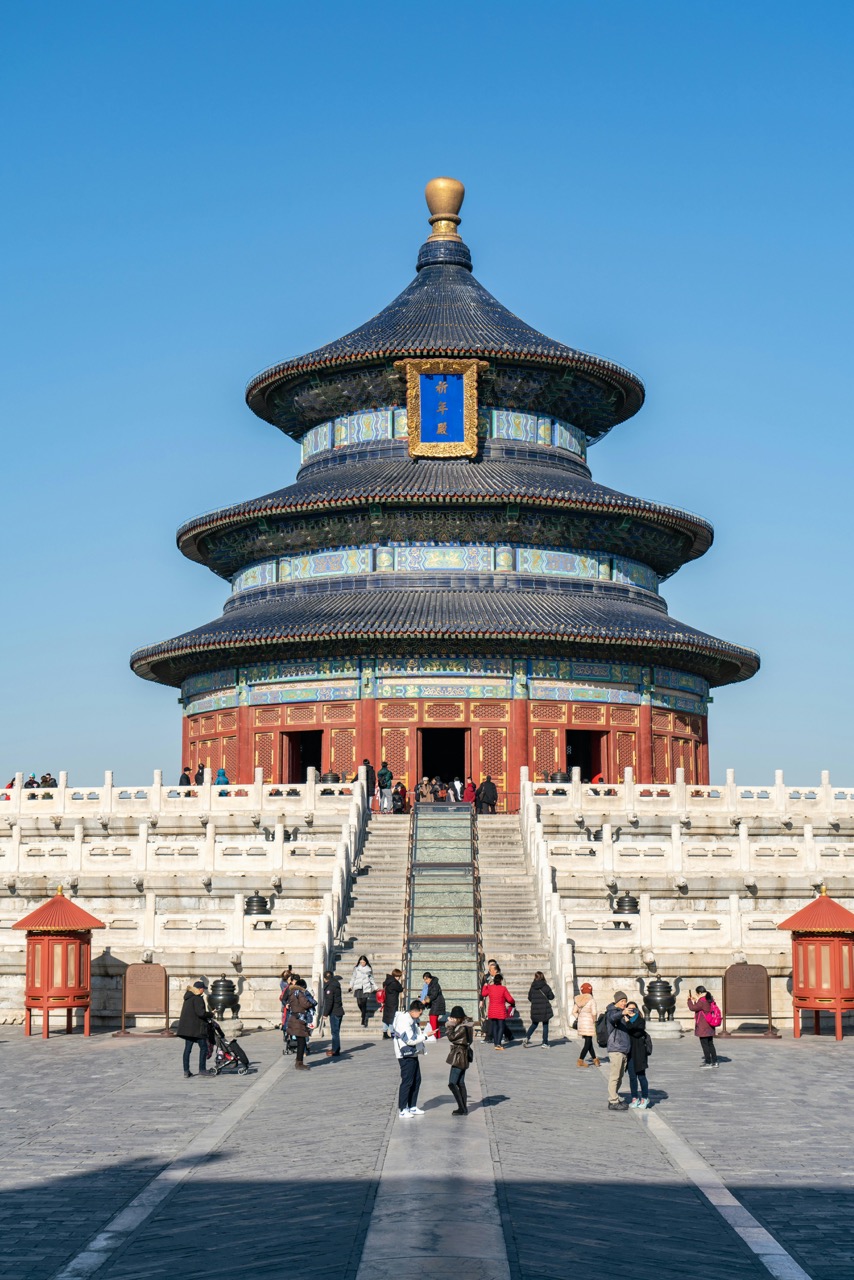
The Hall of Prayer for Good Harvests is the true showstopper as you waddle closer, the sight that makes every visitor pause in awe. Built in 1420, it’s the earliest and most iconic structure in the Temple of Heaven complex. What makes it truly remarkable is that it’s one of the largest medieval wooden buildings in the world, standing 38 meters (125 ft) tall and 36 meters (118 ft) wide, and astonishingly, built entirely without nails.
Originally called the Hall of Great Sacrifice, it was once rectangular in shape, but in 1545, it was rebuilt into the magnificent circular design we see today. Its three-tiered blue roof, symbolizing heaven, is supported by 28 massive wooden pillars, each representing the months and seasons.
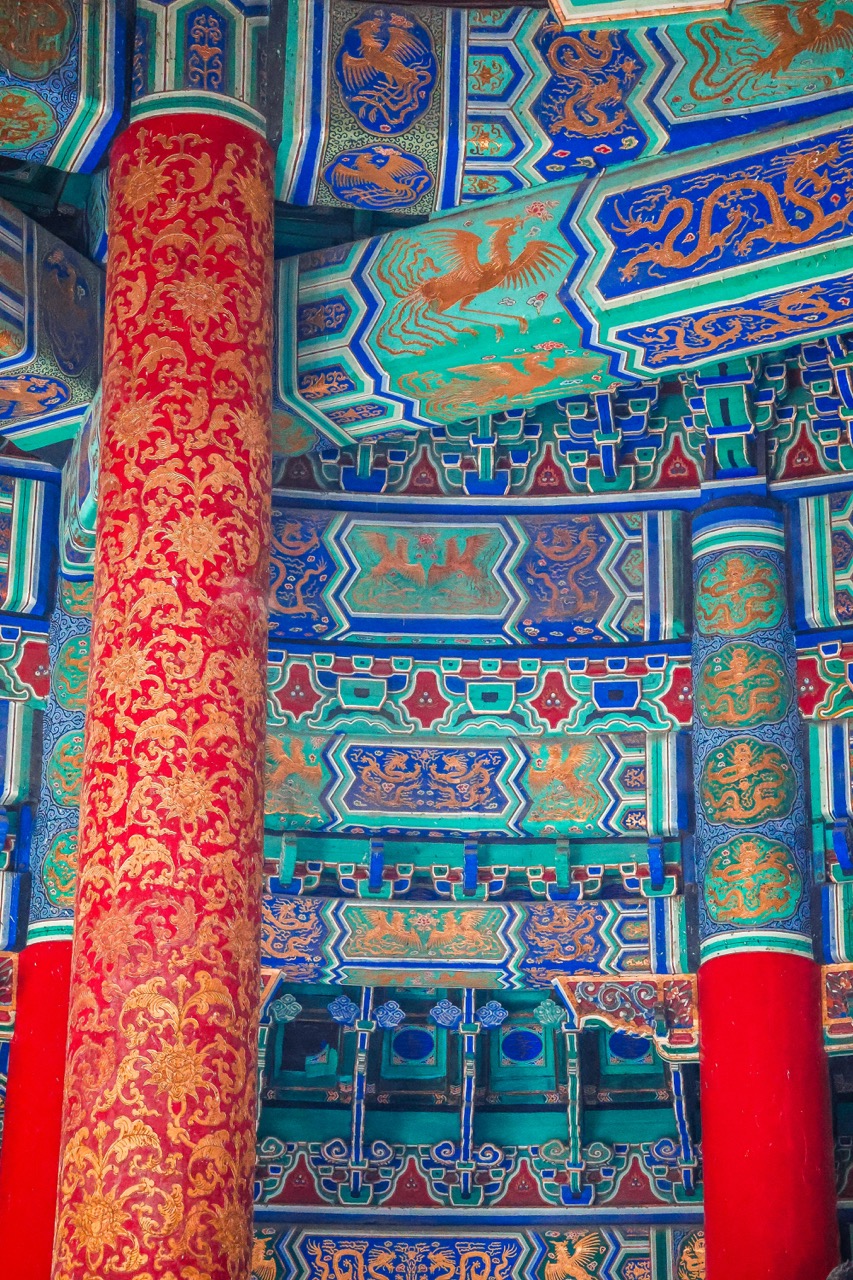
Whether you’re an architecture lover or simply a curious traveler, this masterpiece will leave you speechless. Every beam, tile, and carving tells a story, and you’ll find yourself staring up in quiet admiration for much longer than planned.


Circular Mound Altar
The Circular Mound Altar is one of the most fascinating parts of the Temple of Heaven complex — and one you shouldn’t miss. Built in 1530, it was the site of the Winter Solstice ceremony, where the emperor would pray for good harvests and harmony between Heaven and Earth. The altar’s design is full of symbolism: it’s made up of three circular terraces of white marble, each smaller than the one below, representing the connection between the human world and the divine. At the very center lies the Heart of Heaven Stone, where the emperor once stood to “speak” directly with Heaven. The acoustics here are remarkable — if you stand on the stone and speak, your voice echoes clearly around you. It’s both eerie and magical, and no matter how many visitors gather there, everyone eventually steps onto that central stone for a quiet moment of awe.
Imperial Vault of Heaven
The Imperial Vault of Heaven may be smaller than the main hall, but it’s just as magical. Built in 1530, it once held the Heavenly Tablets used by emperors during their prayers. What makes it really fun is the Echo Wall whisper on one side, and your voice travels all the way around to the other! The vault’s round blue roof and peaceful courtyard make it a perfect spot to pause, listen, and imagine the ancient rituals that once filled the air.
Tours and tickets from GetYourGuideShows GetYourGuide’s own box, which can set GetYourGuide cookies.
Palace of Abstinence
The Palace of Abstinence, built in 1420, is situated southwest of the Hall of Prayer for Good Harvests. This 40,000-square-meter complex was where the Emperor fasted before the Heaven Worship Ceremony. It includes the Beamless Hall, the Rest Palace, and the Belfry, all surrounded by double walls and waterways. In this serene environment, the Emperor observed strict rituals, refraining from meat, alcohol, and distractions to show respect to Heaven. The tranquility of the palace emphasizes the solemnity and spiritual focus essential for the ceremonies.
One of our favorite moments at the Temple of Heaven wasn’t inside the temples at all; it was watching the locals in the surrounding park. The area was alive with people of all ages, yet somehow it felt peaceful, as if time moved more slowly there. Groups of retirees practiced tai chi in perfect harmony, their movements calm and graceful. Others played cards, chess, or hacky sack, chatting and laughing as if they’d known each other forever. A few even danced to old tunes from portable radios. We loved how this everyday rhythm blended with the grandeur of the temples, a reminder that this place isn’t just a monument from the past, but a living, breathing part of Beijing’s present.


More Fascinating Facts About the Temple of Heaven
-
- Symbolic Design. The entire layout reflects ancient Chinese beliefs; the square shape of the outer walls represents Earth, while the circular shape of the inner walls symbolizes Heaven, embodying the traditional concept of “the round heaven and square earth.”
- Heaven’s Exclusive Audience. Only the Emperor, regarded as the Son of Heaven, was allowed to perform rituals here. Ordinary citizens were forbidden to enter until it opened as a public park in 1918.
- The Circular Mound Altar. This part of the temple is famous for its acoustics; if you stand on the central stone and speak, your voice echoes perfectly. It symbolized communication between the Emperor and Heaven.
- Color Symbolism. The dominant blue tiles of the Hall of Prayer for Good Harvests represent Heaven, while the red and gold accents signify imperial power and prosperity.
- Annual Ceremony. The main ritual took place every winter solstice, when the Emperor fasted for three days before leading prayers for abundant crops in the coming year.
- UNESCO Recognition. The Temple of Heaven was designated a UNESCO World Heritage Site in 1998, recognized for its “profound influence on architecture and planning across East Asia.”
- Reconstruction Mastery. Amazingly, the Hall of Prayer for Good Harvests was rebuilt entirely without nails after it burned down in 1889, a testament to traditional Chinese woodworking craftsmanship.
Nearby Attractions
If you’re planning your Beijing itinerary, several amazing spots near the Temple of Heaven are easy to visit on the same day:
- Tiananmen Square. Just a 10-minute metro ride away, this is China’s symbolic heart and the perfect place to continue your journey through the country’s modern history.
- Forbidden City. Located directly behind Tiananmen Square, this grand imperial palace complex is a must-see follow-up after your temple visit.
- Qianmen Street. A beautifully restored shopping street lined with traditional Chinese architecture, street food, and local shops — perfect for grabbing a snack or souvenir.
- National Museum of China. Situated on the east side of Tiananmen Square, this museum offers a deep dive intoChina’s art, culture, and history.
Pro Penguin Tip: Start your day at the Temple of Heaven, then hop on the metro to Tiananmen Square and the Forbidden City, it’s an easy route that perfectly blends spirituality, history, and culture in one unforgettable day.

Visiting the Temple of Heaven was one of those experiences that stays with you long after you’ve left. Between the stunning architecture, the peaceful park filled with locals, and the history echoing through every stone, it felt like we got a true glimpse of Beijing’s soul. From watching tai chi at sunrise to standing on the Heart of Heaven Stone, it’s a place that connects the past and present in the most beautiful way. Whether you come for the history, the calm atmosphere, or just to waddle around and take it all in, the Temple of Heaven is one of those stops that makes any Beijing trip unforgettable.
Pack your bag and explore the Temple of Heaven.

This post contains affiliate links. If you click and buy, I might earn a tiny commission, enough to help a penguin keep up its globe-trotting lifestyle. No extra cost to you, just more fish for me. Thank you for supporting the adventure!