Explore the French Riviera: What to Do, See, and Experience in 72 Hours in Nice
We arrived in Nice with a vague plan and a backpack full of good intentions. Like most people who find themselves on the French Riviera, we’d seen the photos: blue sea, colorful buildings, and those classic striped umbrellas lining the beach. But as soon as we stepped off the plane and caught that first salty breeze, we knew this place had more layers than a postcard could show. We hadn’t mapped out every detail, but we knew one thing: we wanted to see as much of Nice as possible in three days. Not just the famous stuff, but the quiet corners, the hidden gems, the genuine vibe. What followed was a blur of market mornings, golden-hour viewpoints, and those long seaside walks where time disappears. This itinerary is the version of Nice we found laid-back, surprising, and seriously worth every step.
Best Time to Visit Nice, France
The good news? Nice is one of those destinations you can visit almost any time of the year. Thanks to its Mediterranean climate, you’ll get plenty of sunshine no matter when you go. The best time really depends on whether you’re coming for beach days, sightseeing, or to escape the colder weather back home.
Spring (March to May). Spring is one of our favorite times to visit Nice. Temperatures are comfortable, flowers are blooming, and the city feels lively without being overcrowded.
- Why visit in spring: Pleasant weather for walking and sightseeing, fewer crowds than summer, lower hotel prices, great time for day trips along the French Riviera.
Summer (June to August). Summer is peak season in Nice. Expect hot weather, busy beaches, and a buzzing atmosphere from morning until late at night.
- Why visit in summer: perfect beach weather, warm sea temperatures, long sunny days, festivals and outdoor events
- Keep in mind: Accommodation prices are at their highest, and beaches and attractions can get very crowded.
Fall (September to November). If we had to pick just one season, it would probably be early fall. The sea is still warm from summer, but many of the crowds have gone home.
- Why visit in fall: Warm weather continues well into October, fewer tourists, better hotel deals, great conditions for sightseeing and swimming.
Winter (December to February). Don’t expect snow-covered streets and Christmas markets on every corner. Winter in Nice is mild, making it a popular escape for travelers coming from colder parts of Europe.
- Why visit in winter: Mild temperatures compared to much of Europe, smaller crowds, lower accommodation prices, perfect for sightseeing and café hopping.
Our Recommendation
For the best mix of good weather, manageable crowds, and reasonable prices, visit Nice in May, June, September, or early October. You’ll still enjoy plenty of sunshine, but without fighting for a spot on the beach or paying peak summer rates.
3-Day Itinerary for Nice, France
Day One: Sea, Stone, and Sunset Views
We started where Nice begins — with the sea. Our first morning in Nice started early. We walked straight to the Promenade des Anglais, letting that curved stretch of coastline pull us in. It was quiet at first, just joggers and café staff setting out chairs. The water shimmered in a way that only the south of France can. We waddled. We stopped. We sat on those iconic blue chairs as if we were locals on a lunch break.


We wandered down to the Promenade des Anglais Beach to feel the pebbles under our feet, not the softest, but kind of therapeutic in a weird way. Something is grounding about that beach, the way the sea meets the sky with no drama, just presence.

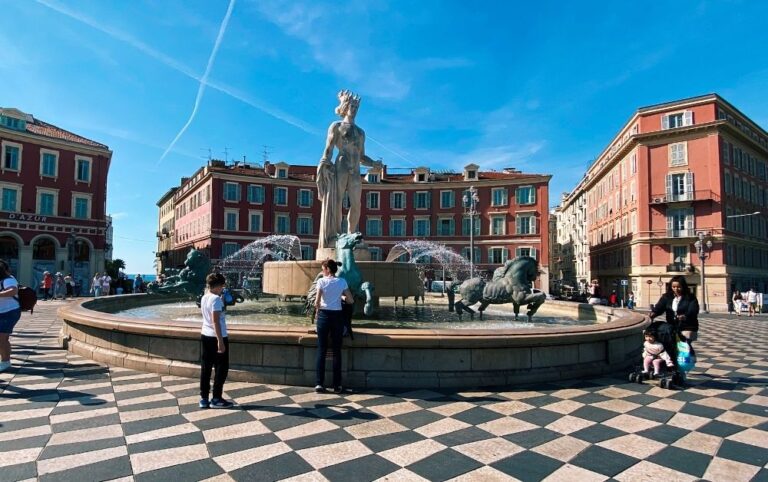
Later that morning, we walked into the heart of the city. Place Masséna was our next stop, open, bright, and alive while trams glided by. People crossed from all directions like a dance that never ends. We found the Fontaine du Soleil in the middle, along with the massive marble Apollo. You can’t miss him. Just beyond that, we reached the Miroir d’Eau, the water mirror. We didn’t plan on running through it, but it was hot, and suddenly, we were part of the splash.
We spent our afternoon following scents and sounds into Old Town.
We couldn’t resist Cours Saleya Market. The mix of lavender, citrus, and fresh bread pulled us in before we even saw the stalls. We didn’t buy much, but we lingered, tried samples, and chatted with a vendor who swore her olives were the best on earth. She wasn’t wrong. You can read more about the flower market it our post Cours Saleya: Nice’s Vibrant Flower and Antiques Market.
Then we lost ourselves in the Old Town. Every alley felt like a new story. We stumbled across Cathédrale Sainte-Réparate, stepped inside, and let the cool, golden quiet wrap around us. It was one of those moments when the noise of the day fades, and you listen.


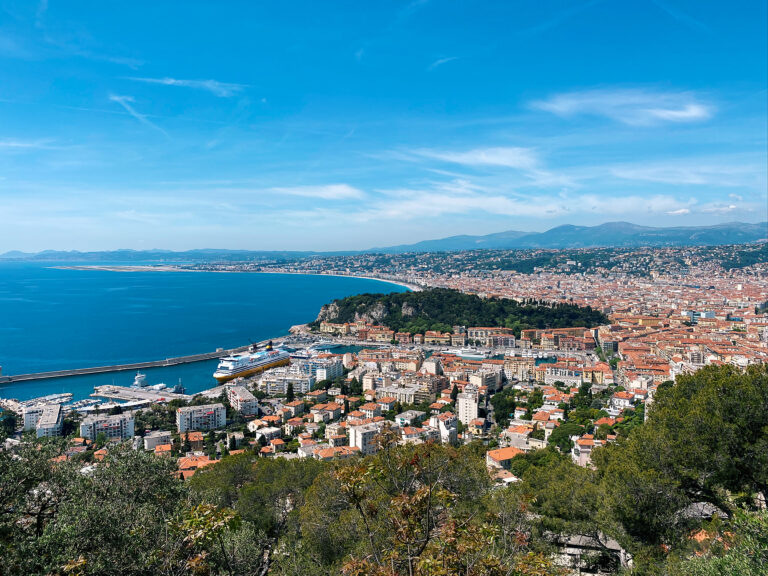
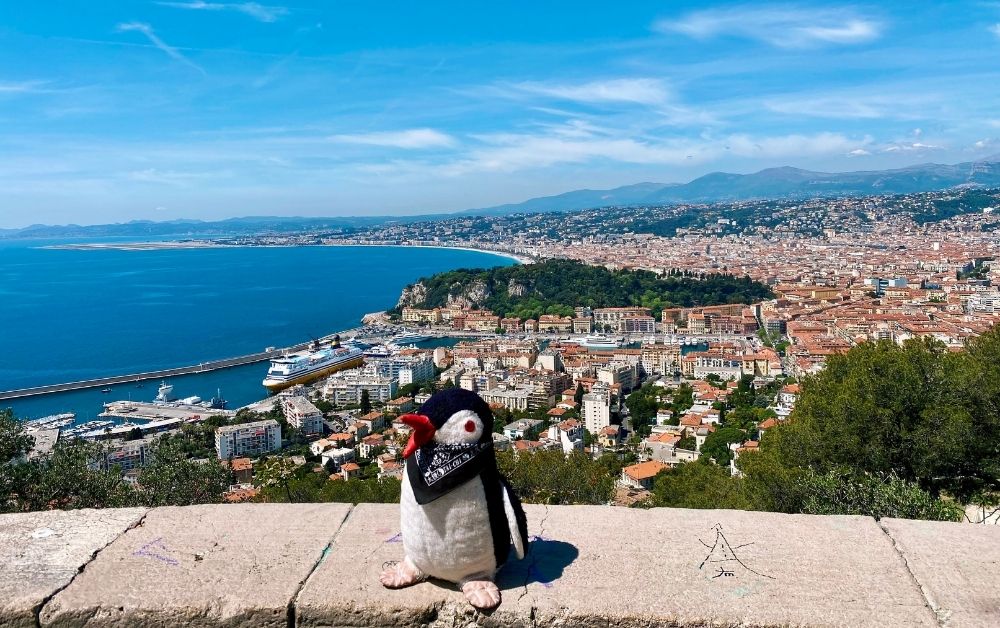
For sunset, there was only one place to go — Castle Hill. We took the stairs (slowly), stopping to catch our breath and those ever-widening views. When we reached the top, it was as if the city had laid itself out just for us. The rooftops, the beach, the sweep of the bay — this was the Nice we had imagined. The waterfall was an unexpected bonus. We snapped our final photos at the #ILoveNice sign on the way down. Touristy? Totally. Still worth it? Every time.

Day Two: Squares, Sculptures, and City Heights
We kicked off the day with a focus on history and architecture. Back in Old Town, we sat for a while at Palais de Justice, watching skaters and early risers filter through. There’s something about a city waking up. Coffee in hand, steps still slow. We waddled over to Palais Rusca, a quieter square, and let ourselves linger. No rush. There’s no reason to move on too fast.
Next up: Garibaldi Square. The yellow buildings glowed in the morning light, and we grabbed seats under an arcade, watching as delivery scooters and lunch setups unfolded. We learned that the statue in the middle honors Garibaldi himself — a native of Nice, an Italian hero. History here doesn’t pick sides. It just exists.
In the afternoon, we chased modernity. La Tête Carrée was calling. It’s a giant square head, part library, part sculpture, and all curiosity. We ducked inside the base for a look around and a break from the sun.
Not far from there, we found Notre-Dame de Nice. We hadn’t expected much, but it stunned us with its soaring towers and stained glass glowing in the afternoon sun. We stayed longer than planned.


We saved the late afternoon for a climb. We headed east to Mont Boron. It’s a bit of a trek, but it’s worth every step. The views here are different, more raw, less polished. You see all of Nice from one side, Villefranche-sur-Mer on the other. We also found Fort du Mont Alban up there.

The day ended at the port. And it couldn’t have been better. We wandered down to Nice Harbour just as the sun dropped behind the hills. Yachts glittered. Fishermen packed up. We found steps by the water, opened a bottle of something local, and let the evening settle in. This wasn’t sightseeing. It was just being.
Day Three: Caves, Memorials, and Market Goodbyes
We started our final day far from the crowd — in a cave. Lazaret Cave is below Mont Boron, and we made a detour to see it. It’s subtle, not a big showpiece, but what it represents is huge. Prehistoric humans lived here. We stood in their shadow, in a spot older than cities and borders. Read more about the cave in our post Lazaret Cave: A Journey Through Prehistoric Nice.
Just nearby, we dropped down to Sarina Beach. It’s not fancy. No umbrellas. No tourists. Just us, a few locals, and that endless Mediterranean. We stayed longer than expected.
We traced the shoreline west and stopped to reflect. At Monument aux Morts de Rauba-Capeù, we paused. The cliffside memorial hits differently. Maybe it’s the way it blends into the rock, or maybe it’s just the silence it demands. Either way, we stood still for a while.
Then, we spotted the Statue of Liberty replica. Tiny, almost hidden — but created by the same sculptor as the original. We wouldn’t have noticed it if we weren’t paying attention. That’s the kind of thing Nice does — gives you surprises when you slow down.


We circled back to where we started — the market. Our last walk through Cours Saleya was slower. We bought some dried lavender to take home. A few soaps. Sat with a final espresso. It felt like saying goodbye to a friend.
And we finished at the Negresco. Because how could we not? The pink dome, the chandelier inside, the sheer theatrical presence of Hotel Negresco, we waddled through the doors like we belonged. Ordered drinks at the bar and soaked in the art and history and strange opulence of it all. We didn’t stay the night, but for that hour, we didn’t need to.
Where to Stay in Nice, France
Nice offers a wide range of accommodation options, from luxury seaside hotels to budget-friendly apartments. The best area for you depends on what kind of trip you are planning. Staying near the beach puts you within easy reach of the Promenade des Anglais, while the Old Town offers a more local atmosphere with lively streets, markets, and restaurants.
Best Areas to Stay in Nice
- Old Town (Vieux Nice). Best for first-time visitors, local atmosphere, restaurants, and nightlife.
- Some hotels to consider: Hotel Rossetti, Palais Saleya Boutique Hôtel, Hôtel Villa La Tour, Hotel Beau Rivage
- Promenade des Anglais. Best for beach access, sea views, and luxury hotels.
- Some hotels to consider: Hotel Le Negresco, Hyatt Regency Nice Palais de la Méditerranée, Hôtel West End Nice, Radisson Blu Hotel Nice.
- City Center (Jean Médecin). Best for shopping, public transport, and convenience.
- Some hotels to consider: Hôtel Apollinaire Nice, Best Western Plus Hôtel Masséna Nice, Hotel 66 Nice.
- Port Area. Best for a quieter stay with excellent restaurants and easy access to day trips.
- Some hotels to consider: Mama Shelter Nice, Hotel du Pin Nice Port, Hôtel Le Saint Paul, Palais Ségurane Boutique Hôtel.
- Cimiez. Best for families and travelers looking for a peaceful neighborhood.
- Some hotels to consider: Hôtel Petit Palais, Maison des Barons, Villa Saint Hubert.
No matter where you stay, Nice is compact and easy to explore on foot, by tram, or by bus, making it a great base for discovering the French Riviera.
Buy Us a Ko-fi

In three days, Nice gave us more than we expected. Every turn held something we didn’t plan for. The best views were often found at the end of long walks. The best moments didn’t cost a cent. If you’re heading to the south of France and wondering how to spend your time in Nice, trust us: wander often, pause often, and let the city lead.
That’s what we did. And we’d do it again in a heartbeat.
Travel Bold. Eat Well. Waddle Wild.

This post contains affiliate links. If you click and buy, I might earn a tiny commission, enough to help a penguin keep up its globe-trotting lifestyle. No extra cost to you, just more fish for me. Thank you for supporting the adventure!