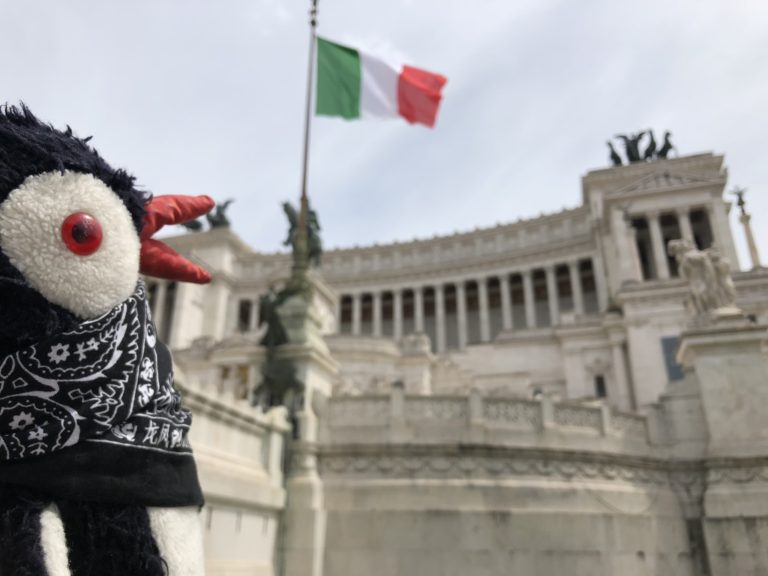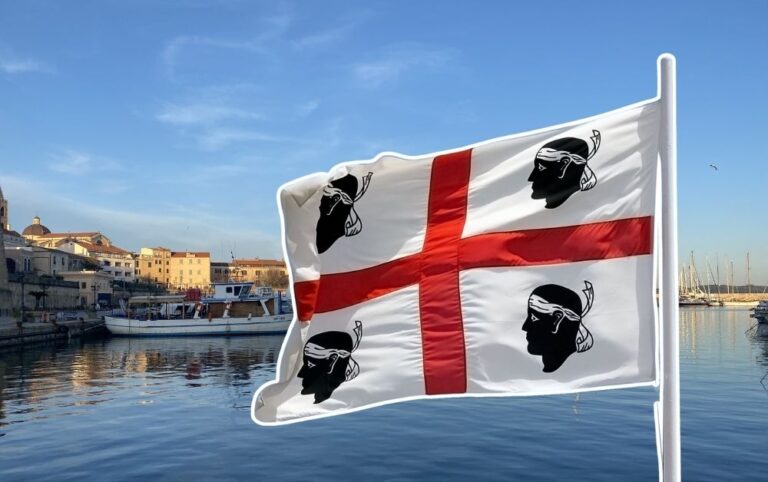
First Time in Rome: Important Facts to Know Before You Go
Did you know cats have special rights in Rome? Or that the city is more than 2,700 years old? I didn’t either, at least not before visiting. Rome was one of the cities we were most excited to explore. It’s hard to describe just how much history is packed into one place, and the architecture is on another level. Walking through the city feels like stepping back in time at every corner. Before our trip, we did some research and discovered a few surprising and interesting facts that made us even more excited to visit. So, if you’re planning a trip too, here are some of the most interesting things to know about Rome before you go.
Quick Facts About Rome
- Location: Central Italy, along the Tiber River
- Population: Around 2.8 million residents
- Timezone: Central European Time (CET)
- Region: Lazio
- Population: Around 2.8 million residents
- Old Town Location: Historic centre built on seven hills, filled with ancient Roman landmarks
- Year Established: Traditionally founded in 753 BC
- Elevation: Approximately 21 meters above sea level
- Language: Italian
- Currency: Euro (€)
- Nearest Major City: Naples (about 225 km away)
- Nearest Airport: Leonardo da Vinci International Airport (Fiumicino Airport)
- Known For: Ancient ruins, the Colosseum, Vatican City, and Renaissance architecture
- Nickname: The Eternal City
- Famous Landmark: Colosseum
- UNESCO Status: Historic Centre of Rome is a UNESCO World Heritage Site
Legendary Rome: Myths and Stories You Need to Know
Rome isn’t just rich in history; it’s also filled with legends that have shaped its identity for thousands of years. There are several, but these two are our favorites.
The most famous one is the founding myth of Rome, centered around the twin brothers Romulus and Remus. According to legend, the twins were abandoned as infants and miraculously saved and raised by a she-wolf. As they grew older, they decided to found a city, but a dispute over its location led Romulus to kill Remus. Romulus then became the first king, and the city was named after him. This story remains one of the most iconic symbols of Rome’s origins and is still represented across the city today.
Another well-known legend surrounds the Trevi Fountain. It’s said that if you throw a coin over your left shoulder into the fountain with your right hand, you’re guaranteed to return to Rome one day. A second coin is believed to bring romance, and a third promises marriage. Whether you believe it or not, the tradition has made the fountain one of the most visited and magical spots in the city. Well, now we know why there are so many coins inside. In fact, the custom is so popular in fact that €3,000 is collected from the fountain every day (that’s around €1.5 million per year).
Quick History of Rome
- 753 BC – Legendary Founding. According to myth, Rome was founded by Romulus and Remus after being raised by a she-wolf. Romulus became the first king after a dispute with his brother Remus.
- 509 BC – Birth of the Roman Republic. The Romans overthrew their last king and established a republic governed by elected officials and the Senate, laying the foundations of Roman law and civic life.
- 390 BC – Sack by the Gauls. Rome was famously sacked by a Gallic tribe, an event that led to major military reforms and the construction of city fortifications.
- Mediterranean Supremacy (264–146 BC). Through the Punic Wars against Carthage (featuring the famous elephant-riding Hannibal), Rome became the Mediterranean’s superpower, gaining control of Spain, North Africa, and Greece.
- 44 BC – Assassination of Julius Caesar. Julius Caesar was assassinated on the Ides of March, leading to the end of the Roman Republic and the rise of the Roman Empire.
- 27 BC – Beginning of the Roman Empire. Caesar’s adopted heir became the first emperor, marking the start of centuries of imperial rule.
- 64 AD – Great Fire of Rome. A massive fire destroyed much of the city, and Emperor Nero famously blamed the Christians, shaping early Roman-Christian history.
- The Height of Power (96–180 AD). Under the “Five Good Emperors,” Rome reached its maximum territorial extent, stretching from Britain to the Persian Gulf. This is the era of the Colosseum, the Pantheon, and the vast network of Roman roads that still exist today.
- 313 AD – Edict of Milan. Emperor Constantine legalized Christianity, a turning point that transformed Rome’s religious landscape.
- 476 AD – Fall of the Western Roman Empire. Rome’s western territories fell to invading Germanic tribes, signaling the end of ancient Roman rule in the West.
- Middle Ages – Papal Rome. Rome became the spiritual center of the Catholic Church, with the papacy exerting enormous religious and political influence.
- 1500s–1600s – Renaissance Rome. Artists like Michelangelo and Raphael transformed the city, creating iconic landmarks including St. Peter’s Basilica and the Sistine Chapel.
- 1870 – Rome Becomes the Capital of Italy. After the unification of Italy, Rome was officially declared the capital, modernizing the city while preserving its ancient heritage.
- 20th Century – Fascist Era and Modern Rome. Rome experienced dramatic political and social change under Mussolini and later became the bustling capital it is today.
- Today – Eternal City. Rome combines ancient ruins, Renaissance art, and vibrant modern culture, attracting millions of visitors each year to landmarks like the Colosseum, Pantheon, and Vatican City.
13 Must-Know Facts About Rome Before You Visit
#1: The Seven Hills of Rome
Rome is famously known as The City of Seven Hills, a name that harks back to the city’s earliest days. While the modern city spreads across many more hills, these seven are considered the original ones on which ancient Rome was founded.
According to legend, Romulus and Remus established the first settlement on the Palatine Hill, while small communities developed on the other six hills. Over time, these settlements merged to form the city we now know as Rome, laying the foundations of its political and cultural life.
The seven hills are: Aventine, Caelian, Capitoline, Esquiline, Palatine, Quirinal, and Viminal. Each hill has its own unique charm and historical significance. The Capitoline Hill, for instance, became the political and religious heart of ancient Rome. At the same time, the Palatine Hill is filled with ruins of imperial palaces and breathtaking views of the Forum below.
Exploring these hills today offers a fascinating journey through history, with ancient temples, grand palaces, and hidden gardens around every corner.
#2: Friendly Romans
The Romans are generally very friendly people and enjoy good conversation, especially about food (one of our favorite topics). And yes, before you ask, they are also a little louder when they talk. Not to mention, you sometimes feel you need to know self-defense because of the hand movements they do while they talk, but that’s part of the culture. Hand movements are part of learning Italian. Animals are also very approachable. You might find on some forums that people are rude to tourists, and of course, there will always be exceptions, but in general, they are charming people to encounter.
#3: Drinking fountains of Rome
Rome is home to around 2,000 public drinking fountains, known as nasoni, so you’ll never be without a refreshing drink of water while exploring the city. We can personally confirm that the water is cold, clean, and surprisingly delicious.
What makes the nasoni even more charming is that each fountain has its own unique design. Many are simple and functional, while others feature intricate carvings and classical motifs, reflecting the city’s rich artistic heritage. The tradition of public fountains in Rome dates back to ancient times, when aqueducts brought water from distant sources into the city. Over the centuries, emperors and popes funded elaborate fountain projects, both as a public service and to showcase their wealth and power.


#4: Nicknames of Rome
As one of the world’s oldest cities, it’s no surprise that Rome has earned a variety of nicknames over the centuries. The Latin name Roma has an uncertain origin, but many scholars believe it comes from Romulus, the legendary founder and first king of the city.
Here are some of the most interesting nicknames we discovered, each with its own story:
- The Eternal City. A nod to Rome’s longevity, famously used by the Roman poet Tibullus.
- Capital of the World. Coined by another Roman poet, Marco Lucano, reflecting Rome’s historical influence.
- The Sacred City. Used by the Roman emperor Septimius Severus, highlighting its religious significance.
- City of God. A spiritual reference, tied to Rome’s central role in Christianity.
- Earthly City. Emphasizing Rome as a hub of human achievement.
- The City of Seven Hills. A descriptive reminder of the city’s iconic geography.
- City of Bricks and Marble. A vivid reflection of Rome’s stunning architecture.
- The City of All Time. Capturing the sense of timelessness that pervades Rome.
There are even more nicknames out there, but these are some of the most memorable. Next time you return from your travels, imagine saying, “I just came from the Capital of the World” instead of the usual, “I came from Rome.”Sounds a little cooler, doesn’t it?
#5: Cats Have Special Rights in Rome
Rome has a unique charm for cat lovers. As you wander the city streets, you’ll often spot cats lounging in the sun, strolling along ancient walls, or simply living life at their own pace. And they can do so freely, thanks to a 1991 law that protects cats and allows them to remain undisturbed in the places where they were born. No one is allowed to relocate them.
One of the best spots to see Rome’s feline residents is the ancient ruins of Largo di Torre Argentina, which has become home to over 250 cats. It’s a fascinating sight, but if you plan to approach them, do so with care; they can be quite feral. Visiting this historic site offers a rare glimpse of both Rome’s past and its living, purring present.
#6: Fountains, Fountains, and More Fountains
Rome is really the city of fountains, boasting more than any other city in the world. With over 2,000+ fountains scattered across streets, piazzas, and squares, the city is a living showcase of water, art, and history. This number includes the functional nasoni drinking fountains.
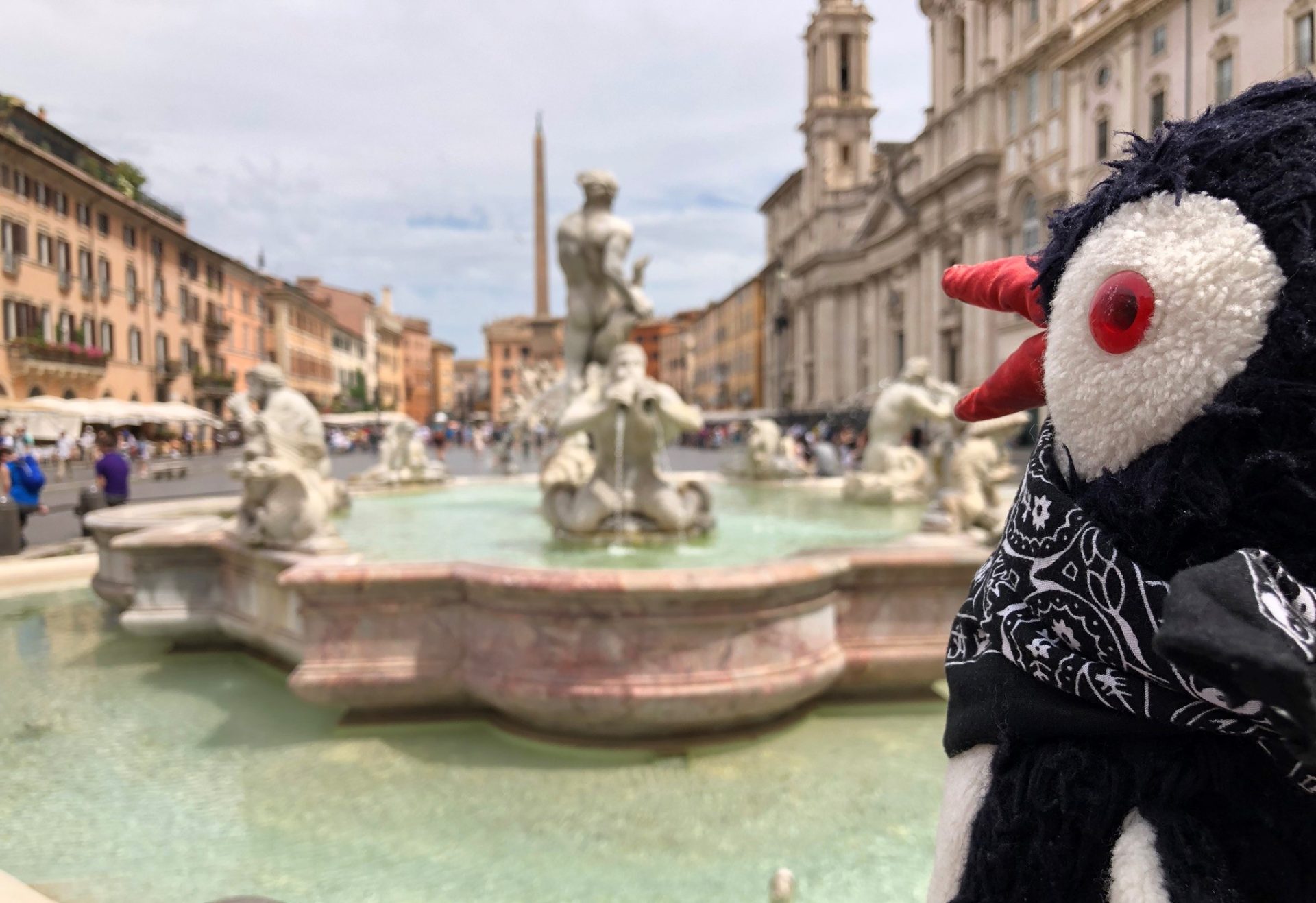
Rome is famous for its monumental fountains, many of which are masterpieces of Baroque art and sculpture. The Trevi Fountain, perhaps the most iconic of them all, draws visitors from around the world who toss coins to ensure their return to the Eternal City. Some piazzas are practically fountain havens. For example, Piazza Navona, one of Rome’s largest and most beautiful squares, is home to three stunning fountains, each with its own story and artistic flair.


#7: Obelisks of Rome
As you wander through Rome, it’s hard not to notice the numerous obelisk monuments scattered across the city. Everywhere you turn, one seems to appear, each commanding attention with its striking presence. Curious, we looked into it and discovered that Rome actually has more Egyptian obelisks than any other city in the world.
In total, there are 13 major obelisks in Rome; 8 of Egyptian origin and 5 Roman-made. Many of them are fairly close together, making it easy to plan a waddling route for those interested in seeing them all. Some, like the Lateranense Obelisk in Piazza di San Giovanni in Laterano, are among the tallest obelisks in the world. No matter their size, each one is a striking reminder of ancient artistry and history.
The story behind these obelisks is fascinating. The Egyptian obelisks were transported to Rome after the Roman conquest of Egypt, brought over as symbols of imperial power and trophies of conquest. Roman emperors were fascinated by Egyptian culture, and erecting these monuments in the heart of Rome was a way to showcase their dominance and appreciation for the exotic. There’s even ongoing discussion about whether some should be returned to Egypt. Still, for now, they remain an integral part of Rome’s landscape, offering visitors a tangible connection to both ancient Rome and ancient Egypt.
#8: Pasta Is a Way of Life in Rome
While in Rome, we learned that pasta isn’t just food; it’s a way of life. Handmade pasta traditions have been passed down through generations, with fresh dough carefully rolled, cut, and dusted with flour to create the perfect texture and bite. Romans take their pasta seriously. In fact, the city is famous for four iconic pasta dishes: cacio e pepe, carbonara, amatriciana, and gricia; each defended by locals as the ultimate version of the dish. Italy leads the world in pasta consumption per person, and Rome is at the heart of that love, with pasta appearing on menus for lunch, dinner, and often both. During your visit, don’t miss the chance to taste Rome’s best pasta. For a truly immersive experience, consider joining a pasta-making class.
#9: The Colosseum is Rome’s Master of Crowd Control
The Colosseum is one of Rome’s most iconic landmarks, so familiar that it’s easy to take for granted. Yet this monumental amphitheater has stood on the same site for nearly 2,000 years, a lasting testament to the ingenuity of the Roman Empire. With around 80 entrances and seating for up to 65,000 spectators, the Colosseum was designed with crowd control in mind, long before the concept existed in modern stadiums. Every passage, stairway, and corridor was planned to allow thousands of people to enter and exit efficiently and safely.


#10: The Spanish Steps Aren’t Actually Spanish
Here’s a fun little surprise about Rome: the Spanish Steps aren’t really Spanish at all! Built between 1723 and 1725, the steps were named after the Spanish Embassy, which was at the base of Piazza di Spagna. But a French diplomat, Étienne Gueffier, funded the construction itself, and the steps were designed to connect the French-owned Trinità dei Monti church at the top with the square below. Somehow, “the French Steps” just never caught on. It’s one of those quirky little facts that makes wandering Rome even more interesting

Buy Me a Ko-fi
#11: Espresso Culture in Rome
In Rome, espresso isn’t just a drink; it’s a way of life. We saw it in every alleyway. Romans start their day with a quick shot of strong, rich coffee at a local café, often standing at the bar and chatting with friends or neighbors. Unlike the slow, lingering coffee culture found in other countries, espresso in Rome is fast, social, and deeply ingrained in daily routines. From morning pick-me-ups to afternoon boosts, you’ll see locals sipping their espresso multiple times a day, savoring the flavor and the moment. Experiencing Rome’s coffee culture is a must; whether you grab a quick shot at a tiny street-side café or linger over a cappuccino at a historic coffee house, you’re taking part in a centuries-old tradition.
But remember, cappuccino is strictly a morning drink! Usually enjoyed with breakfast, like a pastry, and rarely after 11 a.m. Locals consider it a milk-heavy coffee, meant to start the day, not to sip after lunch or dinner. Ordering a cappuccino later in the day might mark you as a tourist, but for first-timers, it’s still a delicious way to join the morning ritual.
#12: Rome Contains an Entire Country
One of the most fascinating facts about Rome is that it surrounds an entire country: Vatican City. Technically, the Pope doesn’t live in Rome itself; his official residence is within the independent city-state of the Vatican. Covering just 0.17 square miles, Vatican City is the smallest country in the world, yet it has its own passports, postage stamps, and government. Despite its size, it’s packed with some of the world’s most famous treasures, including the Sistine Chapel and the Vatican Museums; it’s a must-visit spot for anyone passionate about art, history, and culture.


#13: The First Shopping Mall in History
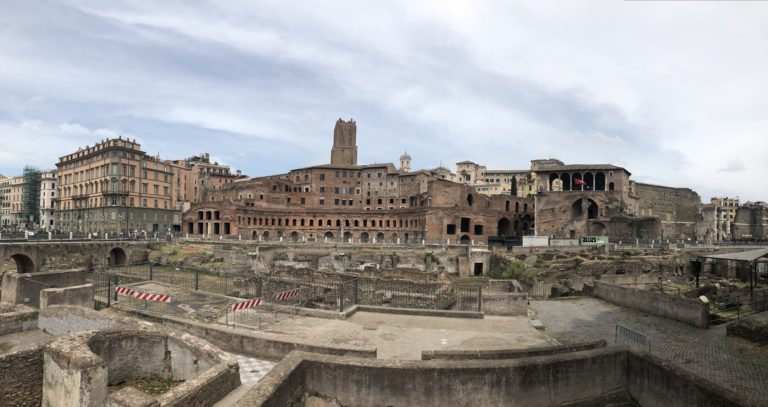
Between 107 and 110 AD, Emperor Trajan commissioned what is considered the world’s first covered shopping mall. Known as Trajan’s Market, this multi-level complex was a bustling commercial hub featuring shops, offices, and administrative spaces, all cleverly designed with corridors and arches that made it an early model of modern retail architecture. Today, Trajan’s Market still stands in the heart of Rome, near the Imperial Forums, giving visitors a fascinating glimpse into ancient urban life. Waddling through its preserved corridors and vaulted spaces, you can imagine Romans browsing for goods, trading, and conducting business just as people do in shopping centers today, almost 2,000 years ago.
Other Interesting Facts Worth Knowing
- By the early fourth century, Rome had built over 8,500 km of roads across its empire. Each Roman mile, about 1,481 meters, was marked with a milestone, inspiring the famous saying: “All roads lead to Rome.”
- The word “Palace” comes from the Palatine Hill, where Augustus established the emperors’ tradition of building their palaces.
- Rome’s mascot is a she-wolf that cared for the brothers Romulus and Remus, the legendary founders of Rome.
- Rome became the capital city of a unified Italy in 1870 after taking the title from Florence.
- In Ancient Rome, it was common for people to vomit between meals so they could eat more.
- It is thought that over 500,000 people lost their lives, and over a million wild animals were killed throughout the duration of the battles at the Colosseum. The last gladiatorial fights took place in 435 AD.
- Julius Ceaser was the one who introduced the modern 12-month calendar. Before that, the Lunar or Arabic calendars were used. It was known as the Julian calendar and was introduced in 46 BC.
- Rome covers 1,285 square km (580 square miles) and has a 98% Roman Catholic population.
- The famous Bocca della Verità (Mouth of Truth) supposedly bites the hand of anyone who lies while placing their hand inside.
- Rome Has a Secret Keyhole. At the Knights of Malta priory, a keyhole perfectly frames St. Peter’s Basilica, creating a hidden optical illusion.
Rome Travel Facts: Must-Know Tips
Best Time to Visit Rome: Spring and Fall
The ideal time to explore Rome is during spring (April to June) and fall (September to October). We visited at the beginning of June, and even then, it was already hot and quite crowded, showing that summer months can get intense. Spring offers blooming flowers, pleasant temperatures, and longer daylight, perfect for wandering through piazzas, gardens, and ancient ruins. Fall provides similarly mild weather, fewer crowds than the peak summer months, and a golden light that makes Rome’s historic architecture even more enchanting.
Summer can be sweltering and packed with tourists, while winter is cooler and quieter but comes with shorter sightseeing days. Planning your trip during spring or fall ensures comfortable weather, manageable crowds, and the best overall experience of the Eternal City.

Tipping in Rome Restaurants
Tipping in Rome is optional and more modest than in some other countries. Most restaurants include a service charge (coperto or servizio) on the bill, so additional tipping isn’t required. If you feel the service was exceptional, leaving 5–10% of the total is appreciated. For casual cafes or bars, it’s common to round up the bill or leave some loose change. Remember, tipping in Rome is seen as a gesture of appreciation rather than an obligation, so follow your comfort and enjoy the experience!
Before you go back to planning your trip to Rome, remember to pack a pair of comfortable shoes. Not only because of the cobblestones you will walk on, but because of the amount of waddling, you will do. Rome is a city that will bring you sore feet. However, it will be worth it. It is like stepping back in time, and each alley is magical. Each piazza is fascinating. And each street leads to the Colosseum for some reason.
Make a Plan, But Leave Room to Waddle the Unexpected
Sightseeing in Rome can feel intense; there’s so much history packed into such a small area. First-time visitors should arrive with a loose plan, focusing on the sights they most want to see, without trying to fill every moment of the day. Rome is a city best absorbed at an unhurried pace, so leave room for shopping, wandering through charming streets, long lunches, or even a mid-afternoon break. Often, these unscheduled moments become the most memorable part of a trip.
Staying in or near the historic center may cost a little more, but it saves time, energy, and transportation costs, making it much easier to pace yourself. And don’t forget a refillable water bottle, Rome has hundreds of free public drinking fountains, known as nasoni, so staying hydrated while exploring is easy and eco-friendly.
🐧 Pro Penguin Tip 🐧
Don’t stress about seeing everything. For example, inside the Colosseum! It’s stunning from the outside, and an early morning or evening stroll around it is often more memorable than the interior visit.
Must-See Landmarks for First-Time Visitors in Rome
If it’s your first time in Rome, focus on the city’s iconic sights that showcase its history, art, and culture. Don’t miss the Colosseum, Vatican Museums and Sistine Chapel, St. Peter’s Basilica, the Pantheon, and the Trevi Fountain. Visiting these landmarks early in your trip gives you a solid sense of Rome’s rich past and makes exploring the rest of the city even more meaningful. Rome rewards planning, but not overplanning.
Book the Main Attractions ASAP
Rome’s most popular sights, like the Colosseum, Vatican Museums, and St. Peter’s Basilica, can get extremely busy, especially during peak season. To avoid long lines and sold-out time slots, it’s best to book tickets online in advance. Securing your spot not only saves time but also allows you to plan your days more smoothly, so you can enjoy the city without the stress of waiting in line.
Rome is a city full of surprises, from its iconic landmarks to its quirky traditions and hidden secrets. We’ve shared just a glimpse of what makes the Eternal City so fascinating, but there’s so much more to discover. Some of Rome’s most memorable moments can’t be written down; they have to be experienced for yourself, wandering its streets, piazzas, and alleys, and uncovering the stories that make this city truly unforgettable.
Pack your bags and explore the eternal city of Rome!

This post contains affiliate links. If you click and buy, I might earn a tiny commission, enough to help a penguin keep up its globe-trotting lifestyle. No extra cost to you, just more fish for me. Thank you for supporting the adventure!