
When in Rome: Essential Travel Tips, Sights, and What to Know Before You Go
Apparently, all roads lead to Rome, so we decided it was finally time to go. We took a week off and planned our trip, knowing one thing for sure: one week is not enough to see it all. Still, it is more than enough time to soak up Rome’s atmosphere, wander through layers of history, and, of course, enjoy a lot of incredible food. Landing in Rome is an experience on its own. As the plane descends, the view stretches across a city with more than 2,500 years of history, instantly setting the tone for what lies ahead and getting you excited before you even touch the ground.
The most obvious way to get to Rome is by plane. Three airports serve the city, and we landed at Rome Ciampino Giovan Battista Pastine Airport. Opened in 1916, it is one of the oldest airports still in operation, adding yet another small historical detail to the start of our Roman adventure. Read on to learn what to expect from Rome.
- Getting From Ciampino Airport to Rome City Centre
- Where to Stay in Rome
- Daily Budget in Rome: How Much Money Do You Really Need
- How Much Walking to Expect in Rome (Prepare Your Feet)
- Best Time to Visit Rome: A Season-by-Season Guide
- How Many Days Do You Need in Rome
- Be Aware of Tourist Scams in Rome
- What to See in Rome
- Rome Travel Mistakes to Avoid
- Rome FAQs
Getting From Ciampino Airport to Rome City Centre
Once you land at Rome Ciampino Airport, there are several ways to reach the heart of the city, and most take about 40–60 minutes, depending on traffic and the option you choose.
- Bus Transfers (Easy and Affordable). One of the most popular and convenient options is taking a direct shuttle bus from the airport to Roma Termini Station, the central transport hub where you can connect to metro lines, buses, or walk into the centre. Services like Terravision and SIT Bus Shuttle run regularly throughout the day, with tickets typically starting at around €6–€7 one-way. The journey usually takes about 40–50 minutes. Pro Penguin Tip: Buy your ticket in advance if possible, online prices tend to be cheaper than on-the-spot prices.
| Shuttle Bus | Route | Cost (One Way) | Frequency | Notes |
| SIT Bus Shuttle | Ciampino Airport → Via Marsala 5 (next to Termini Station) | €6 | Varies by season | Comfortable and reliable. We used this shuttle and also bought a return ticket for the way back. |
| Terravision | Ciampino Airport → Termini Station | €10 | Approx. every 30 minutes | Popular option with frequent departures. Always check the timetable before booking. |
- Train + Local Bus (Cheapest Option). If you’re on a tight budget, you can take a local bus from the airport to Ciampino town and then a regional train from Ciampino station to Roma Termini. This combination is very cheap (often under €5 total), but requires transferring between services and could take slightly longer depending on timing.
- Public Bus to Metro (Budget Local Route). Another low-cost option is city buses, such as ATAC lines 520 and 720, from the airport to nearby metro stations (such as Anagnina or Laurentina), then using Rome’s metro into the centre. This takes longer and is less direct, but can be very inexpensive.
- Taxi. Taxis are available outside the arrivals terminal. Fixed fares from Ciampino to the city centre (within the Aurelian Walls) are around €30–€48, though this can vary depending on luggage and time of day. If asked to pay more, refuse, as the prices from the airport to the city center are fixed. Let us point out that taxi drivers do not have the best reputation in Rome; tourists and locals are being overcharged. Compared to other European cities, taxi fares are high. Always confirm the fare before you get in, as unofficial taxis sometimes quote higher prices. Try using one of the general taxi services like Radio Taxi or Pronto taxi (especially when in the city). You can get a taxi waiting in the taxi line at the airport.
Pro Penguin Tip
If comfort and simplicity matter most to you (which they usually do after a long flight), the direct shuttle buses to Termini are hard to beat for price, reliability, and ease of use.
Where to Stay in Rome
Before you waddle into Rome’s ancient streets, it helps to have a comfortable place to rest at the end of the day. With over 33,000 accommodation options across Rome, finding somewhere to stay is effortless, no matter your budget or travel style.
Let’s talk money. Prices vary widely depending on comfort and location. If you are traveling on a tight budget, options like Couchsurfing or hostels can help keep costs low. In general, we prefer simple and affordable accommodation, as most days are spent exploring rather than sitting in a hotel room.
In Rome, budget accommodation such as hostels or very basic rooms can start at around €40 per night, while standard hotels are more commonly priced from €60–€80 per night, depending on location and season. Luxury hotels can easily cost €200 or more per night.
Hotel search from Booking.comShows Booking.com’s own box, which can set Booking.com cookies.
We stayed at Hotel Clarin Roma, conveniently located near Termini Station. This made getting around the city easy and was especially handy since the airport shuttle stops nearby. The hotel itself was basic but comfortable, with everything we needed: a bed, a private bathroom, and a quiet place to sleep after long days of waddling around Rome.
Breakfast was more than enough to get the day started, and while we snacked and ate out most of the time, the morning cappuccino was a highlight.
Our stay at a glance:
- Hotel: Hotel Clarin Roma
- Room type: Standard Double Room
- Number of nights: 4
- Total price: €306
- Breakfast: Included
Simple, well-located, and budget-friendly, it was exactly what we needed for our time in Rome.


Daily Budget in Rome: How Much Money Do You Really Need
Money, Money, Money: Must Be Funny to Have in Rome. Your daily budget in Rome really depends on how you like to travel. Some people manage on €30 a day, while others are happier spending €150 or more. If you are traveling on a budget, you will likely lean toward the first option. As a penguin, my income is somewhat limited, which means my budget is too, and most of it usually goes straight to food.
So, what does a realistic daily budget look like? If you travel as we do and focus on budget-friendly choices, here is a rough idea of what to expect.
Food & Beverages
- Breakfast (espresso + pastry): €3–€4
- Lunch: €10–€15 for casual meals, €15–€20 at a sit-down place
- Dinner: €15–€25 at a typical trattoria
- Sweet treats (gelato or pastries): €2–€4
- Beer: €3–€5 in bars, around €1.50–€2 in grocery stores
- Cappuccino: €1.20–€1.50 when standing at the bar
- Gelato: from €2.50 per scoop
Public Transport in Rome
- Single ticket (BIT – valid 100 minutes): €1.50
- 24-hour pass: €7.00
- 48-hour pass: €12.50
- 72-hour pass: €18.00
- Weekly pass (7 days): €24.00
- Waddling around Rome: Free and often the best option
As always, your daily costs will depend on your travel style, eating habits, and how many attractions you visit. Rome can be affordable if you plan wisely, but it also offers plenty of ways to splurge if that is more your style.

How Much Walking to Expect in Rome (Prepare Your Feet)
One thing is obvious when visiting Rome: you will waddle a lot. It does not matter whether you are there for four days or two weeks; the amount of walking adds up quickly. This is not the kind of chill where you casually cruise around like the guy we spotted relaxing on his bike on our third day, while our feet were already very much done for.
Because Rome is such a beautiful city, you often do not even notice how far you have gone. One corner leads to another, ruins turn into piazzas, and suddenly you have walked much farther than planned, all while enjoying the surroundings.


The first day was definitely the toughest. As always, we wanted to see everything at once. We waddled 12.25 km (about 7.6 miles), which felt like quite an achievement for a small penguin.
The second day might look easier on the map, but do not be fooled. It was even more demanding. We covered 18.23 km (about 11.3 miles), and honestly, I did not know I had it in me.
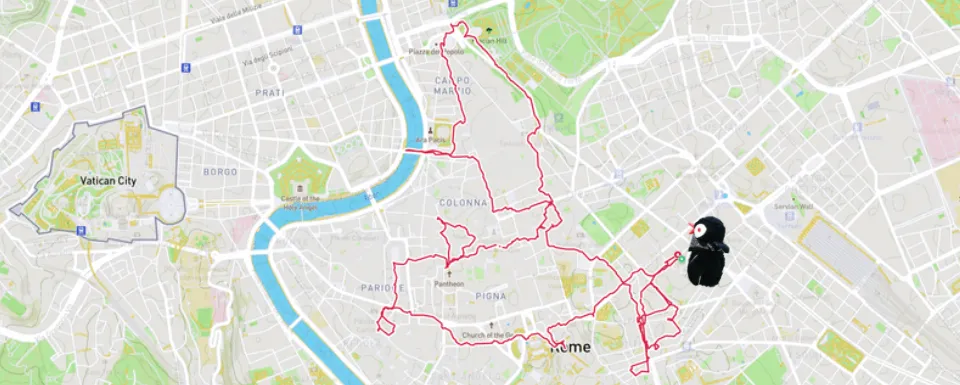
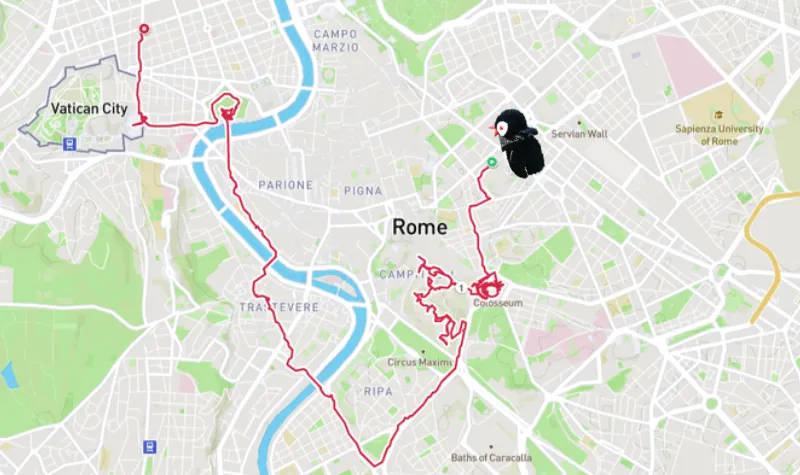
After that, we stopped tracking the exact distances, but the daily average stayed similar. Our feet, however, were very aware of it. Rome is magical, but it definitely puts your shoes and stamina to the test.
Pro Penguin Tip: Wear your most comfortable shoes, break them in before the trip, and pace yourself. Your feet will thank you.
Best Time to Visit Rome: A Season-by-Season Guide
The best time to visit Rome depends on what kind of experience you are after.
- Spring (April–May) and autumn (September–October) are generally ideal, with pleasant temperatures, fewer crowds than summer, and excellent conditions for sightseeing on foot.
- Summer (June–August) brings long days and a lively atmosphere, but also intense heat, higher prices, and very busy attractions, so expect early starts and midday breaks.
- Winter (November–February) is calmer and quieter, with shorter queues and lower accommodation prices, making it a good choice if you prefer a calmer visit and do not mind cooler weather. Each season has its charm, but for comfort and balance, spring and autumn are hard to beat.

Buy Me a Ko-fi
How Many Days Do You Need in Rome
To truly experience Rome, we recommend spending at least 4 to 5 days in the city. This gives you enough time to see the major highlights like the Colosseum, Vatican City, and the historic center without rushing, while still leaving room to wander, eat well, and soak up the atmosphere. If you only have 2–3 days, you can cover the main sights, but expect long days and a faster pace. With a week or more, you can slow down, revisit favorite spots, explore lesser-known neighborhoods, and even take a day trip. Rome is a city best enjoyed without rushing, so the more time you can give it, the better it gets.
Tours and tickets from KlookShows Klook’s own box, which can set Klook cookies.Tours and tickets in Rome on KlookKlook’s box can’t load on this device (an ad blocker often stops it). This opens Klook’s own page.Open Klook
Be Aware of Tourist Scams in Rome
When visiting Rome, it helps to be aware of a few common tourist scams, especially around major attractions and transport hubs. Unfortunately, Rome has some of the highest numbers of scams. Here are a few common ones.
- Friendship bracelet scam. Someone ties a bracelet on your wrist without asking and then demands payment.
- “Free” rose or gift scam. Flowers or small items are handed to you, and later, you are pressured to pay.
- Fake help at ticket machines. Someone offers assistance, then asks for money, or tries to distract you.
- Petition or charity scam. People ask you to sign a petition, then pressure you to donate cash.
- Pickpocketing. Common in crowded areas, on public transport, and near popular sights.
- Overpriced restaurants near attractions. Tourist menus, hidden service charges, or inflated prices not clearly listed.
What to See in Rome
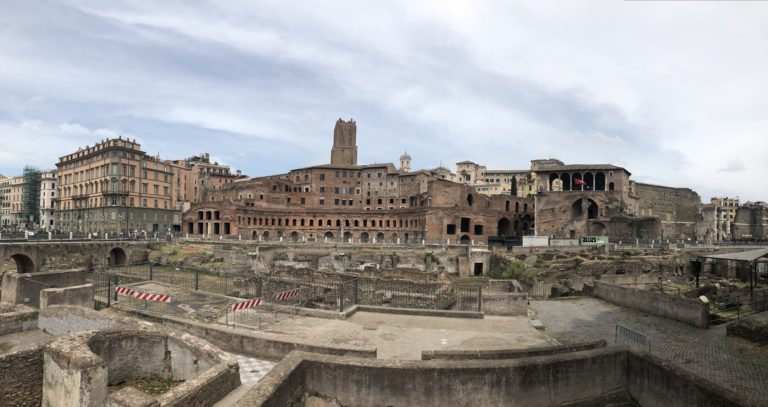
- Colosseum & Roman Forum. Rome’s most iconic ancient landmarks are a must for first-time visitors.
- Vatican City & St. Peter’s Basilica. A highlight for history, art, and architecture lovers.
- Trevi Fountain. Toss a coin and admire one of the most famous fountains in the world.
- Pantheon. An architectural masterpiece with a fascinating history.
- Spanish Steps. A lively meeting point connecting historic Rome with modern shopping streets.
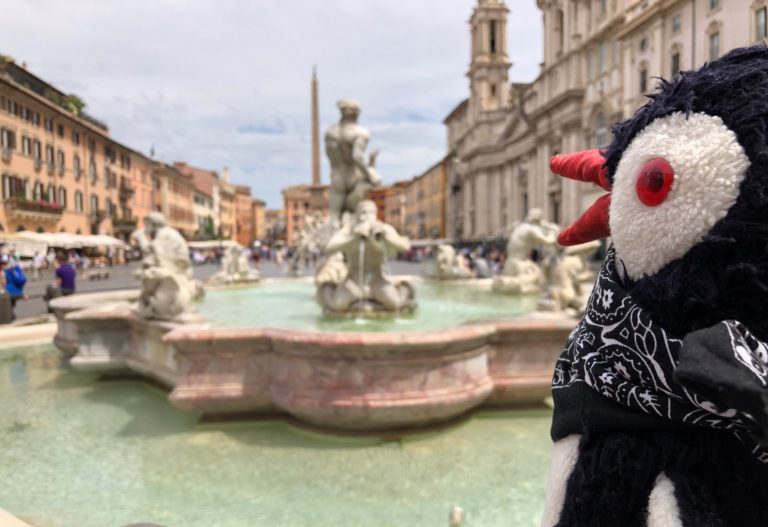
- Piazza Navona. One of Rome’s most beautiful squares, perfect for soaking up the atmosphere.
These are only the absolute must-see highlights in Rome, especially for a first visit. The city is layered with history, hidden courtyards, local neighborhoods, churches, viewpoints, and small details that go far beyond the main attractions. Even after a full week, it feels like there is always more to discover. Rome rewards slow exploration, so leave room in your itinerary to wander, get lost, and stumble upon places that are not on every list.
Rome Travel Mistakes to Avoid
To make the most of your time in Rome, it helps to avoid a few common travel mistakes, especially if it is your first visit.
- Eating right next to major attractions. Restaurants near places like the Colosseum or Trevi Fountain are often overpriced and not of the best quality. Walk a few streets away for better food and prices.
- Wearing uncomfortable shoes. Rome is a walking city, and cobblestones are everywhere. Uncomfortable shoes will quickly turn a great day into a painful one.
- Trying to see too much in one day. Rome is massive and layered. Overpacking your itinerary leads to exhaustion rather than enjoyment.
- Not booking tickets in advance. Popular attractions like the Colosseum and Vatican Museums often sell out. Booking ahead saves time and long queues.

Rome FAQs
- Is Rome safe? Yes, Rome is generally safe for visitors. Violent crime is rare, but petty crime like pickpocketing can occur, especially around major attractions, public transport, and Termini Station. Staying alert and keeping valuables secure goes a long way.
- Do people speak English in Rome? English is spoken in tourist areas, hotels, restaurants, and attractions. While not everyone is fluent, you will have no problem getting by with English, especially as a visitor.
- Is Rome expensive? Rome can be as expensive or affordable as you make it. Food, transport, and attractions can be budget-friendly with some planning, but accommodation and dining near major sights can add up quickly. Compared to some Western European capitals, Rome offers good value if you plan wisely.
- Can you drink tap water in Rome? Yes, tap water in Rome is completely safe to drink. The city is famous for its public drinking fountains, known as nasoni, which provide free, cold water. Bringing a reusable bottle is a great idea.
- Is Rome walkable? Absolutely. Rome is one of the most walkable cities in Europe, especially within the historic center. Many major sights are close to each other, but distances add up quickly, so expect a lot of walking. Wear comfortable shoes.
Rome is a city that rewards curiosity, patience, and comfortable shoes. With a bit of planning and realistic expectations, your first trip can be both memorable and surprisingly smooth. Take your time, enjoy the food, wander often, and let Rome do what it does best: leave a lasting impression long after you’ve gone.
Pack your bags, put on the most comfortable waddling shoes on, and explore Rome!
Save This Pin for Later!

This post contains affiliate links. If you click and buy, I might earn a tiny commission, enough to help a penguin keep up its globe-trotting lifestyle. No extra cost to you, just more fish for me. Thank you for supporting the adventure!