How to Visit Santa Severa from Rome: Transport, Tips, and Things to Do
While we were in Rome, there was no shortage of things to see and do, from iconic landmarks to endless streets full of history. But after a few days in the city, we also felt like getting out for a bit and seeing something different along the coast. That’s when we came across the charming seaside castle in Santa Severa Castle, and decided to turn it into a day trip. It turned out to be a truly charming escape from the city. A mix of sea views, history, and a slower pace made it feel like a completely different side of Italy. In this guide, we’ll take you through how to get there, why it’s worth visiting, and what you can expect once you arrive.
- How to Get to Santa Severa Castle from Rome
- Opening Hours & Tickets for Santa Severa Castle
- Exploring Santa Severa and Santa Severa Castle
- Waddling through Castello di Santa Severa
- A Little Bit of History of Santa Severa Castle
- How Much Time Do You Need for Santa Severa Castle
- Best Time to Visit Santa Severa Castle
- Nearby Things to Do Around Santa Severa Castle
How to Get to Santa Severa Castle from Rome
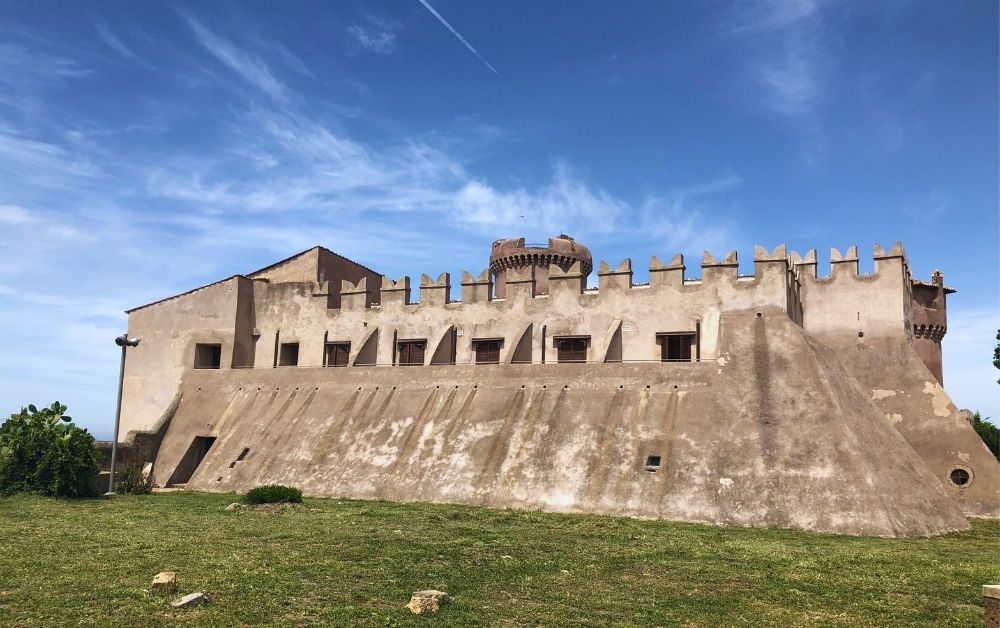
Santa Severa lies about 50 km (31 miles) north of Rome. It is home to a charming medieval town and a striking 9th-century castle right by the sea. From a distance, it almost looks like a sandcastle rising from the shoreline.
If you are renting a car, getting to Santa Severa is quite straightforward. The town lies about 50 km (31 miles) north of Rome along the coast, and the drive takes you directly up the scenic shoreline road. It’s an easy and flexible option if you want to explore the area at your own pace and stop along the way.
We chose the simpler option and went by train, which turned out to be very convenient.
There is a direct train from Rome’s main station (Roma Termini), with no need to change trains. Before boarding, we bought our tickets from the self-service machines inside the station. A one-way ticket costs around €4.10 (about $4.97), and it’s a good idea to get a return ticket at the same time. The machines are easy to use, offer English, and print your tickets instantly.
After getting our tickets, we headed off to find the platform, thinking we had plenty of time to spare. Rome’s central station is huge, and even with 30 minutes left before departure, it still took us around 20 minutes of wandering (and waddling) to reach the right platform. Luckily, we made it just in time to hop on the train and start our coastal adventure.


Important: Ticket Validation Before Boarding Trains in Italy
Before boarding any train in Italy, including the one to Santa Severa Castle, it is essential to validate your ticket. On every platform, you will find small yellow validation machines where you must insert your ticket so it is stamped with the date and time.
This step is not optional. If you travel with a non-validated ticket, you can be fined around €200 (about $243), and the checks are taken seriously.
Make sure to validate both your outbound and return tickets before boarding. We did not validate ours and were sweating when we wanted to board the train back to Rome.
To make it even more important, the small train station in Santa Severa does not have any validation machines at all,and communication on-site is limited as most staff and locals speak only Italian. So always validate before you leave Rome to avoid any stress later on.


Opening Hours & Tickets for Santa Severa Castle
Opening Hours
The castle opening times vary depending on the season, so it’s important to plan your visit carefully.
From April 1 – June 30, the castle is open Tuesday to Friday from 09:00 to 18:00, and on Saturdays, Sundays, and holidays from 10:00 to 19:00.
From July 1 to September 1, opening hours shift to the evening: the castle is open Tuesday to Sunday and holidays from 17:00 to 00:00 (midnight).
From September 2 to October 31, it reverts to daytime hours: 09:00 to 18:00 (Tue–Fri) and 10:00 to 19:00 (weekends and holidays).
From November 1 – March 31, winter hours apply: Tuesday to Friday from 09:00 to 16:00, and Saturdays, Sundays, and holidays from 10:00 to 17:00.
The museum ticket office is closed on Mondays year-round.

Tickets for Santa Severa Castle
- Adult ticket: €8.00
- Reduced ticket: €6.00
- Family package: one adult pays full price, children under 18 enter free
- Audio guide (Italian & English): €5.00
- Plushies: free entry
Entrance tickets can be purchased both online and at the on-site ticket office. Visitors who buy a museum ticket are entitled to a free 3-hour stop, which must be validated at the ticket office before use.
Always check the official website or current visitor information before planning your trip, as opening hours and ticket prices can change seasonally or due to special exhibitions.
Exploring Santa Severa and Santa Severa Castle
The train ride takes just over an hour and is smooth and fairly quick. As you get closer to Santa Severa Castle, the landscape gradually changes, and the first glimpses of the sea start to appear, making it feel like the trip is shifting into a coastal escape.
The train station in Santa Severa is small and quiet, almost charming in its simplicity. When we arrived, there was no staff in sight, and only one other passenger got off with us.
Do not expect taxis or public transport here. Once you step out of the stazione, you really have no choice but to waddle.
But there is no need to worry. The castle is only about 1.5 km (around 0.94 miles) away, and it takes roughly 20 minutes on foot. It’s an easy walk that slowly builds anticipation as you get closer to the sea and the castle begins to appear in the distance.


Waddling through Castello di Santa Severa
When you arrive at the castle, you naturally feel like you want to go inside and explore it properly. The moment you see it rising from the sea, curiosity takes over, and the interior visit quickly becomes the main reason to be here. The castle offers a real step back into medieval times, making it one of the most atmospheric spots along the Lazio coast.
Apart from the castle itself, there is not a huge amount of structured sightseeing in the immediate area. You can enjoy a relaxed beach day, take a walk along the shoreline, or sit and take in the views, but the castle is clearly the highlight and the main attraction. Everything else feels like a bonus to a very simple and peaceful coastal stop.


A Little Bit of History of Santa Severa Castle
- The site has been inhabited since the Bronze Age, thanks to its strategic coastal location.
- Originally built on an ancient Etruscan and Roman settlement site along the Tyrrhenian coast.
- Became an important Etruscan port serving nearby Caere (Cerveteri), about 13 km away.
- Named after Saint Severa, a Christian martyr from the 2nd century.
- The first written mention dates back to 1068.
- In 1130, the castle and church were donated to the Abbey of Farfa
- Major reconstructions shaped its current form during the 14th century.
- Later in 1428, Pope Sixtus IV donated it to the Order of the Holy Spirit, which held it for 500 years.
- Served as an important defensive fortress to protect the coastline near Rome.
- Later controlled by various noble families and religious orders over the centuries.
- Functioned both as a military stronghold and a small coastal village hub.
- Evolved from an ancient settlement to a medieval fortress over many centuries.
- Sadly, the castle also fell into disuse when the German forces recognized its strategic location during the Second World War and used it as a military base.
- Today, it is a well-preserved medieval castle and cultural site open to visitors.
- One of the most atmospheric historical landmarks in the Lazio coastal region.
We had to wait a few minutes before the guided tour started, and apart from us, only two other visitors were joining. We were actually glad they were there, as the guide spoke only Italian and they helped translate parts of the explanation for us.
It’s worth noting that visits inside Santa Severa Castle are mainly guided tours only, so you explore the interior as part of a group rather than independently. That said, even without understanding every spoken detail, it was still a fantastic experience to waddle through the castle. Most of the information inside is also displayed in English, so you can easily follow along and learn as you go.


Once the guided tour started, we were not disappointed at all. Even though visits to Santa Severa Castle are only possible with a guide, it actually adds to the experience and helps bring the castle’s history to life.
Every room we entered had something interesting to discover. Some spaces feature detailed exhibitions, including beautifully crafted miniature models of castles that help explain the evolution of fortifications over time. Other rooms are dedicated to historical displays, such as traditional clothing exhibited across different floors, giving a real sense of how life may have looked in different periods.
As we moved through the castle, we also passed through atmospheric halls, restored living spaces, and exhibition rooms that highlight its long history, from its early origins to its medieval transformation. There are sections dedicated to archaeology, cultural heritage, and local history, making each room feel slightly different from the last. It’s not just about the architecture, but about how the space has been used and adapted over centuries, which makes the whole visit feel layered and engaging.


The Tower Views at Santa Severa Castle
As we waddled on through the castle, we were especially excited to reach the top of the tower, which stands about 20 meters (65 feet) tall. It quickly became one of our favorite parts of the entire visit, and for good reason.
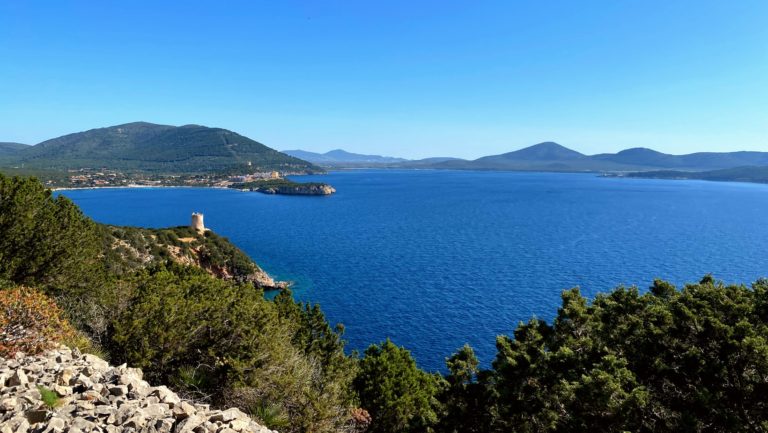
Once at the top, the views did not disappoint. They were spectacular. On one side, you get a sweeping look over the coastline and the open sea, while the other side reveals the surrounding land and countryside stretching inland. Whether you’re admiring the deep blue of the Tyrrhenian Sea or the contrast of the landscape beyond the castle walls, the perspective from above really brings the whole location to life and makes the climb completely worth it.


The Medieval Village
The village is part of the castle complex, and you can wander around it while enjoying more exhibitions. The whole complex is covered in stone streets and was gradually built over several phases of construction during the XV–XVI centuries. The large area consists of several buildings and squares where you can admire life as it was in the past, with the exhibition or, for example, agriculture.
Amongst others, you can see a fountain in the center of the buildings, churches, or remarkable frescoes dating back to the end of the XV century. We enjoyed waddling around very much.


The more you waddle around Santa Severa Castle, the more little details you start to notice. Every angle reveals something new, whether it’s the texture of the stone walls, hidden courtyards, or unexpected views of the sea framed by the fortress.
We definitely recommend taking your time to waddle around the castle before heading down to the beach. It adds context to everything you see later and makes the whole experience feel more complete. One lesser-known detail is that the castle was built directly on top of ancient settlement layers, meaning you are essentially walking through thousands of years of continuous history in one spot. You also notice how naturally the architecture blends into the coastline, almost as if the sea itself shaped it.


Once you make your way down to the beach, the perspective completely changes. The further you move away from the castle, the more it starts to resemble a real-life sandcastle rising from the shore. From a distance, it almost feels unreal, especially when seen against the open horizon of the Tyrrhenian Sea.


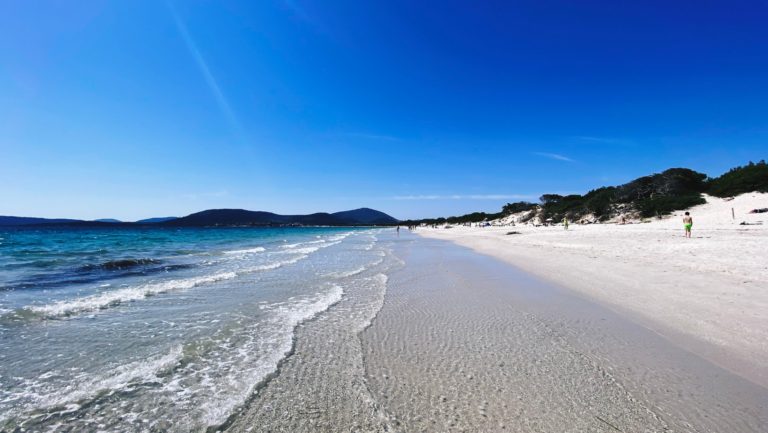
If the weather allows, this is also a great place to enjoy a relaxed beach day right next to Santa Severa Castle. The setting is simple but beautiful, with the castle right by the sea and plenty of space to sit back and unwind after exploring. In our case, it was a little windy, so it wasn’t quite ideal for a long beach stay, but it still added to the atmosphere in its own way. On calmer days, though, it would be perfect for swimming, sunbathing, or just enjoying the view of the castle from the shoreline as it rises like a sandcastle in the distance.
How Much Time Do You Need for Santa Severa Castle
A visit to Santa Severa works perfectly as either a half-day or a full-day trip, depending on how you plan your time. The guided tour inside the castle usually takes around 1 to 1.5 hours, giving you enough time to explore the main rooms, exhibitions, and the tower. On top of that, the journey from Rome takes just over an hour each way, so travel time alone already adds a few hours to your day.
If you combine the castle visit with some time at the beach, it easily becomes a full-day experience. You can explore the castle in the morning or early afternoon, then head down to the shoreline to relax, walk along the water, or enjoy the view of the fortress from the beach. If you are short on time, though, it still works well as a half-day trip focused mainly on the castle itself.

Buy Me a Ko-fi
Best Time to Visit Santa Severa Castle
The best time to visit Santa Severa depends on the kind of experience you are looking for. Spring (April to June) and early autumn (September to October) are ideal, as the weather is warm but not too hot, making it perfect for combining a castle visit with a walk along the beach. These months are also less crowded, making the experience more relaxed.
Summer (July and August) brings a livelier atmosphere, especially in the evenings, when the castle often opens later, and the seaside becomes a popular escape from Rome. However, it can get hot and busier during the day. Winter is much quieter, and while the castle visit can still be enjoyable, the beach experience is more limited due to cooler temperatures.
We visited in early June, which in theory should be perfect beach weather, but in our case, it wasn’t quite warm enough for a proper seaside day. Because of that, our focus remained mainly on Santa Severa Castle itself, exploring it, enjoying the views, and taking in the atmosphere rather than spending time on the beach.
After our visit and a relaxed stop for food nearby, we eventually made our way back to Rome. Even without the beach element, it still worked really well as a half-day trip focused on the castle and the coastal setting.

Nearby Things to Do Around Santa Severa Castle
- Santa Severa Beach, a long sandy beach right next to the castle, is ideal for relaxing, swimming, or just enjoying the coastal views
- Coastal walks & viewpoints, easy waddling paths along the shore where you can see the castle from different angles.
- Santa Marinella town, a nearby seaside town with cafés, restaurants, and a relaxed local atmosphere.
- Photography spots, especially from the beach, where the castle looks like it rises straight from the sea.
- Sunset views, the coastline is beautiful in the evening light, with open views over the Tyrrhenian Sea.
- Etruscan heritage near Cerveteri (Caere), a short drive inland, takes you to UNESCO-listed ancient necropolises and tombs.
- The Pyrgi archaeological area, near the ancient Etruscan-Port settlement, is linked to the region’s early coastal history.
- Roman villa remains (Santa Marinella area), scattered ruins along the coast showing traces of ancient Roman seaside life.
- Medieval coastal watchtowers, defensive towers built along the Tyrrhenian coast to protect against pirate raids.
Whenever you are in Rome and have a day to spare, we strongly recommend a trip to Santa Severa Castle. It is an easy escape from the city and offers a refreshing mix of history, sea views, and a slower coastal pace. There is enough to explore inside the castle to keep you engaged, but it also works perfectly as a relaxed one-day trip where you can combine sightseeing with a walk by the beach. Whether you go for the history, the views, or just a change of scenery from Rome, it is a rewarding and memorable stop along the Lazio coast.
Pack your bags and waddle more!

This post contains affiliate links. If you click and buy, I might earn a tiny commission, enough to help a penguin keep up its globe-trotting lifestyle. No extra cost to you, just more fish for me. Thank you for supporting the adventure!