Ultimate Guide to Dubrovnik City Walls: History, Tickets & Views
After our accidental mix-up with booking a walking tour instead of the city walls 😅, we finally made it, and wow, it was worth the wait! The Walls of Dubrovnik are a breathtaking series of stone fortifications that have protected the city for centuries. Standing proudly since the Middle Ages, these walls were never breached by an enemy army, which makes walking them feel like stepping into history itself.
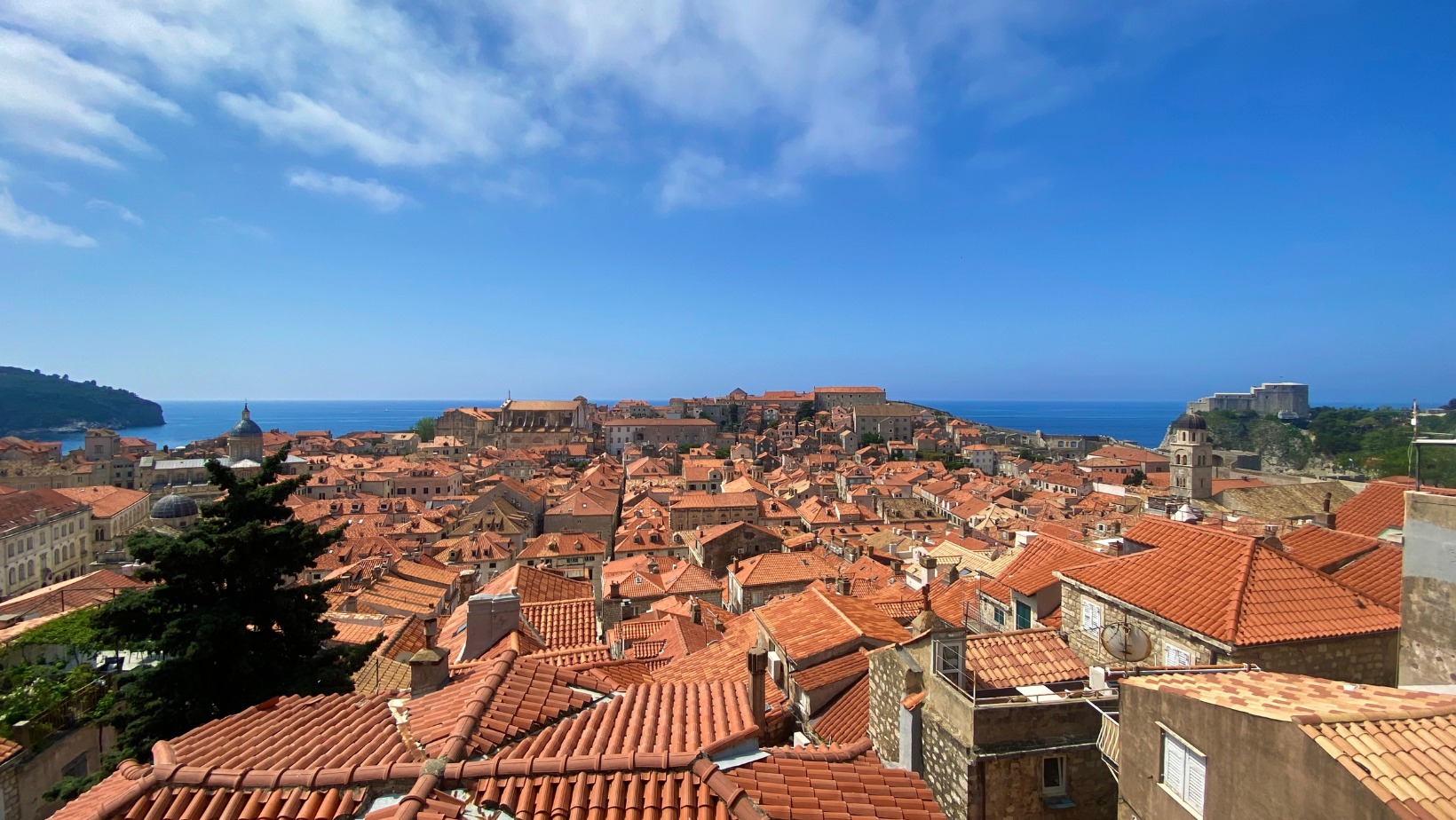
We’ve visited the Great Wall of China, but honestly, the Walls of Dubrovnik left an equally powerful impression, just shorter and with a much prettier view. From up here, every waddle gives you sweeping panoramas of terracotta rooftops and the sparkling Adriatic below. What fascinated us even more was how advanced Dubrovnik was for its time. Unlike many places in medieval Europe, the walls weren’t built by slaves, but by paid workers. In fact, Dubrovnik abolished slavery in 1416, one of the first cities in Europe to do so. That spirit of independence and fairness seems built right into the stones.
Read on to learn everything you need to know before visiting, plus tips, tickets, and how to make the most of your waddle around Dubrovnik’s legendary walls.
- Why Visit the Walls of Dubrovnik
- Walls of Dubrovnik Opening Hours
- Walls of Dubrovnik Tickets & Access Info
- Entry Points to the Walls of Dubrovnik
- History of the Walls of Dubrovnik
- How Long are the Walls of Dubrovnik
- Our Waddle on the Walls of Dubrovnik
- Fun Facts About the Walls of Dubrovnik
- Dubrovnik’s Endless Steps and Stunning Views
- Best Time to Visit the Walls of Dubrovnik
- Fortresses on the Walls of Dubrovnik
- How Long Does It Take to Walk the Walls of Dubrovnik
- Difficulty Level & Accessibility
- Tips for Visiting the Walls of Dubrovnik
- Nearby Attractions
- Is It Worth It? (Our Honest Take)


Why Visit the Walls of Dubrovnik
Walking the Walls of Dubrovnik is a journey through history with some of the most breathtaking views you’ll ever see. Every step tells a story, every stone holds a secret. Here’s why this waddle is an absolute must on any Dubrovnik itinerary:
- Unbeatable Views Over the Adriatic. From the top of the walls, we saw the Adriatic Sea shimmering beneath the red rooftops. Watching the waves crash against the rocks below while the sun lights up the Old Town is pure magic.
- Historical Significance. These fortifications have never been breached.
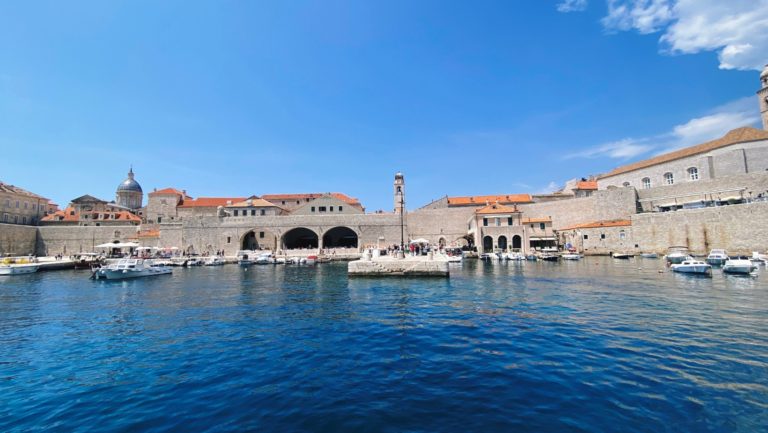
- Great Photography Spots. Whether it’s the Minčeta Tower, Lovrijenac Fortress, or the panoramic views over the Old Port, the walls offer endless photo opportunities. Early morning or sunset light gives the city that golden glow.
- Connection to Game of Thrones. If you are a fan like us, you will instantly recognize scenes from King’s Landing, filmed along these very walls.
For us, this waddle was a highlight of our entire Dubrovnik trip. The combination of sea breeze, history, and cinematic views made it unforgettable.
Walls of Dubrovnik Opening Hours
The Walls of Dubrovnik are open year-round, but the opening hours vary by season to match daylight and weather conditions.
Seasonal Opening Hours
- April – May: 8:00 AM – 6:30 PM
- June – July: 8:00 AM – 7:30 PM
- August – September: 8:00 AM – 6:30 PM
- October – March: 9:00 AM – 3:00 PM
Pro Penguin Tip: Arrive early in the morning or an hour before closing for fewer crowds and softer light, perfect for photos and a more peaceful waddle around the walls.
Always double-check the official Dubrovnik Walls website before your visit, as opening hours can occasionally change due to weather or maintenance.
Walls of Dubrovnik Tickets & Access Info
Here’s everything you need to know about getting tickets, prices, and taking advantage of extras like Fort Lovrijenac access.
You can purchase Walls of Dubrovnik tickets in several convenient ways. The easiest option is to buy them online through the official City Walls Dubrovnik webshop, which lets you skip the queues and secure your spot in advance, especially helpful during busy summer months.
If you prefer to buy in person, tickets are available on-site at all main entrances to the walls, including Pile Gate, Ploče Gate, and the Maritime Museum entrance. You can also purchase them at ticket offices and kiosks across the city, such as those operated by Kompas Croatia.
No matter which option you choose, it’s a straightforward process, and your ticket doesn’t just grant you access to the walls but also to Fort Lovrijenac, one of Dubrovnik’s most iconic landmarks.
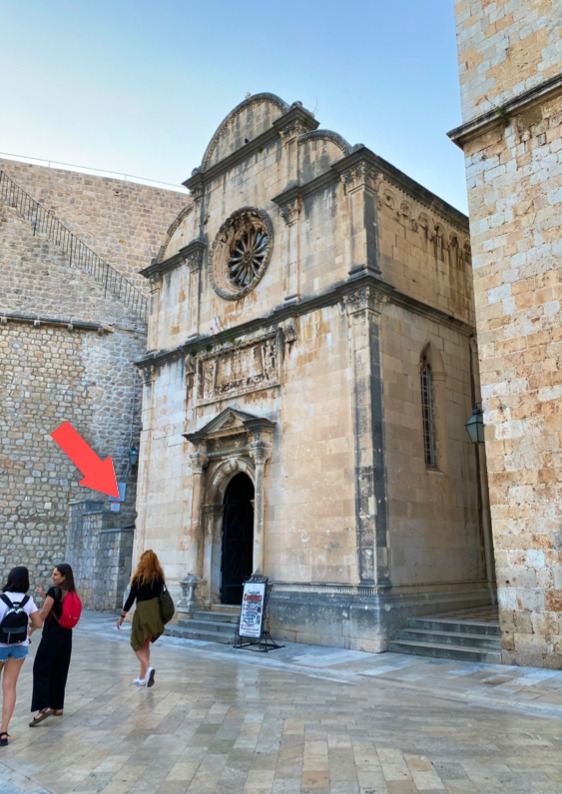
We bought our tickets on the spot at the entrance and had absolutely no issues.
- Adult (regular season): ~ €40
- Children / Youth (under 18): ~ €15
- Off-season discount prices: ~ €15 for adults & €5 for children
- Plushies: free entry
Extra Perks & Notes
- Access to Fort Lovrijenac is included with the walls ticket, which provides entry to Fort Lovrijenac (St. Lawrence Fortress), typically valid within 72 hours of your first use.
- Validity period: The standard ticket is valid for 72 hours after the first scan, allowing you to complete your wall walk and visit the fortress on different days.
- Children under 7: Often admitted free (check at the ticket counter).
- Dubrovnik Pass: A city-wide pass that includes wall access, fortress, museums & public transport, often a better deal if you plan to visit many attractions.


Entry Points to the Walls of Dubrovnik
You can start your wall waddle from a few different gates around the Old Town. The two main ones are the most convenient:
- Pile Gate (Western Entrance). The most popular starting point, located near the main entrance to the Old Town. It’s ideal if you’re coming from most hotels or public transport stops. You’ll find a ticket booth right at the entrance.
- Ploče Gate (Eastern Entrance). A great alternative, often less crowded. It’s perfect if you’re staying near Banje Beach or visiting after exploring the Dominican Monastery.
- Additional Access Points. There’s also an entrance near the Maritime Museum and another by Fort St. John, both convenient if you’re exploring the port area.
Pro Penguin Tip: Start at Pile Gate early in the morning to walk clockwise; you’ll beat the crowds and enjoy the best lighting for photos.
History of the Walls of Dubrovnik
- Origins in the Middle Ages: The earliest fortifications date back to the 7th–9th centuries, when the settlement of Ragusa began building defenses against invaders.
- The Saracen Siege. In the 9th century, the city was besieged by Saracens for 15 months, one of its earliest recorded battles for survival.
- Expansion of the Walls. By the 10th century, the eastern section was reinforced, and walls enclosed the entire cityin the 13th century. The sea channel that once separated the city from the mainland was filled in during the 11th century, making Dubrovnik a united, fortified peninsula.
- Stronger Defenses. In the 14th century, 15 square forts were added to increase strength. Over time, the walls grew to include four main forts, 2 round towers, 12 square forts, five bastions, two corner towers, and multiple semicircular bastions, an engineering marvel of its time.
- Built by Paid Workers. Unlike many fortresses in Europe, the walls were constructed by paid local craftsmen, not slaves.
- The walls survived the devastating 1667 earthquake that destroyed much of the city, proving their masterful design.
- Despite centuries of threats from the Ottomans, Venetians, and pirates, the walls were never conquered.
- Symbol of Freedom: Above Fort Lovrijenac, the city’s motto proudly reads: “Non bene pro toto libertas venditur auro”, Freedom is not to be sold for all the gold in the world.
- UNESCO Recognition. Thanks to their exceptional preservation and historical importance, the Walls of Dubrovnik were inscribed as a UNESCO World Heritage Site in 1979.
How Long are the Walls of Dubrovnik
The walls run uninterrupted for 1940 meters (6365 feet) in length, encircling most of the City, and reach a maximum height of about 25 meters (83 feet). It is quite a waddle around them and it takes a while to waddle them whole, especially if you stop frequently and, take pictures.
In general, the walk itself is relatively easy for anyone with a good physical condition and can be done in 1-2 hours, depending on your pace.


Our Waddle on the Walls of Dubrovnik
The day before our visit, we thought we had already booked tickets for the Walls of Dubrovnik, only to realize halfway through our “tour” that it was actually a city walking tour, not the wall waddle we were so excited about.
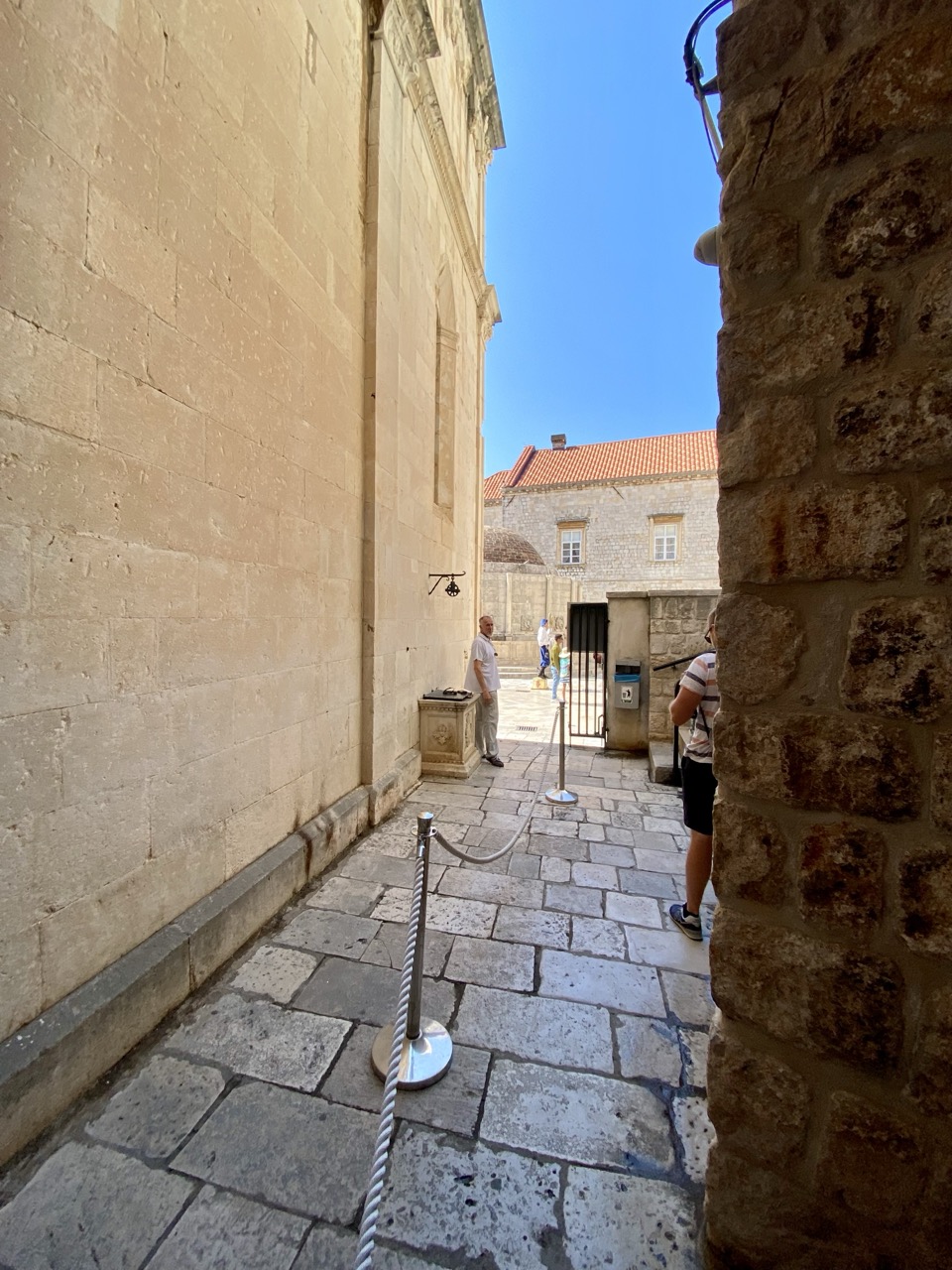
So the next morning, determined to make it up there finally, we went straight for the real ticket. Finding the entrance took us a little while (there are a few gates, and it’s easy to get turned around among the stone streets), but once we spotted the right one, we couldn’t stop smiling.
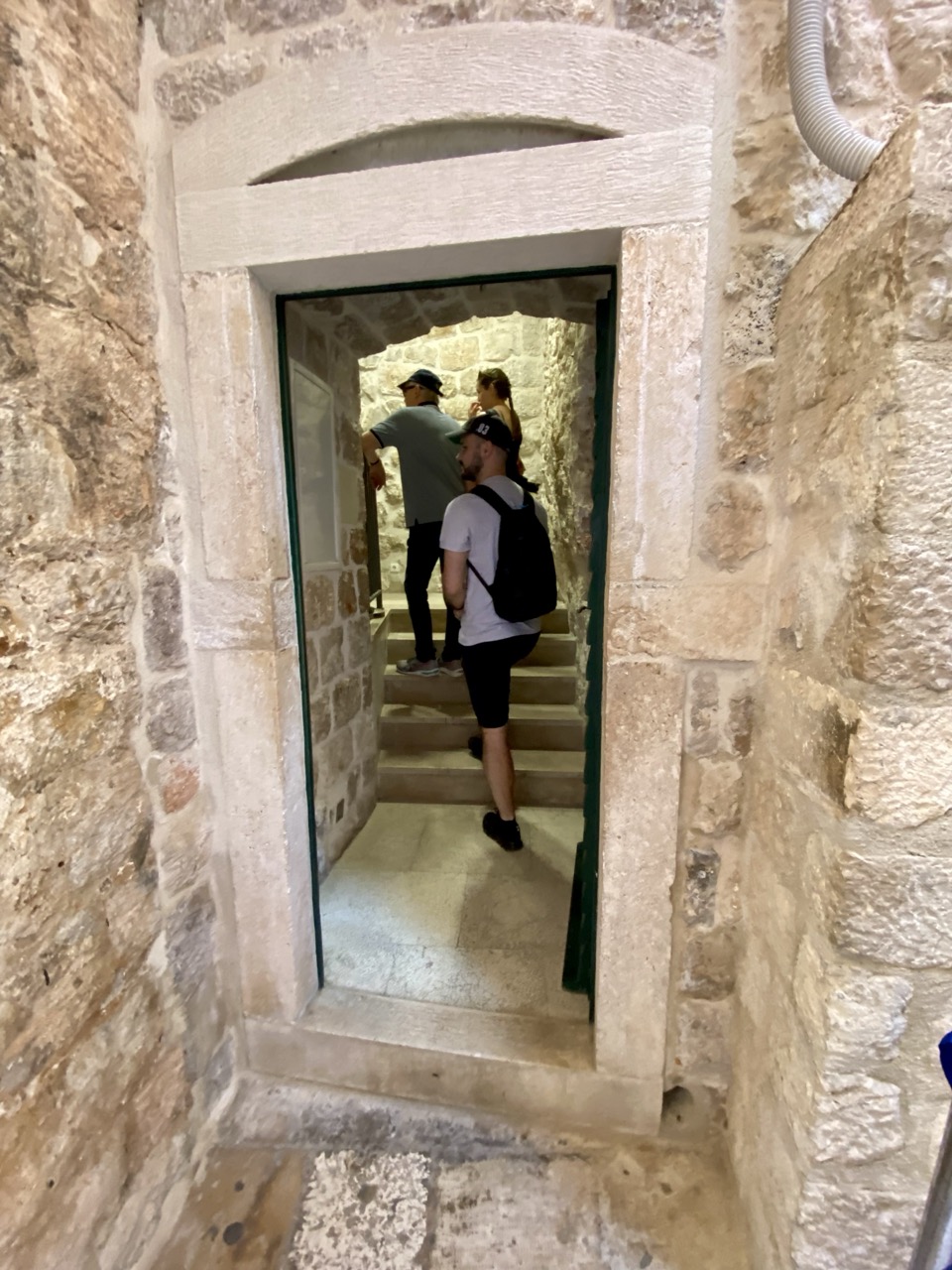
We bought our tickets on the spot and suddenly, the only thing left to do was waddle up the steep stone stairs leading to the top. The climb itself was a warm-up, but as soon as we reached the walls and looked out over the terracotta rooftops and the Adriatic Sea, it was all worth it. The view was simply breathtaking, and we hadn’t even started our full circuit yet.

Fun Facts About the Walls of Dubrovnik
-
- The walls are the main reason why Dubrovnik is well known as the Pearl of the Adriatic. The Walls surround the whole old town.
- The walls are 1940 meters long with six fortresses, Lovrijenac, Revelin, Minčeta, Bokar, St John, and St Lucas.
- The Walls were one of Dubrovnik’s Game of Thrones filming locations.
- The maximum height of the walls in some parts reaches about 25 meters (82 ft).
- The walls themselves are generally 6 meters (19 ft) thick.
- Some parts are very narrow, and the height is low, so be prepared for this if you are afraid of heights.
- While waddling around, you’ll find a few bars and restaurants to buy drinks and eat, or small stands to buy water.
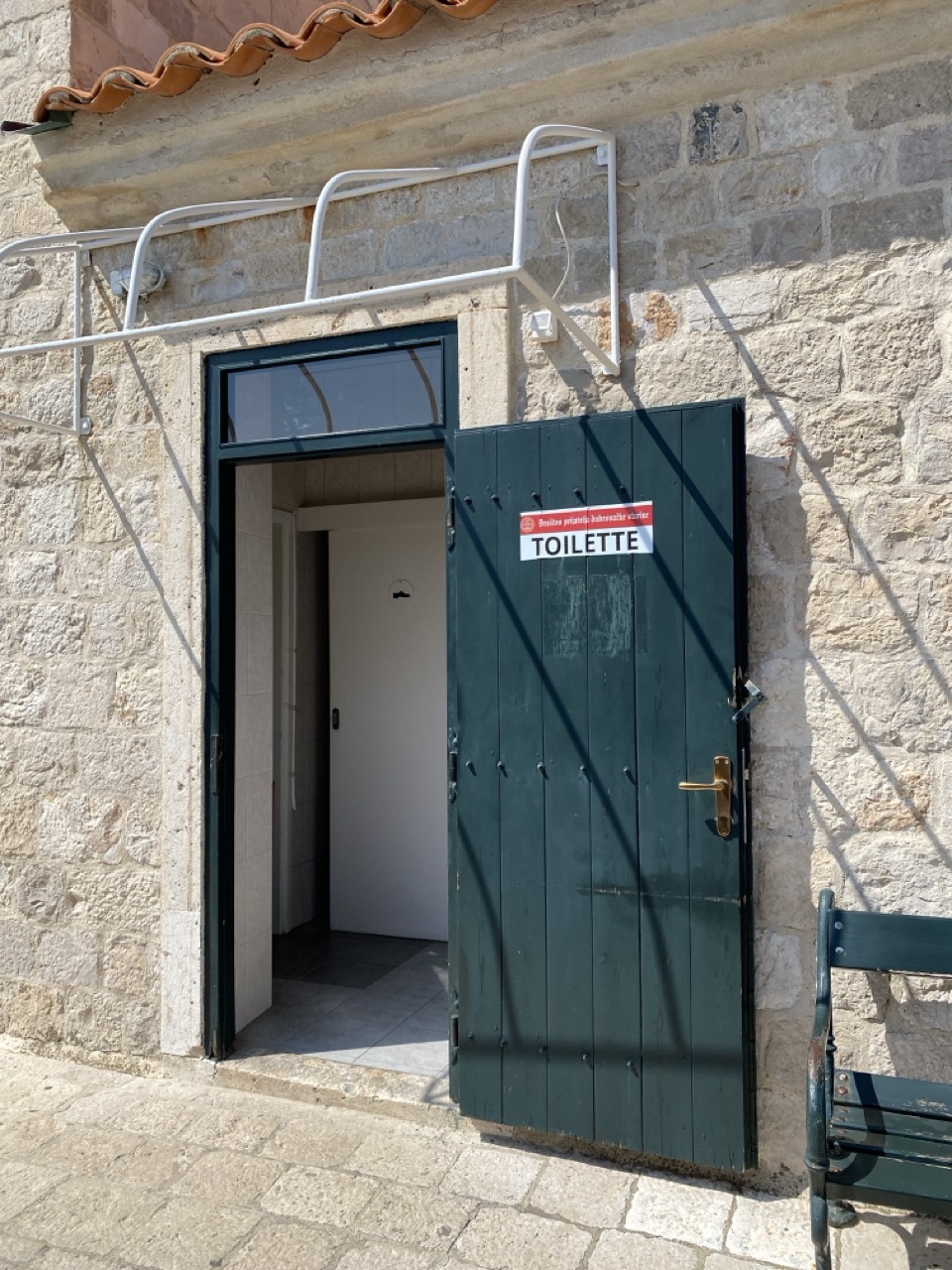
- Toilets are also available on the Walls.
- There is no set time for how long you should be up there, so the time you spend there depends on you.
- You will encounter three checkpoints where you have to present your tickets.

Already at the first set of stairs, the view completely took us by surprise. One moment we were in the narrow stone alleys of the Old Town, and the next we were high above the rooftops, with the Adriatic stretching endlessly in front of us. Standing nearly 25 meters (82 feet) above the city, it felt surreal to waddle along the same path that once protected Dubrovnik’s people. From up there, every terracotta roof tile, church dome, and sparkling wave seemed to tell a piece of history, and we hadn’t even made it halfway around the walls yet.
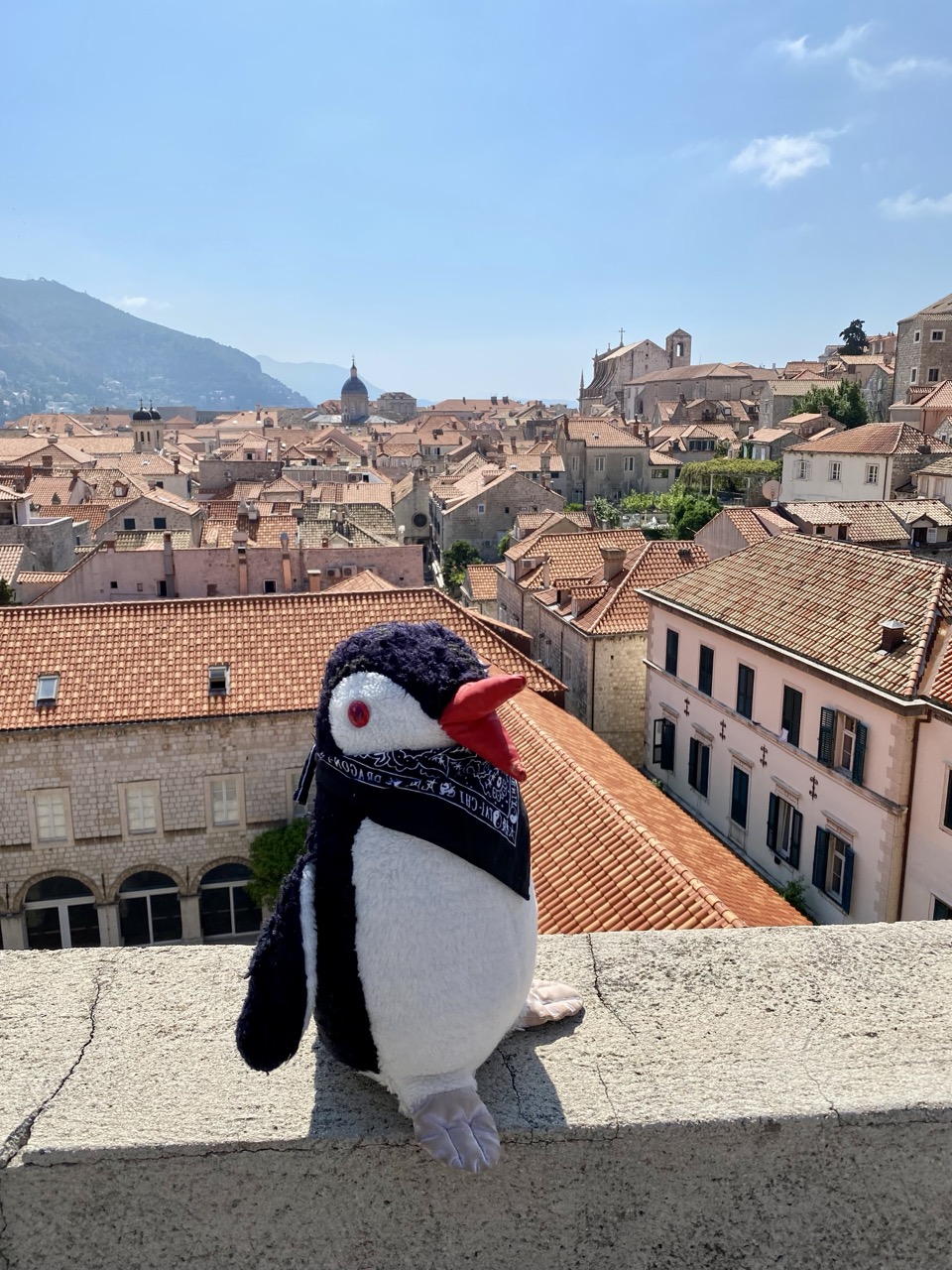
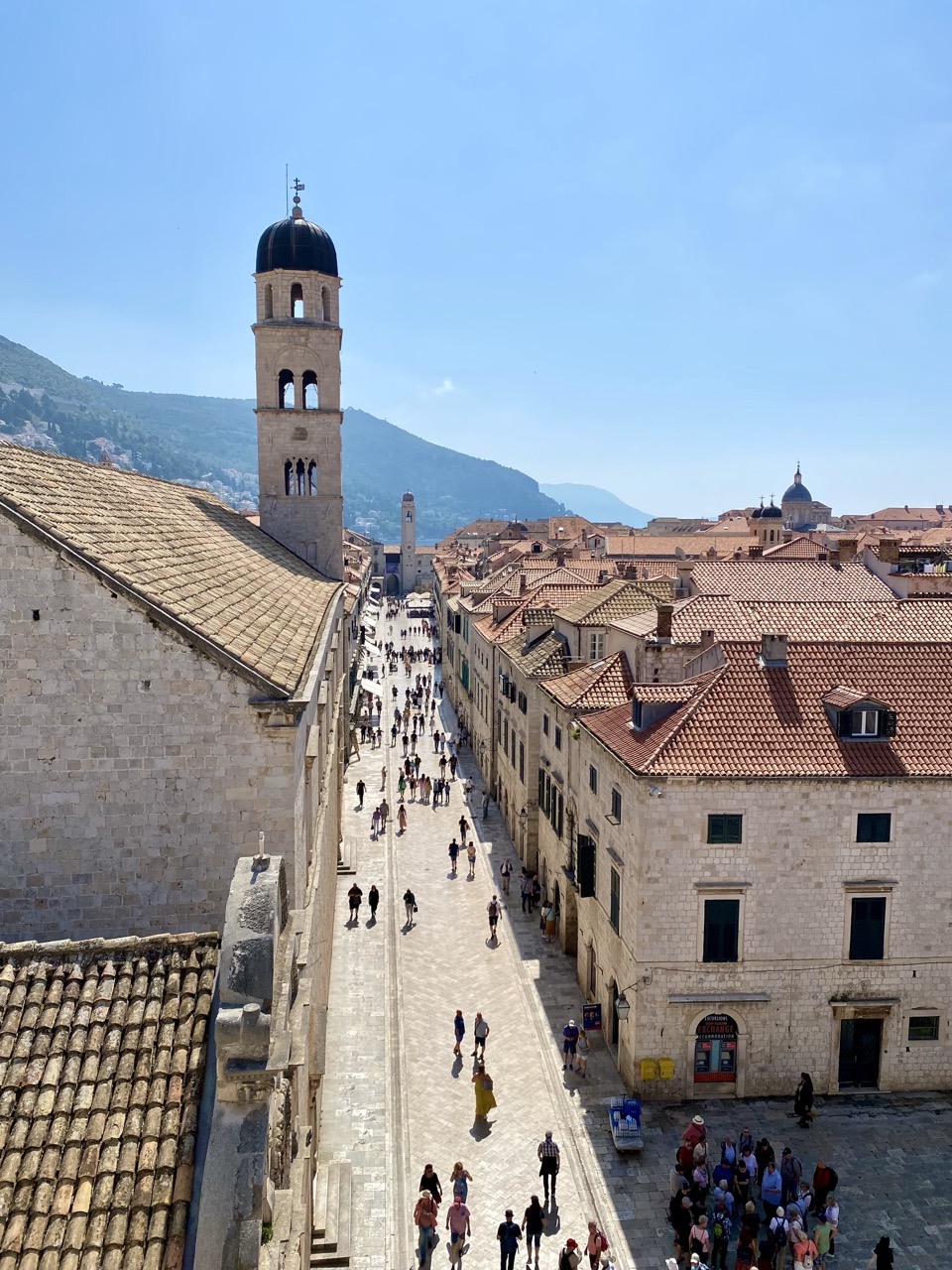
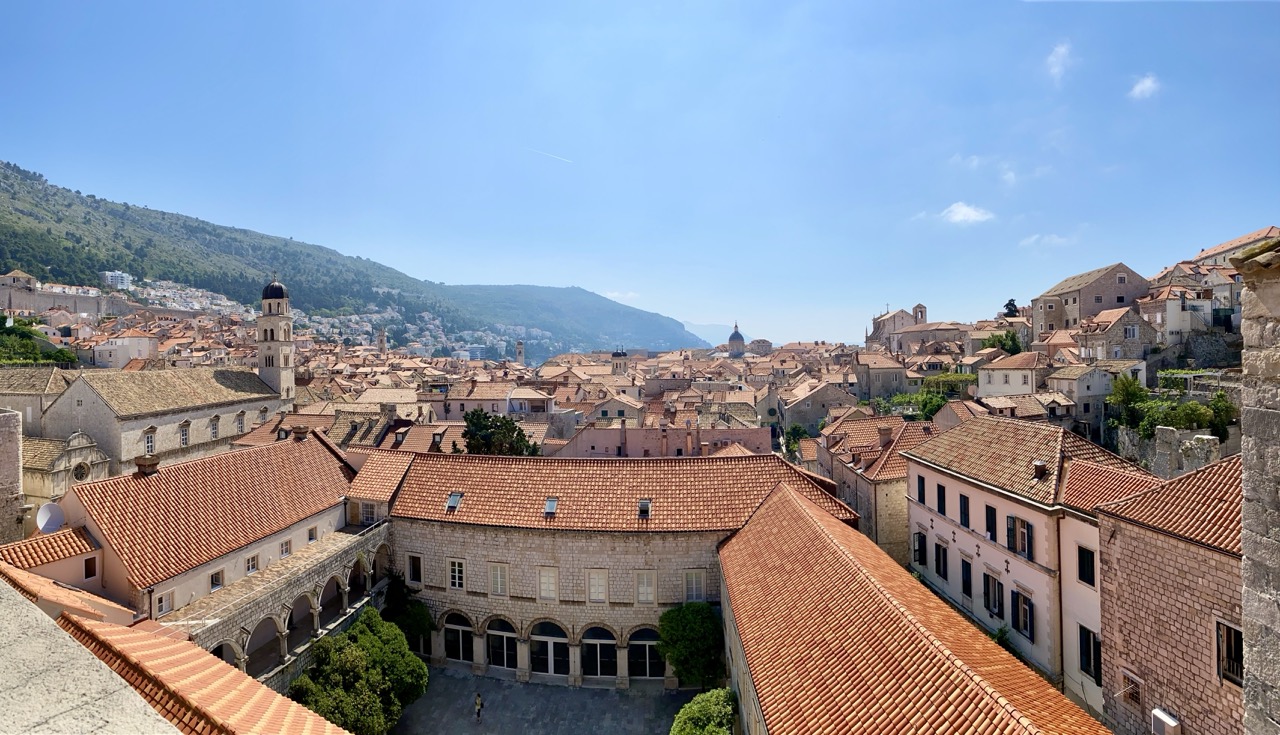
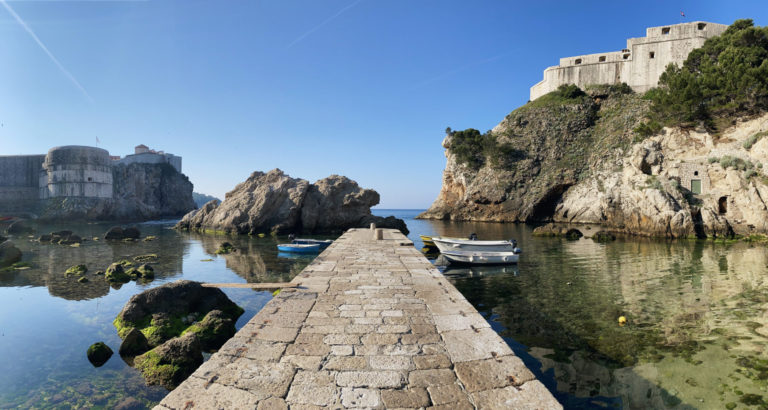
From the top of the walls, we also enjoyed a stunning view of Fort Lovrijenac, standing proudly on its 37-meter-high cliff across the sea. Seeing it from above gave us a whole new perspective; the fortress looked even more majestic, framed by the deep blue Adriatic. It’s easy to understand why it’s often called the “Gibraltar of Dubrovnik.” Watching the waves crash beneath its stone walls while the city unfolded behind us was one of those perfect Dubrovnik moments we’ll never forget.

Some sections of the Walls of Dubrovnik were surprisingly narrow and lower than we expected, which made our waddle a little more thrilling. There were moments when we looked down and instinctively stepped back, fearing we might tumble over if we leaned too far. It added a touch of adventure and a reminder that these centuries-old walls were built for defense, not comfort. Still, every step along them made us appreciate their incredible preservation and the stunning views they continue to offer after all these years.


The Walls of Dubrovnik are not just about history and views; they’re surprisingly well-equipped for visitors. Along the walk, you’ll find a few small cafés and bars perched right on the walls, where you can grab a drink, cool off, and enjoy the panoramic view over the sea and rooftops. It’s honestly one of the most scenic spots to sip a fresh orange juice or a cold beer. There are also toilets available at several points, mostly near the main entrances like Pile Gate and Ploče Gate, so it’s good to plan your stops accordingly. If you’re visiting on a hot day, bring water, but you can also buy some at the walls. There are benches and shaded spots along the way, too, perfect for taking a break and soaking in the views before continuing your waddle.



Dubrovnik’s Endless Steps and Stunning Views
Calling Dubrovnik the city of steps might actually be an understatement. Stairs are everywhere, winding through narrow alleys, leading up to hidden terraces, and yes, climbing all along the city walls. In total, Dubrovnik boasts around 5,000 steps, and the Walls of Dubrovnik account for roughly 1,000 of them (to be precise, about 1,080).
And while those numbers might sound intimidating, every single step rewards you with incredible views. Of course, there’s a bit of sweat (and maybe a few laughs or light swearing 😅) along the way, but once you reach the higher points and look out over the red rooftops and shimmering Adriatic, it’s worth every climb. It’s the kind of workout that doesn’t feel like one, because the views keep you moving forward, one penguin step at a time.


Best Time to Visit the Walls of Dubrovnik
The best time to visit the Walls of Dubrovnik depends a bit on the season, but timing can make a huge difference in how enjoyable your waddle will be. During the high season (June to August), the walls can get crowded and hot under the midday sun, so it’s best to go early in the morning, right after opening, or later in the afternoon before closing. The light during those hours is also softer, perfect for photos without harsh shadows or too many tourists in the background.
If you’re visiting off-season, you have the luxury of going almost anytime. The spring and autumn months (May–June and September–October) are ideal, the temperatures are pleasant, and the crowds are thinner, letting you take your time exploring each tower and viewpoint.


Fortresses on the Walls of Dubrovnik
Waddling around the Walls of Dubrovnik isn’t just about the breathtaking views; it’s also a journey through a network of historic fortresses and towers that once protected the city from invaders. Each one tells a story of strategy, craftsmanship, and Dubrovnik’s determination to stay free.
Among the most iconic is the Minčeta Tower, located on the northern section of the walls, facing the mainland. This massive round fort with its solid stone base and elegant Gothic crown stands proudly as the highest point of Dubrovnik’s defense system. From the top, you will see one of the most panoramic views over the entire city, a must-stop on your wall walk.
The tower’s name comes from the Menčetić family, who owned the land where it was built. Construction began in 1319, designed by architect Ranjina, and over time, it became the ultimate symbol of the city’s strength and resilience. Today, standing atop Minčeta, it’s easy to see why it’s one of Dubrovnik’s most photographed landmarks, and one of our favorite waddle stops on the walls.


The Bokar Fortress, also known as Zvjezdan, stands proudly on the southwestern section of Dubrovnik’s city walls, overlooking the Adriatic. Together with the Minčeta Tower, it played a vital role in defending the Pile Gate and the surrounding moat, one of the city’s most strategic entry points.
Construction began in 1461, based on the plans of the renowned Florentine architect Michelozzo di Bartolomeo. Although there was some debate about whether the project should continue in 1470, Dubrovnik’s leaders wisely decided to complete it. By 1555, the fort was roofed, and by 1570, it reached the form we see today, a two-level masterpiece of Renaissance military architecture.
You might also recognize Bokar Fortress from Game of Thrones, where it appeared in several scenes set around King’s Landing.
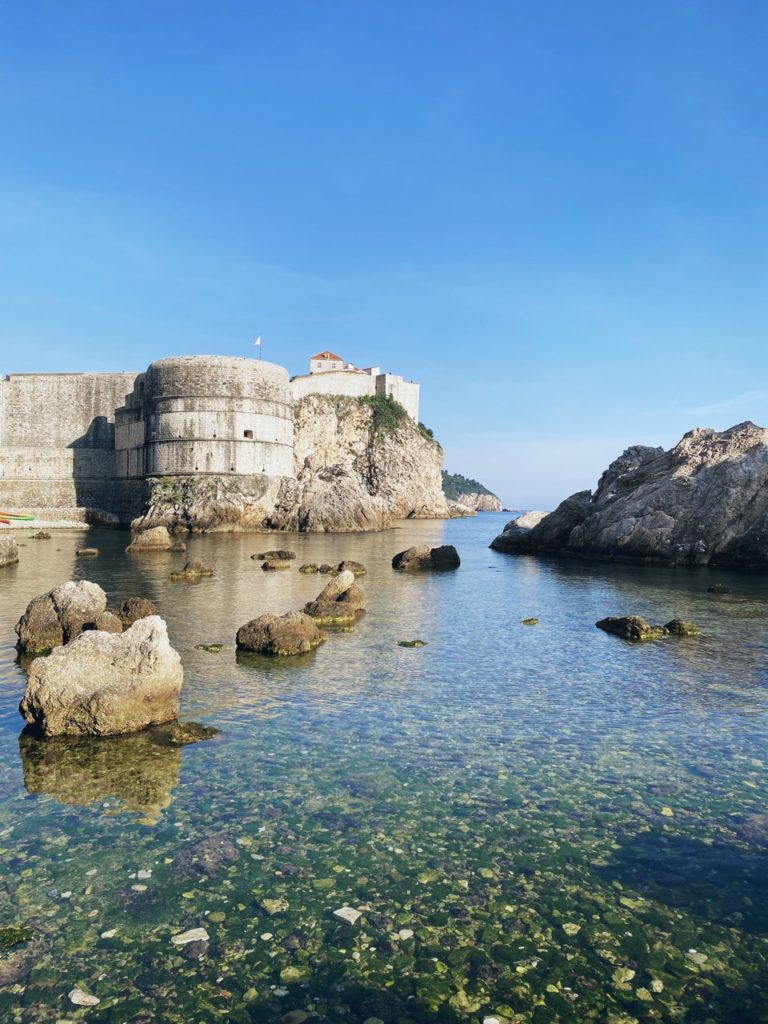
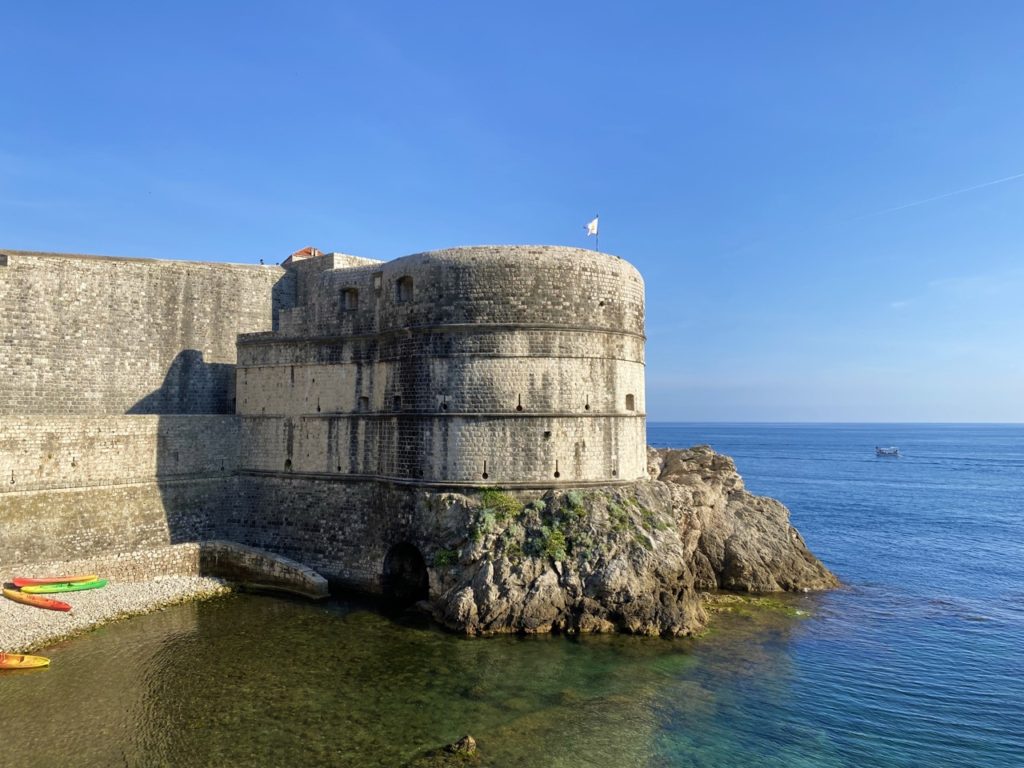
The Fortress of St. John, also known as the Mulo Tower, stands proudly on the southeastern edge of Dubrovnik’s Old Port. This monumental fortress was built to protect the harbor, the city’s vital connection to trade, travel, and defense.
Construction began in 1346 and continued for several years, resulting in one of Dubrovnik’s most distinctive fortifications. The seaward side of the fortress is rounded and sloped, designed to deflect waves and cannon fire, while the side facing the port features flat, vertical walls for added strength and control of access.
Standing here, you can easily imagine how crucial this fortress once was for guarding Dubrovnik’s lifeline to the world. Today, it’s home to the Maritime Museum and the Aquarium, both of which preserve the city’s long maritime legacy and offer a chance to waddle through history from a whole new angle.


How Long Does It Take to Walk the Walls of Dubrovnik
Waddling the entire circuit of the Walls of Dubrovnik usually takes about 1.5 to 2 hours, depending on your pace and how often you stop to take photos (which, trust us, will be often). The full loop is 1,940 meters (about 1.2 miles) long. If you prefer a more relaxed waddle with coffee or photo breaks, plan for closer to two hours. There’s no time limit, so you can explore at your own rhythm and enjoy every viewpoint along the way.
Difficulty Level & Accessibility
The Walls of Dubrovnik are moderately challenging to waddle, not too hard, but definitely a workout. Expect lots of stairs (around 1,000!), uneven stone paths, and a few narrow sections. It’s manageable for most visitors, but comfortable shoes, water, and breaks are a must, especially on hot days. Unfortunately, the walls are not wheelchair or stroller accessible due to their historic structure. Still, for those who can make the climb, the effort is more than worth the views waiting at the top.
Tips for Visiting the Walls of Dubrovnik
- Bring water, sunscreen, and a hat. The sun can be strong, especially in summer, and there’s very little shade on the walls.
- Wear comfortable shoes. Expect uneven stones, steps, and slopes. Your feet will thank you later.
- Avoid the midday sun. Plan your visit early in the morning or late afternoon for cooler weather and softer light.
- Bring your camera (and tripod). Every corner offers a postcard view, from terracotta rooftops to sparkling sea horizons.
- Take breaks at shaded towers. Rest and enjoy the views at Minčeta or Bokar, where there’s often a breeze.
- Combine your visit with Fort Lovrijenac. It’s included in your wall ticket, and the views from across the bay are spectacular.
Nearby Attractions
After waddling the walls, there’s plenty more to explore just a few steps away:
- Fort Lovrijenac. Standing proudly on a cliff across the bay, this fortress offers incredible views back toward the city walls. Don’t forget, it’s included in your wall ticket!
- Onofrio’s Fountain. A refreshing stop near Pile Gate, where you can drink the cool, clean water that has flowed here since the 15th century.
- Stradun Street. The heart of Dubrovnik’s Old Town. Stroll along its polished limestone path lined with cafés, shops, and historic buildings.
- Franciscan Monastery. Just off Stradun, home to one of the world’s oldest working pharmacies and a peaceful cloister courtyard.
- Porporela Pier. A scenic spot at the Old Port where you can sit by the sea, watch boats come and go, or take a dip in the Adriatic.

Is It Worth It? (Our Honest Take)
Yes, it is. The Walls of Dubrovnik are 100% worth it. It’s one of those experiences that defines your trip to Croatia.
Pros:
- Unbeatable views over the Old Town and the Adriatic Sea, truly breathtaking.
- Well-maintained and clean, with cafés, rest spots, and toilets along the way.
- Your ticket also includes entry to Fort Lovrijenac, which adds great value.
- Perfect for photography lovers, every corner is postcard-worthy.
Cons:
- The sun can be brutal, especially at midday. Bring water, sunscreen, and a hat.
- Lots of stairs (around 1,000!), so not ideal if you have mobility issues.
- Crowds build up quickly in high season; early mornings are best.
We’d do it again in a heartbeat. The mix of history, sea breeze, and views made it one of our favorite experiences in Dubrovnik. Our best moment? Standing atop Minčeta Tower, watching the rooftops glow in the golden light. Just time it right, go slow, and enjoy every waddle, it’s unforgettable.
Walking the Walls of Dubrovnik isn’t just sightseeing, it’s stepping straight into the city’s living history. Every stone, view, and sea breeze tells a story of resilience and beauty that no photo can truly capture. Whether you’re a history lover, a photographer, or just someone chasing unforgettable moments, this walk will stay with you long after you’ve left the city.
Pack your curiosity, grab a bottle of water, and waddle up those walls. Dubrovnik’s story is best seen from above.

This post contains affiliate links. If you click and buy, I might earn a tiny commission, enough to help a penguin keep up its globe-trotting lifestyle. No extra cost to you, just more fish for me. Thank you for supporting the adventure!