Gyeongbokgung Palace Guide: Tickets, Opening Hours, Dress Code & Hanbok Rental Tips
We always get excited about visiting historical places, so Gyeongbokgung Palace was high on our list from the moment we started planning our Seoul trip. The palace pops up in every Google search when you look for things to do in the city, and it lives up to the hype. We knew we wanted to waddle through those gates, feel a bit of history, and of course, wear a hanbok for the first time. We had no idea how it worked at first, but that made it even more fun. It felt like stepping into a different time, waddling through the courtyards in colourful outfits and taking way too many photos. Continue reading to learn about tickets, opening hours, renting a hanbok, and more.
- Why Visit Gyeongbokgung Palace (what is special about it)
- A Short History of Gyeongbokgung Palace
- Opening Hours & Tickets to Gyeongbokgung Palace
- Best Time to Visit Gyeongbokgung Palace
- How to Get to Gyeongbokgung Palace
- K-Dramas Filmed at Gyeongbokgung Palace
- Our Experience at Gyeongbokgung and Why This Palace Is a Must-See
- Basic Facts About Gyeongbokgung Palace at Glance
- Popular Photo Spots Inside Gyeongbokgung Palace
- How Much Time Do You Need for Gyeongbokgung Palace
- Accessibility and Facilities
- Pro Penguin Tips
Why Visit Gyeongbokgung Palace (what is special about it)
Gyeongbokgung Palace is huge, calm, and full of these beautiful little details that make you slow down even if you did not plan to. What makes it special is how it blends history with real everyday Seoul. One moment you are standing in a centuries-old throne hall, and the next you look up to see modern buildings rising in the background. We loved that you can wander around at your own pace, find quiet corners, watch the guard ceremony, and if you wear a hanbok, the whole palace turns into your own fairytale. It is the kind of place that reminds you why we travel in the first place.
A Short History of Gyeongbokgung Palace
- Built in 1395 during the early Joseon Dynasty, Gyeongbokgung was designed to be the heart of the new capital, a place where the king ruled, ceremonies were held, and major decisions shaped the country.
- Designed with strong symbolism, the palace layout follows traditional Korean geomancy and faces Bugaksan Mountain, believed to offer protection and good energy to the royal family.
- Served as the main residence of Joseon kings and queens, housing political offices, private living quarters, grand halls, and beautiful gardens where the royal family spent their daily life.
- Suffered heavy destruction during the Imjin War in the late 1500s, when much of the palace was burned down during the Japanese invasion.
- Rebuilt in the 19th century under King Gojong, who restored many of the original structures and brought the palace back to life as the center of the kingdom.
- Damaged again during the Japanese occupation, when many buildings were demolished or replaced, leaving only a fraction of the original complex standing.
- Large-scale restoration began in the 1990s and continues today, bringing back key halls, pavilions, and gates so visitors can experience the palace closer to its original form.
- Home to important cultural sites, including Gyeonghoeru Pavilion, Hyangwonjeong Pavilion, and the National Palace Museum, all of which offer insight into royal life and Korean heritage.
- A powerful symbol of Korean resilience, the palace stands today as a reminder of history, loss, and restoration, showing how culture can survive and shine again.
Gyeongbokgung is considered the most important palace in Korea because it was the main royal residence of the Joseon Dynasty and the symbolic heart of the entire kingdom. This is where kings lived, where major political decisions were made, and where national ceremonies took place. It was designed according to traditional Korean principles that placed it in the most powerful and protective location in Seoul, with Bugaksan Mountain behind it. Even after wars and destruction, Gyeongbokgung remains the palace that represents the origin story of the nation, its culture, and its resilience.Visiting it feels like stepping into the first chapter of Korean history.

Opening Hours & Tickets to Gyeongbokgung Palace
Gyeongbokgung Palace is open most days of the year but the hours change by season, so it’s worth planning ahead. Generally, the palace opens at 9:00 AM, and closing times vary:
- January–February: 09:00–17:00 (last admission 16:00)
- March–May: 09:00–18:00 (last admission 17:00)
- June–August: 09:00–18:30 (last admission 17:30)
- September–October: 09:00–18:00 (last admission 17:00)
- November–December: 09:00–17:00 (last admission 16:00)
Note: The palace is typically closed on Tuesdays (unless special cultural events change this).
Ticket Prices & Entry
- Adults (19 to 64): around 3,000 KRW
- Youth (7 to 18): around 1,500 KRW
- Children under 6: free entry
- Seniors 65 and over: free entry
- Visitors wearing a full Hanbok: free entry
- Plushies: free entry, they waddle straight in
Pro Penguin Tip
One of the coolest perks? If you wear a full Hanbok (traditional Korean outfit), your entry to Gyeongbokgung is completely free; that’s right, traditional dress equals free palace entry. The free entry in a hanbok is valid for all palaces in Seoul.
There are also combination passes (valid at multiple palaces and shrines) and occasional special night openings or Culture Day free entry days (like the last Wednesday of the month), so it’s worth checking ahead if your trip lines up with those.
Buying your ticket is easy. You can buy tickets at the main gate ticket booth, but you can also reserve online through the official Cultural Heritage ticket portal if you prefer to plan ahead.
The portal supports common international payment methods, including credit and debit cards, and it is the safest place to check updated prices, availability, and any special events.
Opening hours, ticket prices, special closures, and event info can change, especially seasonally or for holidays and night openings, so always check the official palace site before your visit:
Official Gyeongbokgung Palace page (Korea Heritage Service)
Which Day Is Gyeongbokgung Closed
Gyeongbokgung Palace is closed every Tuesday. This catches many travelers by surprise, so always double-check your itinerary to avoid showing up at locked gates. Hours and special events can change throughout the year, so it is always smart to check the official website for the latest updates before you visit.
Best Time to Visit Gyeongbokgung Palace
The palace looks beautiful all year, but the absolute best months are April, May, September, and October. Spring gives you soft blossoms and mild weather, while autumn brings dreamy golden colors that make every photo look magical with no effort. Summer can be very hot and winter very cold, so the shoulder seasons are the sweet spot if you want comfortable weather and great lighting for photos.
We came in the middle of November, and autumn was in full force, so the whole palace felt like a painting. The trees were colourful, the leaves were falling in slow waves, and everything had that soft golden look that makes you stop every few steps to admire it. If you love autumn, we highly recommend coming during this time. It is one of those seasons that make Gyeongbokgung truly special.


If you want fewer crowds and cleaner shots, go on a weekday morning, ideally right after the gates open at 9:00 AM. This is when the palace feels calm and peaceful, and you have room to wander through the courtyards without the big tour groups arriving yet. Late afternoon on weekdays is also lovely, especially for softer light, but mornings still win for quiet vibes.
How to Get to Gyeongbokgung Palace
Getting to Gyeongbokgung Palace is super easy, and the subway is the fastest and most convenient option for most travelers. The palace has its own dedicated station, so you cannot miss it.
The best way is to take Line 3 (the orange line) to Gyeongbokgung Station and exit at Exit 5, which brings you right to the main entrance. If you are coming from the Gwanghwamun area, you can also walk from Gwanghwamun Station (Line 5) and use Exit 2, which takes about 10 minutes and gives you a nice view as you approach the gates.
Taxis are also easy; all you need to say is “Gyeongbokgung,” since it is one of Seoul’s most famous landmarks. But honestly, the subway is cheap, quick, and drops you exactly where you need to be.

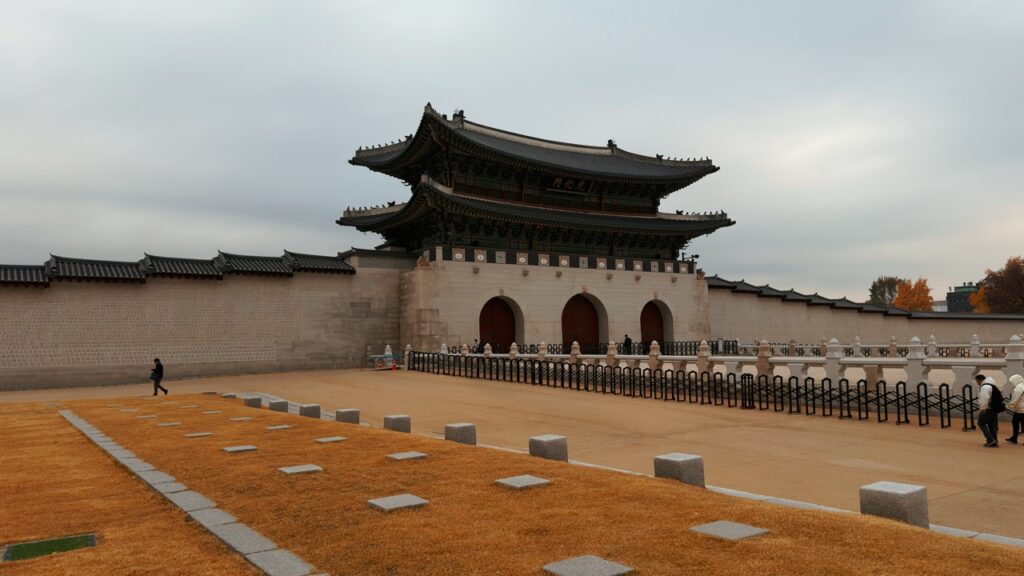


We waddled to Gyeongbokgung Palace from our hotel because we were staying close to the Cheonggyecheon Stream, and it turned out to be such a nice way to start the morning. The waddle took us about 15 to 20 minutes, a little chilly but totally doable, and we even had time to explore the big square in front of the palace before heading inside. It felt like a slow, simple waddle through the city, making the whole visit feel even more special.
K-Dramas Filmed at Gyeongbokgung Palace
- Goblin. Iconic scenes filmed near the palace gates, adding a dramatic backdrop to the story.
- Moon Embracing the Sun. Historical palace shots used to bring the Joseon era to life.
- Jewel in the Palace (Dae Jang Geum). Features several traditional palace areas in its royal court scenes.
- The King: Eternal Monarch. Uses the palace’s exterior for key parallel-world moments.
Our Experience at Gyeongbokgung and Why This Palace Is a Must-See
As mentioned, we waddled our way to Gyeongbokgung Palace that morning, since it was the first stop on our itinerary and our hotel was close enough for a slow, cosy walk. It took us about 20 minutes to reach the main gate, and even though it was a bit cold, the city felt calm and beautiful in the early morning. Before entering the palace right at opening time, we made a quick detour to rent a hanbok, because if you are already here, you might as well enjoy the full palace experience. It felt like the perfect start to the day.
There are hundreds of places around the palace where you can rent a hanbok, so you never have to stress about finding one. We already had a booking with Hanboknam, but honestly, the whole process is super easy, no matter where you go. You pick the hanbok you like, try it on, pay, and off you go to explore the palace in full royal style. If you want a deeper guide on how the rental process works, you can read more here: How to Rent a Hanbok in Seoul.
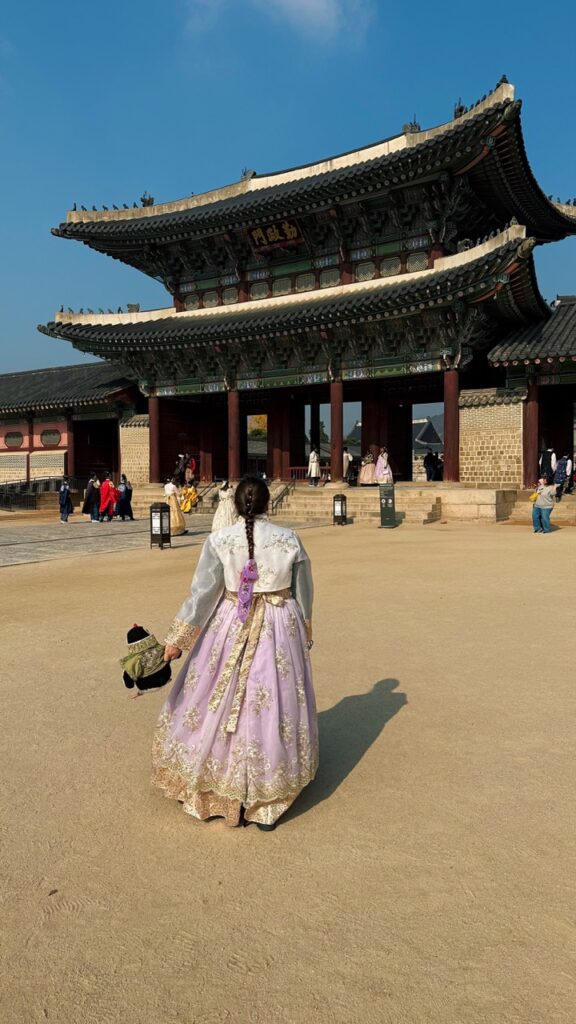
After we got our hanboks, we waddled toward the main gates of Gyeongbokgung Palace, ready for our royal morning. As we approached, we noticed everyone around us curating their outfits, fixing ribbons, adjusting sleeves, and taking those first excited photos. It felt like we were all part of the same colourful parade. By the time we reached the gate, it was almost time for the Changing of the Guard ceremony, so we found a nice spot and waited. Dozens of people in bright hanboks kept arriving, and the whole entrance area turned into a moving rainbow. And honestly, once you see how many visitors are dressed up, you realise that not wearing a hanbok is what would feel strange. Wearing one makes the entire experience so much more fun and immersive, as if you were stepping right into the palace story rather than just watching it.


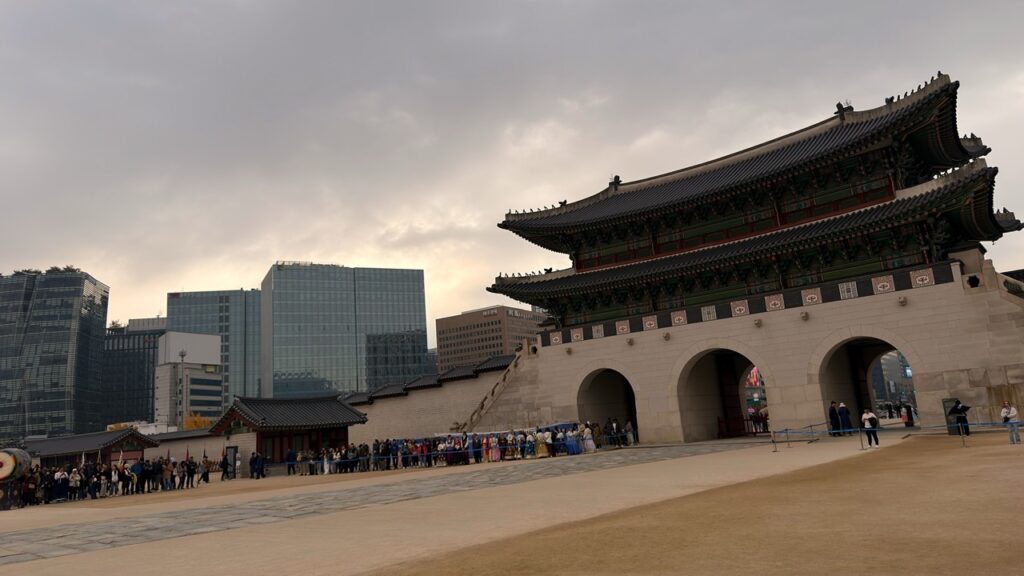
Changing of the Guard Ceremony
As we waited for the Changing of the Guard ceremony to start, we noticed something unusual. It happened to be the day of Suneung, Korea’s national university entrance exam, and because of this the ceremony was delayed by about ten minutes. It was such a surreal moment, only in Korea can an exam be so important that even a royal guard performance adjusts for it. We just stood there in our hanboks, surrounded by students, parents, tourists, all waiting together for the same event to begin. It felt like a tiny slice of real Korean life happening right in front of us.
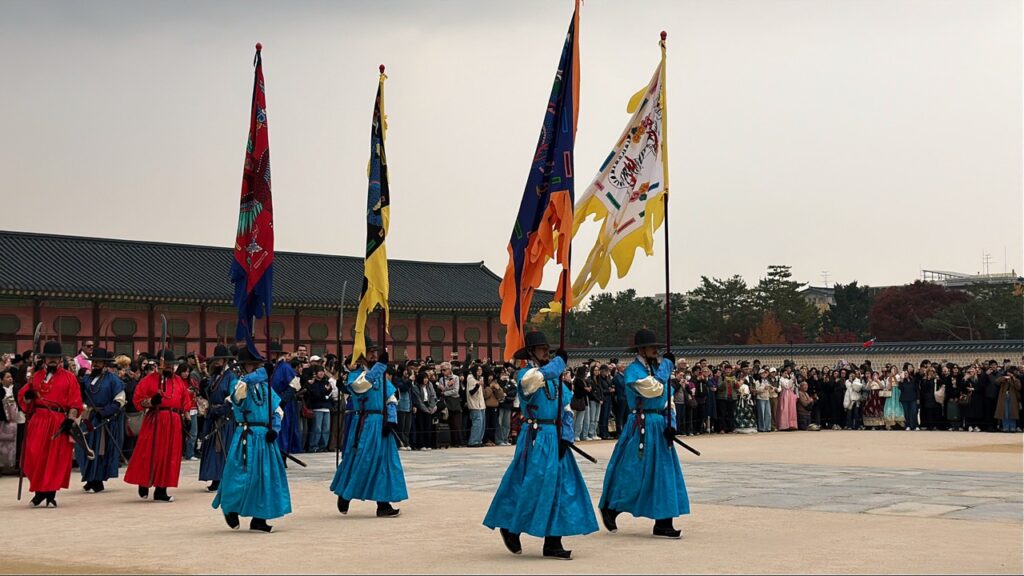
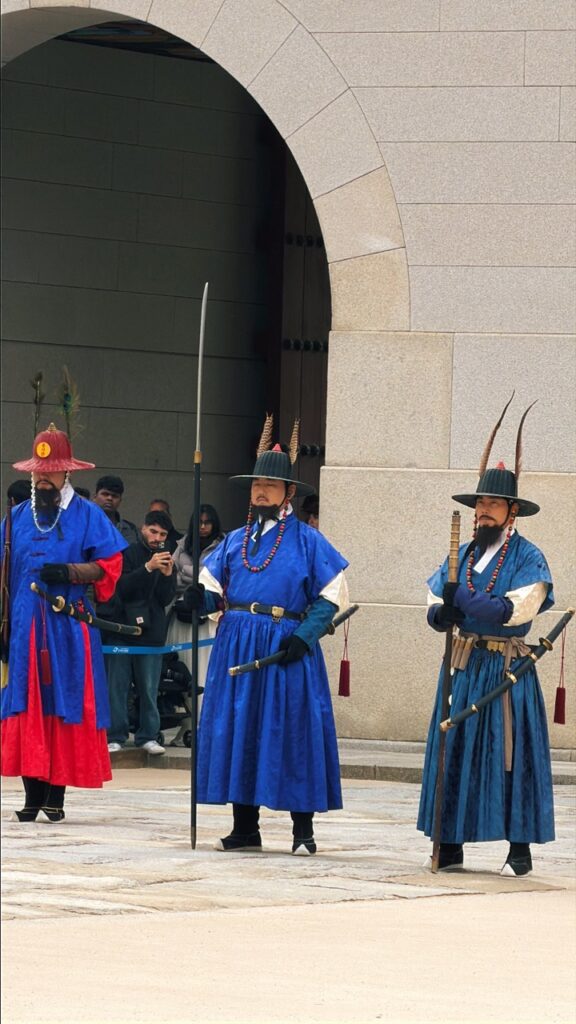
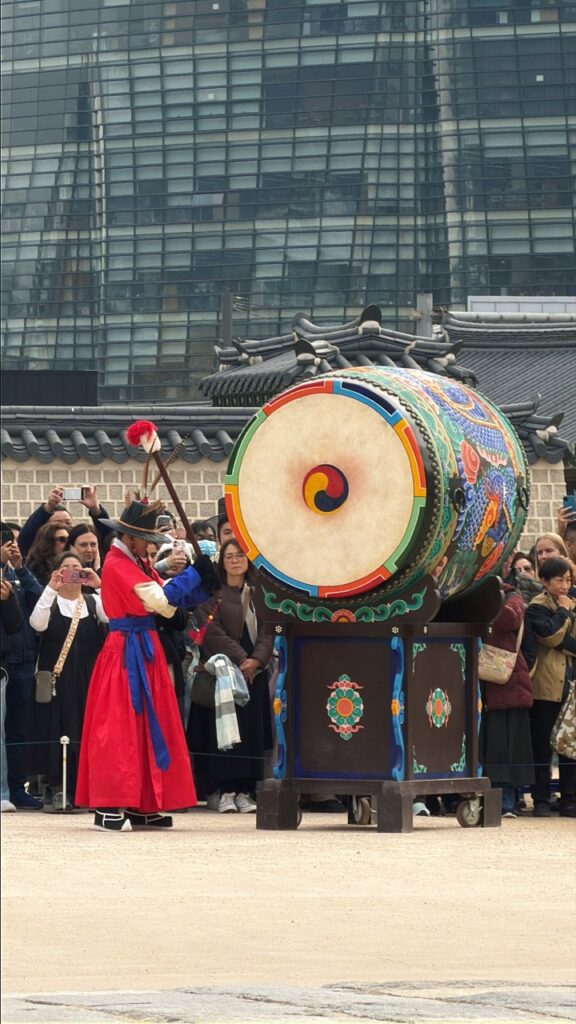
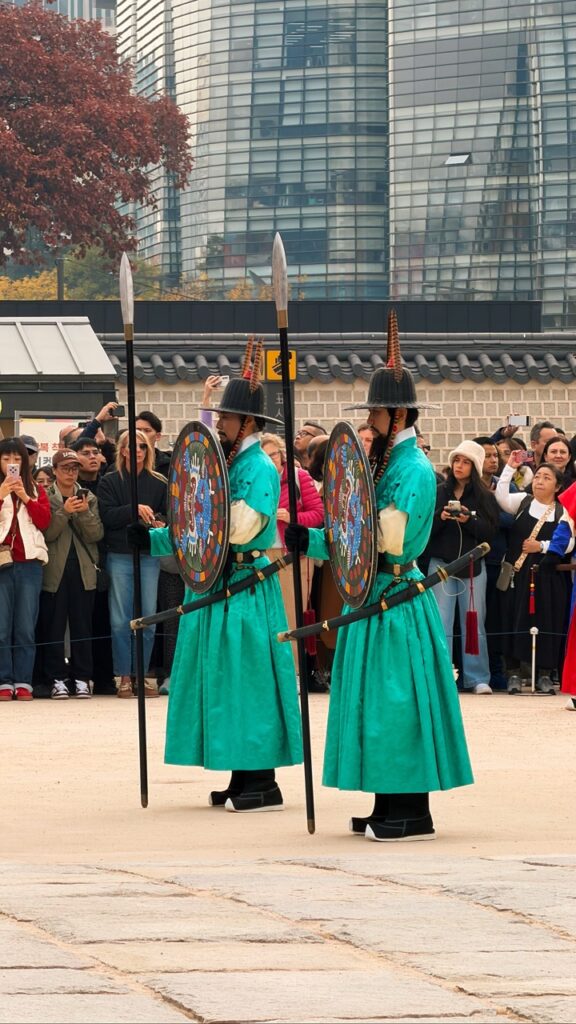
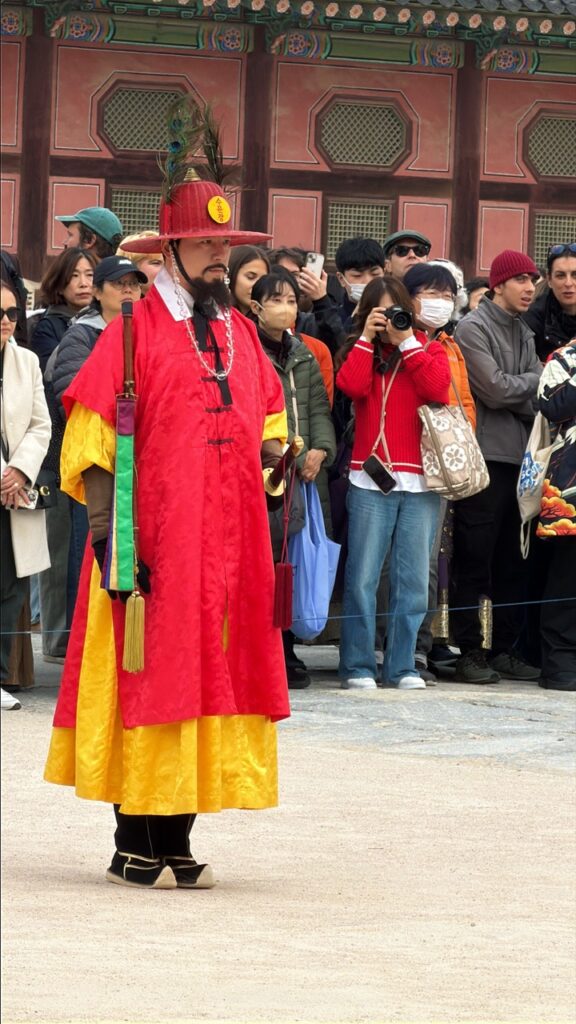
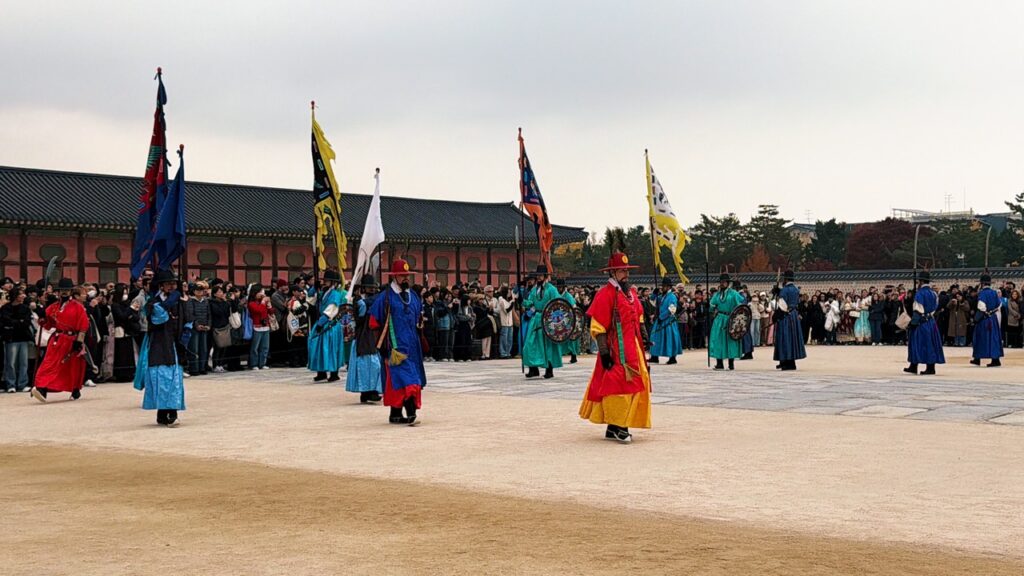
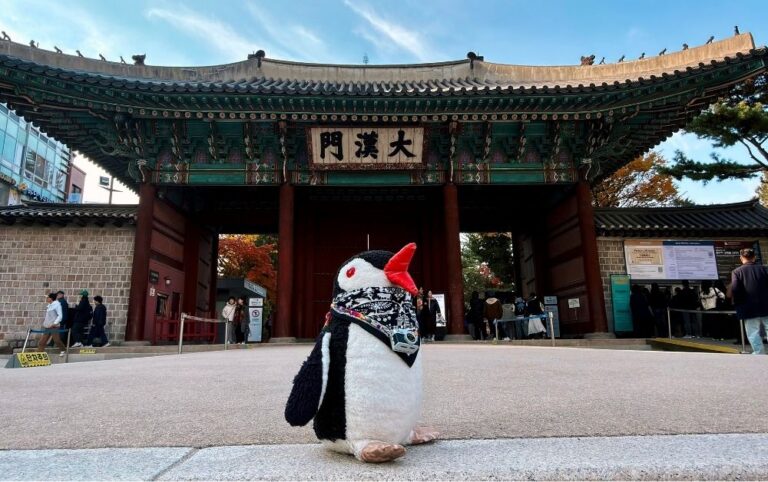
The Changing of the Guard takes place right in front of Gwanghwamun Gate, the main entrance of Gyeongbokgung Palace, so you cannot miss it when you arrive. Once the ceremony began, it was completely worth the wait. The guards marched in with bright uniforms, bold colours, drums, and traditional music that echoed across the courtyard. They were even more colourful than all the visitors in hanboks, and that says a lot. You can watch the Changing of the Guard at 10:00 AM and 2:00 PM, and if you can fit it into your itinerary, we highly recommend it. It adds a whole extra layer of life to the palace visit and makes the experience feel much more special.
Just before the end of the changing of the guard ceremony, we decided to enter the palace so we could avoid the big wave of people heading in all at once. Stepping inside felt a little bit royal on its own. As mentioned, if you wear a traditional hanbok, you get free entry, and there is even a separate entrance for visitors in hanboks compared to those with regular tickets. It makes you feel just a tiny bit special, like you have access to a secret shortcut. Plus, with dozens of people around us wearing hanbok too, it felt like we were all part of this colourful little club making our way into the palace together.
Basic Facts About Gyeongbokgung Palace at Glance
- Location: In northern Seoul’s Jongno district, right at the end of Sejong-daero, close to Gwanghwamun Square and Cheonggyecheon Stream.
- Mountain Behind the Palace: Bugaksan, the guardian mountain that gives the palace strong symbolic protection.
- Total Area: About 40 hectares (over 400,000 square meters), making it the largest of the Five Grand Palaces.
- Main Gate: Gwanghwamun Gate, the iconic three-arched entryway and the site of the changing of the guard ceremony.
- Throne Hall: Geunjeongjeon Hall, where official ceremonies and royal meetings were held.
- King’s and Queen’s Living Quarters: Gangnyeongjeon (King’s residence) and Gyotaejeon (Queen’s residence).
- Famous Pavilions:
- Gyeonghoeru Pavilion, a large palace pavilion standing on a lotus pond.
- Hyangwonjeong Pavilion is a small, picturesque pavilion on an island connected by a wooden bridge.
- Gardens: Spacious courtyards, lotus ponds, and traditional landscaped areas that change beautifully with each season.
- Museums Inside the Grounds: National Palace Museum of Korea, National Folk Museum of Korea
- The palace is divided into ceremonial areas, residential quarters, government offices, and gardens, arranged according to traditional Korean geomancy.

Buy Me a Ko-fi
Things to See Inside the Palace
Gwanghwamun Gate is the grand main entrance to Gyeongbokgung Palace and one of Seoul’s most recognizable landmarks. With its three arched doorways, traditional wooden pavilion, and stunning view of Bugaksan Mountain behind it, the gate sets the tone for the entire visit. It has been rebuilt several times throughout history due to invasions and occupation, but today it stands proudly restored in its original location and design. This is also where the changing of the guard ceremony takes place, so the gate is always full of life, colour, and that first spark of excitement before you step into the palace grounds. You can actually enter and see the ceremony without a ticket as the ticket gate is the next one.
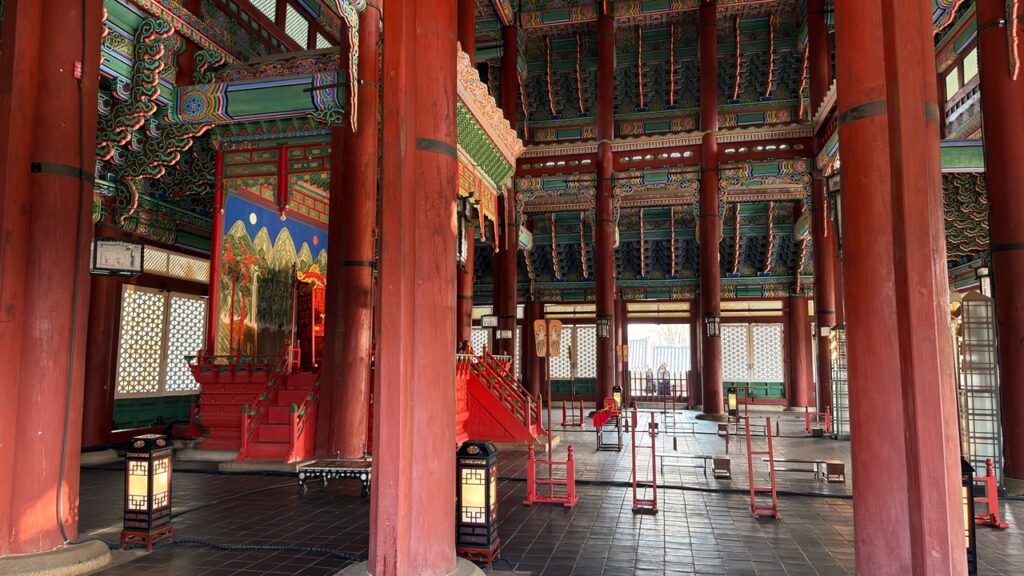
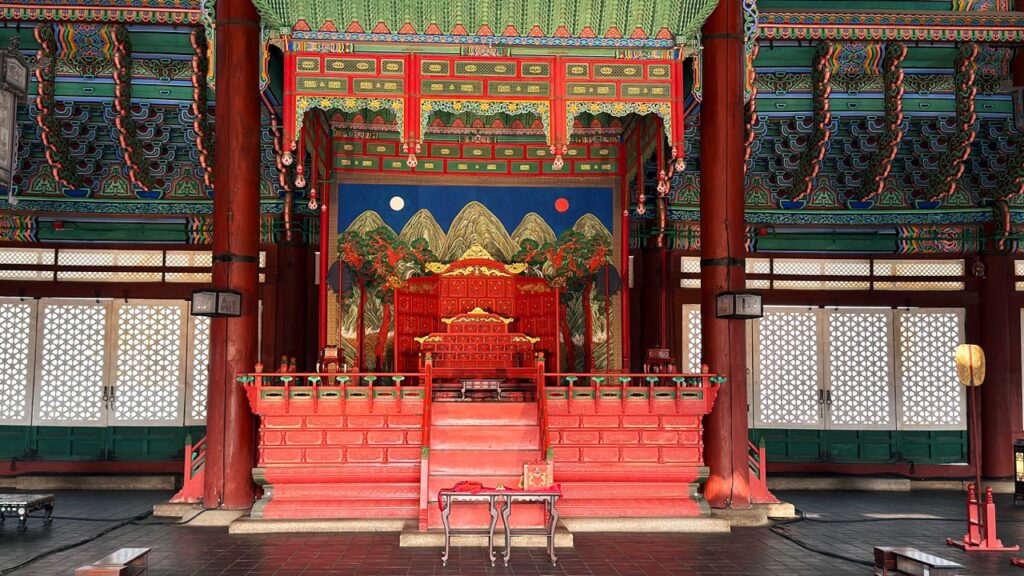
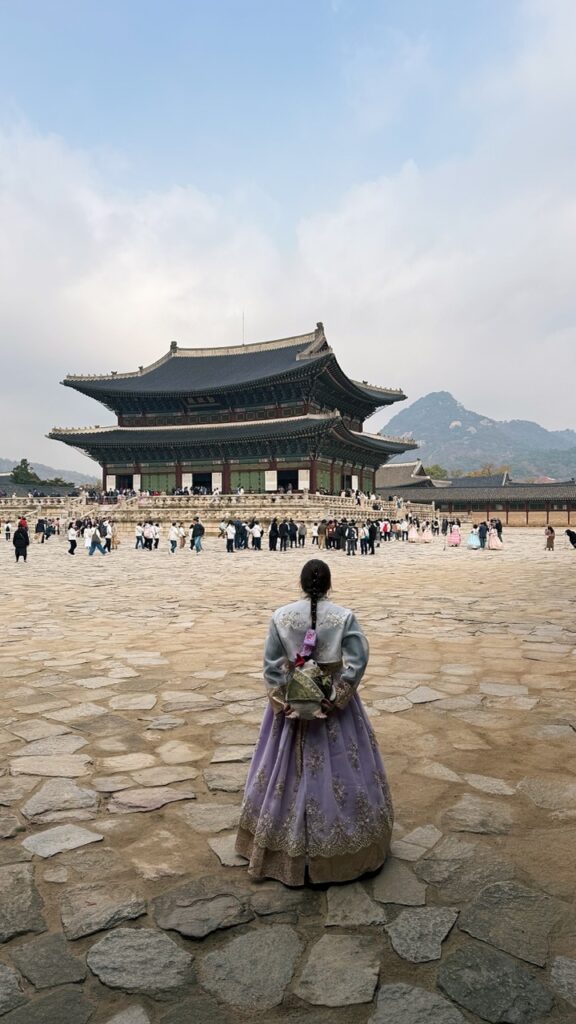
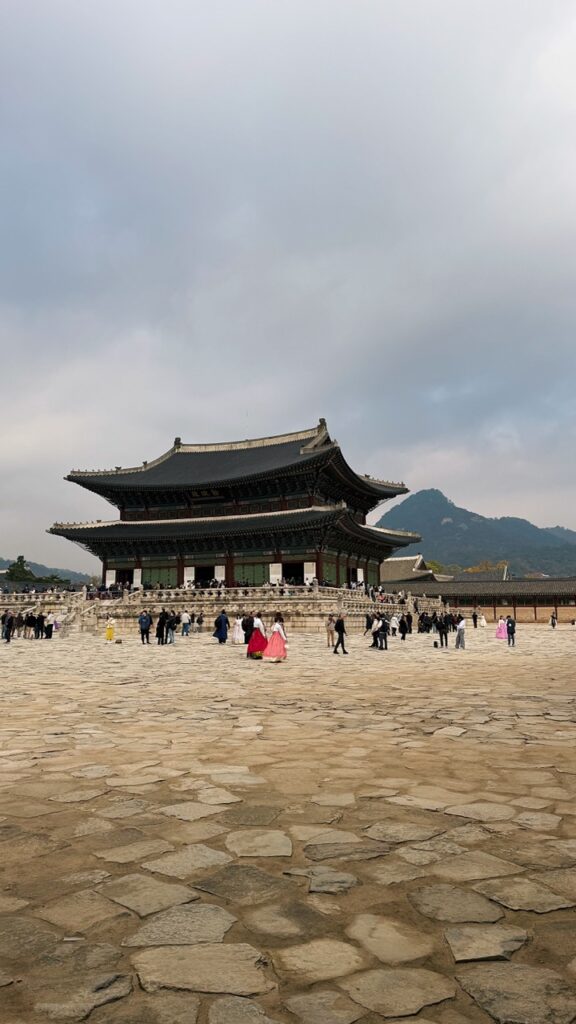
Geunjeongjeon Hall is the main throne hall of Gyeongbokgung Palace and the most important building in the entire complex. This is where the king held official ceremonies, greeted foreign envoys, and made key state decisions. The hall stands on a wide stone platform surrounded by rows of courtiers’ markers, which help you imagine exactly where everyone stood during royal events. Inside, you will spot the beautifully painted throne area with its famous Irworobongdo backdrop showing the sun, moon, and five mountain peaks. It is one of the most photographed spots in the palace and gives a real sense of what royal life and power looked like during the Joseon Dynasty.
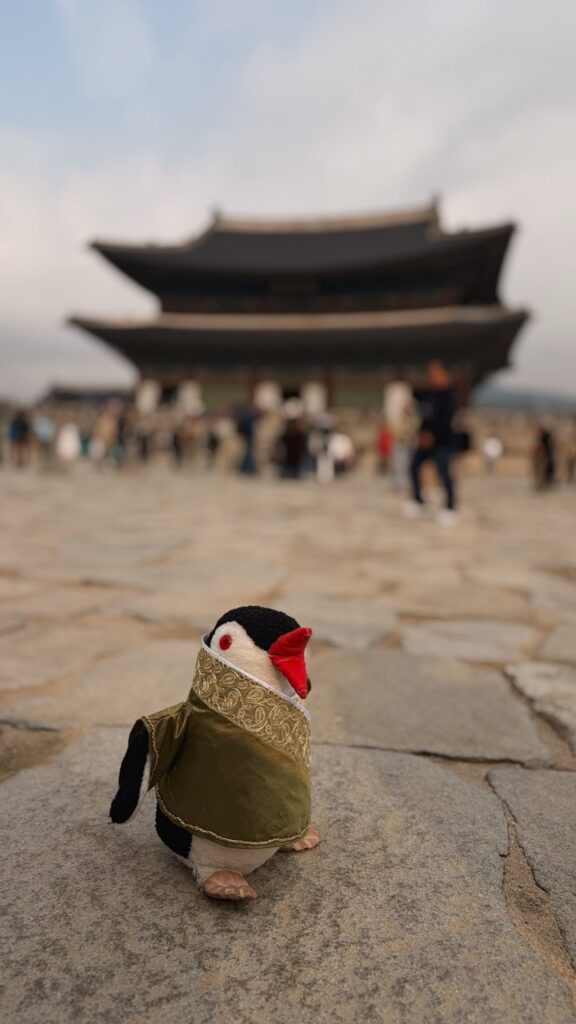
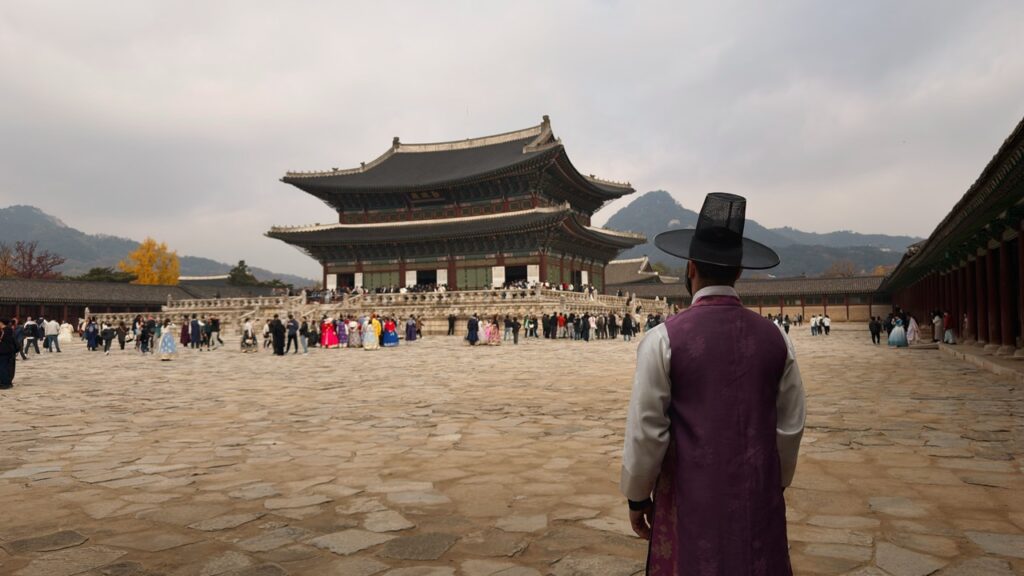
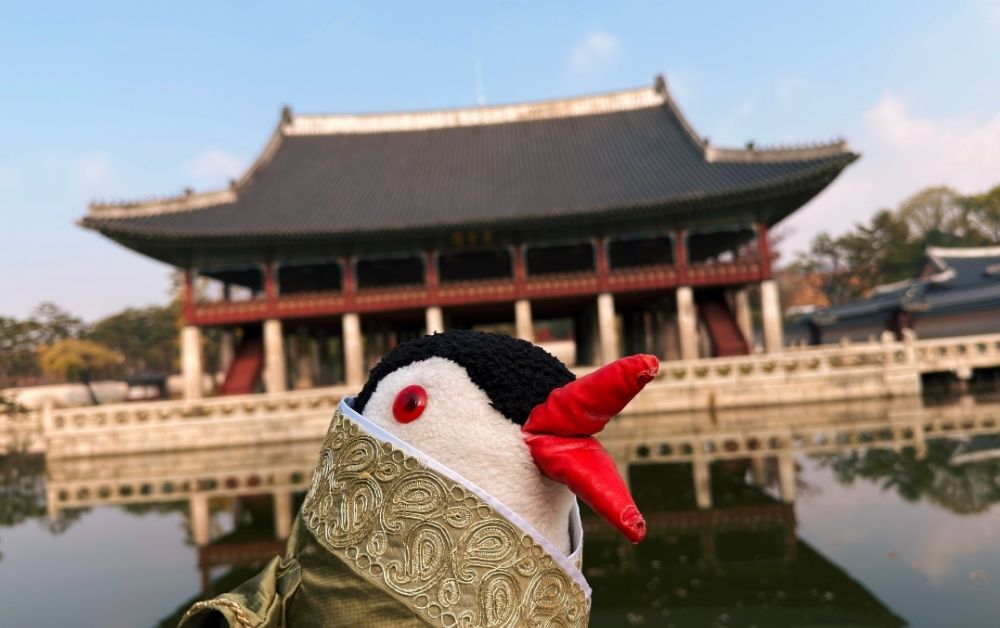
Gyeonghoeru Pavilion is one of the most iconic sights in Gyeongbokgung Palace, sitting on a large lotus pond supported by dozens of stone pillars. This was the royal banquet hall, where kings hosted important celebrations, diplomatic gatherings, and special events. With the water reflecting the structure and Bugaksan Mountain rising behind it, the whole area feels calm and majestic. It is one of the best spots for photos and a place where you naturally slow down to enjoy the view.


Hyangwonjeong Pavilion is the smaller, more intimate pavilion located on a tiny island connected by a charming wooden bridge. Built as a retreat for the royal family, it is surrounded by gardens that change beautifully with the seasons. In spring and autumn especially, the scene looks almost like a painting. The mix of water, trees, and the delicate pavilion makes it one of the most peaceful and romantic corners of the entire palace.


We also visited the National Palace Museum of Korea, which is right next to the main entrance of Gyeongbokgung Palace. It is a great place to step inside for a bit, especially if you want to learn more about the royal history, clothing, rituals, and everyday life of the Joseon Dynasty. The exhibits are well organised, calm, and easy to follow, even if you are not a history expert. And of course, we had to stop by the stamp station to add another stamp to our travel passport, a small thing, but always so satisfying on our trips.


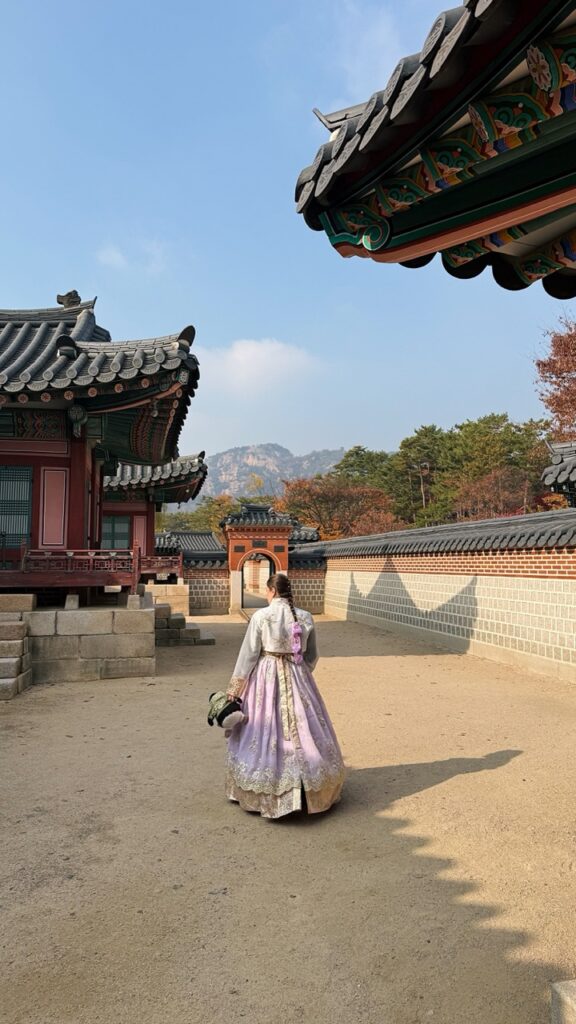
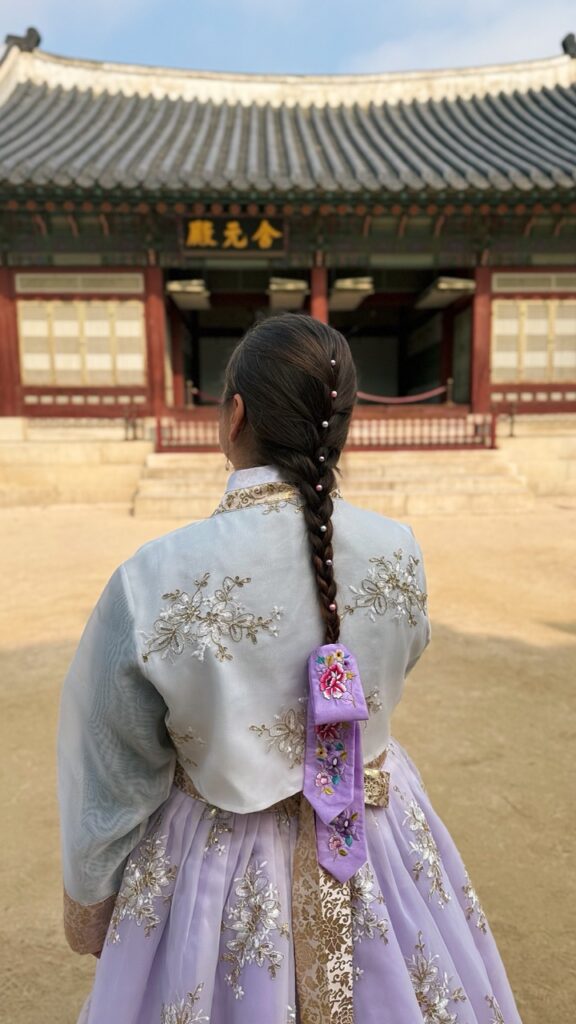
The palace grounds are really vast, and there is a lot to explore, but it was incredibly enjoyable to waddle around, especially in our hanboks. The whole place felt special, almost dreamy, and it is easily something we would recommend to anyone visiting Seoul. We also found several great photo spots along the way. You will see plenty of people waddling around in hanboks, posing at every corner, and even professional photographers shooting full-on sessions. But do not worry, it is absolutely manageable to get beautiful photos on your phone, too. The palace does most of the work for you.


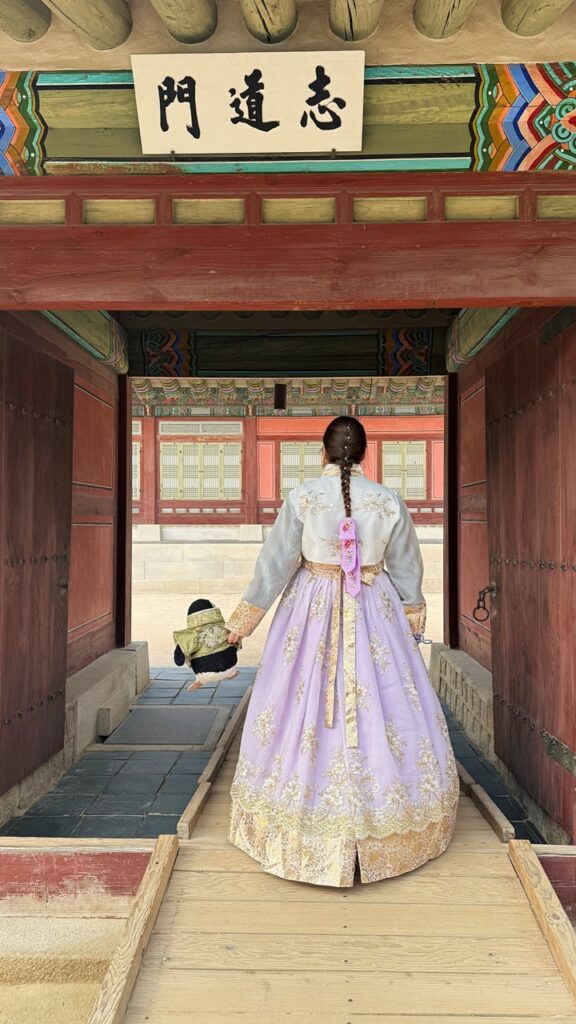
Wearing a hanbok felt magical in a way we did not expect. The colours, the flow of the fabric, and the way it moves when you waddle it make you feel a little royal, like you stepped into a different time. It is such a simple thing, but it adds so much to the experience. The moment you put it on, the palace feels more alive, and you feel like you are part of the story instead of just visiting it.
Popular Photo Spots Inside Gyeongbokgung Palace
- Gwanghwamun Gate. The grand entrance with the palace walls and Bugaksan Mountain in the background.
- Geunjeongjeon Hall. In front of the throne hall, with the stone markers and traditional patterns.
- Gyeonghoeru Pavilion. Reflections on the lotus pond with the pavilion behind you.
- Hyangwonjeong Pavilion. The small island pavilion with the wooden bridge is perfect in every season.
- Long palace corridors. Red pillars, repeating patterns, and perfect symmetry for cinematic shots.
- Stone bridges and open courtyards. Bright, open spaces grare eat for full hanbok photos.
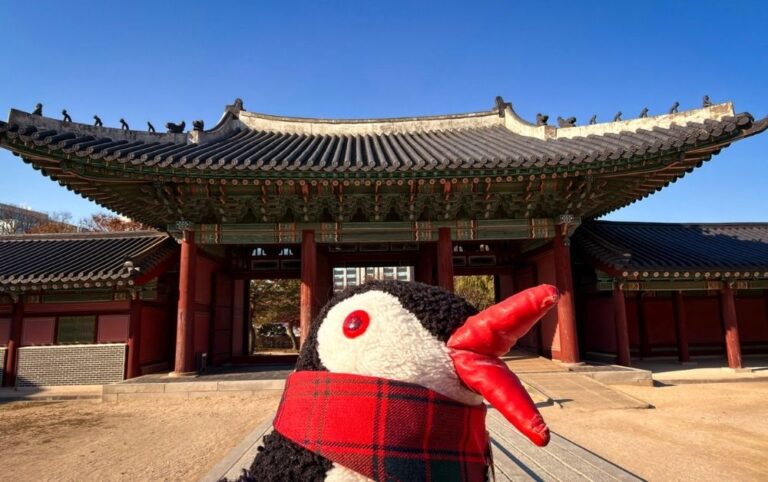
- Side gates and wooden doorways. Framed shots with colourful dancheong details.
- Garden paths. Especially in spring and autumn when the colours pop naturally.
Tours and tickets from KlookShows Klook’s own box, which can set Klook cookies.Tours and tickets in Seoul on KlookKlook’s box can’t load on this device (an ad blocker often stops it). This opens Klook’s own page.Open Klook
Next time, we would probably switch the order of our morning a little bit. Since the changing of the guard ceremony is free to watch and the palace entry is free when you wear a hanbok, we would first head straight to the ceremony and then rent a hanbok afterwards. I know there is a tiny bit of FOMO that the nicest hanboks might get taken, but honestly, there are so many options that you will still find something beautiful. We would also come a little earlier to enjoy the palace in softer morning light, because the colours and shadows make the photos even nicer and the courtyards feel extra calm before the crowds arrive.


How Much Time Do You Need for Gyeongbokgung Palace
As always, it depends on you, but below is some guidance for your planning.
- Fast visit (1 to 1.5 hours): Waddle through the main gates, see the throne hall, explore a few courtyards, and catch a quick view of the pavilions. Good if you are on a tight schedule.
- Regular visit (2 to 3 hours): Enough time to wander at a comfortable pace, see the key halls, enjoy the gardens, watch the changing of the guard, and take a few photos along the way.
- Slow visit with hanbok photos (3 to 4 hours): Perfect if you want to fully enjoy the experience, take lots of hanbok photos at different spots, explore side paths, and visit the museums inside the palace grounds. This option feels the most relaxed and immersive.
We stayed for about two and a half, almost three hours, and that felt just right for us. We had our hanboks, took plenty of photos, waddled around the courtyards, and explored all the spots we wanted to see without rushing. For a casual visit, this amount of time was perfect. But if you book a professional photo shoot, your visit might take a bit longer, since photographers usually lead you through multiple locations and wait for the best light and moments. It all depends on how much you want to capture and how slow you want your royal morning to be.
Accessibility and Facilities
- Restrooms. Several clean restrooms are throughout the palace grounds, including some with accessible stalls.
- Shaded areas. Long corridors, pavilions, and garden spots offer shade and a place to rest on sunny days.
- Stroller-friendly paths. Most major walkways are flat and wide, making it easy for families to move around.
- Water fountains. Available near selected rest areas for a quick drink.
- Gift shop. Small souvenir shops near the entrance and by the museums, perfect for postcards and small gifts.
- Wheelchair access. Main sections of the palace are accessible, though some historical areas have steps or uneven surfaces.
- English signage. Helpful maps and explanations throughout the palace for easy self-guided exploring.
- Nearby food options. Plenty of cafés and restaurants around the palace for a break before or after your visit.
Pro Penguin Tips
- Where to avoid crowds. Head to the back gardens and the side pavilions after visiting the main throne hall. Most tour groups stay near the central courtyards, so the further you wander, the quieter and calmer it gets.
- What to bring. Bring a small bottle of water, sunscreen in warmer months, and a portable power bank for all the photos you will take. A light scarf or layers help in cooler seasons, especially if you visit in the morning.
- Weather notes. Seoul’s weather changes quickly. Summers are hot and humid, winters are cold, and spring and autumn can shift fast. Check the forecast before you visit and dress in comfortable layers so you can adjust easily.
- Comfort tips for waddling. The palace grounds are huge, so wear comfortable shoes, even if you are in hanbok. Many hanbok rentals offer soft inner shoes, but your own sneakers or flats are much better for long walks and exploring every corner.
Gyeongbokgung Palace is beautiful, historic, calm, and full of little details that make you slow down and appreciate where you are. Whether you visit in a hanbok or not, the palace gives you a glimpse into Korea’s royal past in a way that feels both grand and personal. It is absolutely worth visiting if you are in Seoul.
We also recommend combining your palace visit with a wander through Bukchon Hanok Village or Samcheong-dong, both just a short waddle away. These neighbourhoods are perfect for cafés, shops, traditional houses, and slow strolls that match the palace’s vibe.
Take your time, enjoy the courtyards, breathe in the history, and waddle through it all at your own pace. That is the best way to experience Gyeongbokgung.
Put a hanbok on and travel back in time, waddling around Gyeongbokgung Palace.

This post contains affiliate links. If you click and buy, I might earn a tiny commission, enough to help a penguin keep up its globe-trotting lifestyle. No extra cost to you, just more fish for me. Thank you for supporting the adventure!