Tiananmen Square: Facts, History, and Travel Tips for First-Time Visitors
Before heading into the Forbidden City, we made a quick stop at Tiananmen Square, or at least, that was the plan. We honestly didn’t know what to expect, except that it’s big. Turns out, “big” doesn’t even begin to cover it. The moment we waddled in, we were surrounded by people from every direction, tour groups with matching hats, and the occasional flag waving in the air. It’s one of those places that makes you feel tiny yet completely fascinated, a square so vast and full of history that you can’t help but pause and take it all in before moving on to the next adventure. Read on to learn how to prepare for your adventure.
- How to Get to Tiananmen Square
- Entering Tiananmen Square: Smile, You’re on (Many) Cameras
- Practical Information: Opening Hours & Entrance Fee
- History & Facts About Tiananmen Square
- How Long to Spend at Tiananmen Square
- Best Time to Visit Tiananmen Square
- Our Evening Waddle Around the Square
- Interesting Facts About Tiananmen Square
- Is Tiananmen Square Worth Visiting
- Practical Things You Shouldn’t Forget
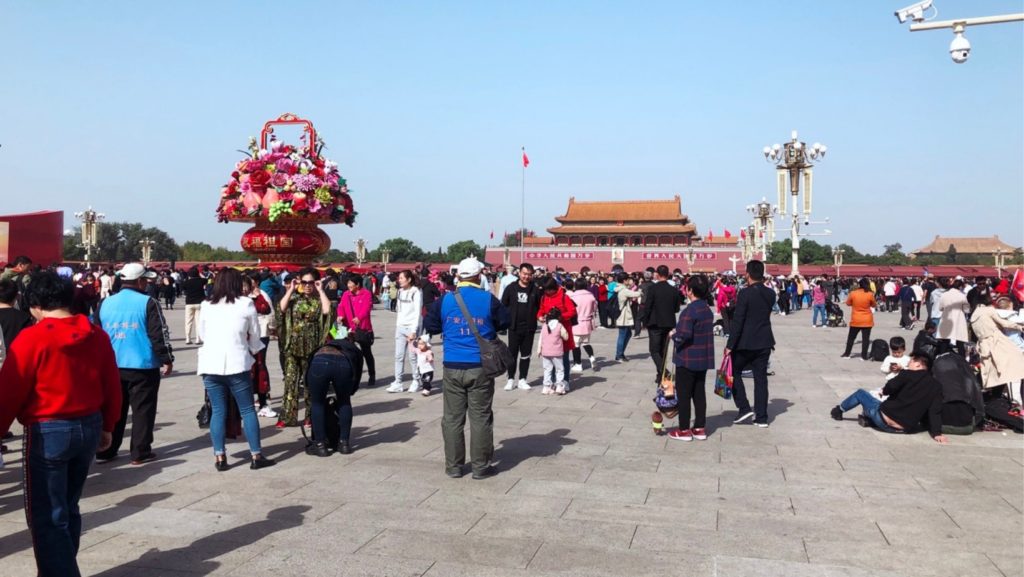
How to Get to Tiananmen Square
Reaching Tiananmen Square is super easy thanks to Beijing’s excellent metro system. The square is situated right in the heart of the city, surrounded by major attractions such as the Forbidden City and the National Museum of China.
- By Metro. Line 1 (Red): Beijing’s busiest metro line runs directly along the north side of the square. You can access it via Tiananmen East (Dong) or Tiananmen West (Xi) stations, both located on W Chang’an Avenue. The Tiananmen East stop is the closest if you’re coming from the Wangfujing shopping district — it’s just one stop away. Line 2 (Blue): Take this line to Qianmen Station, which sits on the south end of the square.
- By Bus. Numerous city buses stop nearby — look for routes heading toward Qianmen or Tiananmen stops.
- Waddling. If you’re visiting the Forbidden City, Mao Zedong Memorial Hall, or Zhongshan Park, you can easily walk to the square in just a few minutes.
Pro Penguin Tip
Arrive early in the morning or just before sunset. The crowds thin out a little, and the light for photos is much softer (plus, it’s cooler if you’re visiting in summer!).
Tours and tickets from KlookShows Klook’s own box, which can set Klook cookies.Tours and tickets in Beijing on KlookKlook’s box can’t load on this device (an ad blocker often stops it). This opens Klook’s own page.Open Klook
Entering Tiananmen Square: Smile, You’re on (Many) Cameras
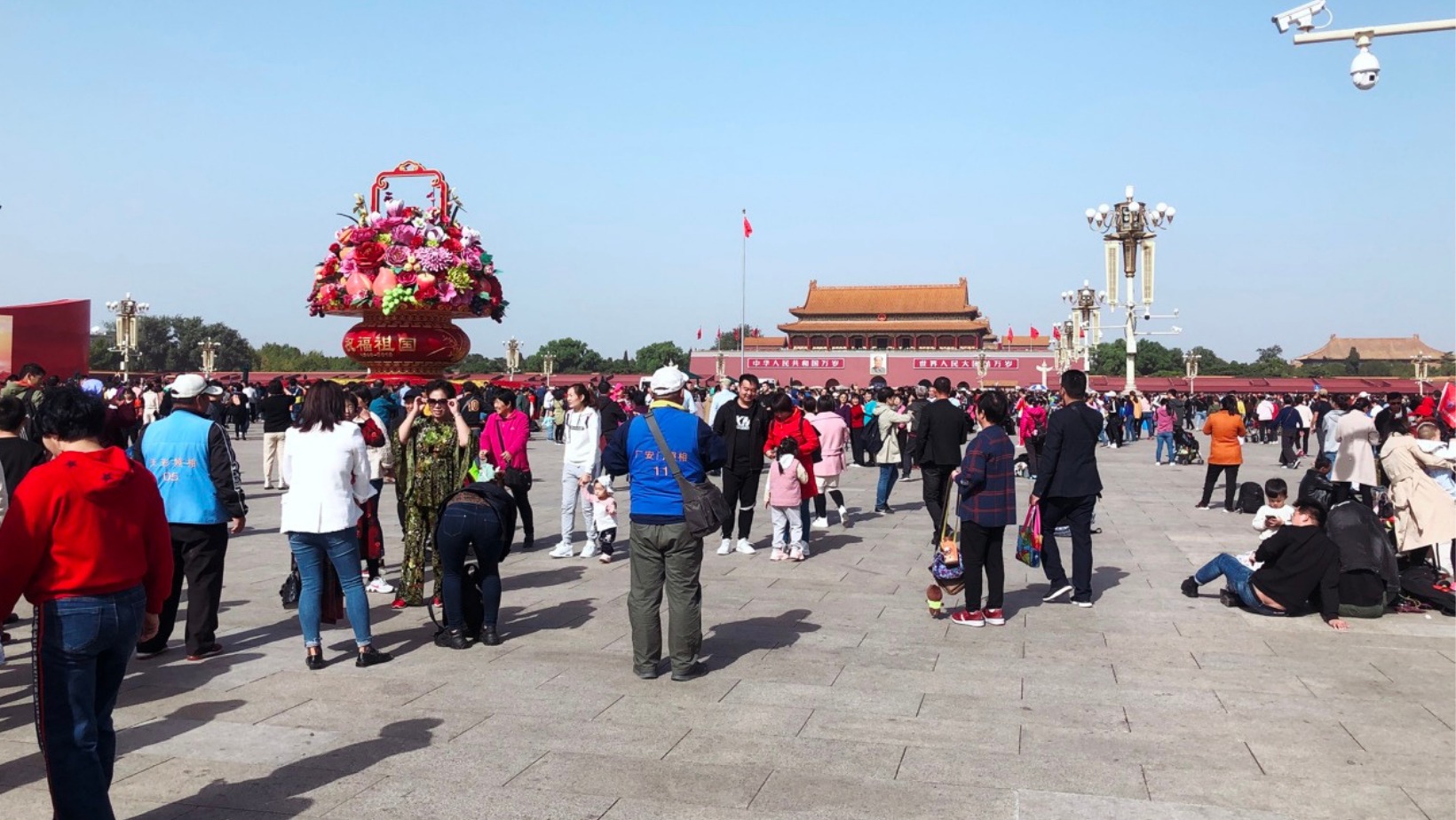
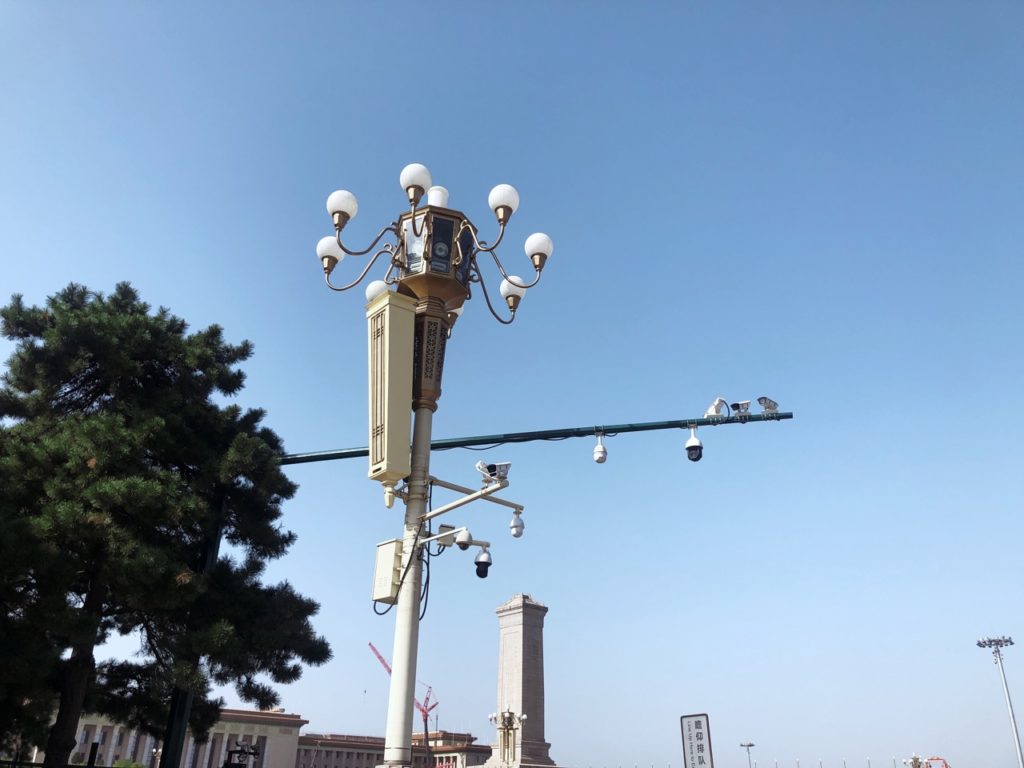
Before stepping onto Tiananmen Square, be ready for a bit of a process and a lot of cameras. 😄 Every entrance has a security checkpoint with metal detectors and bag scanners, and you’ll likely need to show your ID or passport, so don’t leave it behind at the hotel. When we visited, they mostly checked that we had valid visas. Once inside, it’s hard not to notice how closely the area is monitored; there are cameras everywhere, sometimes several mounted on the same pole. It’s all part of the experience, and honestly, after a while, you just smile and wave, you’re officially on Beijing’s most-watched square!
Practical Information: Opening Hours & Entrance Fee
Tiananmen Square may be a public space, but it does have official opening hours and controlled security access. The square is open daily from around 5:00 AM to 10:00 PM, though exact times may vary slightly depending on the season or special events. The flag-raising ceremony at sunrise and flag-lowering at sunset are the most popular times to visit, often drawing large crowds.
There’s no entrance fee to waddle around the square itself. However, suppose you plan to enter specific attractions located on or around it, such as the Mausoleum of Mao Zedong or the National Museum of China. In that case, those have separate entry fees and schedules. Please remember to bring your passport or ID, as you’ll need it to pass through security checkpoints and for access to ticketed sites.
Can you take photos in Tiananmen Square
Yes, you can freely take photos around Tiananmen Square; it’s a popular spot for both locals and tourists. However, be mindful of where you point your camera. Avoid photographing security personnel, checkpoints, or government buildings, as this can draw unwanted attention or even lead to your photos being deleted. Stick to capturing the landmarks, atmosphere, and flag ceremony, and you’ll have no issues snapping those memorable shots.
History & Facts About Tiananmen Square
- Symbol of State Power. Tiananmen Square stands as one of China’s most important political and cultural landmarks, a symbol of the nation’s state power and unity.
- Imperial Origins. The square takes its name from the Tiananmen Gate (“Gate of Heavenly Peace”), originally built in 1417 during the Ming Dynasty as the main ceremonial entrance to the Imperial City.
- Although its origins date back centuries, Tiananmen Square was expanded to four times its original size in 1651 during the Ming Dynasty, and later fully paved in 1958 under Mao Zedong’s leadership, giving it the monumental appearance it has today.
- Modern Expansion. The square was enlarged in the 1950s under the direction of Mao Zedong to host massive public gatherings and national ceremonies.
- World’s Largest Public Square. Covering 400,000 square meters (880 meters long and 500 meters wide), it can hold up to one million people, making it one of the largest squares in the world.
- Key Monuments. Notable landmarks include the Monument to the People’s Heroes, the Mao Zedong Memorial Hall, and the Great Hall of the People.
- Historic Events. Tiananmen Square has been the site of numerous major events in Chinese history, from the proclamation of the People’s Republic of China in 1949 to large-scale parades and political demonstrations.
- Cultural Recognition. In 1987, it was declared part of the UNESCO World Heritage site connected with the Forbidden City, recognizing its cultural and historical significance.
- Flag Ceremony Tradition. Every day at sunrise and sunset, crowds gather to watch the raising and lowering of the Chinese national flag, performed by soldiers from the People’s Liberation Army.
As a symbol of state power, Tiananmen Square has long been the stage for military parades, national celebrations, and political events. Yet, it is also remembered for one of the most defining moments in China’s modern history. During the spring of 1989, students and citizens gathered here to call for faster social and economic reforms, hoping for change and greater openness. What began as a peaceful protest turned tragic on the night of June 3–4, 1989, when the army was sent in to suppress the demonstrations. The military opened fire on the crowd, resulting in hundreds of deaths, a moment that shocked the world. One image became an enduring symbol of courage: the “Tank Man,” a lone protester standing in front of a line of tanks, holding only two shopping bags, refusing to move.
How Long to Spend at Tiananmen Square
You don’t need an entire day to explore Tiananmen Square, but it’s worth giving yourself at least 1 to 2 hours to truly take it in. The square itself is enormous, and just waddling across it can take some time, especially with security checks and the crowds. If you plan to visit nearby landmarks such as the Mausoleum of Mao Zedong, the Monument to the People’s Heroes, or the National Museum of China, add another hour or two. We recommend arriving early in the morning or late in the afternoon when the temperatures (and crowds) are more manageable, and you can catch the flag-raising or lowering ceremony, which is one of the most moving moments to witness here.
Best Time to Visit Tiananmen Square
The best time to visit Tiananmen Square is early in the morning or around sunset. Arriving just before sunrise allows you to witness the flag-raising ceremony, a poignant and patriotic moment as soldiers march in perfect formation while the national anthem plays. Sunset is equally special, the crowds begin to thin, the light turns golden, and the square feels calmer and more reflective. In terms of seasons, spring (April–May) and autumn (September–October) offer the most pleasant weather, with mild temperatures and clear skies, making it perfect for exploring both the square and nearby attractions like the Forbidden City.
Note: Avoid wearing clothing with political messages or symbols (for example, “Free Tibet” shirts) when visiting Tiananmen Square. It’s also best to skip any attire featuring religious imagery or references to death, as these can draw unwanted attention and are considered inappropriate in such a politically sensitive and highly monitored area.
Our Evening Waddle Around the Square
We arrived at Tiananmen Square around 6:30 PM, just in time to catch the evening buzz and the queues. Before even stepping onto the square, we underwent a series of strict security checks, which included ID and visa verification. It felt a bit like an airport line, just outdoors and with a lot more people. Despite the process, the atmosphere was surprisingly calm. Families, tourists, and locals all moved patiently through the checkpoints, everyone eager to reach the vast open space ahead. Once inside, the crowd spread out across the enormous square, and we couldn’t help but feel small among the sea of visitors, cameras, and flags fluttering in the warm Beijing evening.
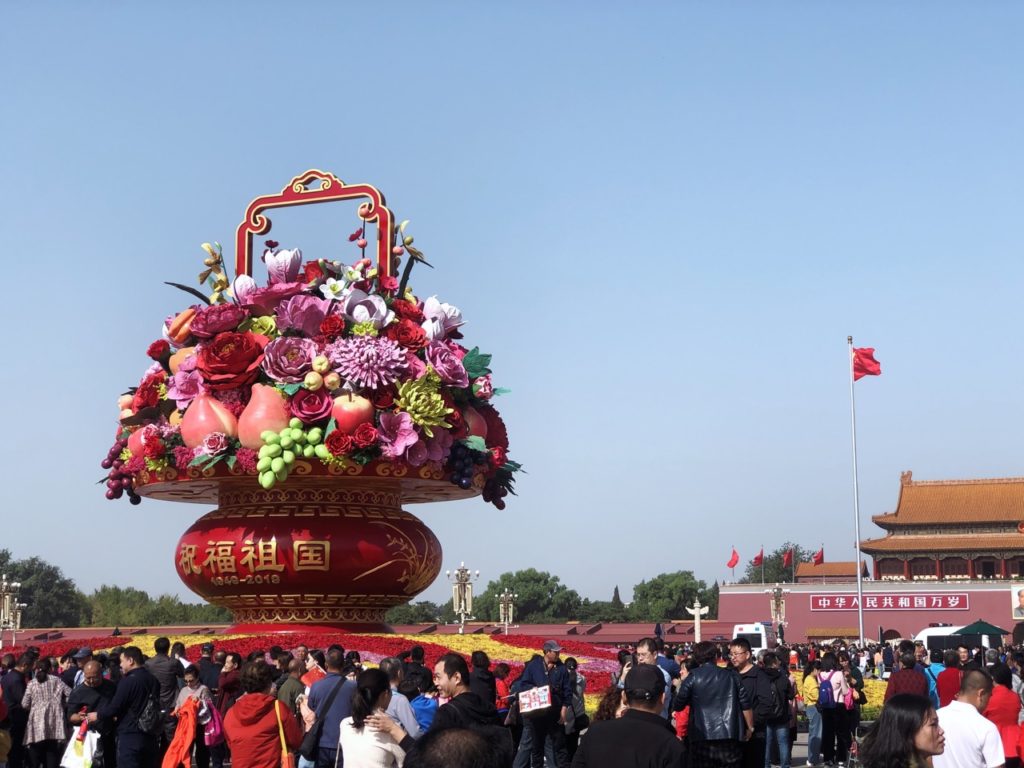
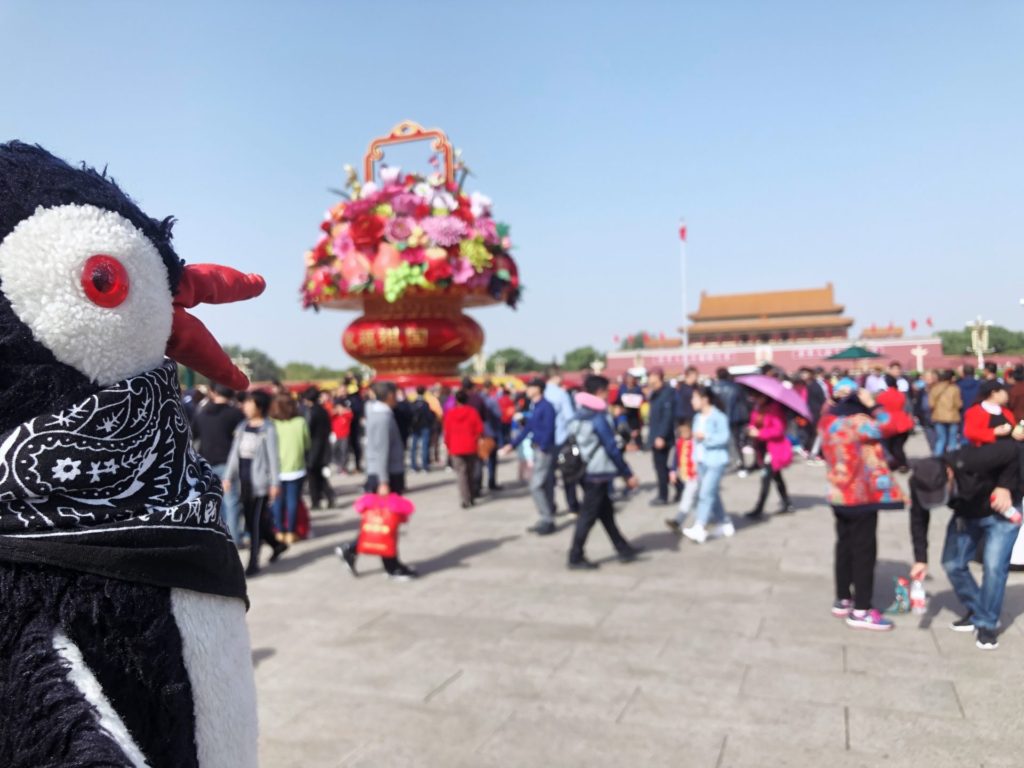
We happened to visit during China’s 70th anniversary of the founding of the People’s Republic, and the entire square was dressed for the occasion. Giant red banners, patriotic displays, and a massive floral arrangement, the famous “giant flower pot stood at the center, overflowing with bright blooms and national symbols. The atmosphere was festive yet orderly, with visitors taking photos, families strolling together, and security keeping everything perfectly in sync. It felt like being part of a living celebration of China’s modern identity, right in the heart of its most symbolic square.
Interesting Facts About Tiananmen Square
- It’s HUGE! The square covers 400,000 square meters, which is big enough to fit over 55 football fields. Plenty of space for a penguin waddle (or two).
- Crowd Central. On a regular day, tens of thousands of people visit. During national holidays or parades, it can hold up to one million visitors at once!
- Name with Meaning. “Tiananmen” translates to the Gate of Heavenly Peace, which sounds just as poetic as it looks.
- Selfie Spot Alert. It’s surrounded by iconic landmarks like the Forbidden City, Mao Zedong Memorial Hall, and the Great Hall of the People.
- Daily Flag Ceremony. Every sunrise and sunset, soldiers from the People’s Liberation Army march in for a precise flag-raising or lowering; it’s one of the most popular moments to see.
- Center of Beijing. The square sits right in the middle of the city, making it the perfect starting point for exploring the capital.
Tours and tickets from GetYourGuideShows GetYourGuide’s own box, which can set GetYourGuide cookies.
When You Become the Tourist Attraction
Tiananmen Square isn’t just popular with international tourists; it’s a favorite destination for people from all over China, too. As some of the few non-Chinese faces around, we quickly found ourselves in a funny situation. A friendly local asked for a photo with us, which was sweet, until a few more joined in. Within minutes, there was a small line forming, and suddenly we were part of the attraction! It’s all in good fun, and everyone means well, but be warned, once you start posing, it can feel like you’re taking pictures with the whole square. Take a few shots, smile politely, then waddle away before it turns into a full photo session. 😅
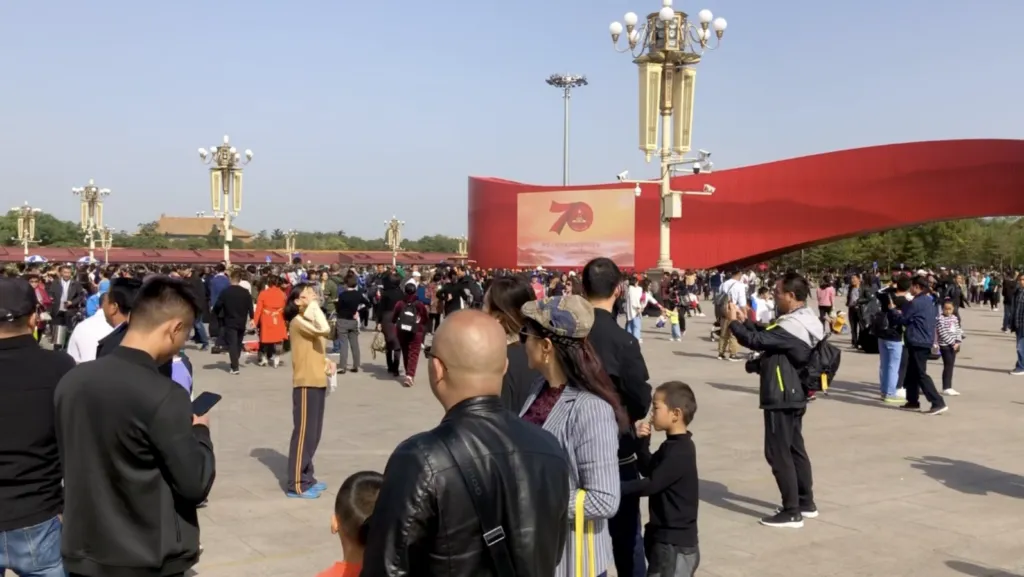
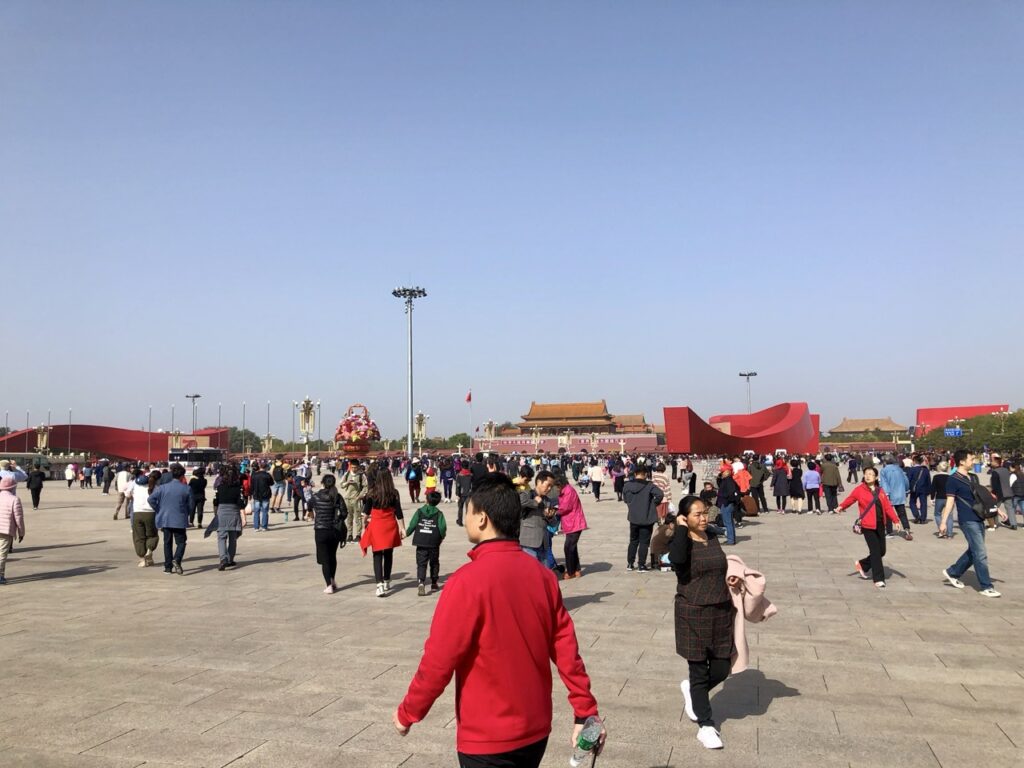
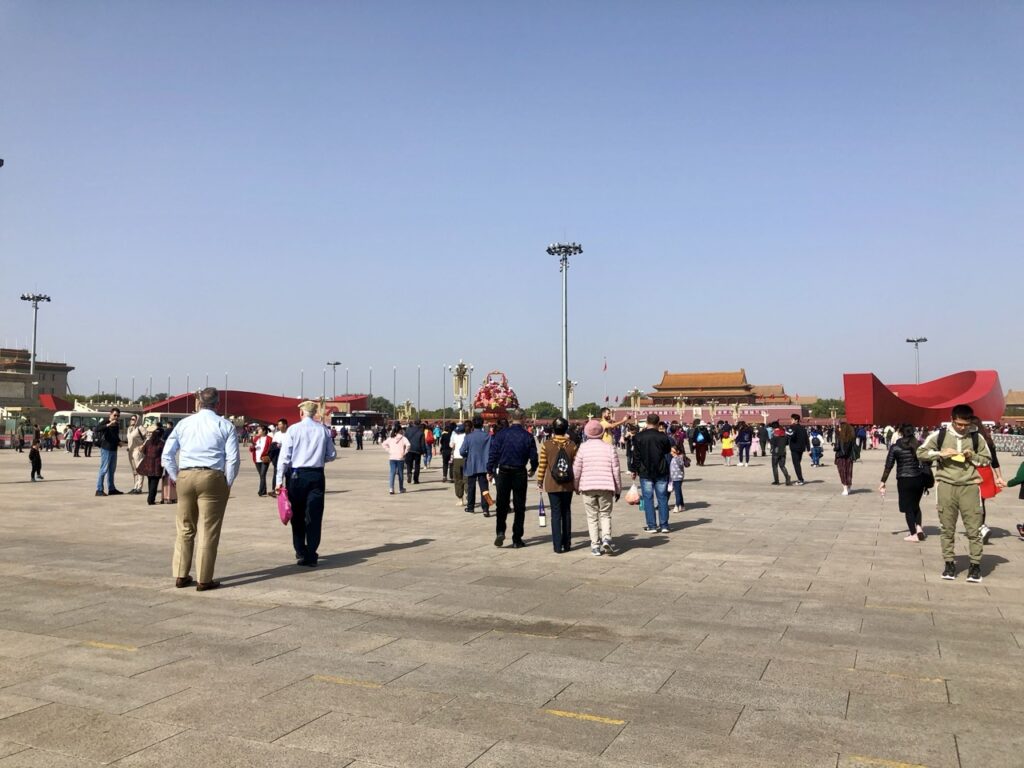
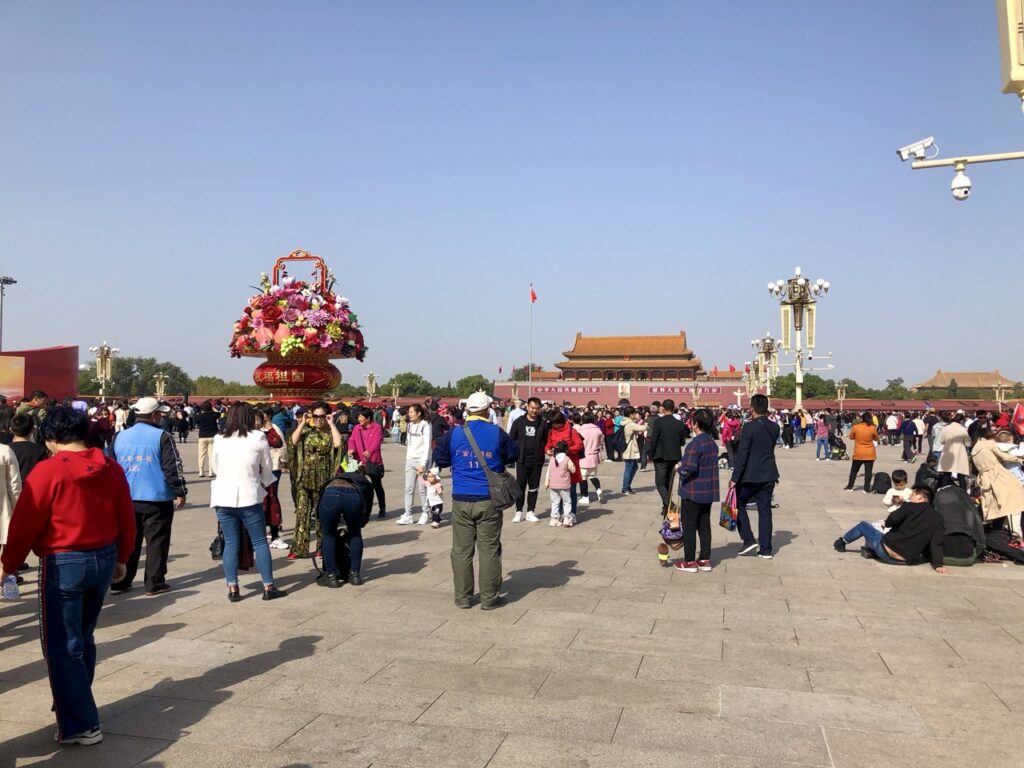
Be prepared, walking around Tiananmen Square in summer can get incredibly hot. With no trees or shade anywhere, the sun beats down relentlessly, so make sure to bring a hat, sunglasses, and plenty of water. There are no shops or toilets directly inside the square, but you’ll find several facilities and convenience stores around its perimeter. If you think you might get thirsty, buy water before entering. Once you’re inside, it’s a long (and sunny) waddle to the nearest drink.
Is Tiananmen Square Worth Visiting
Yes. Tiananmen Square is worth it, even if just for the experience of standing in one of the most historically and politically significant places in the world. The sheer scale of the square is jaw-dropping, and the atmosphere feels both grand and humbling. You’ll find yourself surrounded by monumental architecture, symbols of modern China, and a mix of visitors from every corner of the country. It’s not a spot where you linger for hours, but it’s one you shouldn’t skip, especially if you’re already visiting the Forbidden City nearby. Go for the history, the energy, and that surreal feeling of being in the very heart of Beijing.
Practical Things You Shouldn’t Forget
- Passport or ID. Required for all security checks, you won’t get in without it.
- Water. There are no shops inside the square, so buy a bottle before entering.
- Hat or Umbrella. The area has no shade, and the summer sun can be intense.
- Comfortable Shoes. The square is enormous, expect lots of walking.
- Cash or Payment App. Useful for nearby kiosks, metro tickets, or small snacks.
- Sunscreen. The open space means full exposure to the sun all day.
- Camera or Phone. To capture the moment, just remember that some areas may have restrictions on what you can photograph.
Tiananmen Square is a place that captures China’s history and spirit in one vast space. Standing there, surrounded by monuments and people, we felt the weight of the past and the pulse of modern Beijing. It’s not a long visit, but it’s one that truly stays with you.

This post contains affiliate links. If you click and buy, I might earn a tiny commission, enough to help a penguin keep up its globe-trotting lifestyle. No extra cost to you, just more fish for me. Thank you for supporting the adventure!