Things to See in Alghero: A Complete Guide to the City’s Best Attractions
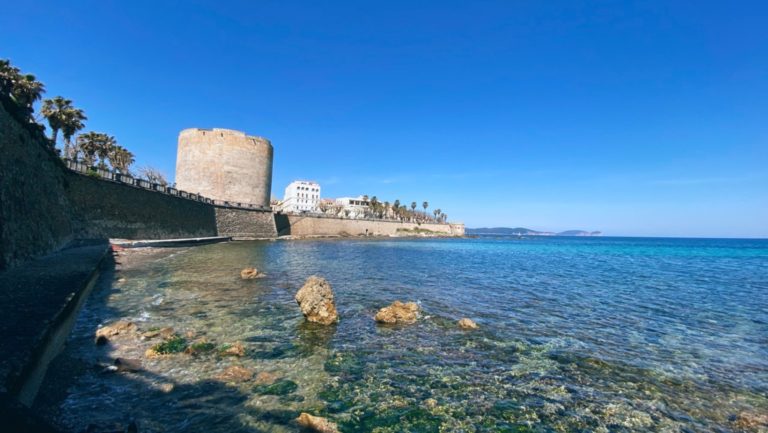
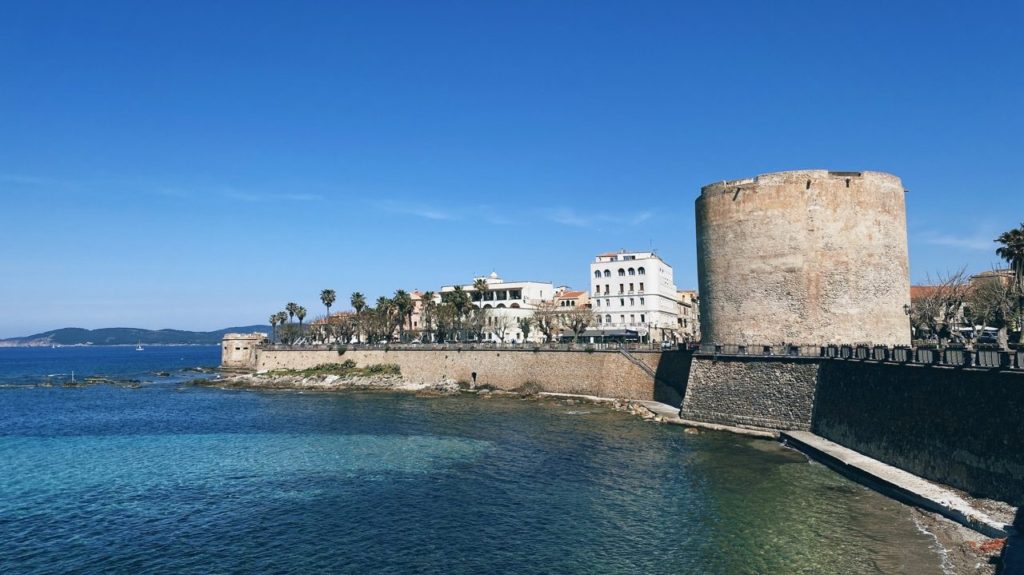
Alghero is one of those destinations that seems to have it all — sightseeing, adventure, and delicious food. As you waddle through the city, you catch the salty sea breeze drifting through narrow historic streets, with the sound of waves never far away. The old town is still protected by its impressive 16th-century walls, also known as bastions, which stretch from Porta a Mare to the Sulis Tower and frame the city’s coastline.
Sardinia had been on our travel wish list for a long time, but once we spotted a direct flight to Alghero, the decision was made. After spending a couple of days exploring the city on foot (lots of waddling involved), we quickly realised how much there is to see and experience here. Below, we share what you should not miss when visiting Alghero, and at the end, you will also find our itinerary with top restaurant suggestions to help you plan your own trip.
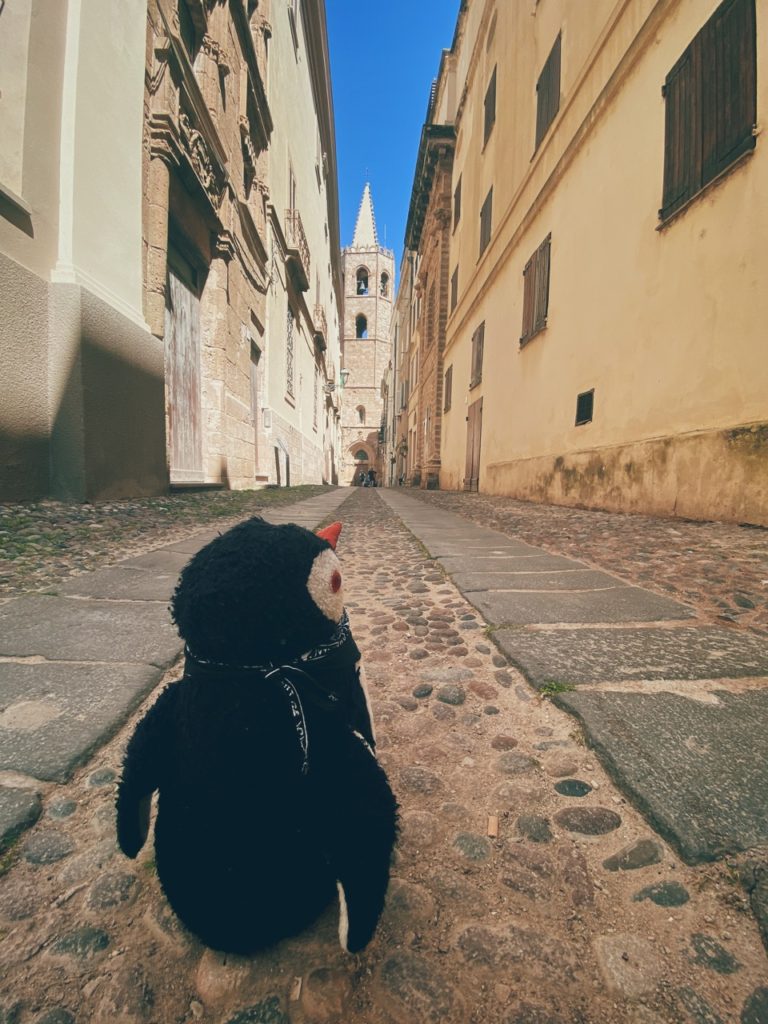
Alghero has a rich and layered history, with the first settlements dating back to the Neolithic Age. During the Late Neolithic period, several domus de janas (rock-cut tombs) were created in the surrounding area. Later, the Bronze Age left its mark in the form of nuraghi, the iconic stone towers of Sardinia, some of which can still be seen not far from Alghero today. Over the centuries, numerous civilisations have come and gone, each leaving traces that have shaped the city’s unique cultural and historical identity.
Waddle Around the Historic Center
Alghero’s historic centre is something you simply cannot miss and absolutely have to waddle around. It is the very first thing we recommend doing after you arrive, drop your bags and head straight out for a wander. Exploring the old town offers a truly unique experience and is the best way to get a feel for the city.
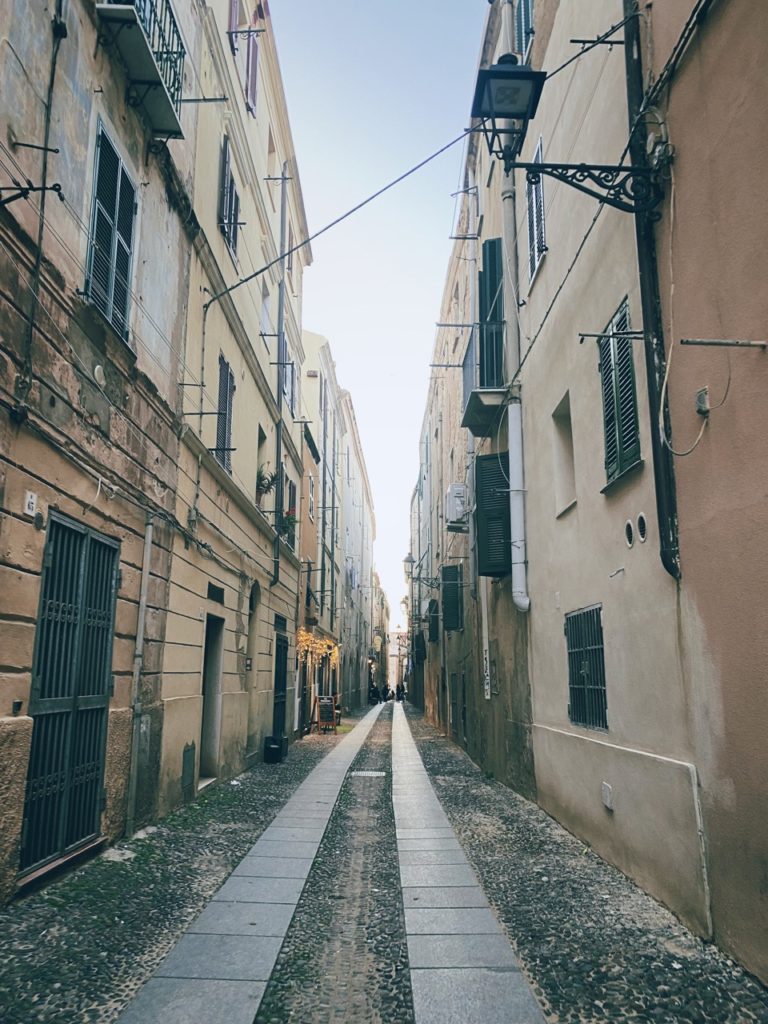
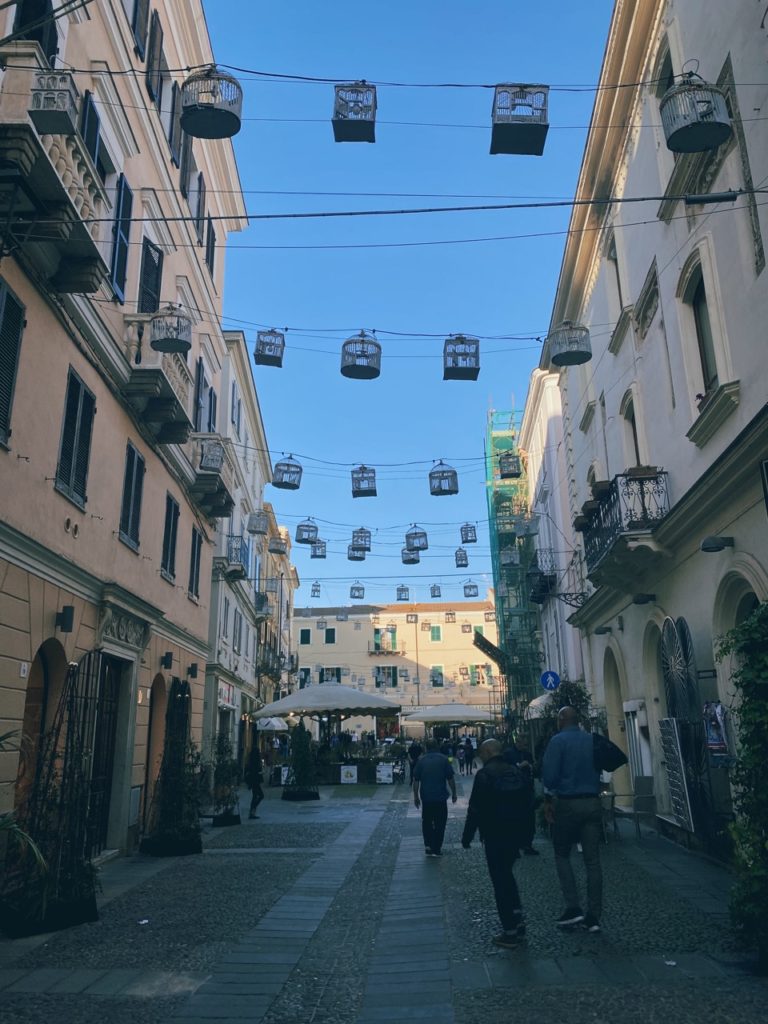
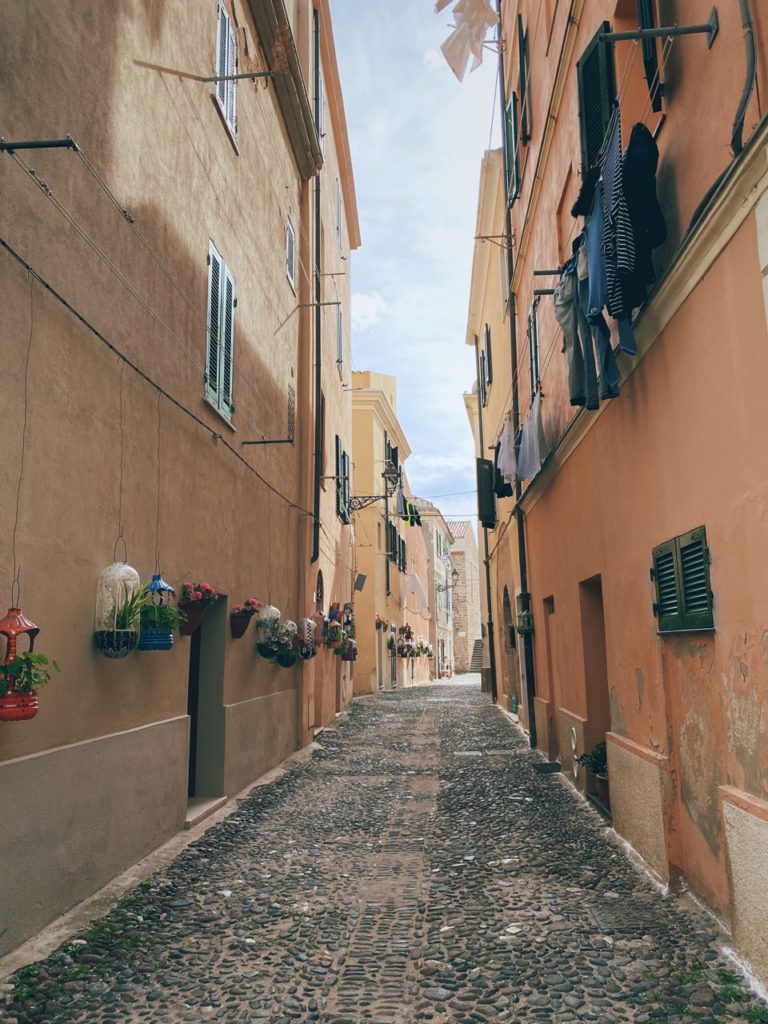
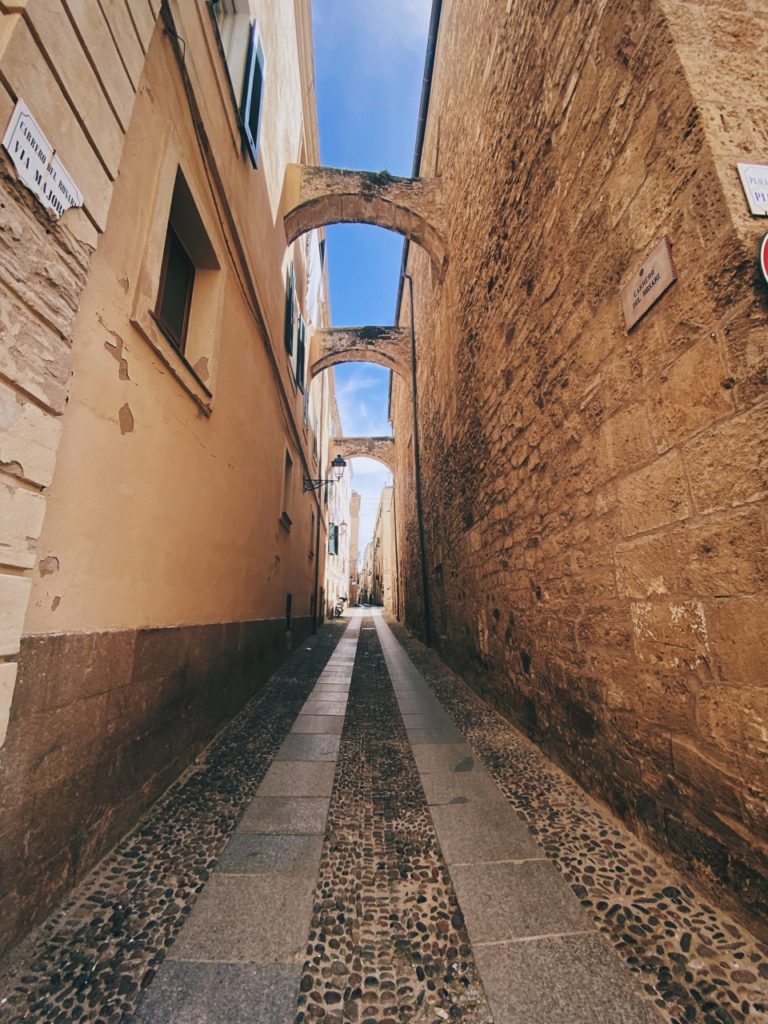
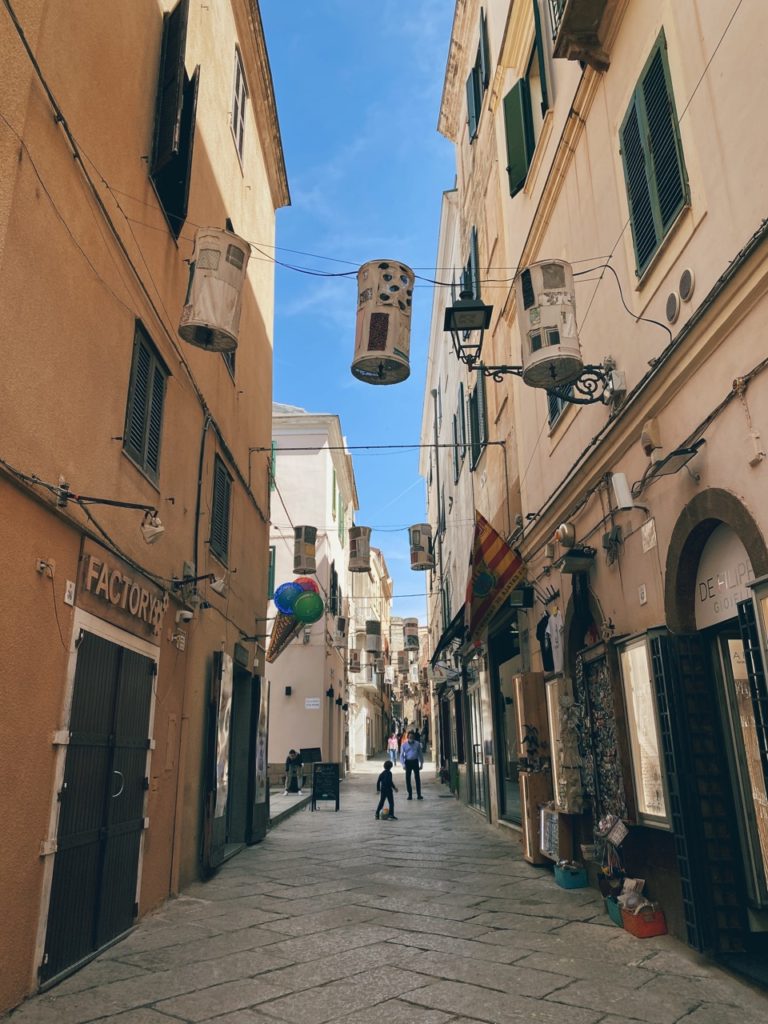
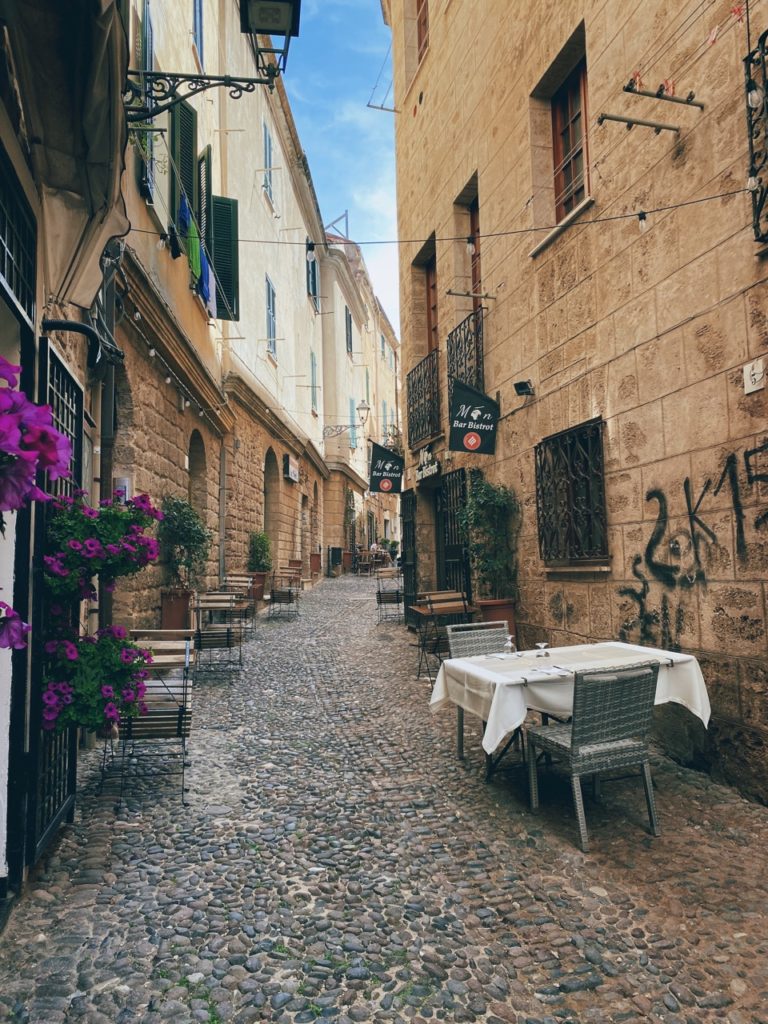
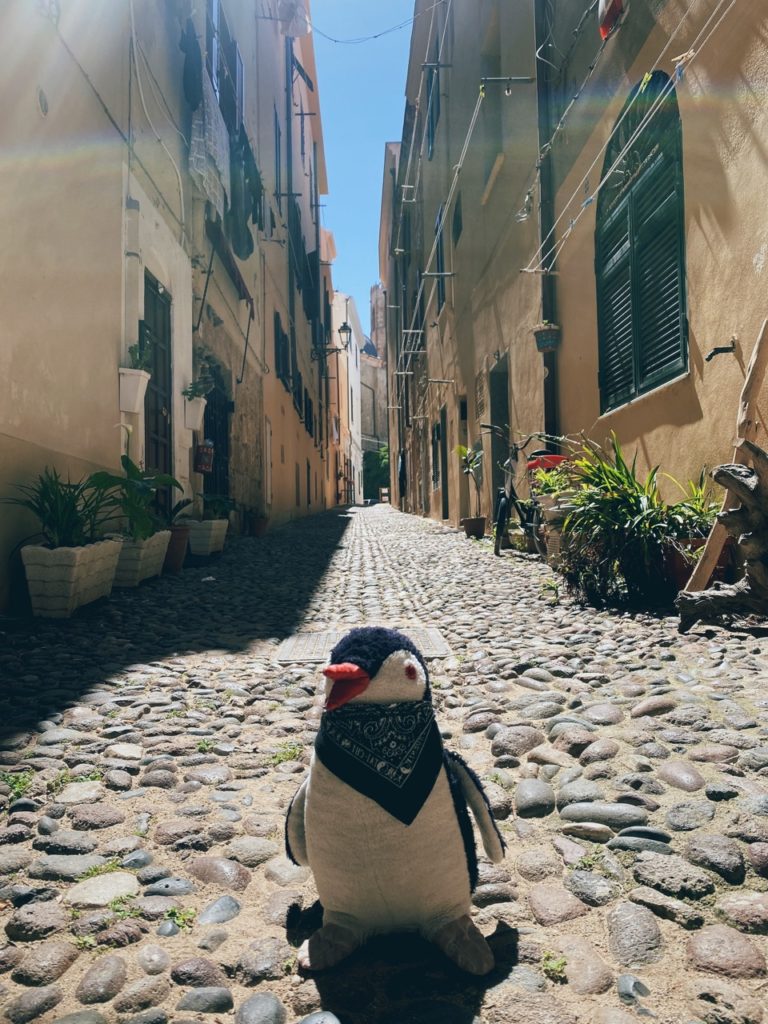
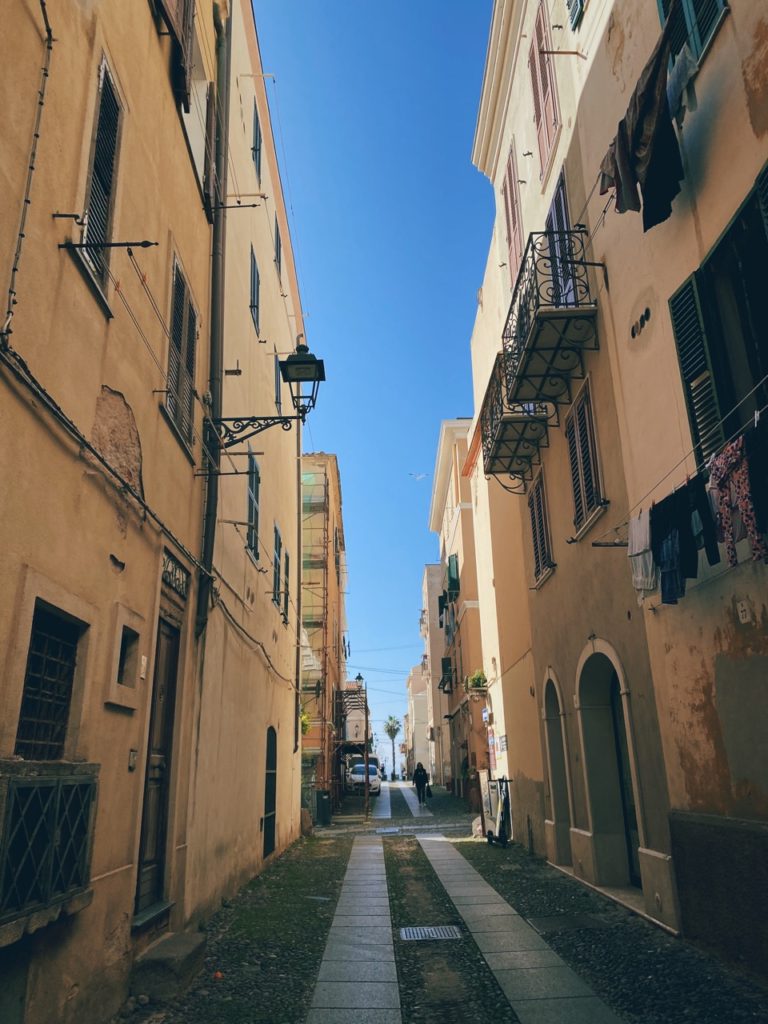
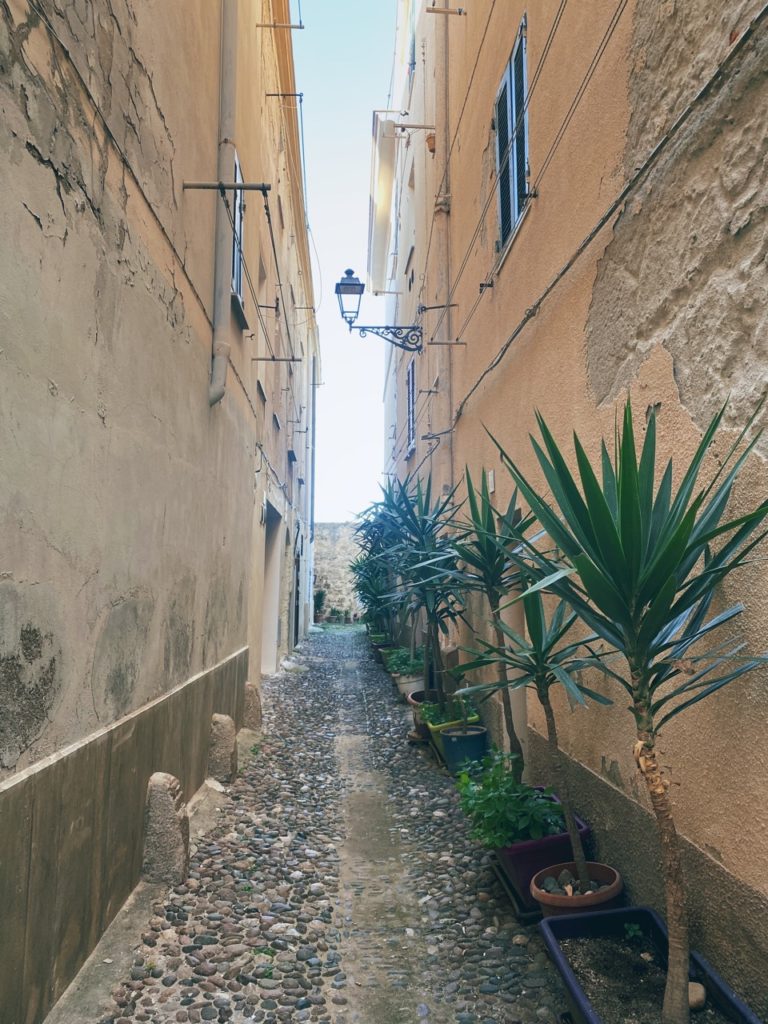
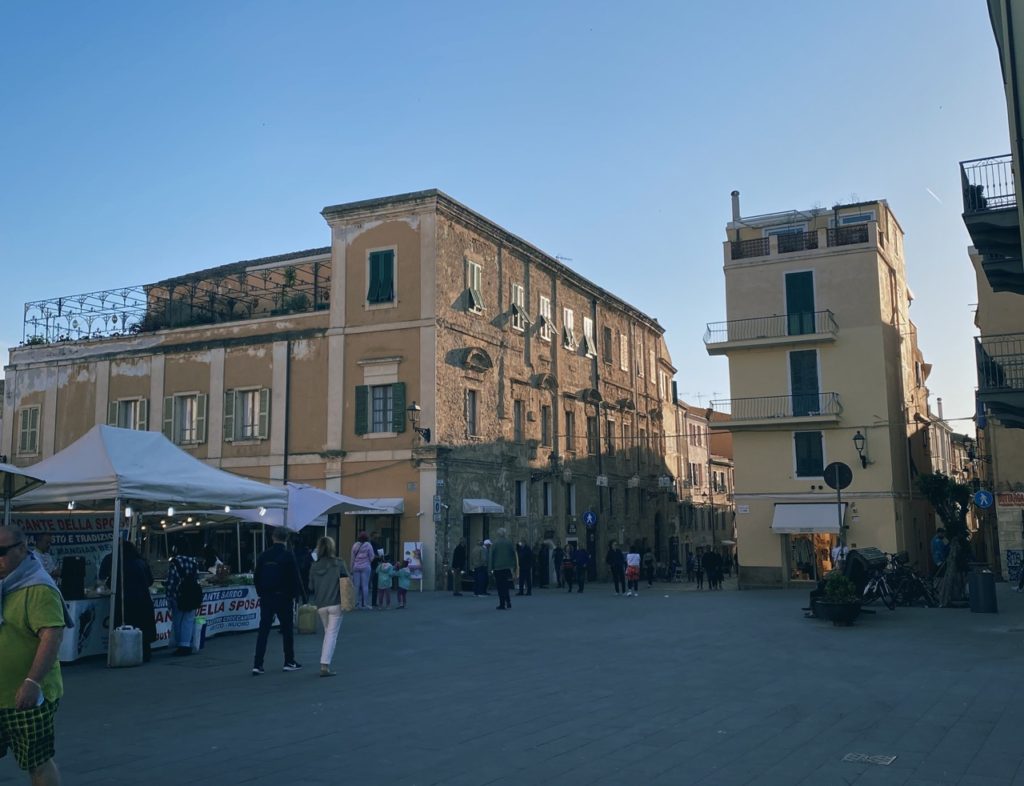
As you explore, you will come across the name Alguer Vella, the local name for Alghero’s historic centre. This area welcomes you with cobbled, narrow streets, buildings in the Catalan-Aragonese style, and a layout still within the old city walls. The historic centre is full of life. You will find a cathedral, small museums, gelato shops, boutiques, restaurants, wine bars, and plenty of local shops selling typical products, including the famous red coral jewellery for which Alghero is known.
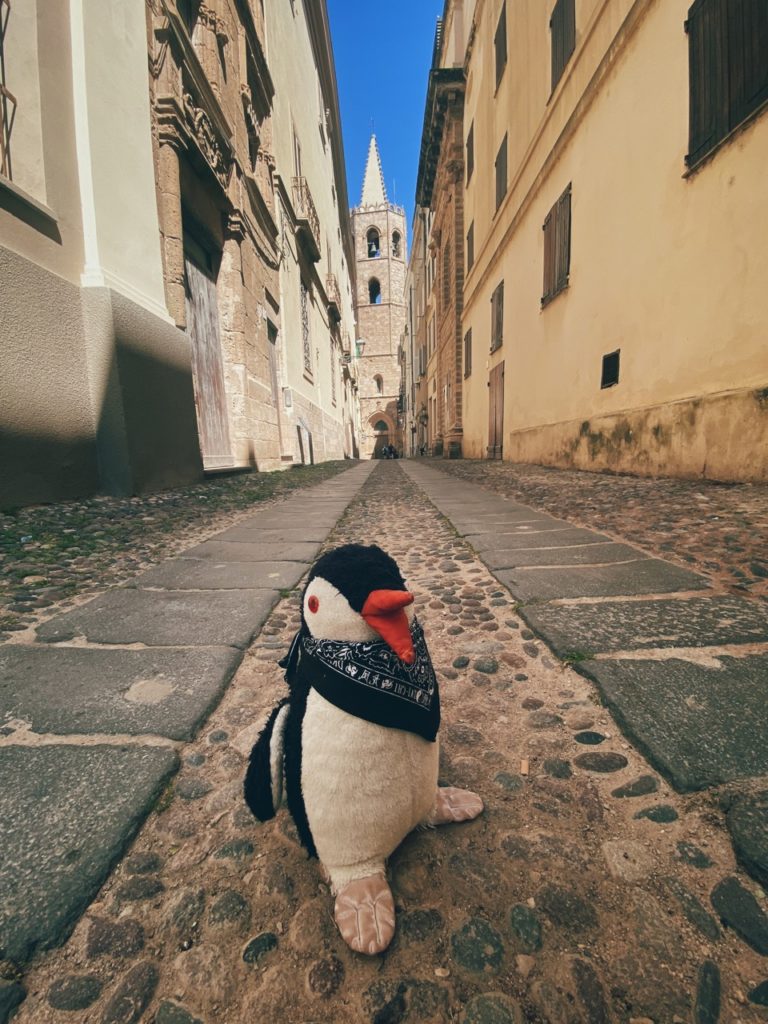
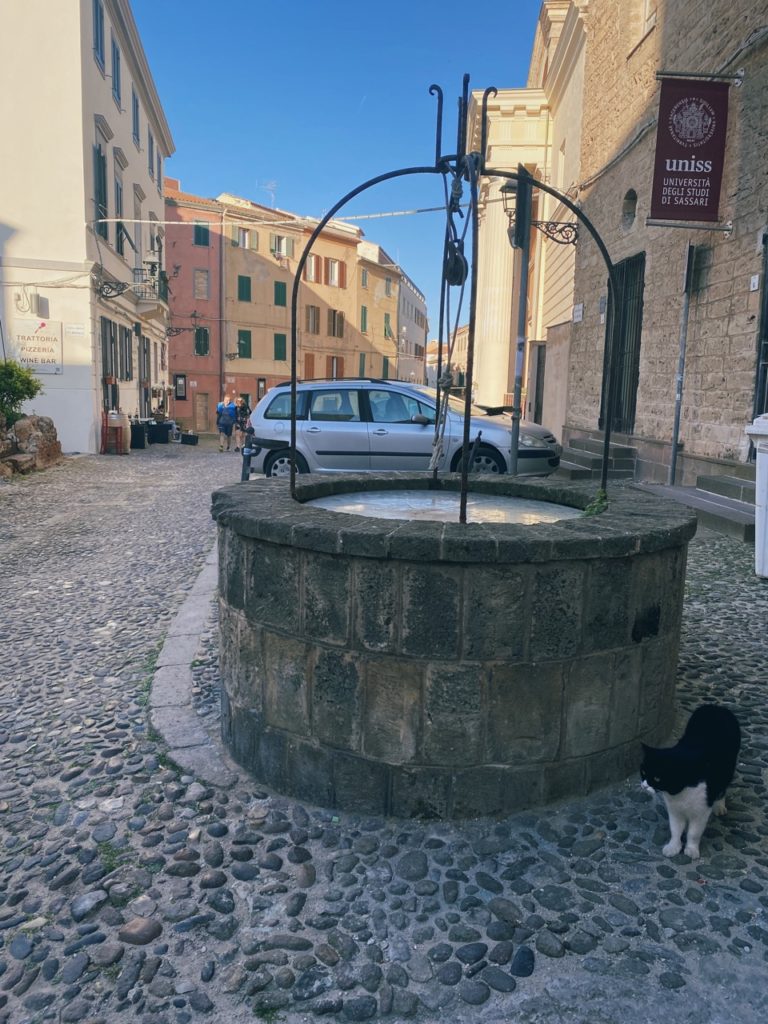
We are starting with our favourite part, the many narrow alleys of Alghero. These are the kind of streets where getting lost is part of the charm. Every alley feels different, whether it is the light, the colours, or a tiny detail, and we honestly could not get enough of wandering through them.
Santa Maria Cathedral
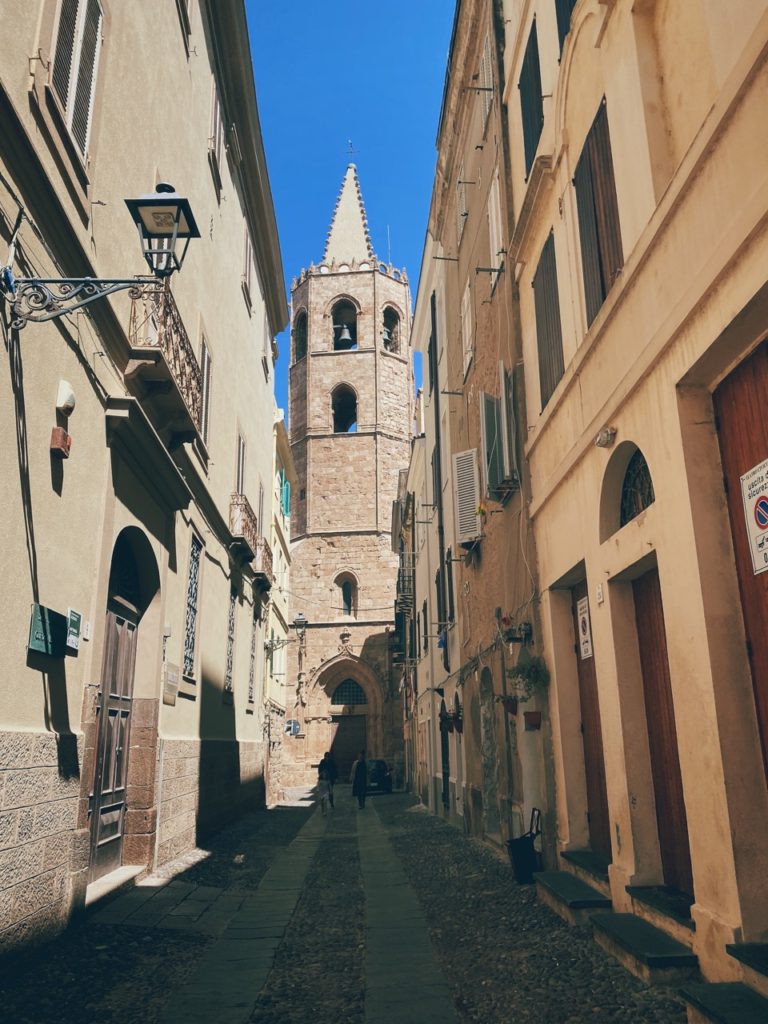
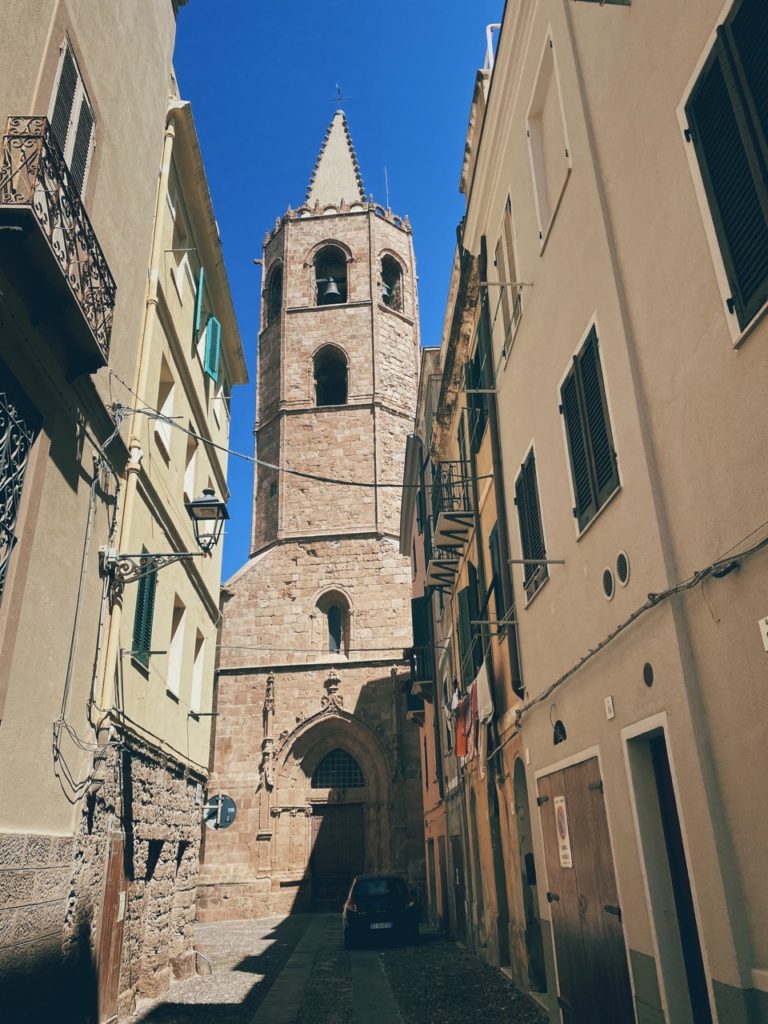
Right in the heart of Alghero stands Santa Maria Cathedral, a beautiful Gothic architectural masterpiece originally built in the 16th century and one of the city’s most important landmarks. It is also one of the most popular sights in Alghero and a highly recommended stop while exploring the historic centre.
While the cathedral was first built in the Catalan Gothic style, it was later expanded and modified, resulting in a unique blend of Gothic, Renaissance, and Neoclassical elements. The bell tower, which dominates the skyline, was added later and is one of the most recognisable features of Alghero’s old town.
Santa Maria Cathedral is said to be the only church in Alghero that normally stays open throughout the day, although when we visited in April, it was unfortunately closed. Inside, the Renaissance-style interior is known for being pleasantly cool on hot days and for its lovely paintings tucked away in the side chapels. Visitors can usually pay a small entrance fee, just a few euros that go toward maintaining the church, and climb the bell tower for panoramic views over the city and sea. We missed out this time due to the closure, but that gives us a good reason to come back next time.
Church of St. Michael
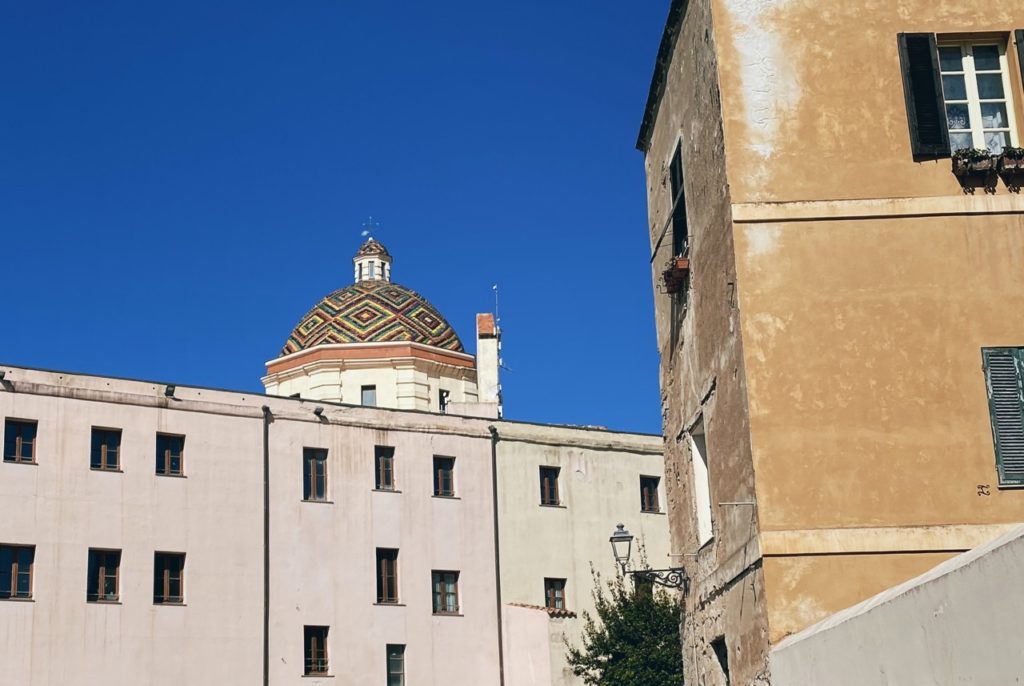
Saint Michael’s Church (Chiesa di San Michele) is one of the most important Baroque-style buildings in Sardinia and an absolute standout in Alghero’s historic centre. The church is best known for its colourful, patterned dome, decorated with vibrant ceramic tiles that instantly catch the eye.
Interestingly, this iconic dome is something you do not fully appreciate when standing right next to the church. It really reveals itself only from a distance or from higher viewpoints, where the colours and geometric patterns come together beautifully. It is one of those sights that surprises you once you step back.
An interesting fact is that the church was built in the 17th century by the Jesuits, and its dome has since become one of Alghero’s most recognisable symbols. And yes, purely coincidentally of course, it also happens to be named after Michael, which makes it feel just a tiny bit more special to us.
Parrocchia Cattedrale dell’Immacolata Concezione
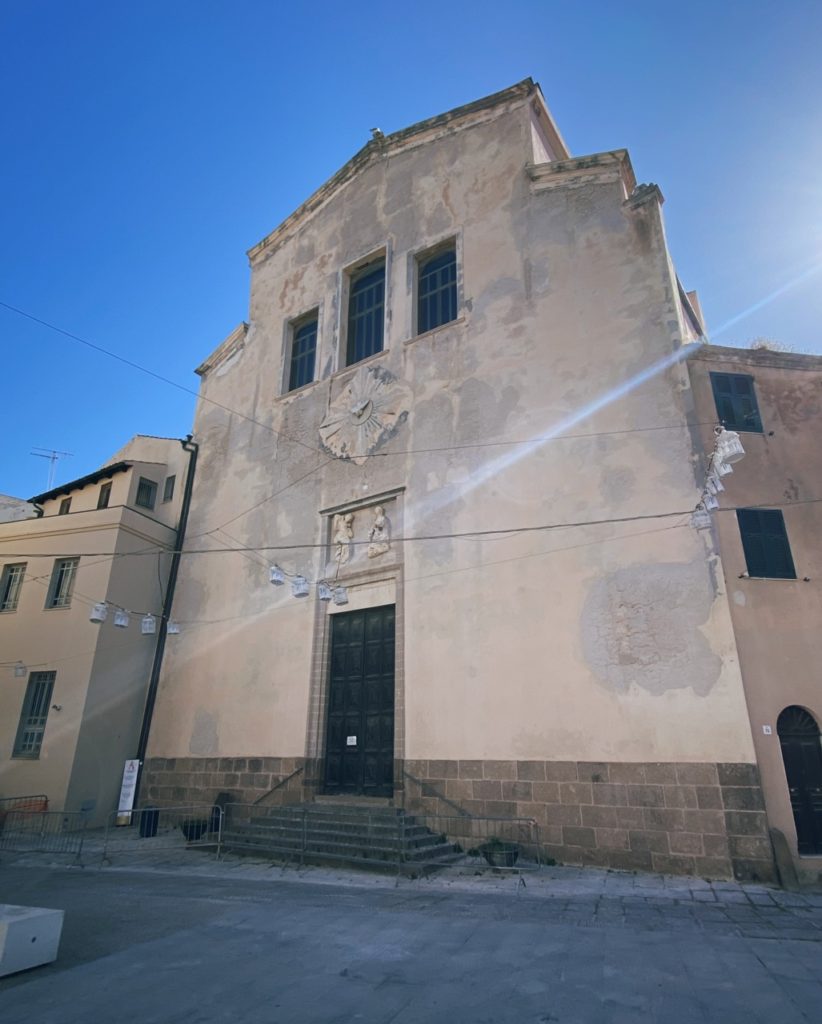
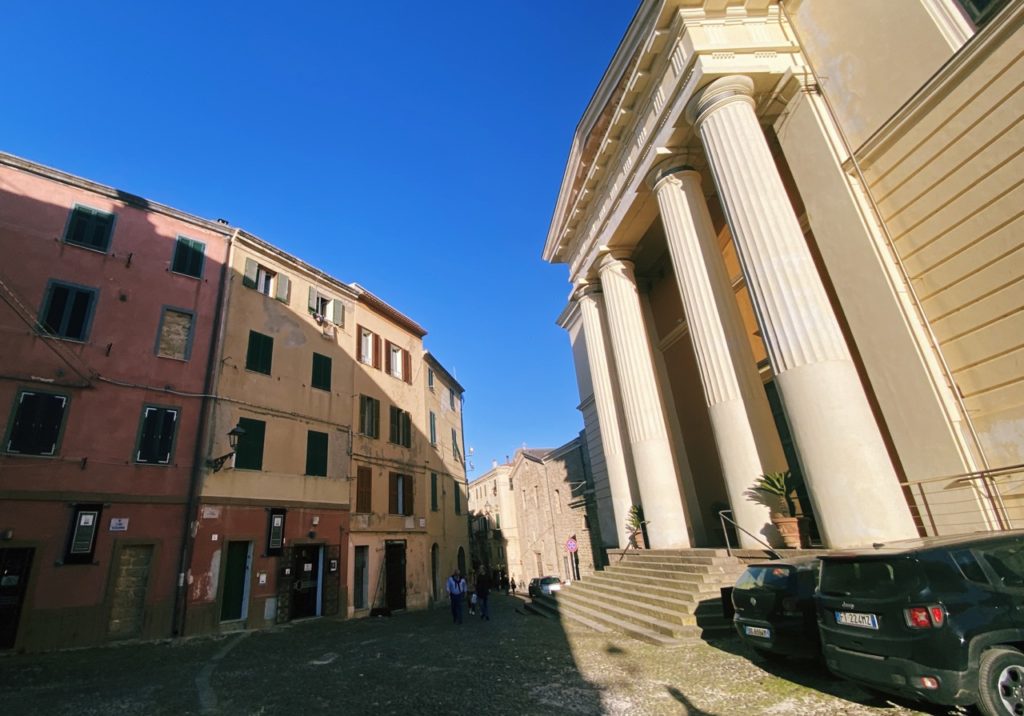
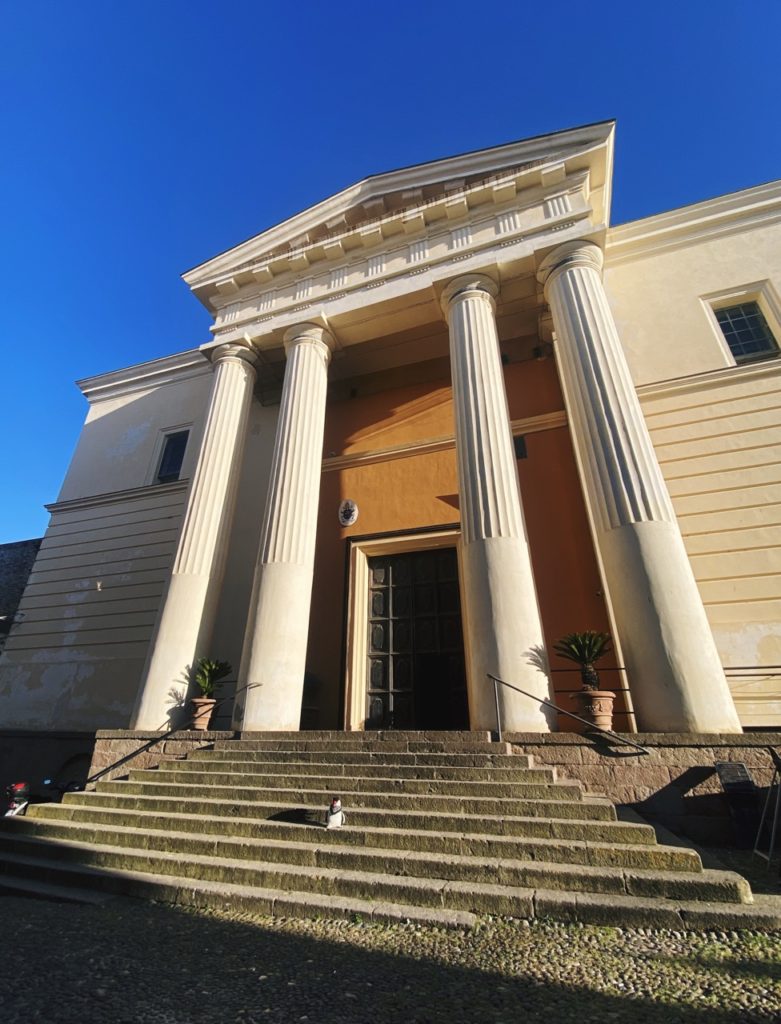
Parrocchia Cattedrale dell’Immacolata Concezione, right in the historic centre of Alghero, was the building that surprised us the most. It is massive, and once you spot it, there is no chance you will miss it while waddling around the old town. As you can see in the photo, I am barely visible on the steps, which really puts its scale into perspective.
Architecturally, it stands out from its surroundings. With its Roman-style columns and neoclassical façade, it does not quite blend in with the narrow streets and medieval buildings around it, yet it is magnificent in its own way. An interesting fact is that this cathedral went through several architectural transformations over the centuries, which explains why it looks so different from the rest of the historic centre.
Despite its grandeur and historical importance, the cathedral is still actively used for daily services, giving it a living, local feel rather than that of a purely tourist sight. Stepping inside, even briefly, offers a quiet contrast to the busy streets just outside.
Red Coral Museum
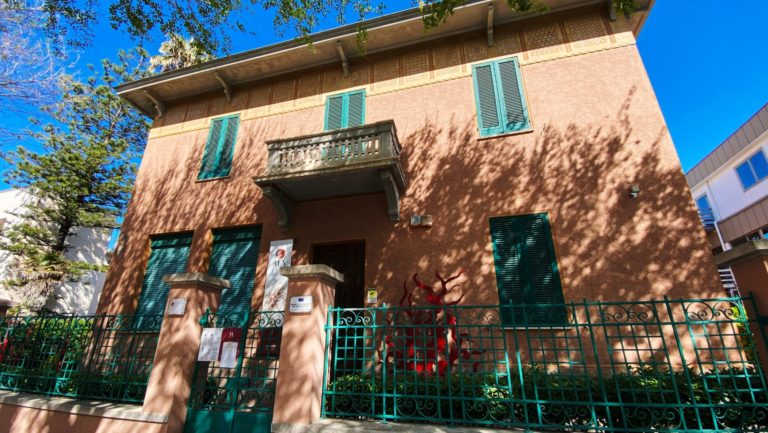
Alghero is most famous for its red coral, so a visit to the Red Coral Museum is an absolute must. The museum is housed in a beautiful Art Nouveau villa, named after the family who had it built in 1927, just outside the historic city walls.
The exhibition space was completely restyled and renovated in 2016 and now focuses on the culture, history, and identity of Alghero, all through the lens of its deep connection to red coral. During our visit, we learned a surprising amount about how red coral forms, why it was so valuable, and how closely it is tied to the city’s past.
If you want to dive deeper into this fascinating local treasure, including tickets, opening hours, and what to see inside, we cover it all in our dedicated guide: Inside Alghero’s Red Coral Museum: Sardinia’s Famous Treasure
Alghero’s Walls, Bastions, and Towers
Alghero is one of the few Italian cities that has preserved its walls and towers in remarkably good condition, and waddling around them truly feels like stepping back a few hundred years.
The Catalan period left the deepest mark on the city, shaping not only its architecture but also its language. Even today, Catalan is widely spoken in Alghero, setting it apart from much of Sardinia. During this time, most of the bastions and defensive walls were built, while the town itself flourished and the harbour became an important and busy trading hub.
Alghero was originally founded between 1102 and 1112 by the Doria family, with its defensive walls raised a few decades later. Today, you can still see several towers within the city, as well as strategically placed towers outside the walls, such as the Torre del Bollo, which once played a key role in protecting the coastline.
Bastion Antonio Pigafetta
Bastion Antonio Pigafetta is in the northern part of Alghero’s Old Town, between the Bastioni Marco Polo and the Tower of Elmo (Torre di Sant’Elmo). Originally built as part of the city’s defensive system, this bastion once played an important role in protecting Alghero from attacks coming from the sea.
Today, it is best known for the beautiful views over the Port of Alghero, making it a great spot to pause during a walk along the walls. Although the structure has suffered damage over the centuries, its remaining walls are still impressive and give a strong sense of the city’s fortified past. Standing here, it is easy to imagine how strategic this position once was, watching over the harbour and the busy maritime life below.
Sulis Tower
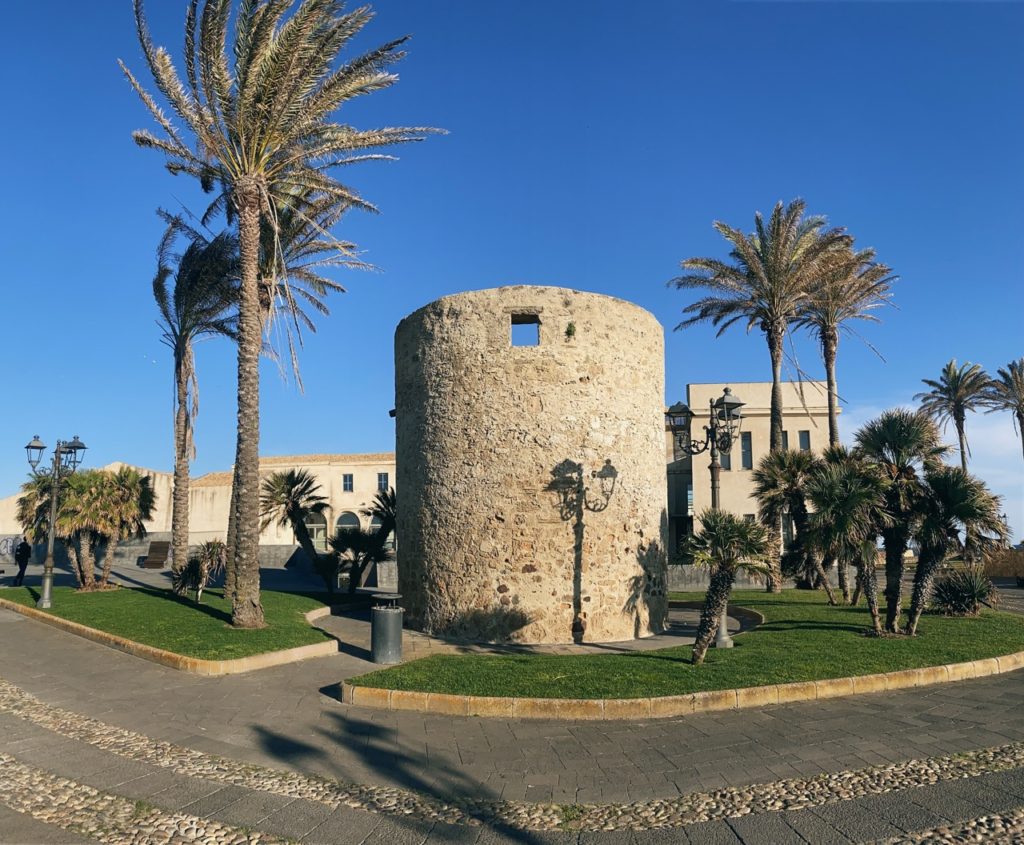
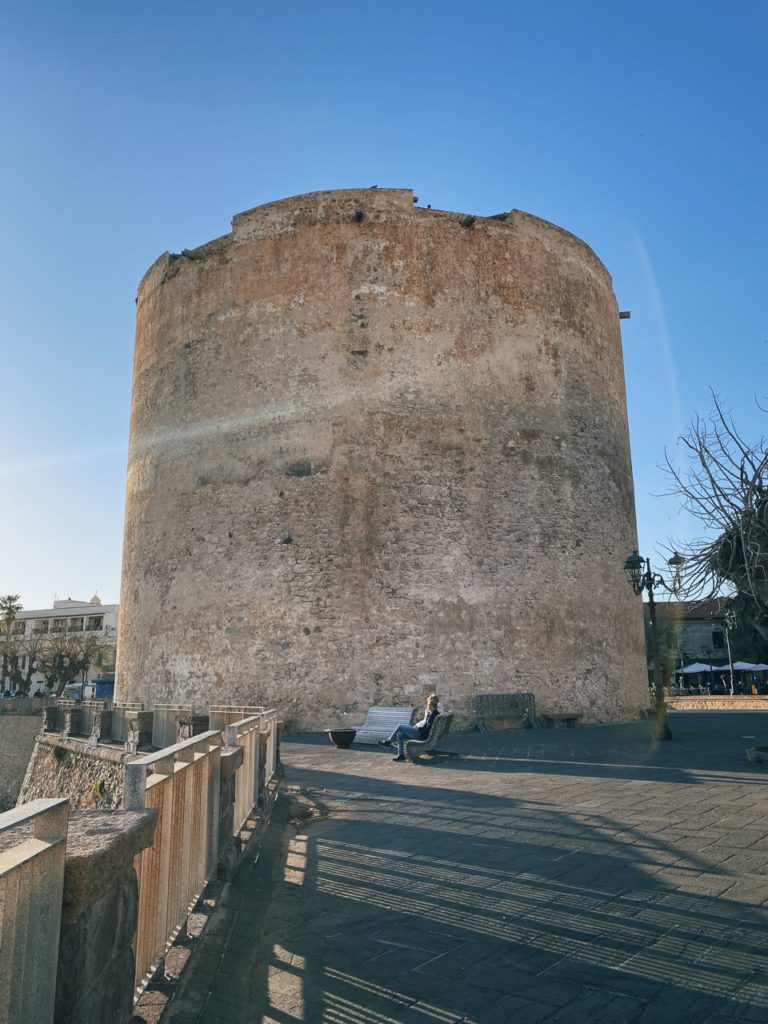
Sulis Tower (Torre di Sulis) was known as the Tower of the Royal Supply, reflecting its strategic role in guarding provisions and maritime access. In more recent times, it was renamed after Vincenzo Sulis, a revolutionary born in Cagliari who became a symbol of Sardinian resistance. An interesting and rather chilling fact is that Sulis spent twenty-two years in solitary confinement inside this very tower, making it one of the most historically charged places in Alghero.
At its peak, Sulis Tower was the most majestic tower in Alghero, dominating the city’s defensive system. Today, it marks the end of Alghero’s Old Town, standing as a quiet reminder of both the city’s military past and its political history. Waddling past it feels like crossing an invisible line between the medieval town and the more modern parts beyond.
The Sulis Tower, standing 22 metres high, often hosts exhibitions and theatrical performances on its ground and first floors, giving this historic structure a lively cultural role today alongside its past as a defensive stronghold.
Sant’Elmo Tower
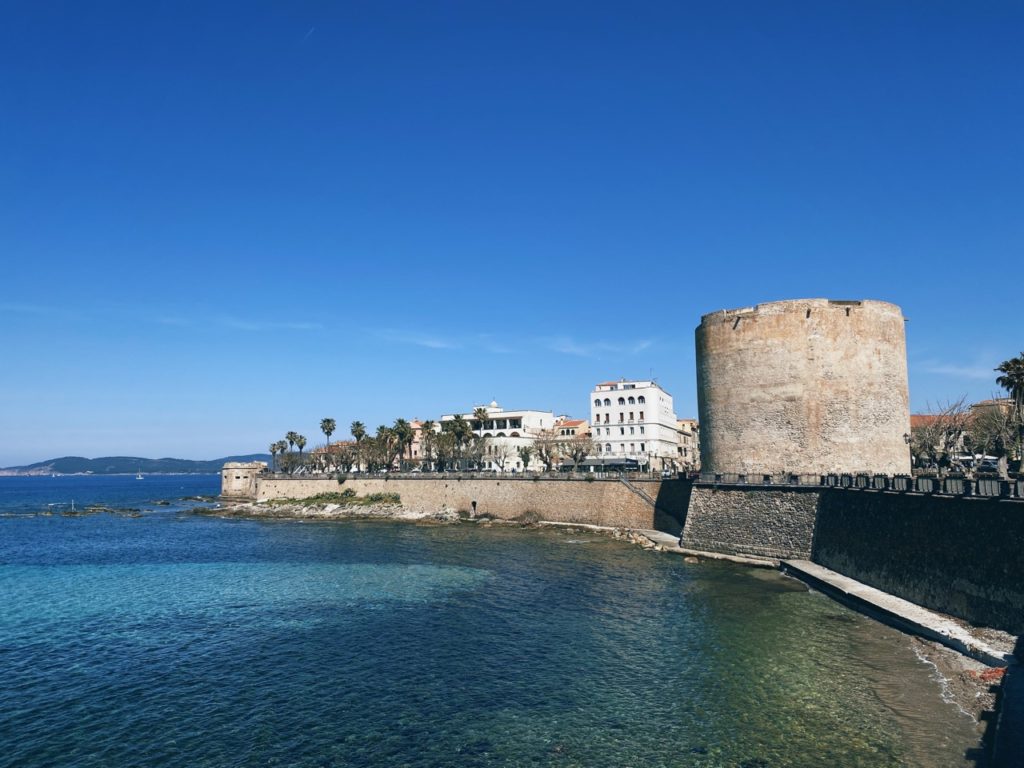
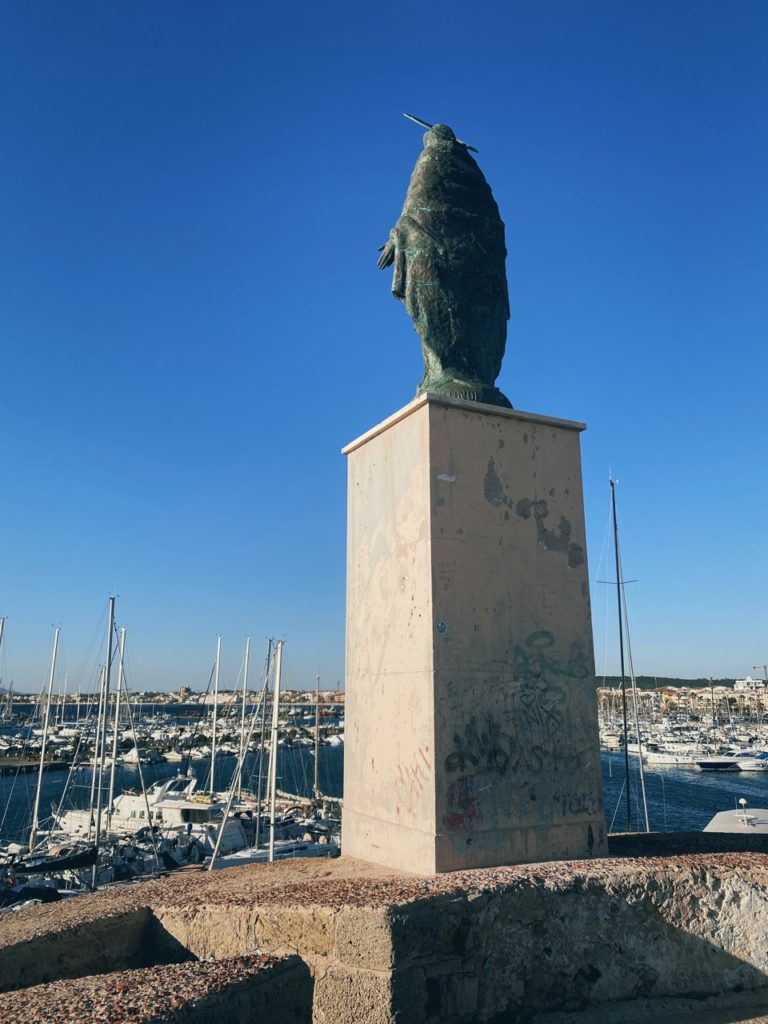
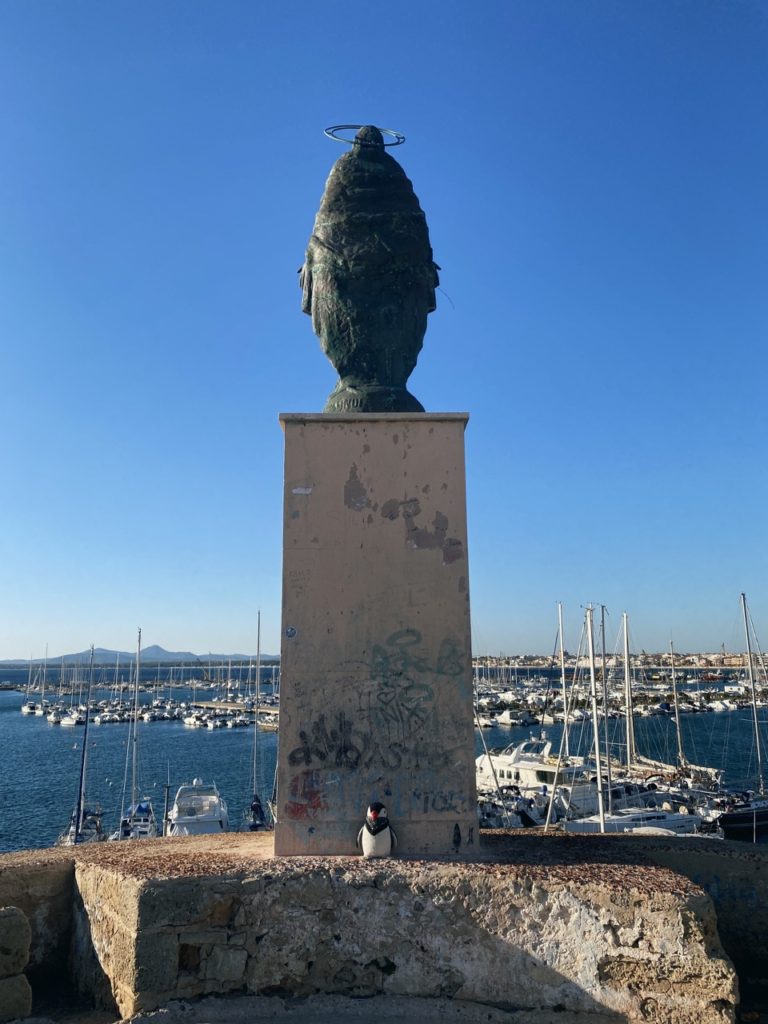
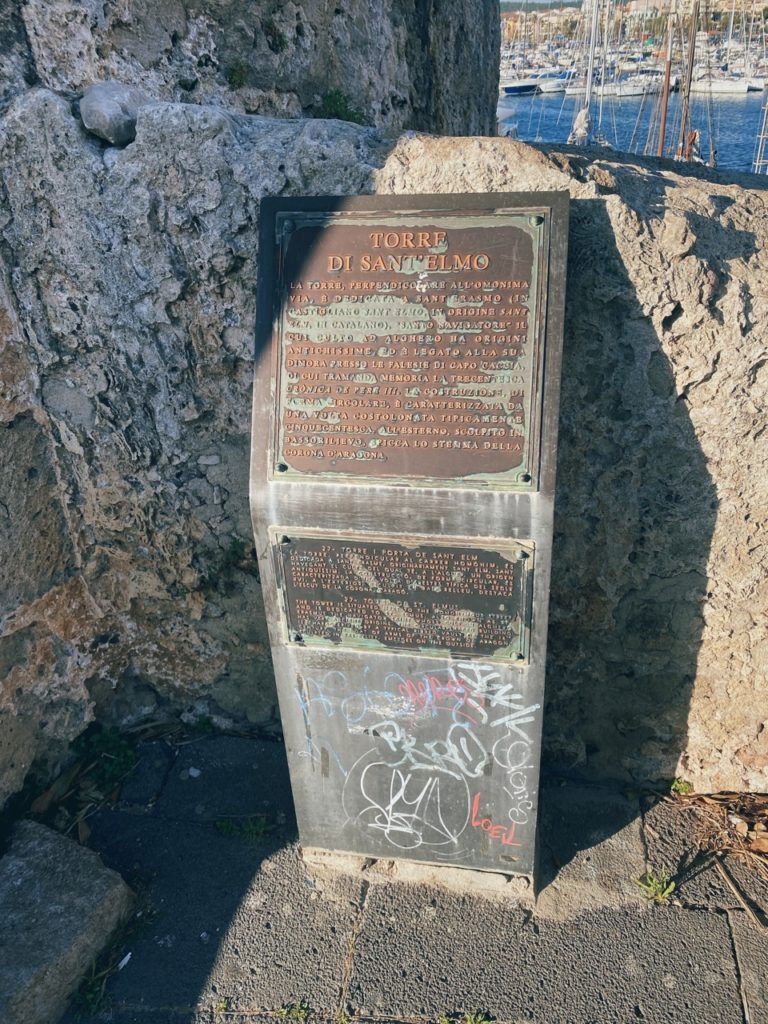
Sant’Elmo Tower (Torre di Sant’Elmo) is the first tower you will spot when arriving from the airport and easily one of the most recognisable landmarks in Alghero. It is also known locally as “La Madonnina” for the statue of the Virgin Mary above the tower, watching over the city and the sea.
The tower was named in honour of Saint Elmo (Saint Erasmus), the patron saint of sailors. A lesser-known and interesting fact is that Saint Elmo is associated with St. Elmo’s Fire, a natural weather phenomenon sailors once believed was a divine sign of protection during storms. This connection made the tower an important symbolic landmark for seafarers approaching Alghero.
For us, Sant’Elmo Tower became our own personal navigation point. Whenever we spotted it, we instantly knew where we were. With so many walls, bastions, and towers surrounding the old town, it is easy to get turned around, but this one stands out and helps you orient yourself quickly.
It is also one of the best sunset spots in Alghero. As the light softens and the sky turns warm, the tower and the sea below create a beautiful scene that perfectly wraps up a day of waddling through the city.
San Giovanni Tower
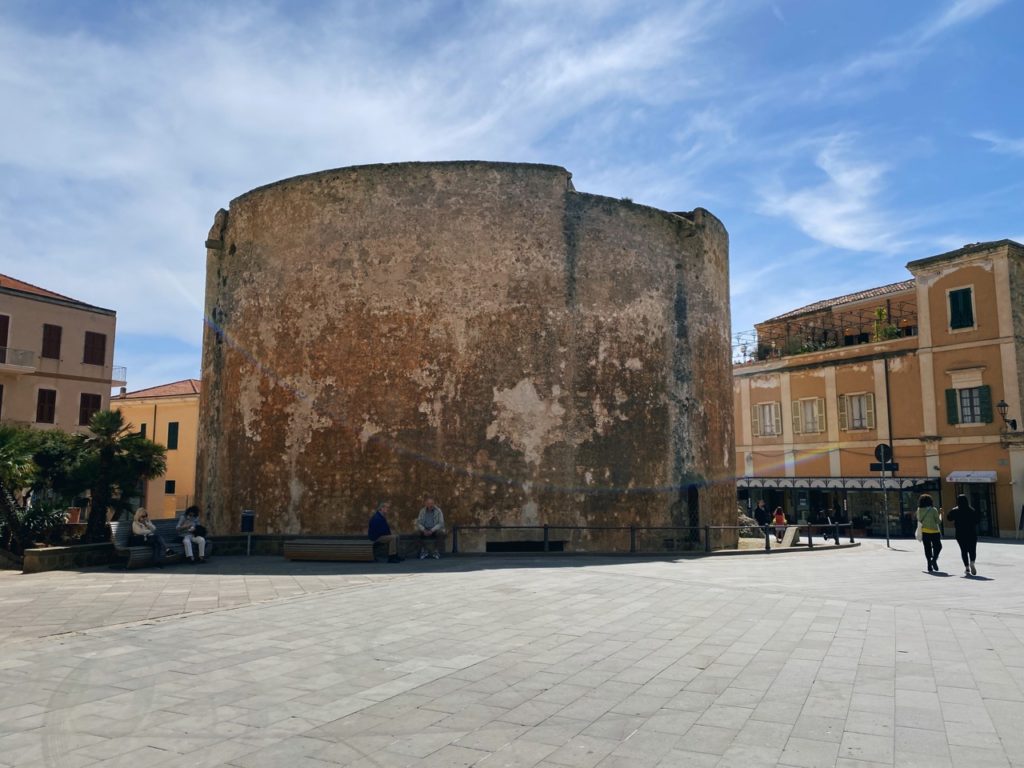
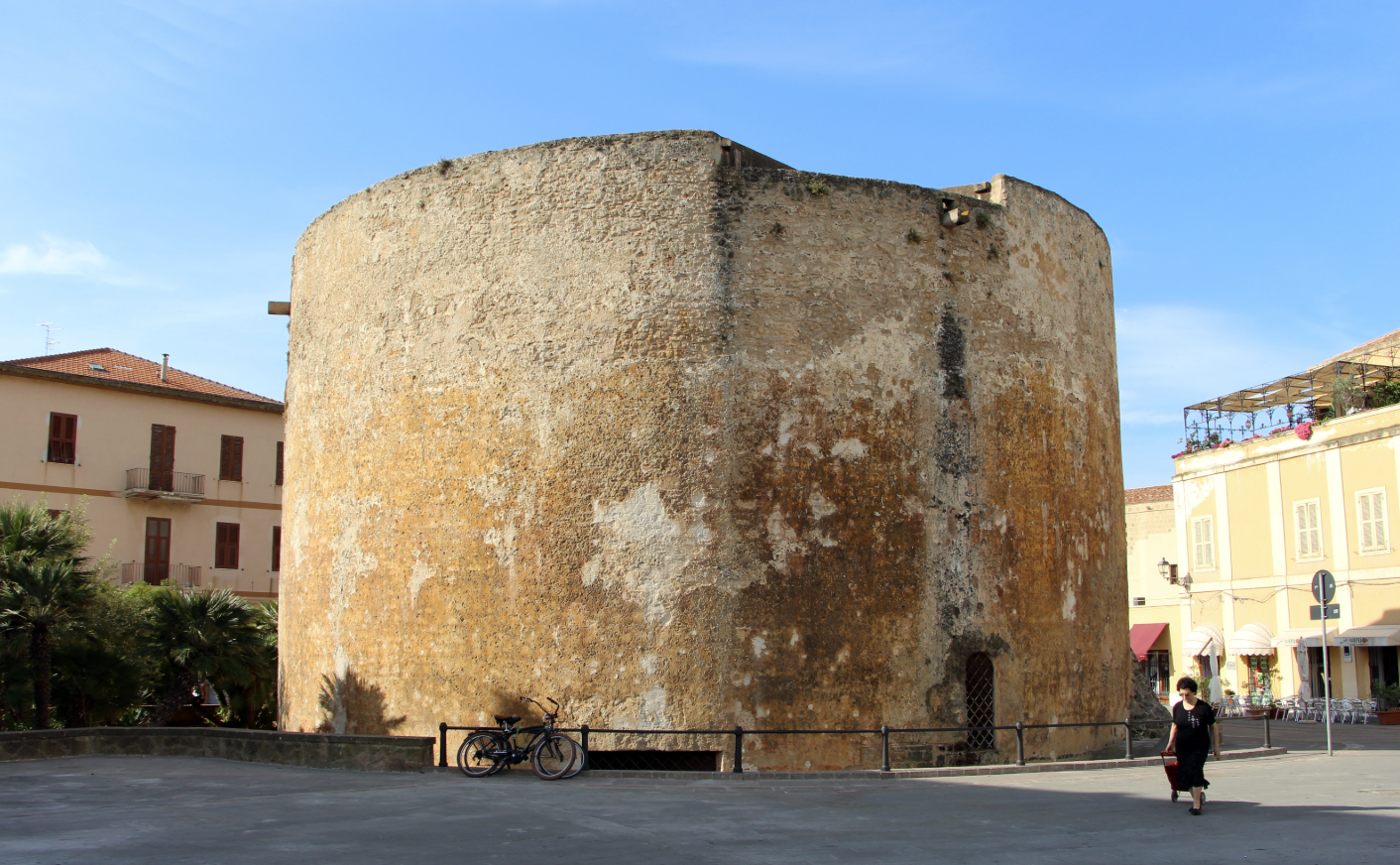
San Giovanni Tower (Torre di San Giovanni) sits in the middle of Alghero’s defensive walls, which is why it is sometimes described as the city’s central tower. Today, it is used as a space for temporary exhibitions, giving this historic structure a modern cultural role.
In the past, however, the tower held a strategic military position, controlling key sections of the walls and helping to protect the city from attacks coming from both land and sea. One of the more curious facts about this tower is that it carried different names in different centuries. In the 16th century, it was known as St. Michael’s Tower, while in the 17th century, it became known as Torre di Mezzo, literally meaning “Middle Tower”, a name that reflects its central location.
A lesser-known detail is that the tower’s thick stone walls and compact structure were designed to withstand artillery fire, making it one of the more resilient elements of Alghero’s fortifications. Today, walking inside feels like stepping into a layered timeline, where centuries of defence have quietly given way to art and culture.
Apart from these bastions and towers (and yes, there are quite a few, so it can get a little confusing), Alghero is also home to several historic palaces worth noticing. In total, seven defensive towers are preserved within the city walls, while three additional towers are located outside the historic centre, strategically placed along the coastline to protect the city. We especially enjoyed exploring the towers within the Old Town, where history feels very much alive and woven into everyday city life. Below, we list some of the most notable palaces you should keep an eye out for while waddling around Alghero.
Old Palaces of Alghero
Alghero is home to many historic monuments, and its palaces are beautiful examples of the city’s rich culture and the architectural styles of past centuries.
- Palazzo Carcassona (Palazzo Real). Established by a Jewish family around 1400, this palace later became the Royal Family’s residence in the mid-15th century. Its Gothic-Catalan windows are a highlight, and today the building has been repurposed as a restaurant, blending history with modern dining.
- Palazzo De Ferrara. You will find it in Piazza Civica in Alghero’s historic centre. This 15th-century Gothic palace was built by the wealthy merchant Pedro de Ferrera. A lesser-known fact is that an emperor is said to have stayed here briefly. The main entrance opens into an elegant foyer with a grand staircase, still visible today.
- Palazzo Civico. Built in the 19th century, this building preserves its original Neoclassical façade, constructed from squared sandstone blocks with a granite base. Today it serves as Alghero’s Town Hall, and it is also a popular venue for civil wedding ceremonies.
- Palazzo Peretti. Located on Via Roma, this palace was originally built in the 15th century in the Gothic-Catalan style by the noble Guyo Duran family. In the late 18th century, it was purchased by the Peretti family from Corsica, who still own the palace today.
- Palazzo Simon. Found on Via Gilbert Ferret, near San Giovanni Tower, this palace dates back to the late 13th century and was later restored in the late 19th century. Above the massive arched entrance, you can still see the coat of arms of the Simon family, the palace’s first owners.
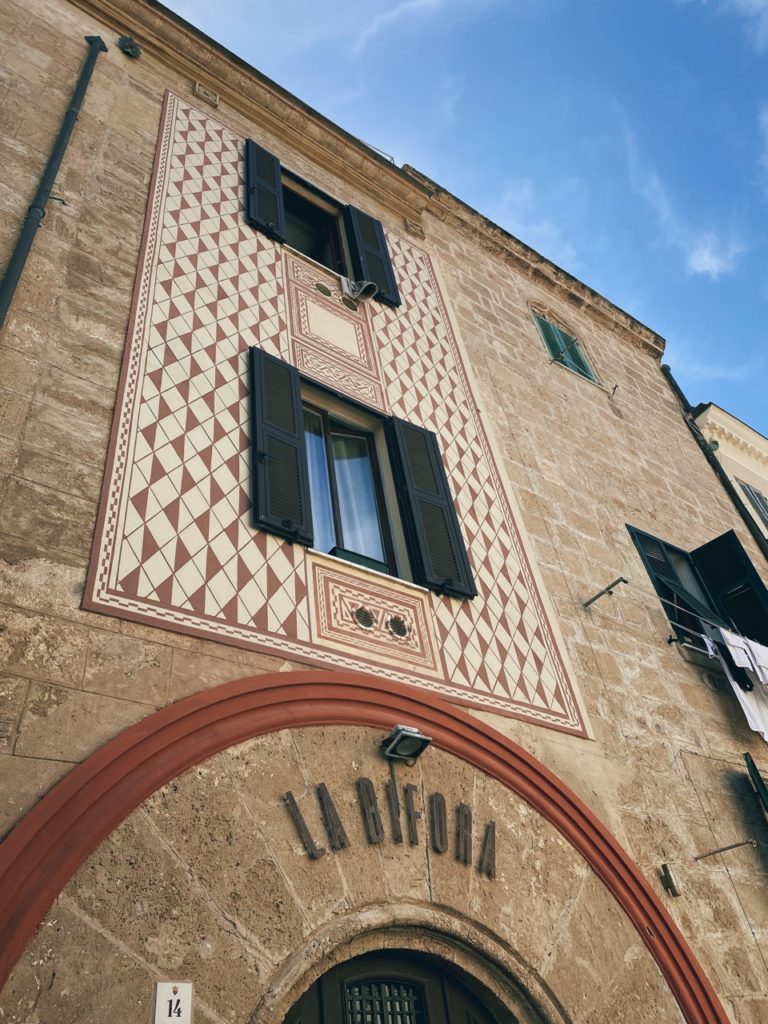
- Palazzo Serra. Located at the corner of Piazza Civica and Via Carlo Alberto, this palace was built in the late 18th century by one of Alghero’s wealthy families. Its architecture is interesting due to its mix of styles, reflecting changes and additions over time.
- Palazzo del Pou Salit. An ancient stone building with deep historical roots, this palace now houses the Faculty of Architecture of the University of Sassari, giving it a modern academic role within Alghero’s historic centre.
- Palazzo Machin (Palazzo Tibau). Situated on Via Principe Umberto near Piazza Teatro, this palace was built in the mid-15th century. It is also known as Palazzo Tibau, named after a former owner who was a Catalan merchant, highlighting Alghero’s strong Catalan connections.
Maddalena Fort
Maddalena Fort is the only surviving structure of the original three forts once built at this location. Constructed in the 16th century, it was dedicated to Mary Magdalene, who was considered a protector of sailors and coastal settlements, an important role for a city so closely tied to the sea.
At the fort, you can still see a statue of Mary Magdalene, though time has not been kind to it. Weather, salt air, and centuries of exposure have worn away many of its features, leaving it almost unrecognisable today. That quiet erosion adds a certain atmosphere, as if the fort itself is slowly returning to the elements it once defended against.
A lesser-known detail is that Maddalena Fort once formed part of a triangular defensive system, designed so that the three forts could visually communicate and protect the coastline together. While the other two have disappeared, this lone survivor still tells the story of Alghero’s strategic importance and its long relationship with the sea.
Marina Di Sant Elmo
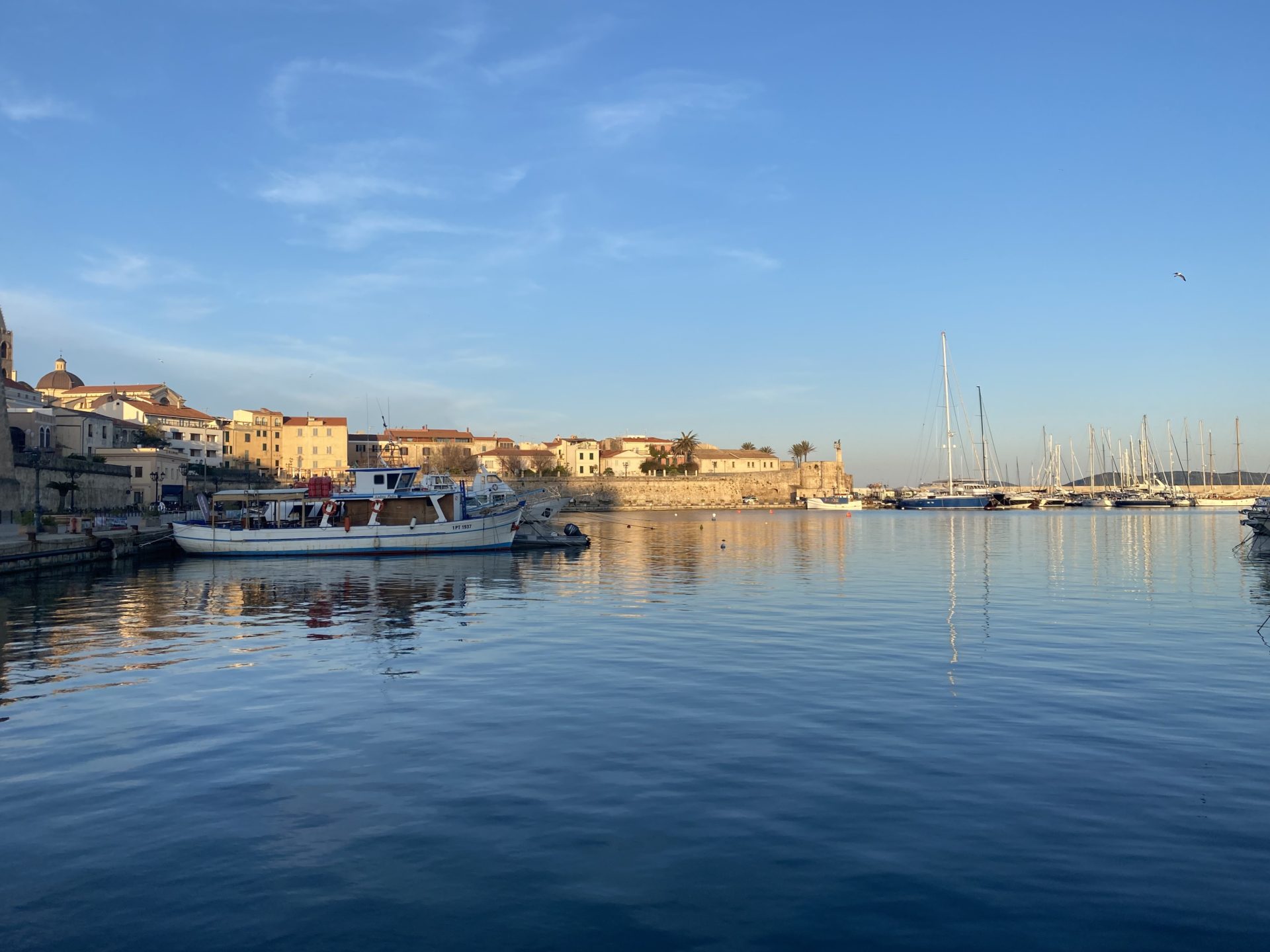
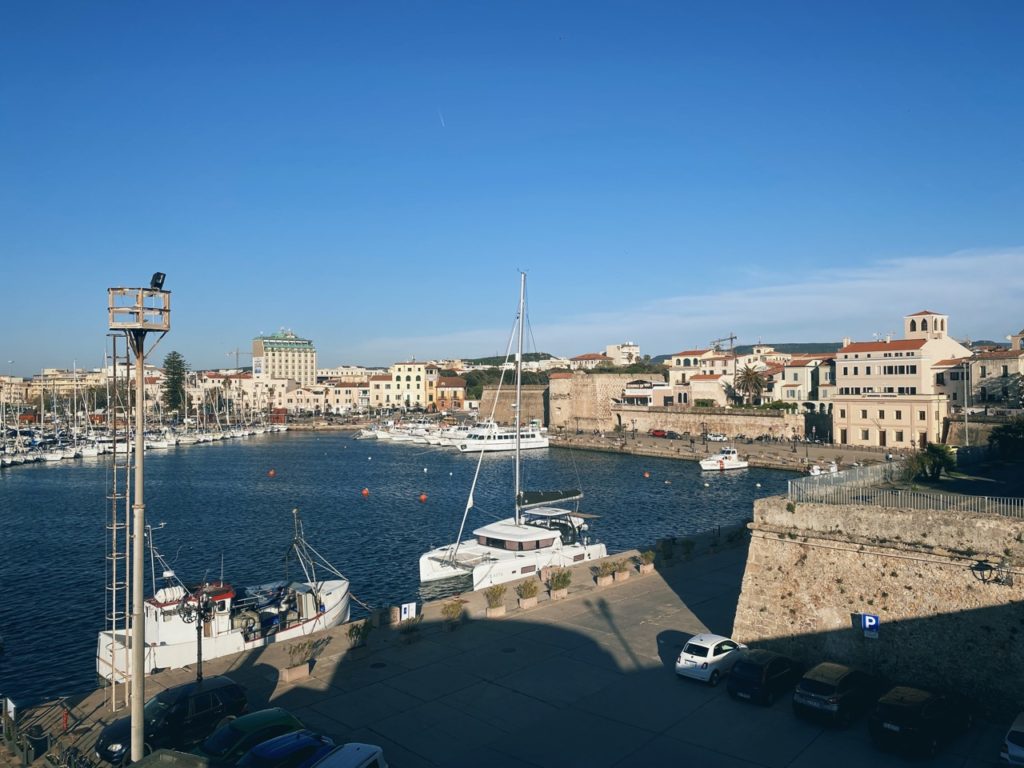
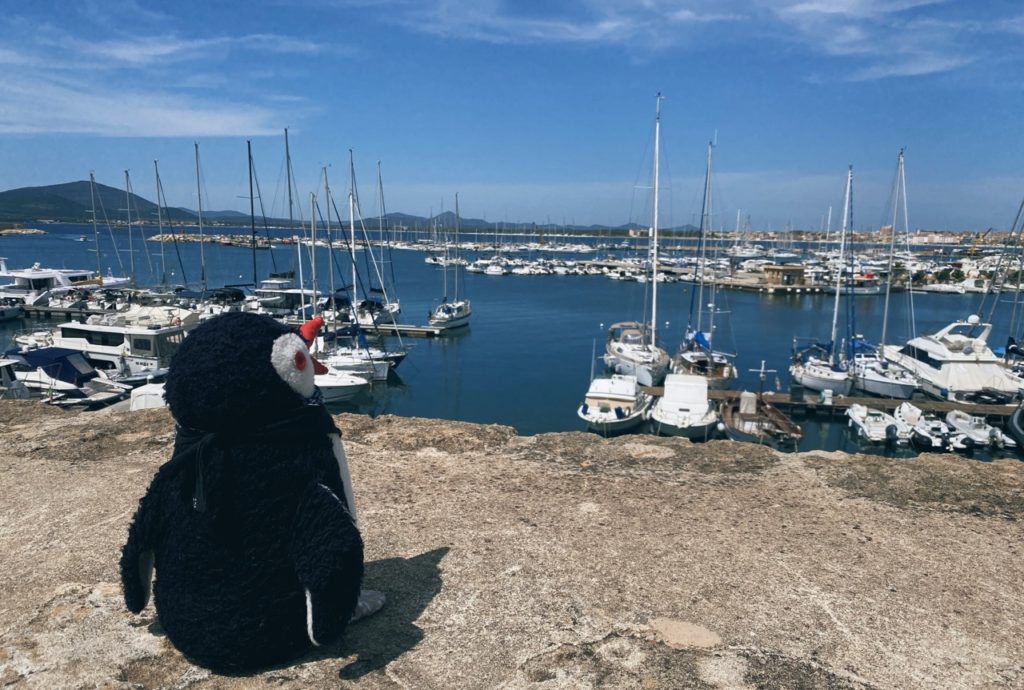
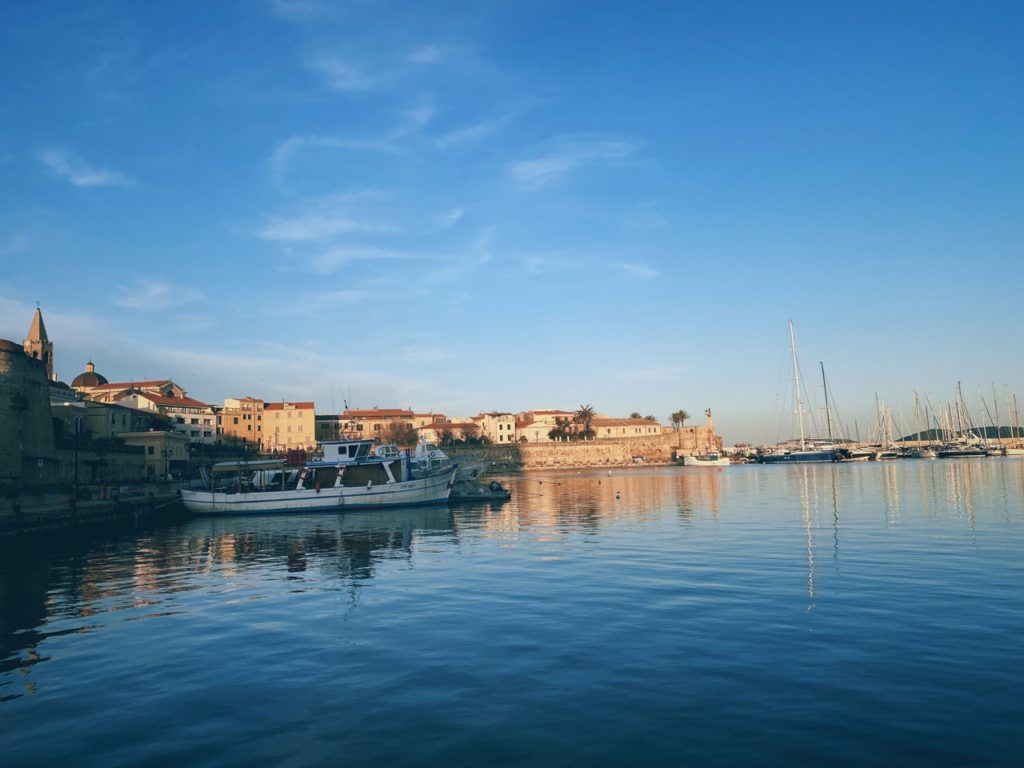
Marina di Sant’Elmo is where Alghero’s maritime life comes together. This is the main marina where boats are moored, and it is also one of the easiest places to hop on a boat tour to admire Alghero from the sea. If you are not sailing anywhere, simply waddling through the marina is worth it on its own, with rows of boats gently bobbing in the water.
The marina has around 400 berths and can accommodate boats of various sizes, from small leisure boats to larger yachts, which explains why it always feels lively without being overwhelming. Thanks to its location right next to the Old Town, it is a place you naturally pass through again and again while exploring Alghero.
What makes Marina di Sant’Elmo especially special is the timing. In the late afternoon and at sunset, the light turns golden, the sea calms down, and the whole area slows into that classic Mediterranean evening rhythm. It is one of the best spots in the city to pause, people-watch, and enjoy the moment before dinner.
Central Market (Mercato Civico)
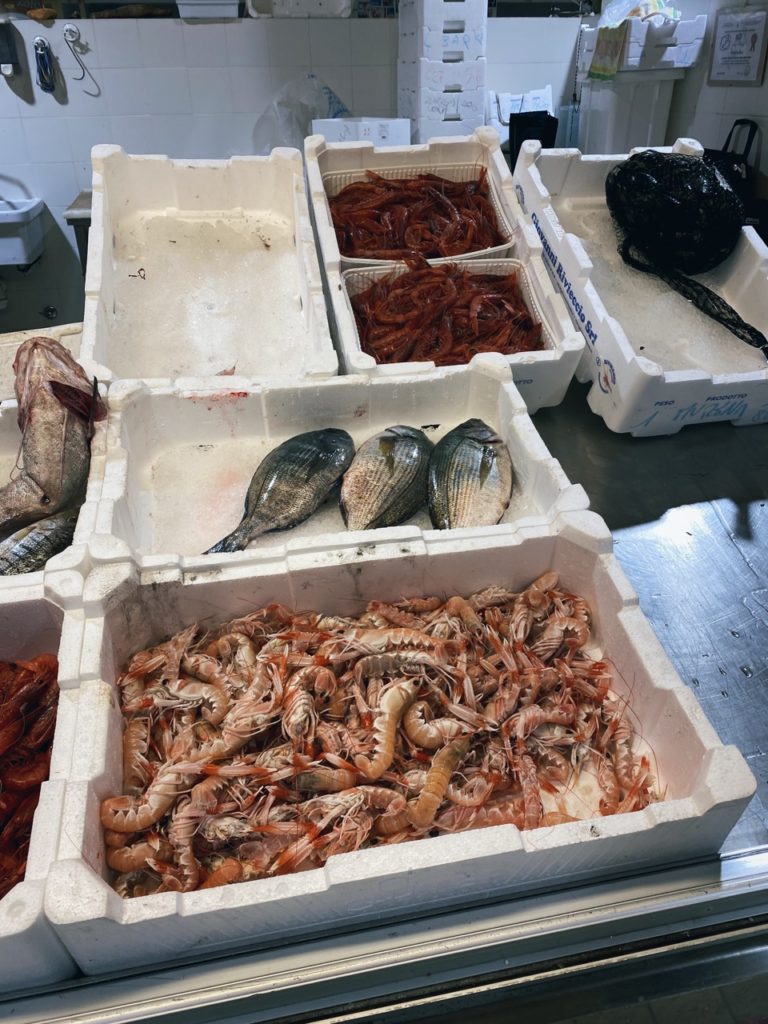
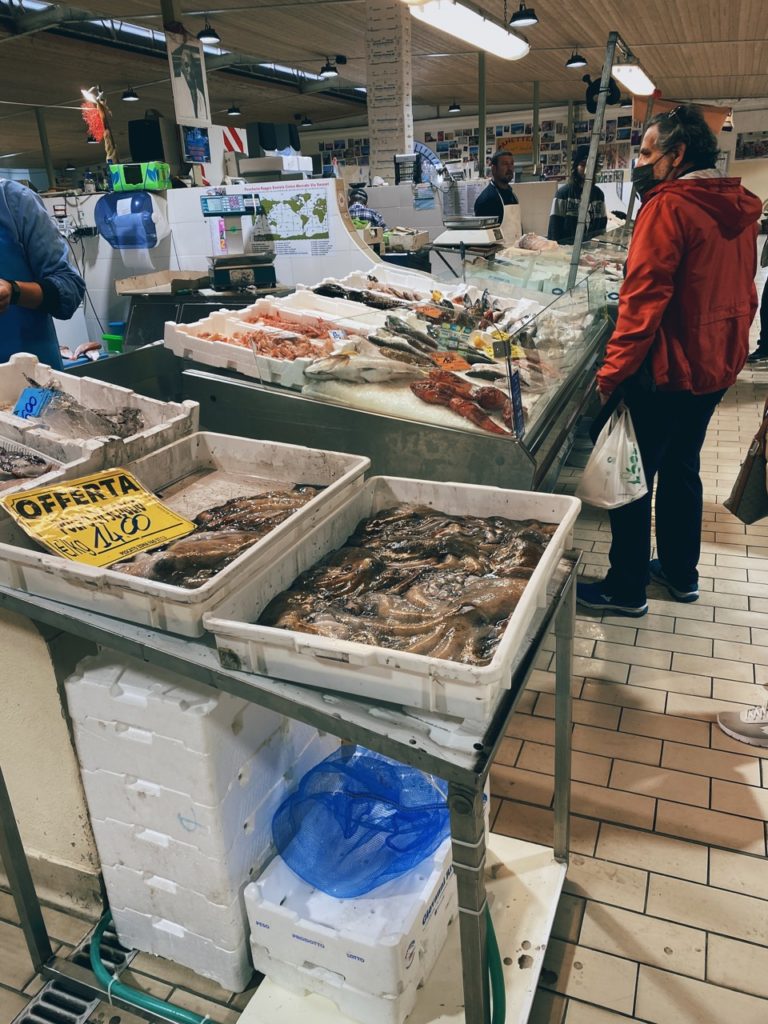
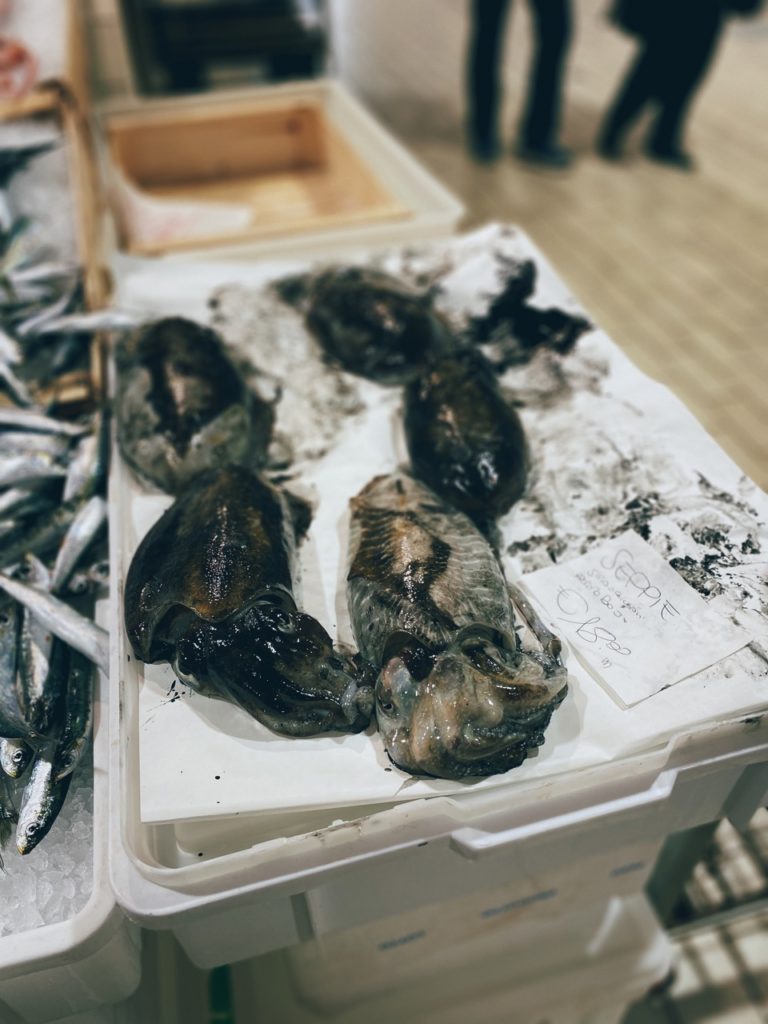
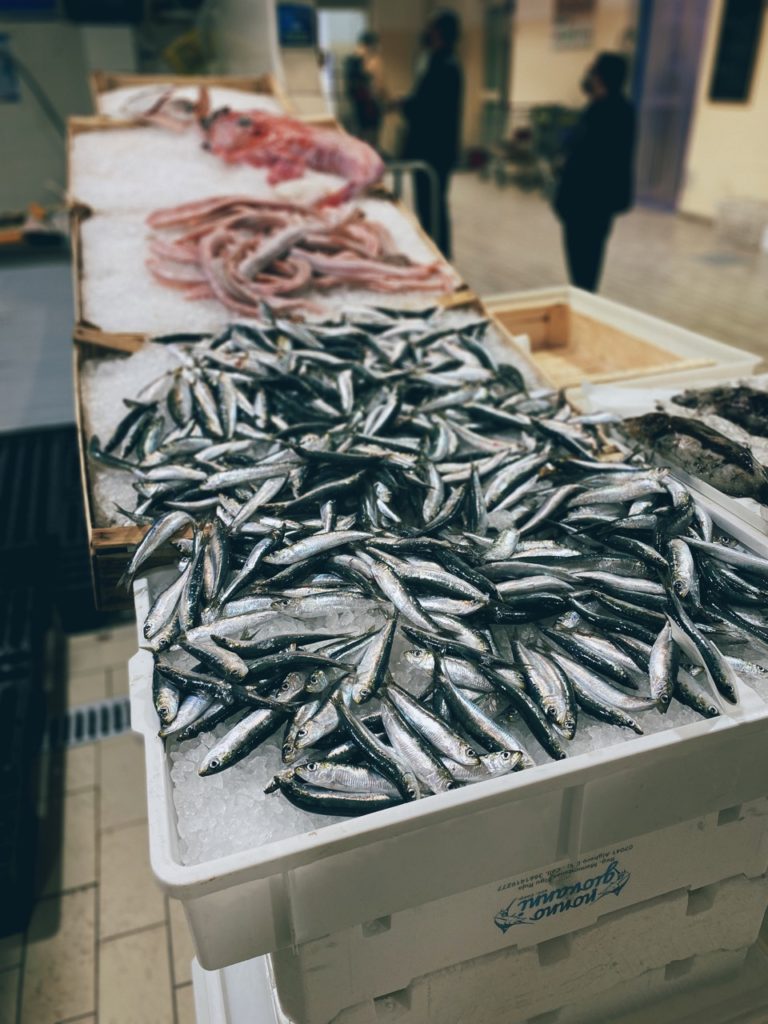
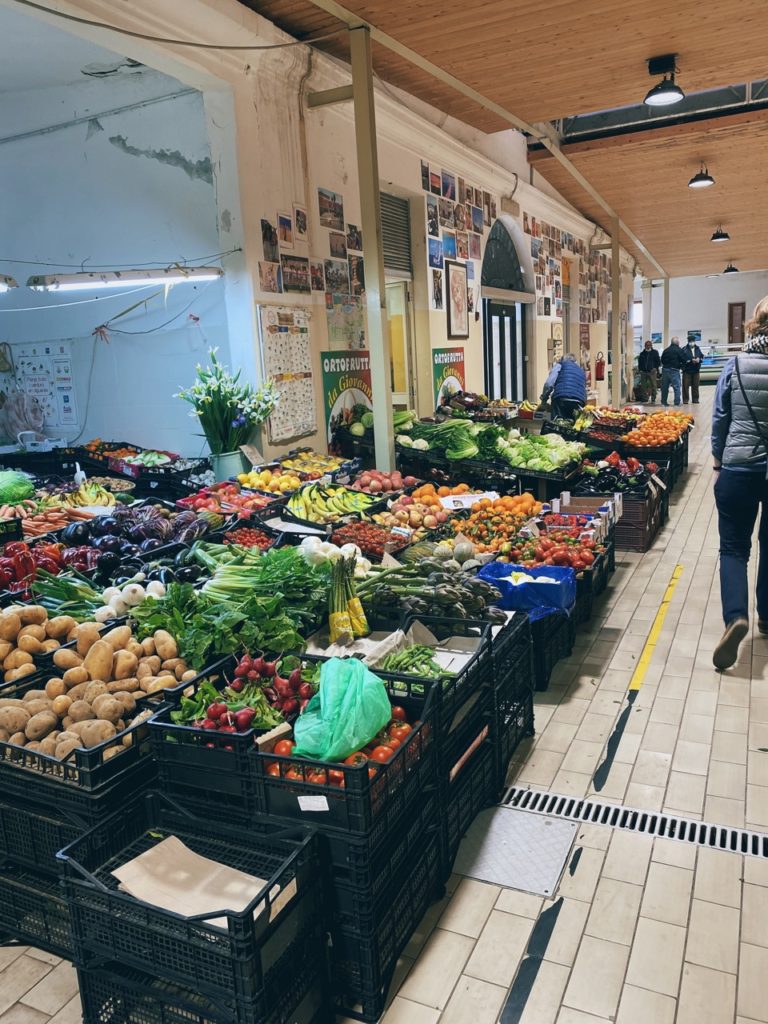
Central Market (Mercato Civico), at Via Sassari 12, is one of those places that surprises you once you step inside. From the outside, it looks like a traditional local market, but wander in, and you will quickly discover its real highlight, an excellent local fish tavern serving fresh, locally caught seafood at very fair prices.
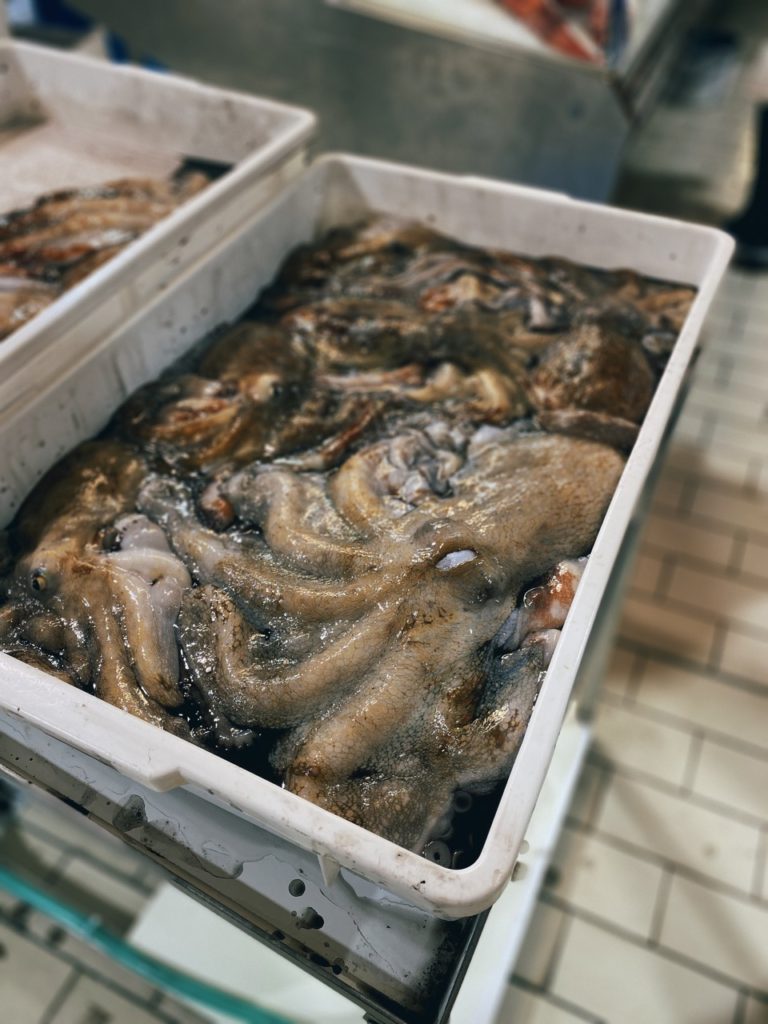
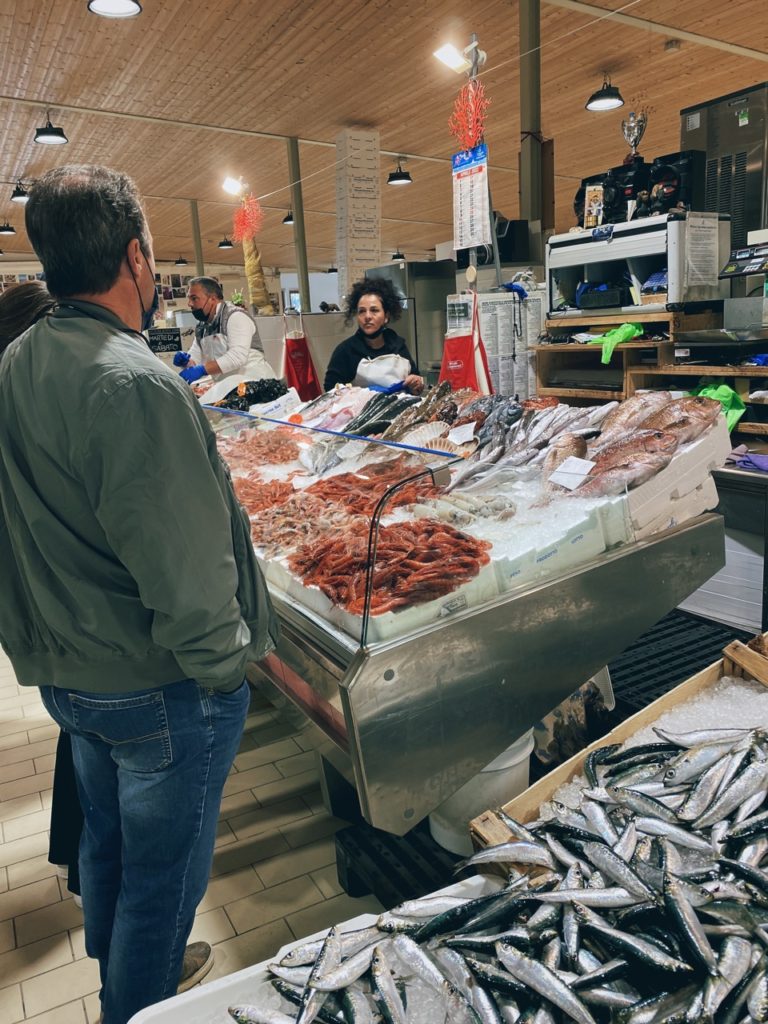
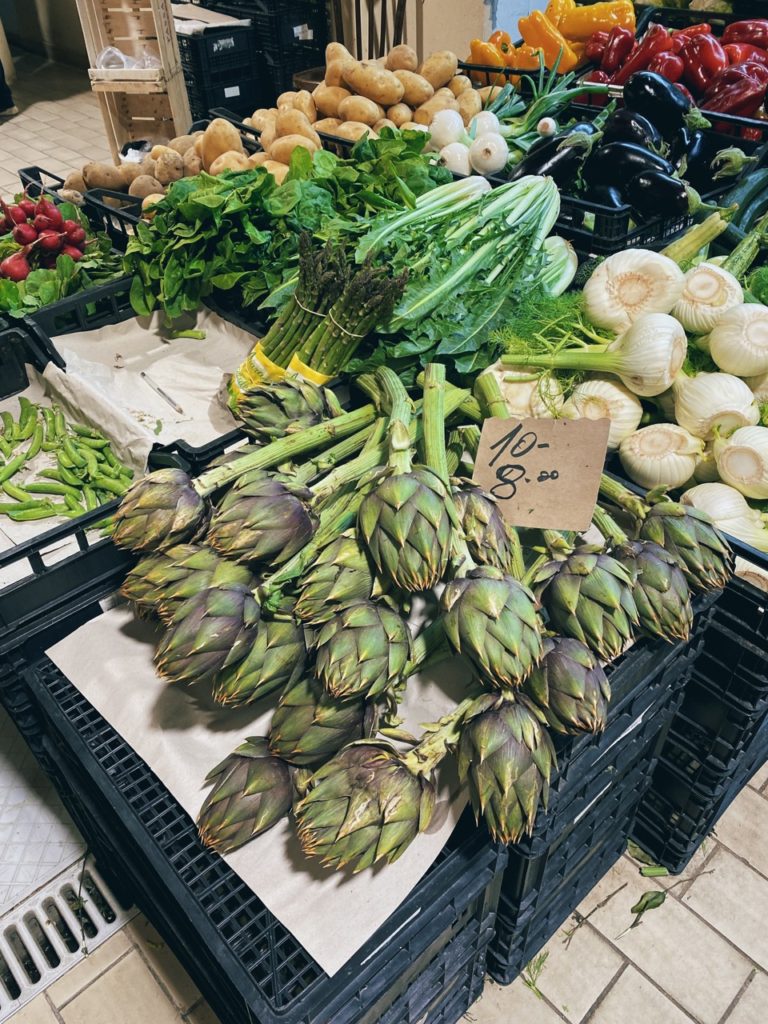
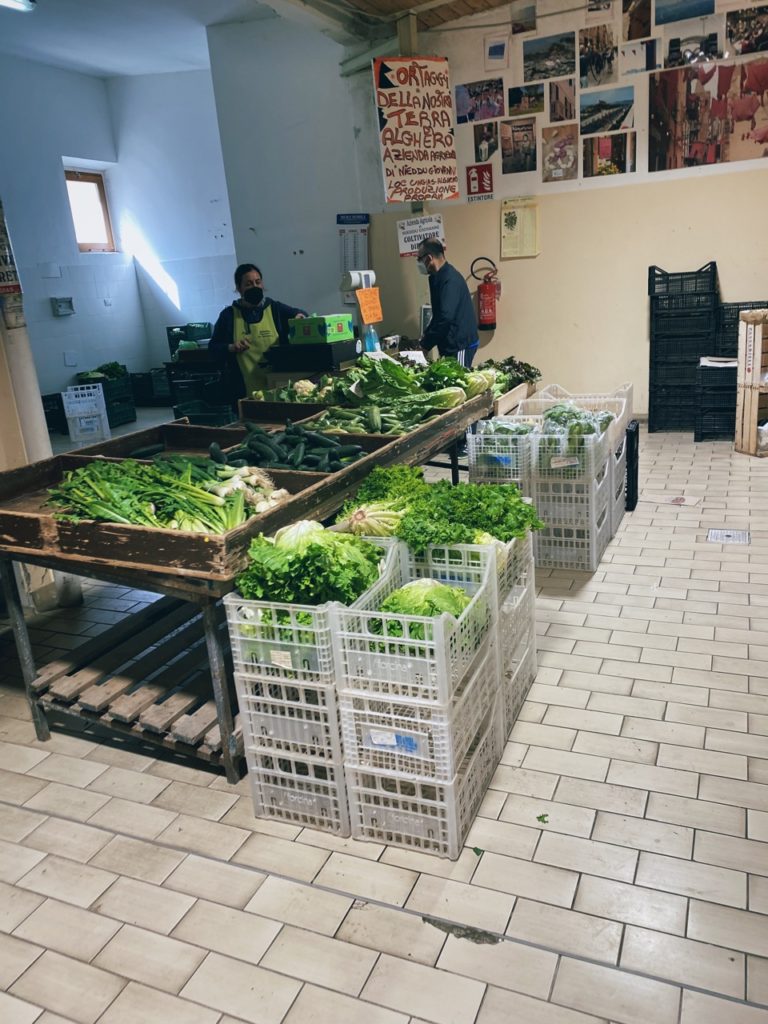
The market itself is a great place to experience everyday life in Alghero. You can expect fish stalls piled with the day’s catch, alongside vendors selling local produce and regional products. The atmosphere is lively but local, with residents doing their daily shopping rather than tourists ticking off a checklist.
The fish tavern inside the market is the real gem. Dishes are simple, honest, and focused on freshness, exactly how seafood should be. It is the kind of place where you eat what came in from the sea that morning, without unnecessary extras.
The market is open daily from about 6:00 AM to 2:00 PM, making mornings and late mornings the best time to visit if you want the widest selection of fresh produce and seafood. Inside, you’ll find colourful stalls piled high with fish, fruit, vegetables, cheeses, bread, and local specialties, all reflecting the true flavours of the region.
What makes a stop here especially memorable is the fish tavern tucked into a corner of the market. You can often book a table for late morning to early lunch (around 12:45–14:30), when the market is still open, to enjoy fresh seafood from the day’s catch grilled or fried to order.
Lungomare Barcellona Promenade
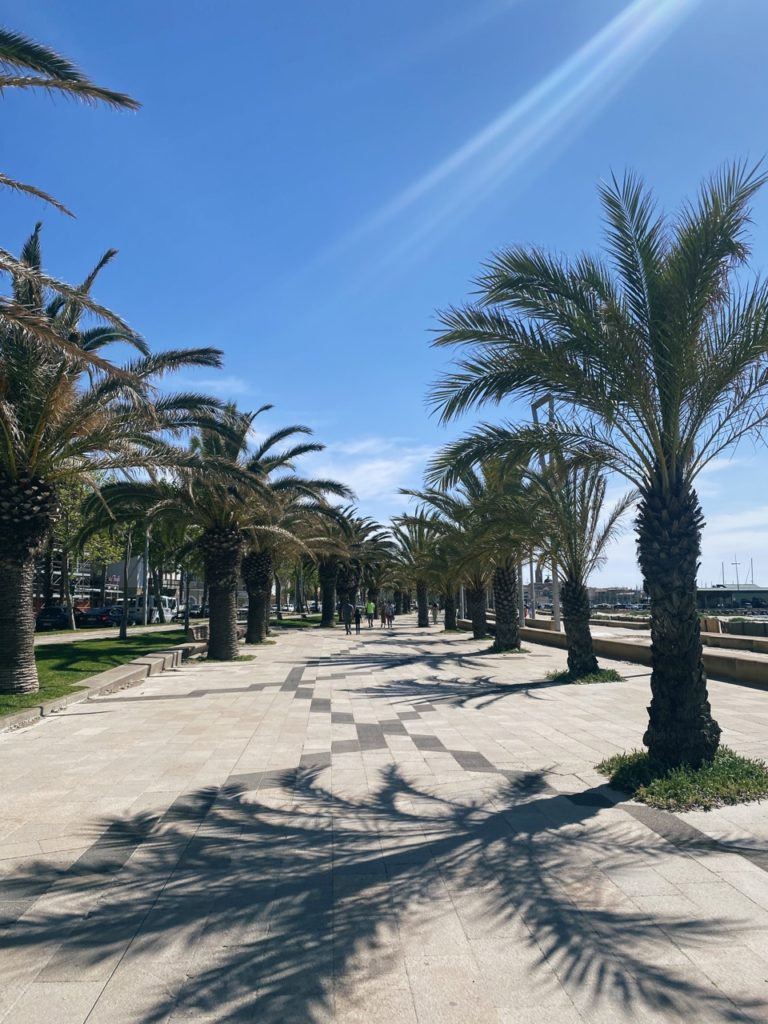
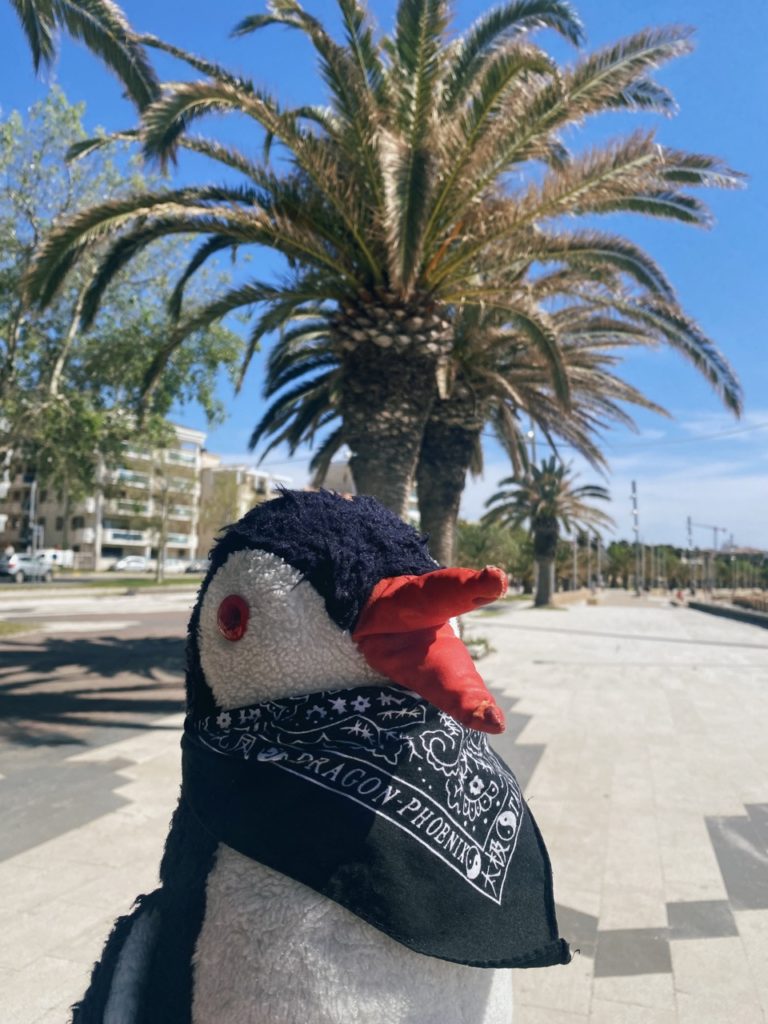
Lungomare Barcellona Promenade is one of the most pleasant places for a relaxed waddle in Alghero. Lined with palm trees, it offers plenty of shade and a steady sea breeze, making it especially enjoyable on warmer days. This promenade also forms the main waddling route toward Lido Beach, so chances are you will pass through it more than once during your stay.
The promenade stretches for approximately 1 kilometre, running along the seafront just outside the historic centre. It was developed in the early 20th century, when Alghero began expanding beyond its medieval walls and opening up to the sea. Along the way, you will find boat tour stands, souvenir stalls, cafés, and bars, making it an easy place to stop for a drink or plan a short boat trip.
An interesting fact is its name. Lungomare Barcellona is a nod to Alghero’s strong Catalan heritage and historic ties with Barcelona, which are still evident in the city’s architecture, traditions, and even its language.
Lido Beach
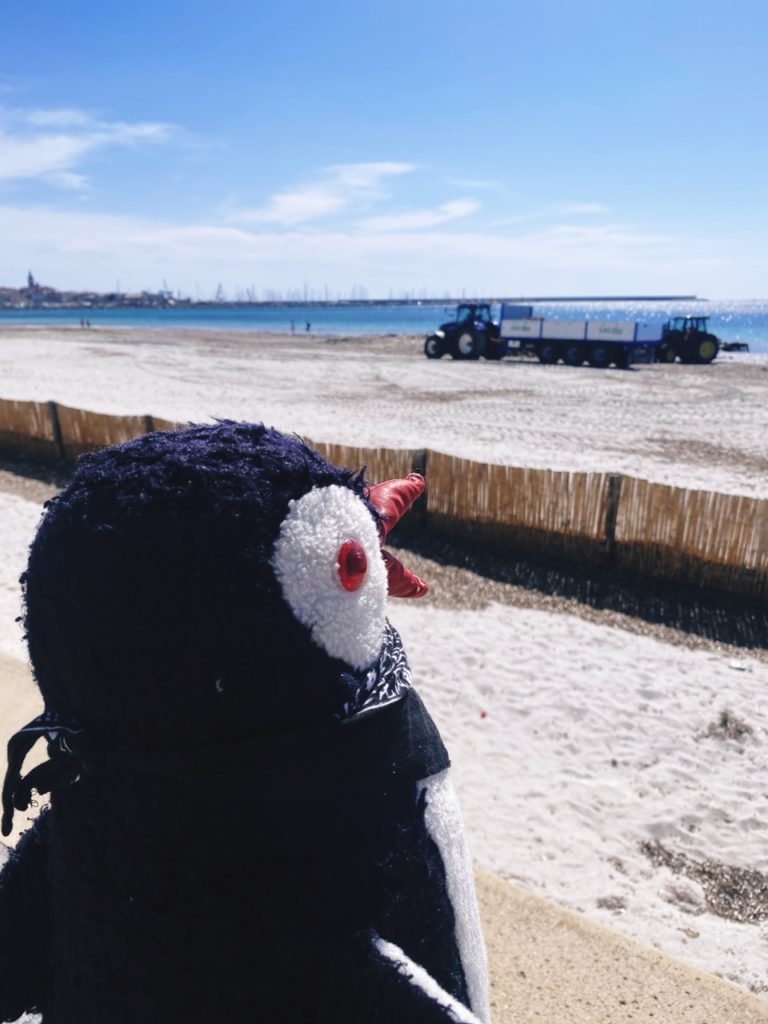
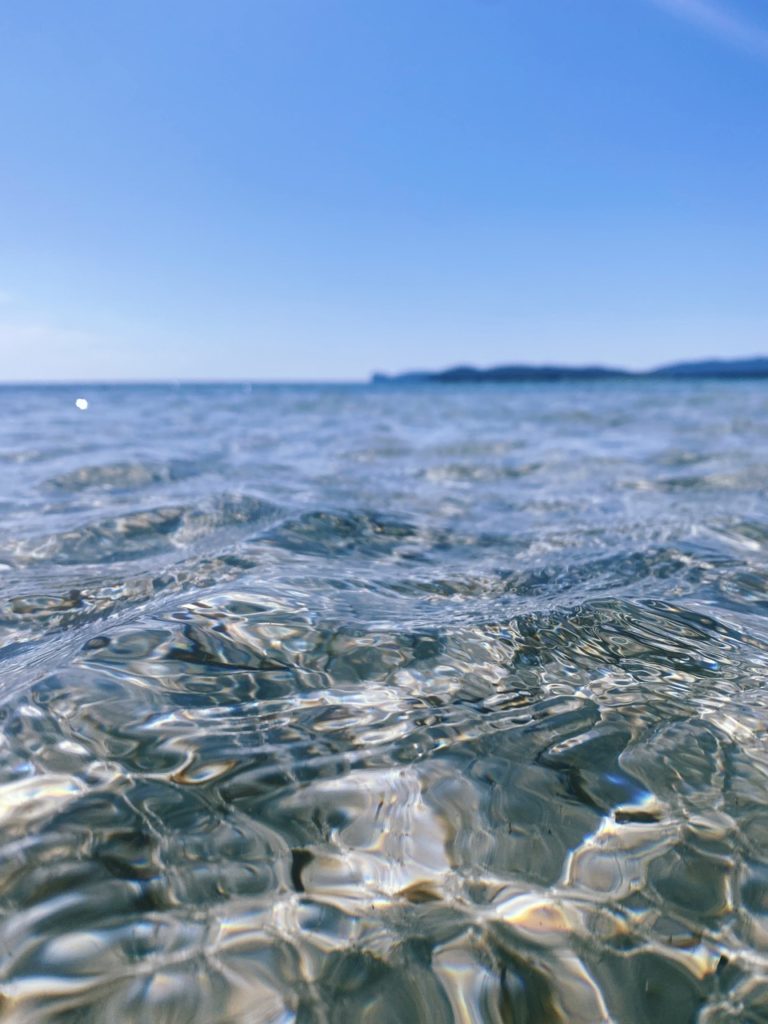
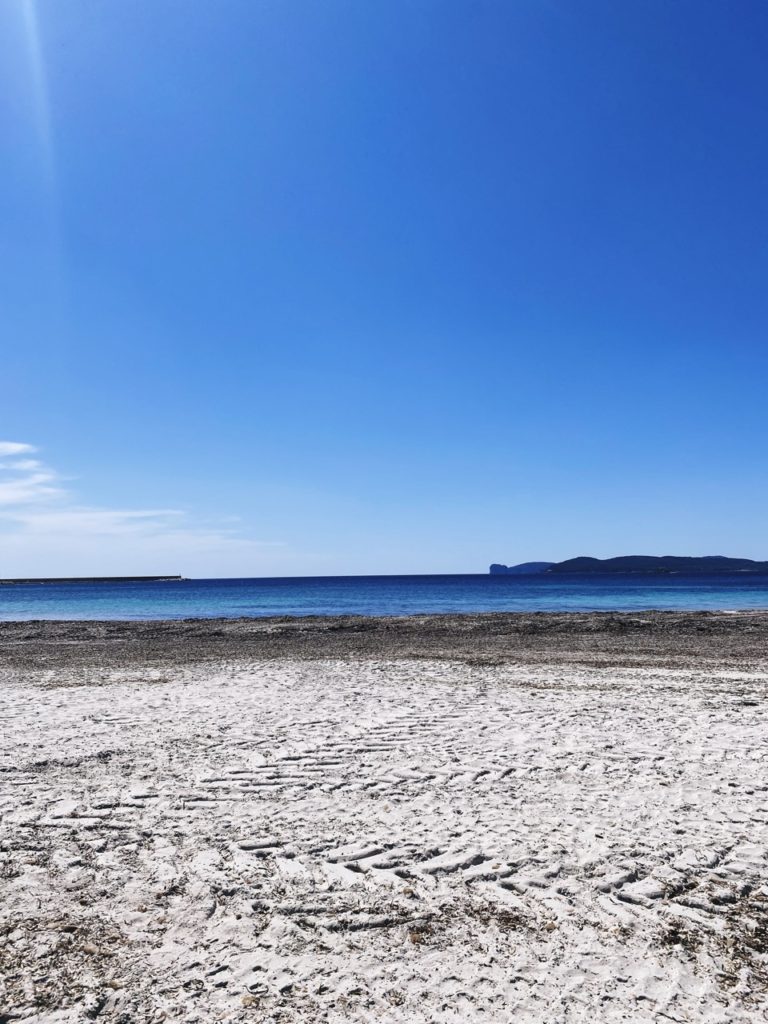
Lido Beach (Spiaggia Lido di San Giovanni) is a long, straight stretch of coastline known for its fine white sand and clear, turquoise water. It’s just a few hundred metres north of Alghero’s historic centre, and it is one of the easiest beaches to reach from the city, which explains its popularity.
The beach extends for nearly 1.5 kilometres and faces southwest, meaning it enjoys plenty of sun throughout the day. Thanks to its central location, Lido Beach is a favourite with both locals and visitors, offering quick access not only to the sea but also to the marina, promenade, and Old Town.
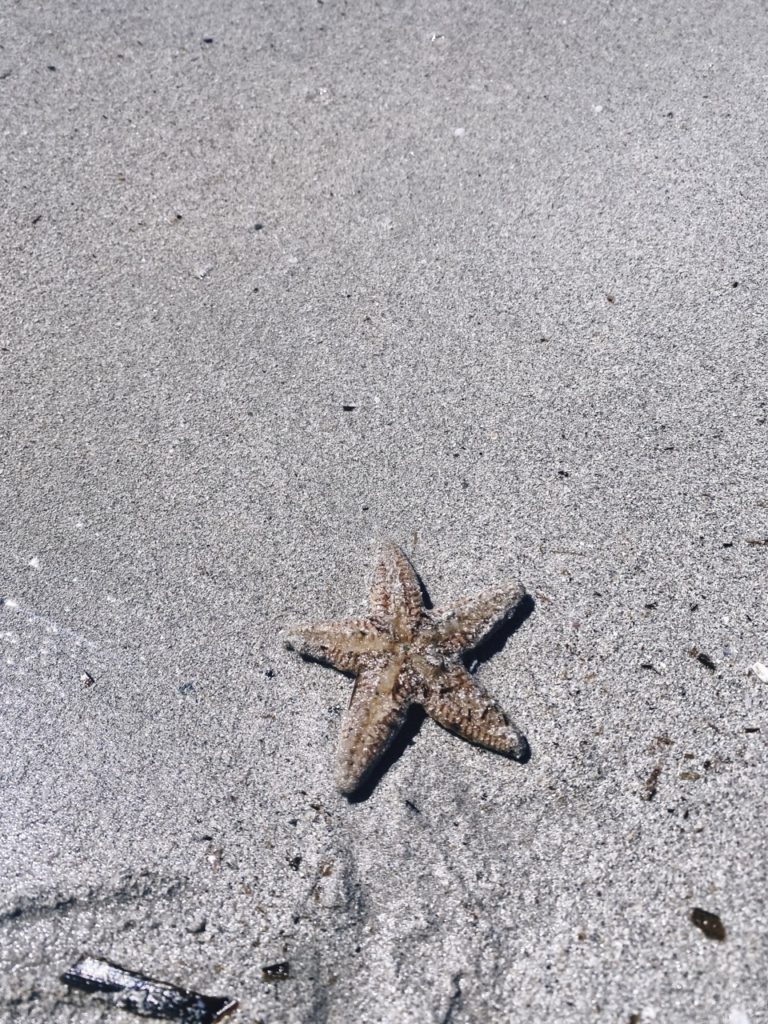
We visited in April, during the off-season, and the beach was still partly covered with seaweed, a natural occurrence after winter storms. That said, we can already see preparations underway, with sections being cleaned in anticipation of the peak summer months. Even with the seaweed present, the water remained crystal clear, which really says a lot about the quality of the sea here.
During summer, Lido Beach becomes lively, lined with beach clubs, sunbeds, cafés, and bars, making it a great option if you want a beach day without straying far from the city.
Places to Visit Near Alghero
Neptune’s Grotto
Neptune’s Grotto is an absolute must when visiting Alghero. If you decide to do just one thing, make it this. Discovered by a local fisherman in the 18th century, Neptune’s Grotto is a spectacular stalactite sea cave carved by the sea over millions of years.
To reach the cave by land, be prepared to waddle down 654 steps of the famous Escala del Cabirol. It sounds intimidating, but it is absolutely worth it. The views along the way are already breathtaking, with dramatic cliffs and deep blue water stretching out below you. For full details on opening hours, tickets, and what to expect, plus how our visit went, check out our dedicated guide: Neptune’s Grotto, Alghero: How to Visit Sardinia’s Most Stunning Sea Cave.
Nuraghe di Palmavera
Nuraghe di Palmavera is perfect if you are into a bit of time travel. Visiting this site takes you around 4,000 years back in time to the Nuragic civilisation, one of Sardinia’s earliest and most influential cultures. The archaeological complex includes stone towers and hut remains, offering a fascinating glimpse into how people lived here long before Roman or medieval times.
Across Sardinia, there are more than 7,000 nuraghi, and, luckily for Alghero visitors, a few are nearby. Nuraghe di Palmavera is one of the most accessible and well-preserved examples in the area.
The site is generally open daily from around 10:00 to 19:00, though hours can vary slightly by season. Entrance tickets cost around €5, with discounts or free entry for children (and yes, plushies still get in for free). A guided tour is highly recommended and costs about €2 per person, but it needs to be booked in advance. There is also an audio guide option, usually priced at around €3.
We have to admit, we did not manage to visit this time, and it is one of those places we genuinely regret skipping. If you have even a slight interest in ancient history, this is a stop well worth making.
Porto Conte Regional Natural Park
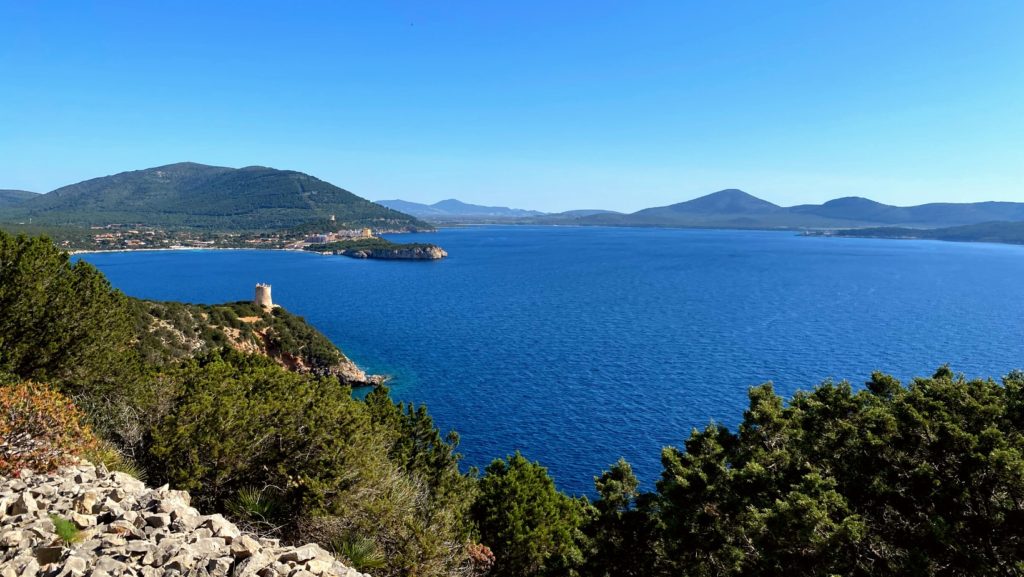
Porto Conte Regional Natural Park is another great option if you enjoy a good waddle surrounded by nature. This protected area is a unique environmental heritage of the Alghero region and offers a completely different side of Sardinia compared to the city and beaches.
Founded in 1999, the park covers a large, mostly flat inland area and extends to include around 60 kilometres of coastline. Here, long sandy beaches alternate with dramatic limestone cliffs, creating varied scenery and excellent walking routes with sea views.
There is plenty to explore within the park, from coastal paths and forest trails to hidden coves and panoramic viewpoints. Whether you are up for a longer hike or a relaxed nature walk, Porto Conte Regional Natural Park is a rewarding escape for anyone wanting to slow down and experience Sardinia beyond Alghero’s historic centre.
Sella & Mosca Winery
Not far from Alghero, wine lovers will find exactly what their heart desires at Sella & Mosca Winery. Set on an immense estate, it is one of the largest wineries in Europe and a true icon of Sardinian wine production.
Visits to the winery are available year-round, from Monday to Saturday, with Sunday openings during the peak season from June to September. Guided tours are offered in English as well, although this should be confirmed in advance when making a reservation. Walking through the vineyards and historic cellars is a fantastic way to experience another side of the Alghero region, especially if you enjoy wine paired with a bit of history.
Ferrata Cabirol
For the more adventurous souls out there, this is one of the most unique experiences you can have in Alghero, and not for the faint-hearted or anyone afraid of heights. Climbing the Via Ferrata del Cabirol is not a simple tour but a demanding and thrilling adventure that offers something truly special. Designed for experienced and confident hikers, it combines dramatic coastal views with exposed sections and ladders, making it a challenging yet unforgettable experience for those up to the task.
Best Beaches in Alghero
Alghero offers a great mix of beaches, with some located right in the city and others just a short distance away. Whether you want an easy beach you can reach on foot or are happy to venture a little further for something more natural and spacious, there is a beach around Alghero to suit every kind of beach day.
- Il Lazzaretto. Located about 10–12 km north of Alghero, on the way to Porto Conte, these two beaches sit in small coves with fine sand and crystal-clear water. They are surrounded by a dense Mediterranean pine forest, alive with the sound of cicadas in summer, and are among the most popular beaches in the area.
- Mugoni Beach. Situated around 12 km from Alghero, Mugoni lies within the Porto Conte Regional Natural Park. It features soft sand, calm clear water, and offers beautiful views toward Capo Caccia. Its sheltered position makes it a great choice on windy days.
- Lido San Giovanni. Located right in Alghero, just 1 km from the historic centre, this is the city’s main urban beach. It is perfect for a quick morning swim or an afternoon beach break, with cafés, beach clubs, and easy access from town.
- Maria Pia Beach. Found about 3–4 km from Alghero, in the direction of Fertilia, this beach is known for its white sand, protected dunes, and pine forest. It feels more spacious and natural than the urban beaches, and, in our opinion, is the most beautiful beach near Alghero.
- Porto Ferro Beach. Located roughly 25 km north of Alghero, Porto Ferro is one of the most secluded and wild beaches in the area. The wide bay is backed by hills and watched over by three Aragonese towers, which alone make the trip worthwhile. It is also popular with surfers when conditions are right.
- La Pelosa Beach. About 45–50 km north of Alghero (around a one-hour drive), La Pelosa is one of the most famous beaches in Sardinia. Known for its shallow, turquoise water and Caribbean-like feel, it is extremely popular in summer, when advance booking via an app is required to control visitor numbers.

Buy Me a Ko-fi
Our Alghero Itinerary for 2.5 Days
Alghero is one of those destinations that surprised us. From wandering through the historic centre and walking along centuries-old walls to relaxing on beautiful beaches and discovering places just outside the city, it offers a little bit of everything. Even with just two and a half days, we managed to experience the essence of the city without rushing.
Whether you are here for history, food, nature, or to enjoy that slow Mediterranean rhythm, Alghero delivers. We hope this itinerary helps you plan your own trip and makes it easier to decide what to prioritise. Take your time, waddle often, and let Alghero work its quiet magic on you.
Pack your bags, put your waddling shoes on, and explore Alghero!
Save This Pin for Later!
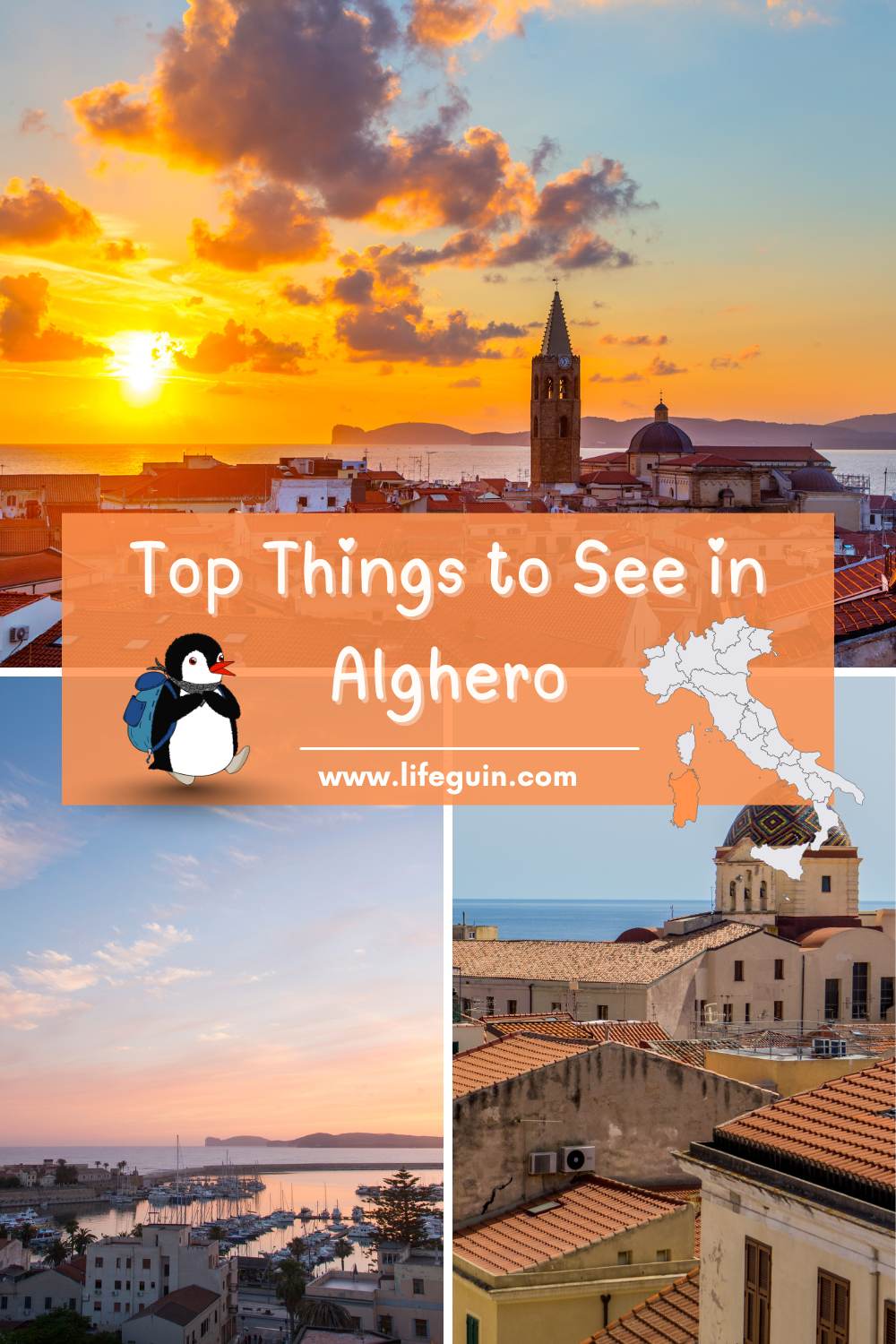
This post contains affiliate links. If you click and buy, I might earn a tiny commission, enough to help a penguin keep up its globe-trotting lifestyle. No extra cost to you, just more fish for me. Thank you for supporting the adventure!