
Chinese Cuisine Guide: Regional Dishes You Must Try When Visiting China
When we visited China, we were beyond excited to taste the dishes we’d only ever heard about, and they did not disappoint. Every meal felt like an adventure, from steaming baskets of dumplings in Shanghai to spicy noodles that made our eyes water in Chengdu. Chinese cuisine is so much more than what we know from takeout menus. Each region has its own flavors, traditions, and cooking secrets waiting to be discovered. Whether you’re wandering through a local market or sitting down in a small family restaurant, you’ll find that food in China tells the story of its people, history, and culture one delicious bite at a time. Read on to learn what foods not to miss.
- Northern China: Bold flavors, hearty wheat dishes, and famous dumplings
- Sichuan Province (Southwest China): Spicy, numbing, and bursting with flavor
- Eastern China: Subtle sweetness and refined cooking styles
- Cantonese (Guangdong & Hong Kong): Dim sum, seafood, and delicate flavors
- Western China (Xinjiang & Gansu): Aromatic spices and Middle Eastern influences
- Southern China (Hunan & Guangxi): Spicy, sour, and full of personality
- Yunnan Province (Southwest Border): Colorful, earthy, and full of herbs
- Tips for Eating in China
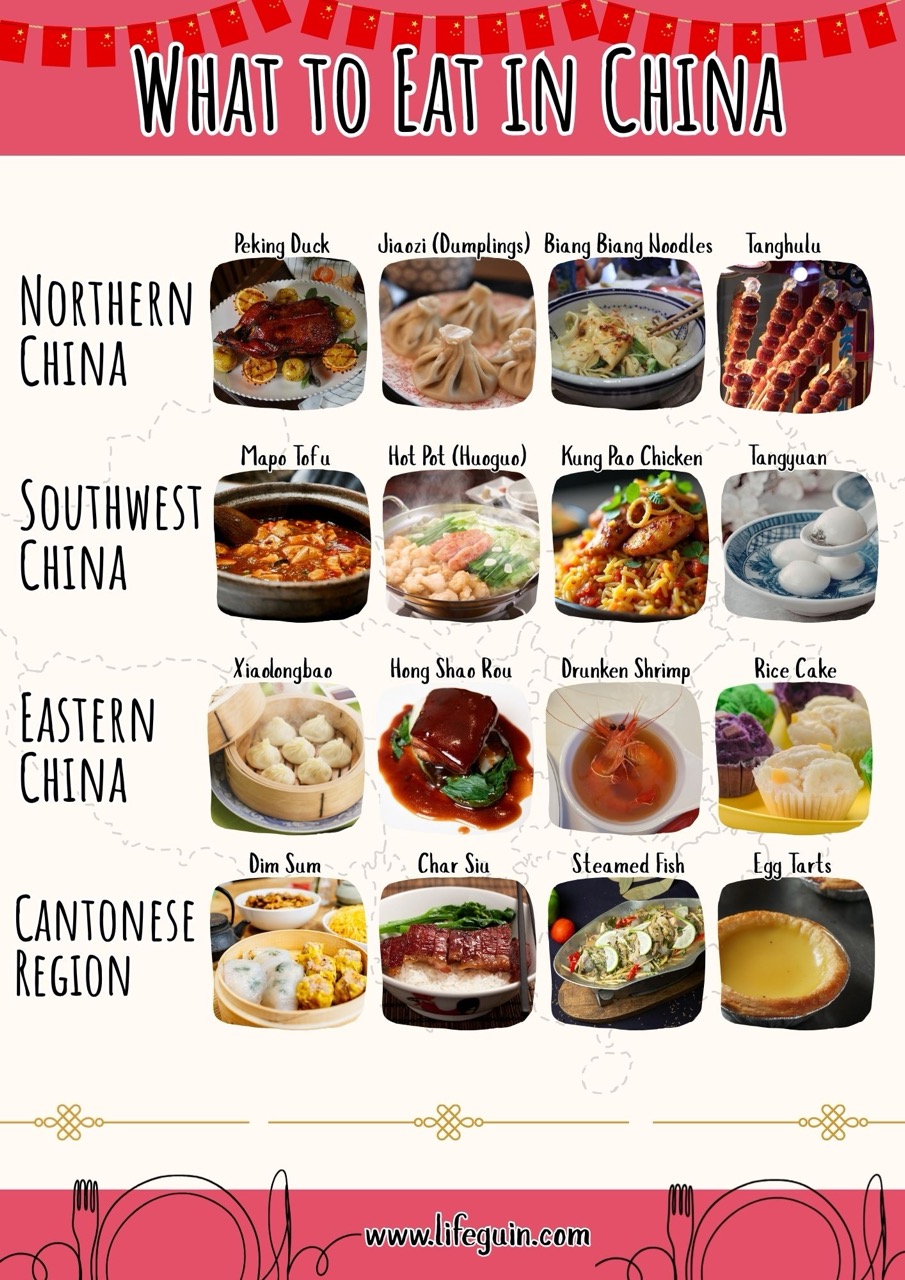
Northern China: Bold flavors, hearty wheat dishes, and famous dumplings
Northern China, home to Beijing, Xi’an, and Tianjin, is known for its strong, savory flavors and its love for noodles and dough-based dishes. Because the region’s colder climate favors wheat over rice, you’ll find plenty of buns, pancakes, and noodles here.
- Peking Duck (Beijing). Roasted to crispy perfection and served with thin pancakes, scallions, and hoisin sauce. It’s one of China’s most iconic dishes and is worth the wait.
- Jiaozi (Dumplings). These boiled or fried dumplings are filled with minced meat and vegetables. We loved trying them with black vinegar and chili oil.
- Biang Biang Noodles (Shaanxi). Extra-wide hand-pulled noodles tossed in spicy oil, garlic, and chili flakes, a simple yet addictive comfort food.
- Tanghulu. Candied hawthorn berries on skewers, sold by street vendors, are crispy, glossy, and nostalgic.
Sichuan Province (Southwest China): Spicy, numbing, and bursting with flavor
Sichuan cuisine is renowned worldwide for its distinctive use of chili peppers and Sichuan peppercorns, which create the characteristic “mala” sensation. If you love bold flavors, this region will be your paradise.
- Mapo Tofu. Silky tofu in a spicy, aromatic sauce made with minced pork, fermented beans, and chili oil.
- Hot Pot (Huoguo). A communal meal where you cook meats, vegetables, and tofu in a bubbling spicy broth.
- Kung Pao Chicken. Stir-fried chicken with peanuts, dried chilies, and a sweet-spicy sauce is a perfect mix of flavor and texture.
- Sichuan Sweet Glutinous Rice Balls (Tangyuan). Chewy rice balls filled with sesame paste are often served in sweet syrup.
Eastern China: Subtle sweetness and refined cooking styles
Eastern China, including Shanghai, Zhejiang, and Jiangsu, is known for its elegant dishes, gentle seasonings, and slightly sweet flavors. The food here often emphasizes freshness and presentation.
- Xiaolongbao (Soup Dumplings). Delicate dumplings filled with rich broth and pork, best enjoyed with a splash of vinegar.
- Hong Shao Rou (Red-Braised Pork). Slow-cooked pork belly in soy sauce, sugar, and rice wine, sweet, sticky, and melt-in-your-mouth good.
- Drunken Shrimp. Fresh shrimp marinated in Shaoxing wine, a traditional Jiangsu specialty.
- Sweet Osmanthus Rice Cake. Fragrant and floral, made with sticky rice flour and osmanthus syrup, this is a light and elegant dessert.
Buy Us a Ko-fi

Cantonese (Guangdong & Hong Kong): Dim sum, seafood, and delicate flavors
Cantonese cuisine is all about balance, freshness, and technique. It’s the origin of many dishes that traveled across the world, like dim sum and sweet-and-sour pork.
- Dim Sum. A collection of bite-sized dishes like shrimp dumplings (har gow), siu mai, and BBQ pork buns, traditionally served with tea.
- Char Siu (BBQ Pork). Tender pork marinated in honey, soy, and five-spice, then roasted until caramelized.
- Steamed Fish with Ginger and Soy. A light yet flavorful dish that highlights the natural taste of fresh fish.
- Egg Tarts. Buttery pastry shells filled with creamy egg custard, perfect for dessert or breakfast.
Western China (Xinjiang & Gansu): Aromatic spices and Middle Eastern influences
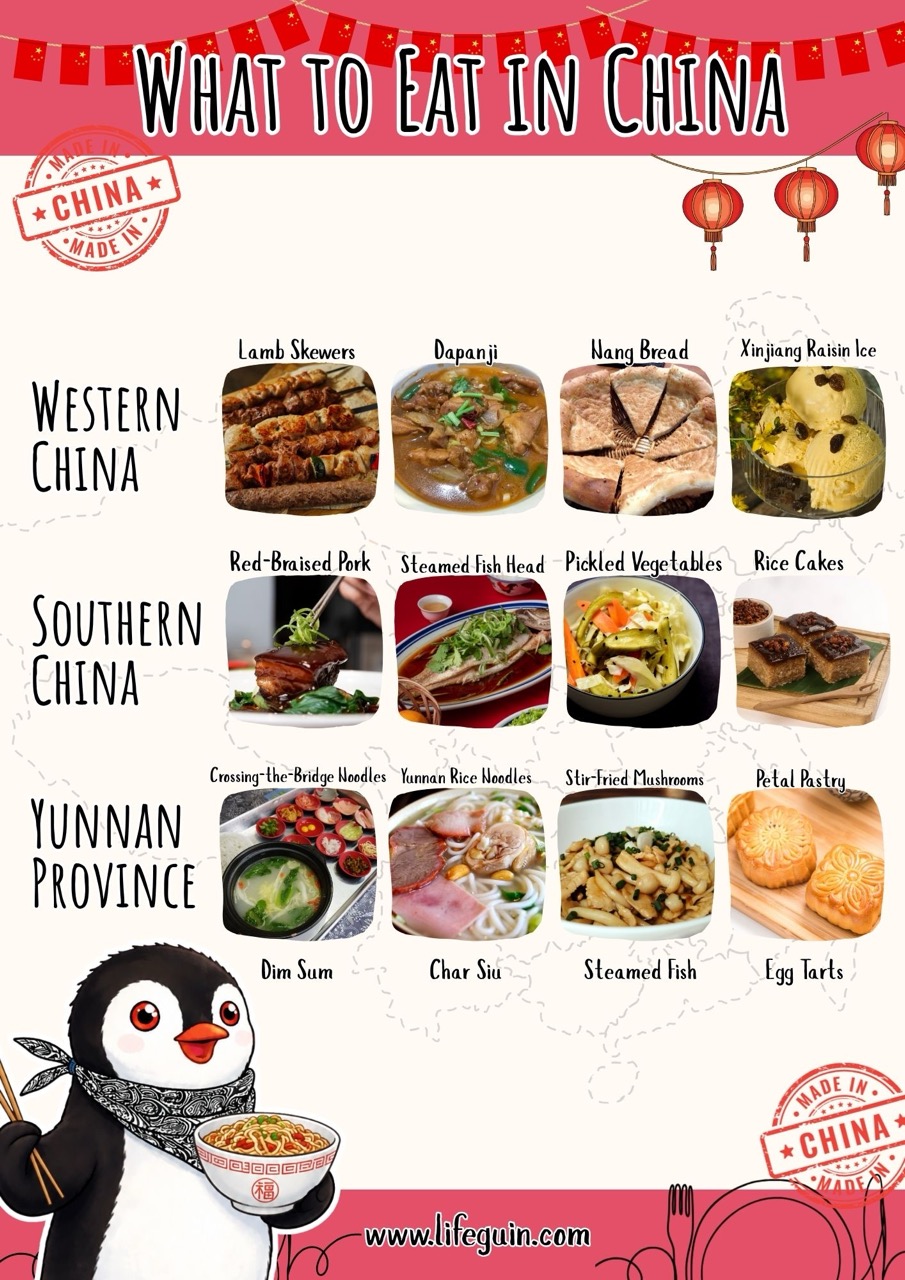
Western China’s cuisine is shaped by its Silk Road history, blending Chinese and Central Asian flavors. Expect grilled meats, hand-pulled noodles, and rich spices.
- Lamb Skewers (Chuan’r). Juicy skewered lamb seasoned with cumin, chili, and salt, a street-food favorite.
- Dapanji (Big Plate Chicken). A hearty stew of chicken, potatoes, and wide noodles in a spicy sauce.
- Nang Bread. Crispy, tandoor-style bread is often paired with stews or kebabs.
- Xinjiang Raisin Ice Cream or Yogurt. A refreshing finish to balance the spices, mildly sweet and creamy.
Southern China (Hunan & Guangxi): Spicy, sour, and full of personality
While Sichuan gets most of the fame, Hunan cuisine is equally bold, often spicier than its counterparts. Locals love the combination of chili, garlic, and vinegar, which gives every dish a punchy kick.
- Chairman Mao’s Red-Braised Pork. A rich, caramelized pork dish beloved across Hunan.
- Steamed Fish Head with Chili. A famous dish in Changsha is known for its bright color and intense flavor.
- Pickled Vegetables. Served as sides or in stir-fries, adding a tangy balance to spicy dishes.
- Rice Cakes with Brown Sugar Syrup. Chewy, warm, and comforting, simple but addictive.
Yunnan Province (Southwest Border): Colorful, earthy, and full of herbs
Yunnan’s cuisine is a beautiful mix of Chinese and Southeast Asian influences, known for its use of fresh herbs, mushrooms, and flowers.
- Crossing-the-Bridge Noodles. A famous dish where you assemble your noodles, meats, and vegetables in hot broth right before eating.
- Yunnan Rice Noodles. Smooth and slightly chewy, served in light yet flavorful soups.
- Stir-Fried Mushrooms. Yunnan is a paradise for mushroom lovers; local varieties are rich and aromatic.
- Rose Petal Pastry. Flaky pastry filled with rose jam, fragrant, delicate, and very Yunnan.
Tips for Eating in China
Eating in China is an adventure in itself, full of flavors, surprises, and local quirks that make every meal memorable. Here are some tips we learned along the way to help you eat like a local and make the most of your culinary journey:
- Always carry cash or Alipay/WeChat Pay. Many small eateries and night markets don’t accept foreign cards, so mobile payments or cash are the way to go.
- Download translation apps. Menus aren’t always in English, but apps like Google Translate or Papago make ordering much easier.
- Be adventurous, but cautious when it comes to street food. Go for stalls with long lines, locals know where the freshest food is.
- Share dishes “family style.” Chinese meals are meant to be shared, so order a few plates and try everything together.
- Don’t expect napkins. Many local restaurants don’t provide them, so carry your own tissues or wet wipes.
- Bring your own chopsticks or spoon if you prefer. In some casual places, utensils might be reusable and not individually wrapped.
- Drink bottled or boiled water. Tap water isn’t safe for drinking in most areas.
- Don’t tip. It’s not part of Chinese culture; a simple “谢谢” (xièxiè) is appreciated instead.
- Learn a few basic food words. “不辣” (bù là) means “not spicy,” which can be useful if you can’t handle Sichuan heat.
- Expect regional variety. Spice levels, cooking styles, and portion sizes differ drastically from north to south; that’s part of the fun!
- Eat breakfast out. Street vendors serve some of the best morning foods, think fresh dumplings, soy milk, or fried dough sticks (youtiao).
Exploring China through food is the most rewarding travel experience you can ever have. Every dish tells a story of people, regions, and centuries of culinary tradition. Whether you’re sitting in a local eatery in Beijing or tasting dim sum in Hong Kong, remember to keep an open mind and an empty stomach.
Pro Penguin Tip: Always try at least one local street snack wherever you go, that’s where the real flavors of China come alive.
Travel Bold. Eat Well. Waddle Wild.

This post contains affiliate links. If you click and buy, I might earn a tiny commission, enough to help a penguin keep up its globe-trotting lifestyle. No extra cost to you, just more fish for me. Thank you for supporting the adventure!