Exploring Beijing’s Forbidden City: What to See, Tips & Hidden Corners
After conquering the Great Wall, the next big dream on our Beijing bucket list was the legendary Forbidden City. We’d seen it in movies, documentaries, and postcards, but nothing quite prepares you for the real thing. The entrance alone felt like organized chaos: crowds everywhere, tickets in hand, scanners beeping, and us waddling through it all like two confused penguins in a sea of tourists. But once we stepped inside, everything changed. The noise faded, the red walls towered above us, and history seemed to hum through every stone. The waddle quickly turned magical. Read on to learn how to make the most of your own visit and avoid a few of our rookie mistakes along the way.
- How to Get to the Forbidden City
- Forbidden City Opening Hours
- Forbidden City Tickets
- Facilities & Amenities Inside the Forbidden City
- A Brief History of the Forbidden City
- Secrets Beneath the Golden Roofs: The Legend of the Forbidden City
- Best Time to Visit the Forbidden City
- Our Waddle Through the Forbidden City
- Practical Facts About the Forbidden City
- Main Halls and Palaces to See in the Forbidden City
- How Long Do You Need to Visit the Forbidden City
- How Many People to Expect at the Forbidden City
- Jingshan Park
- The Perfect Day in Beijing: Our Recommended Route
How to Get to the Forbidden City
Getting to the Forbidden City is easy and perfectly pairs with a visit to Tiananmen Square, since the two landmarks sit right next to each other in the heart of Beijing.
By Metro
- Line 1. Get off at Tiananmen East (Exit A) or Tiananmen West (Exit B). Both exits lead directly to Tiananmen Square; from there, walk north to the Meridian Gate (main entrance) of the Forbidden City.
- Line 2. Get off at Qianmen Station (Exit A) and walk about 10–15 minutes through Tiananmen Square.
The most convenient way to reach them is by metro, take Line 1 to Tiananmen East or Tiananmen West Station. From there, follow the signs and the stream of visitors toward the square, then continue north to the main entrance of the Forbidden City (the Meridian Gate).
By Bus
Several buses stop near the Forbidden City and Tiananmen Square:
- 1, 2, 52, 59, 82, 99, 120, 126, 203, 210, 728, 802 – Get off at Tiananmen East or Tiananmen West.
- Special Tourist Bus Line 1 or 2 – These hop-on-hop-off buses also stop near the Forbidden City and other key landmarks.
Waddle
- If you’re staying nearby, you can also waddle or take a short Didi (Chinese Uber) ride. Please note that both sites require security checks, so you can expect a waiting time before you enter.
Forbidden City Opening Hours
The Forbidden City (also known as the Palace Museum) has two main seasons for visiting. From April to October, the museum is open Tuesday to Sunday, 8:30 AM to 5:00 PM (last entry at 4:00 PM, with the museum halls closing at 4:10 PM). From November to March, it closes an hour earlier, 8:30 AM to 4:30 PM, with the last entry at 3:30 PM. The site is closed every Monday, except on national holidays. Arriving early is highly recommended; it gets busy fast, and you’ll enjoy a calmer start to your waddle through history.
Note: The schedule can change (during repairs, holidays, or special events). Always check the official Palace Museum website before heading there to confirm up-to-date hours.
Forbidden City Tickets
Tickets must be purchased online in advance, as there are no on-site ticket counters. You can buy them through the official Palace Museum website or via major travel apps.
The entrance fee is ¥60 (around €7.50) during peak season (April–October) and ¥40 (around €5) in the off-season (November–March). Inside, you can also buy an optional ¥10 ticket for the Treasures Gallery and ¥10 for the Clock Exhibition Hall.
Don’t forget to bring your passport, it’s required for entry and acts as your ticket ID.
Again, always check the official Palace Museum website just before your visit for last-minute changes in ticket rules or pricing.
We actually bought our tickets in advance through GetYourGuide, here’s the listing we used: “Beijing: The Forbidden City or Tiananmen Square Entry Ticket”
Facilities & Amenities Inside the Forbidden City
The Forbidden City is huge, but well-equipped with everything you need for a comfortable visit. Here’s what to expect once you waddle inside:
- Restrooms. Public toilets are located throughout the palace grounds, especially near main halls and exits. Most are clean but many are squat-style, so be prepared and carry tissues or hand sanitizer.
- Cafés & Refreshments. Small cafés and drink stalls serve water, tea, and light snacks. For a full meal, it’s best to eat outside the north gate (Shenwumen). Bring your own water bottle—Beijing’s sun can be relentless.
- Souvenir Shops. Several shops inside sell postcards, replicas, books, and traditional gifts. The main store near the Gate of Supreme Harmony is perfect for picking up a quality souvenir.
- Audio Guides. Available in multiple languages, the GPS-activated audio guides are easily rented at the entrance and share fascinating details as you explore each courtyard.
- Lockers & Storage. Large bags aren’t allowed in exhibition halls, but lockers and luggage storage are available near the main entrance, handy if you’re coming straight from a trip or heading to the airport later.
- Accessibility. The main walkways are wheelchair-friendly, though some smaller courtyards have uneven stone surfaces. Ramps are available at key points.
A Brief History of the Forbidden City
- Built in the early 15th century. Construction began in 1406 under the orders of Emperor Yongle of the Ming Dynasty and took 14 years to complete.
- A home for emperors. For nearly 500 years, it served as the residence and political center for 24 emperors of the Ming and Qing dynasties.
- Symbol of imperial power. Ordinary people were forbidden from entering, hence the name “Forbidden City.”Only royalty, officials, and servants were allowed inside.
- Architectural masterpiece. The complex spans approximately 720,000 square meters, featuring over 8,000 rooms, all aligned in perfect symmetry based on ancient feng shui principles.
- End of the empire. The last emperor, Puyi, was forced to abdicate in 1912, marking the end of imperial rule in China.
- Transformation into a museum. In 1925, it officially became the Palace Museum, opening its gates to the public for the first time.
- UNESCO World Heritage Site. Recognized in 1987 for its cultural and historical value, it’s now one of the most visited museums in the world.
Secrets Beneath the Golden Roofs: The Legend of the Forbidden City
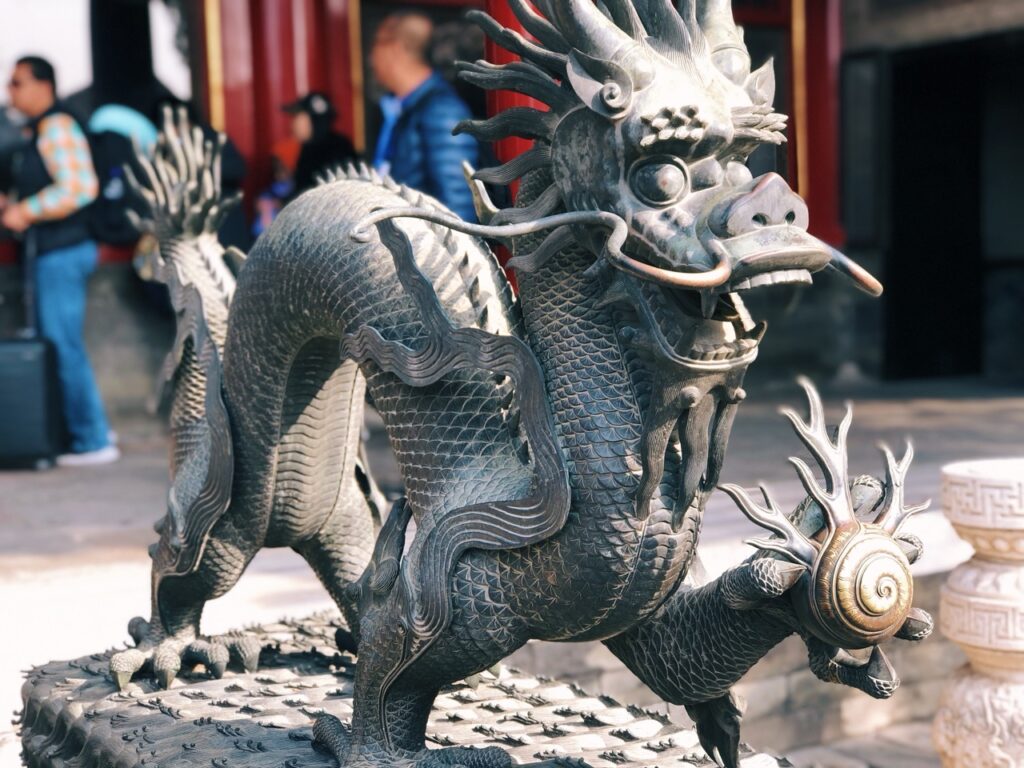
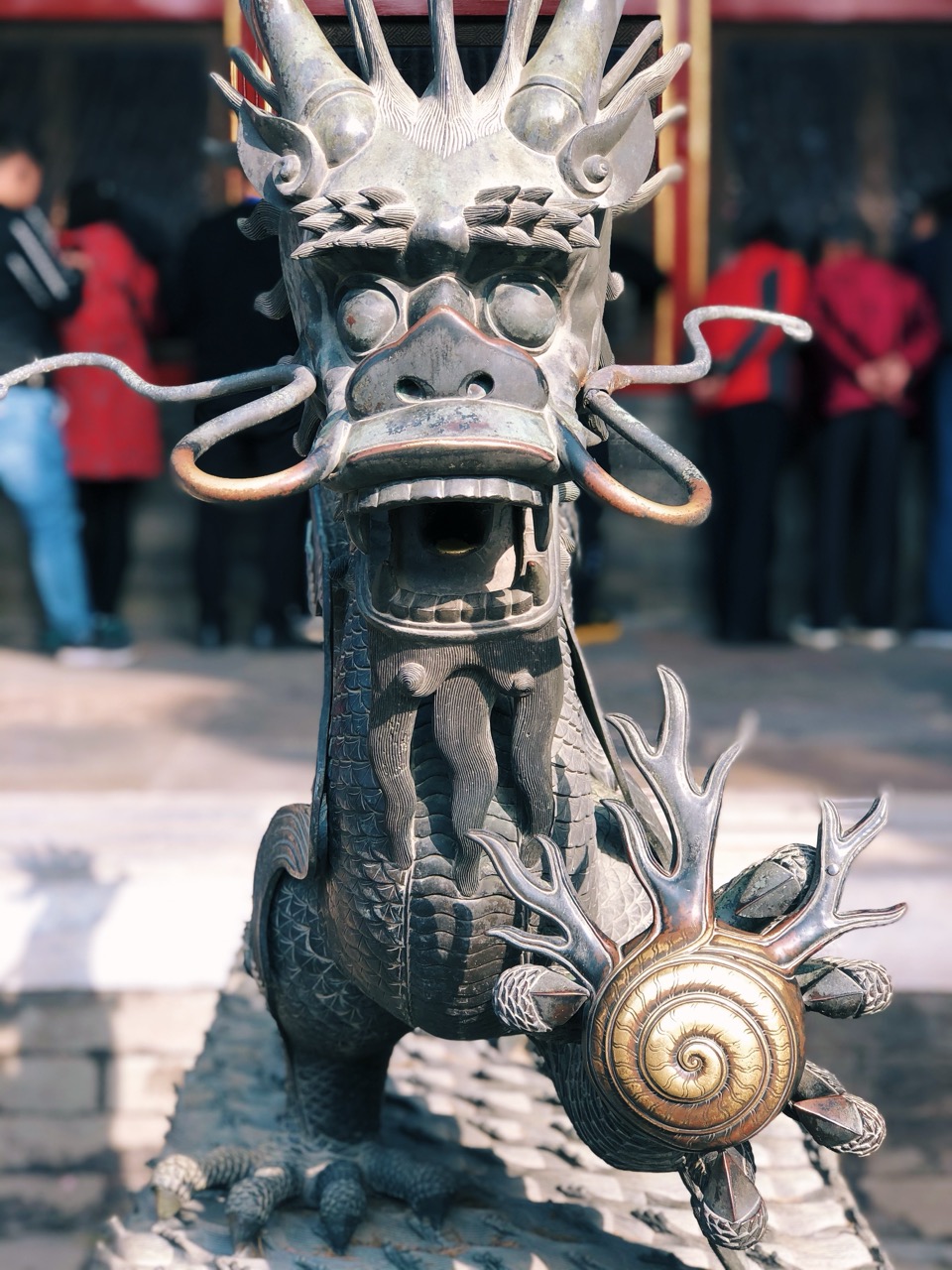
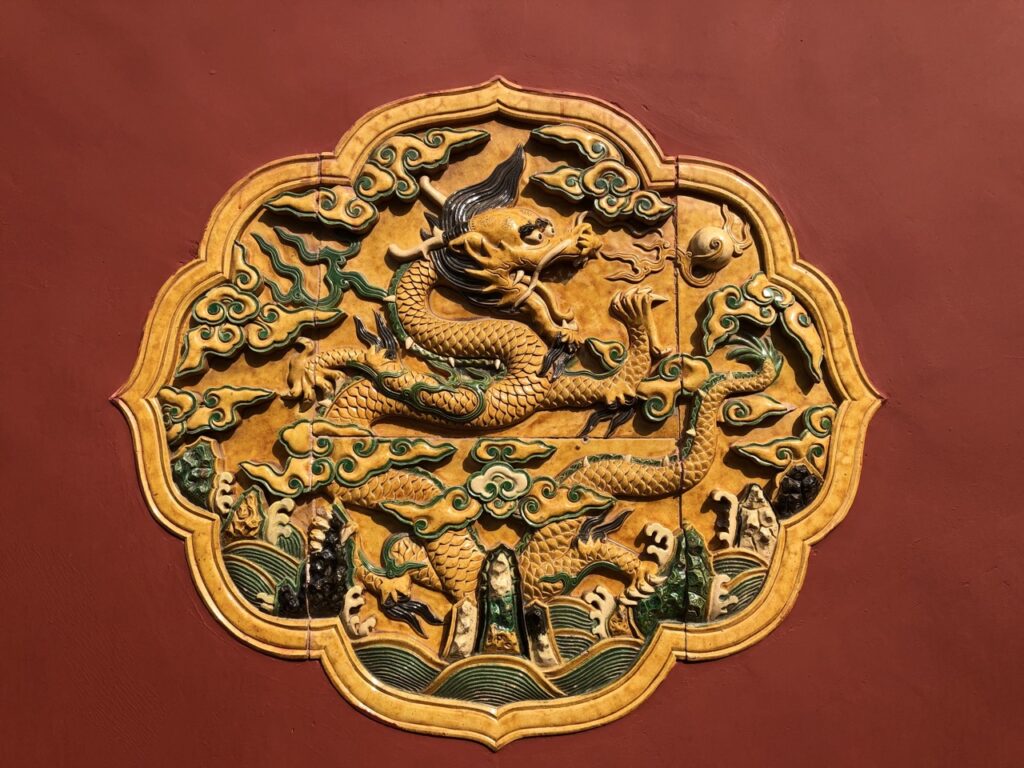
Beyond its grand halls and golden roofs, the Forbidden City holds a lesser-known legend whispered among locals and guides. It’s said that deep within the palace, near the Hall of Supreme Harmony, a mystical dragon spirit once protected the emperors. During the Ming dynasty, a great fire broke out inside the palace, threatening to destroy everything. But according to witnesses, a giant dragon-shaped cloud formed above the hall, bringing sudden rain that saved the heart of the city. Since then, the dragon has been seen as the guardian of the imperial throne, symbolizing heaven’s approval of the emperor’s rule. Some even believe that on stormy summer nights, when lightning strikes near the rooftops, the dragon still awakens to watch over the city.
Best Time to Visit the Forbidden City
The best time to visit the Forbidden City is early in the morning, ideally right after it opens at 8:30 AM. That’s exactly when we went and it made all the difference. The crowds were lighter, the air cooler, and the morning light made the red walls and golden roofs glow beautifully in the sun. By mid-morning, tour groups start to fill the courtyards, and by noon it can get quite packed, especially near the main halls. If you prefer a calmer, more peaceful experience (and better photos without a sea of people behind you), arrive early and head straight for the Hall of Supreme Harmony before exploring the smaller courtyards later on.
Our Waddle Through the Forbidden City
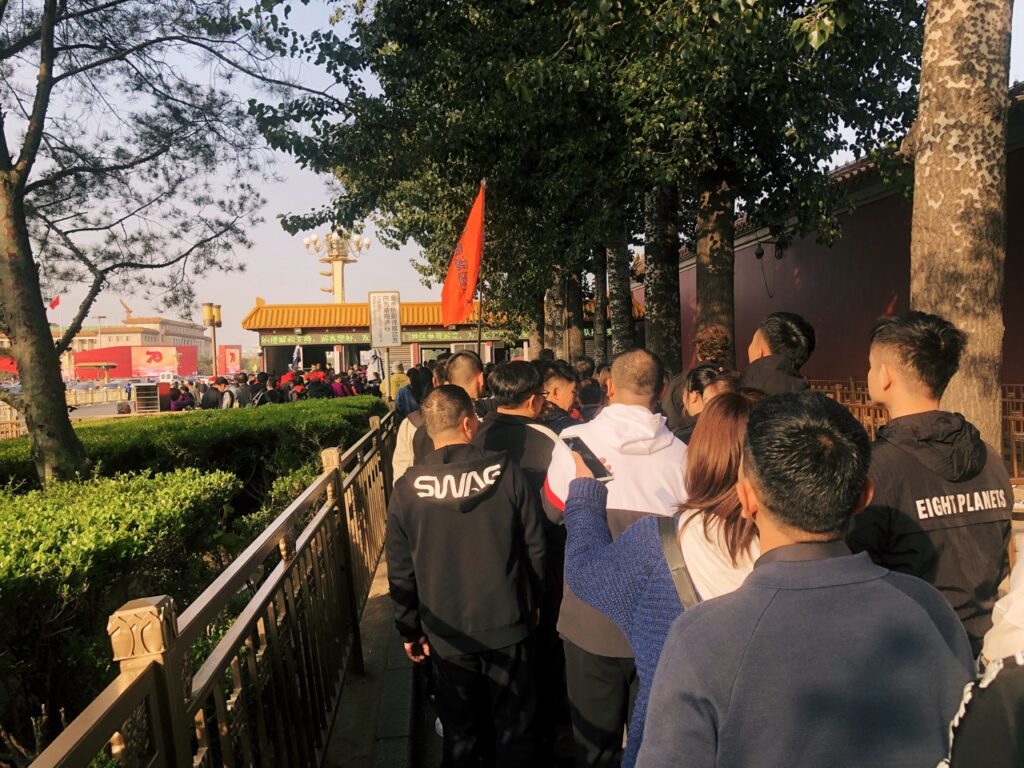
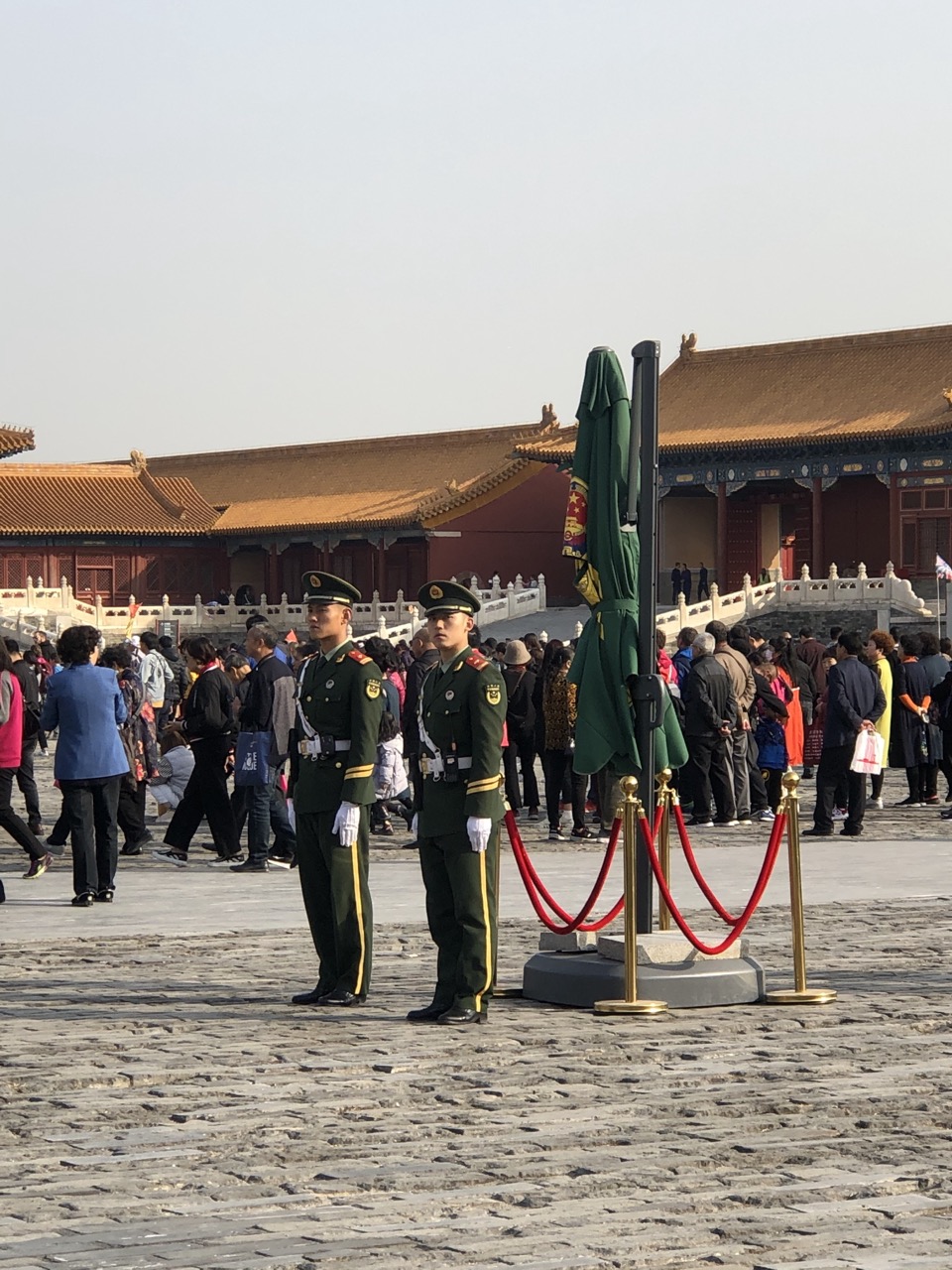
So we arrived by metro, taking Line 1 straight to Tiananmen East Station, and from there, we walked along East Chang’an Street toward the main entrance of the Forbidden City. Before we even got close to the iconic red gate, we were greeted by another security check—a standard routine in Beijing’s major landmarks. We passed through metal detectors, had our bags scanned, and our passports inspected to confirm our valid visas. It all felt a bit intense at first, but once we were cleared, we joined the flow of visitors heading toward the grand Meridian Gate, ready to start our waddle through history.
Tours and tickets from ViatorShows Viator’s own box, which can set Viator cookies.
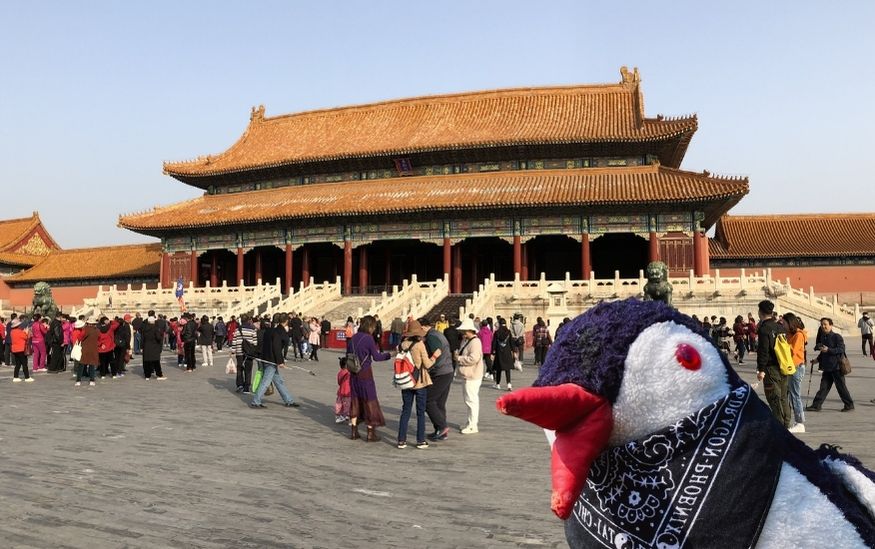
Entering through the main gate was an adventure of its own. There were people everywhere, hundreds moving in one direction, and the passage through the narrow gate felt more like joining a slow, determined river of travelers than walking. You just went with the flow and hoped for the best.
Once we finally made it inside, we picked up our audio guide, which turned out to be one of the best decisions of the day. It didn’t just explain the history, it also worked as a map with a built-in GPS tracker, automatically playing interesting stories based on where we were standing. It felt like having our own private guide waddling right beside us.
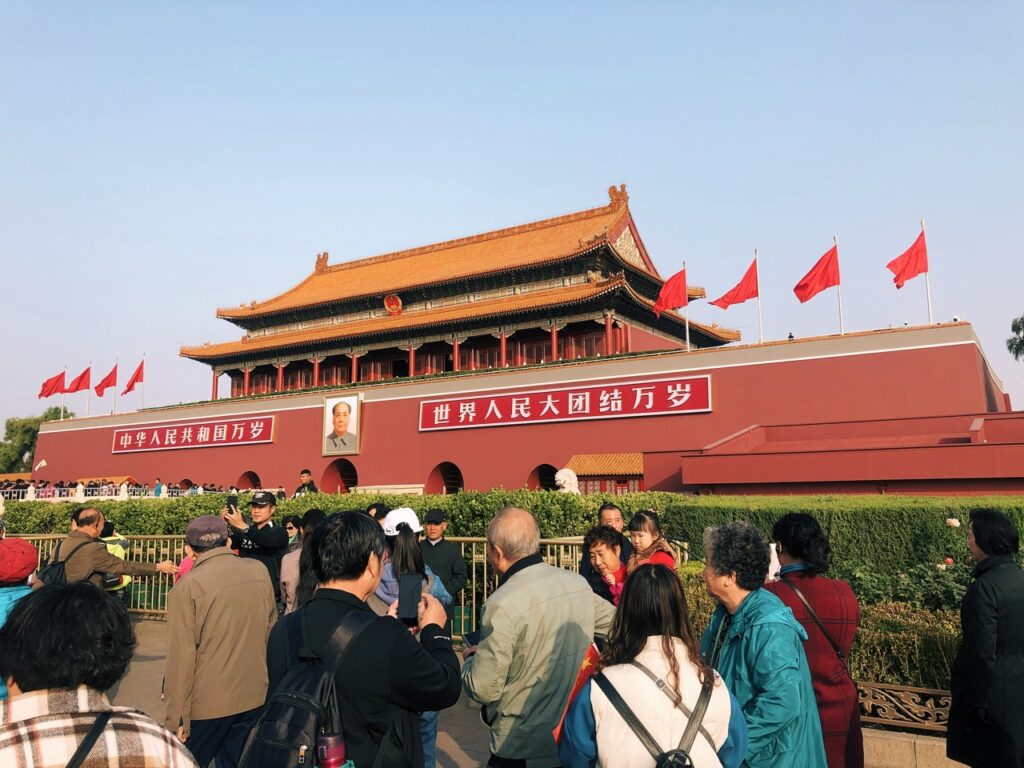
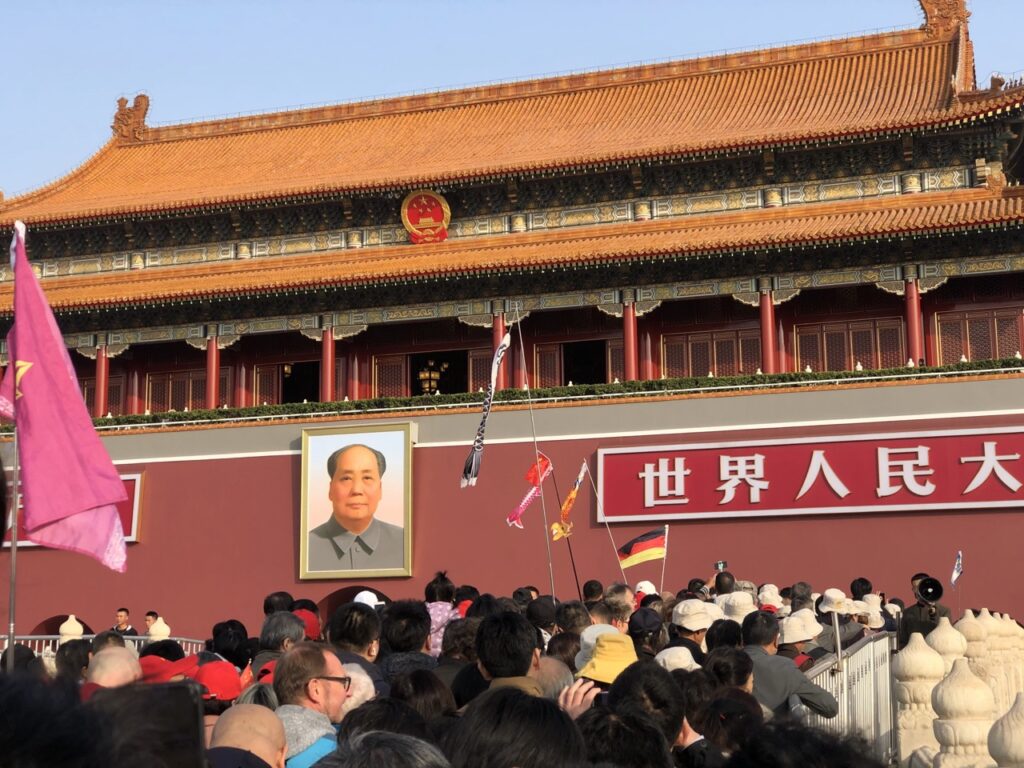
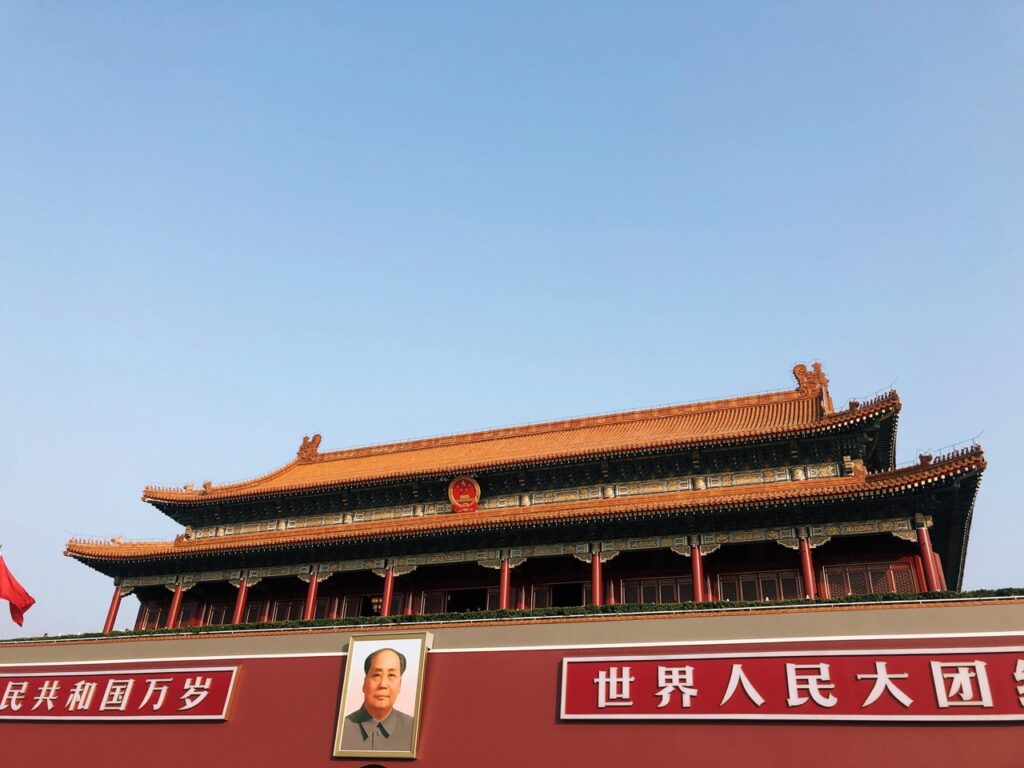
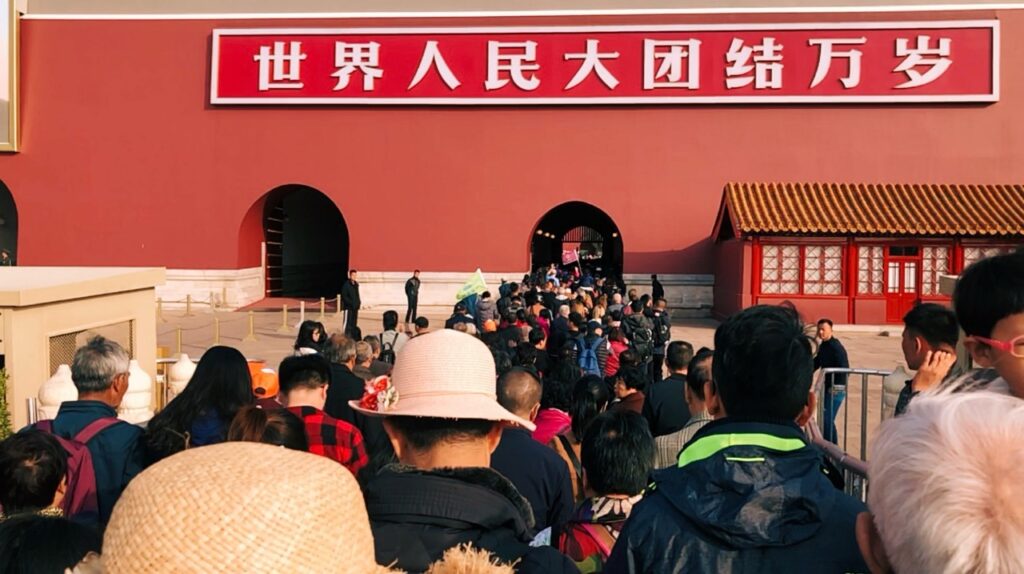
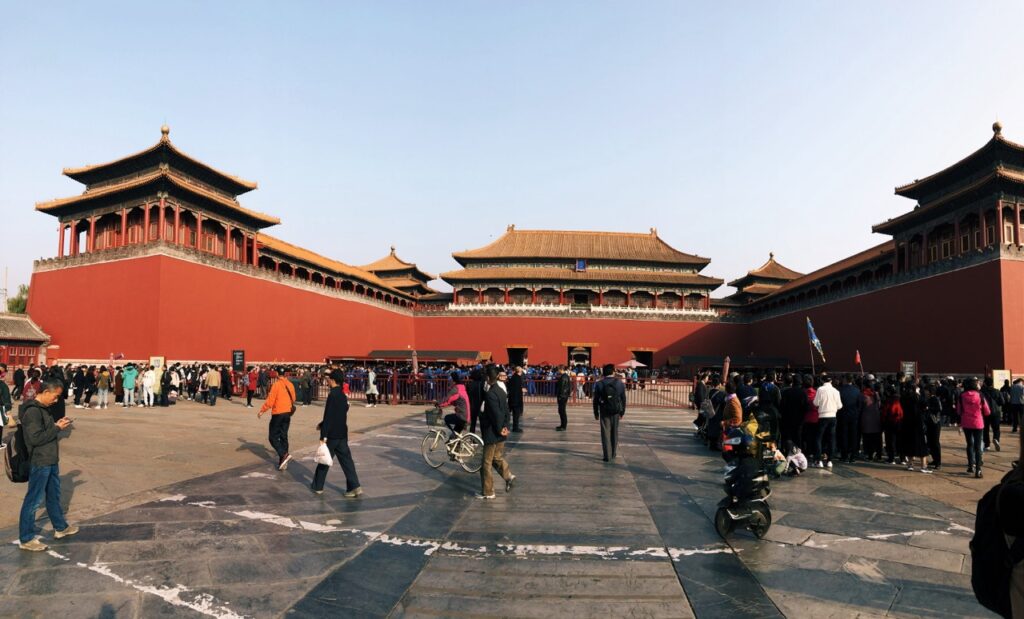
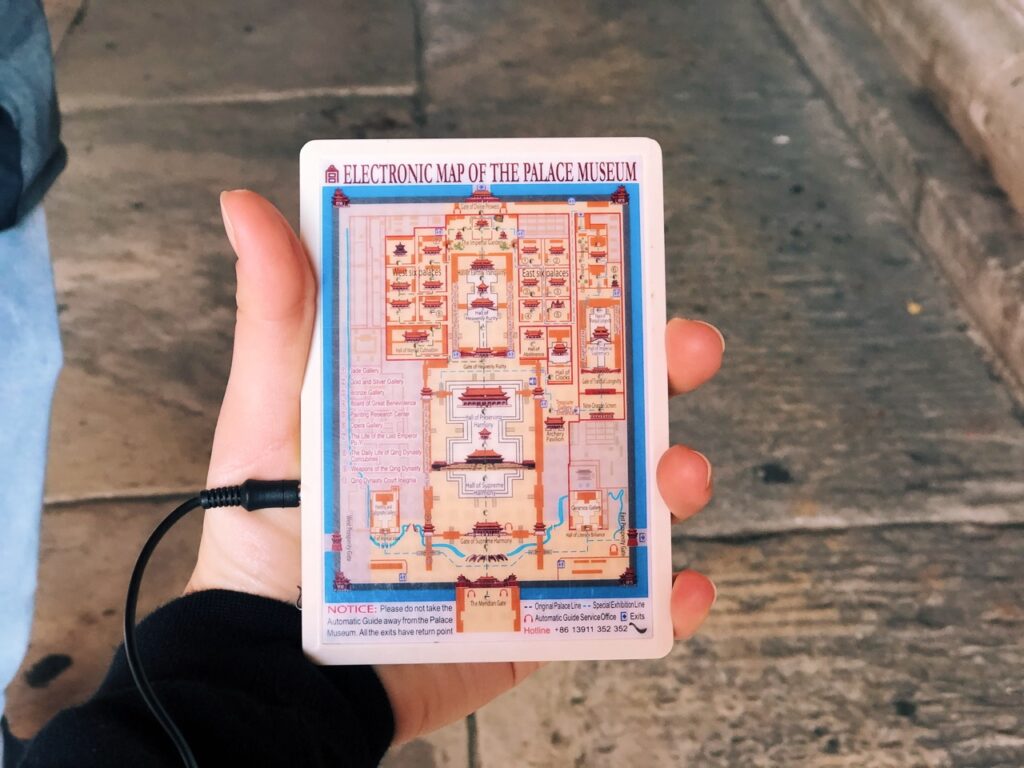
As we started to waddle inside through the gates, it truly felt like stepping back in time. The air seemed to change, suddenly quieter, heavier with history. It was magical to think that every courtyard, every red wall, had witnessed centuries of imperial life. When you walk through those massive gates, remember, you’re stepping on stones that once felt the footsteps of emperors, concubines, and royal guards. It’s one of those rare places where imagination and reality blur, and you can almost hear the echoes of the past following your every step.
Practical Facts About the Forbidden City
- Total Area: The Forbidden City covers about 720,000 square meters (180 acres)—that’s larger than 100 football fields!
- Number of Buildings: There are around 980 surviving buildings within the complex today.
- Number of Rooms: The palace is said to have 8,704 rooms, though legends claim there were once 9,999½ rooms, the “half” symbolizing respect for heaven.
- Years of Imperial Use: It served as the home and political center of 24 emperors from the Ming and Qing dynasties for nearly 500 years (1420–1912).
- Daily Visitors: On average, the Forbidden City welcomes around 30,000–50,000 visitors per day, and up to 80,000 during peak holiday seasons.
- Architectural Layout: The city is perfectly aligned on a north–south axis, following feng shui principles that reflect harmony between heaven and earth.
- Construction Materials: Over 1 million laborers and 100,000 artisans were involved in its construction, using rare woods, marble, and glazed tiles brought from across China.
- UNESCO Status: It became a UNESCO World Heritage Site in 1987, recognized for its outstanding cultural significance and architectural preservation.
- Fun Fact: The palace once had a strict “no one taller than the emperor” rule—anyone taller had to bow or crawl in the emperor’s presence!
Layout of the Forbidden City
The Forbidden City is carefully designed around ancient Chinese principles of balance and hierarchy. It’s divided into two main sections: the Outer Court and the Inner Court.
- The Outer Court, located in the southern part, was the center of official ceremonies and state affairs. This is where the emperors held grand events, met ministers, and conducted rituals to display imperial power. The most famous buildings here are the Hall of Supreme Harmony, Hall of Central Harmony, and Hall of Preserving Harmony—massive, golden-roofed structures that dominate the first half of your walk through the palace.
- The Inner Court, in the northern section, served as the living quarters for the emperor and his family. It’s more intimate, filled with smaller halls, beautiful gardens, and the Palace of Heavenly Purity, where emperors once lived. This area feels calmer and gives a glimpse into daily life behind the imperial walls.
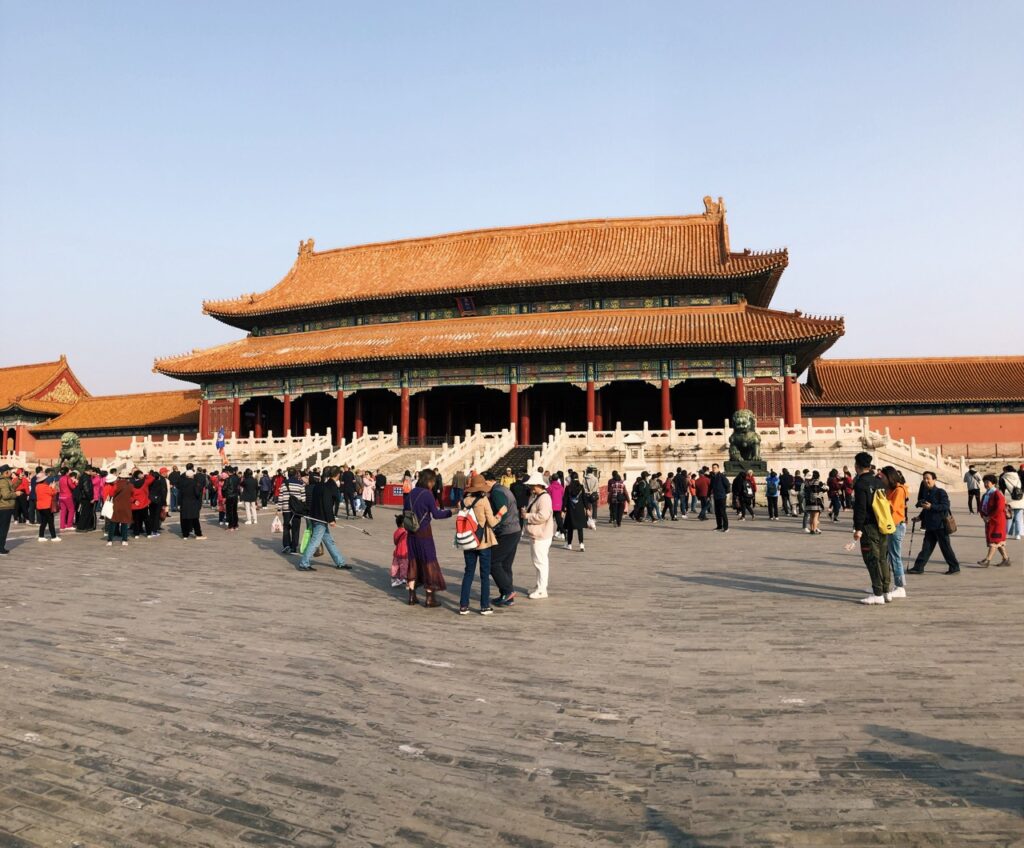
Main Halls and Palaces to See in the Forbidden City
The Forbidden City is packed with stunning halls and palaces, but a few stand out as absolute must-sees during your visit.
Hall of Supreme Harmony (Taihe Dian)
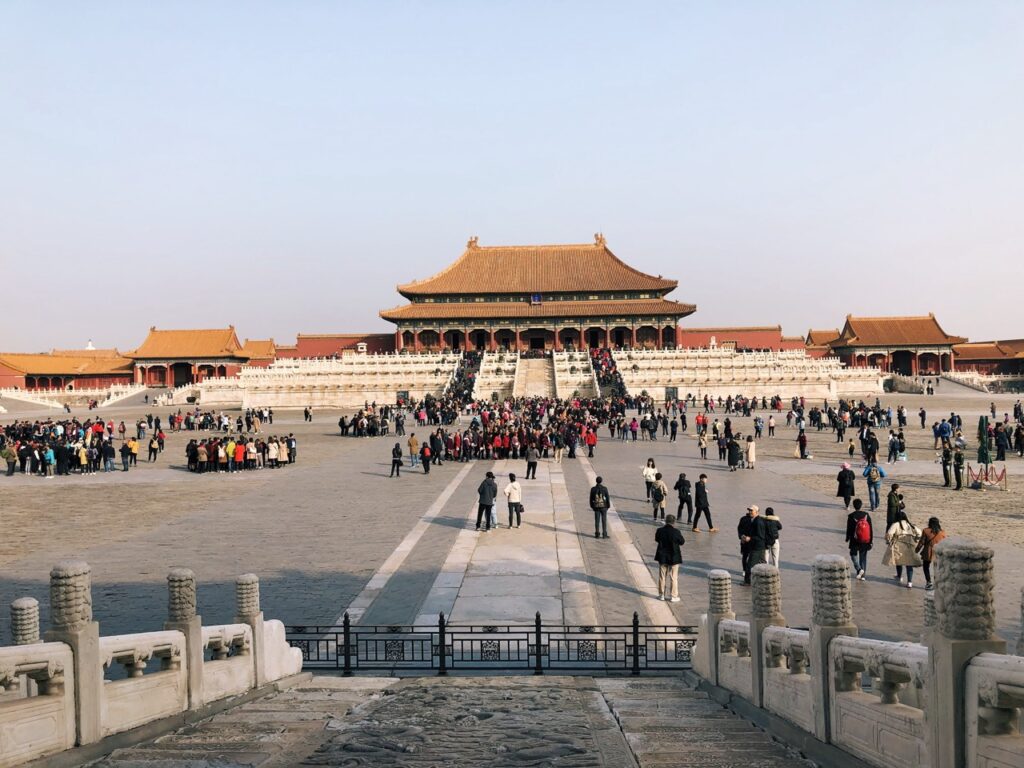
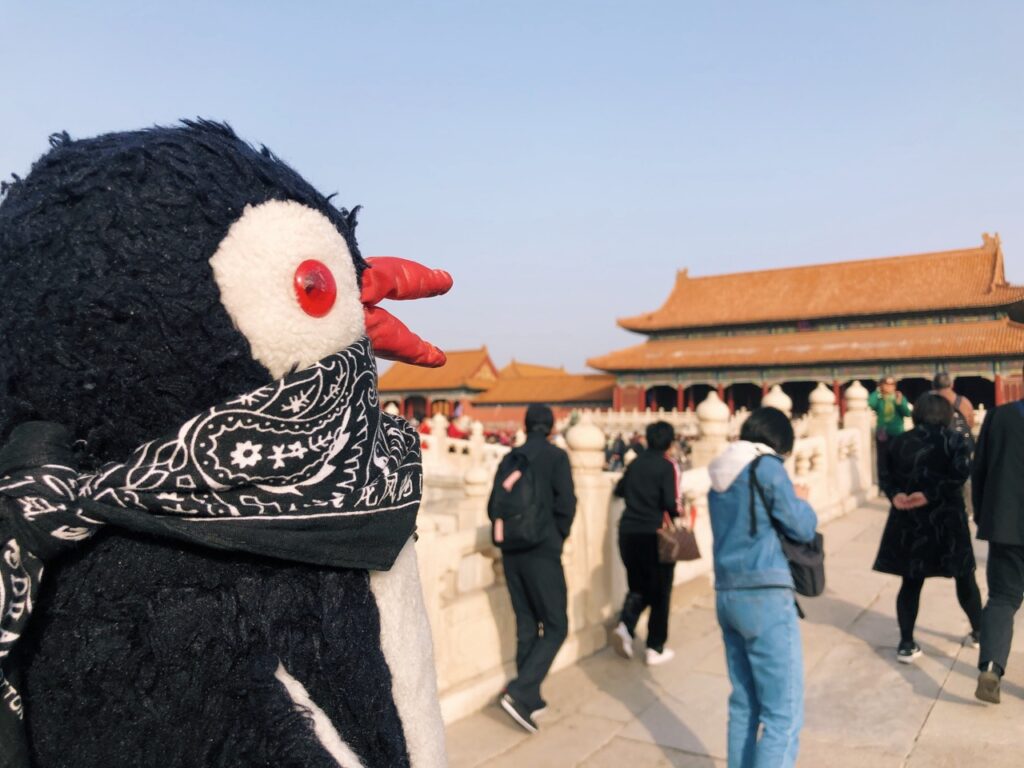
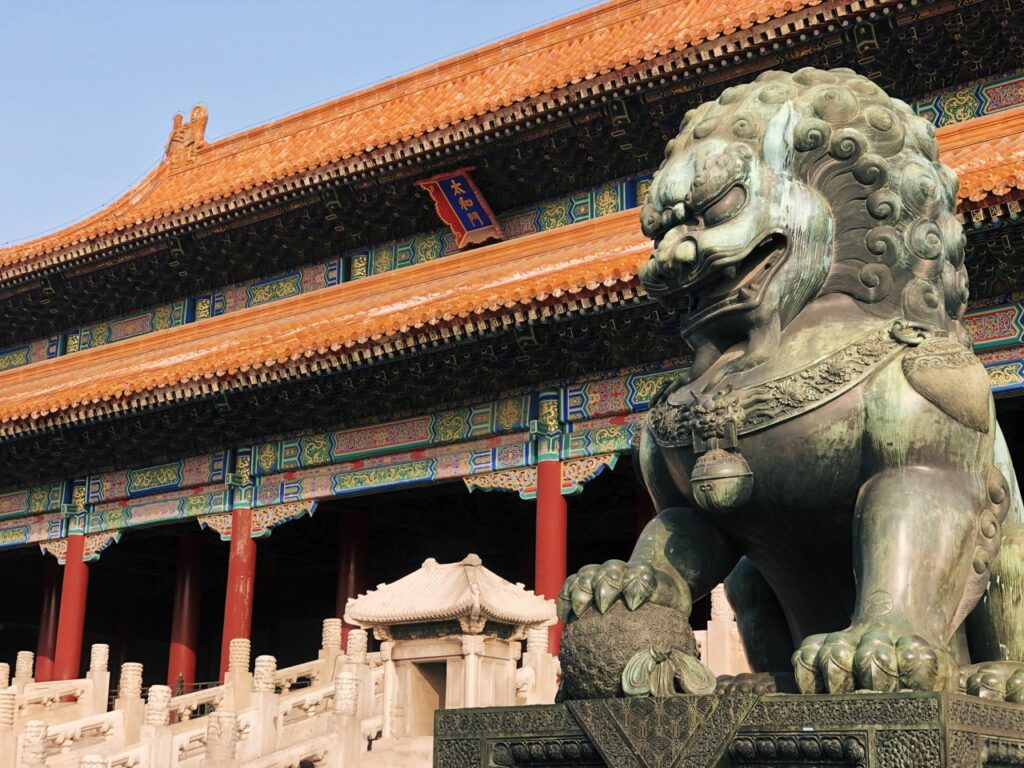
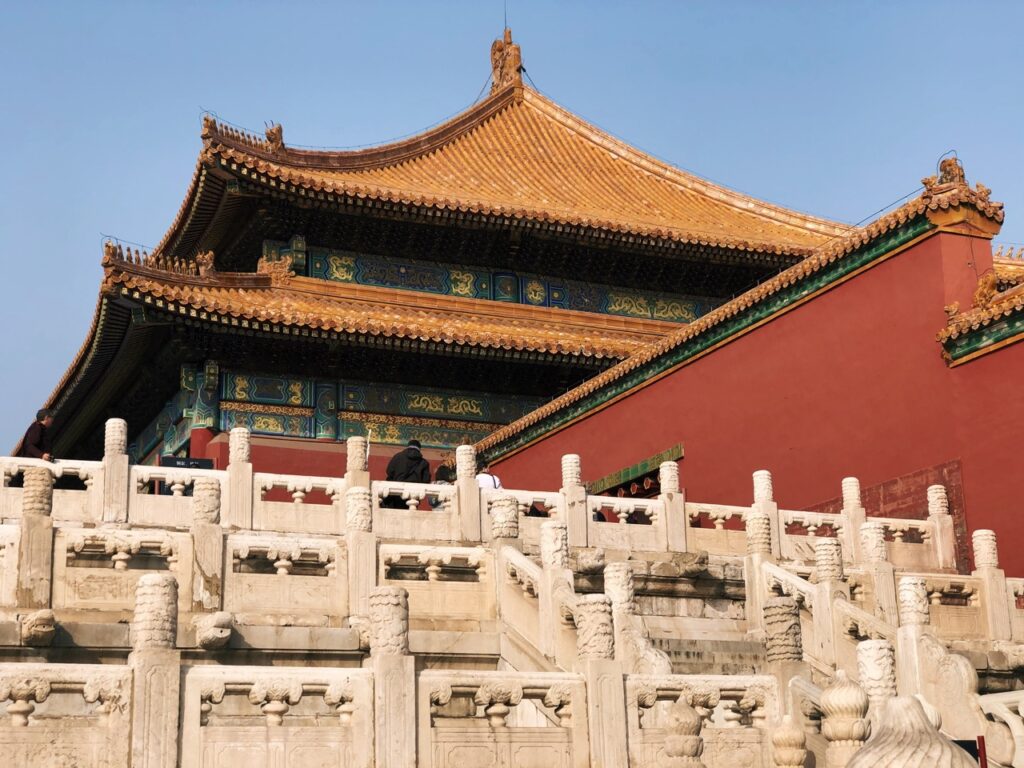
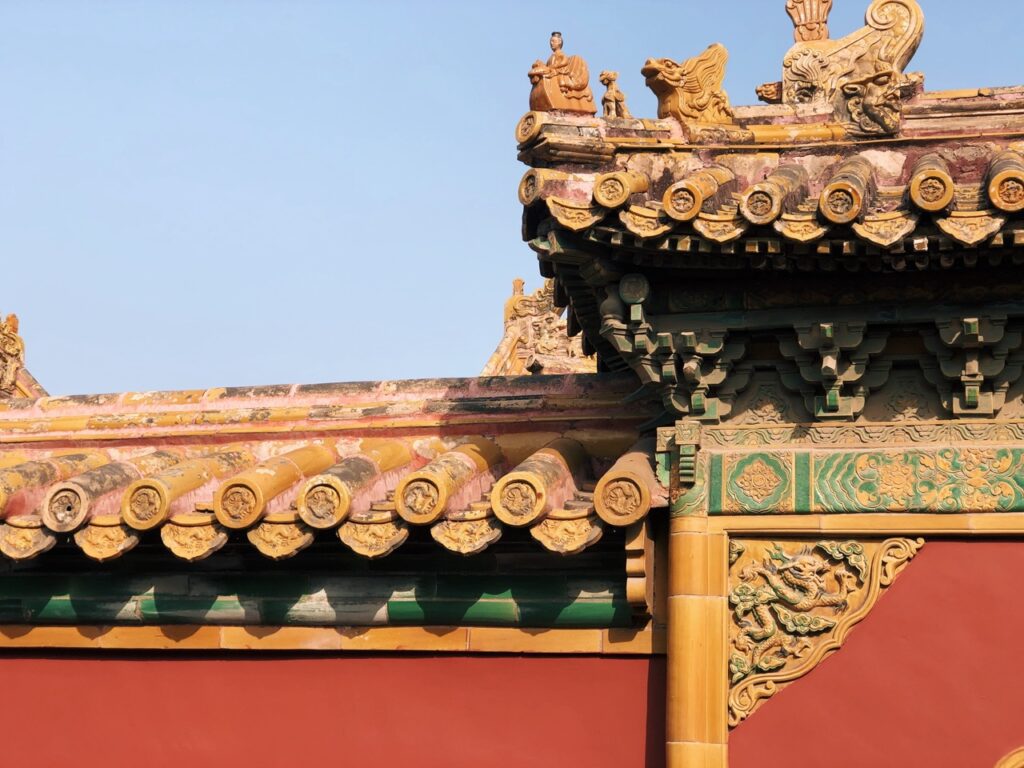
When we waddled up to the Hall of Supreme Harmony (Taihe Dian), it completely took our breath away; it was so much bigger than we expected. The massive open square in front of it felt endless, as if designed to make everyone feel tiny before the emperor’s power. Standing on its three-tiered marble terrace, it was easy to imagine the grand ceremonies that once filled this space, coronations, royal weddings, and imperial birthdays celebrated with full splendor. Every detail radiates authority and artistry, from the golden dragon throne inside to the exquisite carvings on the marble balustrades. The roof glimmered under the morning sun, lined with small guardian figurines said to protect the emperor.
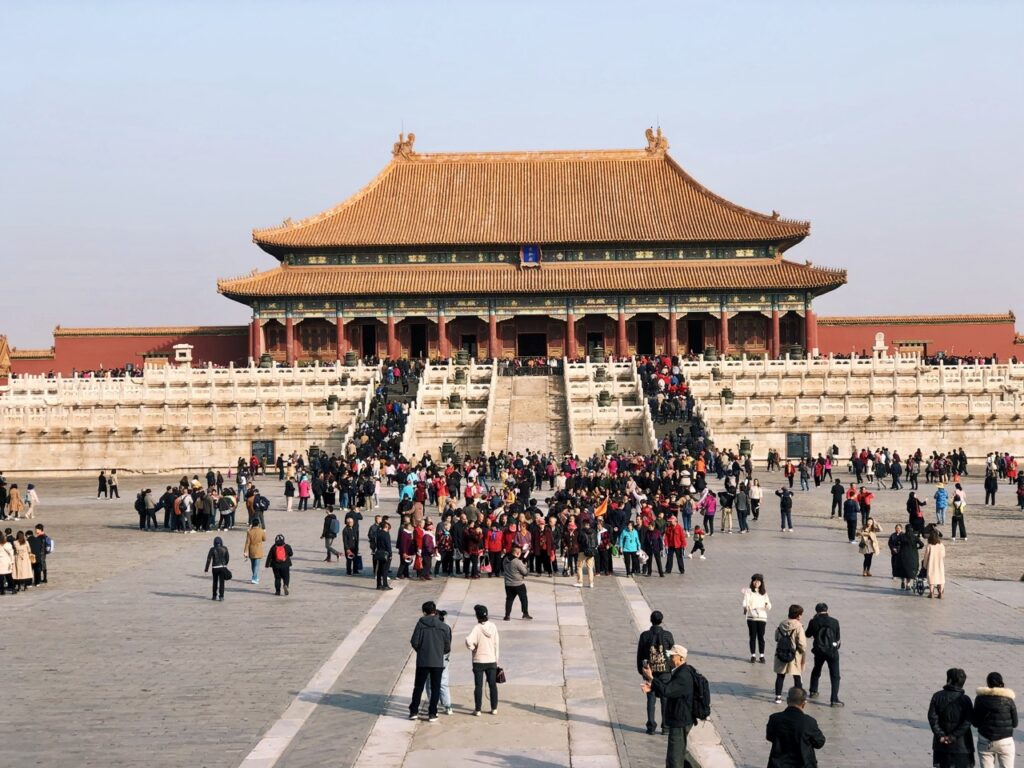
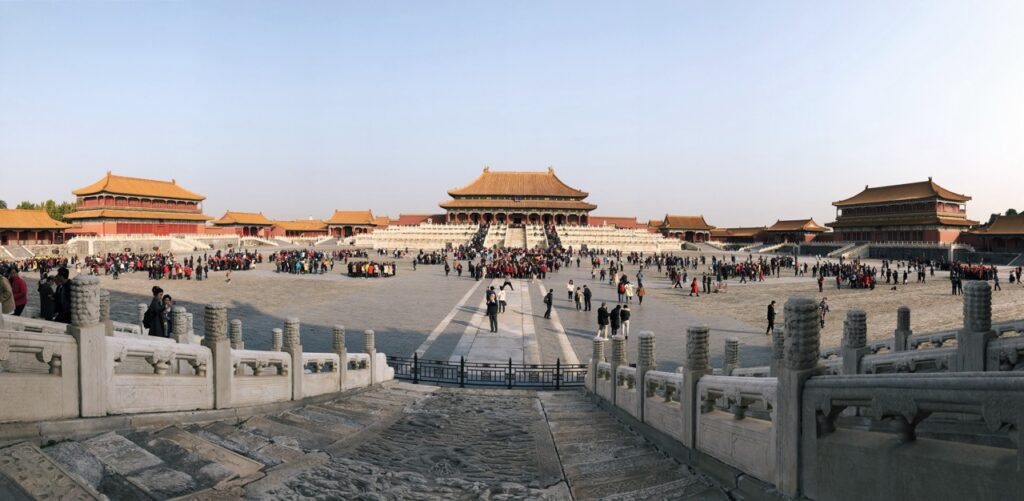
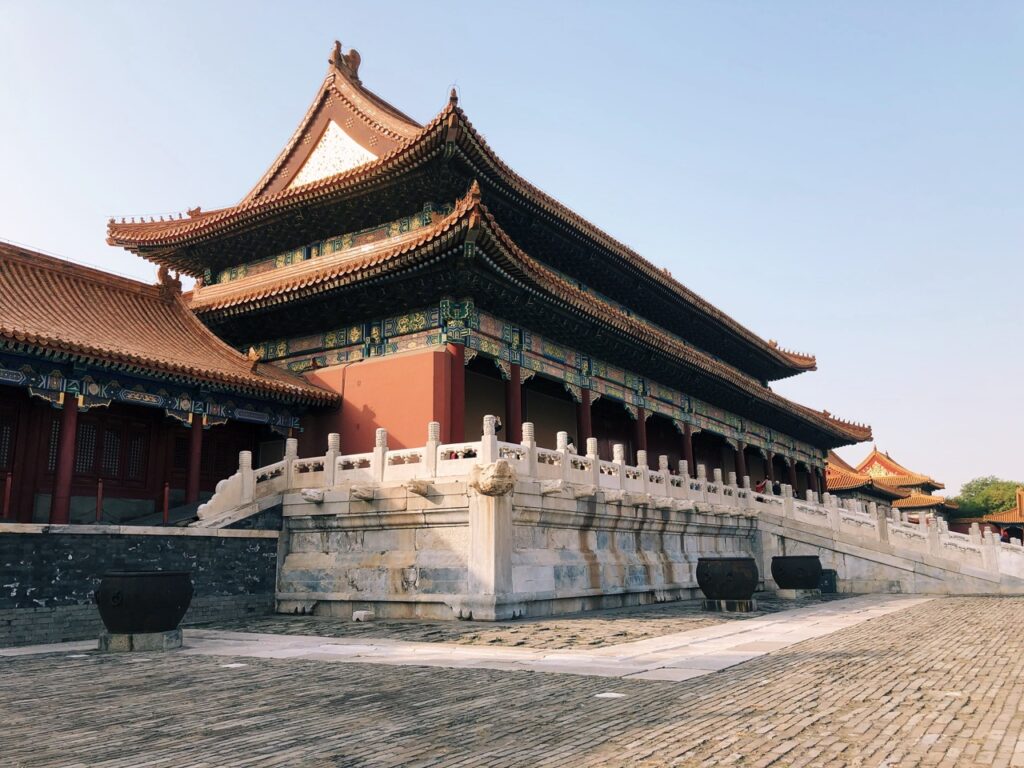
Right behind it stands the Hall of Central Harmony (Zhonghe Dian). In this smaller building, emperors rested and prepared for rituals, followed by the Hall of Preserving Harmony (Baohe Dian), used for imperial banquets and later for the final stage of the civil service exams.
The Beauty Is in the Details: Look Closer as You Waddle
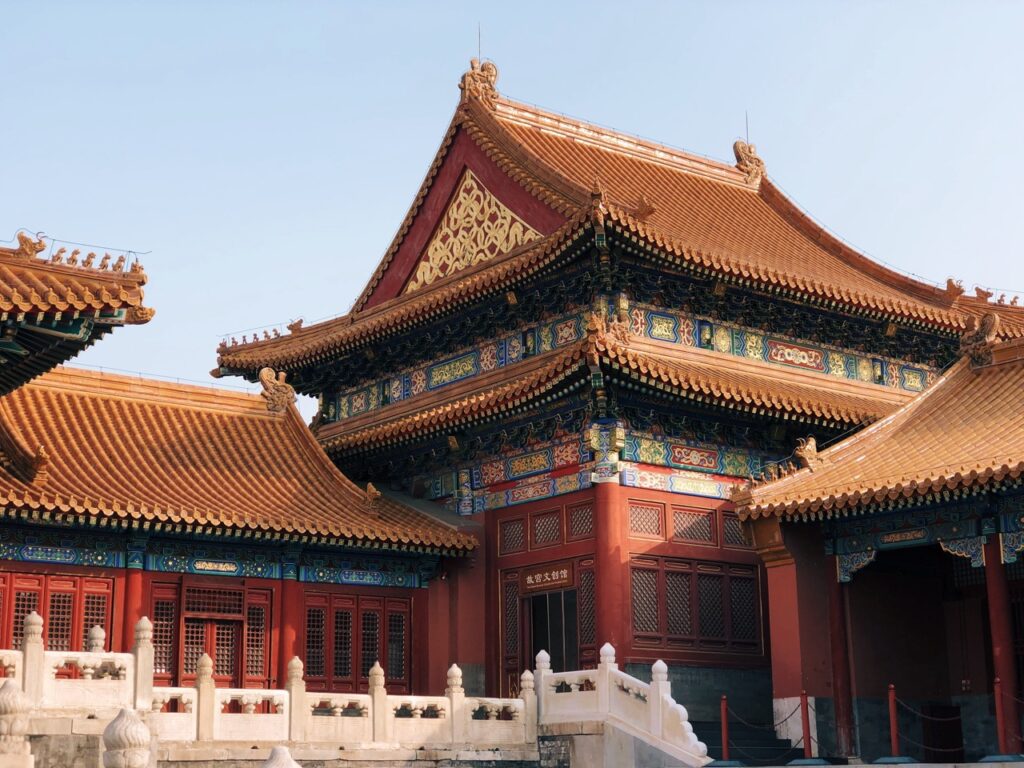
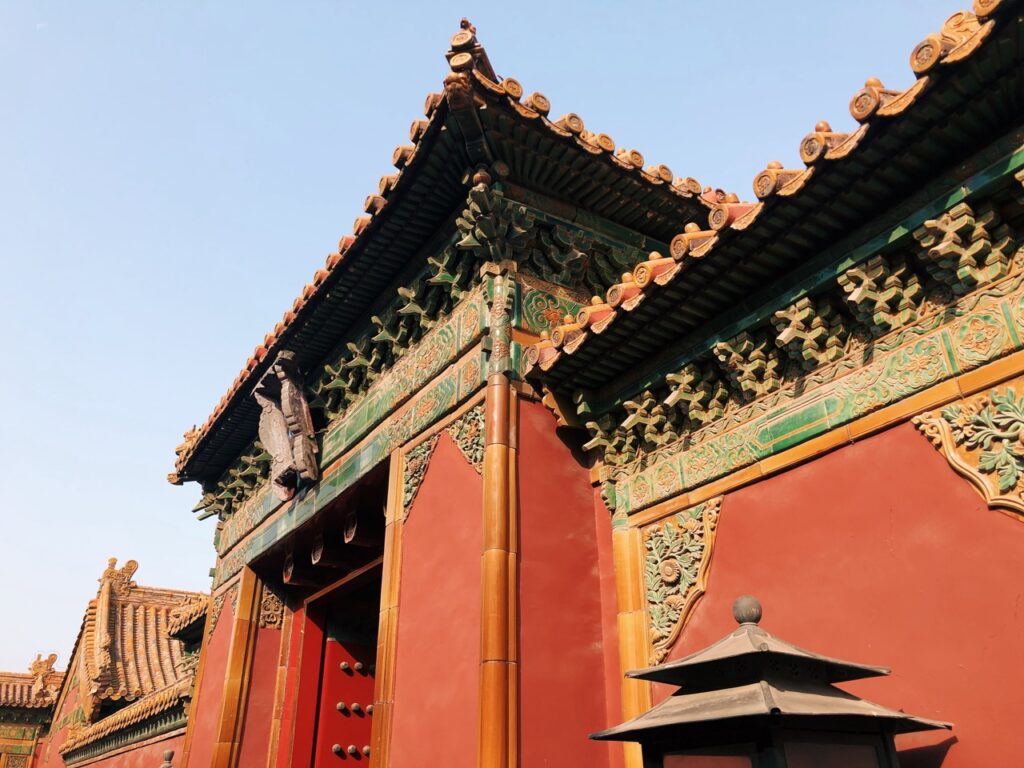
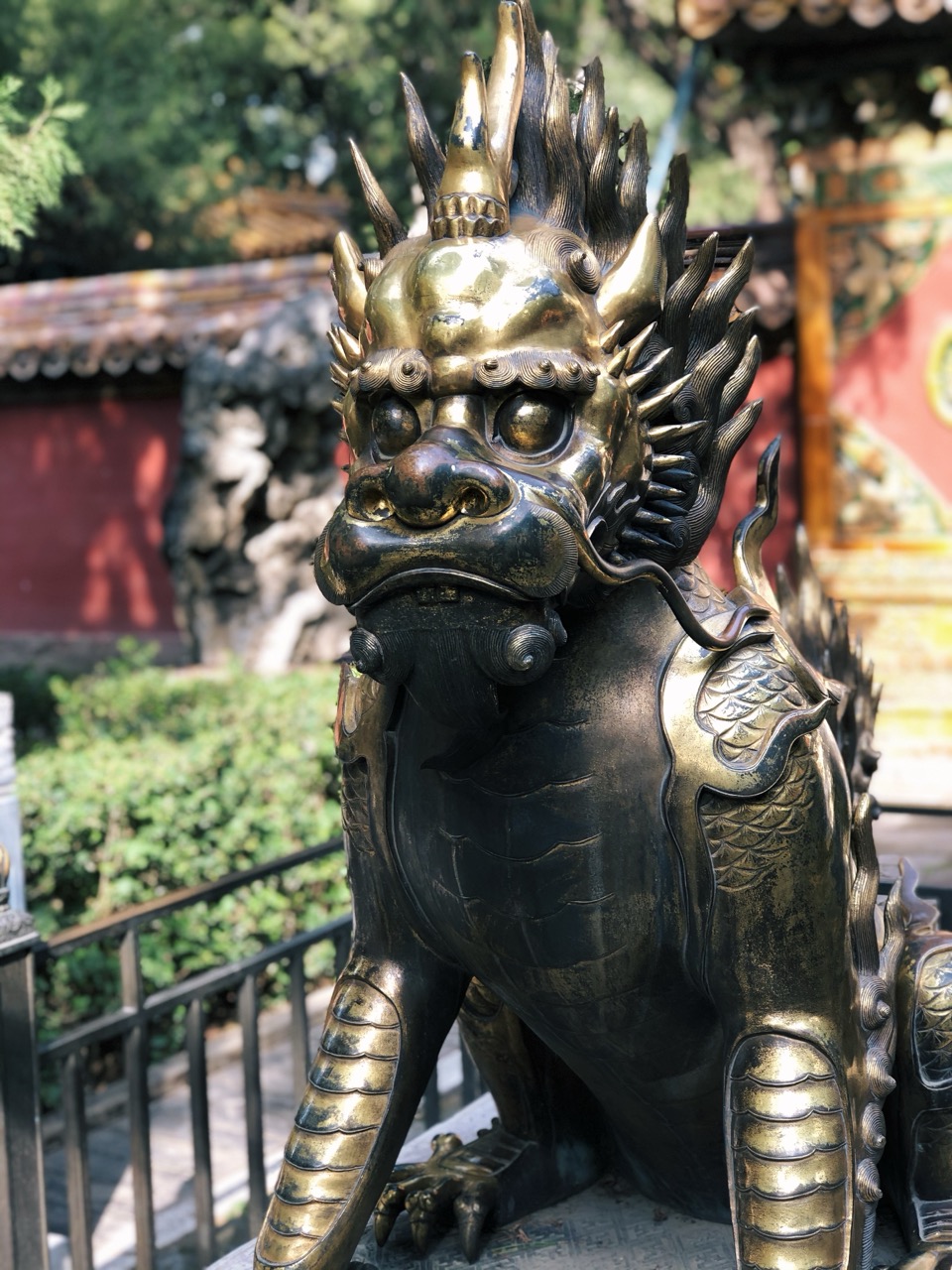
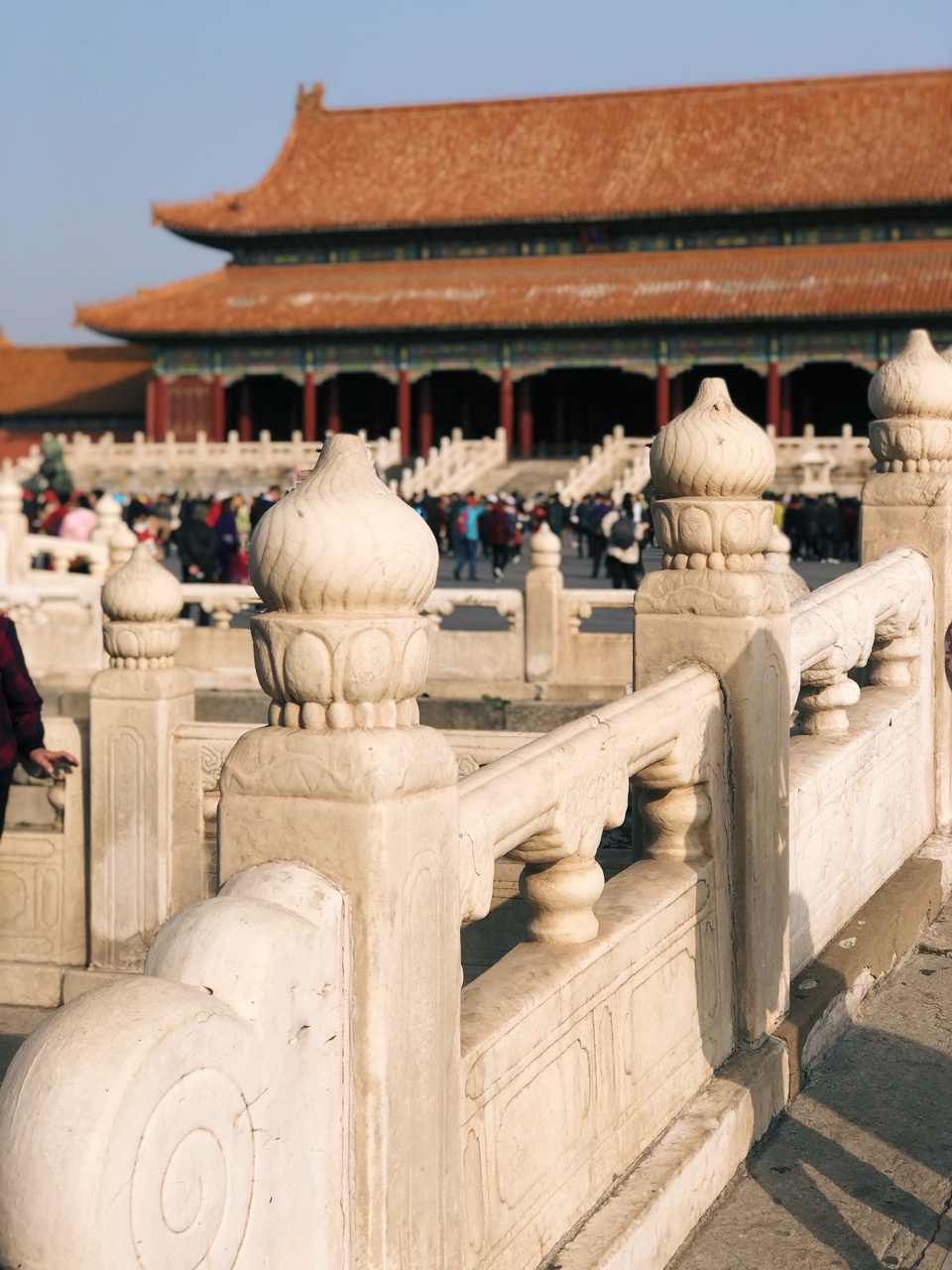
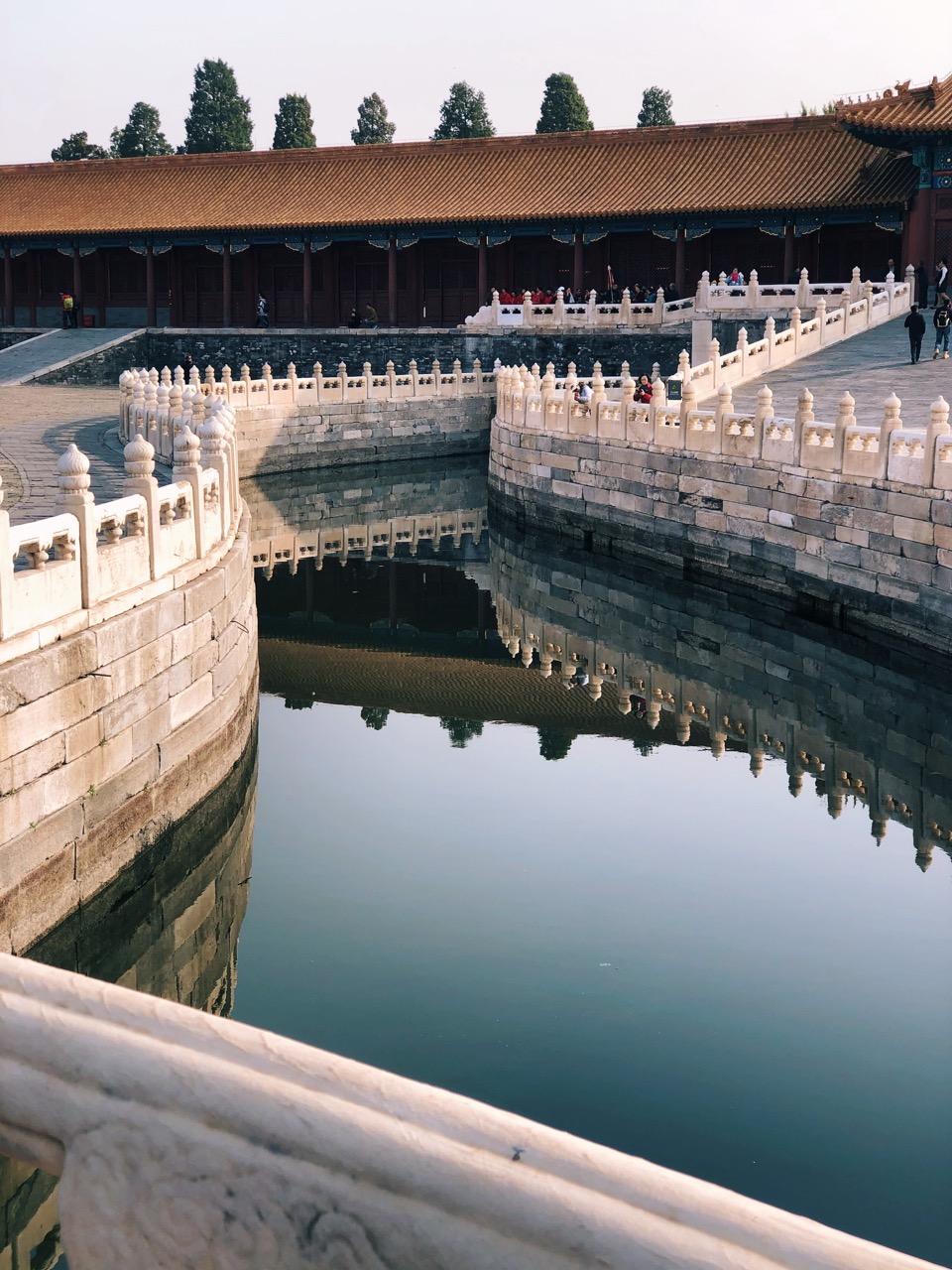
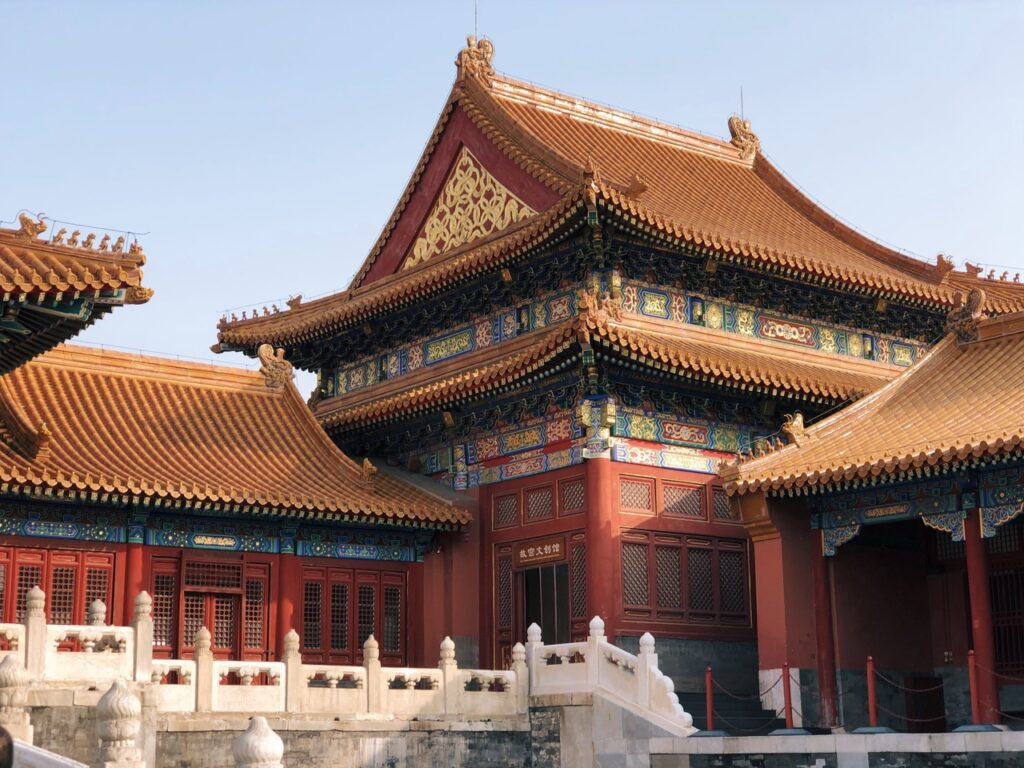
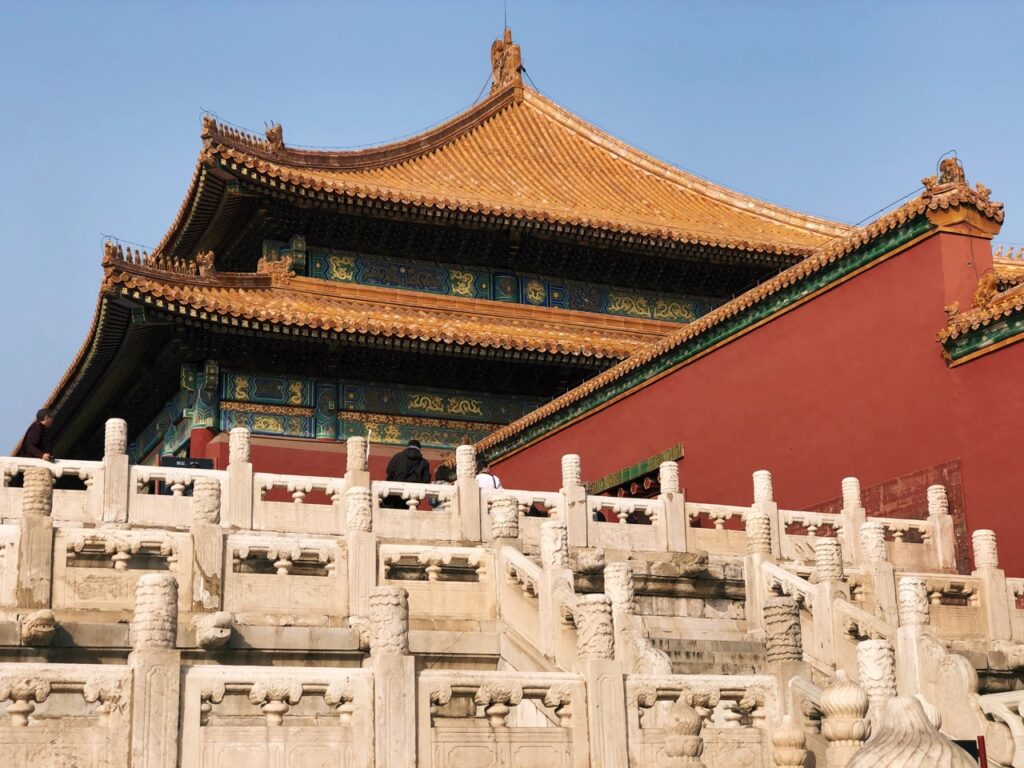
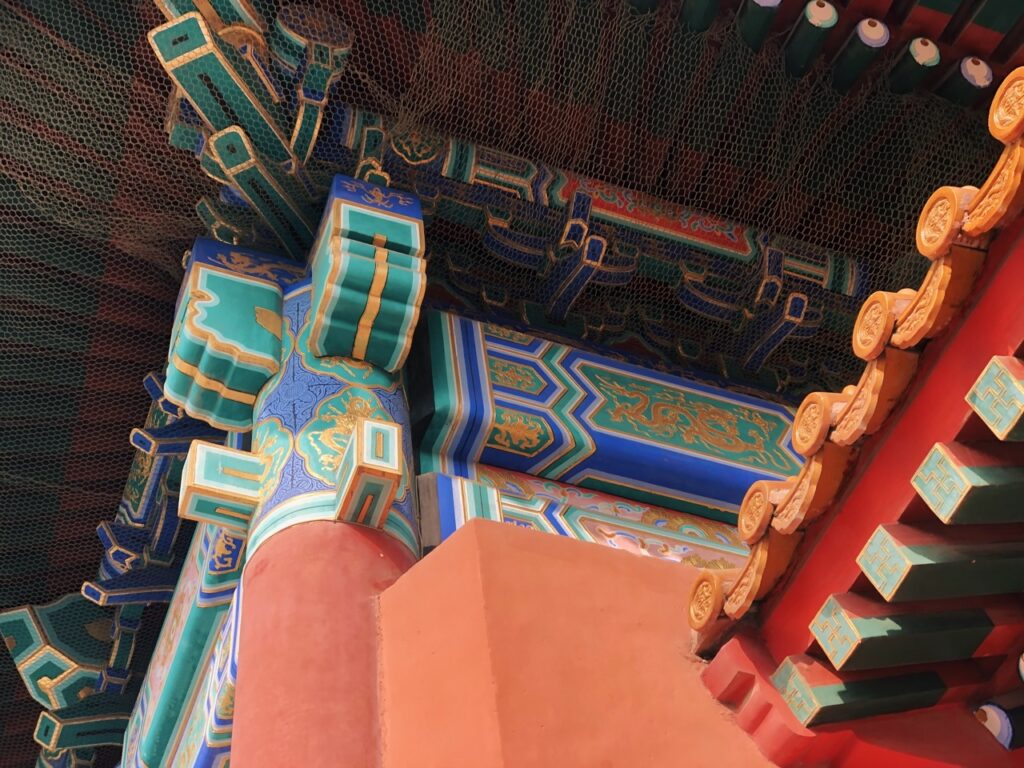
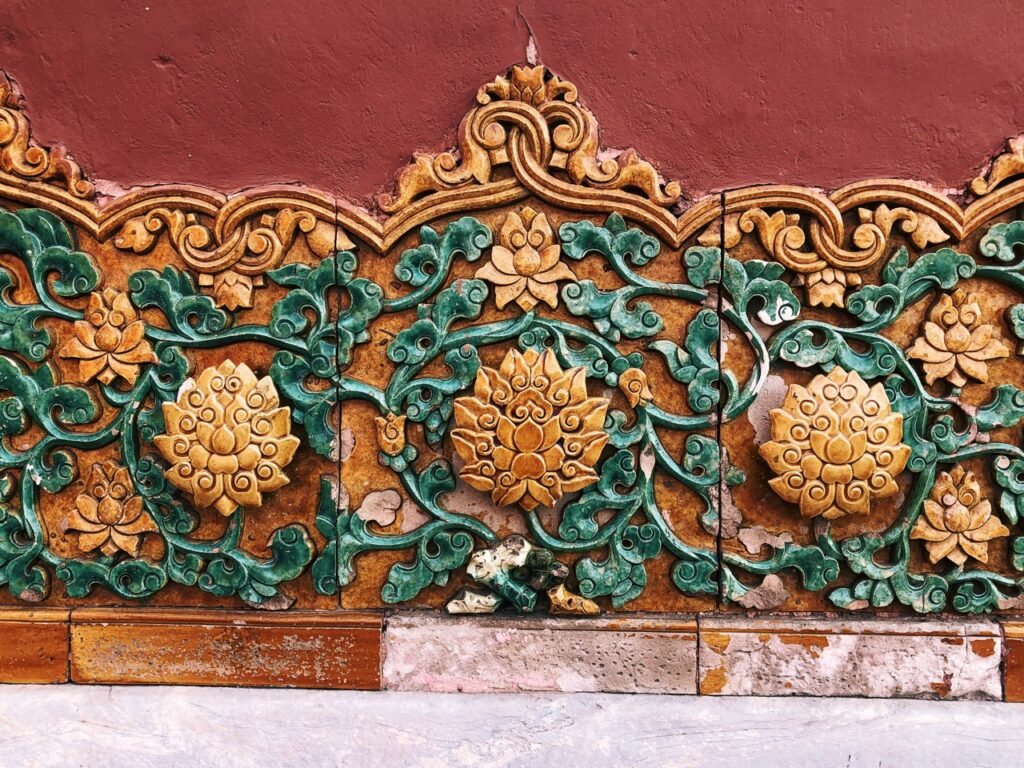
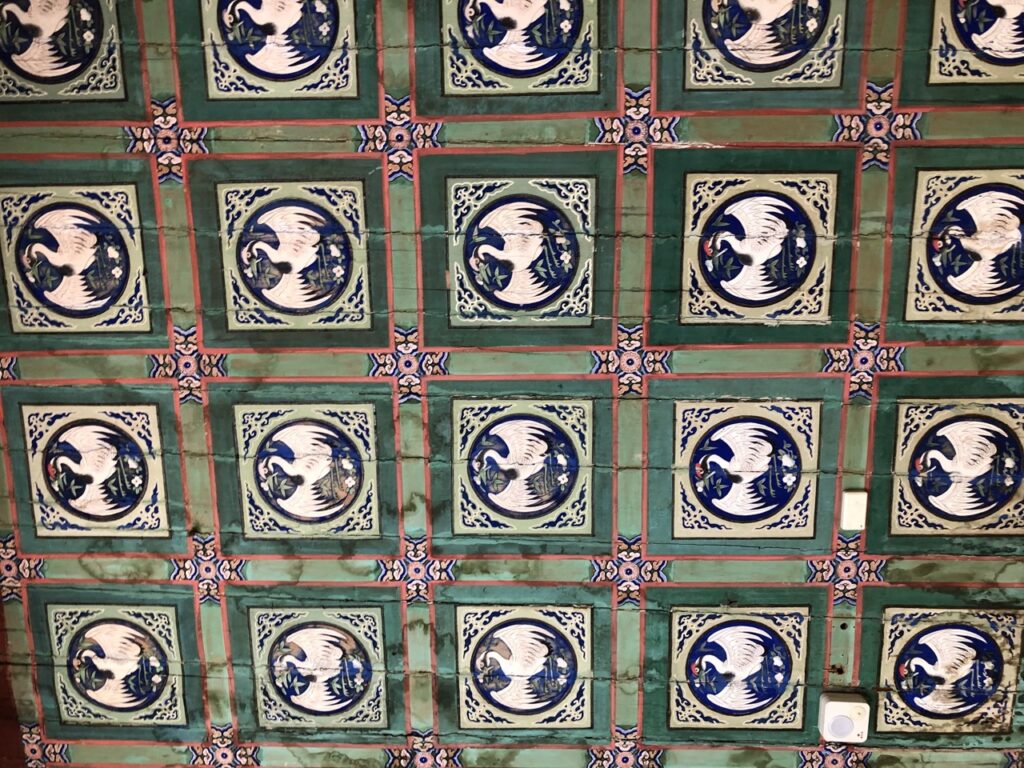
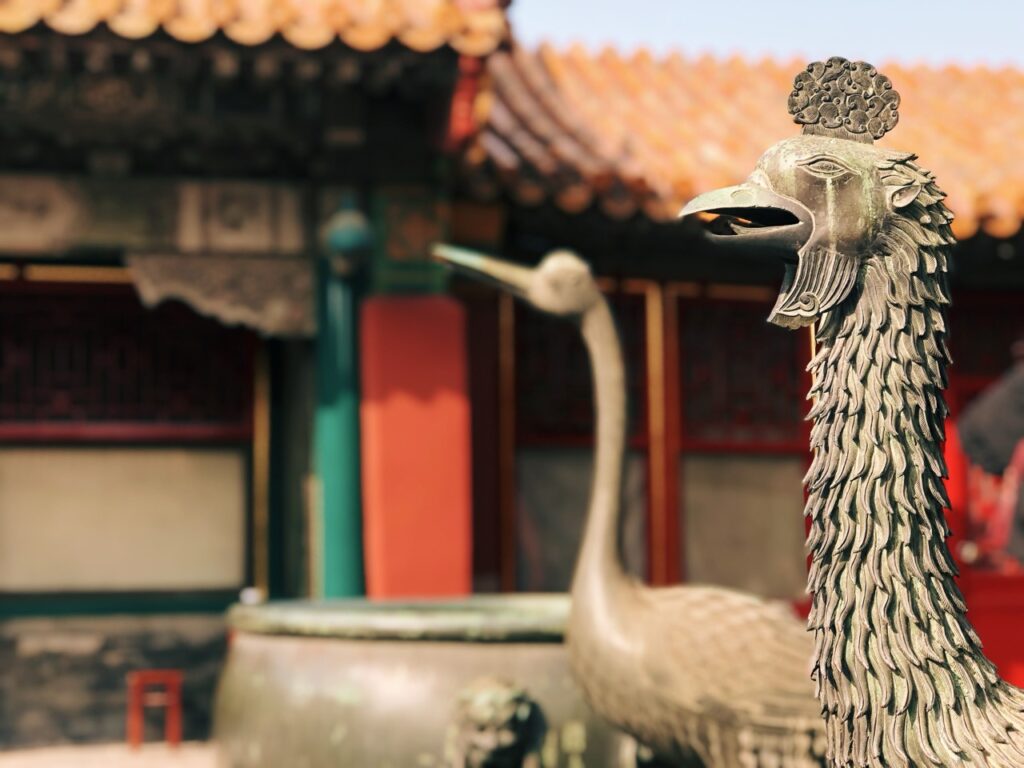
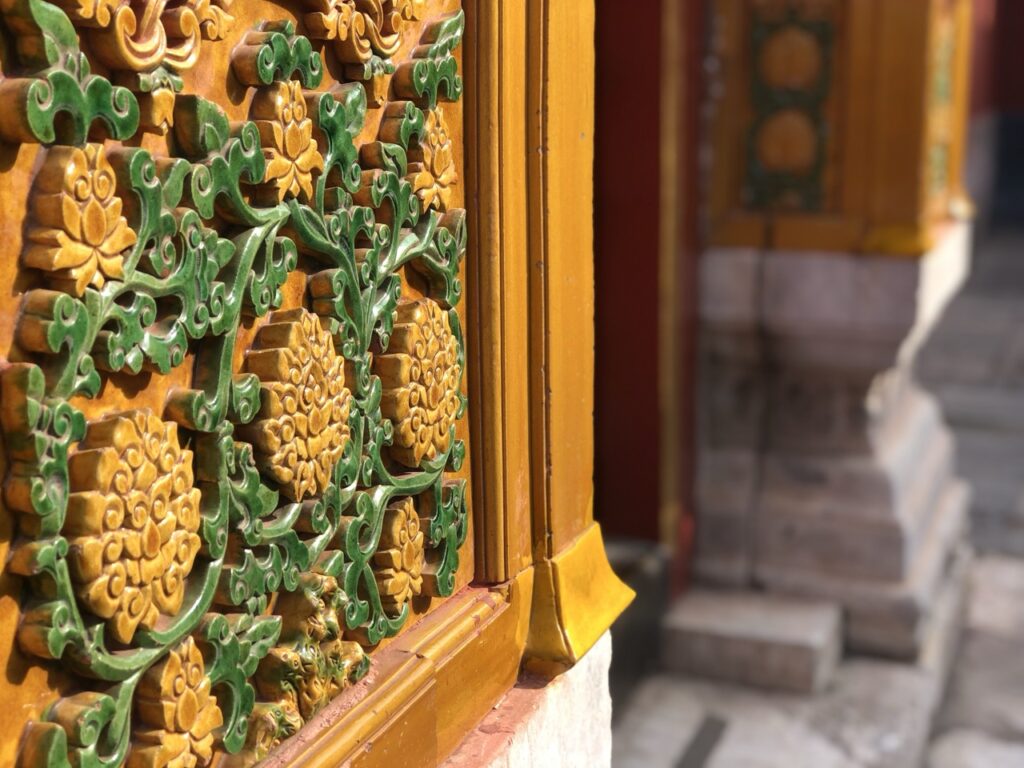
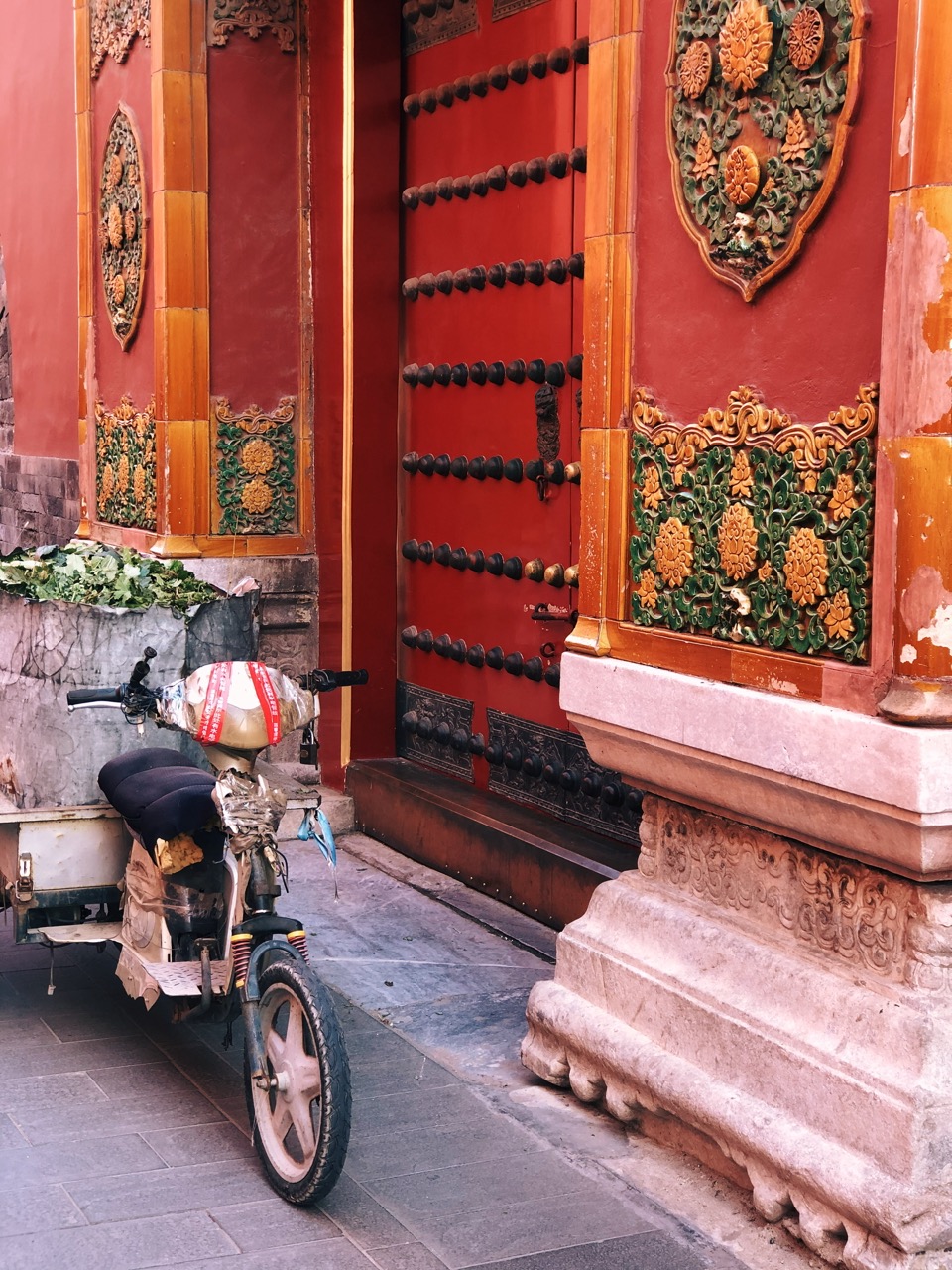
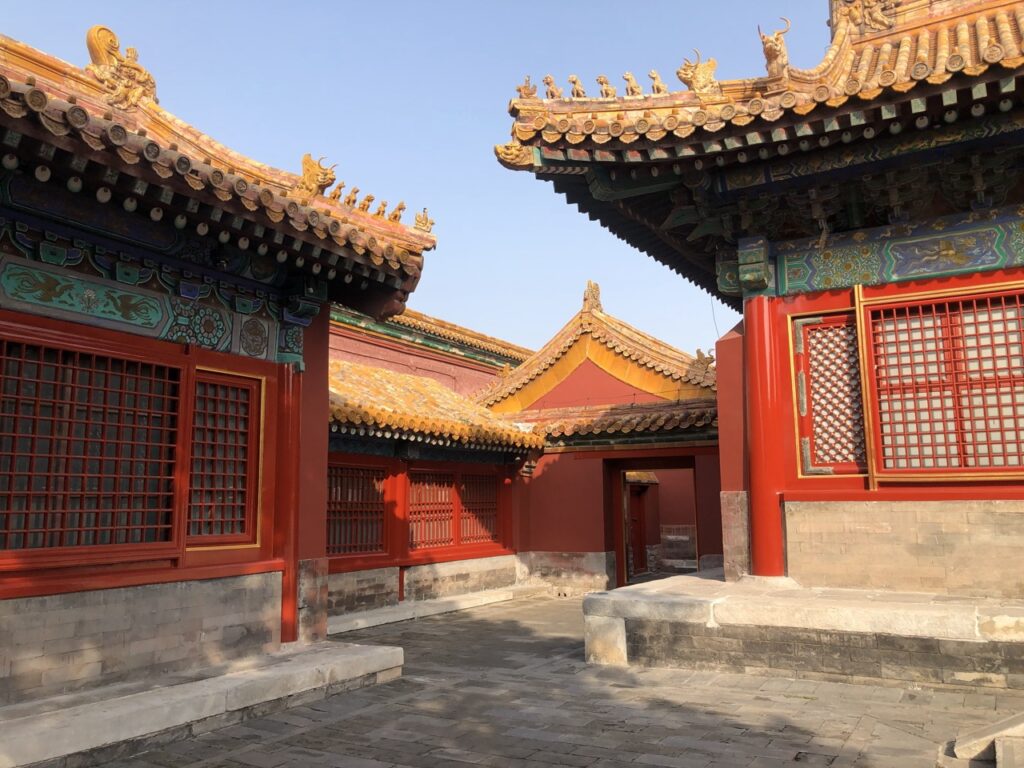
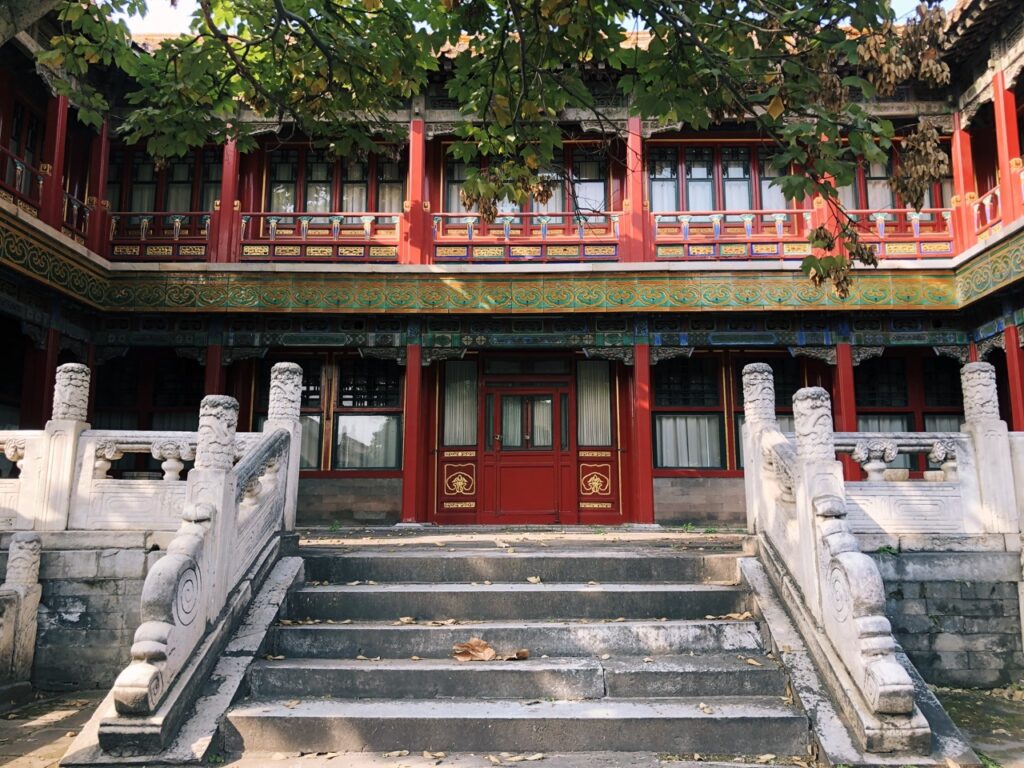
Although we were completely swayed by the sheer vastness of the Forbidden City, it didn’t take long to realize that the true magic lies in the details. Every corner, column, and beam hides delicate carvings, paintings, and symbolic designs that tell stories of power, luck, and protection. The vivid red walls, shimmering golden roofs, and intricate dragon motifs weren’t chosen by chance; each color and pattern carried meaning. Look closely at the stone railings, where clouds, cranes, and mythical beasts are sculpted into marble, or at the painted ceilings, filled with floral patterns and phoenixes representing rebirth. Even the roof tiles have tiny guardian figures marching along the edges, guarding the palace from evil spirits. It’s easy to rush through, overwhelmed by the scale, but take your time, pause, look up, and let the craftsmanship of centuries reveal itself one brushstroke and carving at a time.
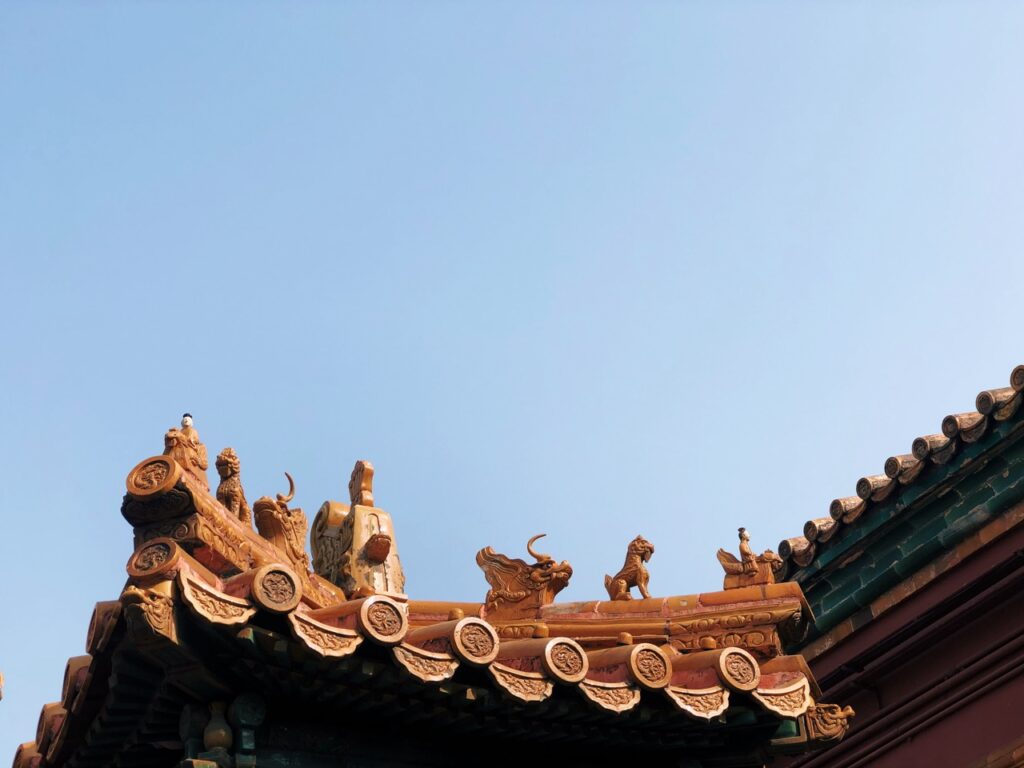
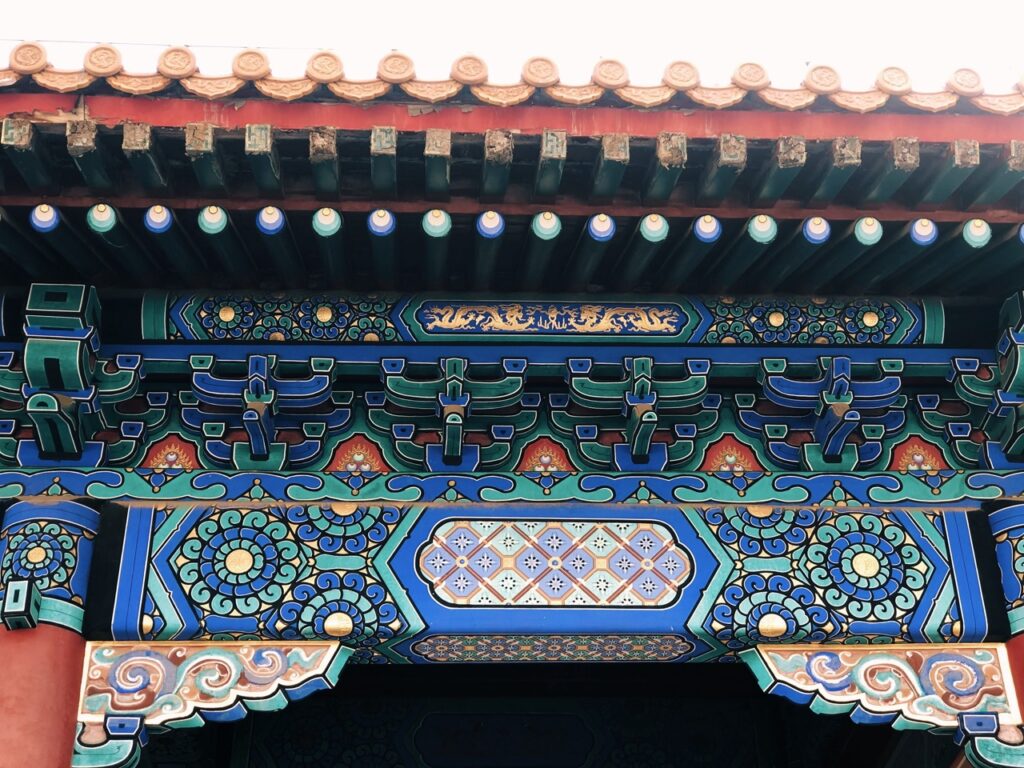
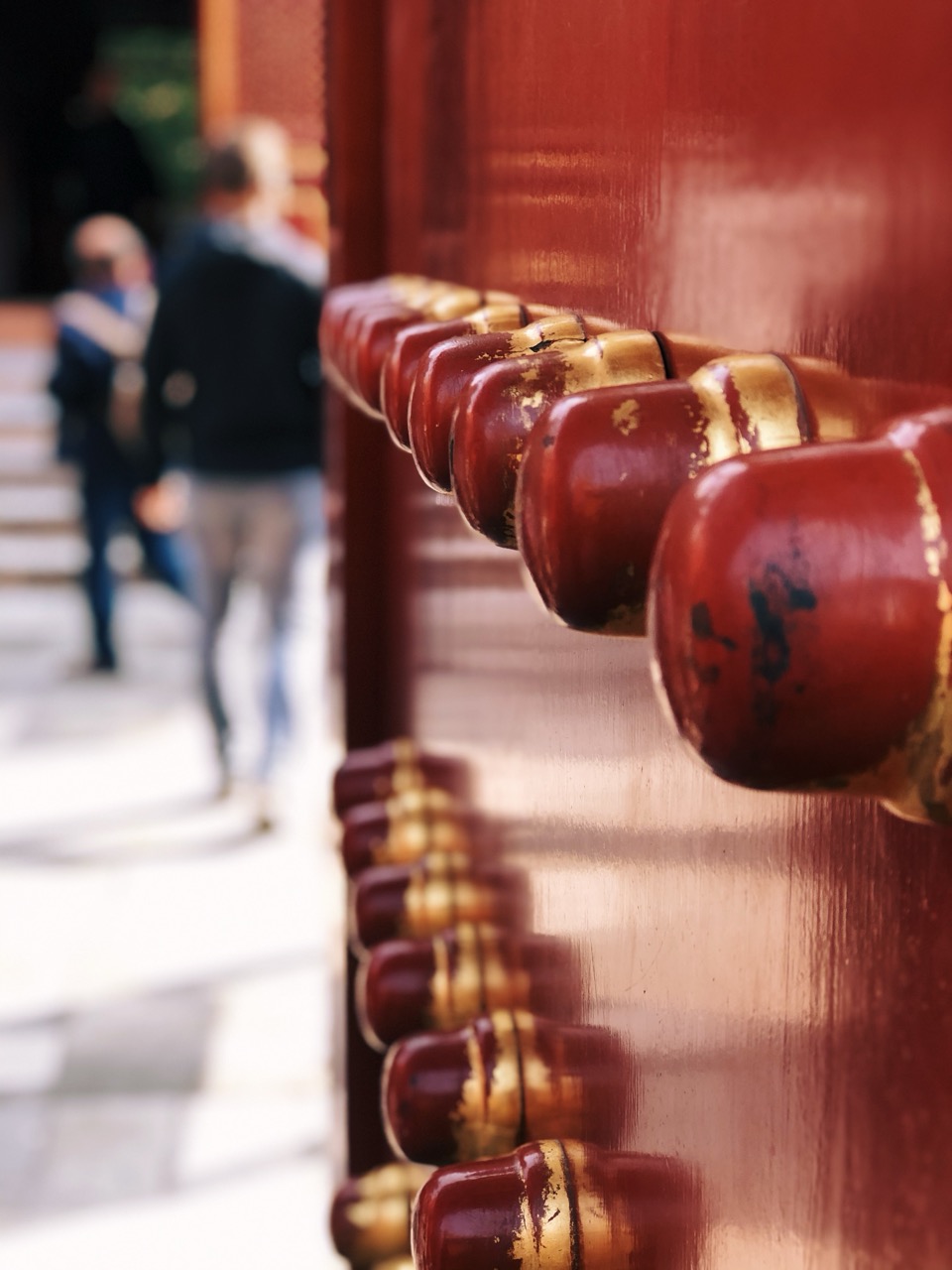
Waddling Through Time: Along the Red Walls of the Forbidden City
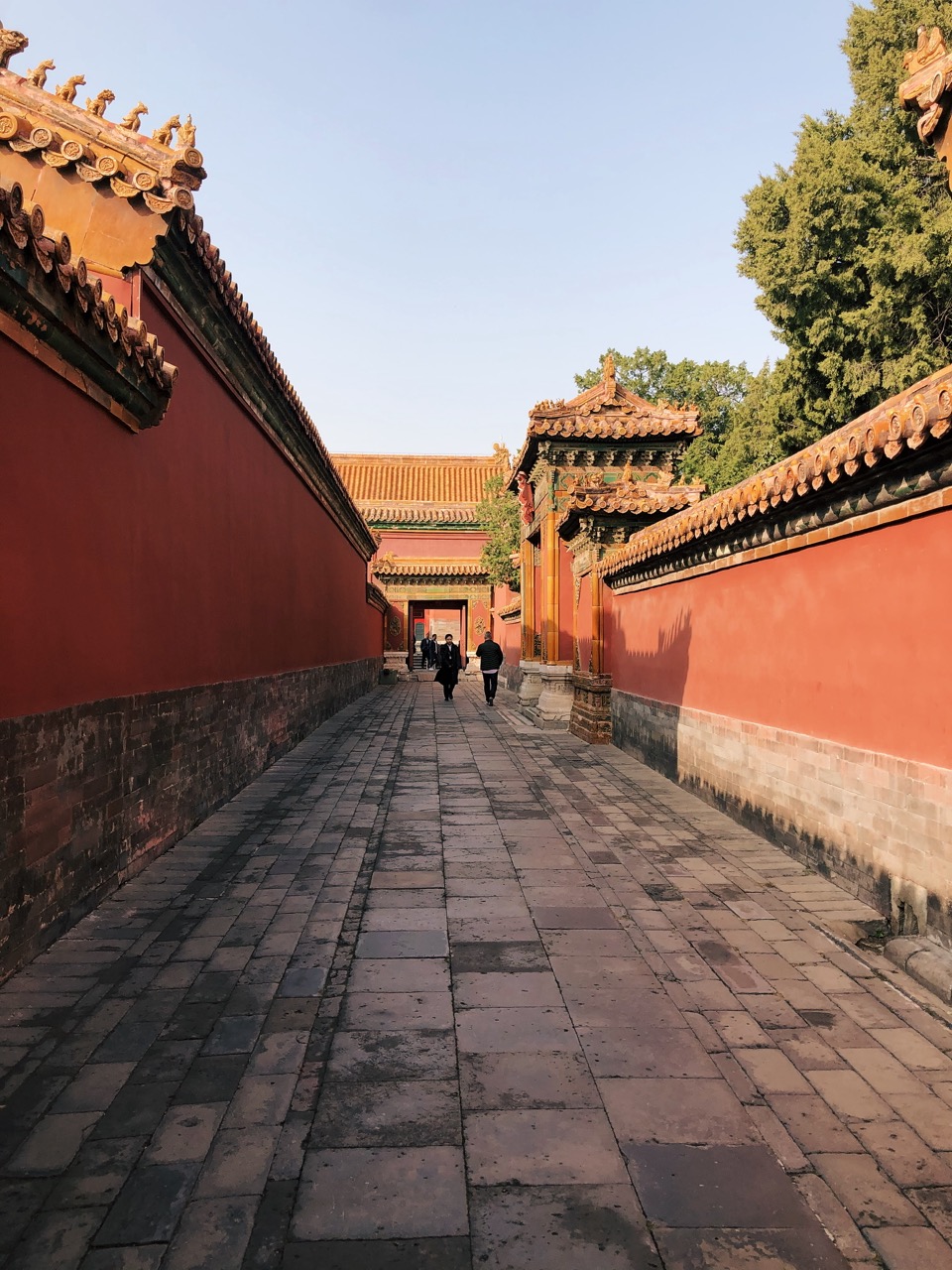
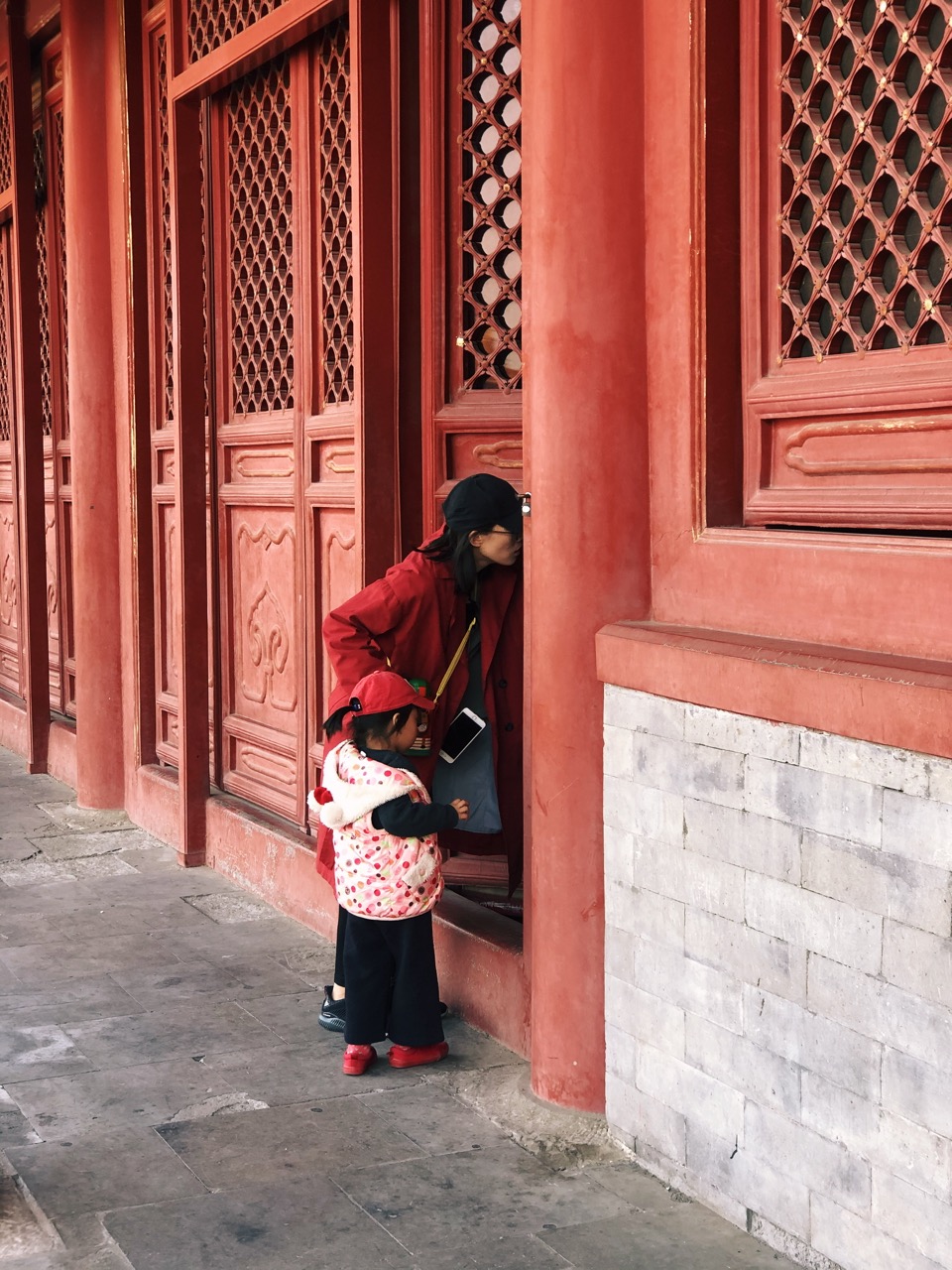
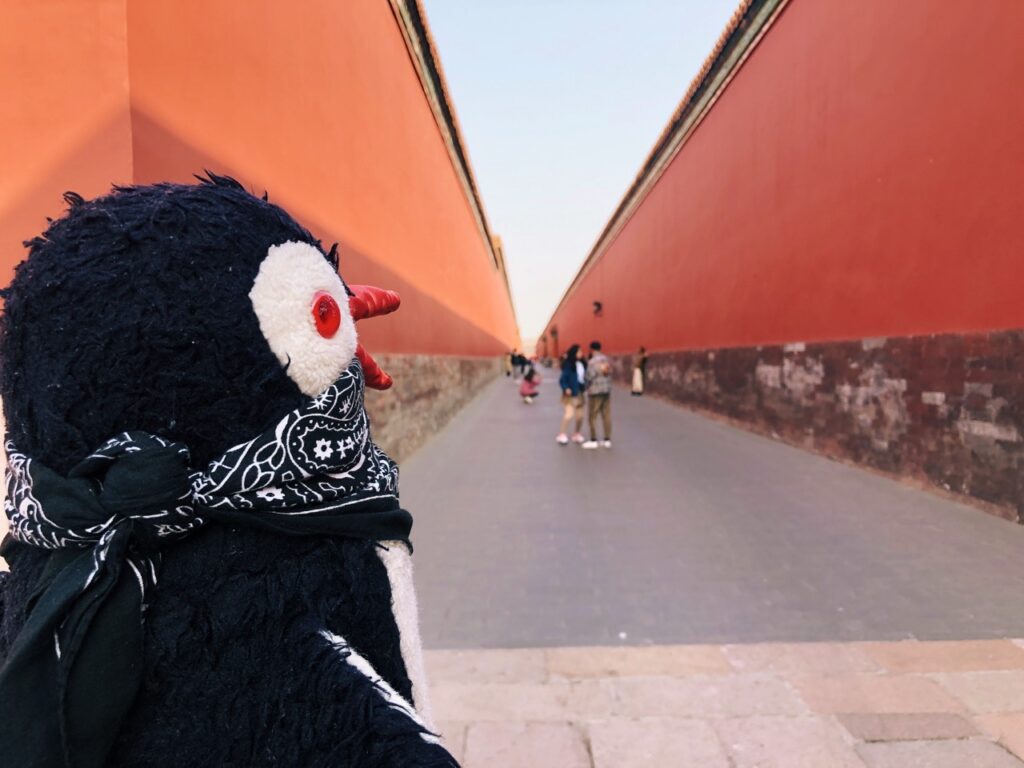
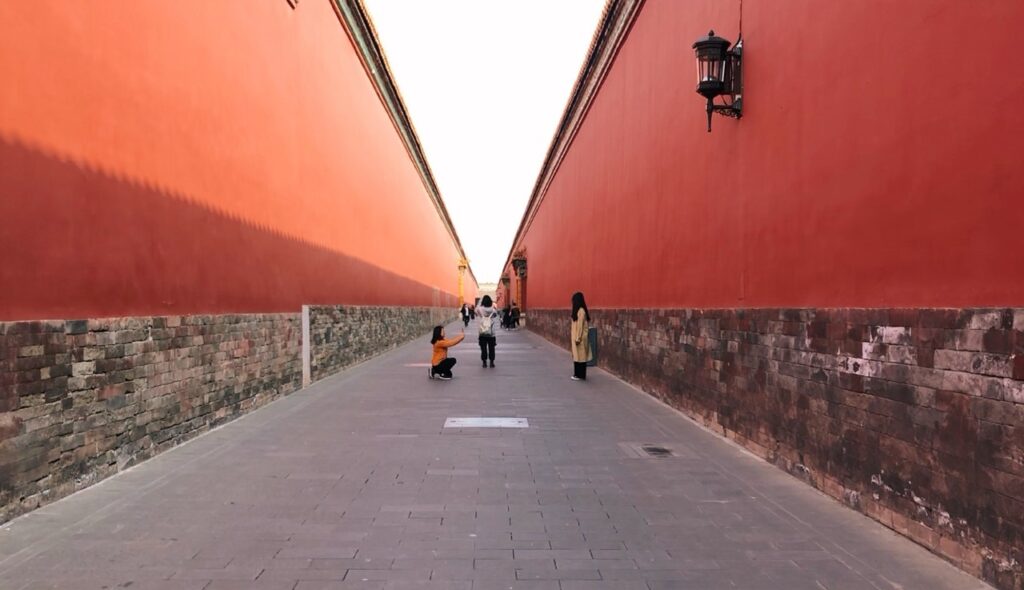
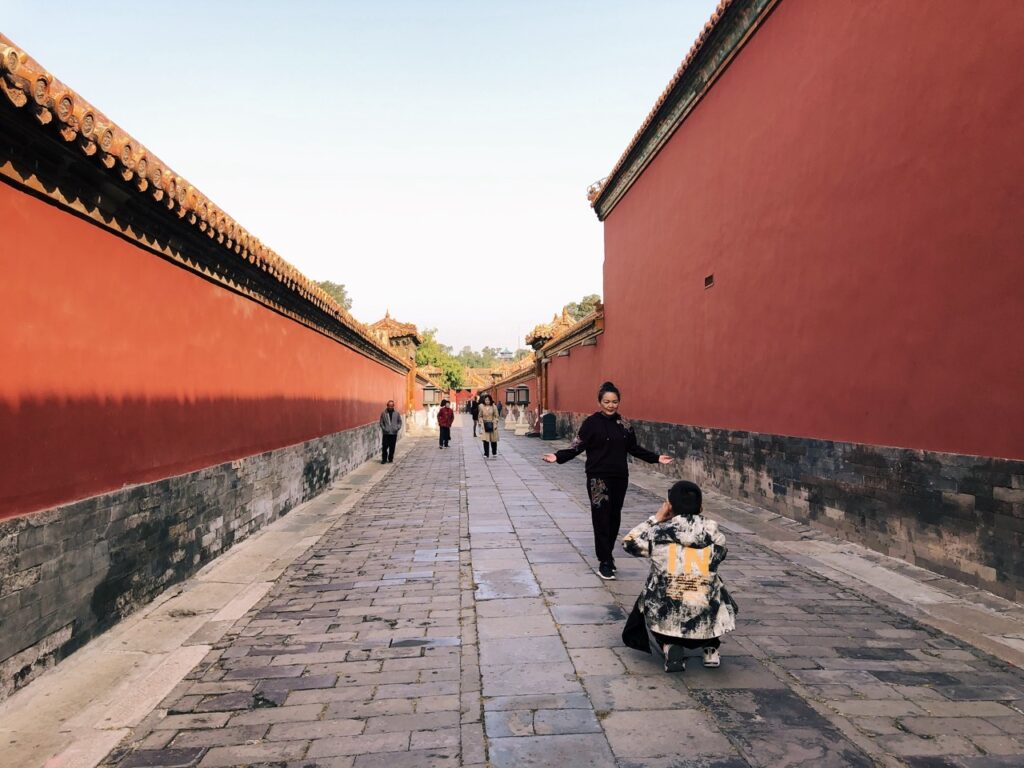
One of the most striking parts of visiting the Forbidden City is simply waddling through its long, echoing walkways, surrounded by towering red walls on both sides. The paths seem to stretch endlessly, guiding you deeper into the heart of history. As we waddled through, it almost felt like the walls were whispering stories of emperors, concubines, and guards who once walked the same route centuries ago. The red color, symbolizing prosperity and good fortune, glows beautifully in the sunlight, creating a warm, almost cinematic feel as shadows play along the walls. Every turn reveals another hidden courtyard, another doorway, another piece of the past. It’s in these quieter corridors, away from the main halls, that the Forbidden City feels most alive, peaceful, timeless, and utterly captivating.
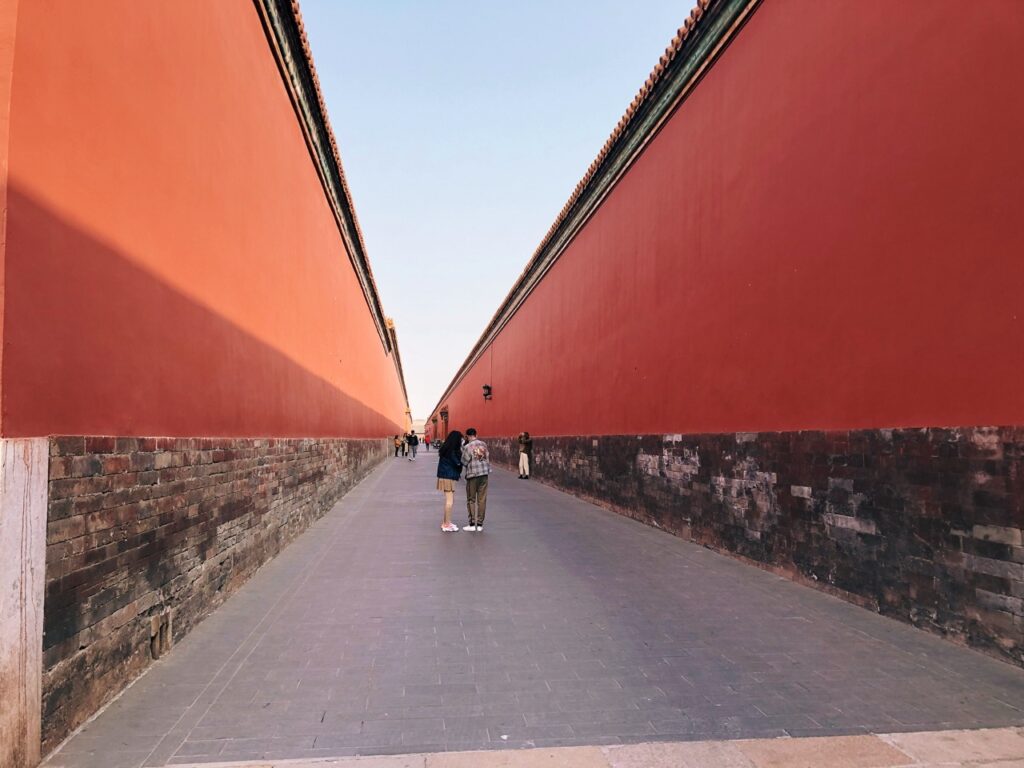
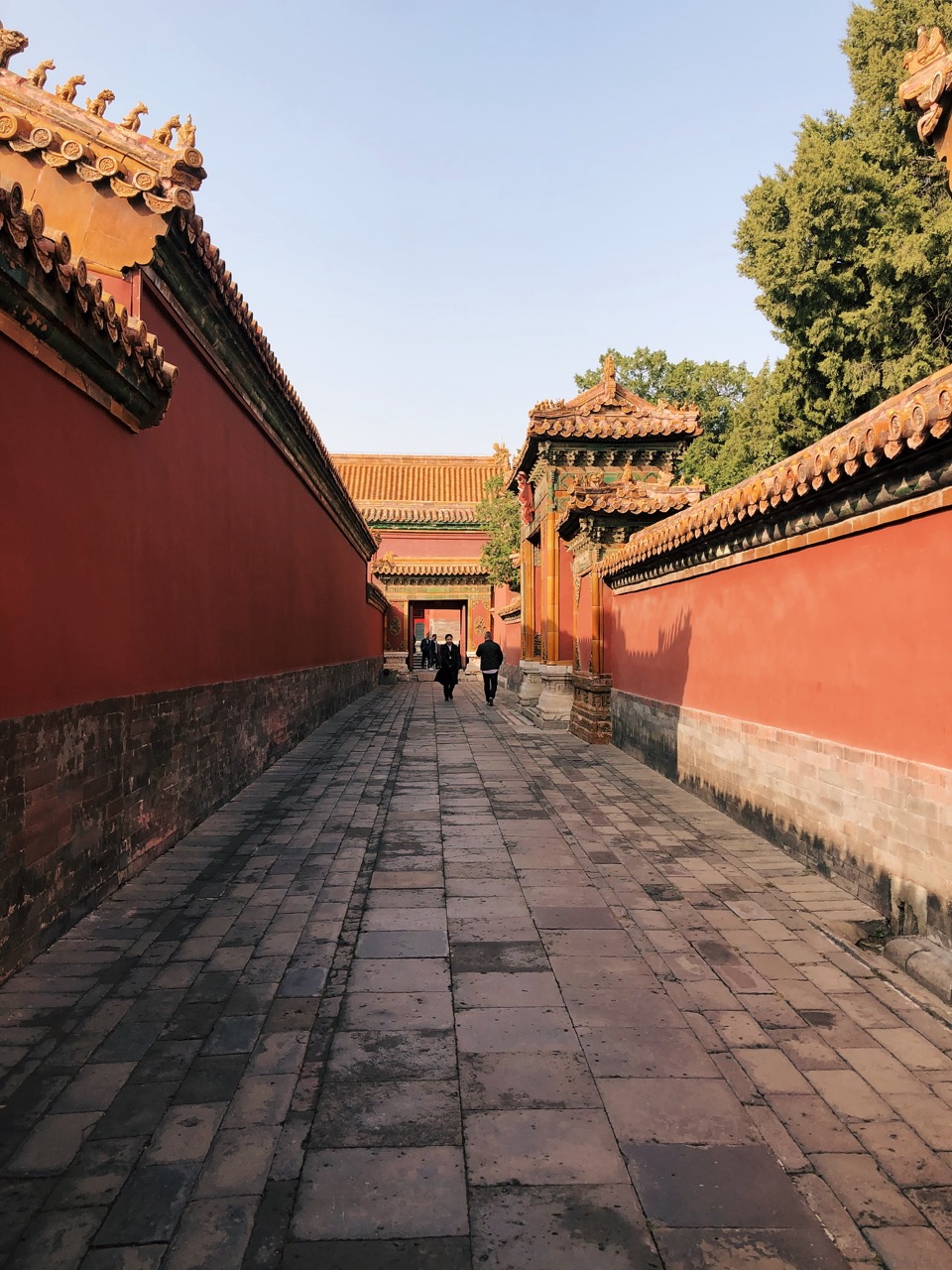
Why Is the Forbidden City Red
The red color of the Forbidden City isn’t just for decoration; it’s deeply symbolic in Chinese culture. Red represents happiness, prosperity, power, and protection, making it the perfect choice for an imperial palace. In ancient China, red was also believed to ward off evil spirits and bring good fortune to those who lived within its walls. The pigment came from cinnabar, a mineral that gave the buildings their rich, warm tone and durability. As we waddled between the towering red walls and golden rooftops, it was easy to see how the color set the mood, bold yet peaceful, powerful yet graceful. Under the sunlight, the walls seemed to glow, a constant reminder that this was not just a palace, but a symbol of divine authority and eternal harmony.
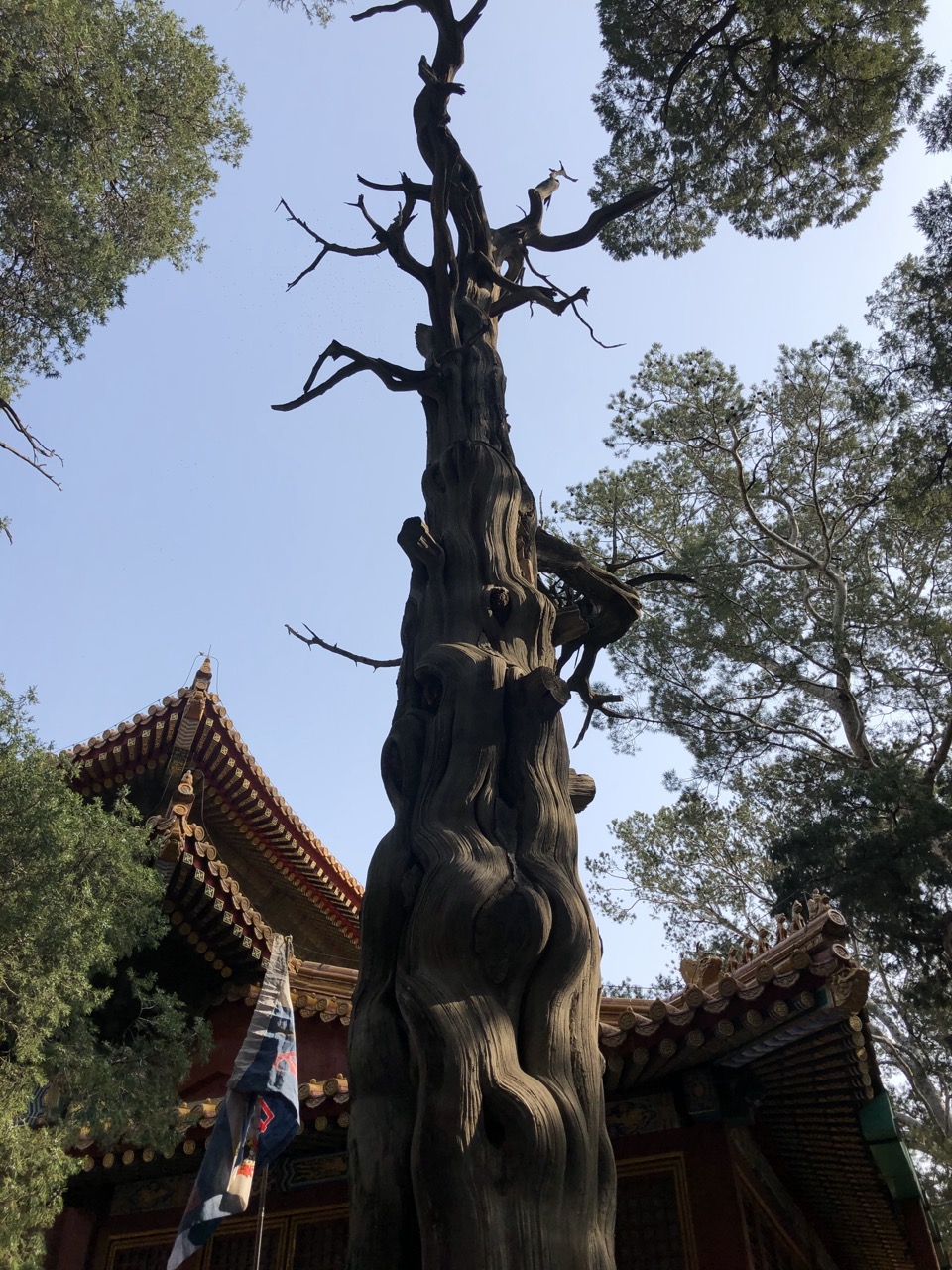
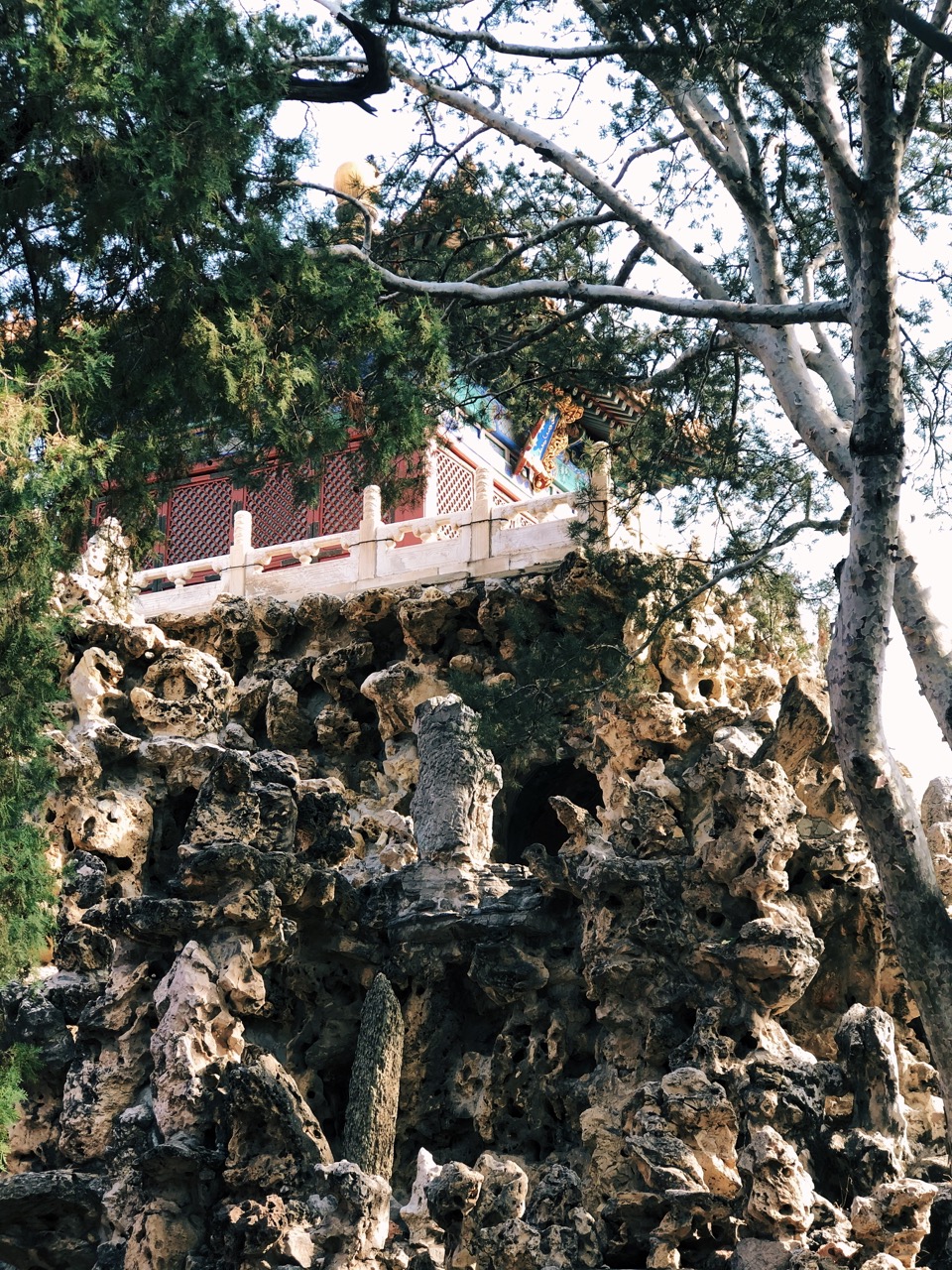
In the Inner Court, don’t miss the Palace of Heavenly Purity (Qianqing Gong), the Hall of Union (Jiaotai Dian), and the Palace of Earthly Tranquility (Kunning Gong), together, they formed the emperor and empress’s main living area. Finally, wander into the Imperial Garden at the northern end, filled with ancient cypress trees, rock formations, and peaceful pavilions that offer a perfect place to pause and reflect on centuries of history.
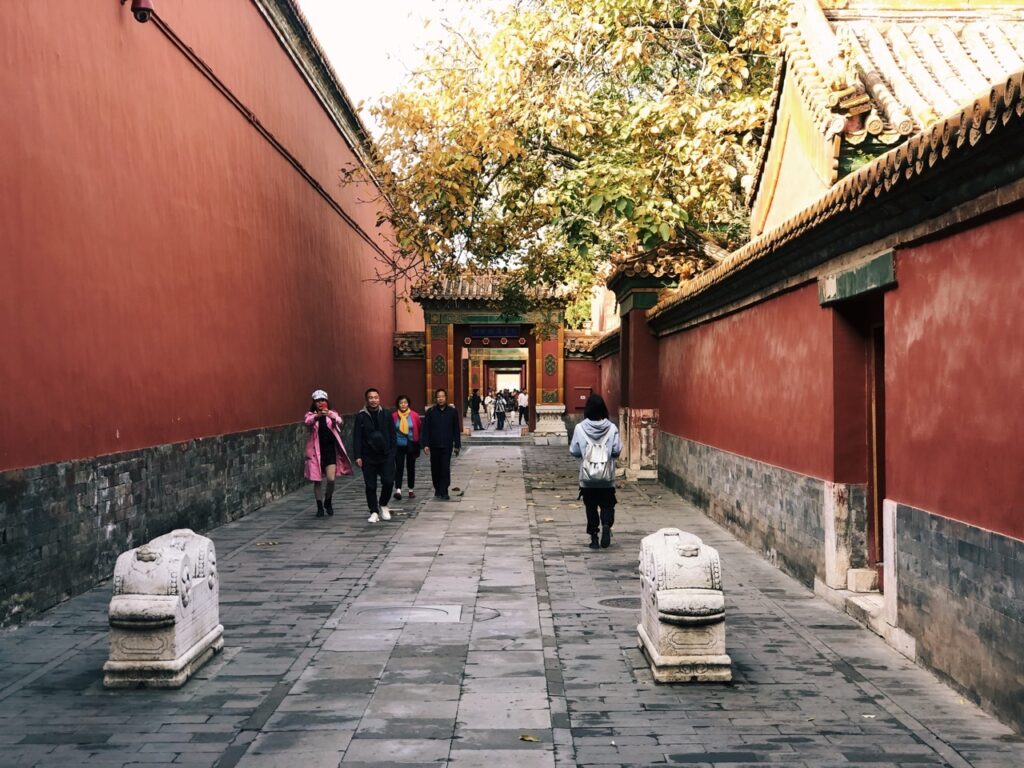
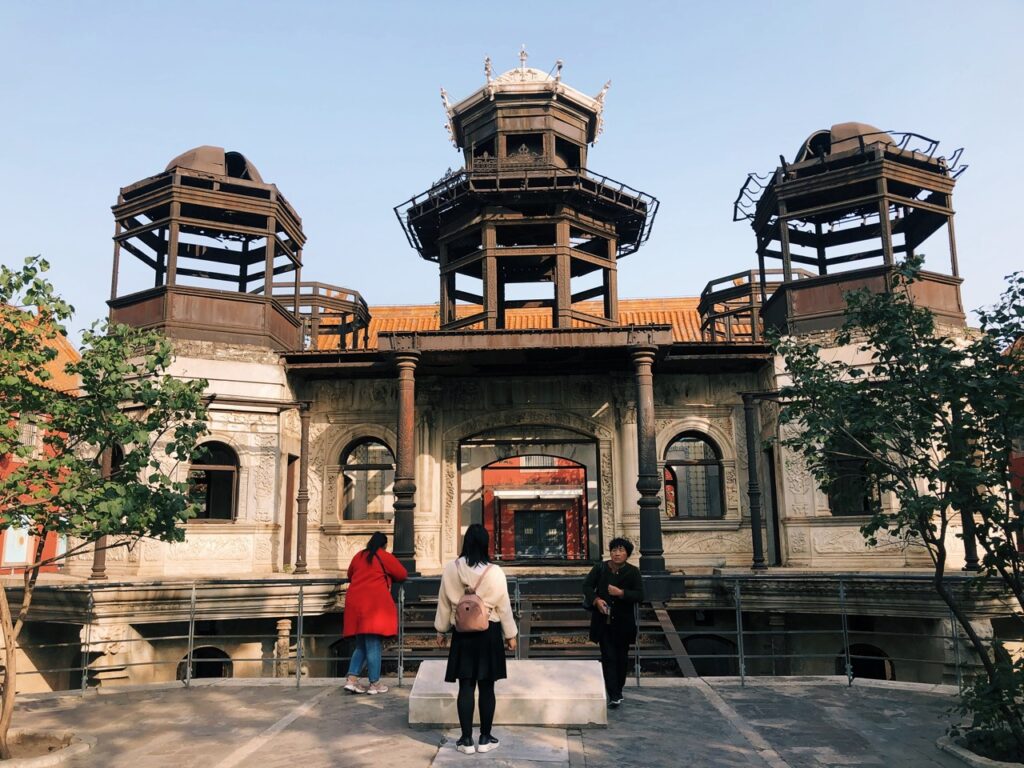
As we waddled deeper into the Forbidden City, we stumbled upon a few quiet corners almost completely deserted by people. After the buzz of the main courtyards, finding these peaceful spots felt like discovering a secret world within the palace walls. The air was still, the sounds of the crowd faded, and for a moment, it felt like we had the entire imperial city to ourselves. We sat down on a shaded bench, surrounded by red walls and ancient trees, and just took it all in, no rush, no noise, just calm. We’re not even sure which section it was, but that little moment of stillness was one of our favorites. It was a nice reminder that even in the most visited places, there’s always a corner of peace waiting to be found.
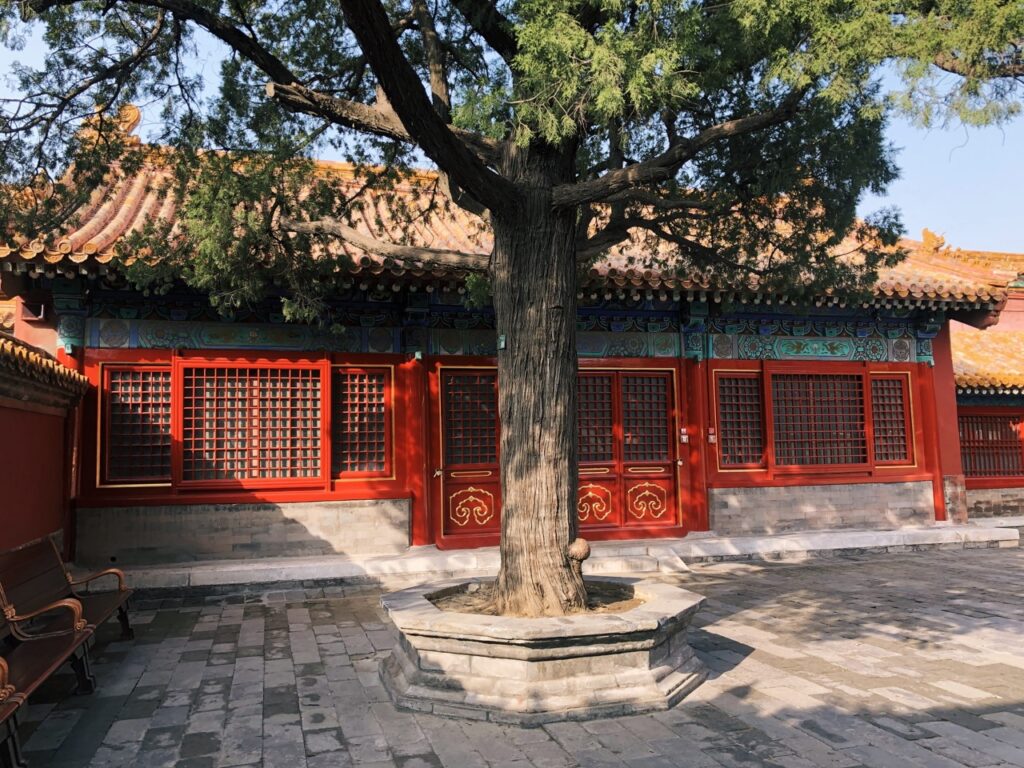
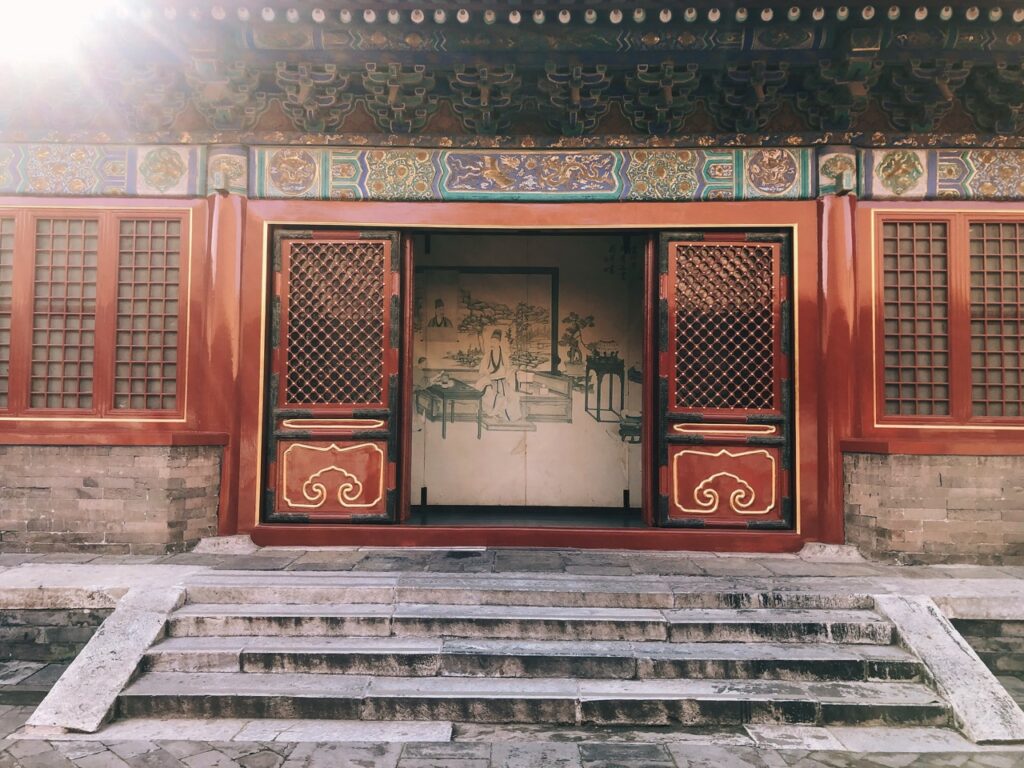
The Qianlong Garden
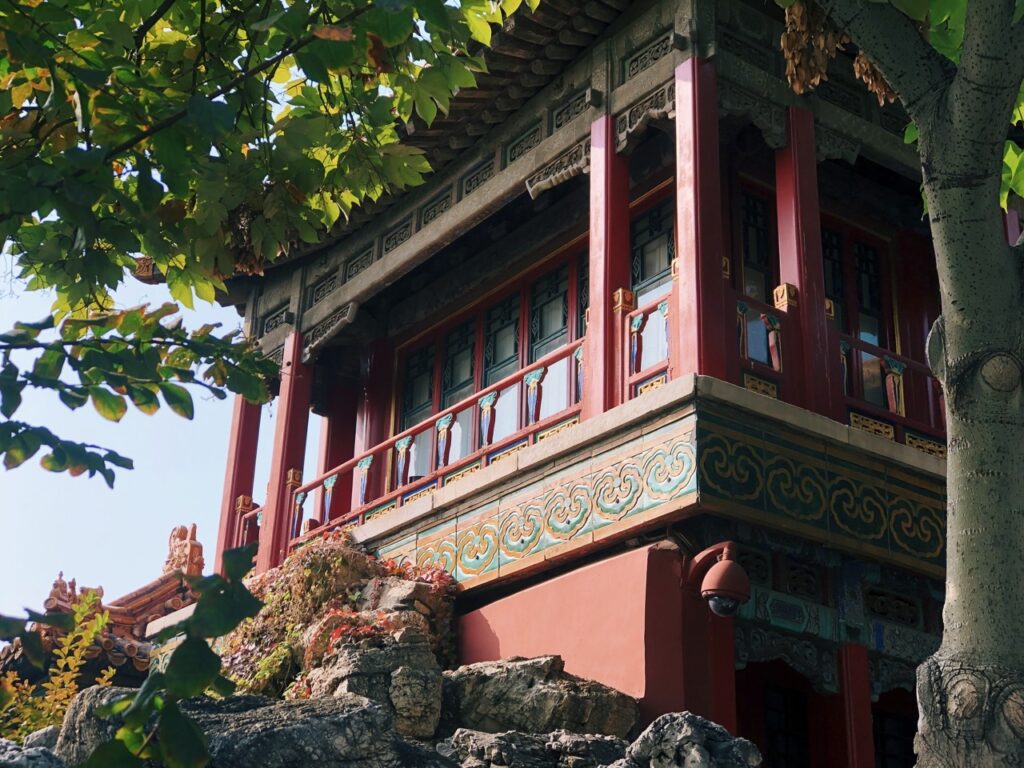
In the northeastern corner of the Forbidden City lies the Qianlong Garden, one of our absolute favorite parts of the entire complex. Built in the 18th century for Emperor Qianlong’s retirement, this garden was designed as a private retreat, a peaceful world apart from the grandeur of the main halls. It’s filled with intricate rockeries, ornate pavilions, and hand-painted interiors, each detail blending art, philosophy, and nature in perfect harmony. What makes it especially fascinating is that it remained untouched for over two centuries, preserving original designs that few other areas still have. Restoration efforts have recently opened parts of it to the public, giving visitors a rare glimpse into the emperor’s personal taste and vision.
How Long Do You Need to Visit the Forbidden City
To truly experience the Forbidden City, plan to spend at least 3 to 4 hours exploring. The complex is massive, over 720,000 square meters, and even a relaxed waddle through the main halls, courtyards, and gardens takes time. If you enjoy history, photography, or simply pausing to admire the details, you could easily spend half a day here without noticing how quickly time passes. We spent around four hours and still felt like we’d only scratched the surface. The best approach is to move slowly, follow the natural south-to-north route, and take breaks in the quieter corners or gardens. Rushing through would mean missing the essence of the place, after all, this isn’t just a sightseeing stop, it’s a journey through centuries of Chinese imperial life.

How Many People to Expect at the Forbidden City
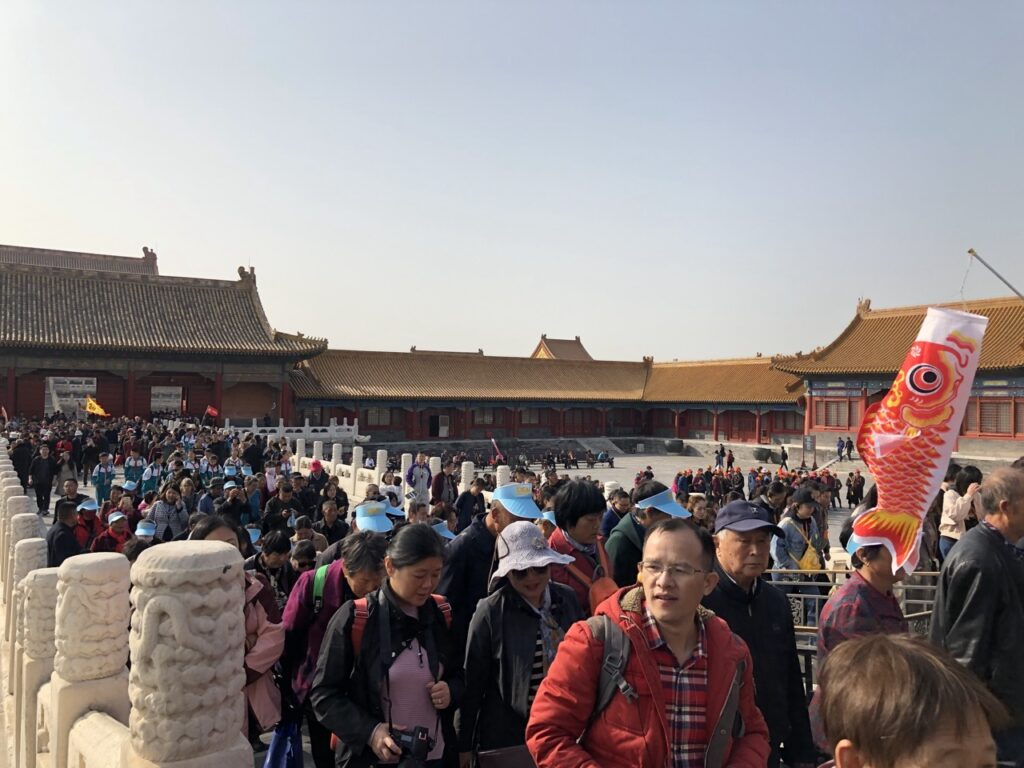
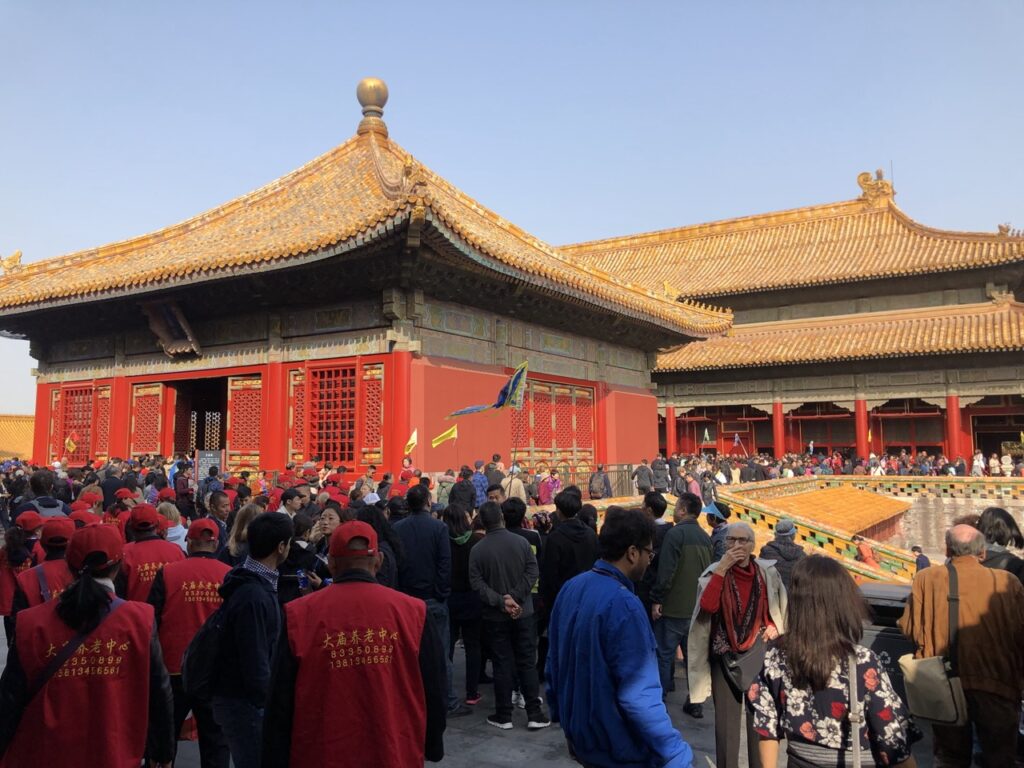
The Forbidden City is one of the most visited landmarks in the world, so expect a lot of people, especially during weekends and holidays. On an average day, around 30,000 to 50,000 visitors pass through its gates, but during peak seasons like Chinese New Year or Golden Week, that number can soar to 80,000 or more (which is also the daily visitor cap). We visited early in the morning, and even then, the courtyards quickly filled with tour groups, guides waving flags, and endless lines of cameras. It can feel overwhelming at first, but don’t worry, once you move deeper into the complex, the crowds thin out and you’ll find plenty of quiet corners to pause and soak up the atmosphere.
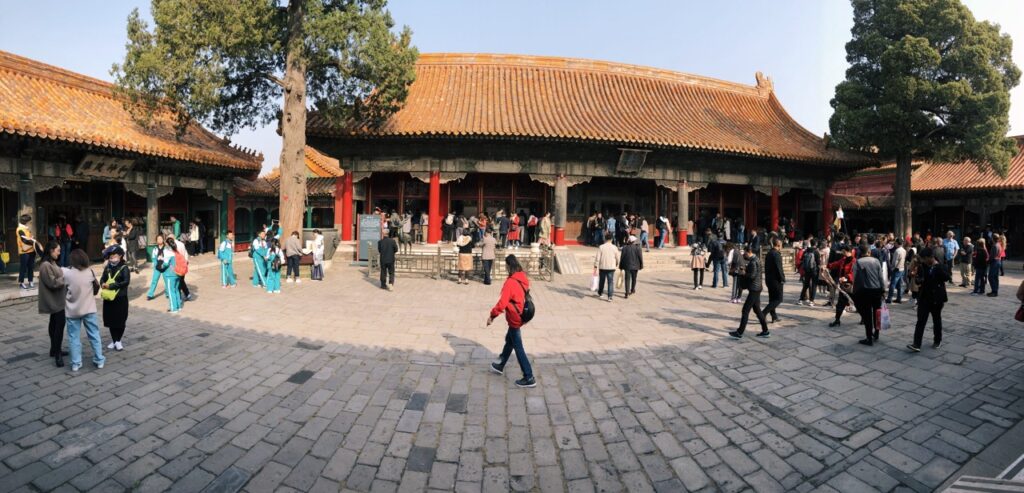
We absolutely loved our waddle through the Forbidden City, it’s one of those rare places that truly lives up to its legend. From the grand halls to the hidden courtyards, every corner has a story waiting to be discovered. If you visit, take your time. Don’t rush through it like another checklist stop. This is a place that deserves to be experienced slowly, one step, one red wall, and one quiet moment at a time. Sit down, look around, and imagine the centuries of history that unfolded right where you stand.
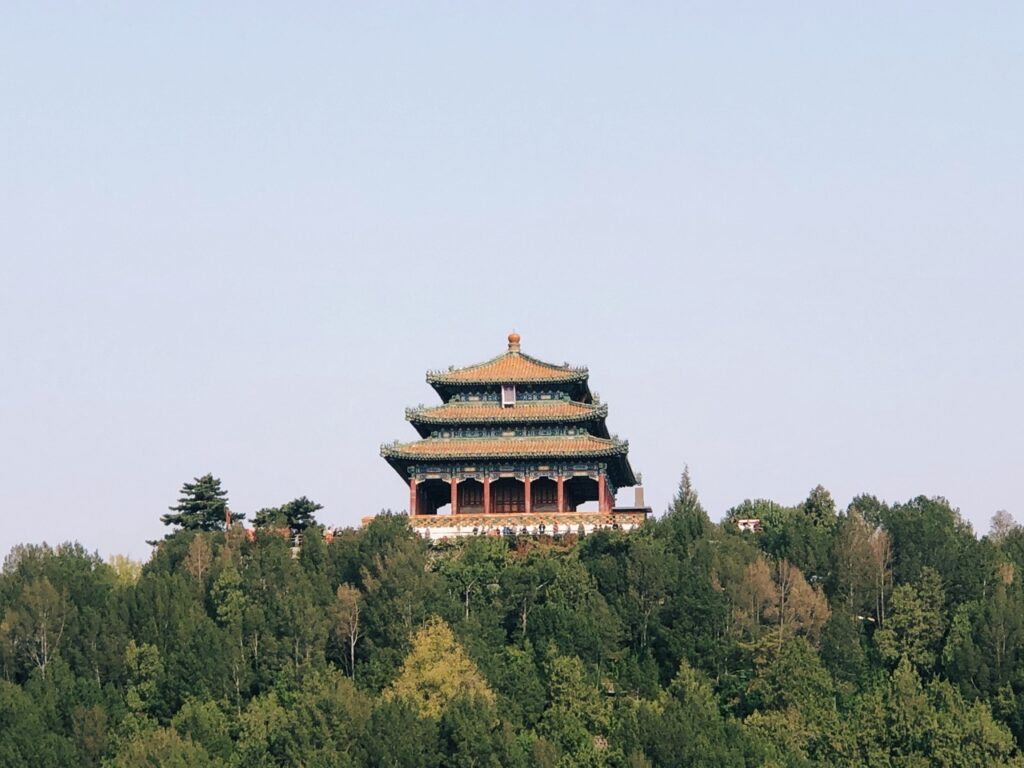
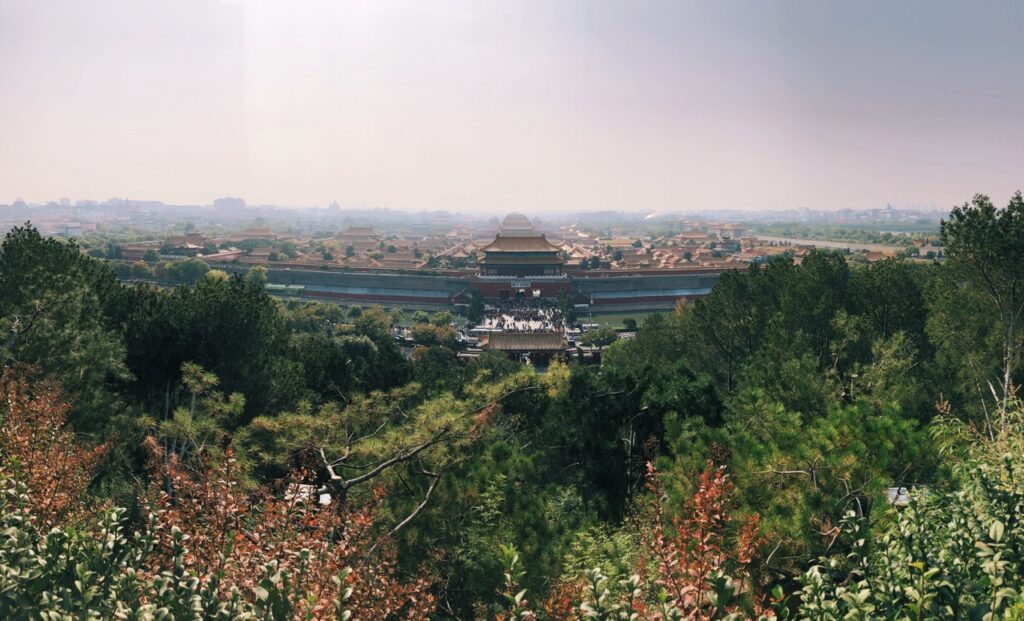
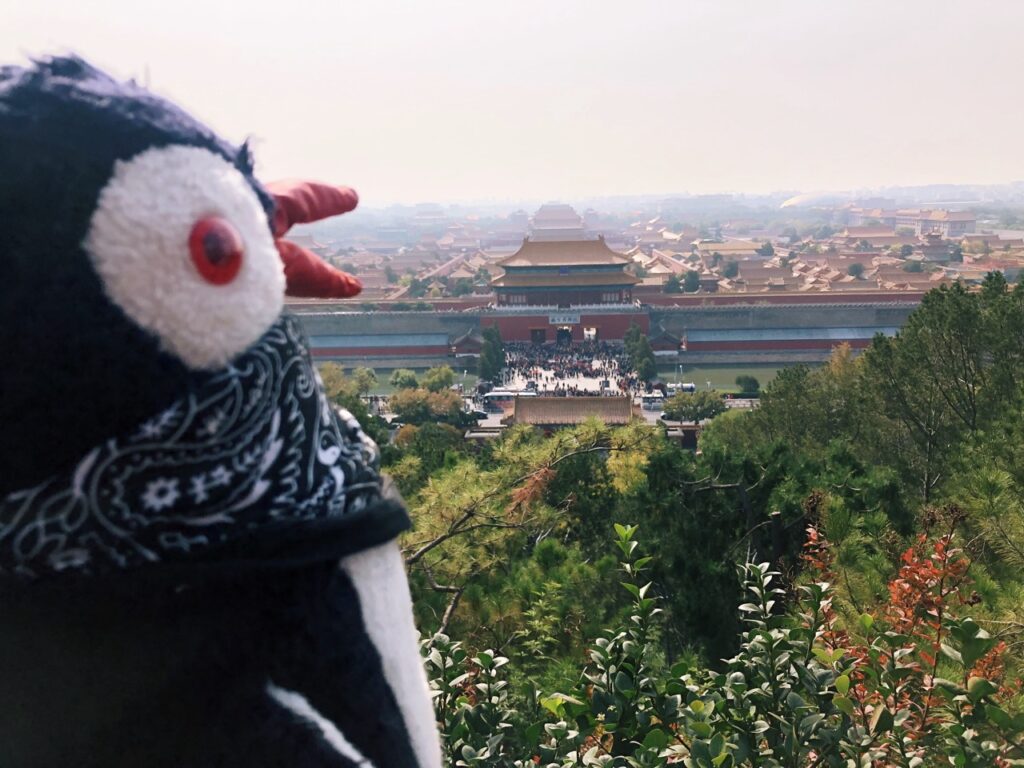
But our adventure didn’t end there. After leaving through the northern gate, we continued our waddle uphill to Jingshan Park, once part of the imperial gardens. It’s the perfect spot to end your visit, offering a stunning panoramic view of the Forbidden City’s golden rooftops, shining in the sun like a sea of history beneath your feet.
Jingshan Park
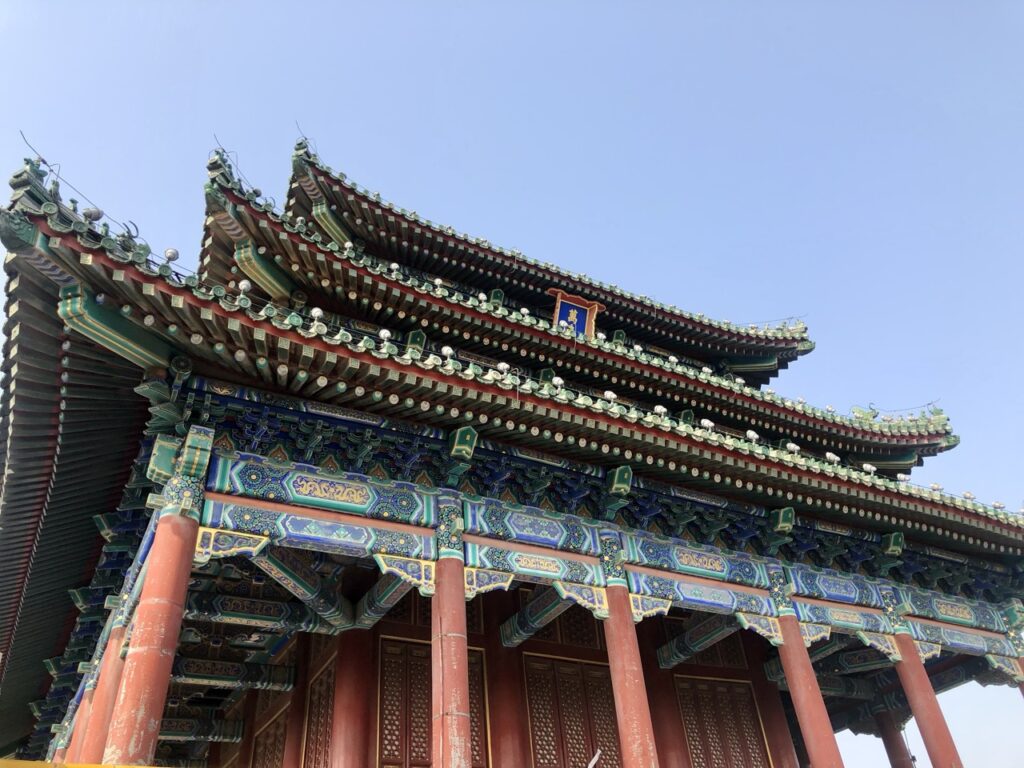
We entered the Forbidden City through the Meridian Gate (Wumen), the grand southern entrance where emperors once began their ceremonial processions. From there, we waddled all the way north through the palace grounds until we reached the Gate of Divine Prowess (Shenwumen), the final exit leading directly toward Jingshan Park. This beautiful park was once part of the imperial gardens and served as a private retreat for the royal family. It’s hard to believe, but the hill at its center, Jingshan Hill, was actually artificial, created from the earth excavated to create the Forbidden City’s moat. Climbing to the top rewards you with one of the best panoramic views of Beijing, especially the golden roofs of the Forbidden City, which spread out below like a sea of history. We highly recommend combining your visit to the Forbidden City with Jingshan Park; it’s the perfect way to end your imperial waddle with peace, perspective, and a breathtaking view.
You’ll Need a Separate Ticket for Jingshan Park
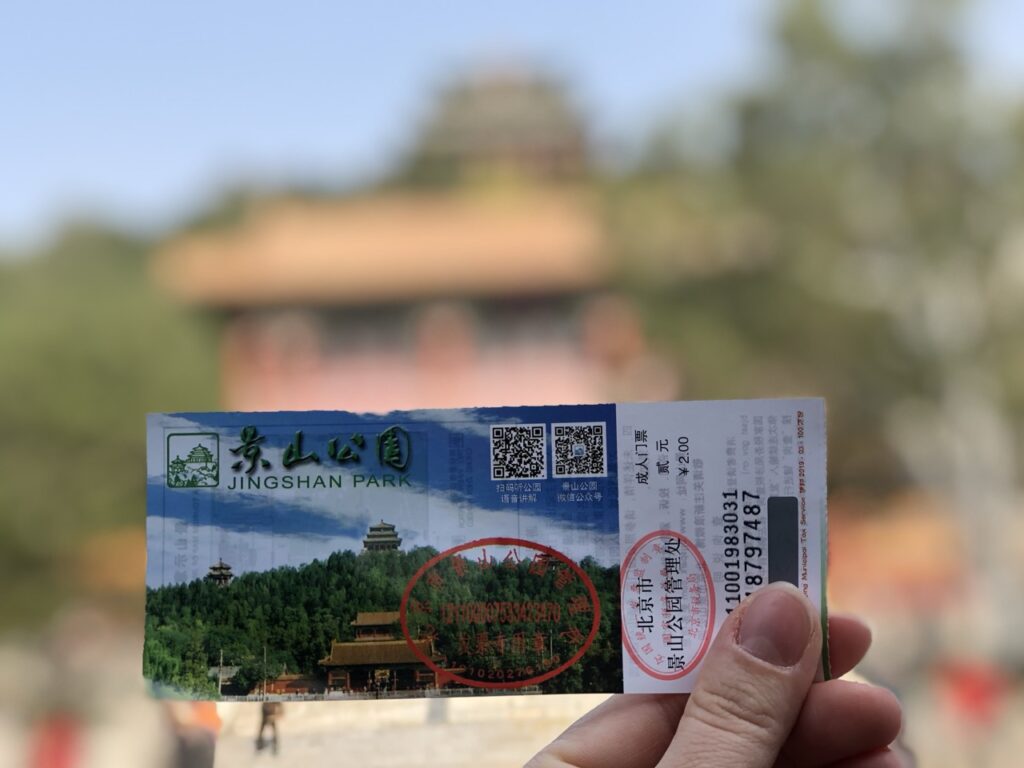
While Jingshan Park sits right behind the Forbidden City and was once part of its imperial gardens, it’s managed separately today, so you’ll need to buy an additional ticket to enter. The good news is that it’s very affordable, usually around ¥2–¥10 (less than €1.50) depending on the season. You can easily purchase it at the entrance gate or via popular Chinese travel apps. The short climb up Jingshan Hill is absolutely worth it for the panoramic view over the Forbidden City’s rooftops, especially in the late afternoon when the golden tiles glow in the sunlight. It’s the perfect little add-on to your visit and a peaceful way to wrap up your day of imperial waddling.
Jingshan Park Opening Hours
If you’re planning to visit Jingshan Park after exploring the Forbidden City, it’s good to know the opening hours so you can time your waddle right. The park is open daily from 6:00 AM to 9:00 PM, though the last ticket is usually sold around 8:30 PM. Hours may vary slightly by season, especially in winter when it closes earlier. We visited in the afternoon, and it was the perfect time to watch the sunset over the Forbidden City’s golden roofs, a view that truly feels like a reward after the long walk through history.
Pro Penguin Tip: For the most magical light (and fewer people), visit either early in the morning or just before sunset.
The Perfect Day in Beijing: Our Recommended Route
For a truly memorable day in Beijing, we recommend starting early at Tiananmen Square, the symbolic heart of China. From there, waddle north straight into the Forbidden City, where you can spend a few hours exploring its grand halls, quiet courtyards, and fascinating history. Take your time, it’s not a place to rush. After exiting through the Gate of Divine Prowess, continue your walk directly into Jingshan Park for a well-earned break and a breathtaking panoramic view over the palace rooftops. It’s the perfect way to end your day, peaceful, scenic, and a little poetic, watching the city’s golden past fade into the soft evening light.
Pack your bags and explore Beijing!
🐧 Pin it to your Beijing travel board so you don’t forget this imperial adventure!

This post contains affiliate links. If you click and buy, I might earn a tiny commission, enough to help a penguin keep up its globe-trotting lifestyle. No extra cost to you, just more fish for me. Thank you for supporting the adventure!