Waddle into Faroese history with medieval ruins, a legendary farmhouse, and sweeping sea views
Our last day in the Faroe Islands didn’t start quite the way we imagined. We woke up to heavy rain hammering against the windows, the kind that makes any thought of exploring seem out of the question. The forecast, however, promised sunshine later in the afternoon, though, believe us, it was hard to imagine as we sat inside watching the downpour. We needed a destination close to Tórshavn that wouldn’t eat up our limited time. That’s how we decided on Kirkjubøur, the oldest village in the Faroe Islands. In this post, we’ll share what makes this historic spot so special, where to park, and what you can expect when visiting.

- How to Get to Kirkjubøur
- Where to Park in Kirkjubøur
- Amenities & Facilities in Kirkjubøur
- Why Visit Kirkjubøur
- How Long to Spend
- Our Waddle Around Kirkjubøur
- Our Waddle Through Kirkjubøur
- Kirkjubøur, the Oldest Village in the Faroe Islands
- The Legend of the Churches of Kirkjubøur
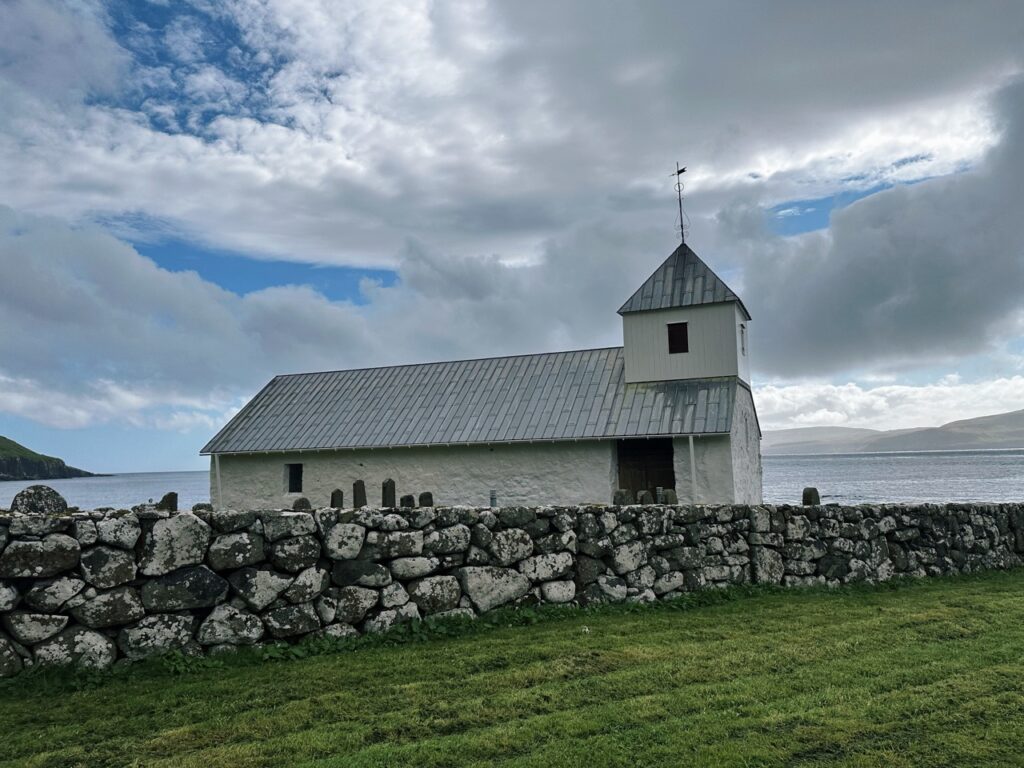
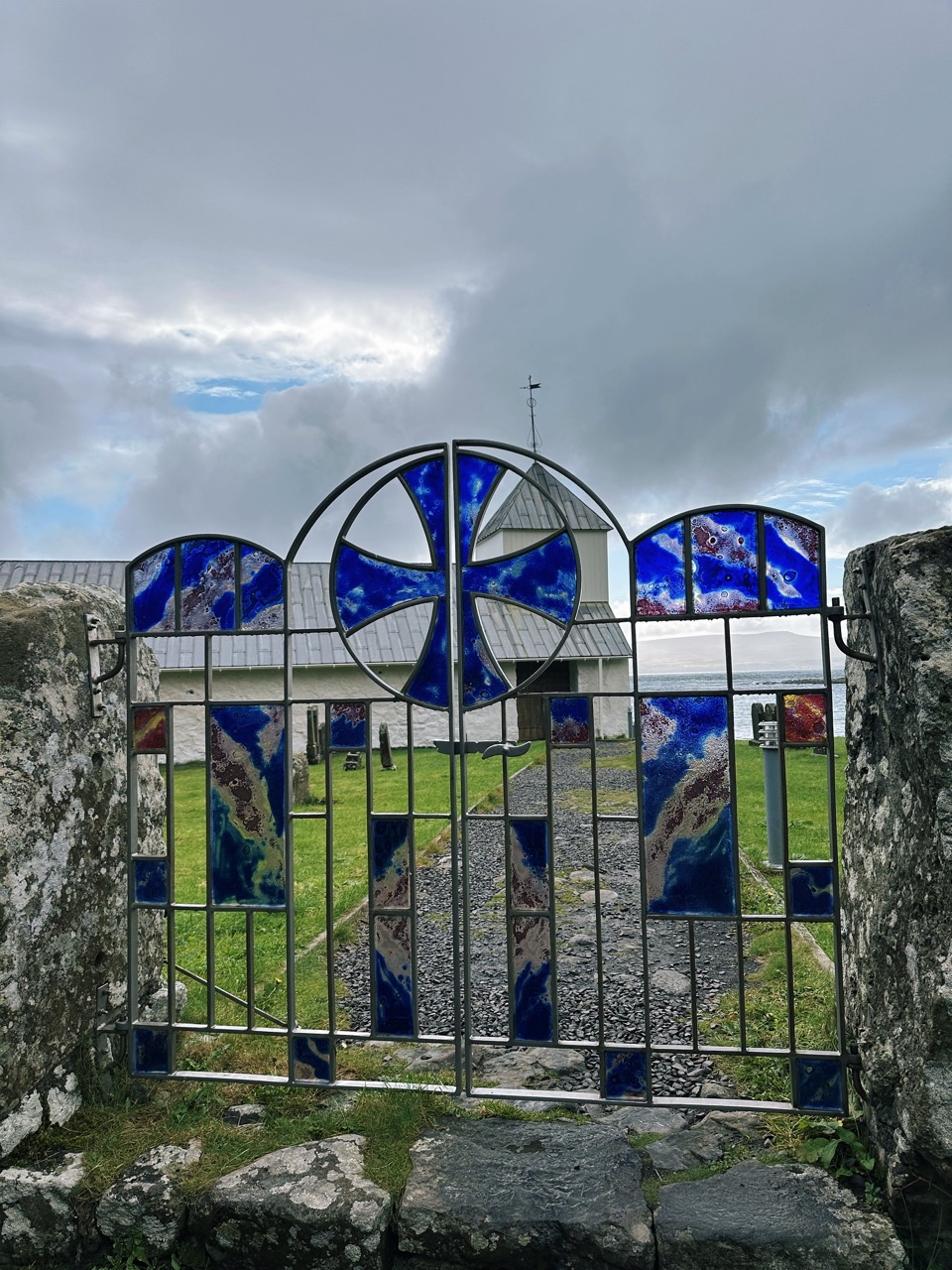
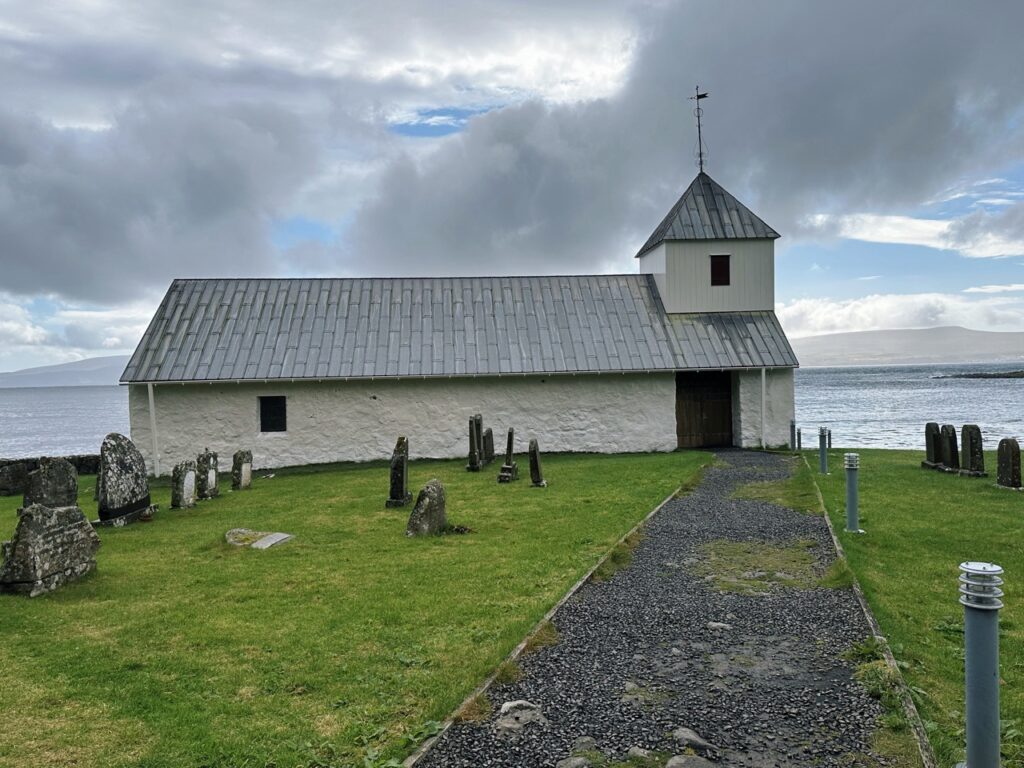
- First Stop: St. Olav’s Church
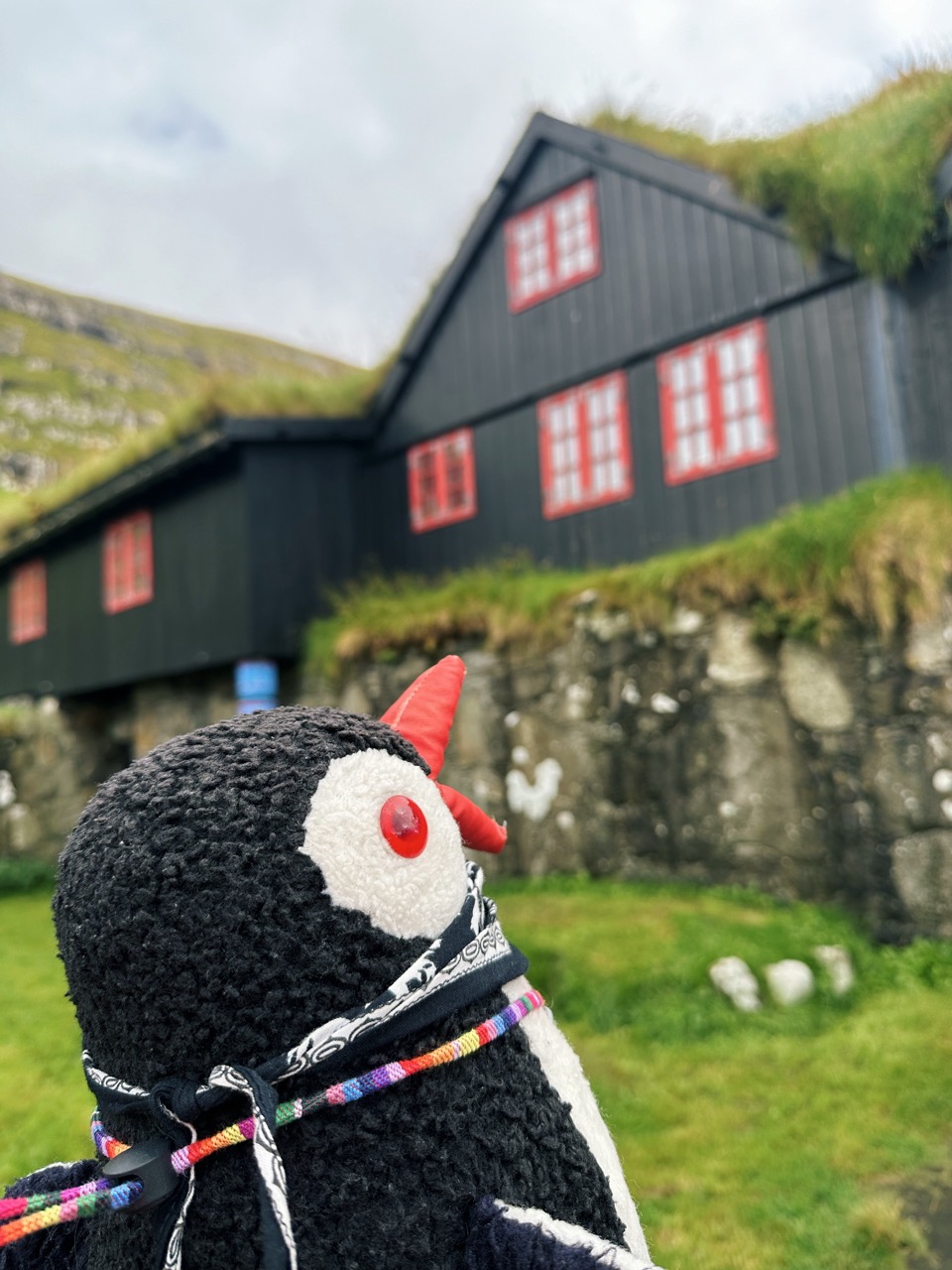
- Second Stop: Roykstovan
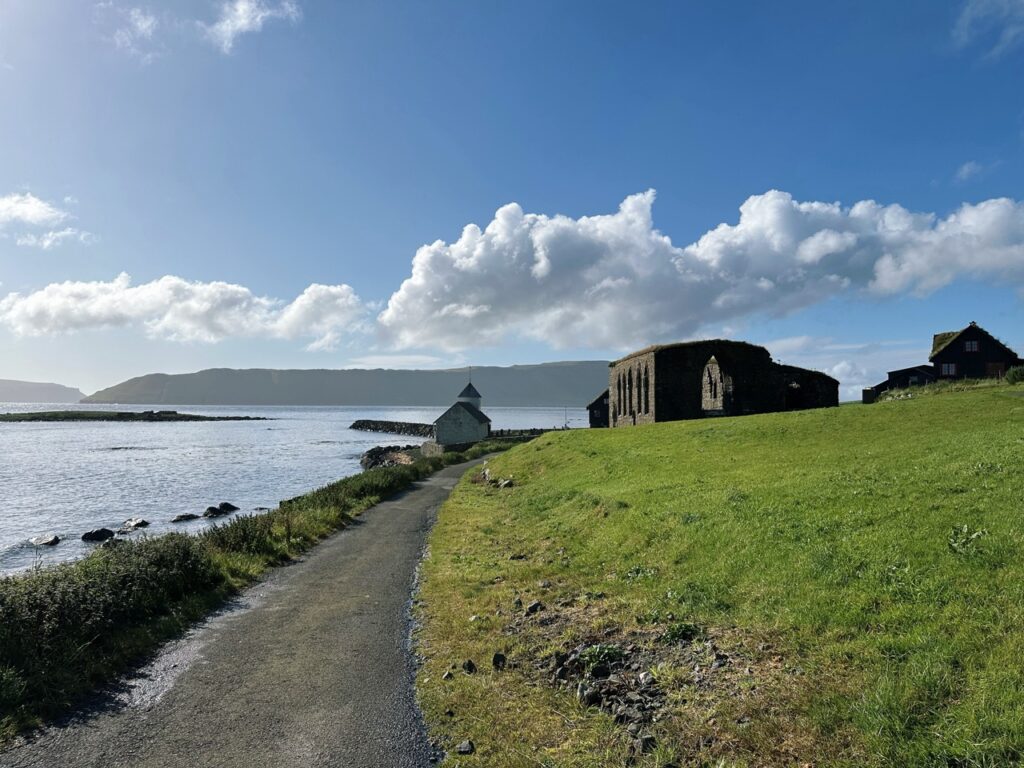
- Kirkjubømúrurin: The Ruins of St. Magnus Cathedral
- A Walk Along the Coastal Path
- One Last Stop in Tórshavn
- Best Time to Visit Kirkjubøur
- Accessibility
How to Get to Kirkjubøur
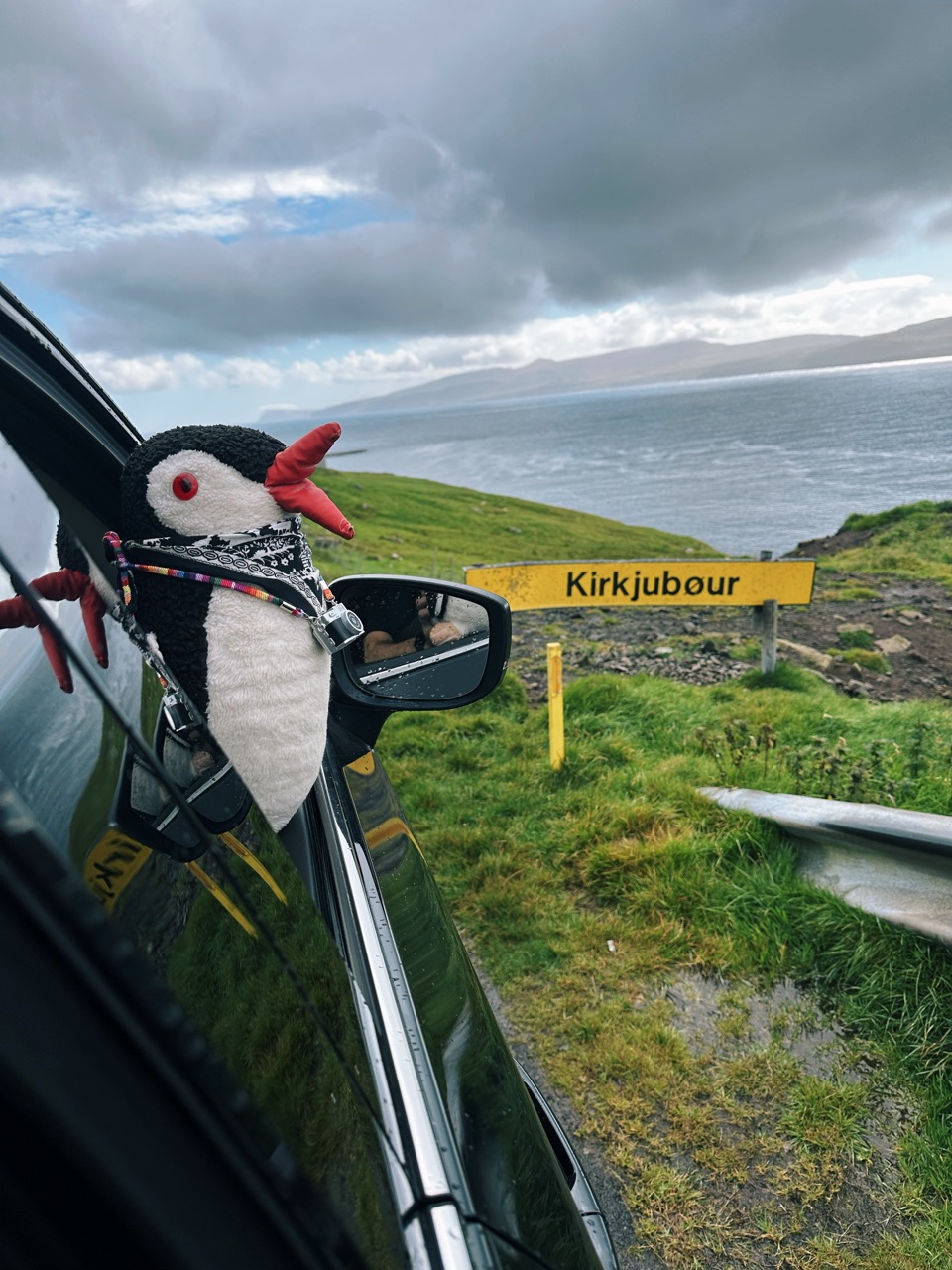
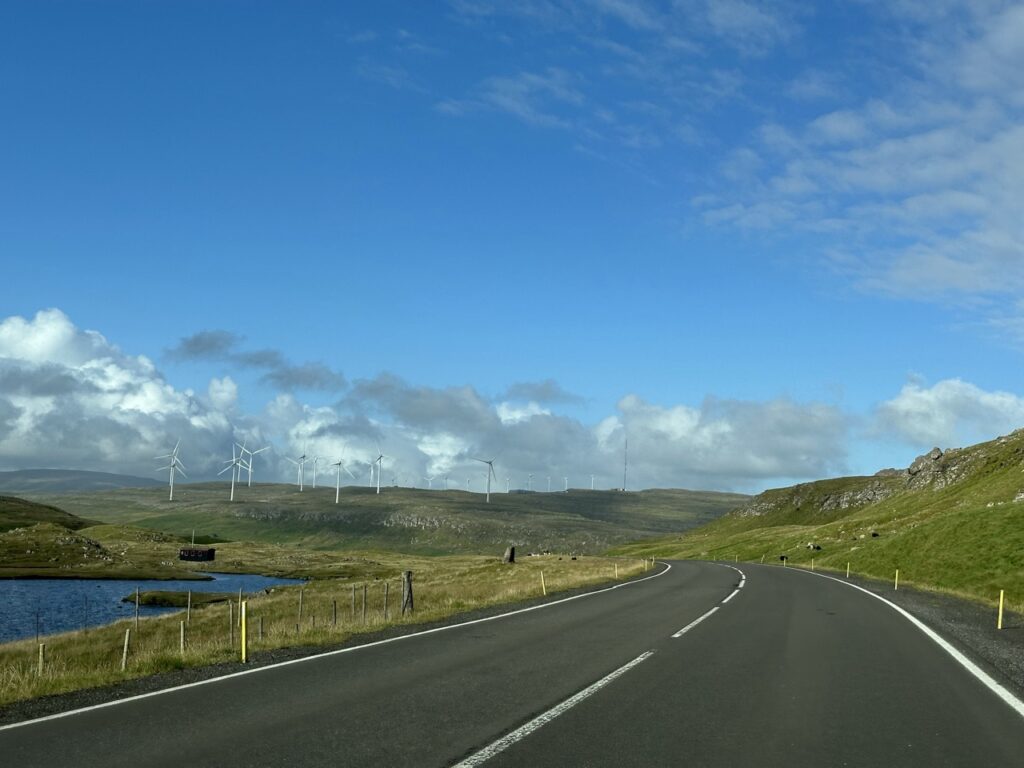
Since we had been renting a car during our trip to the Faroe Islands, getting to Kirkjubøur was quick and easy. The village is located only about 7 kilometers from Tórshavn, which makes it the perfect short drive on a day when you don’t want to travel far. From the capital, it took us just under 15 minutes to reach Kirkjubøur, following a scenic road that winds along the coastline with sweeping sea views before arriving at the historic village.
If you don’t have a car (which we highly recommend when you come here), there’s also the option to travel by public transport. From Tórshavn, you can take bus number 5 directly to Kirkjubøur. The ride is short, usually around 20 minutes, and the bus stops right in the village, just a few steps away from the main sights. It’s an easy and budget-friendly way to visit if you’re not planning on driving in the Faroe Islands.
Where to Park in Kirkjubøur
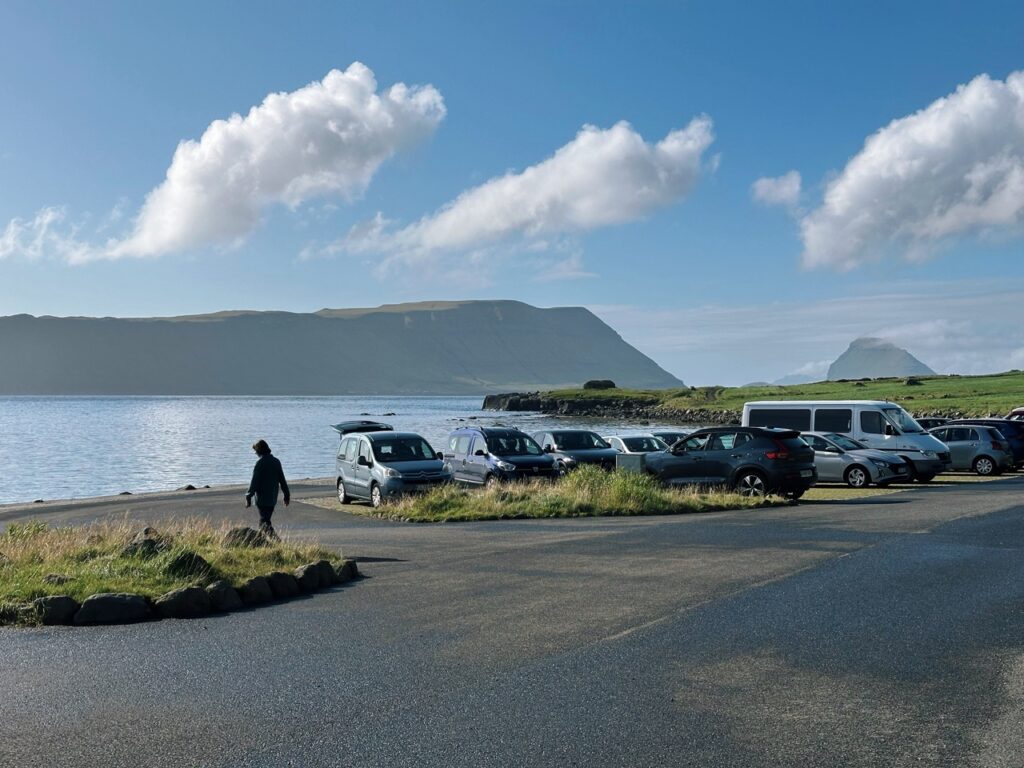
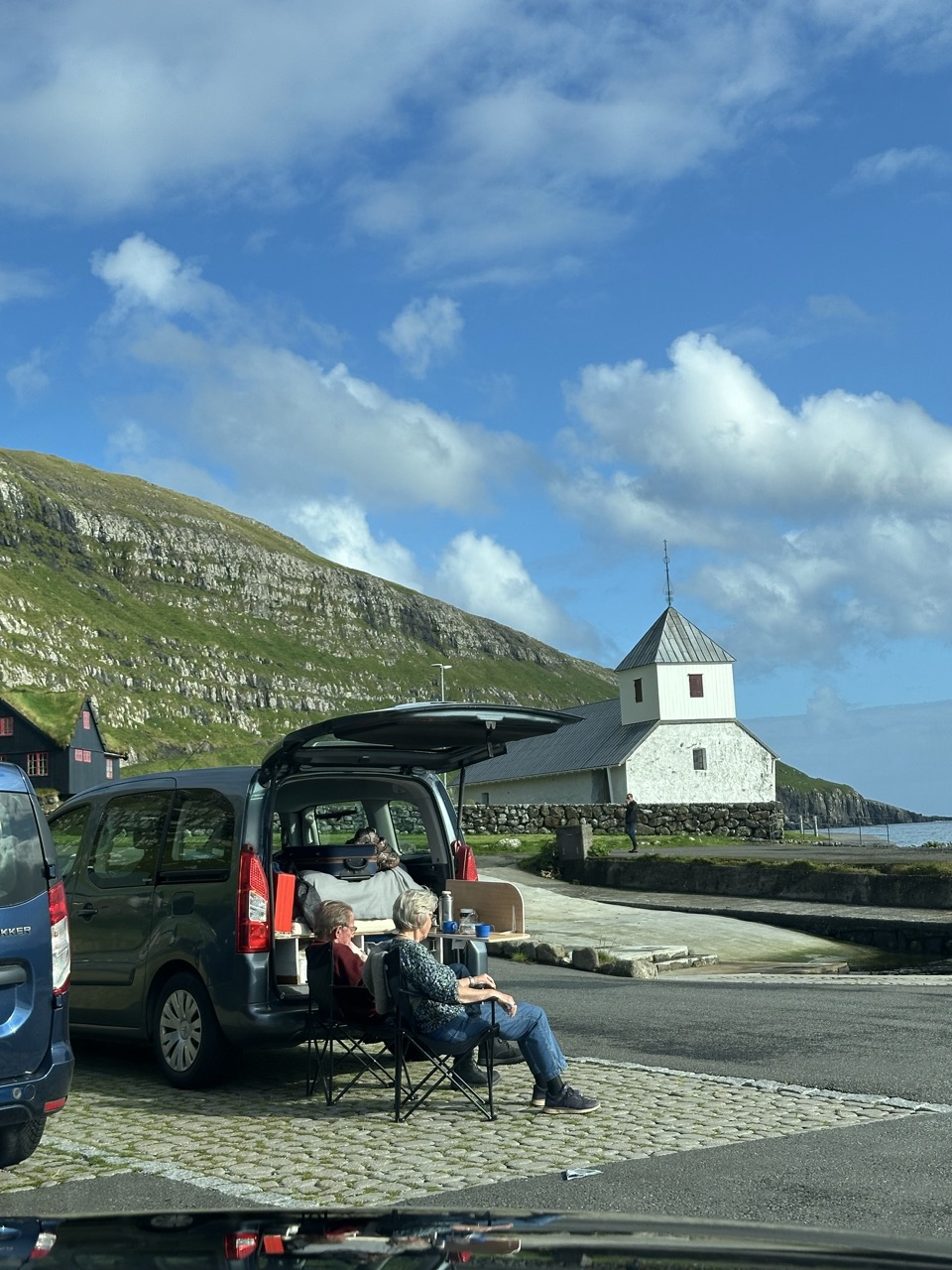
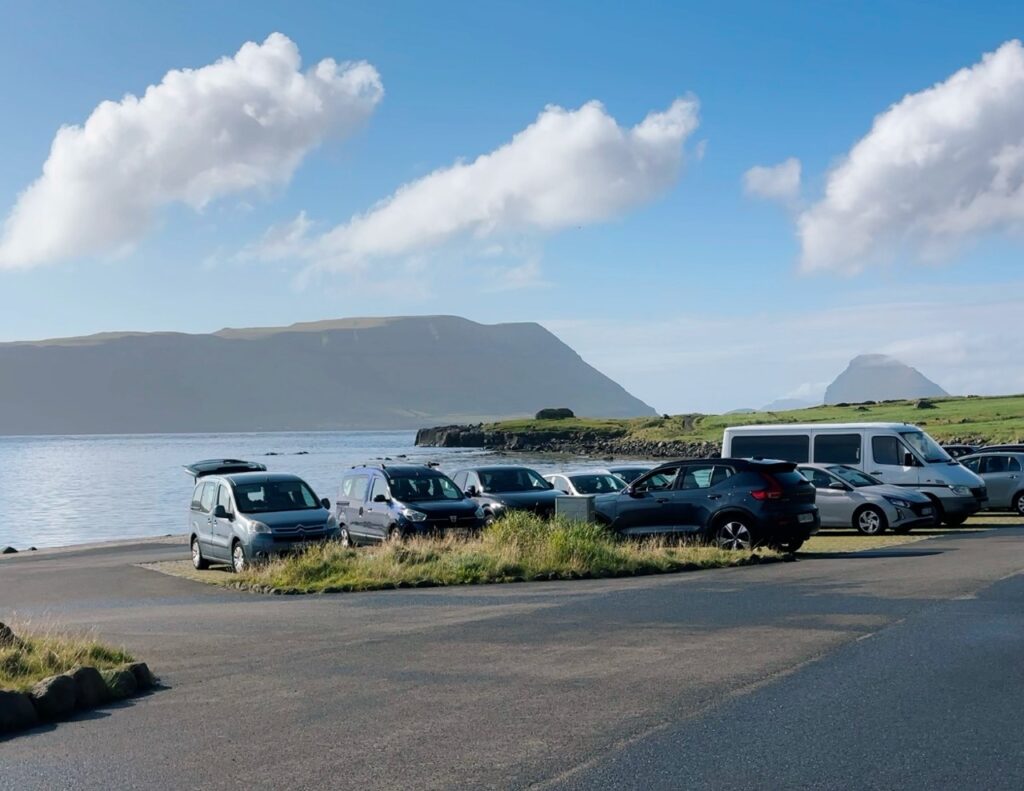
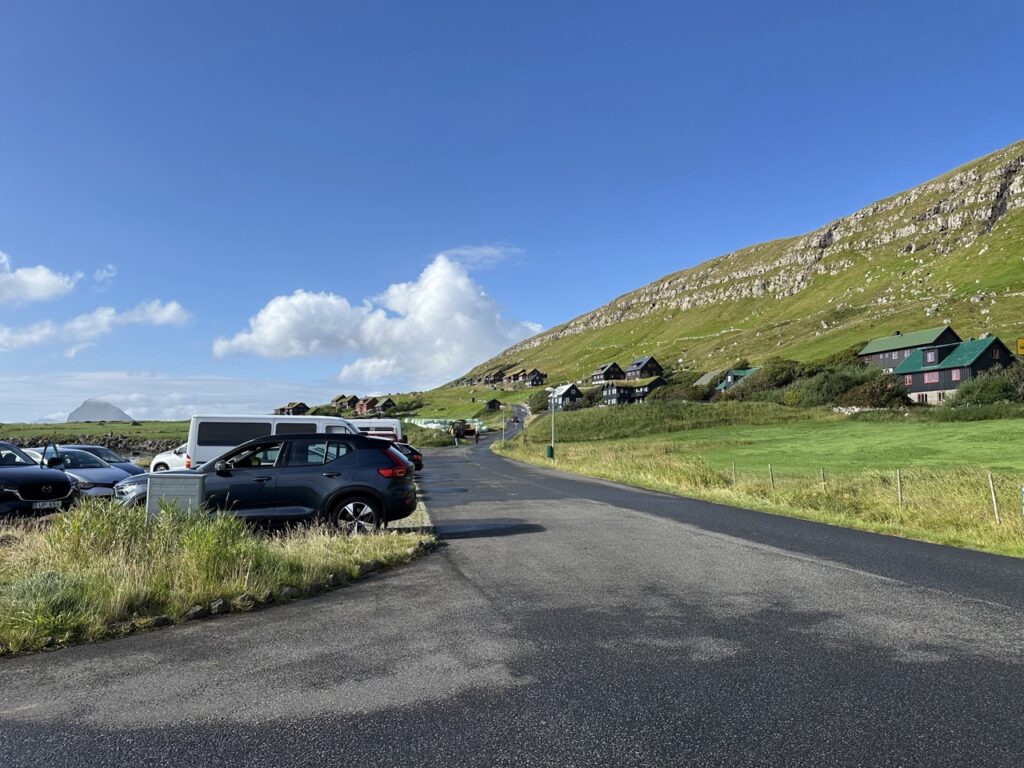
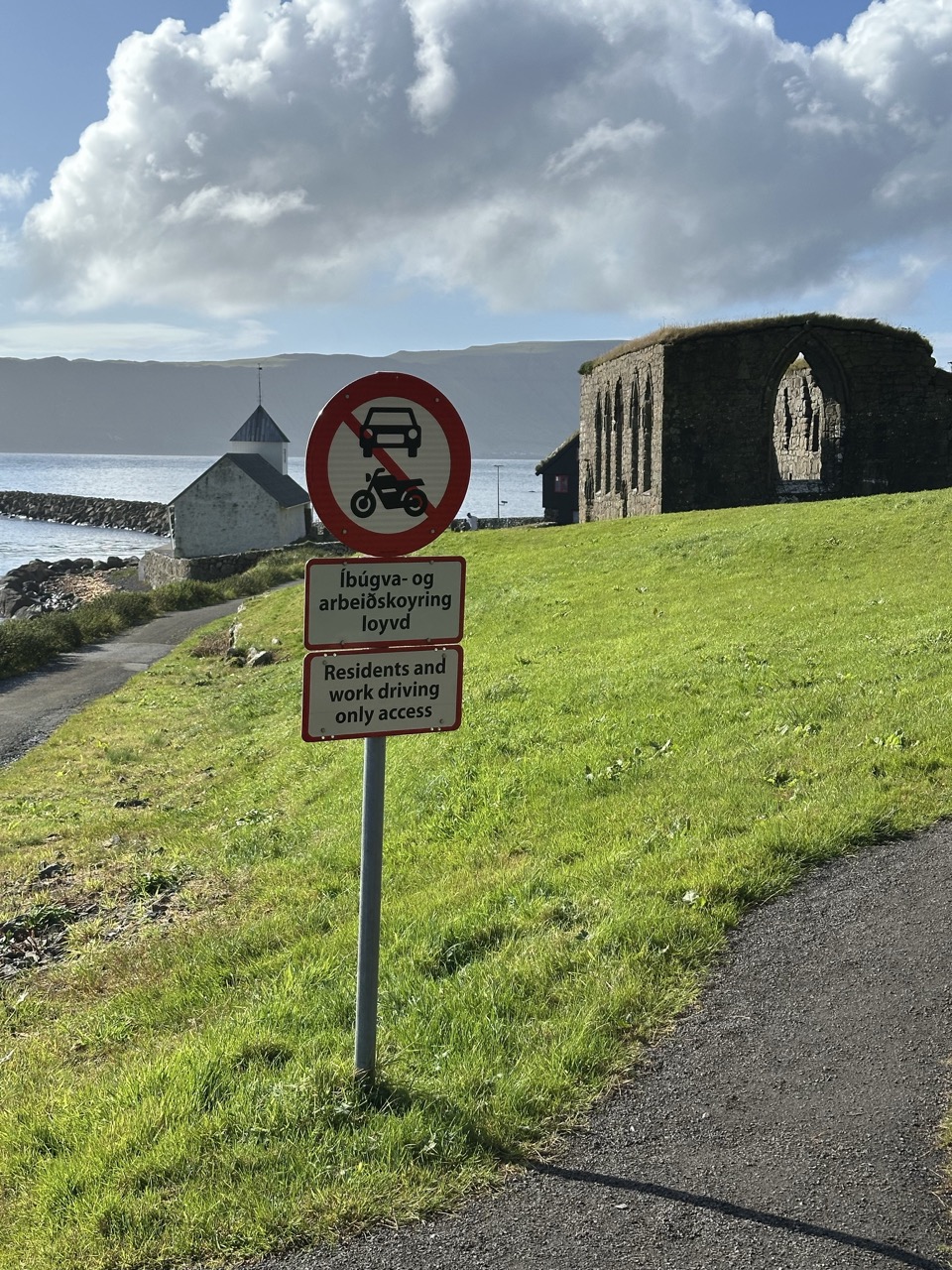
Parking in Kirkjubøur couldn’t be easier. Right at the entrance to the village, next to the small harbour, there’s a dedicated parking area that’s surprisingly spacious given the size of the settlement. Best of all, it’s completely free of charge, so there’s no need to worry about tickets or time limits. From here, you can start exploring on foot; everything in the village is just a short stroll away, making this the perfect starting point for your visit.
Amenities & Facilities in Kirkjubøur
While Kirkjubøur is a small village, it has a few very practical facilities that make a visit more comfortable.
-
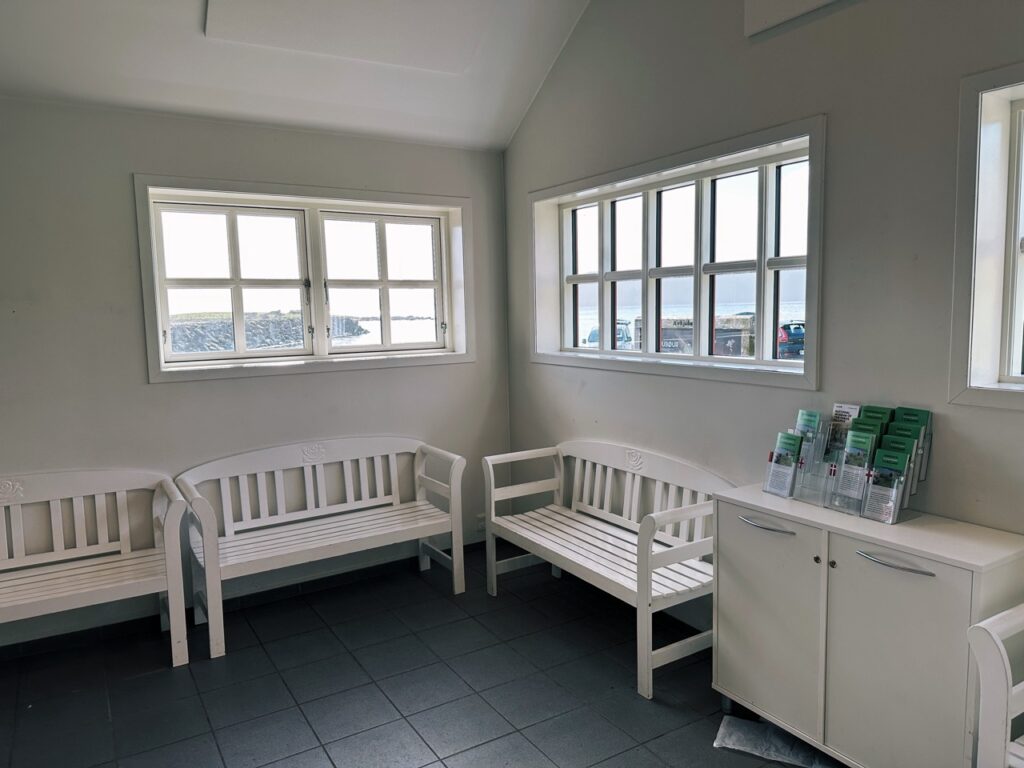
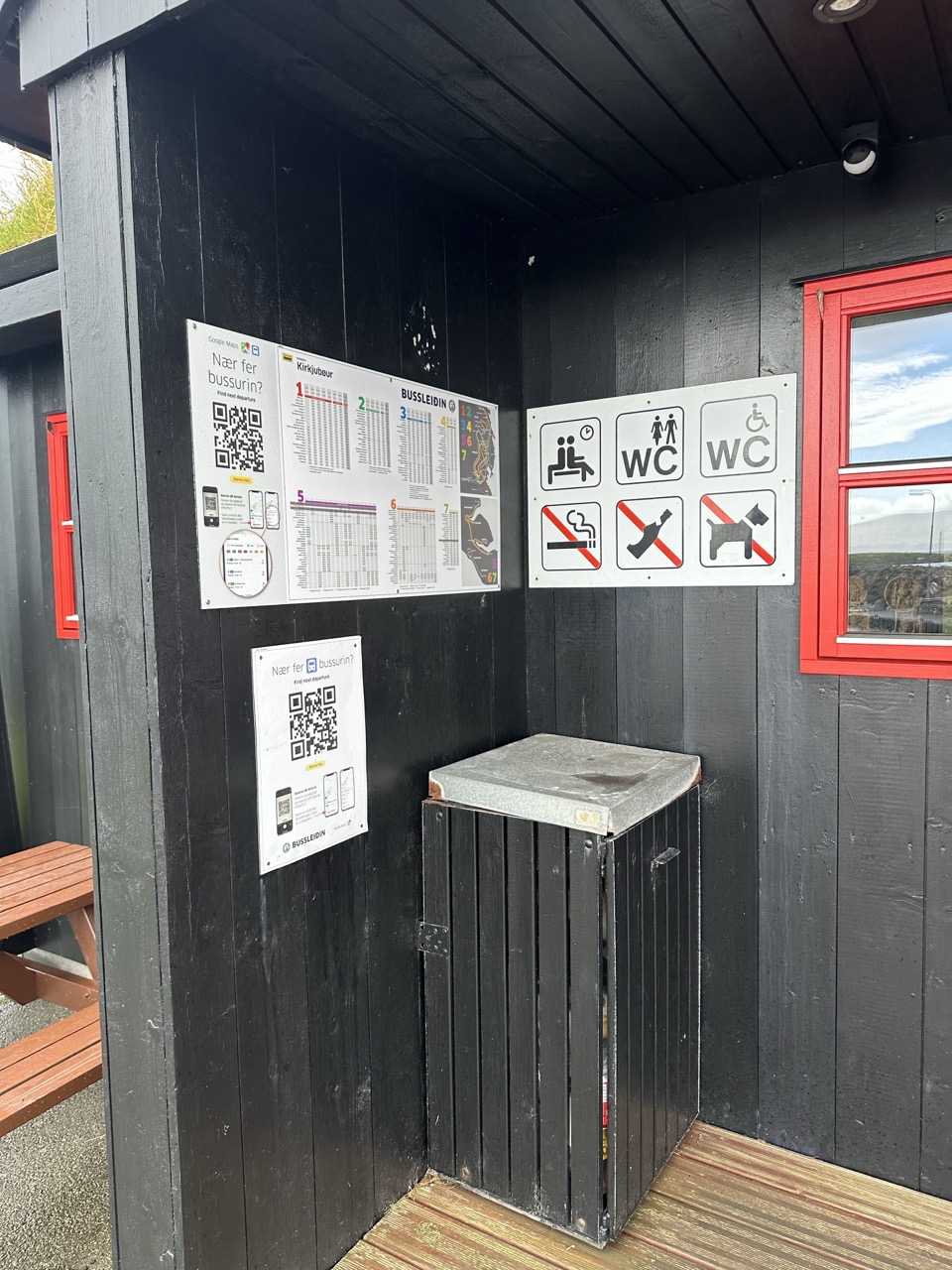
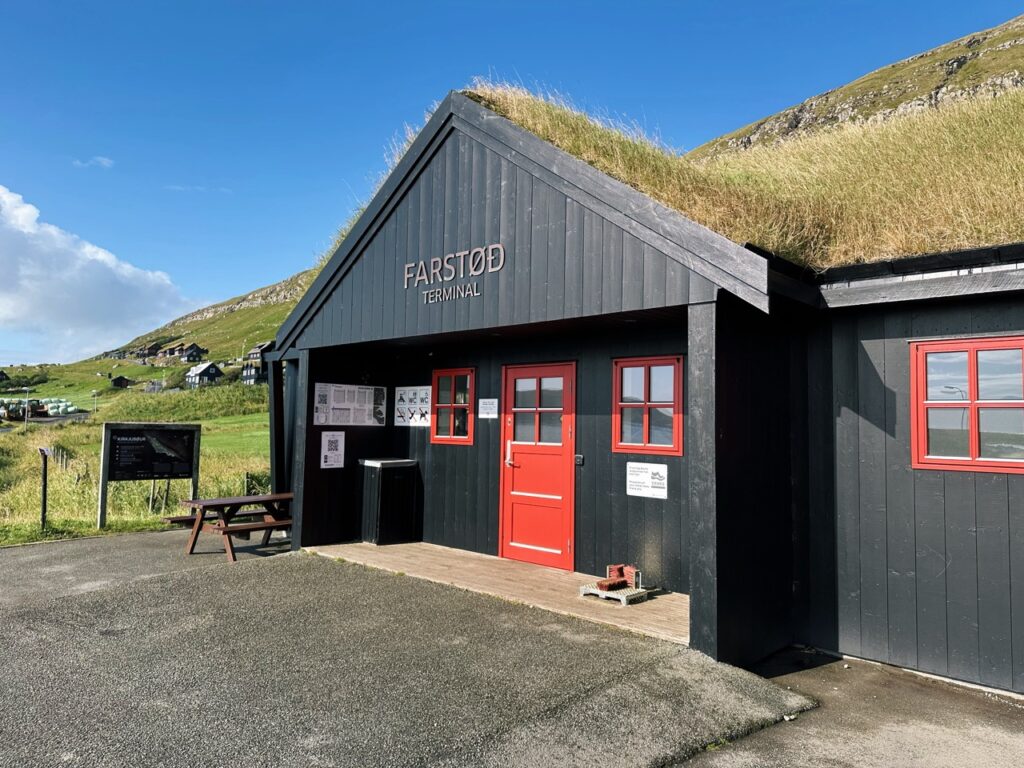
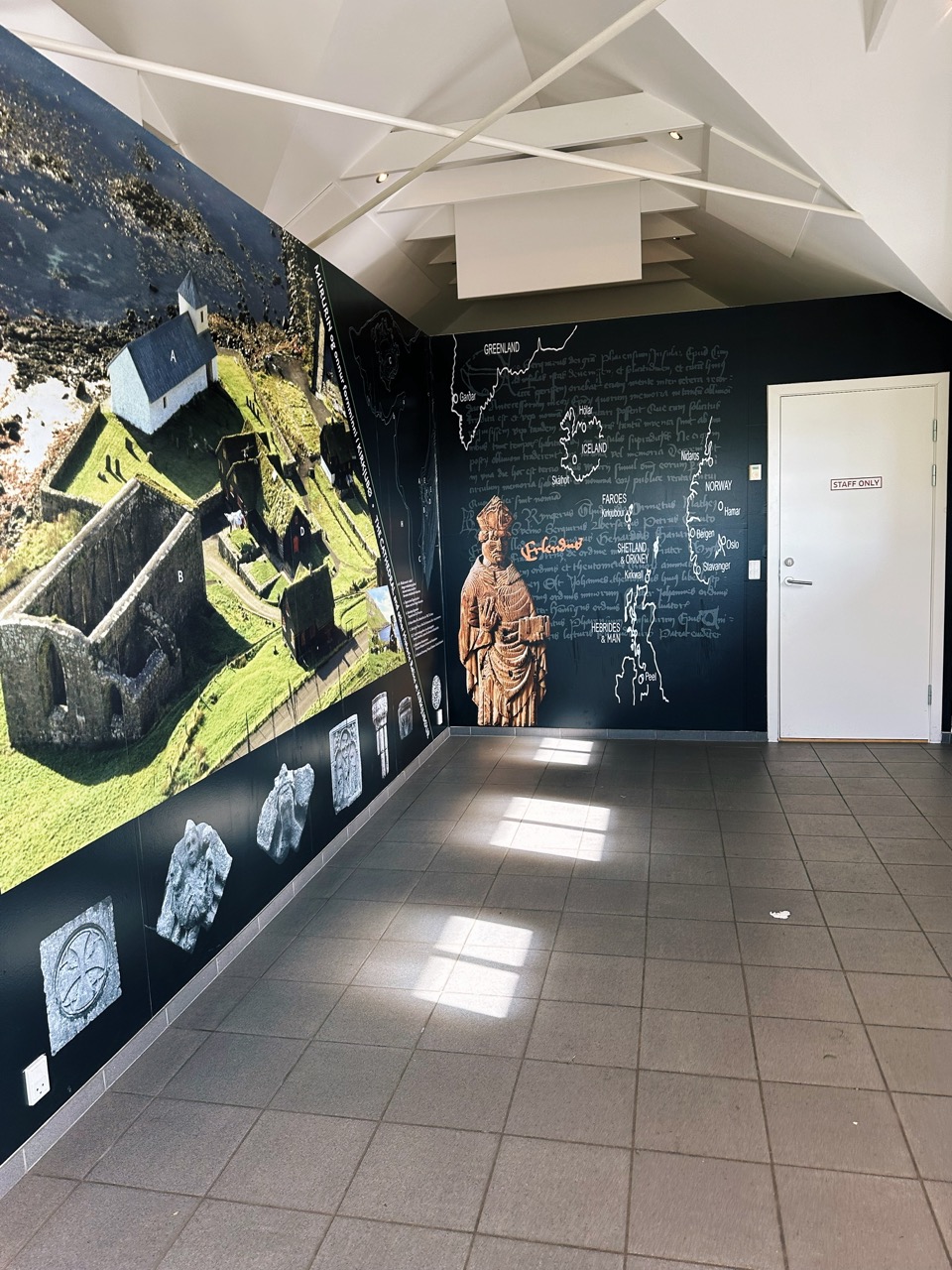
- The public bathroom, located right next to the main parking area, is large and clean.
- The bus waiting area, located in the same building, also serves as a convenient spot to wait for the bus back to Tórshavn.
- Shelter from the weather, if you arrive during rain or wind, this is a handy place to take cover before exploring.
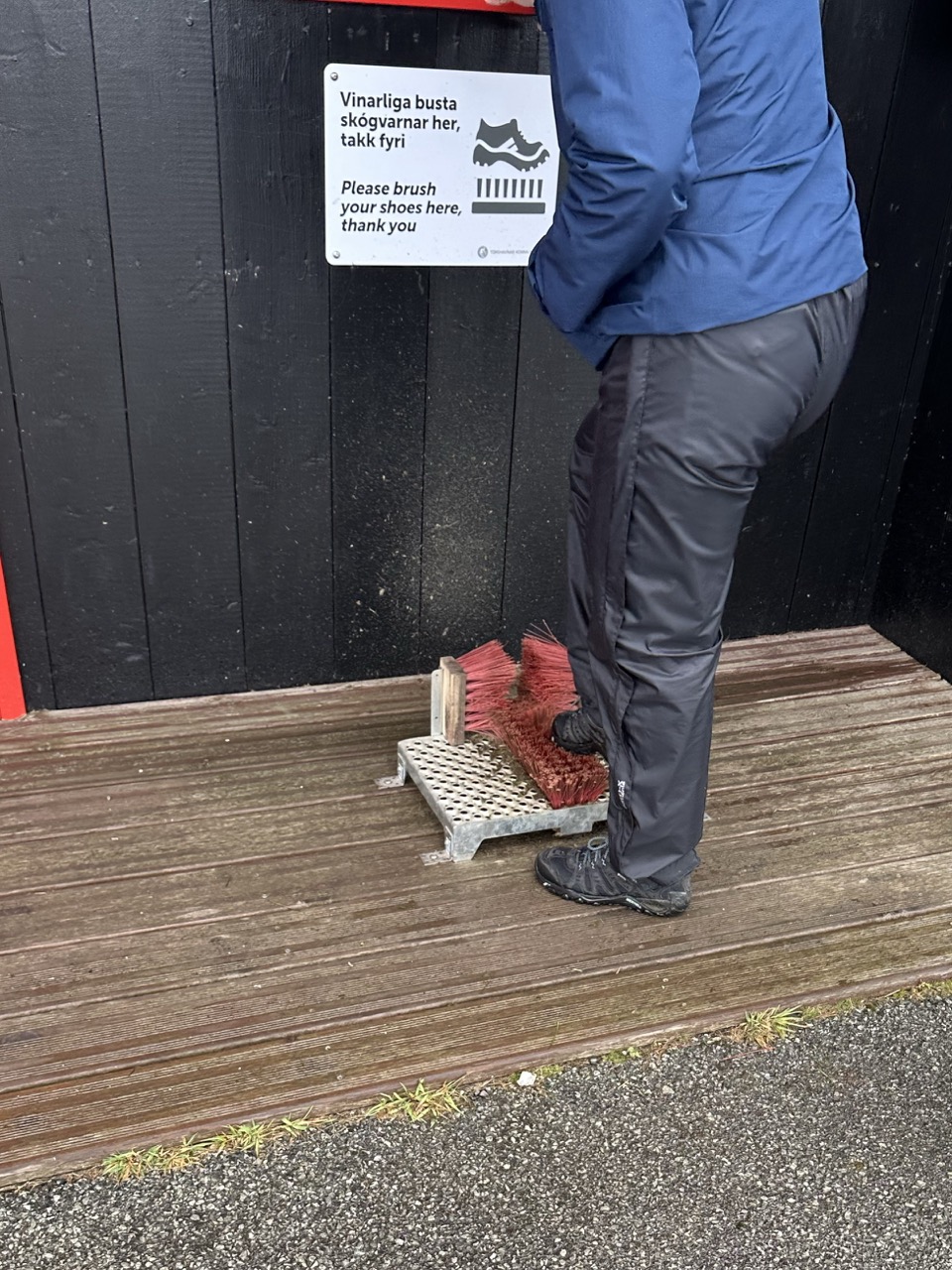
- Shoe cleaning area, perfect for wiping off mud or dirt after a hike on Faroese trails.
Why Visit Kirkjubøur
Kirkjubøur is the cultural heart of the Faroe Islands. Here you can waddle among medieval ruins, step inside Europe’s oldest still-inhabited wooden house, and visit the islands’ oldest church, all within a few minutes’ waddle. Add in sweeping sea views and its easy access from Tórshavn, and it’s clear why Kirkjubøur is a must-see stop on any Faroese itinerary.
How Long to Spend
You’ll need about 1–2 hours in Kirkjubøur to see the main sights at a relaxed pace. This gives you enough time to visit St. Olav’s Church, the ruins of St. Magnus Cathedral, Roykstovan farmhouse, and still enjoy a short waddle along the coastal path for the sea views.
Good to Know
Everything in Kirkjubøur is outdoors, so be prepared for changing weather conditions. Bring a rain jacket, wear sturdy shoes, and dress in layers; even on a sunny day, the Faroese wind can surprise you.
Our Waddle Around Kirkjubøur
- Waddle Duration: about 1.5 to 2 hours (depending on photo stops and how long you linger at the ruins)
- Starting Point: Kirkjubøur village parking area by the harbour
- Distance: ~4.1 km (2.55 miles)
- Elevation Gain: ~82 m (269 ft)
- Difficulty: easy (flat paths through the village, short inclines near the ruins)
- Route: waddle from the parking → St. Olav’s Church → St. Magnus Cathedral ruins → Roykstovan farmhouse → coastal paths with sea views → loop back to the harbour
- Parking / Access Fee: free, large parking area at the village entrance
- Map: link
- Public Transport: bus 5 from Tórshavn to Kirkjubøur (frequent and direct)
- Things to See: St. Olav’s Church, St. Magnus Cathedral ruins, the 900-year-old Roykstovan farmhouse, sea views across to Hestur and Koltur islands
Our Waddle Through Kirkjubøur
As mentioned earlier, this was our very last adventure in the Faroe Islands, and it couldn’t have been a more fitting farewell. Once the afternoon rain finally cleared, we set off for Kirkjubøur and parked at the village’s dedicated parking spot by the harbour. From there, we began our final waddle through history, exploring medieval ruins, turf-roof houses, and sweeping sea views, all within one of the islands’ most legendary villages.
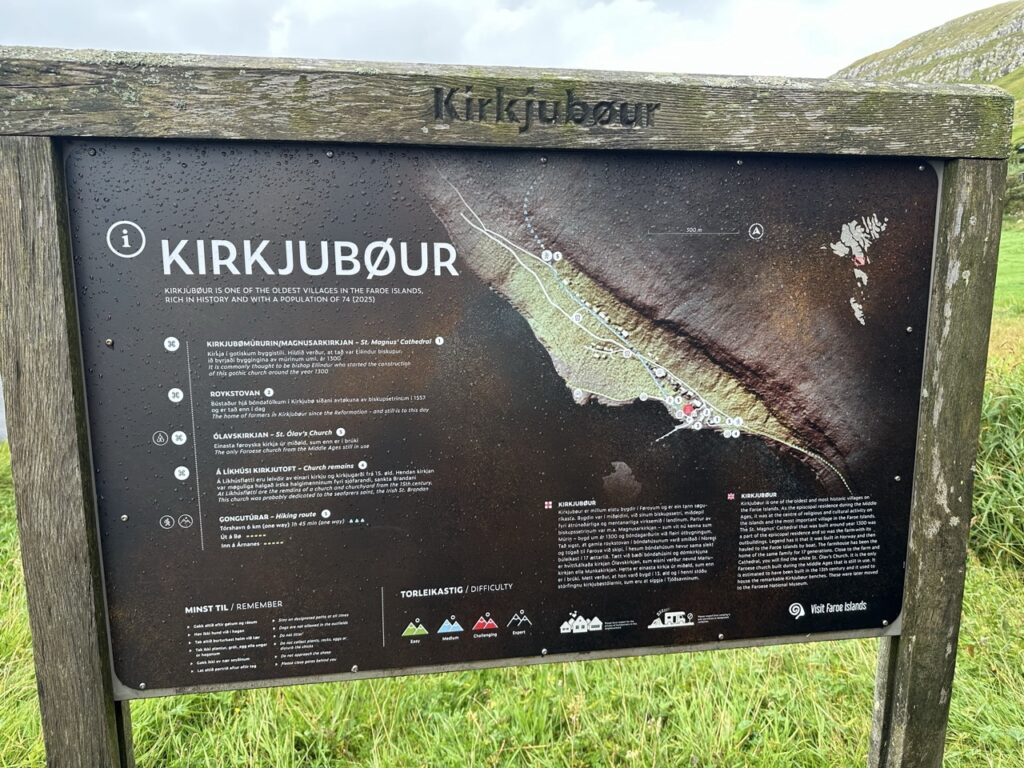
Kirkjubøur, the Oldest Village in the Faroe Islands
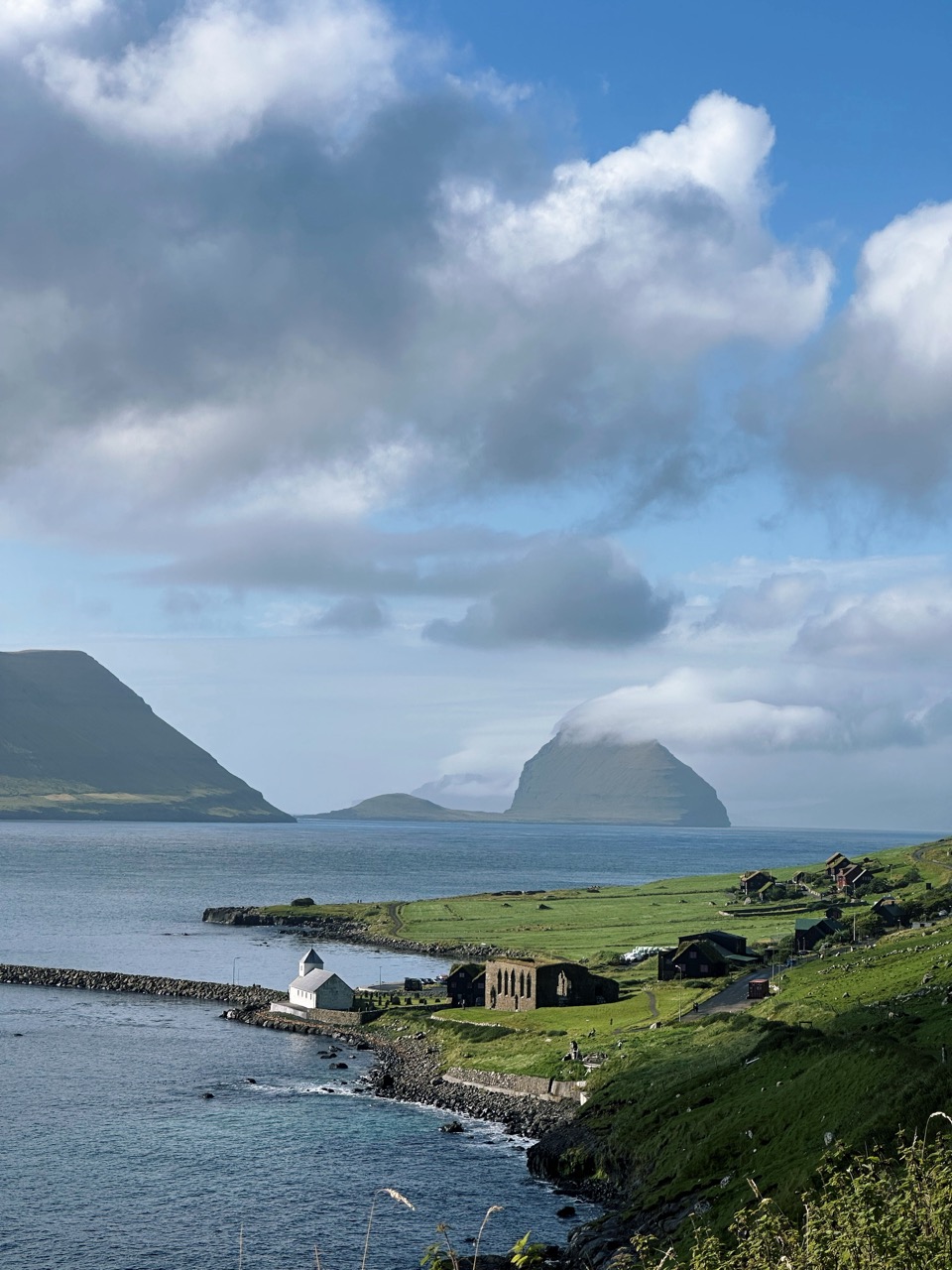
Kirkjubøur is the most important historical site in the islands. Famous for its medieval ruins and centuries-old houses, the village was once the episcopal and cultural center of the Faroes during the Middle Ages. Here, bishops lived, churches were built, and Faroese history was shaped. You can still explore the unfinished St. Magnus Cathedral, the whitewashed St. Olav’s Church, and the Roykstovan farmhouse, which has been continuously inhabited for nearly 900 years. Add in stunning views across the sea to Hestur and Koltur, and Kirkjubøur feels like stepping into a living open-air museum.

Quick Facts About Kirkjubøur
-
- Population: around 75 residents
- First settlement: traces of habitation date back to the Viking Age
- Historic importance: medieval episcopal center of the Faroe Islands
- Main sights: Roykstovan farmhouse, St. Magnus Cathedral ruins, St. Olav’s Church
- Age of Roykstovan: about 900 years, one of Europe’s oldest inhabited wooden houses
- Location: 7 km (15 minutes) southwest of Tórshavn
- Fun fact: carved pews from Kirkjubøur’s churches were moved to Tórshavn Cathedral, where they are still used today
The Legend of the Churches of Kirkjubøur
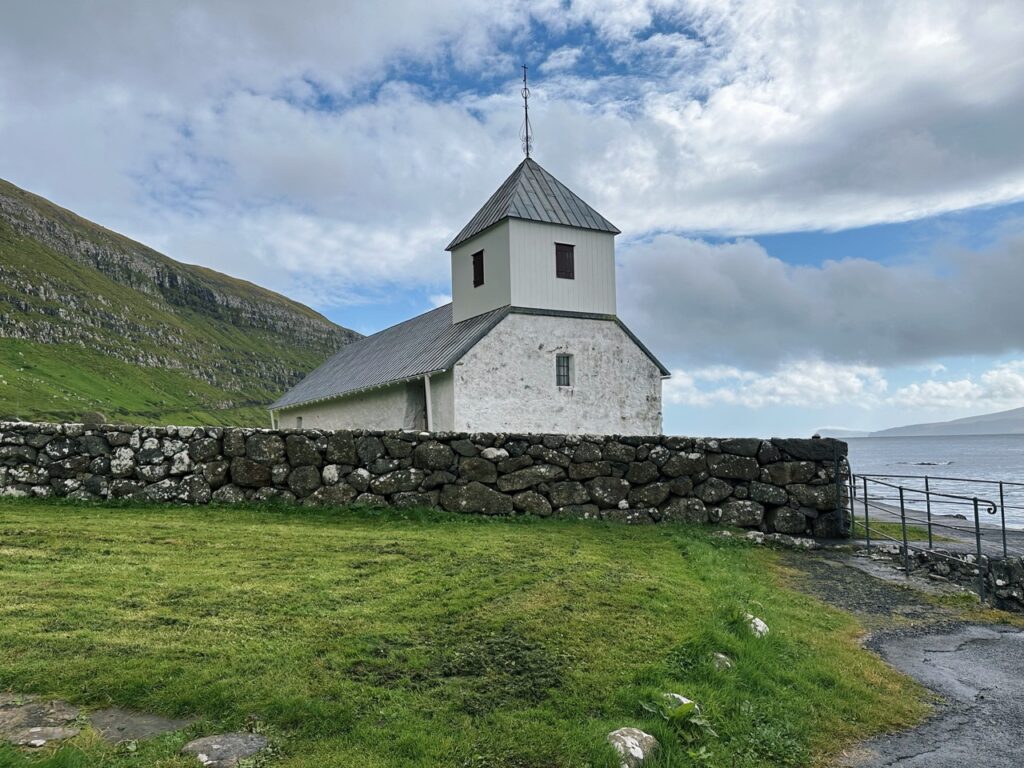
According to Faroese legend, Kirkjubøur was once home to five churches, but four of them were swept away by the sea during a violent storm. Only St. Olav’s Church survived and still stands today, making it the oldest church in continuous use in the Faroe Islands. Locals say this was no coincidence; St. Olav himself protected the church, keeping it safe from the waves that claimed the others.
First Stop: St. Olav’s Church
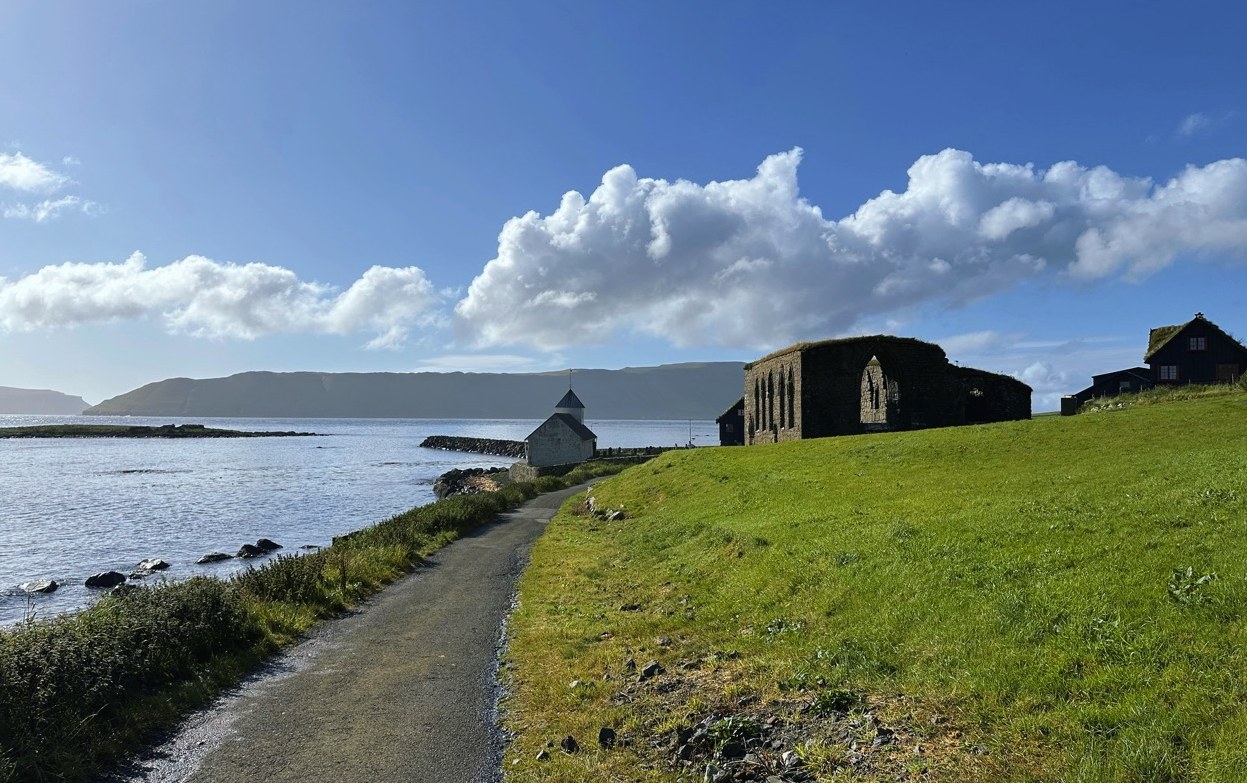
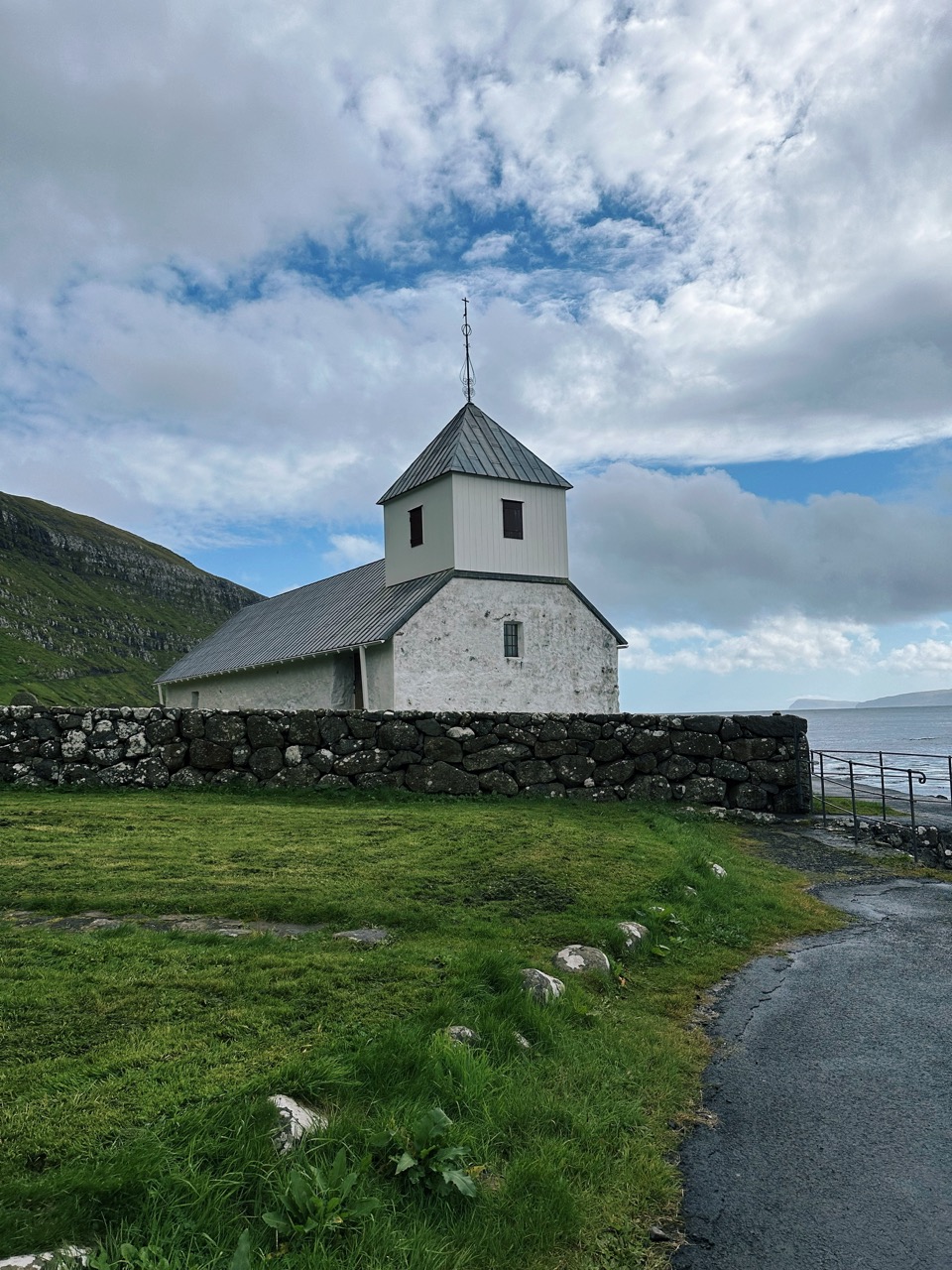
Right from the parking lot, our first stop was the whitewashed St. Olav’s Church, the most famous landmark in Kirkjubøur. Built in the 12th century, it is the oldest church still in use in the Faroe Islands, and stepping inside feels like walking straight into history. What makes it especially important is that this was once the episcopal seat of the islands, a center of spiritual life during the Middle Ages. Inside, you’ll find carved pews that were originally made for the grand St. Magnus Cathedral and later moved here for safekeeping. Even today, the church remains active, connecting the present with nearly 900 years of Faroese faith and tradition.
Second Stop: Roykstovan
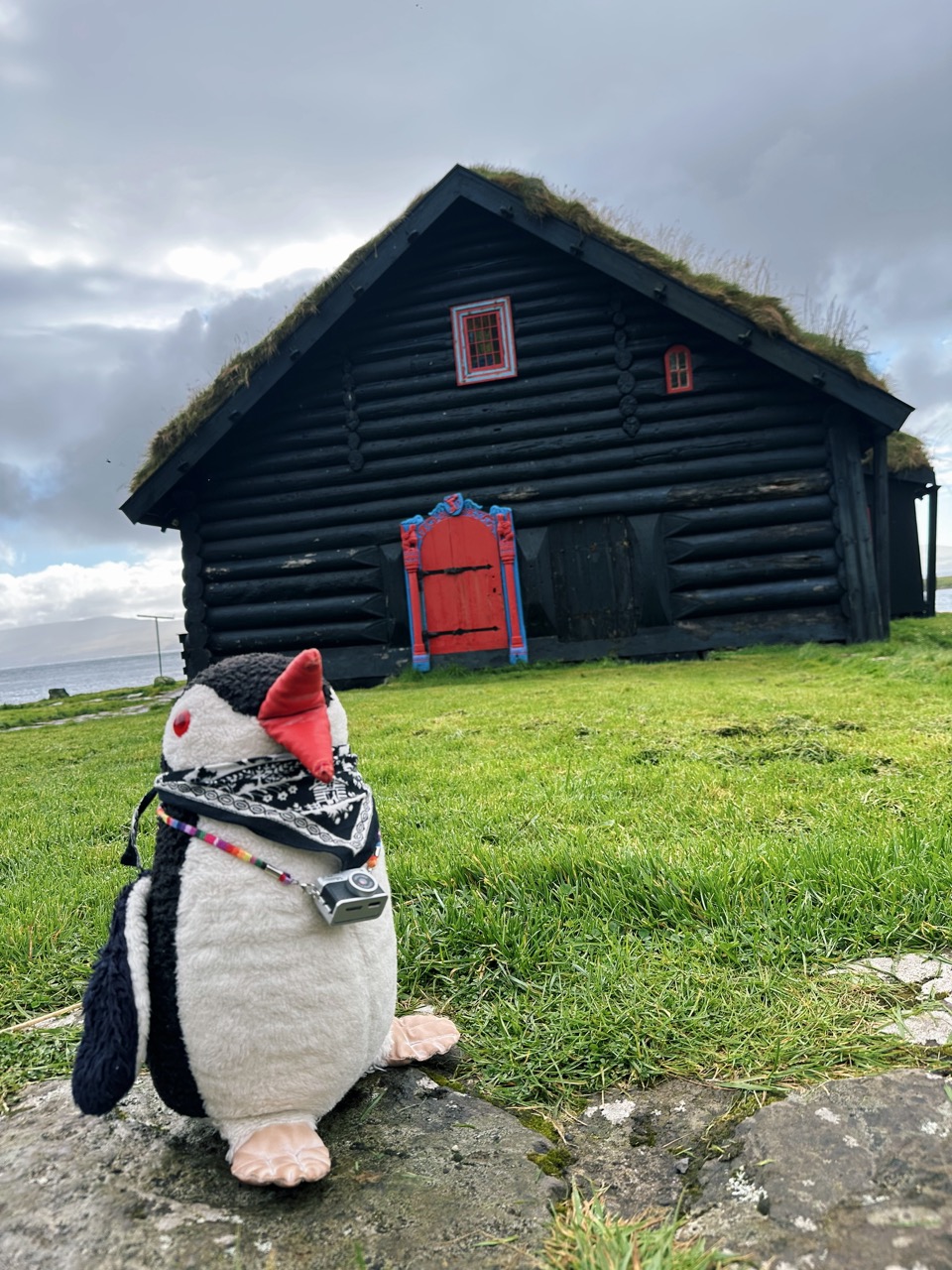
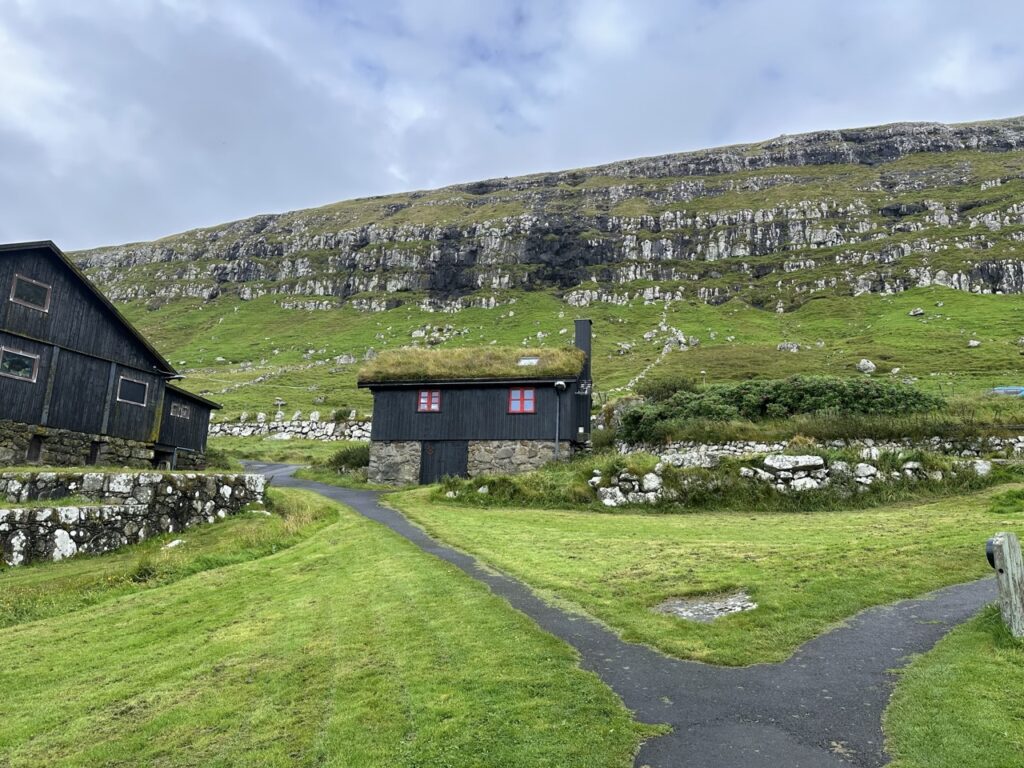
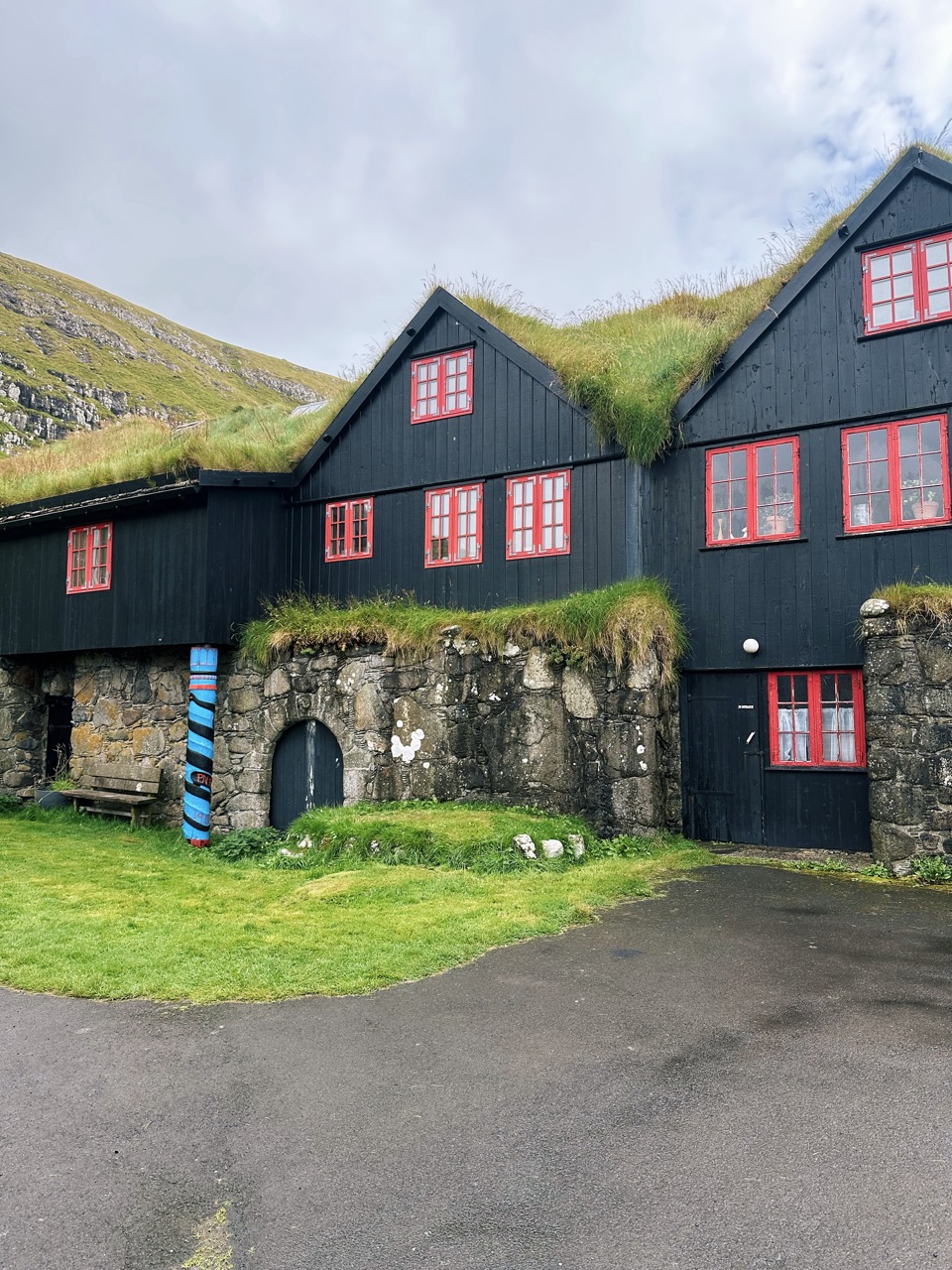
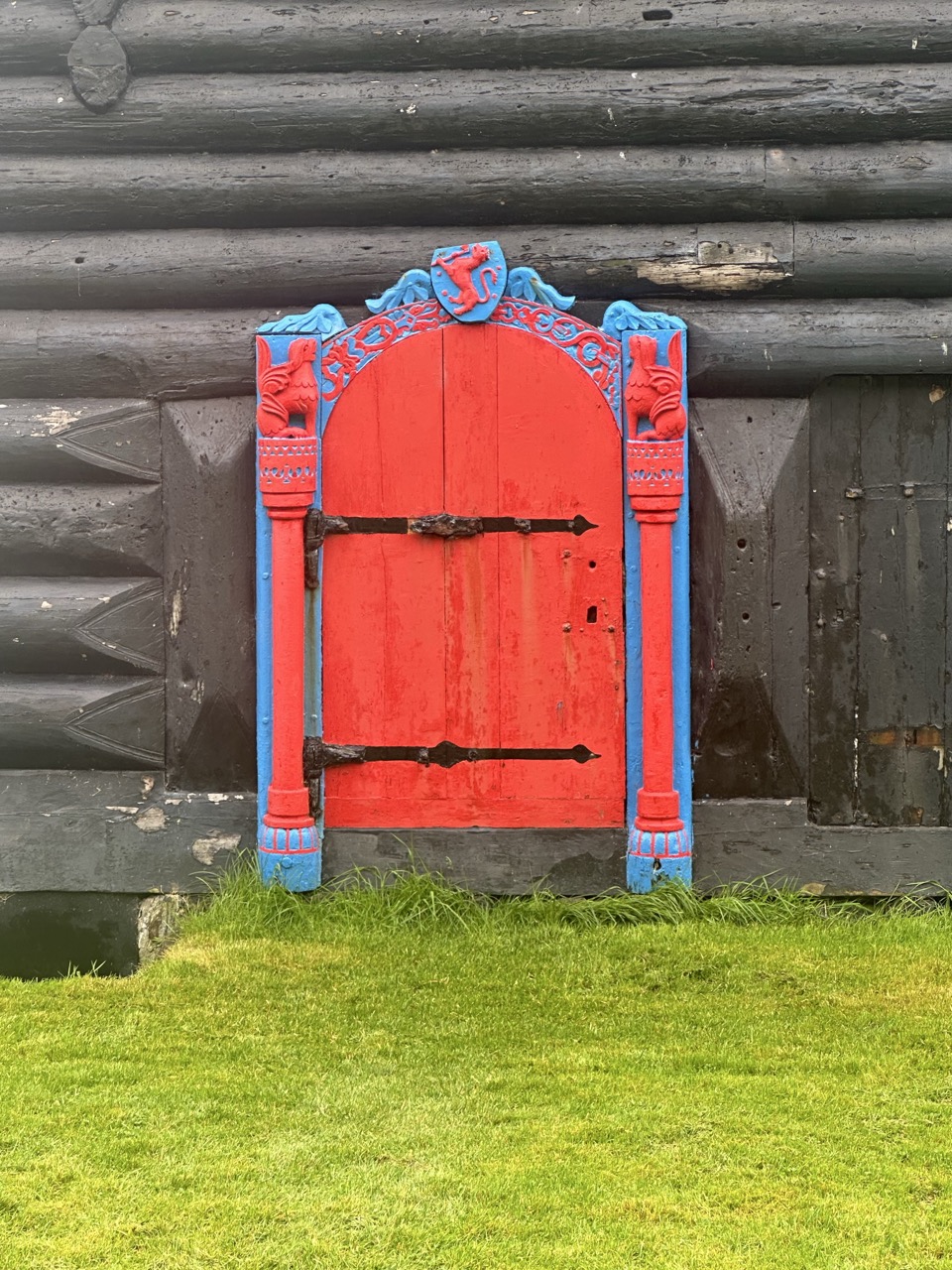
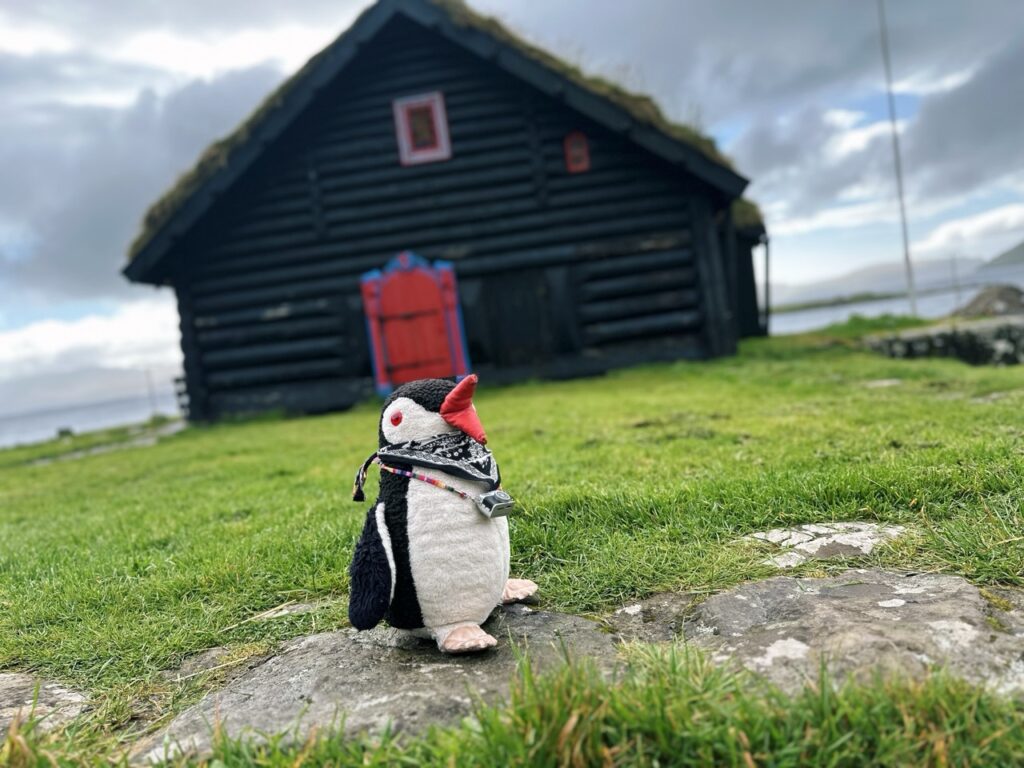
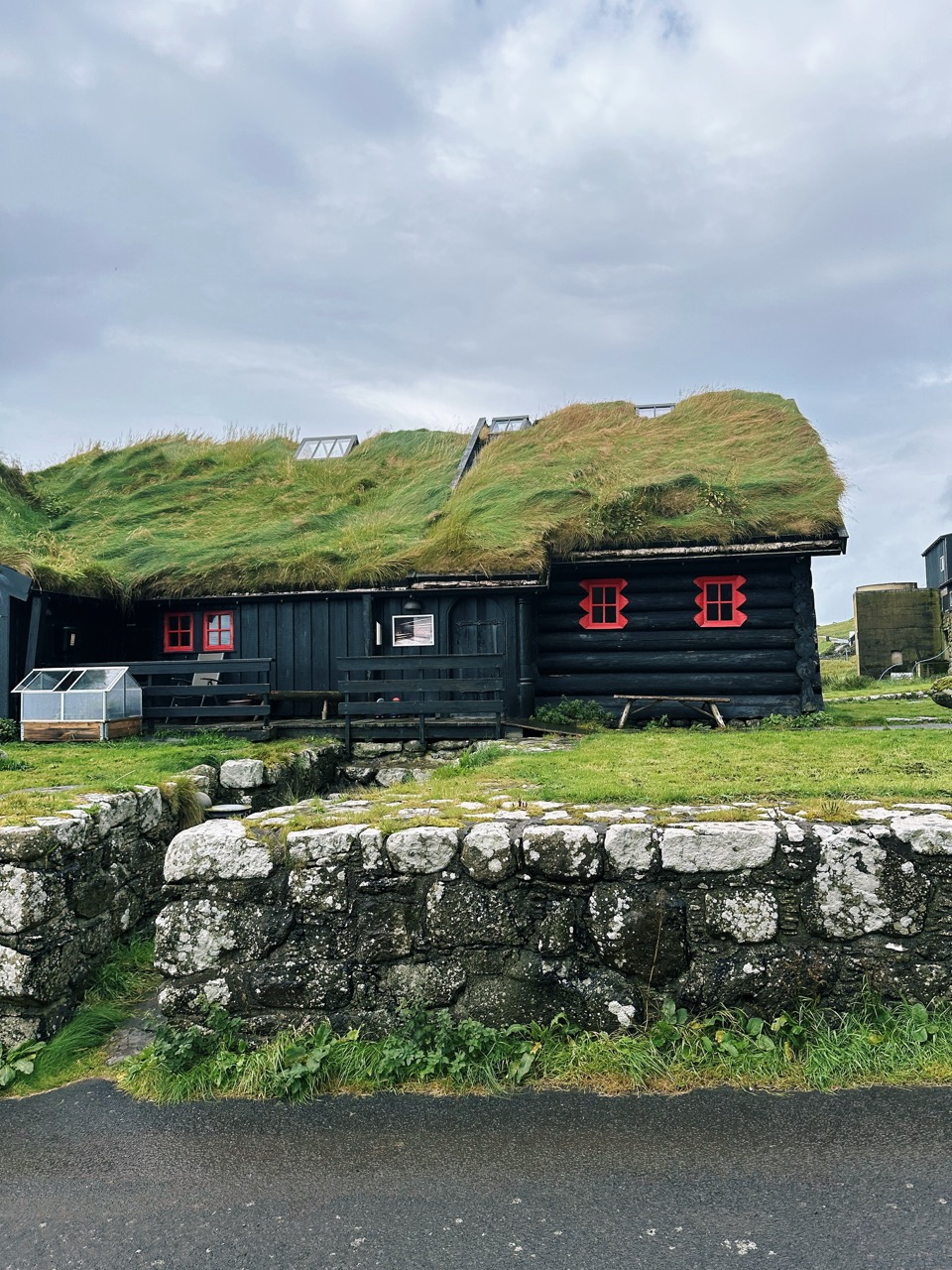
From the church, we continued just a few steps to Roykstovan, one of the most remarkable places in the Faroe Islands. This turf-roofed farmhouse is said to be nearly 900 years old, making it one of the oldest wooden houses in Europe still inhabited. Even more incredible, it has been home to the same Faroese family for 17 generations. It is a shame you can’t explore the entire interior (since it remains a private home), just standing outside and thinking about how many centuries of Faroese life have passed through its doors makes it one of the highlights of Kirkjubøur.
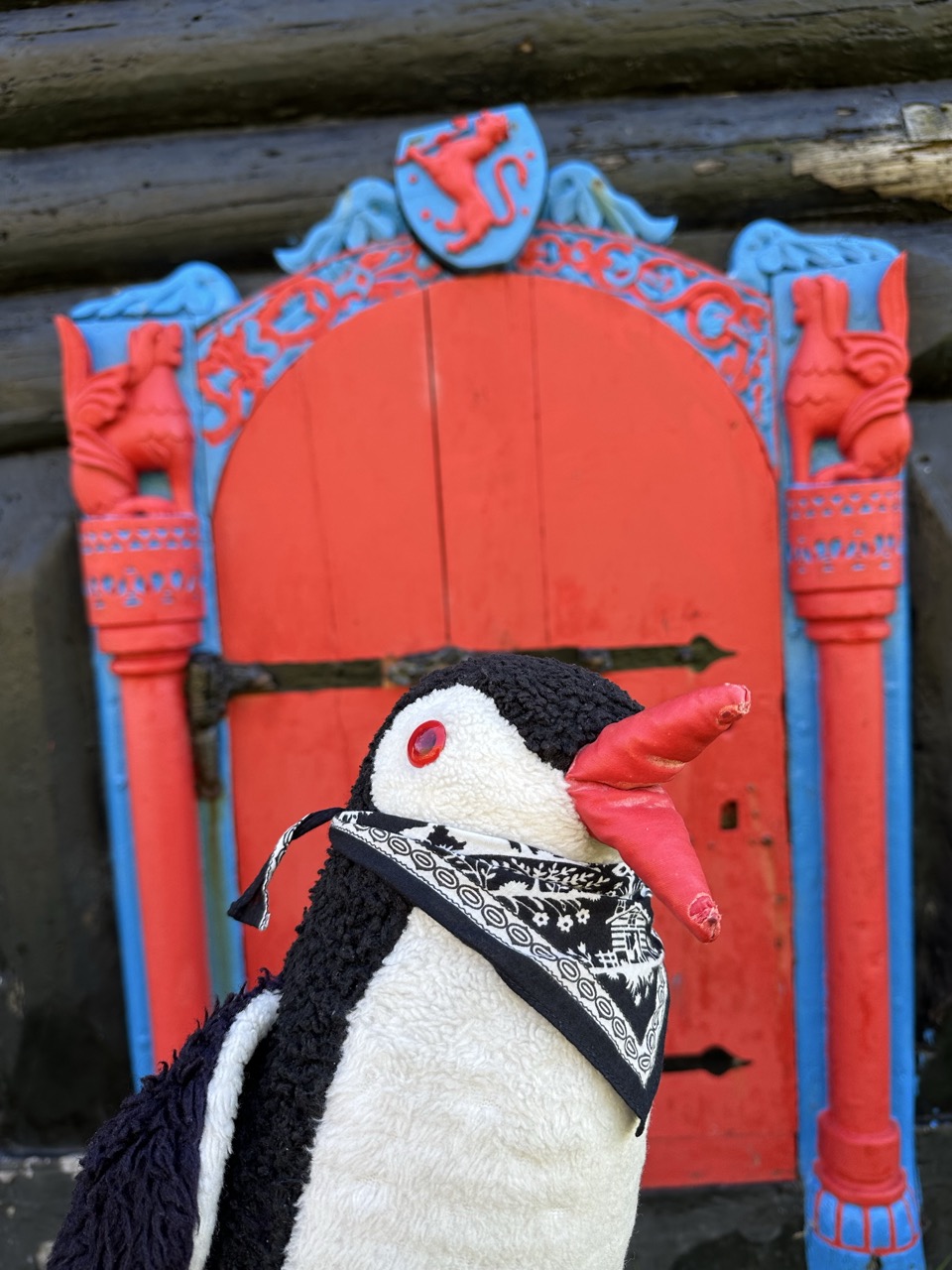
The Driftwood Legend of Roykstovan
There is another famous story associated with it. The legend of Roykstovan, according to folklore, the timber used to build it didn’t come from local forests (since the Faroe Islands have none) but instead drifted across the sea all the way from Norway. Islanders believed this was a gift of fate, delivered by the ocean to provide wood for what would become one of the oldest inhabited wooden houses in Europe. To this day, the house is still lived in, making the legend feel alive each time you step near its turf roof and weathered walls.
Kirkjubømúrurin: The Ruins of St. Magnus Cathedral
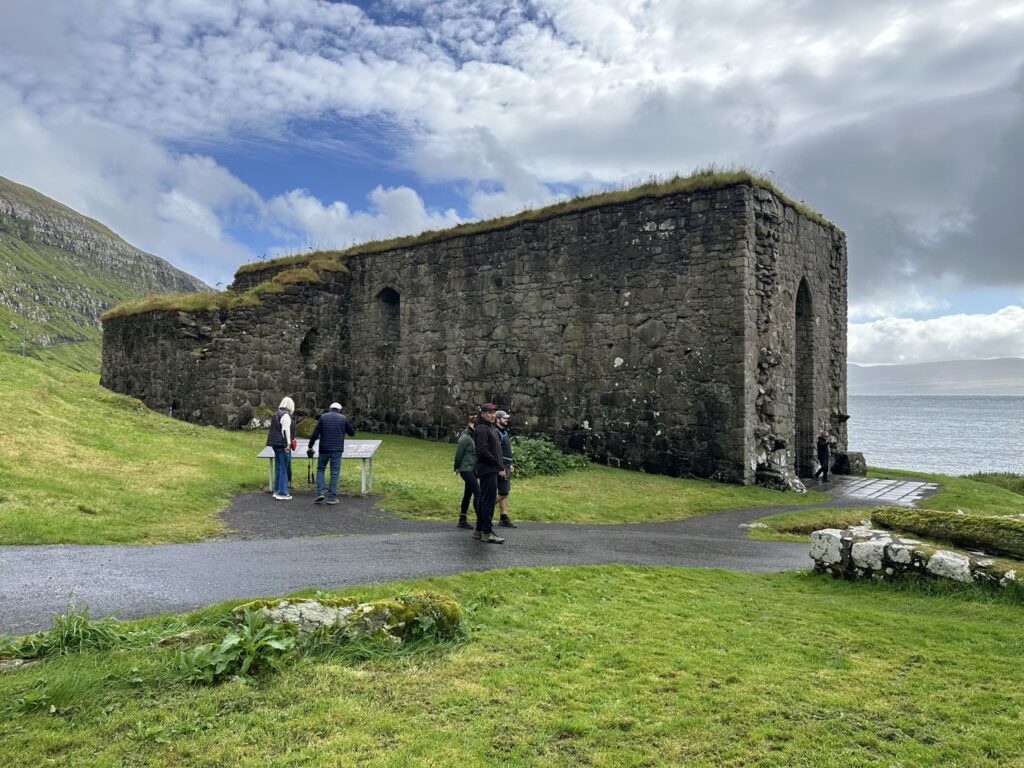
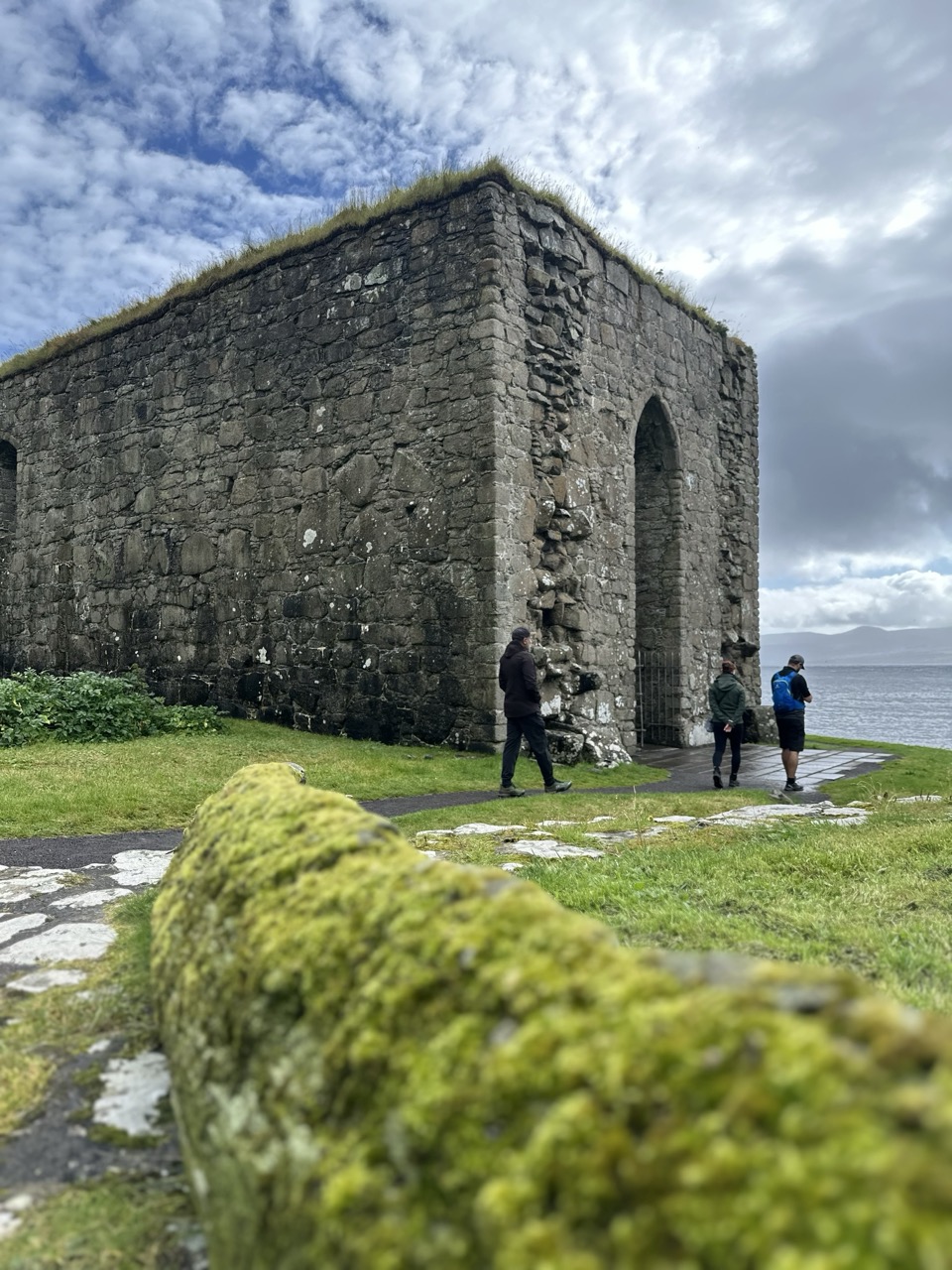
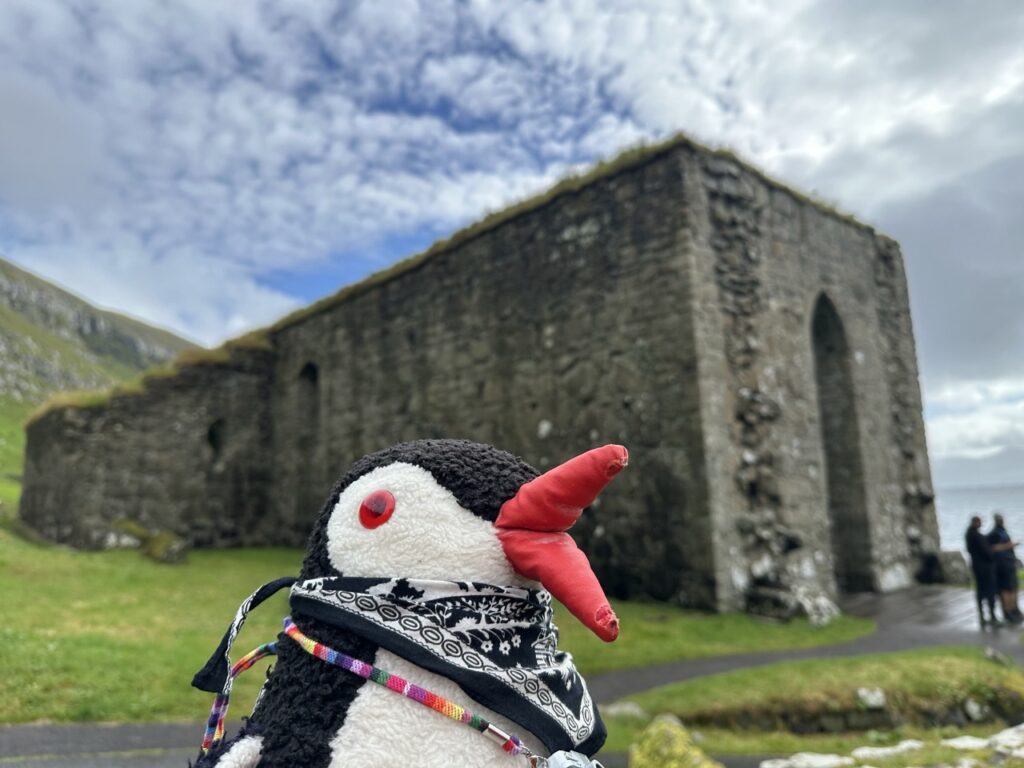
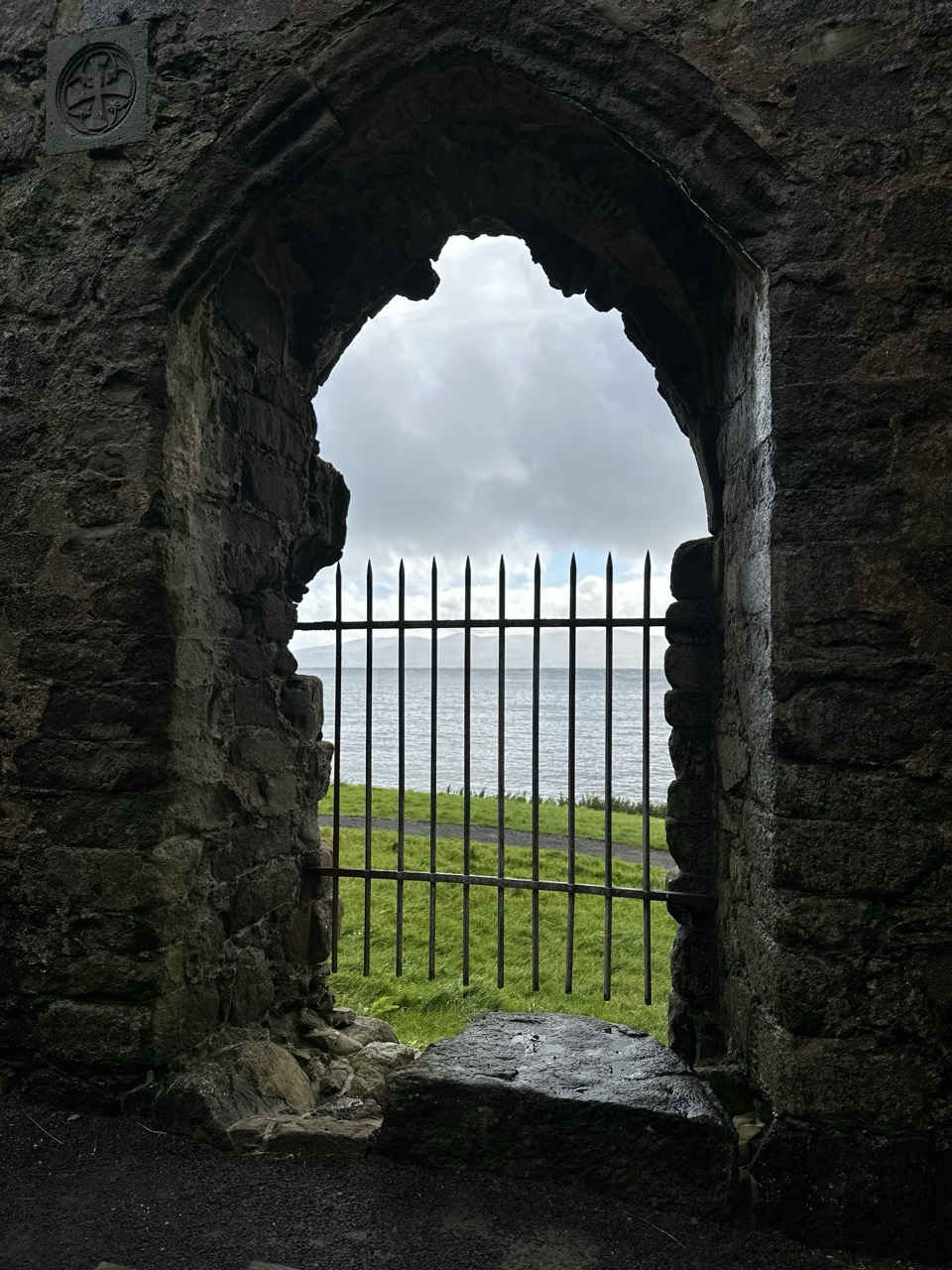
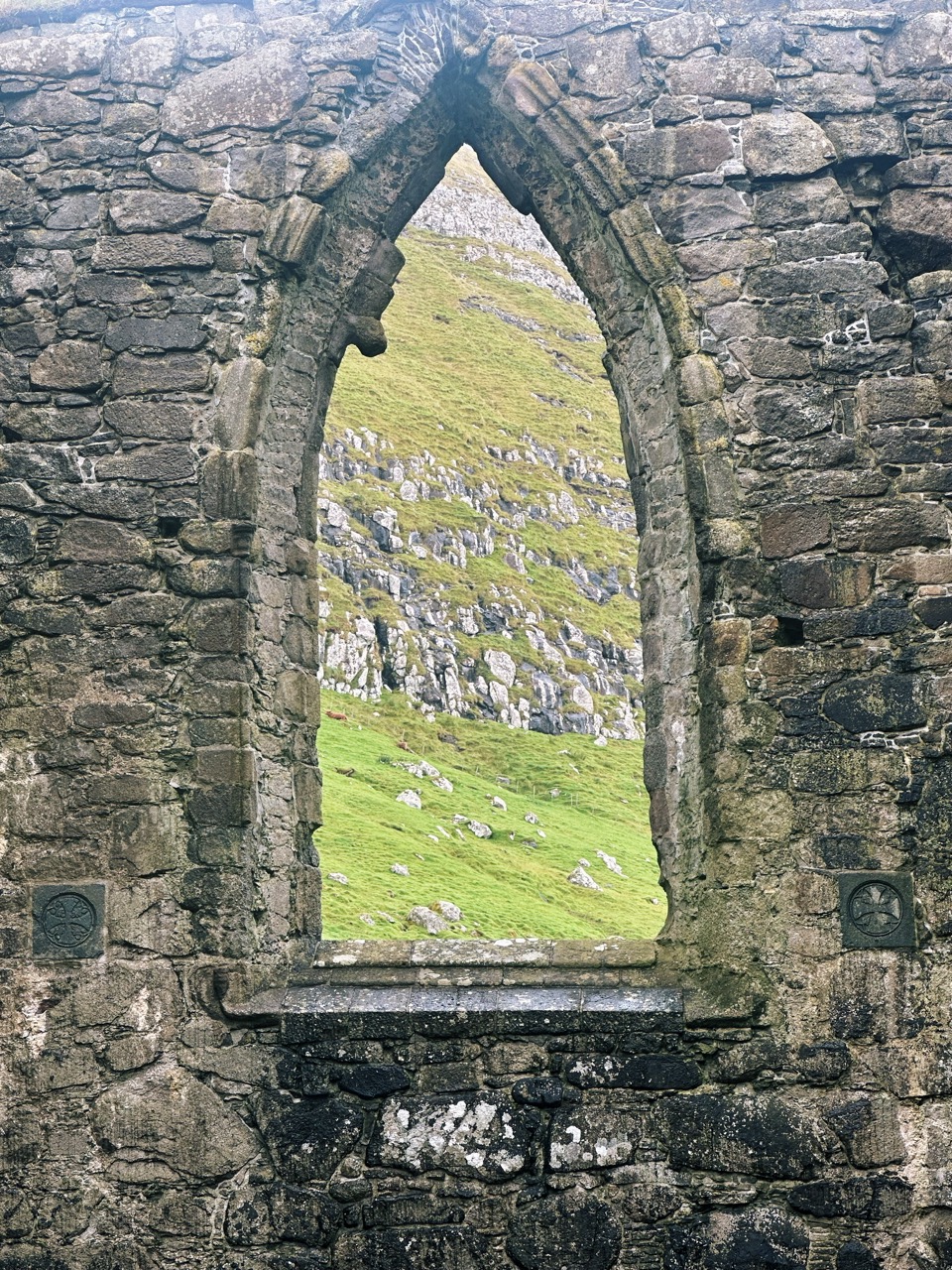
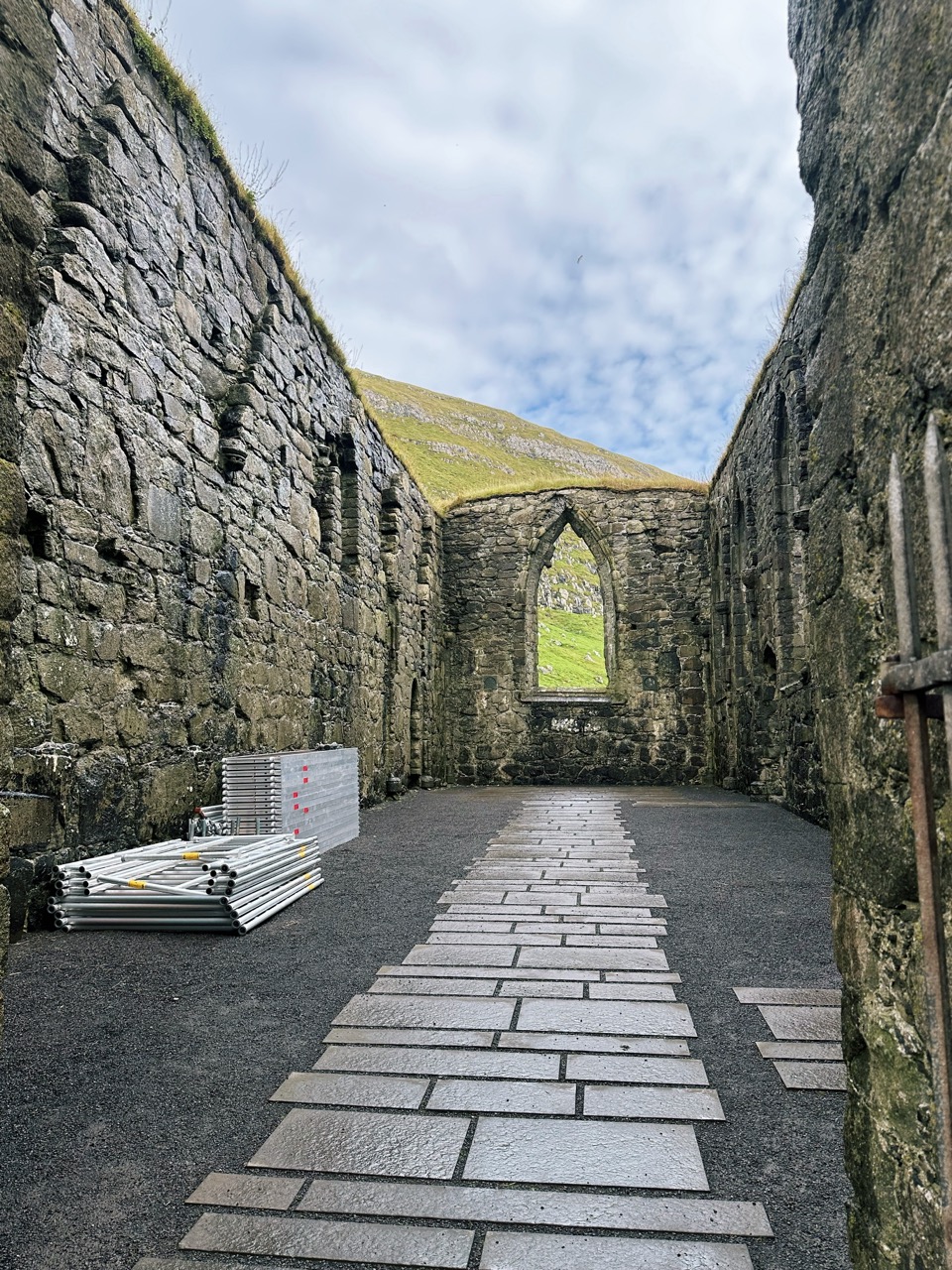
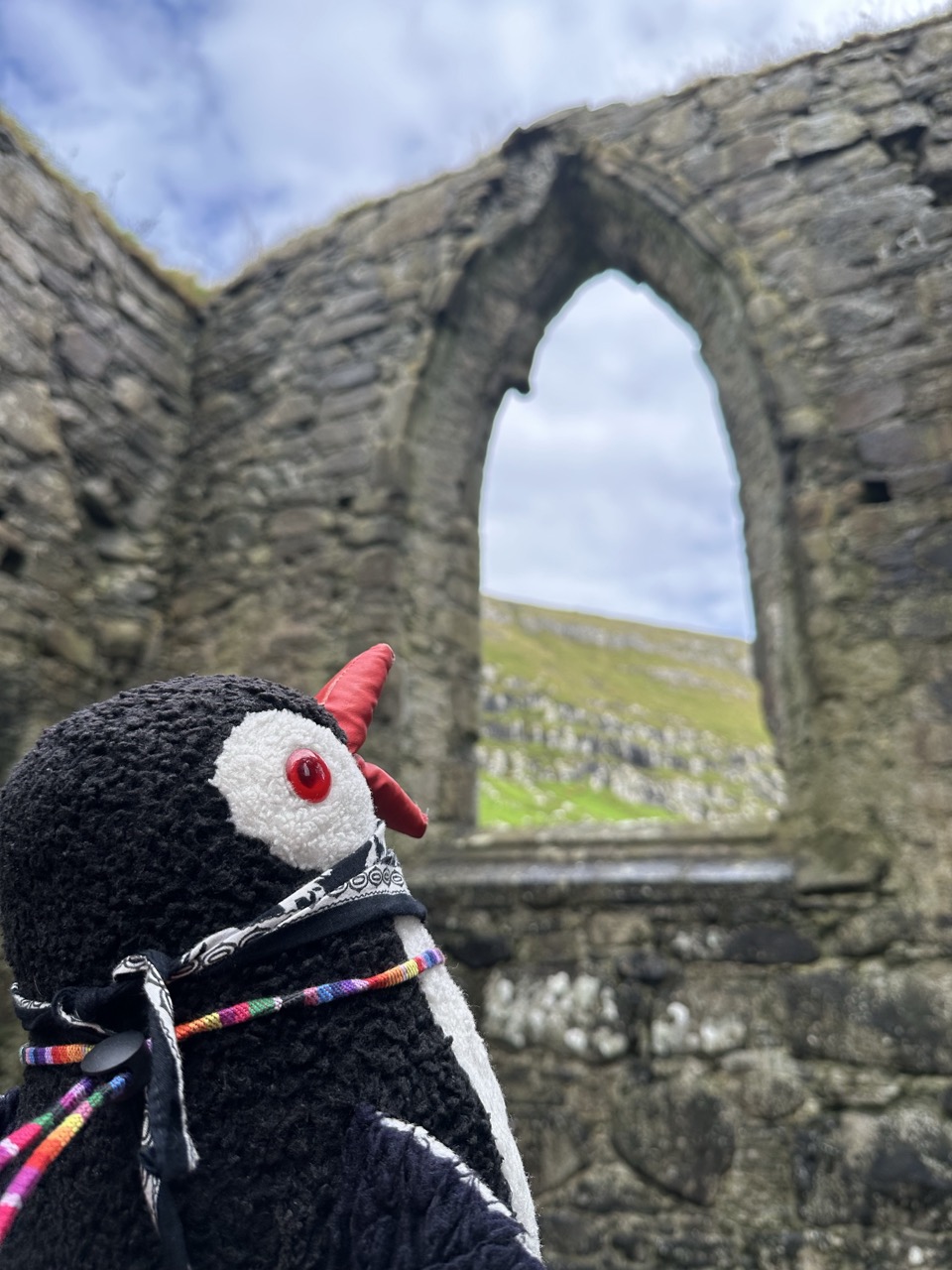
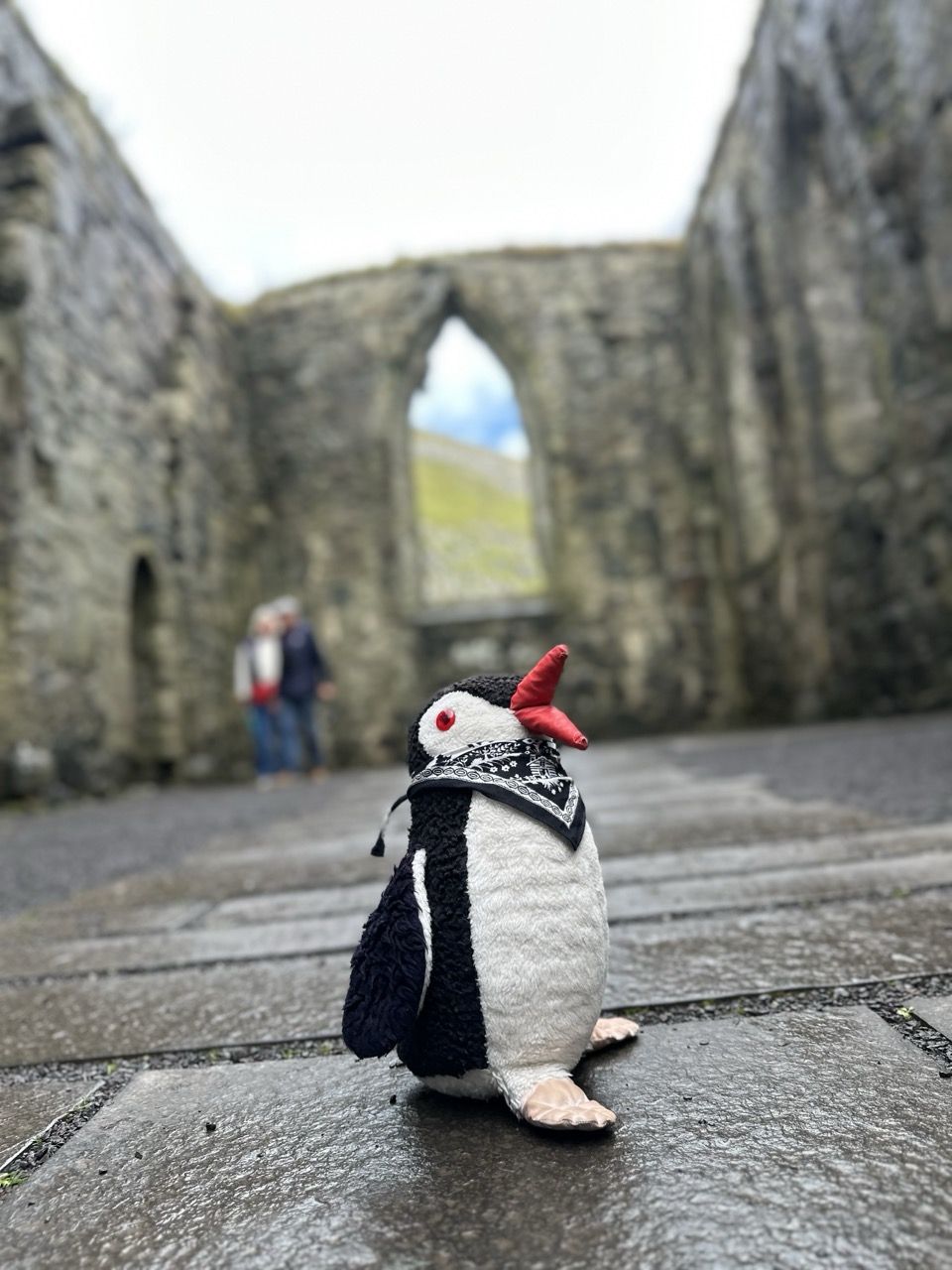
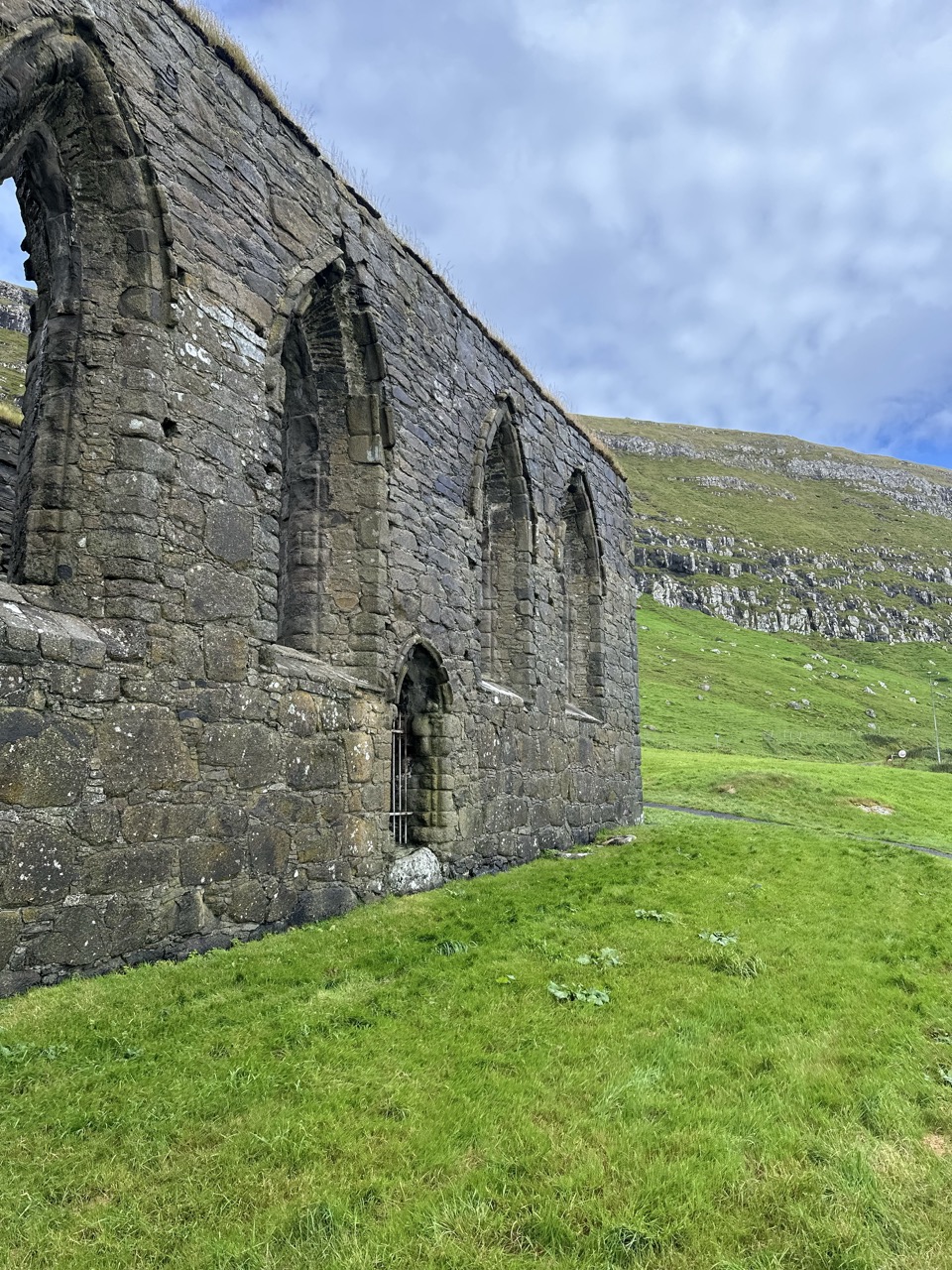
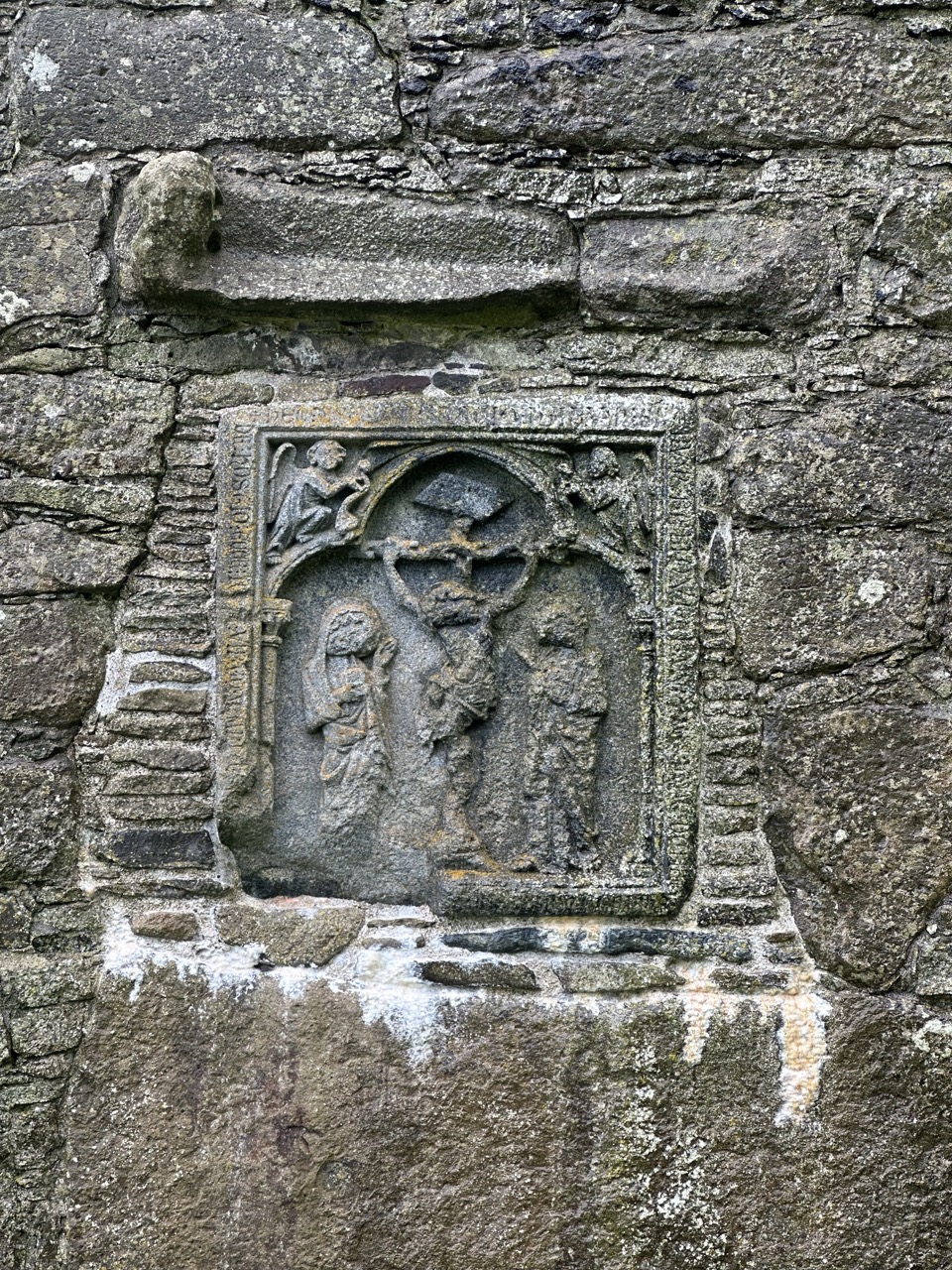
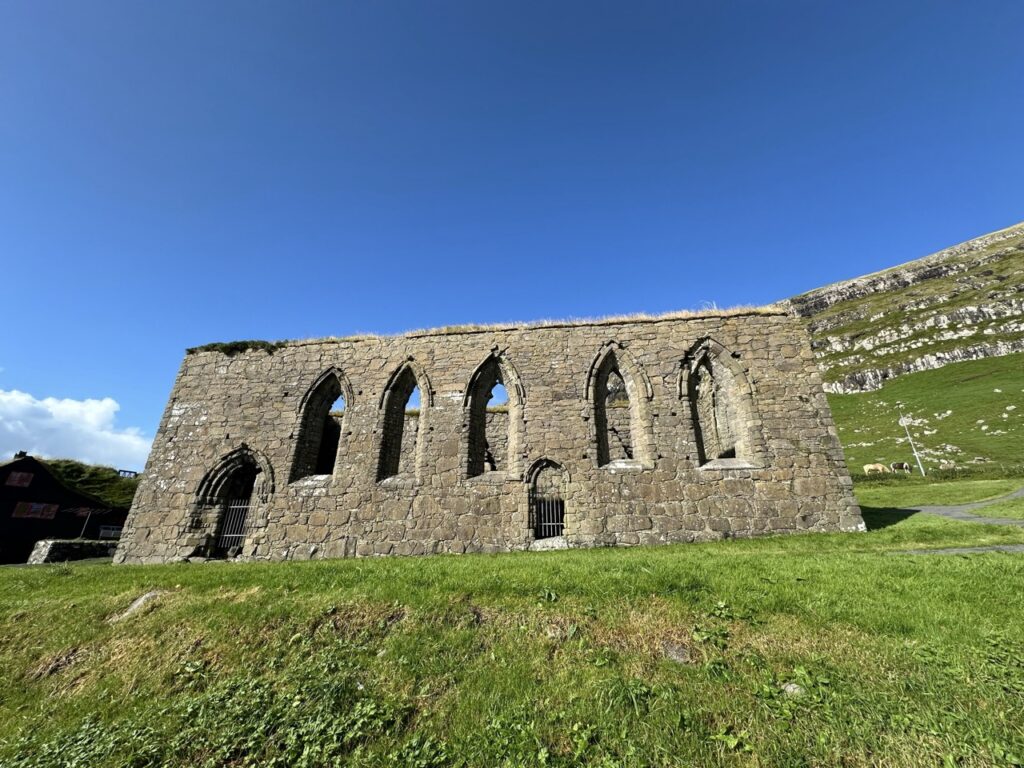
Our next stop in Kirkjubøur was the dramatic ruins of St. Magnus Cathedral, known locally as Kirkjubømúrurin. Construction began in the 13th century, with the intention of building the largest and most impressive church in the Faroe Islands. However, for reasons that remain uncertain —whether due to a lack of funding, shifting political power, or the Reformation —the cathedral was never completed. What’s left today are tall stone walls open to the sky, standing silently as a reminder of both ambition and abandonment.
A Walk Along the Coastal Path
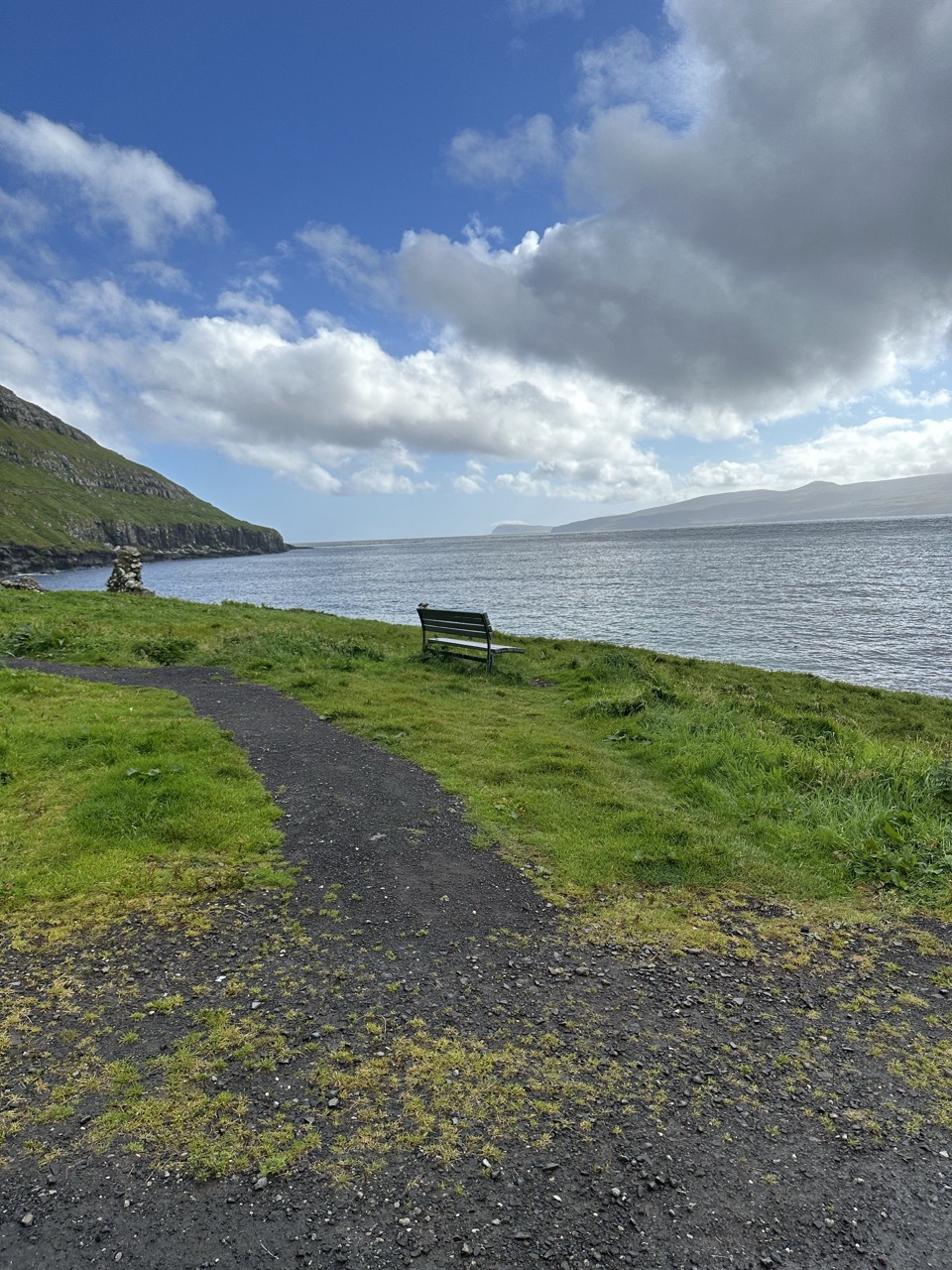
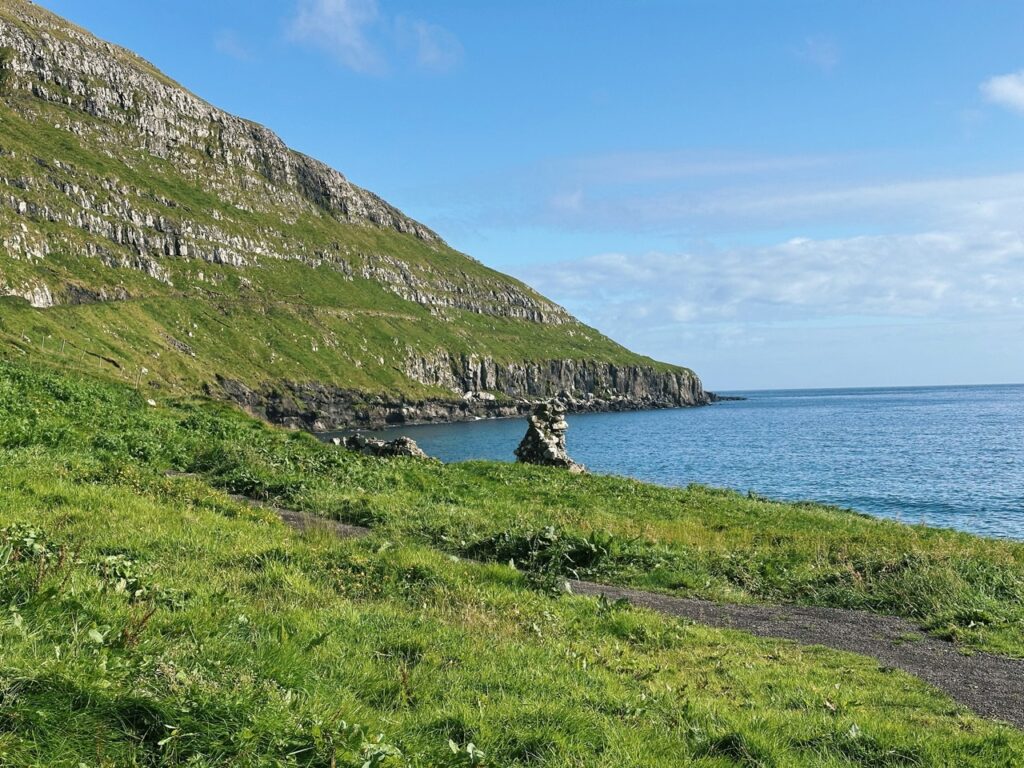
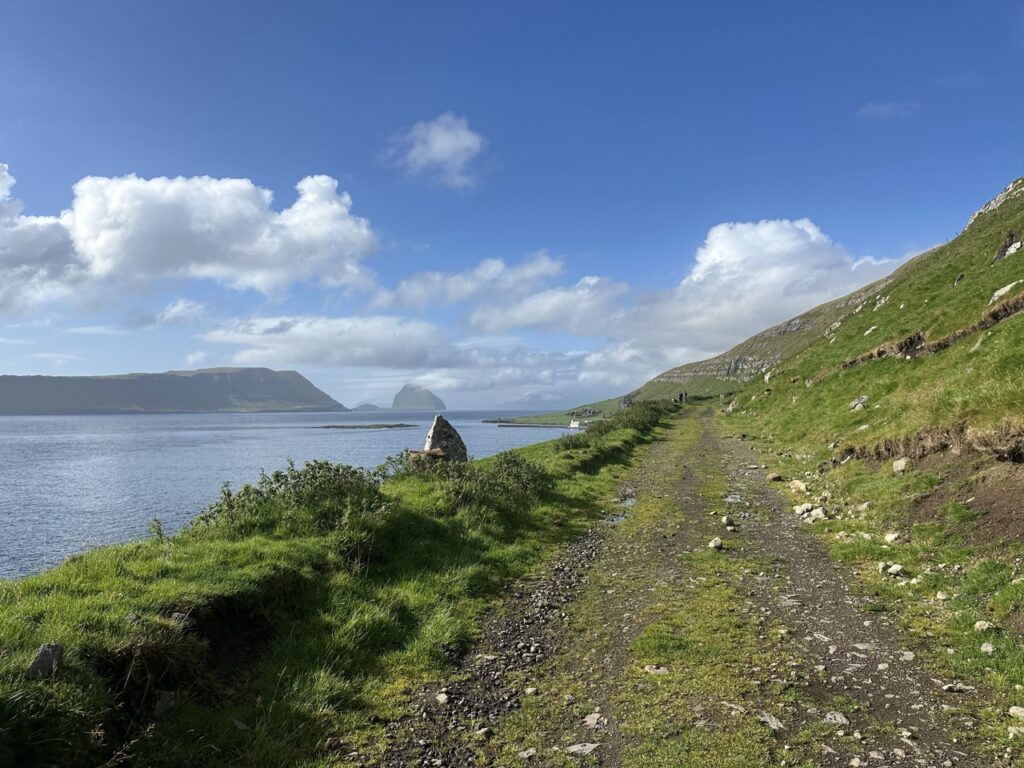
After exploring the most iconic buildings in Kirkjubøur, we decided to follow the coastal pathway that winds its way along the shore to the very end of the village. The waddle rewarded us with sweeping sea views toward the neighboring islands, yet again proving that in the Faroe Islands, every corner of the landscape has its own unique character. One thing we especially appreciated was that this path was completely free of charge, unlike some of the more regulated hikes around the islands, making it an easy add-on to your visit.
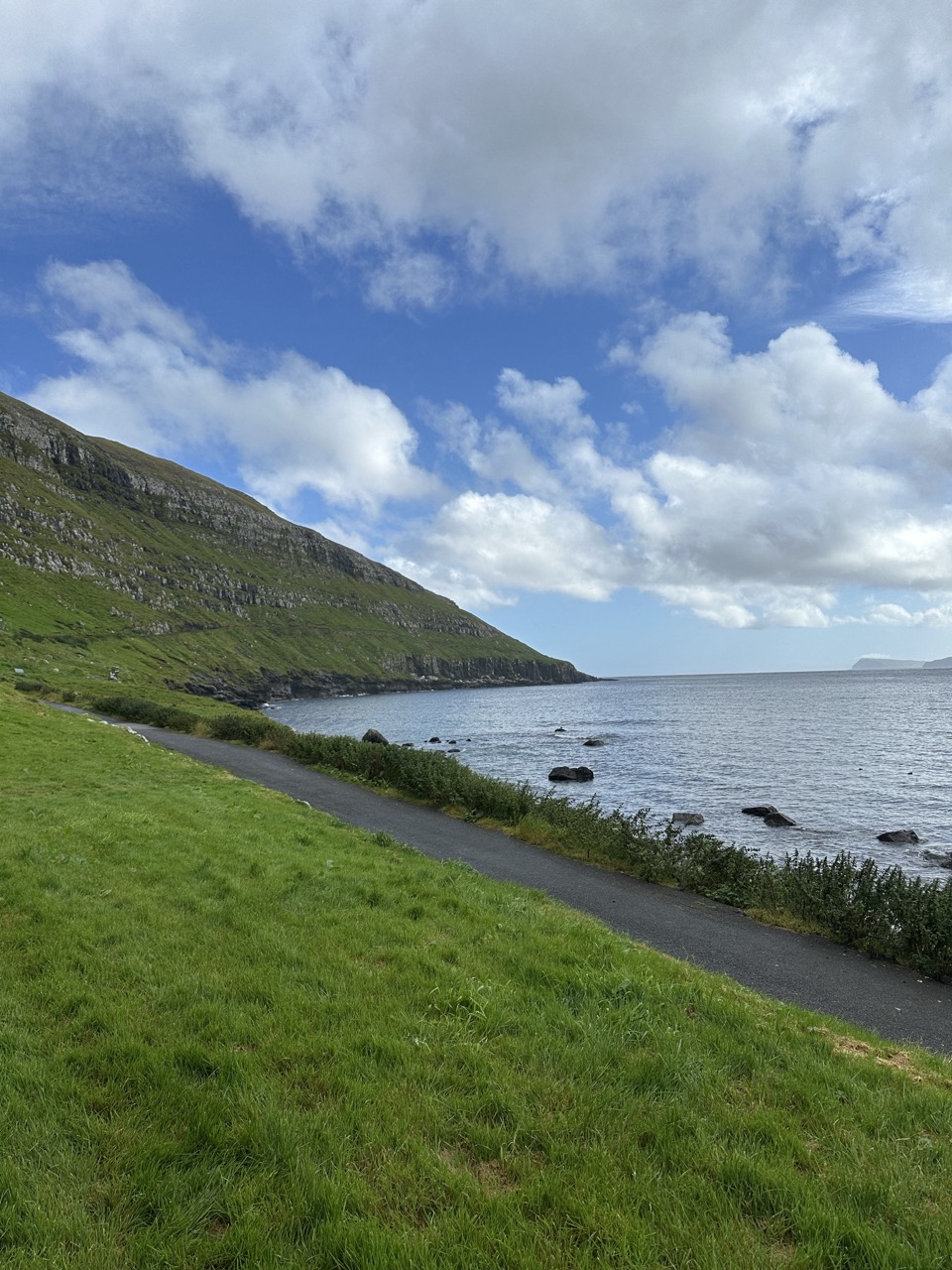
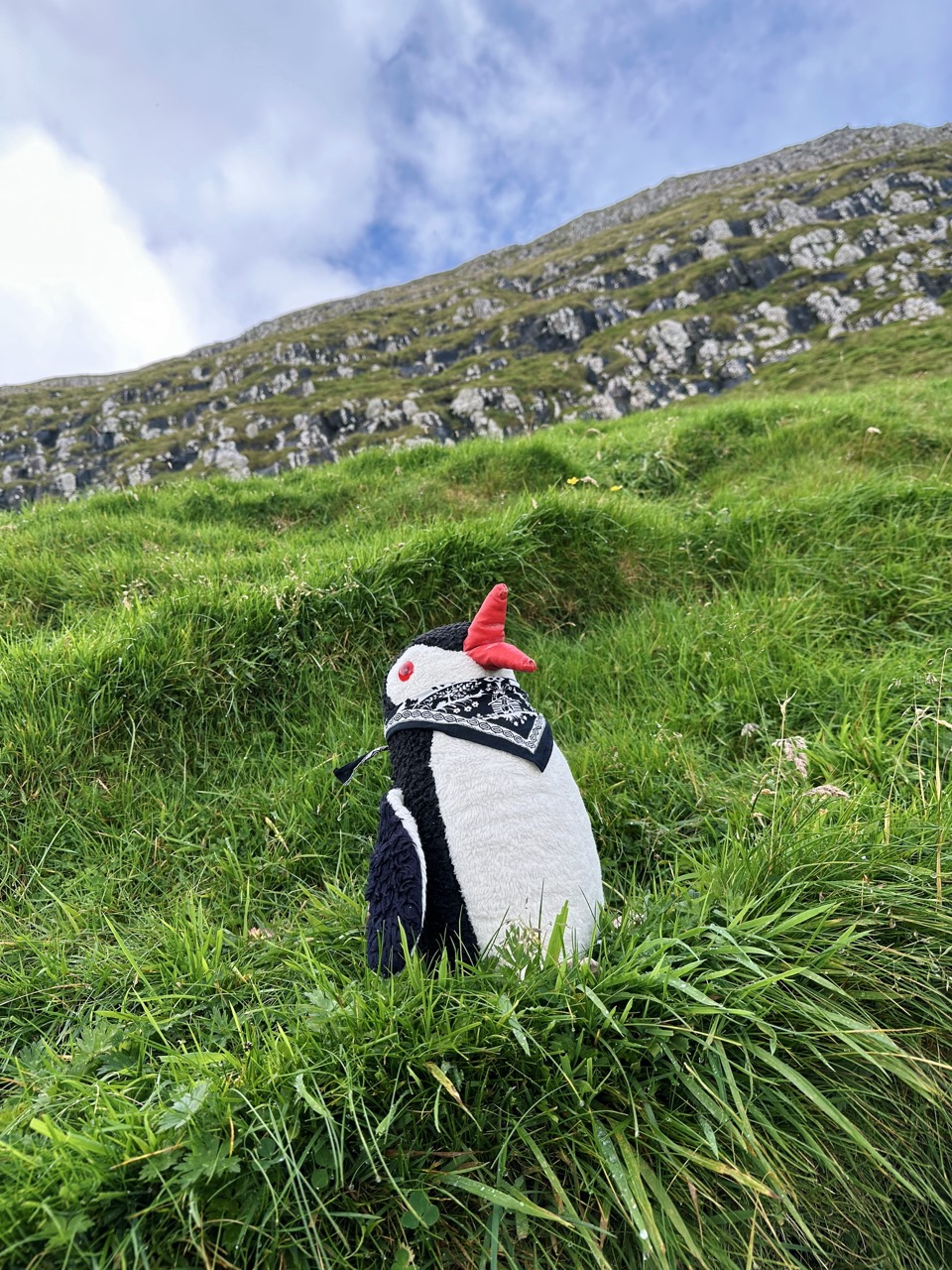
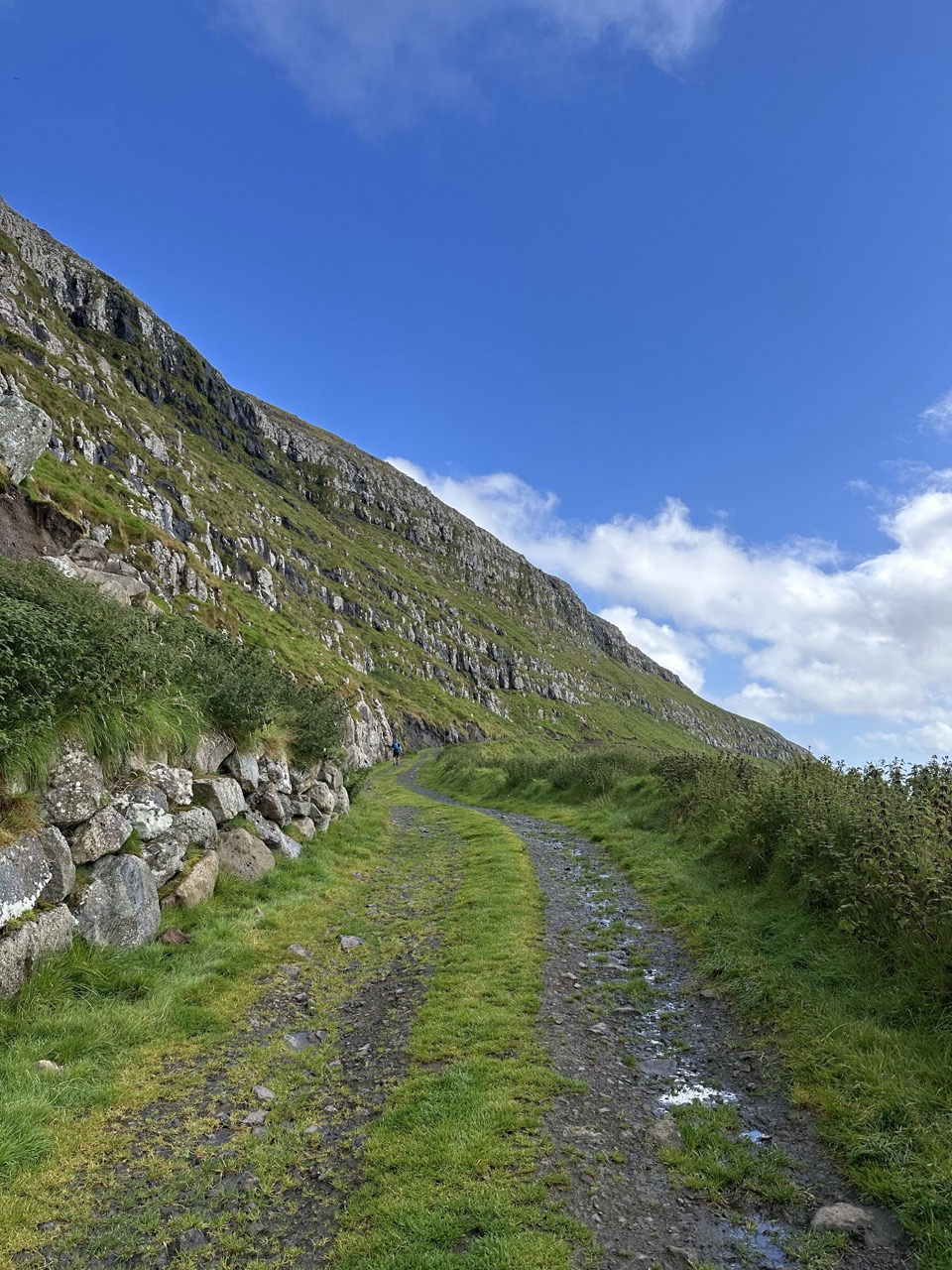
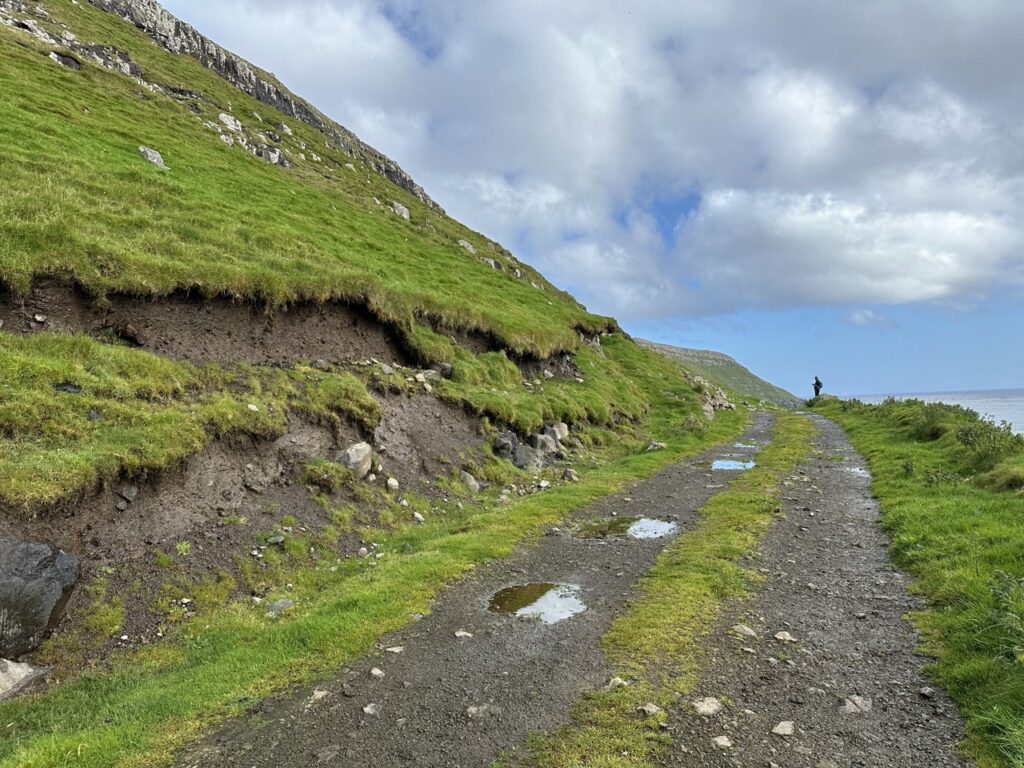
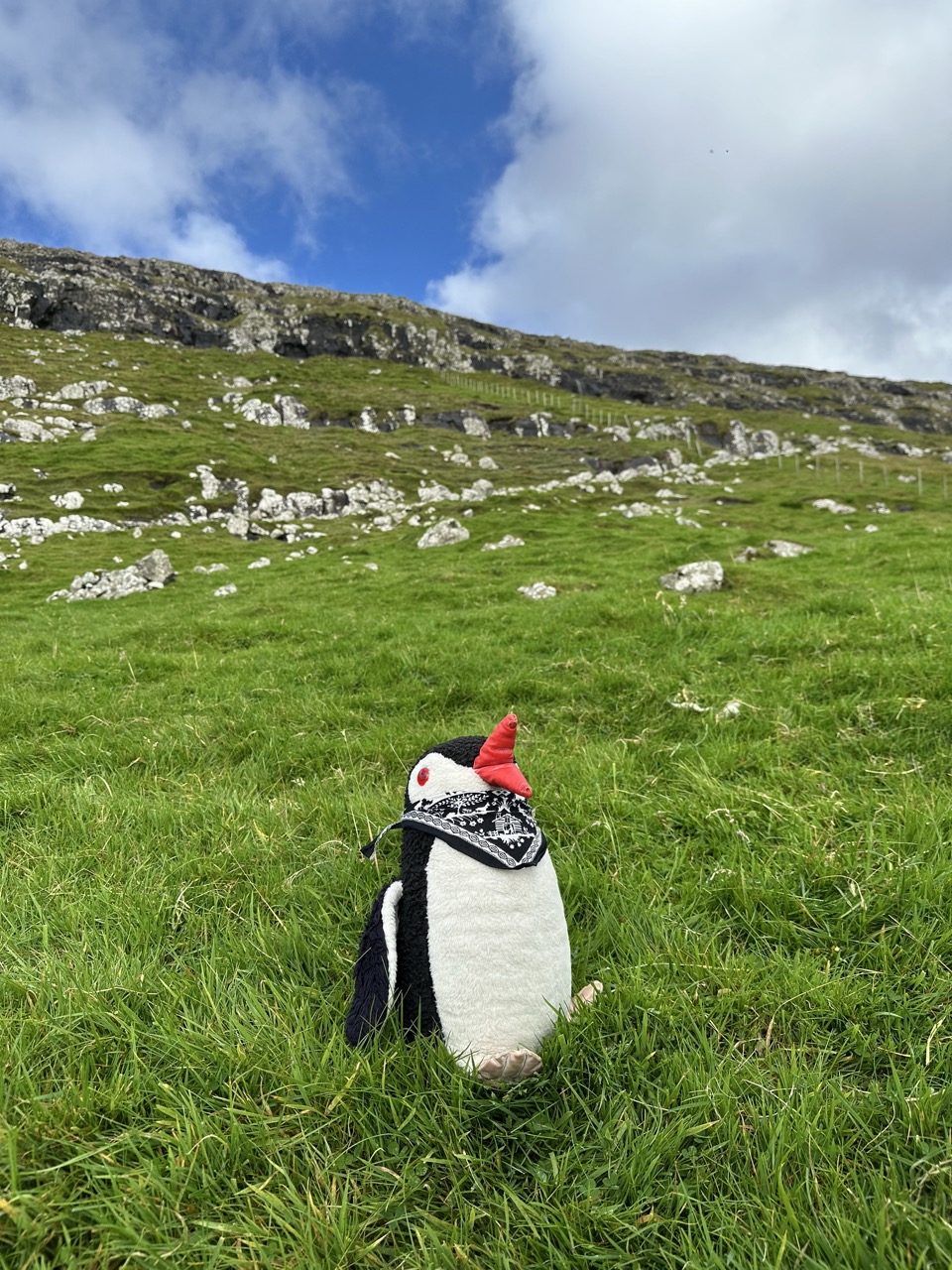
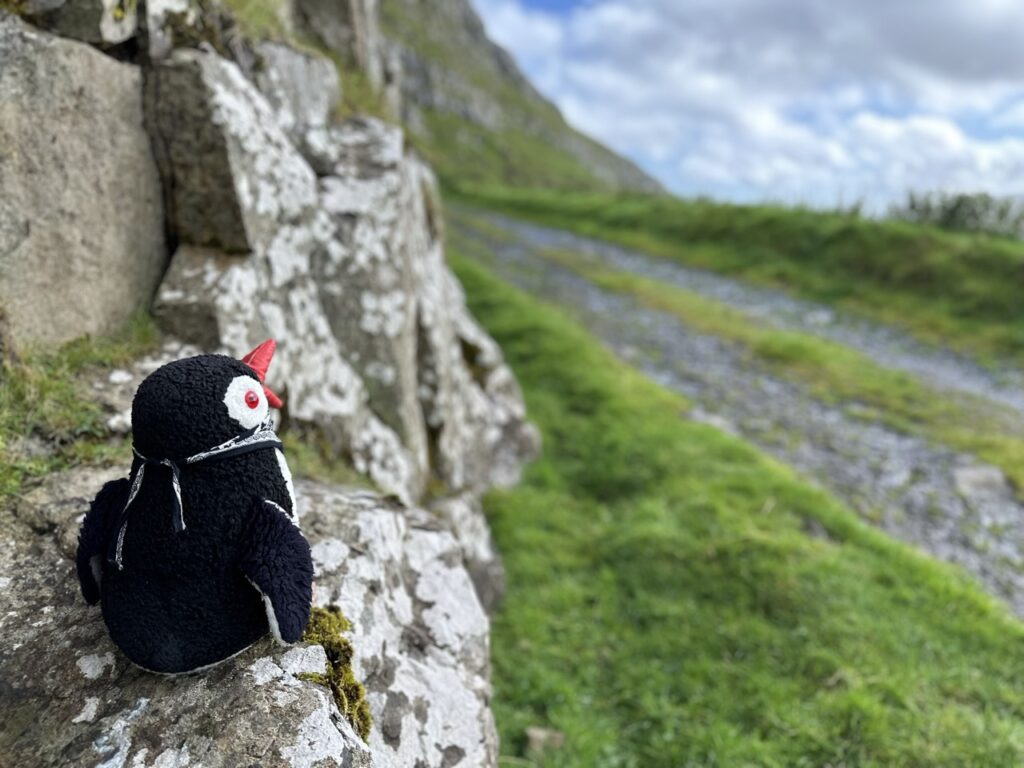
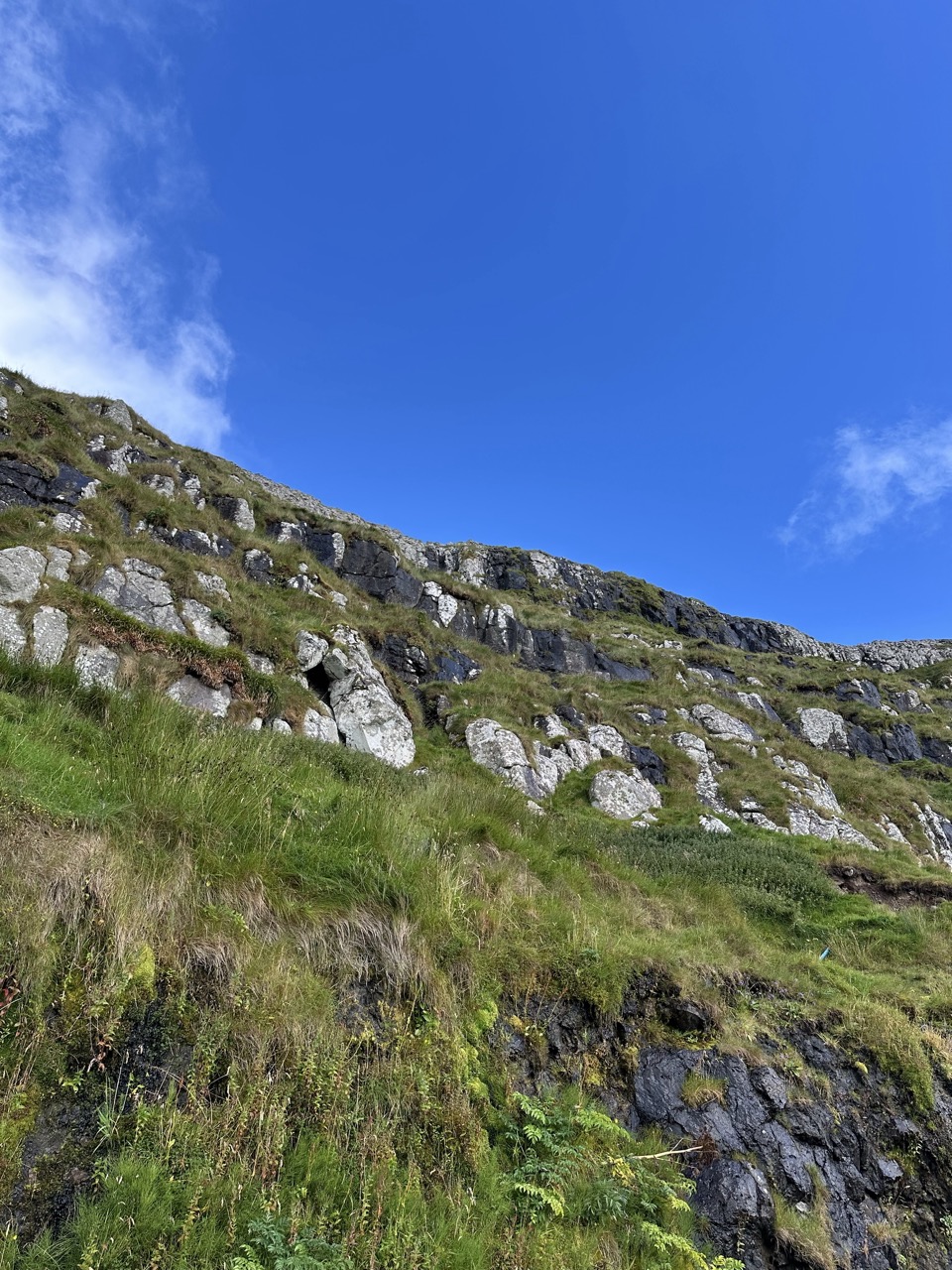
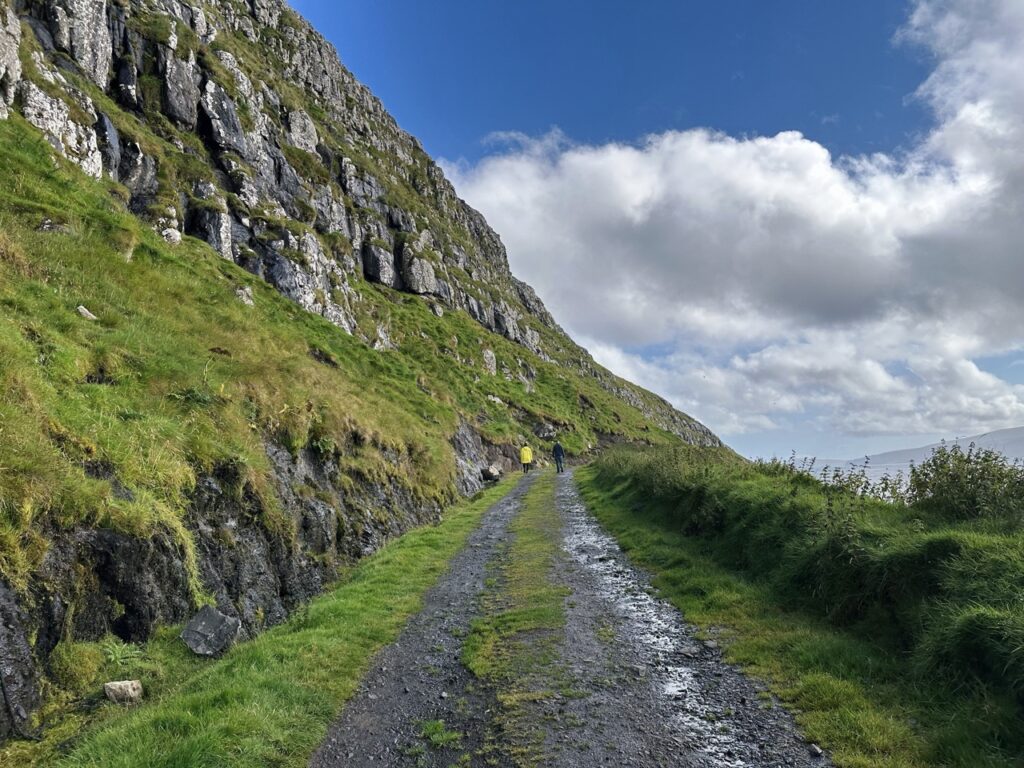
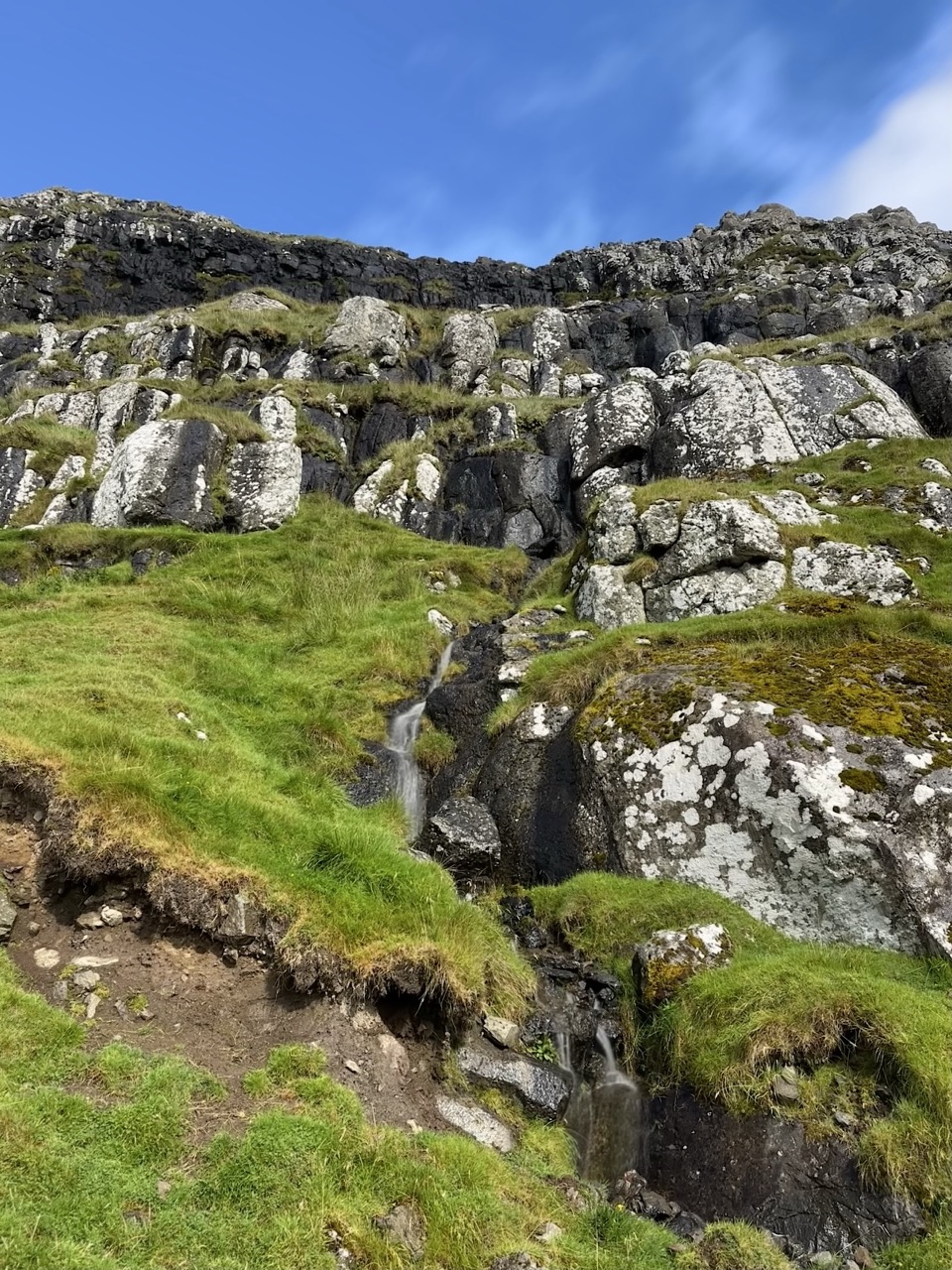
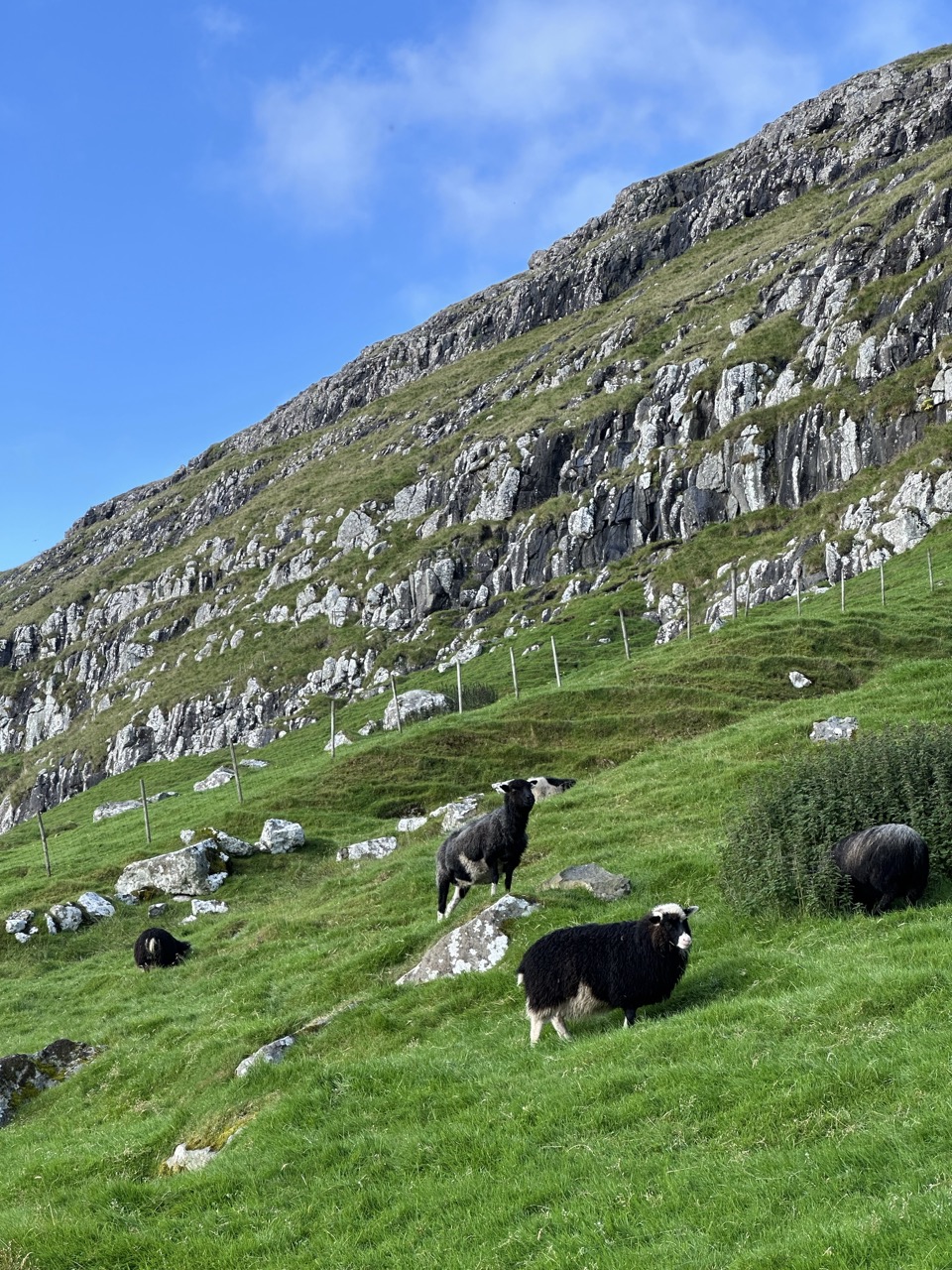
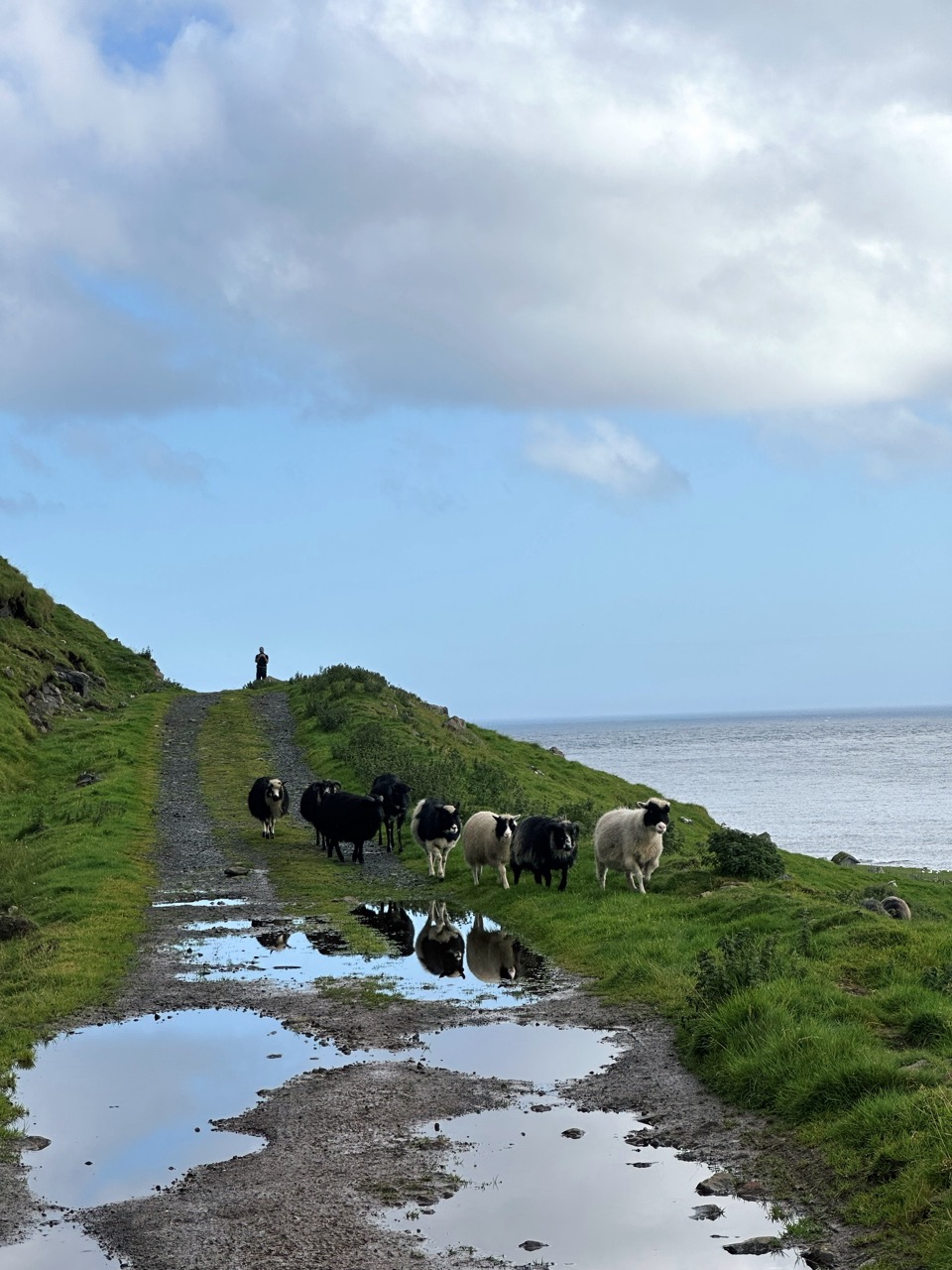
Now, here’s the funny part: while it may have been free, it was also one of the “shittiest” trails we walked in the Faroes, quite literally. 😅 The path is well-trodden by the village’s many sheep, and let’s say they left plenty of “souvenirs” behind. It turned into a bit of an obstacle course trying to dodge the droppings, so consider yourself warned: when you waddle this way, watch your step!
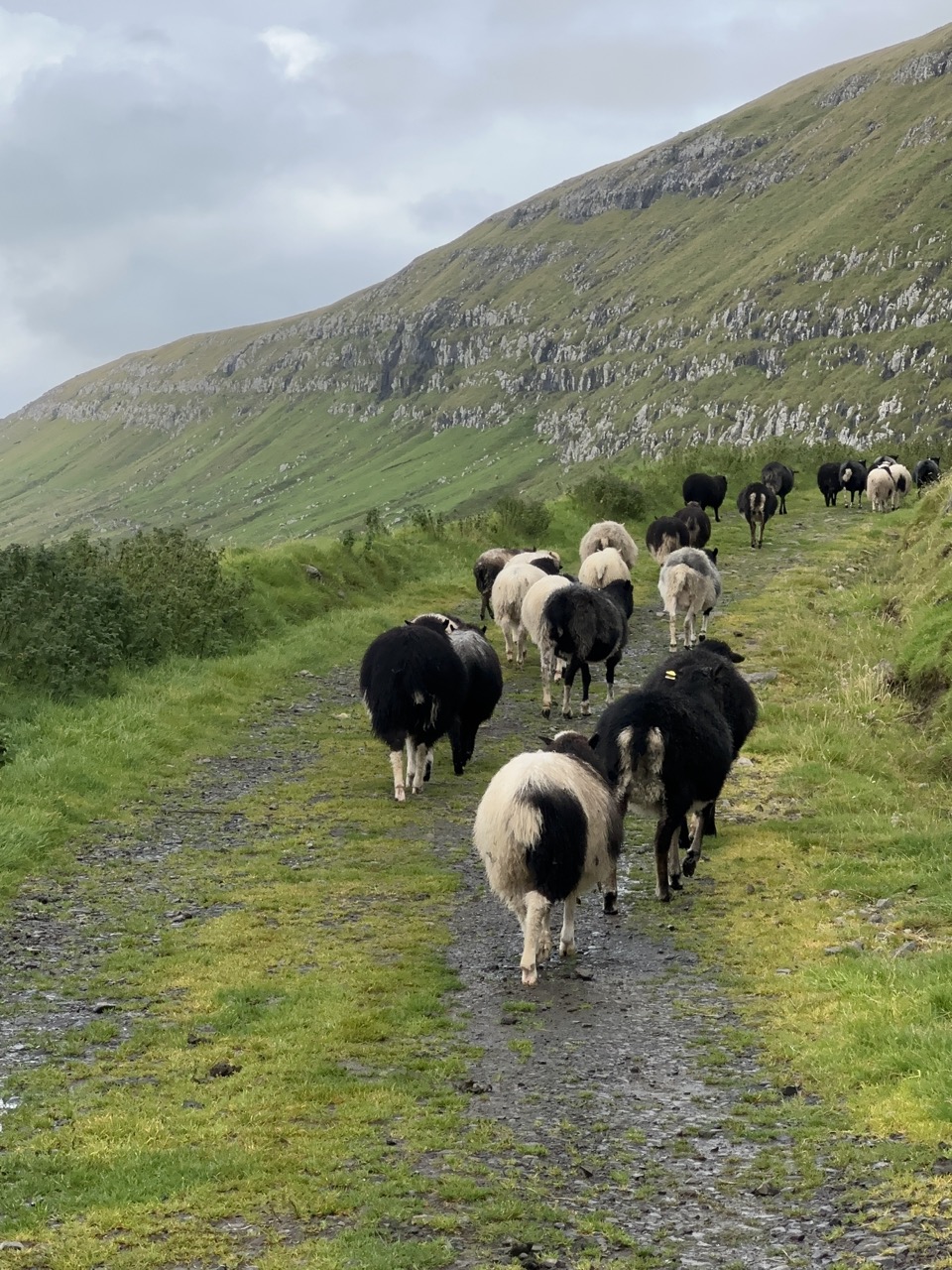
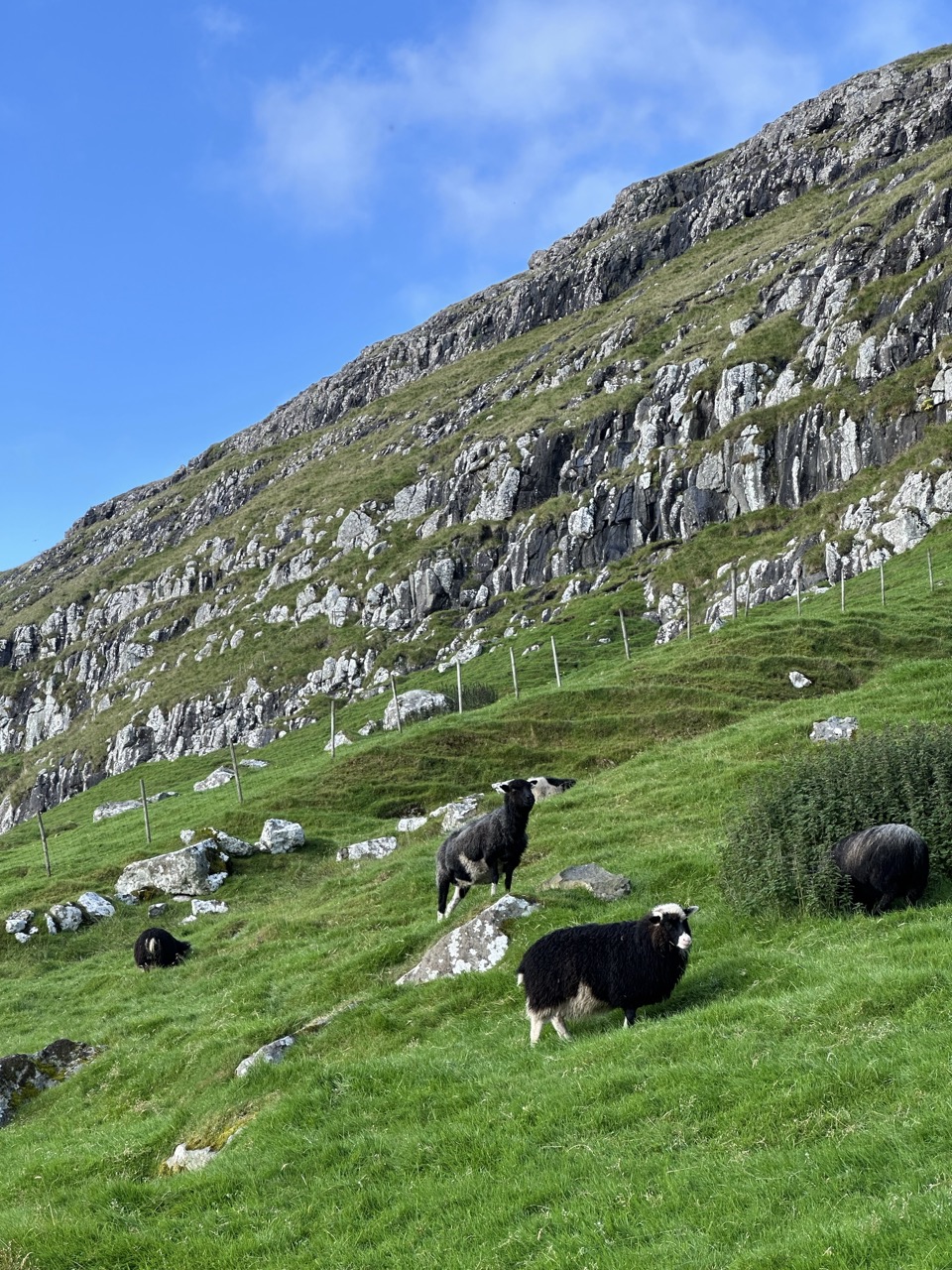
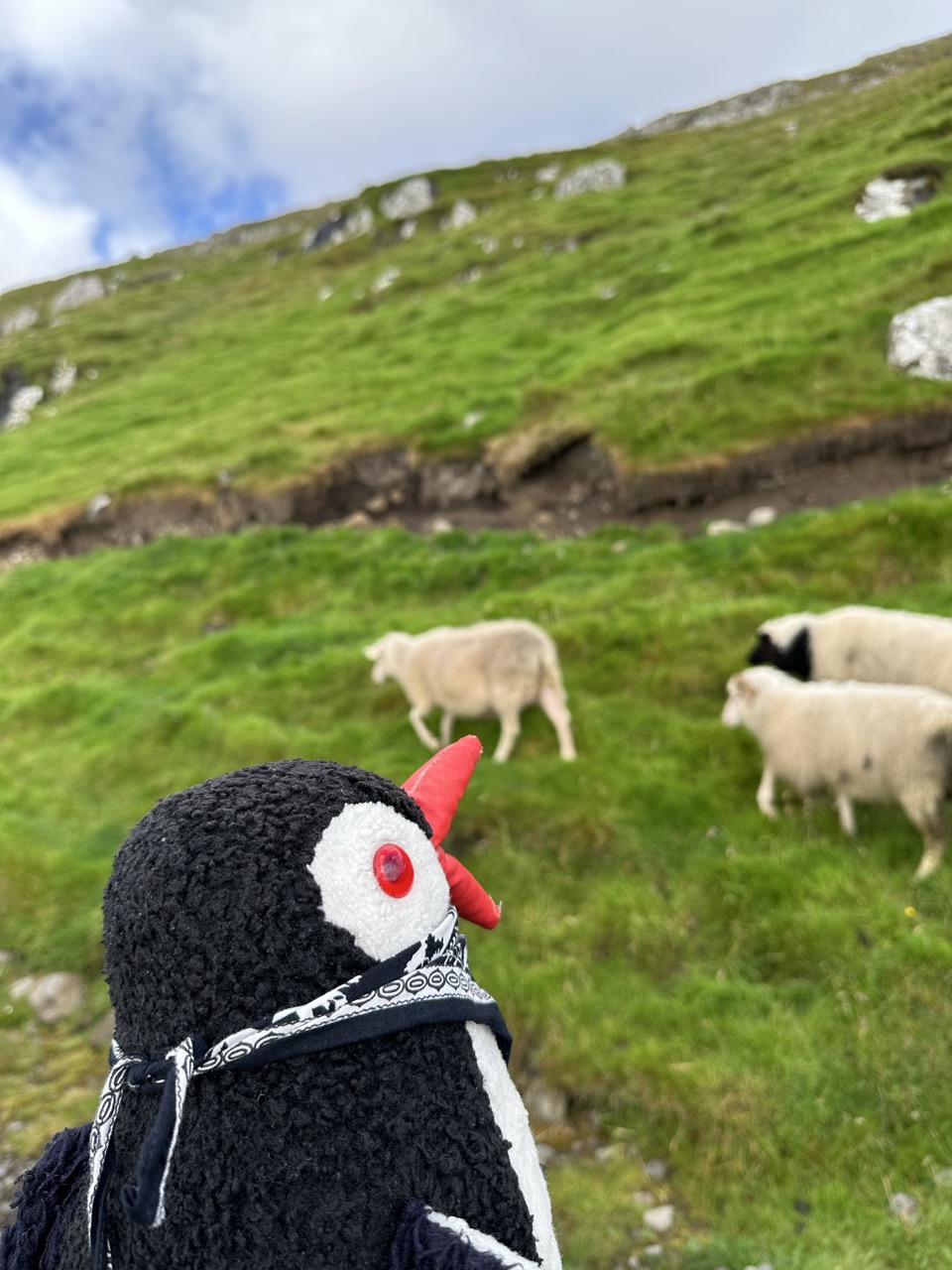
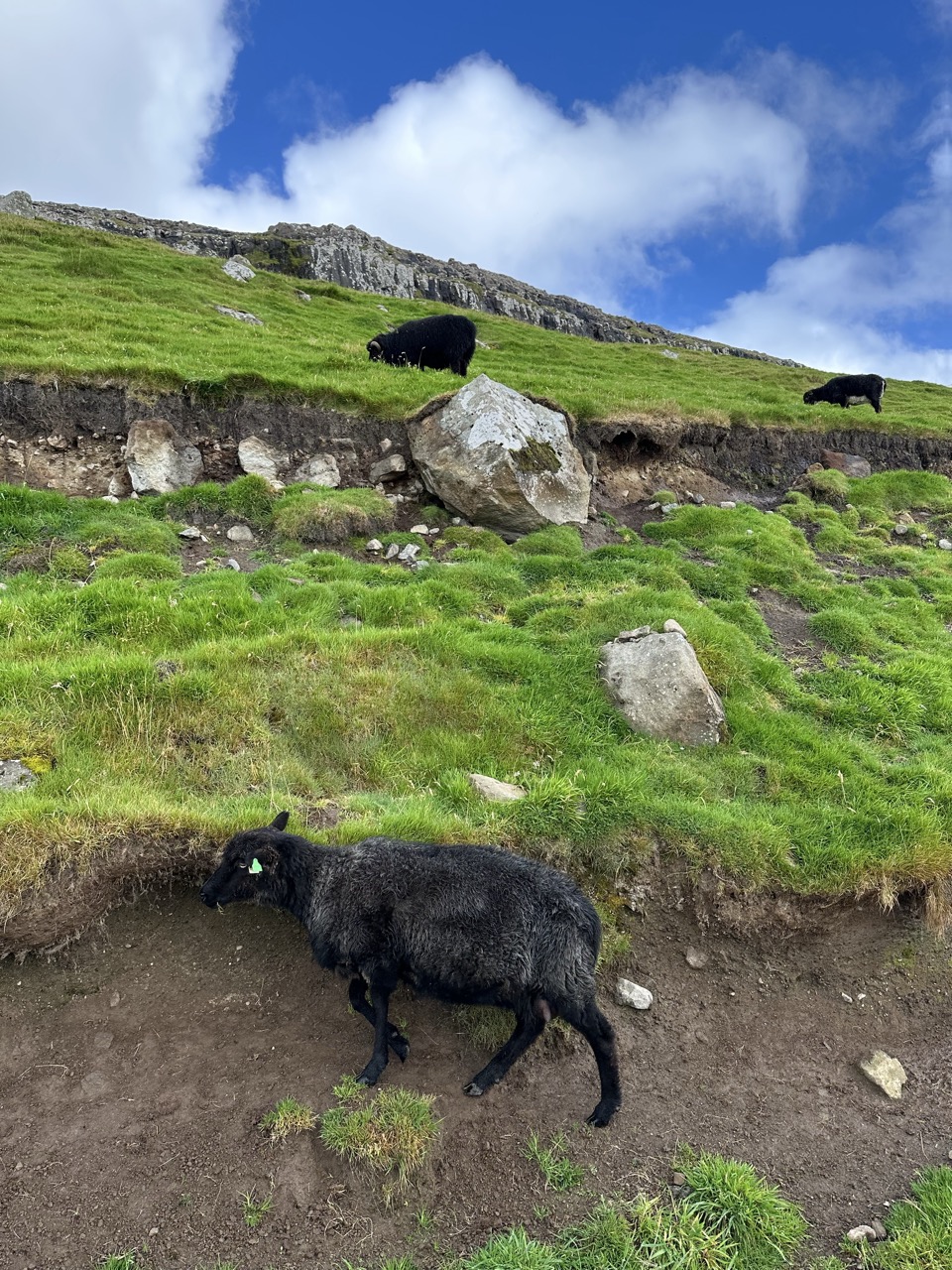
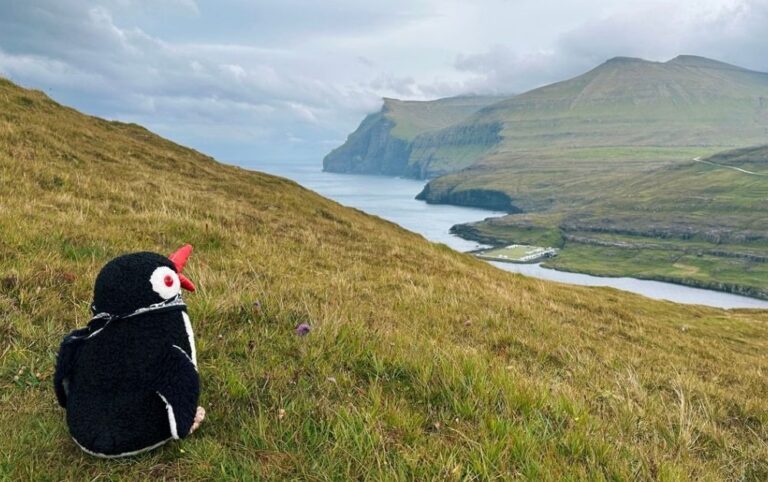
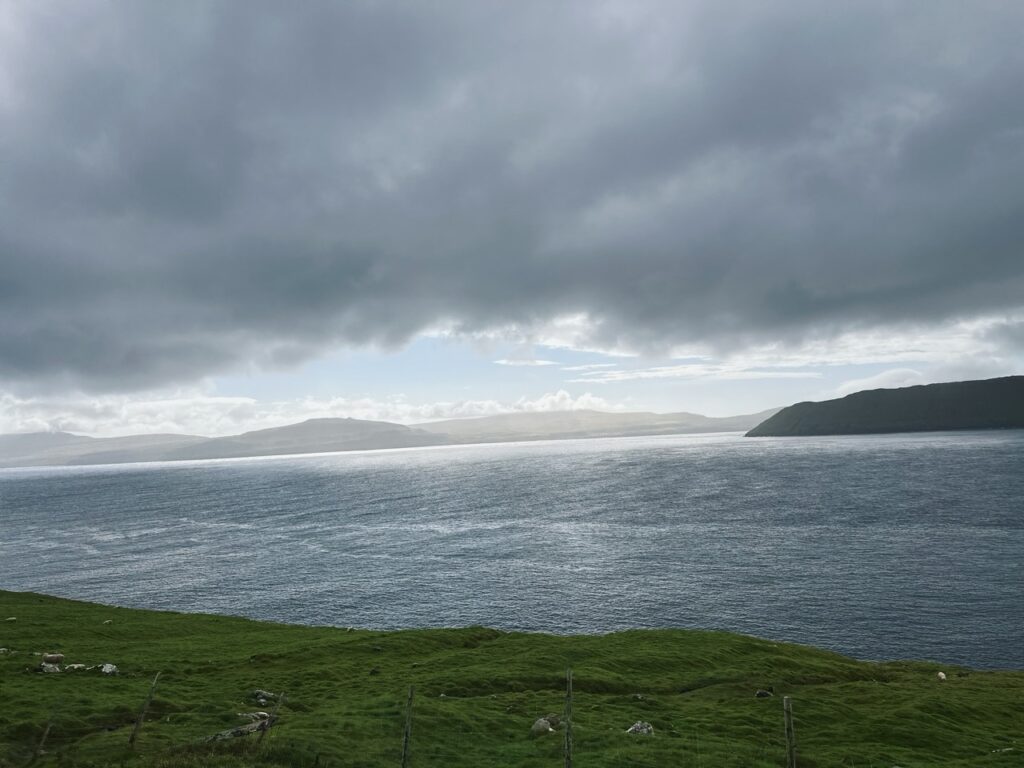
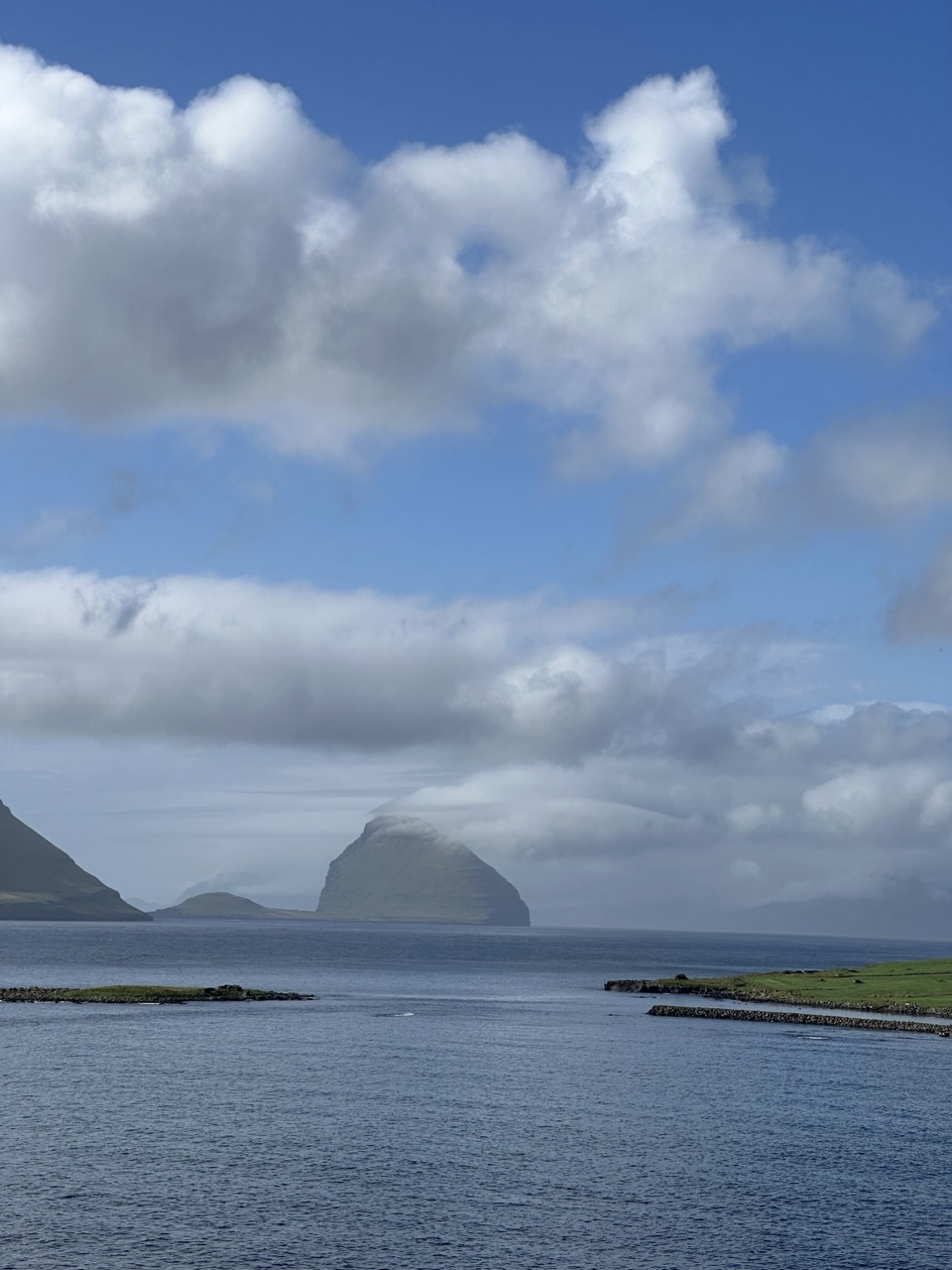
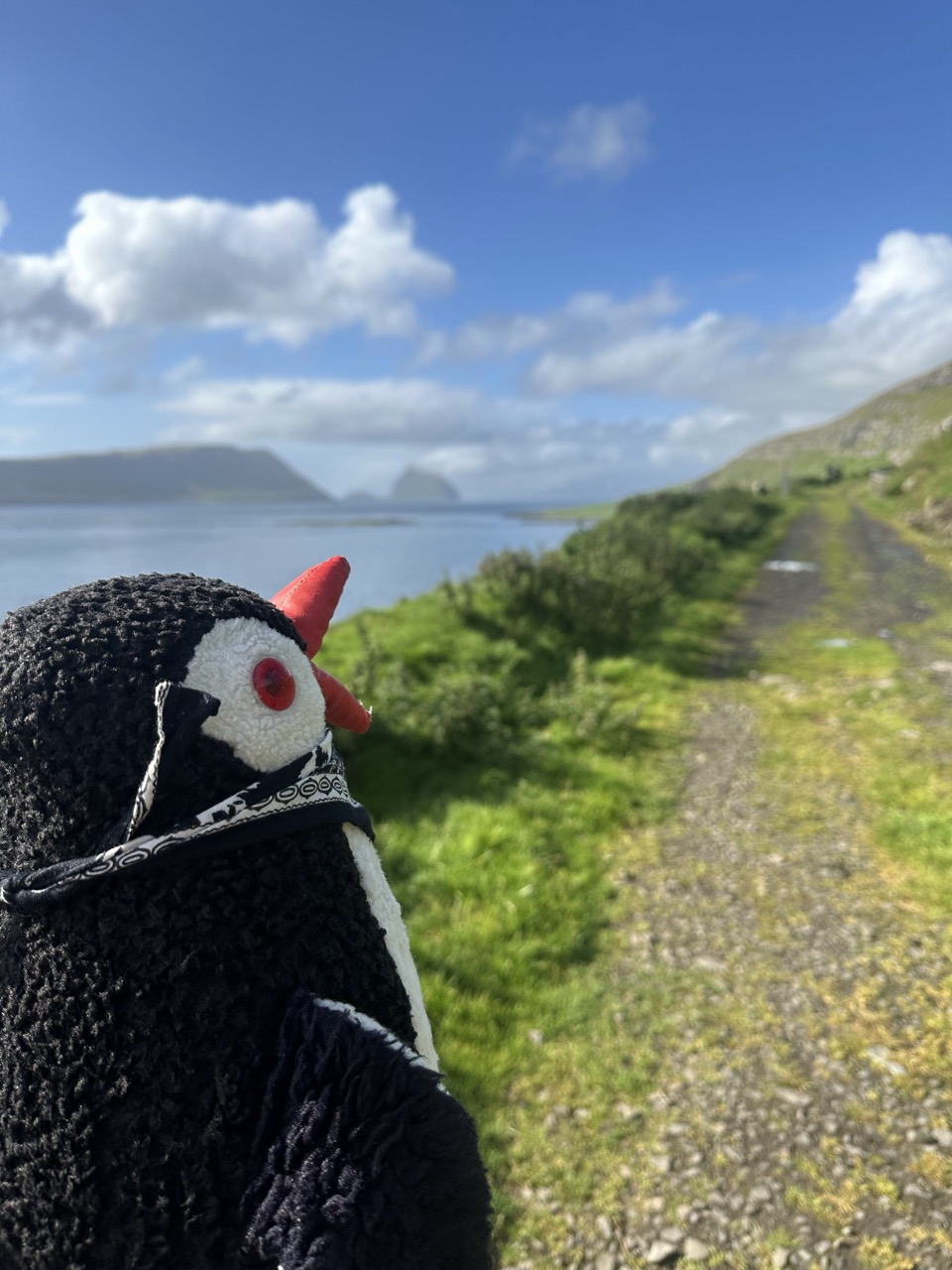
At the far end of the coastal path, we reached a quiet sheep farm, a reminder that even in such a historic village, everyday Faroese life carries on. From here, you can also waddle down toward the shoreline, where the land drops gently to the sea. We sat down for a while, letting the salty air and the sound of waves sink in, while taking in the breathtaking panorama of two islands rising just across the water, Hestur and Koltur.
- Hestur: The Horse Island. Hestur, whose name means horse in Faroese, as the island’s shape resembles a horse lying down. It’s sparsely inhabited, with just one small village, but it’s known for its dramatic cliffs and excellent birdlife. Puffins, guillemots, and other seabirds nest along its steep rock walls, making it a hidden gem for nature lovers.
- Koltur: The Tiny Island. Beside Hestur is Koltur, one of the smallest islands in the Faroes. Its name means colt (a young horse), and together with Hestur, the two islands carry on a horse-inspired legacy. Koltur is nearly uninhabited today, with only a single family farm keeping traditions alive.
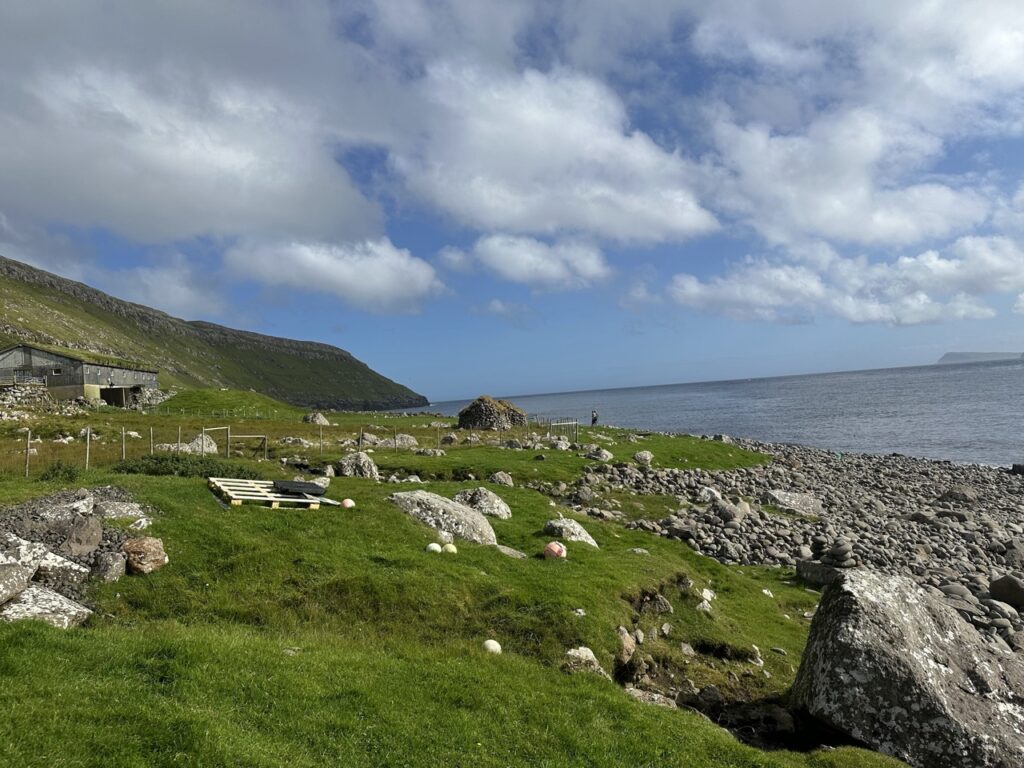
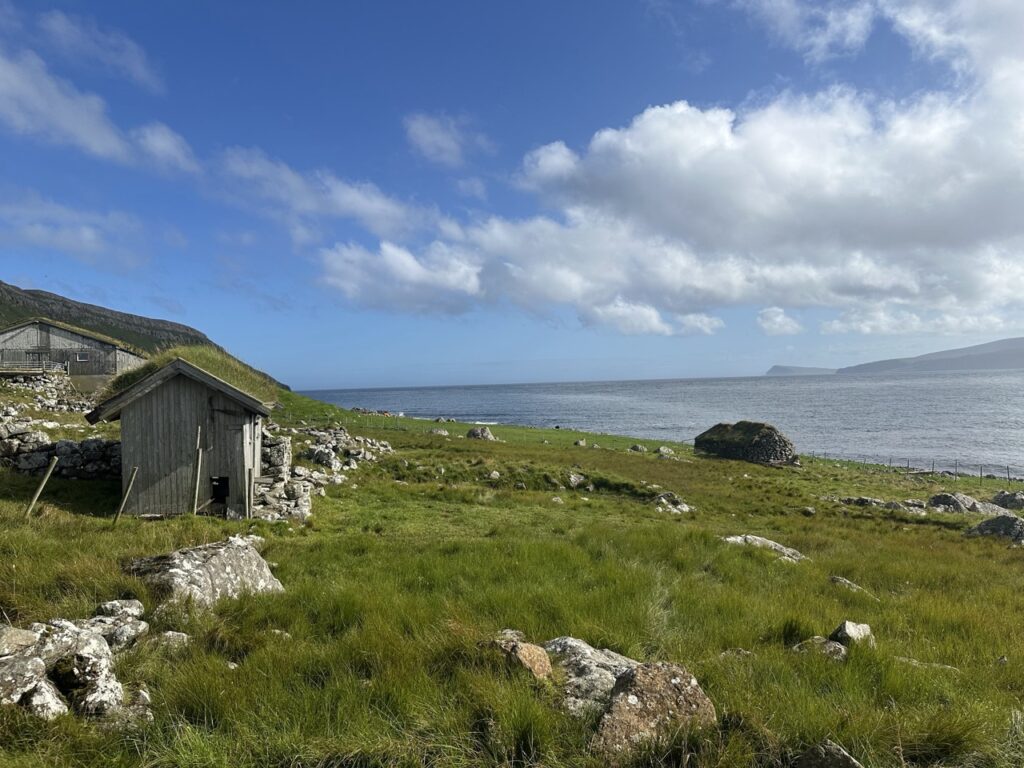
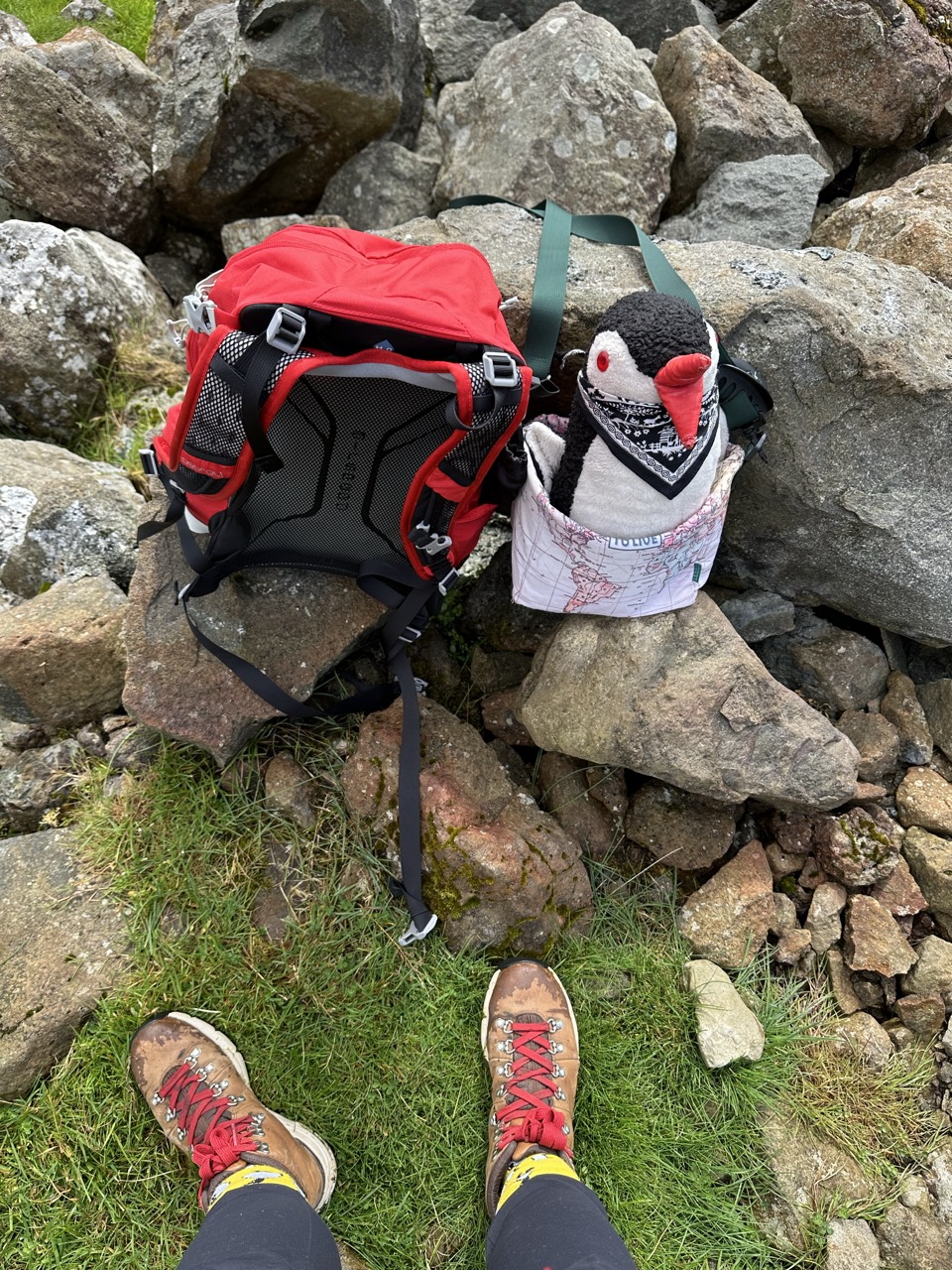
After soaking in our fair share of breathtaking views, we waddled back toward Kirkjubøur. And once again, the real challenge wasn’t the waddle itself but avoiding the countless “souvenirs” left behind by the sheep. Let’s just say it added a whole new level of concentration to our final stroll!
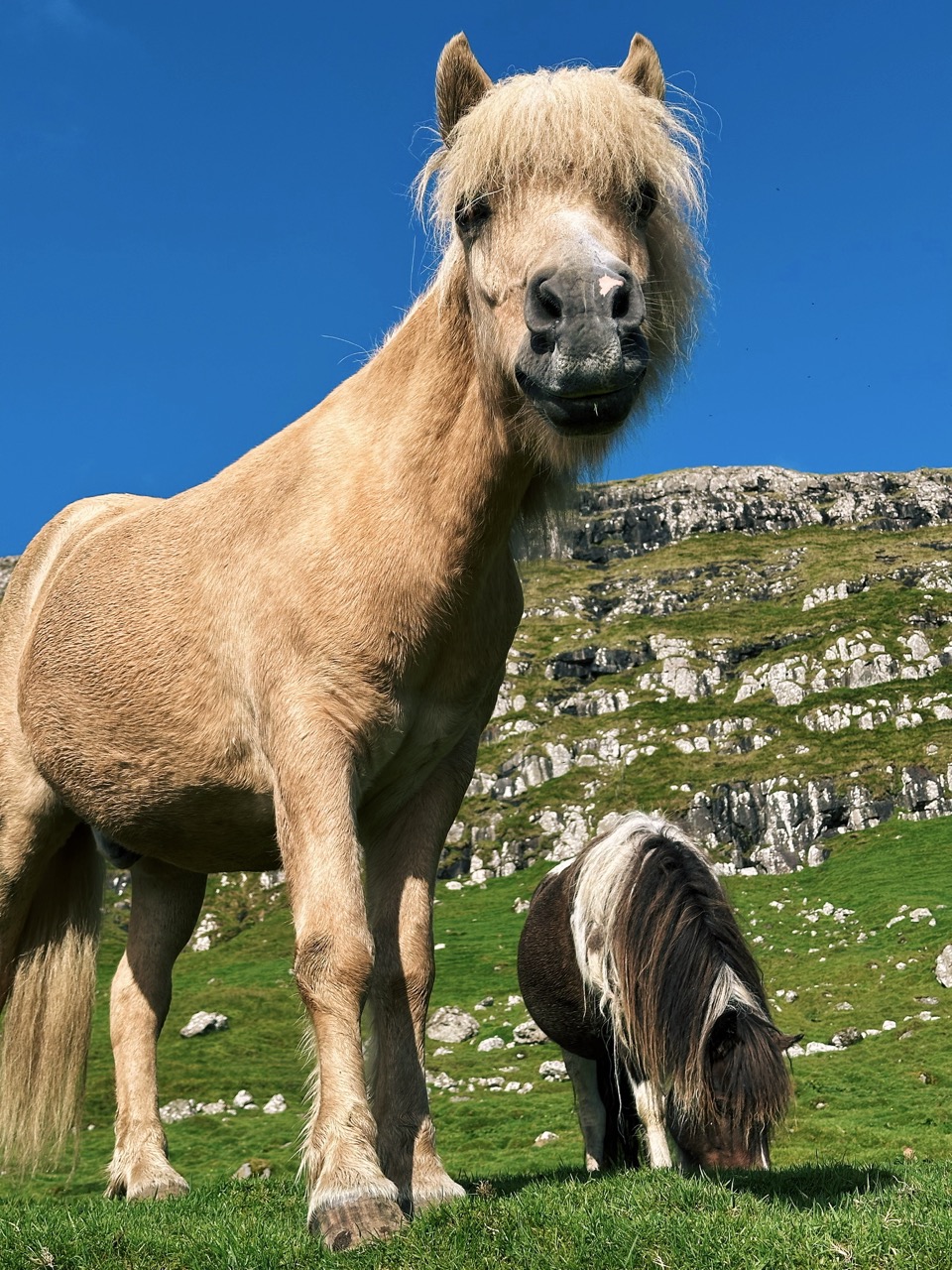
This was a wonderful way to close out our time in the Faroe Islands. Kirkjubøur may be small, but it’s packed with history, charm, and views that will stay with you long after you’ve left. If you’re visiting the Faroes, we can only recommend making time for this special village; it’s the perfect blend of culture, legends, and scenery, all just a short drive from Tórshavn.
One Last Stop in Tórshavn
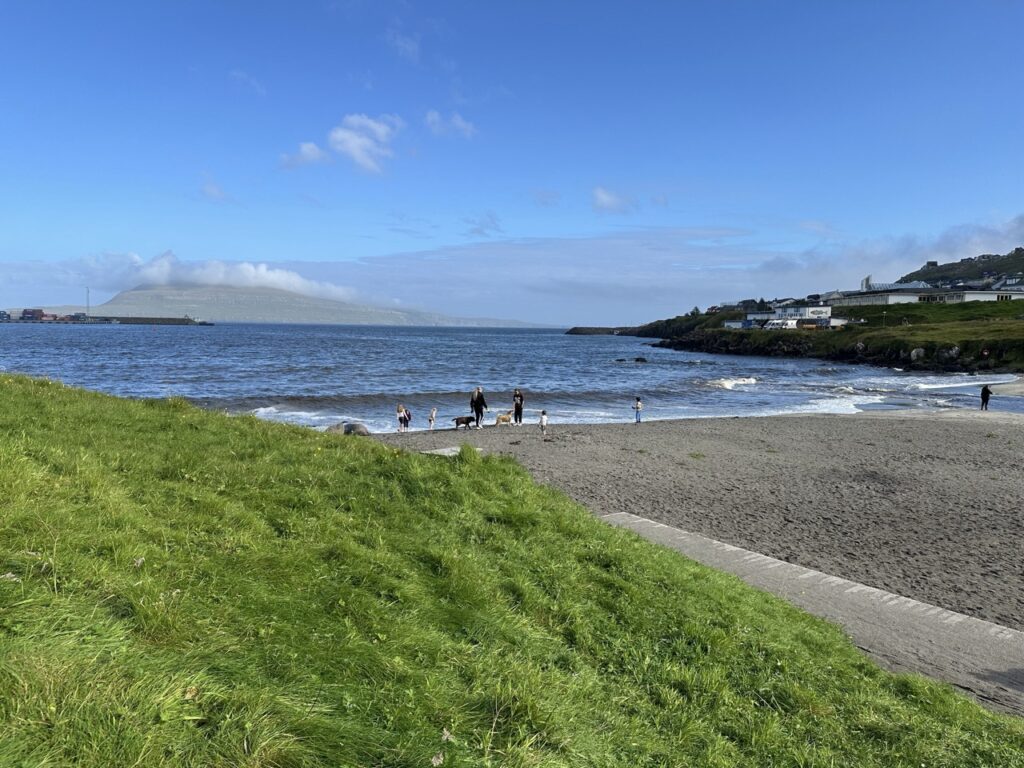
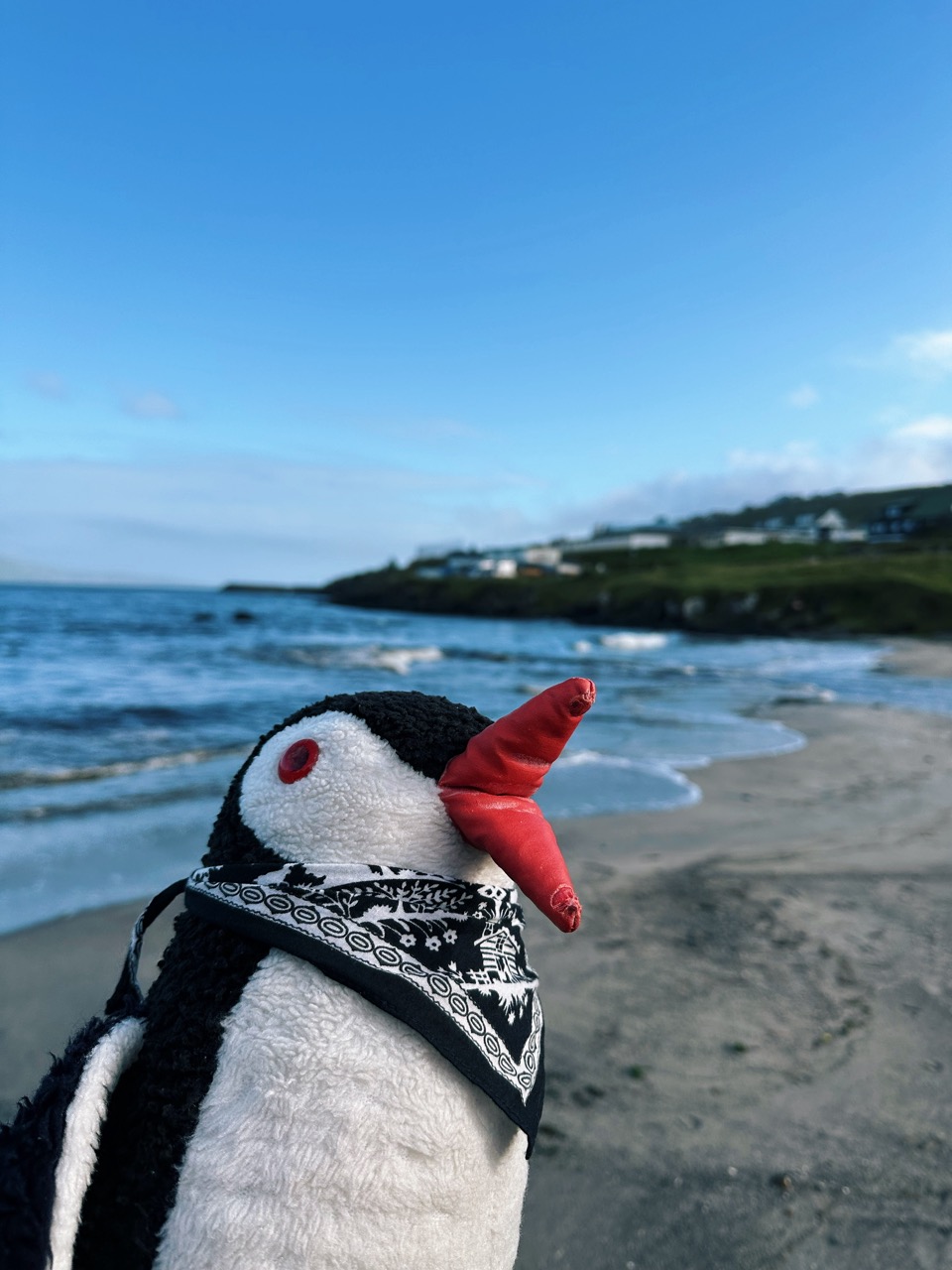
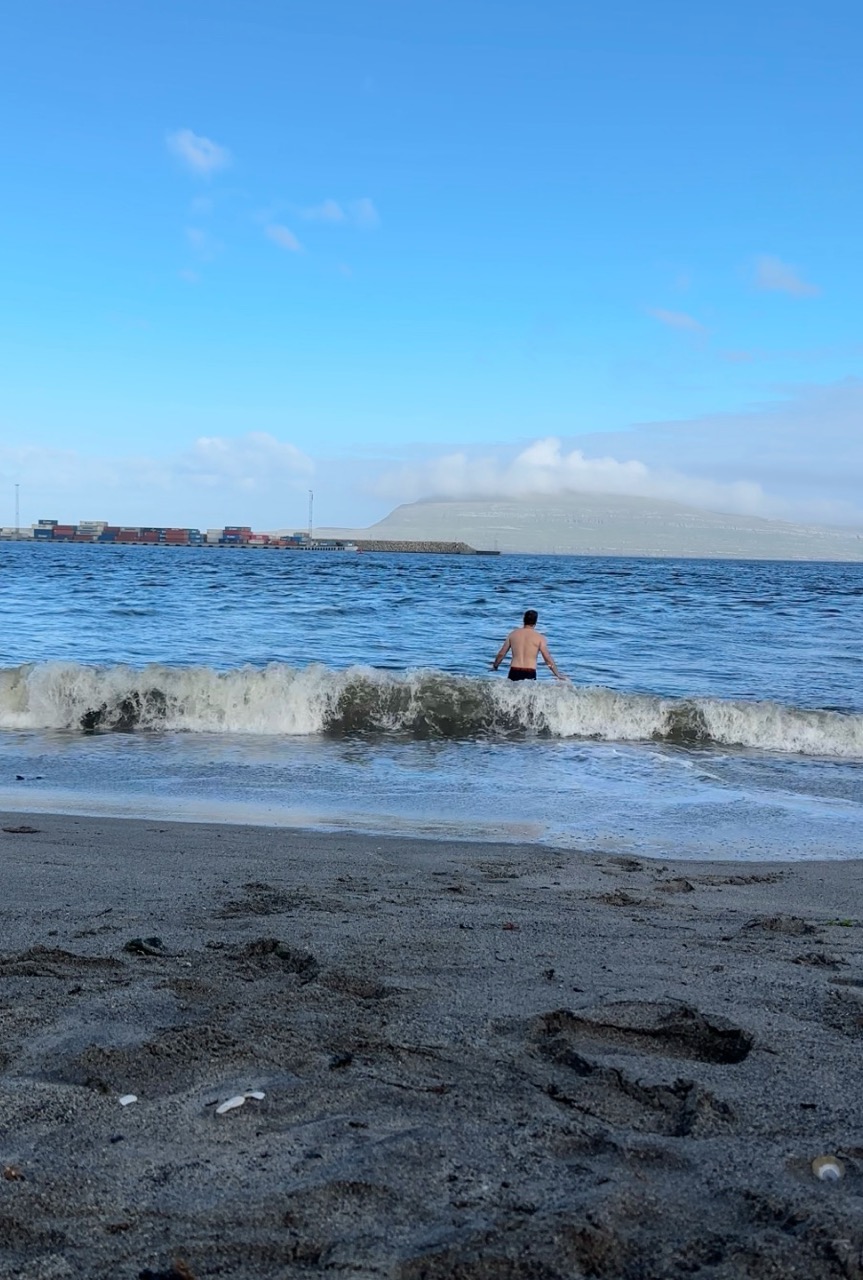
Before calling it a day, we made one final stop back in Tórshavn. Since the weather had turned surprisingly nice, we wanted to finish our Faroese adventure on a legendary note. So, where did we go? To the only official beach in the capital, and yes, we actually went for a dip in the Atlantic Ocean! The water was cold, the waves playful, and the whole experience unforgettable. It might not have been a tropical beach day, but plunging into the chilly Faroese sea felt like the perfect way to close out our trip, refreshing, exhilarating, and just a little bit crazy. If the weather permits, be sure to take advantage of some cold water immersion while in the Faroe Islands.
Best Time to Visit Kirkjubøur
- The best season to visit Kirkjubøur is summer, when the Faroe Islands enjoy long days, mild temperatures, and the highest chance of clear skies. From June to August, you’ll have nearly endless daylight hours, which means more time to explore the village and enjoy the sea views without feeling rushed. That said, Kirkjubøur is open year-round, and each season has its own charm: autumn brings dramatic skies, winter offers solitude, and spring highlights the fresh green of the turf roofs.
- The time of day also makes a difference. Afternoons and early evenings are especially magical, with the light falling over the sea and the neighboring islands of Hestur and Koltur. If you’re a photographer, the golden hour here is breathtaking, especially around the cathedral ruins and coastal paths. Mornings tend to be quieter, which is perfect if you want to enjoy the village almost entirely to yourself.
Accessibility
Kirkjubøur is an easy place to explore on foot, with all the main sights just a short waddle from the parking area. The paths are generally flat, but they can get muddy and slippery after rain, so bring sturdy shoes.
Kirkjubøur was the perfect farewell to our Faroese adventure: a village where history, legends, and nature all came together for one last waddle. We couldn’t have asked for a better ending: the rain gave way to sunshine, the sea views stretched endlessly, and we left feeling grateful that the islands gifted us such a memorable final day.
Pack your bag and explore Kirkjubøur!

This post contains affiliate links. If you click and buy, I might earn a tiny commission, enough to help a penguin keep up its globe-trotting lifestyle. No extra cost to you, just more fish for me. Thank you for supporting the adventure!