Discover Betliar’s historic manor, English park, and collections just outside Rožňava
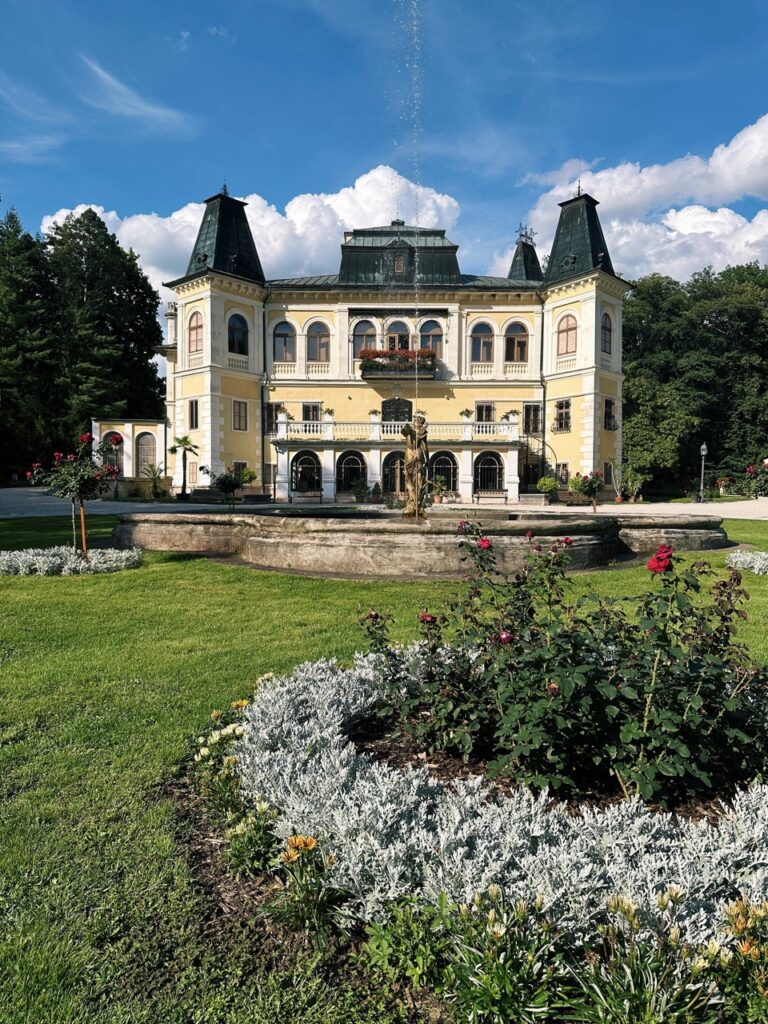
We stopped by Château Betliar on our Slovakia road trip, and it quickly became one of the most unexpected highlights. Tucked in the village of Betliar near Rožňava, this 19th-century hunting manor once belonged to the influential Andrássy family. Today, it’s a beautifully preserved museum that gives a vivid glimpse into aristocratic life, complete with an expansive English-style park. If you’re planning a visit, this blog post gives you everything you need to know, including opening hours, ticket info, what to expect inside, and practical tips to make the most of your stop.
How to Get to Château Betliar
We drove in from Bratislava by car and reached Château Betliar in just under four and a half hours, taking the E58 and cutting through the heart of Slovakia. The route winds through rolling hills, dense forests, and quiet towns, making the journey feel like part of the adventure.
Château Betliar sits in the village of Betliar, around 6 kilometers northwest of Rožňava in eastern Slovakia’s Košice Region. If you’re coming from Košice, it’s a much shorter ride, around 75 kilometers, taking roughly 90 minutes by car. Both routes are straightforward, with clear signage as you approach the manor.
Public transport works too. Trains and long-distance buses run between major cities and Rožňava. From there, a local bus gets you to Betliar in about 10 minutes, and the stop is just a short walk from the entrance. Whether you’re road-tripping across Slovakia or planning a day trip from Košice, Château Betliar is surprisingly accessible and absolutely worth the detour.
Opening Hours & Admission to Château Betliar
Before you go, it’s good to know that Château Betliar isn’t a walk-in kind of place. It’s a museum run by the Slovak National Museum, so access to the interiors is only possible via guided tour, and those run at set times. Planning ahead makes all the difference between a rushed visit and a relaxed, immersive experience.
From April to October, the manor is open Tuesday through Sunday, usually from 9:30 AM to 4:30 PM, with slight variations on Thursdays when it’s open a bit later. In the off-season, from November to March, the hours shorten significantly, typically 9:30 AM to 2:00 PM, and it’s closed on Mondays. Always check the official website for the most up-to-date times, especially around public holidays or off-season adjustments.
Tickets are very reasonably priced.
- Adults: €6
- Students and seniors: €4
- Children under 6: free
- Penguins: free
Family and group rates are available, and there’s also a combo ticket if you’re visiting other nearby SNM sites.
Keep in mind: the admission price covers only the manor interiors. If you want to explore the permanent exhibition on the upper floor or access other parts of the grounds, that may cost a bit extra. The English-style park is open to the public free of charge, and it’s well worth setting aside time for.
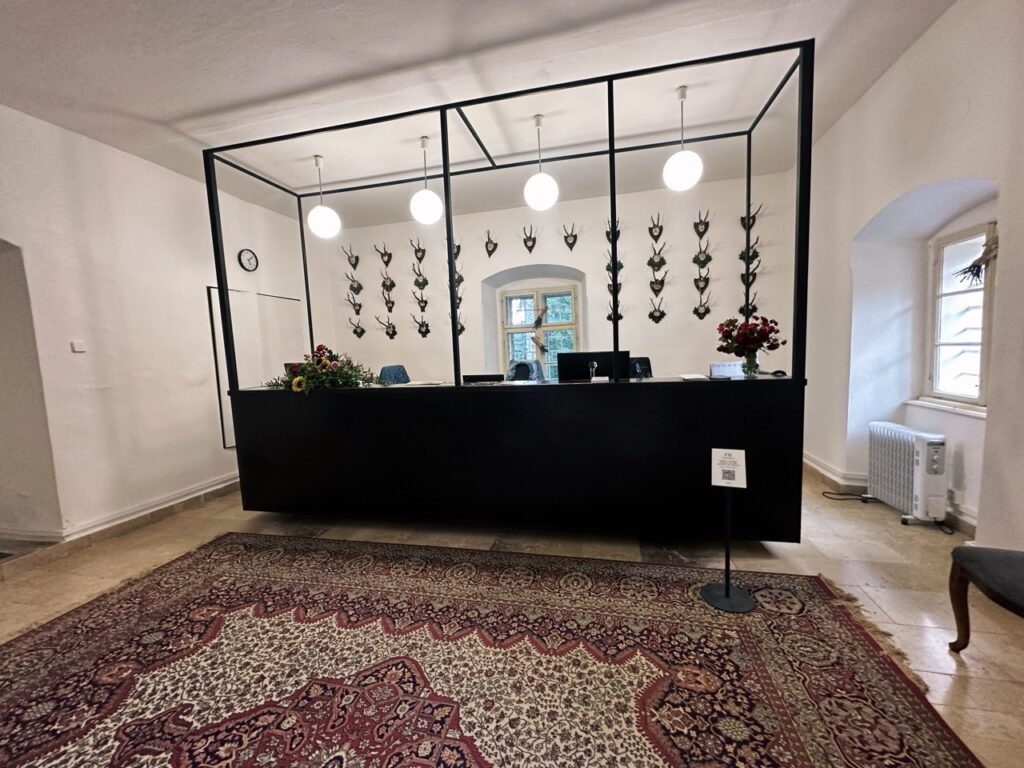
Photography inside the manor may require a special permit, so it’s best to ask at the ticket counter. Guided tours are in Slovak by default, but English materials are usually available, and some guides may offer informal translations.
Accessibility Notes for Château Betliar
The manor house building is not wheelchair-accessible. There are steps at the main entrance and inside, and no elevator or ramps provide barrier-free access to the exhibits or upper floors.
If you are using a stroller or mobility aids, you may find entering the manor difficult due to these access limitations.
The English-style garden, however, offers smoother pathways with gentle slopes. While the terrain is uneven in places, many paths remain manageable for visitors with limited mobility, especially those who are comfortable walking on gravel or compacted soil.
Best Time to Visit Château Betliar
The best times to visit are spring and autumn. In spring, the gardens bloom with fresh greenery and flowers, and crowds are still light. Autumn brings golden foliage and soft afternoon light, perfect for photos and quiet walks.
Summer (July–August) is busiest, but offers extended hours and occasional cultural events. Just be sure to book your tour in advance. Winter is peaceful but limited; the garden is bare, and tours run on a shorter schedule.
For fewer crowds and better lighting, aim for early mornings or late afternoons, especially in spring or fall.
A Brief History of Château Betliar
- Originally built in the 15th century by the Bebek family as a fortified residence.
- Acquired by the Andrássy family in the late 16th century, one of the most influential noble families in Hungary and Slovakia.
- Transformed from a defensive structure into a luxurious hunting manor during the 18th and 19th centuries.
- Major renovations took place between 1880 and 1886 under Count Emanuel Andrássy, who gave it the elegant form we see today.
- Designed in the style of an English country house, complete with towers and a sweeping park.
- Interior filled with original furnishings, art collections, and travel souvenirs from across the world.
- The library holds around 15,000 volumes in multiple languages, collected over centuries.
- Home to exotic artifacts , including an Egyptian mummy, samurai armor, African masks, and rare hunting trophies.
- Survived both World Wars with its collections largely intact, thanks to the family’s foresight.
- Became part of the Slovak National Museum after World War II and opened to the public as a museum.
- Today, it’s one of the few Slovak manor houses that still retains its original interior and park layout.
The Guardian Betler
Betliar carries more than history. A local legend speaks of Betler, an old beggar who appeared one night in the mining settlement that later became Betliar. The villagers, hardworking and generous, offered him shelter on one condition: he must contribute something good in return. He chose to protect the village’s only spring, the vital source of drinking water for the entire region. Over time, villagers said that Betler had blessed the spring and guarded it from drought or contamination. People believed the water stayed pure thanks to his spirit. Some even say that during dry summers, this spring continued to flow when others in neighboring settlements ran dry. The tale turned Betler into a silent protector of Betliar, a guardian figure woven into the landscape and whispered from generation to generation.
While the Betler legend is tied to the origins of the village rather than the manor house itself, it infuses Betliar with mystery and a sense of the sacred. Walking through the manor’s park, past the spring or toward the waterfall, you may feel that echoes of the legend still linger in the air.
Our Waddle to the Manor
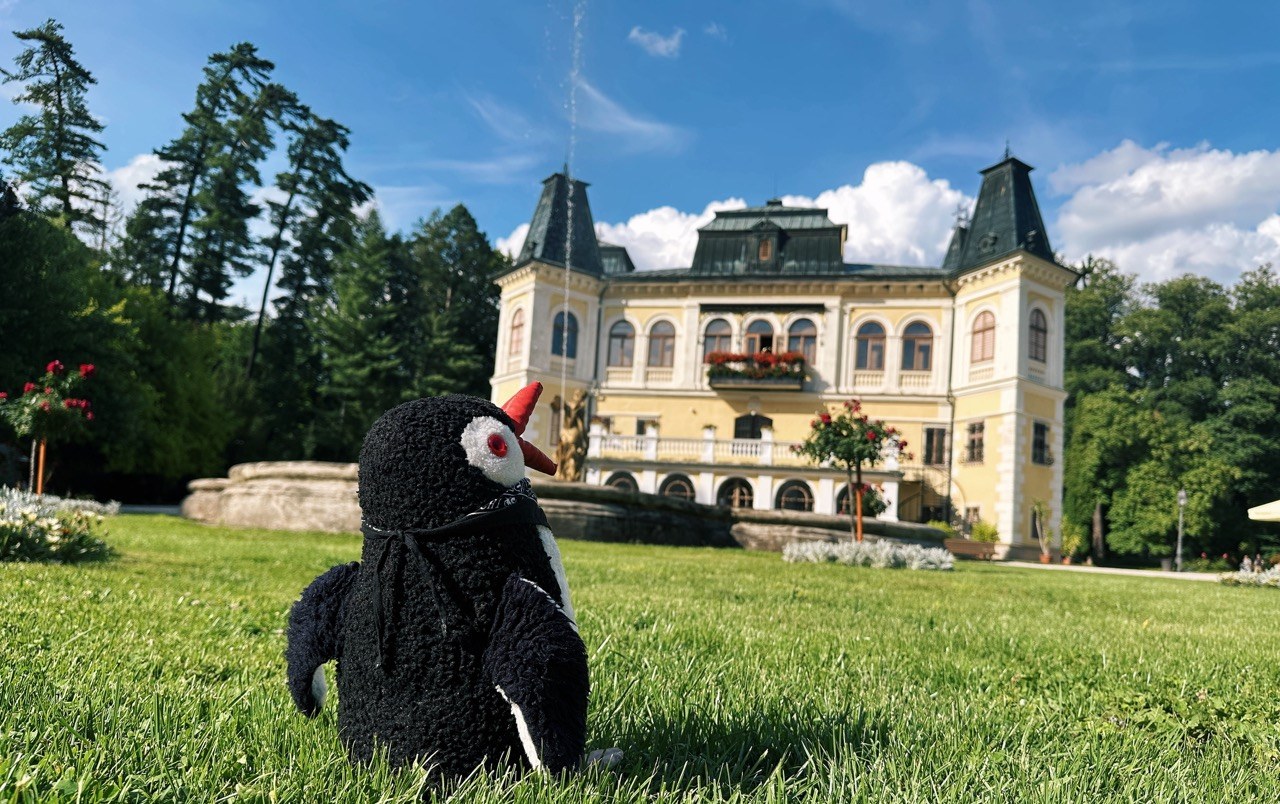
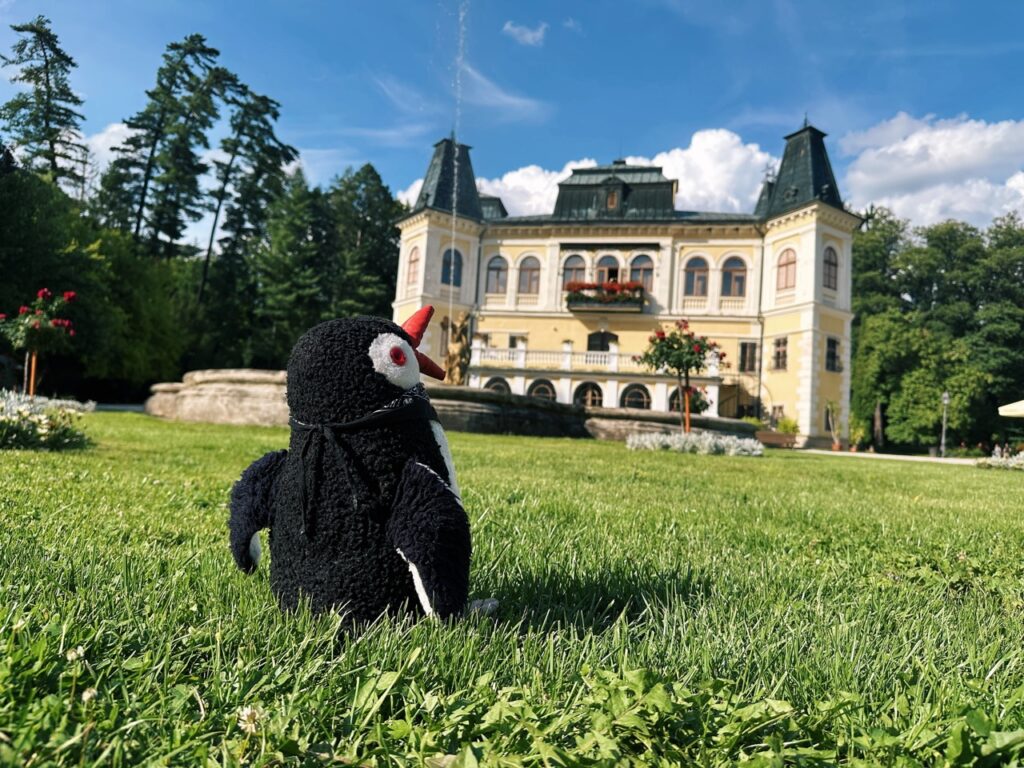
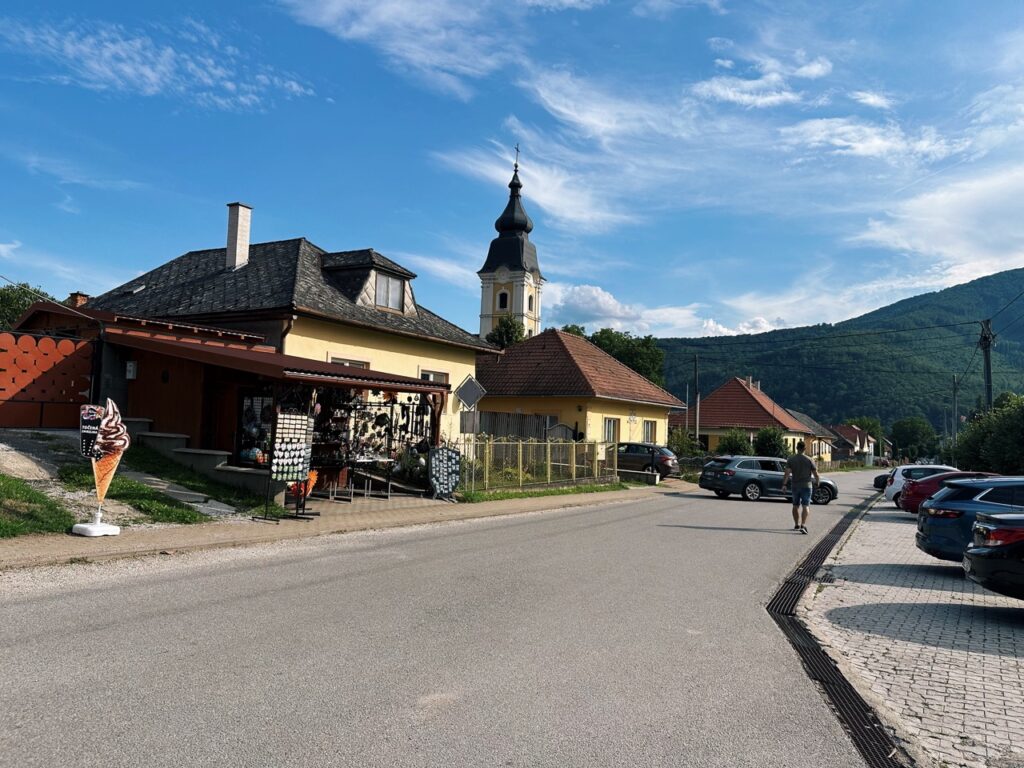
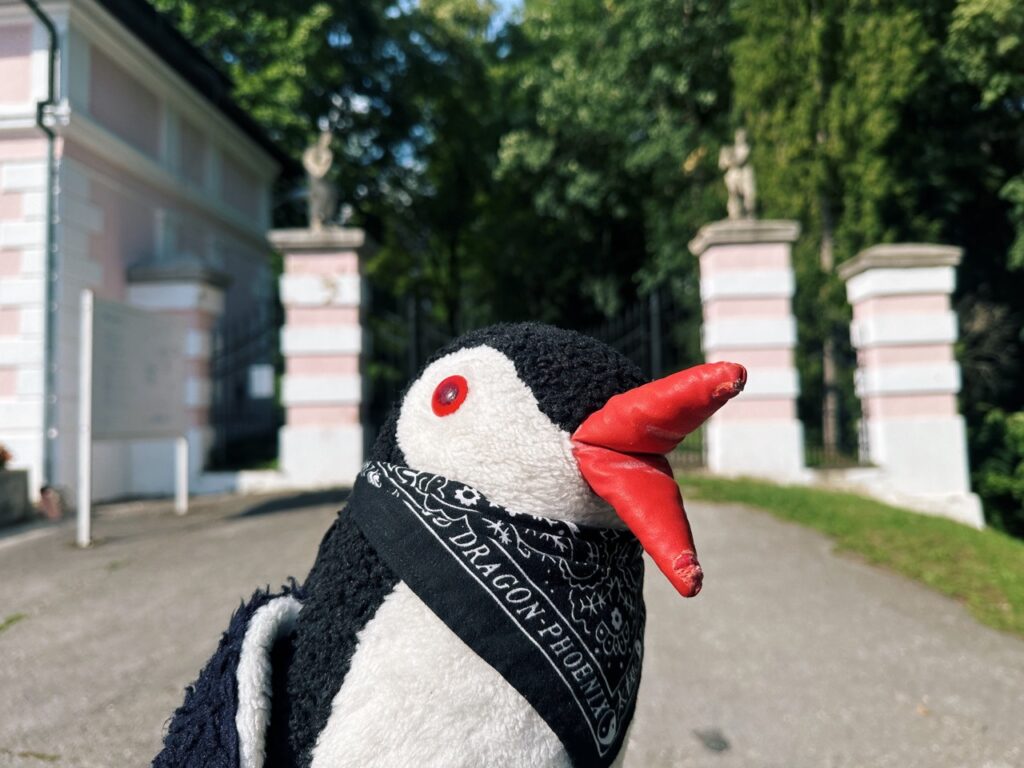
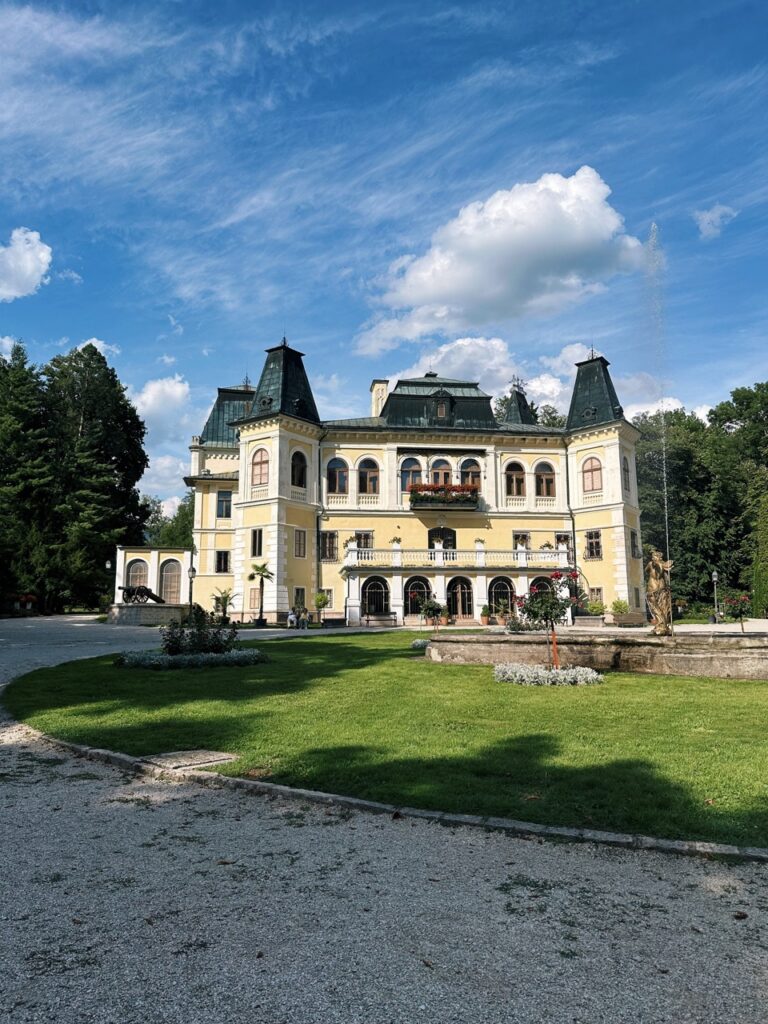
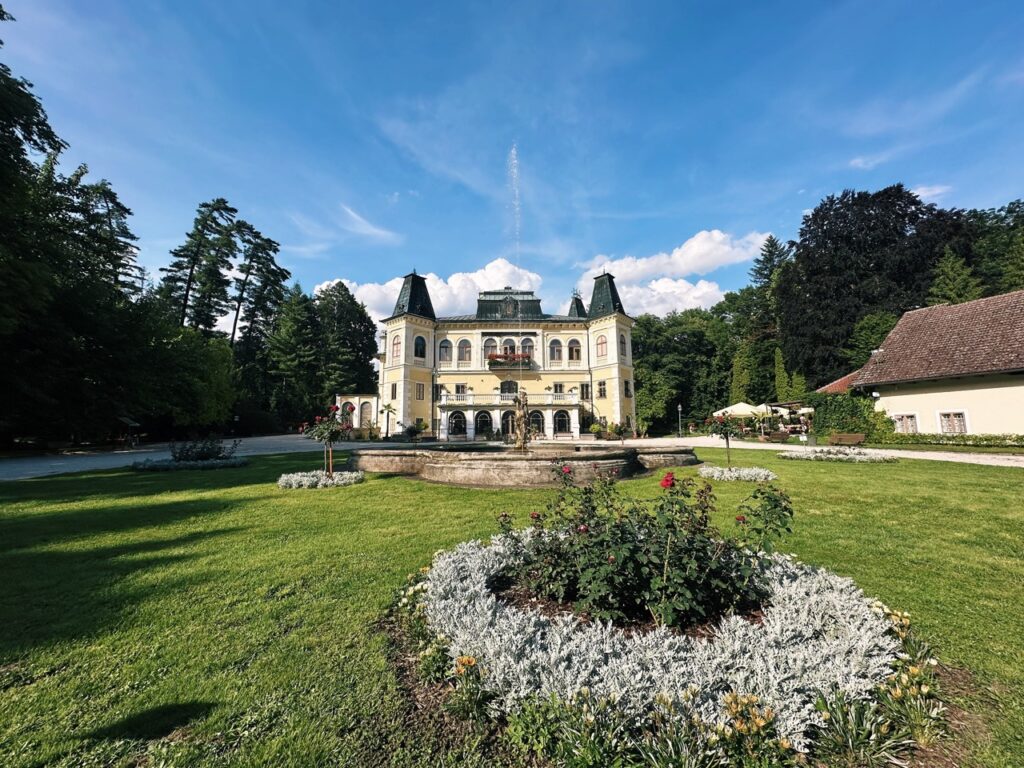
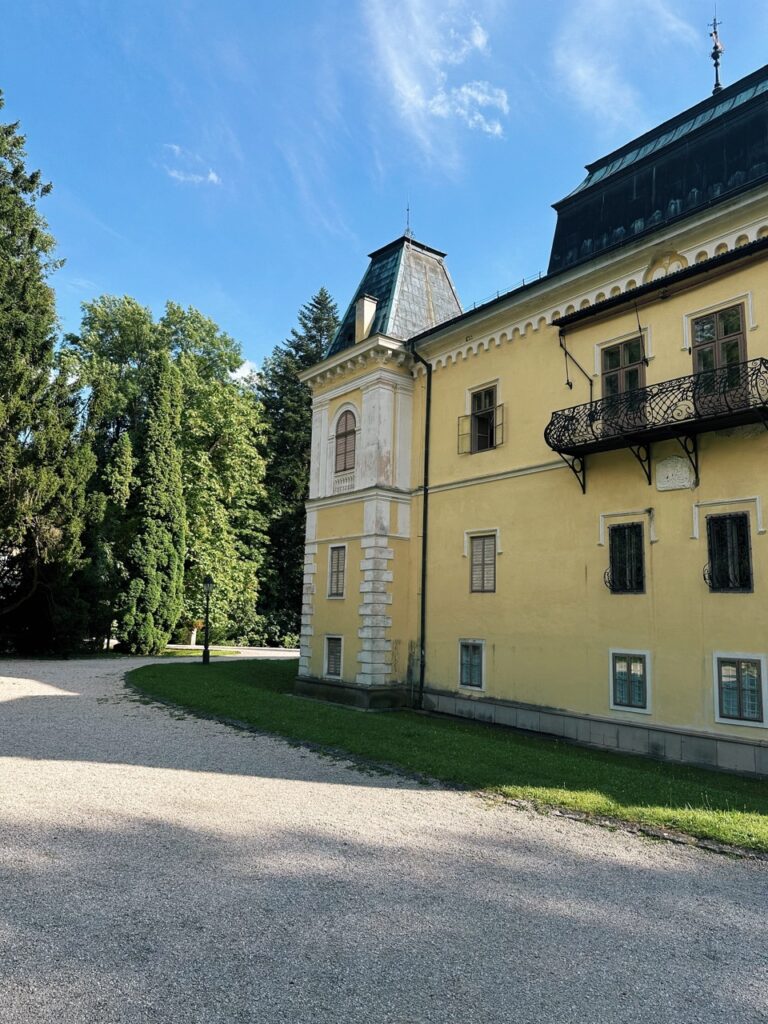
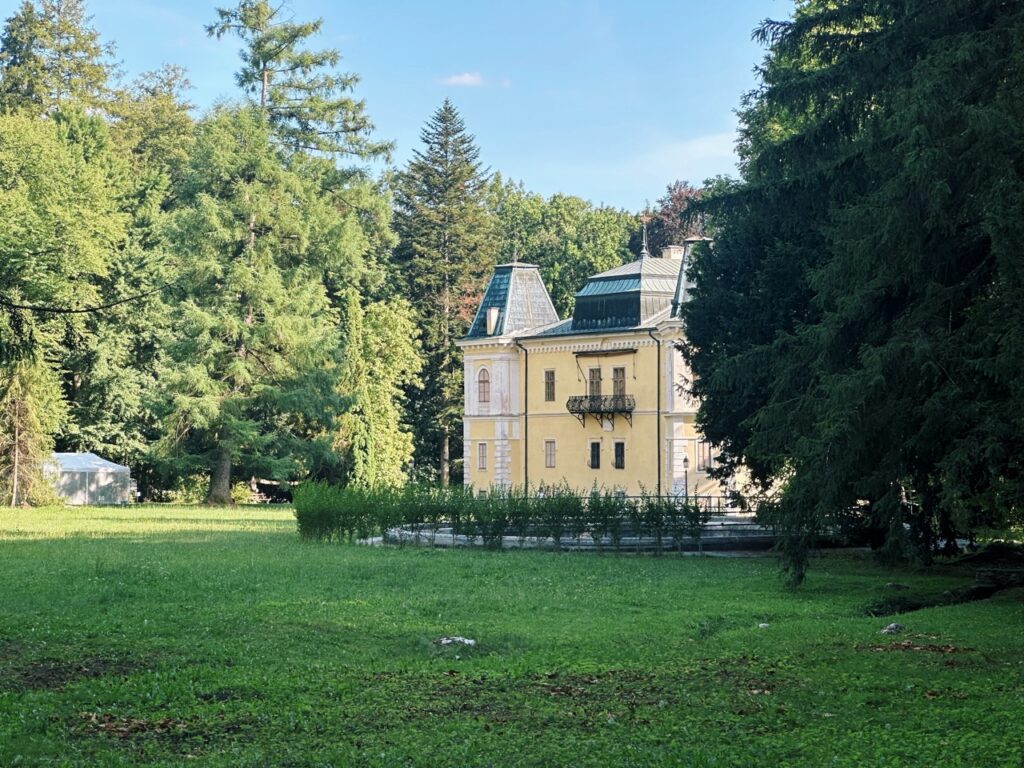
We parked the car at a nearby lot just outside the manor grounds. It’s not part of the château complex, but it’s a short waddle away and easy to spot. Payment is straightforward; you can use a card at the machine or through a mobile app. However, one quirk is that you can only pay for the entire day, even if you plan to stay just a couple of hours. With tickets sorted and cameras ready, we waddled up the gentle path toward the manor. The first glimpse is genuinely striking: the symmetry, the soft yellow façade, the elegant towers. We stopped for a few photos outside, trying to capture the full view, but no image does it justice.
A Stroll Through the English Garden
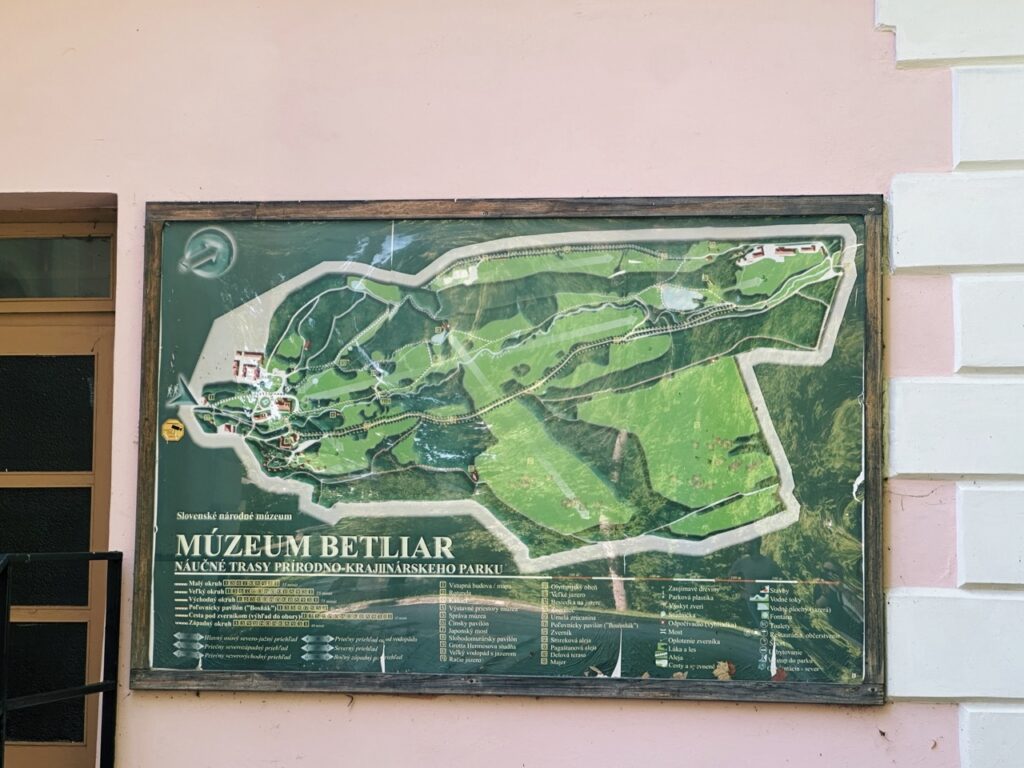
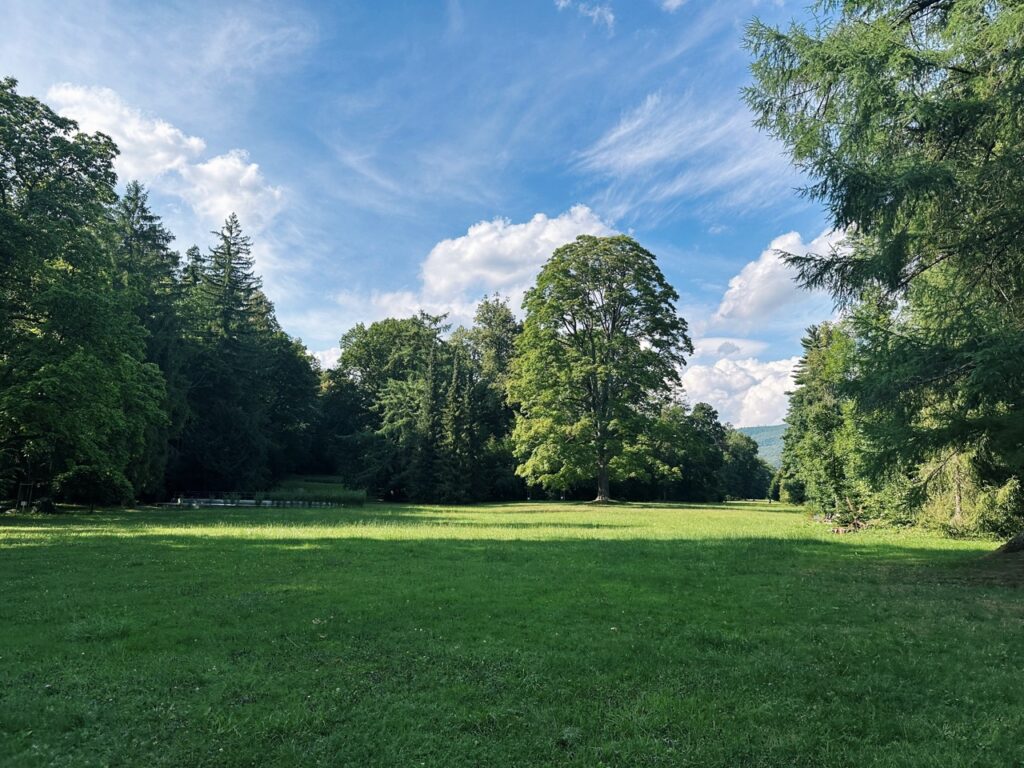
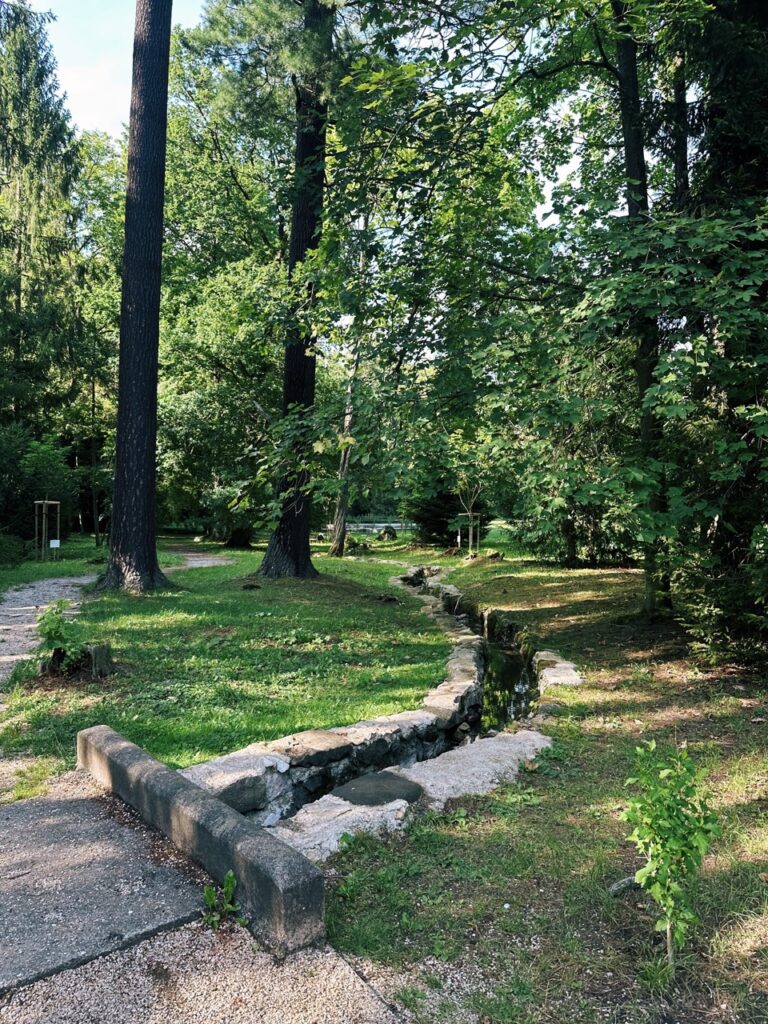
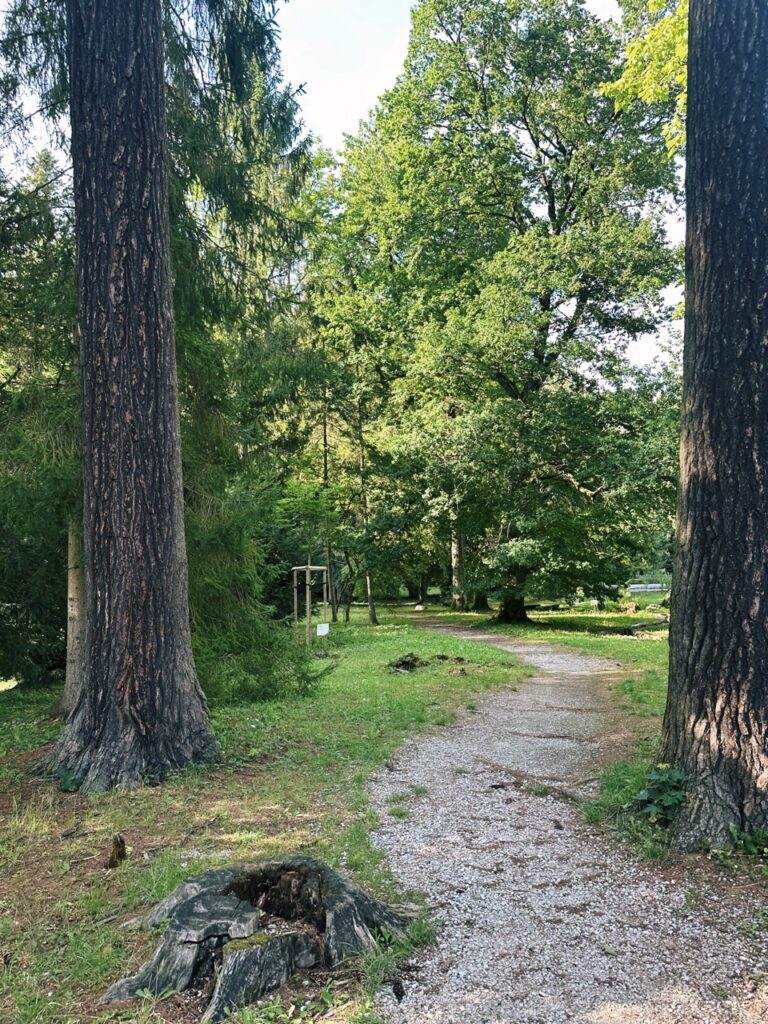
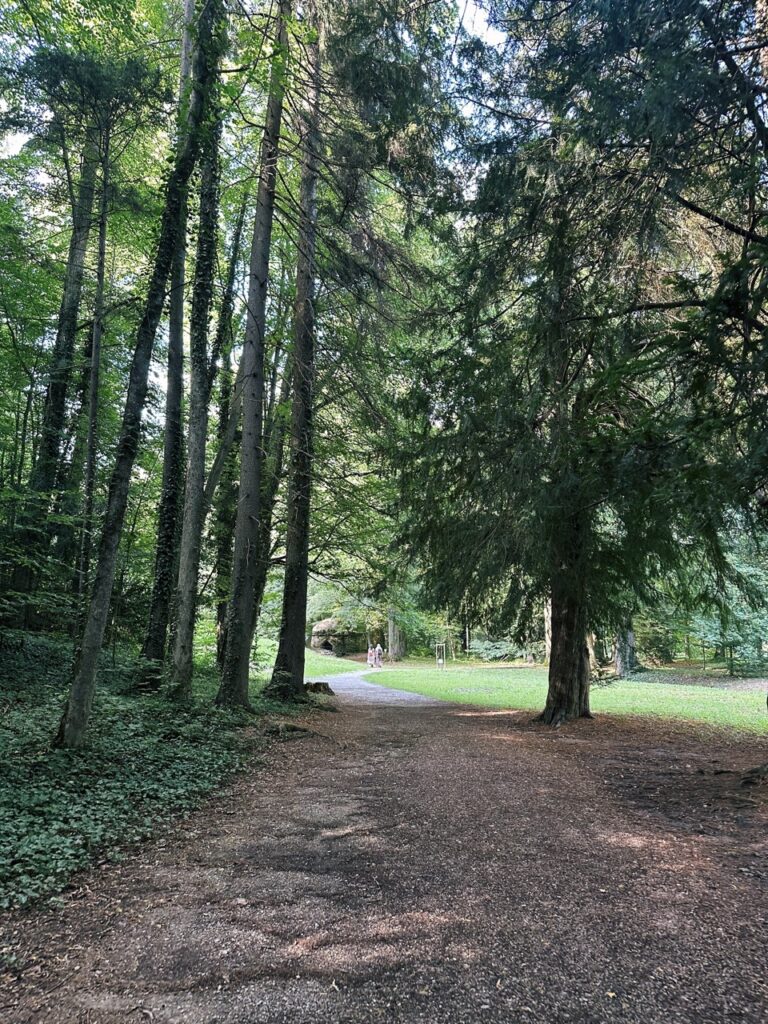
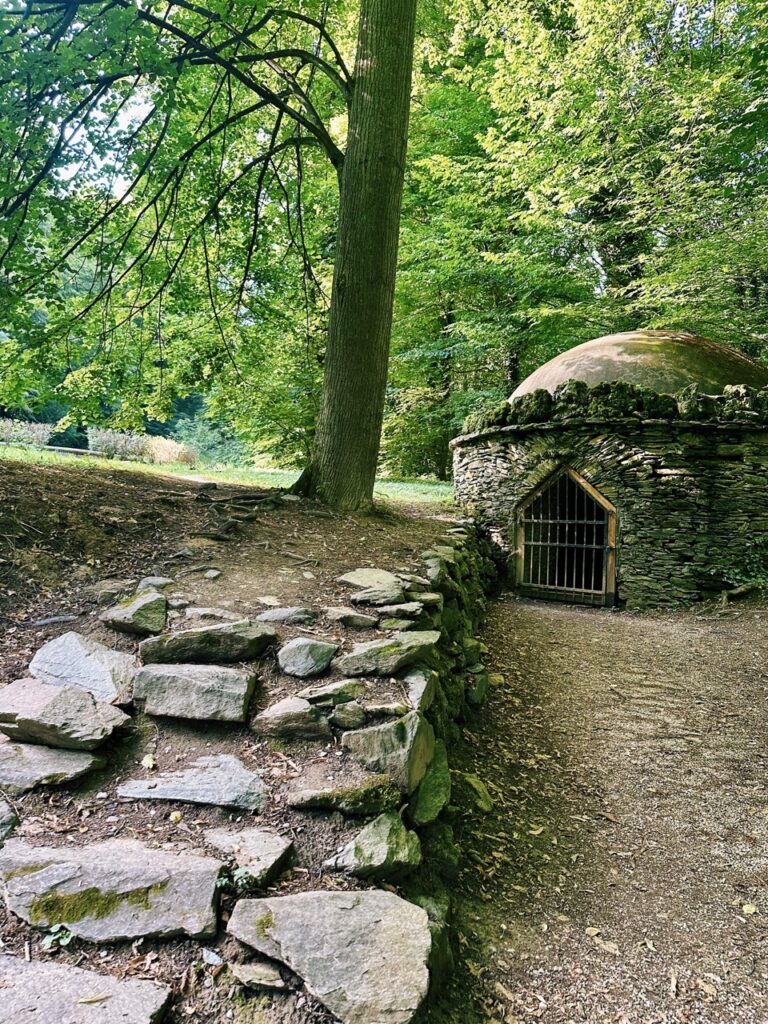
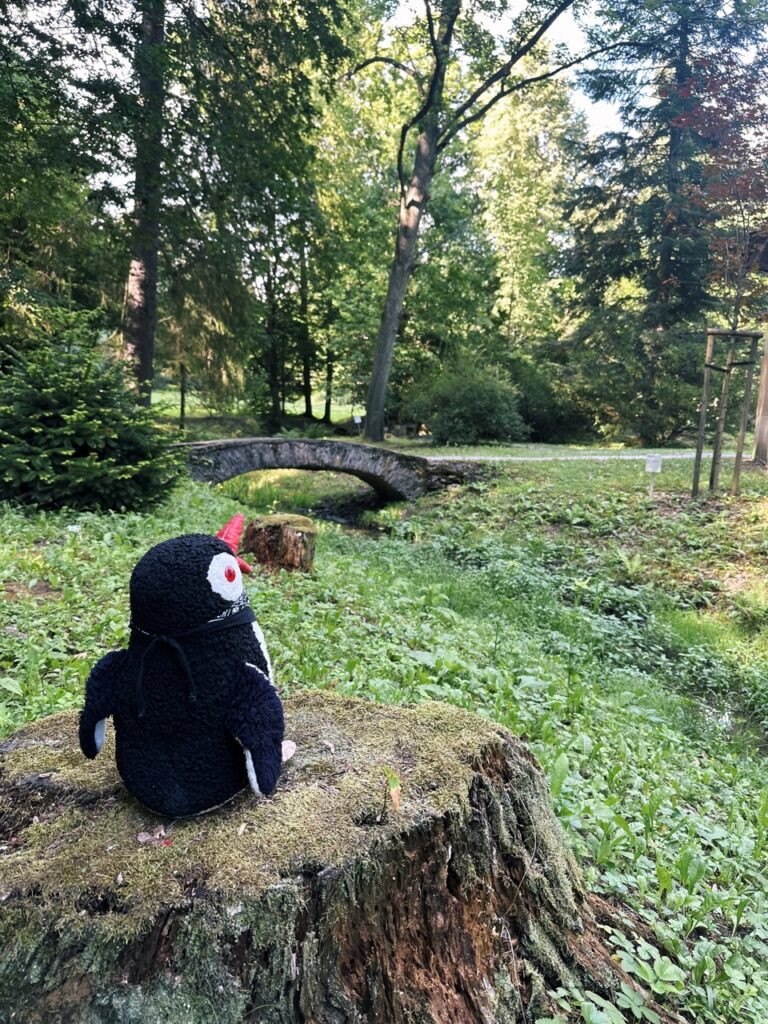
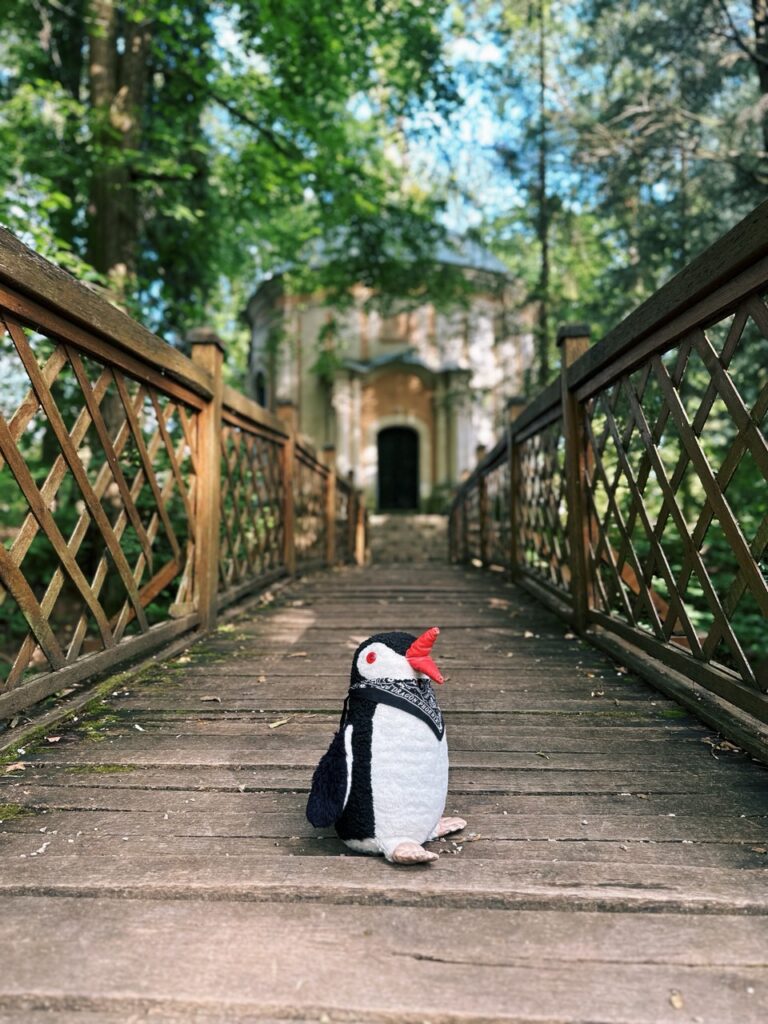
Before waddling into the manor itself, we took time to explore the English-style garden that stretches around the estate. It’s not just a backdrop, it’s a key part of what makes Betliar feel like a complete experience. The paths are wide and shady, lined with exotic trees, gentle streams, and spots that make you pause even without realizing it. You don’t need a map, follow wherever the garden feels like leading you.
Quick Facts About the English Garden
- Size: Approximately 57–80 hectares, one of the largest and best-preserved historical parks in Slovakia
- Style: Designed in the English landscape tradition—naturalistic layout with free-form paths, gentle slopes, and water features
- Origins: Created in the late 18th century, expanded in the 19th century by Count Emanuel Andrássy.
- Highlights:
- An 8-meter-high artificial waterfall, built to add drama to the scenery
- Several decorative ponds with bridges and statues
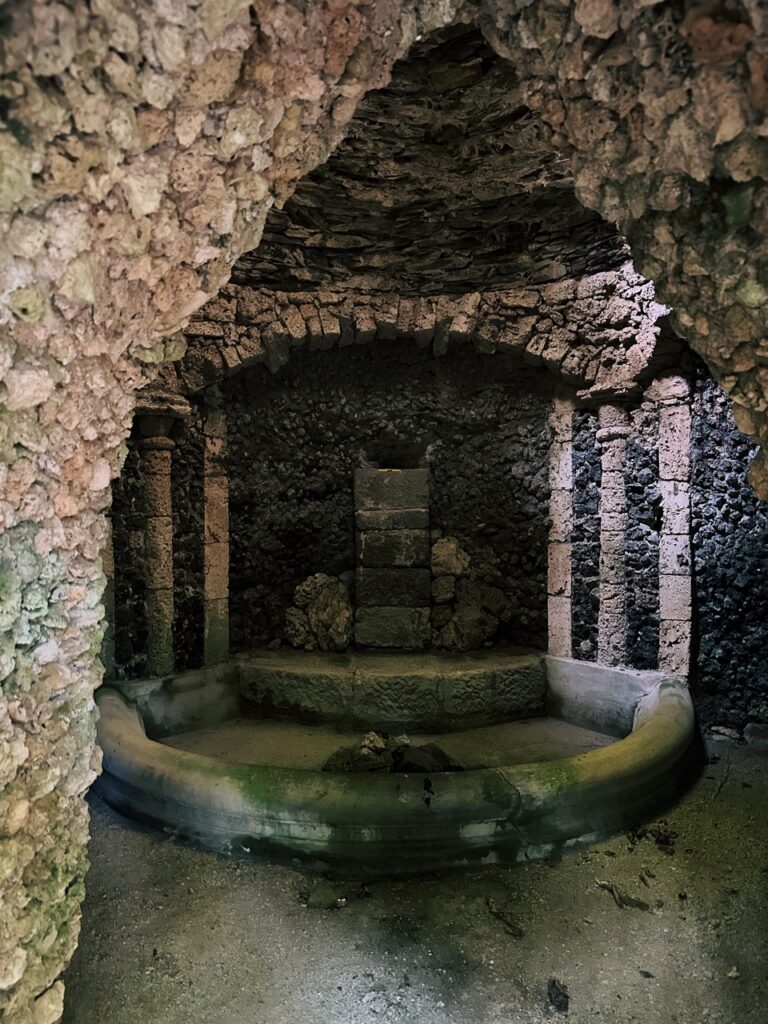
- A romantic grotto, perfect for a quiet pause
- A collection of exotic trees and plants, imported from around the world
- Status: Declared a national cultural monument and part of Slovakia’s most important garden heritage
- Entry: Free and open to the public during normal hours
- Fun fact: The park originally included a mini zoo and a network of hidden paths designed to surprise guests during walks
Plan Ahead or Miss Out (Like We Did)
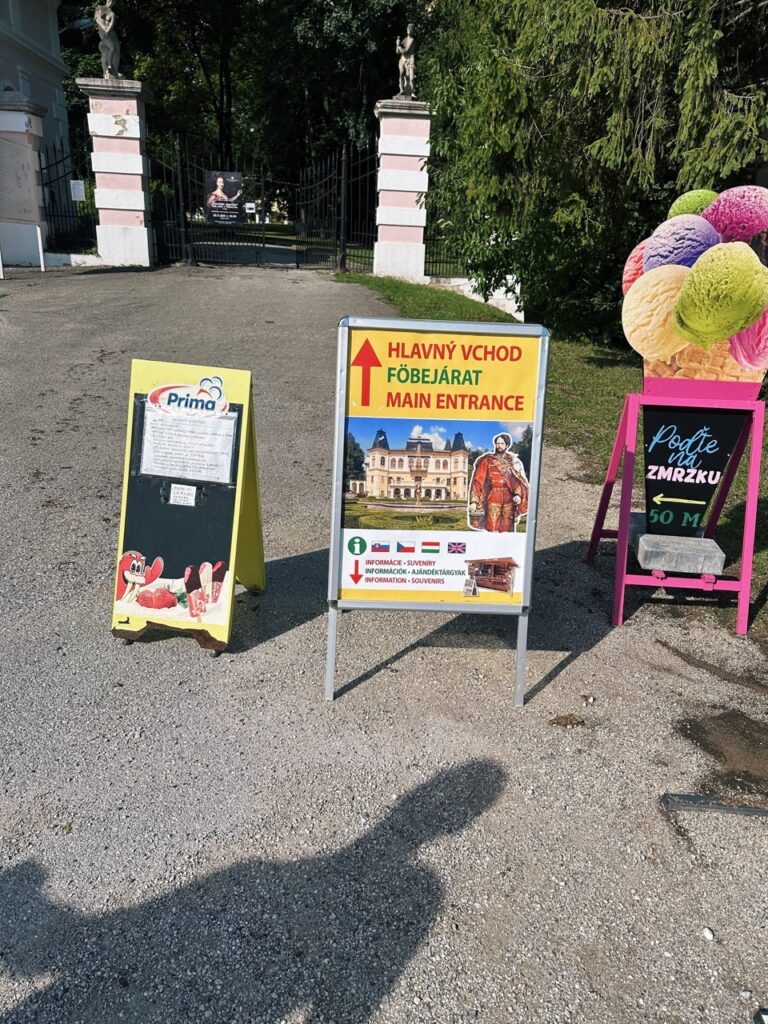
After exploring the English Garden and enjoying the peaceful paths, we made our way to the main entrance of the manor house, ready to step into centuries of aristocratic history. But… no luck. It was already late in the day, and we hadn’t booked ahead. Entry is only possible with a guided tour, and the last one had already left. So we stood there, slightly defeated, taking one last look at the grand exterior and promising ourselves we’d come back better prepared. If you’re planning your visit, here’s our advice: check the tour schedule in advance and book a time slot. Tours typically run every hour, and spots can fill up, especially in high season. Please don’t leave it to chance like we did.
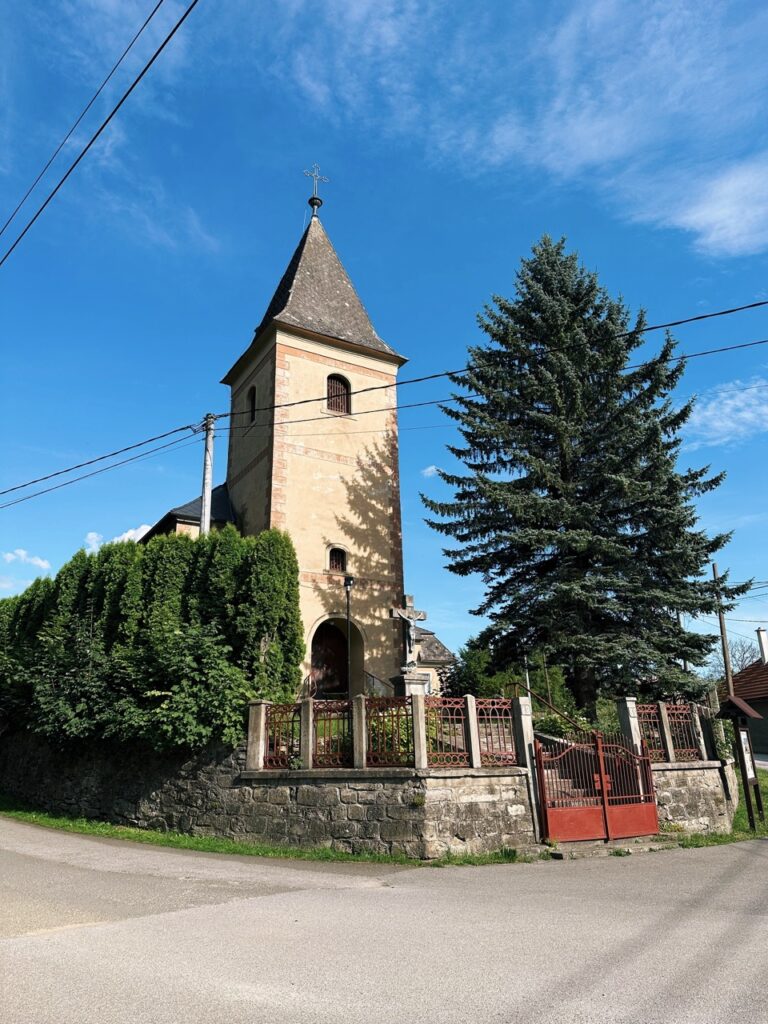
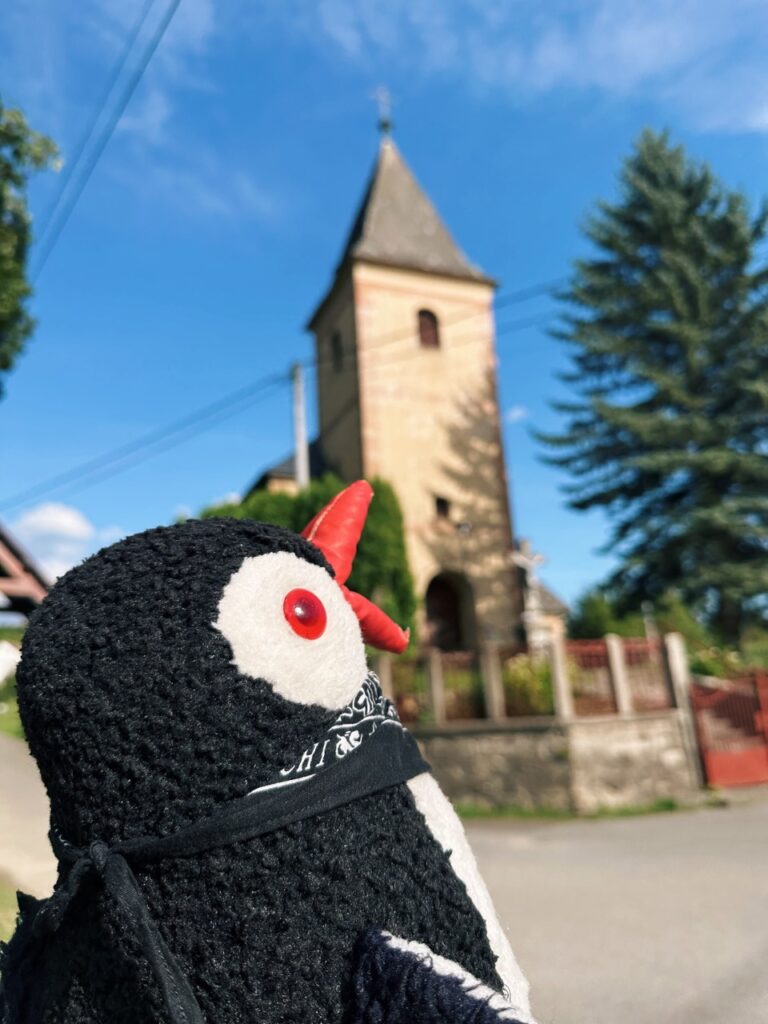
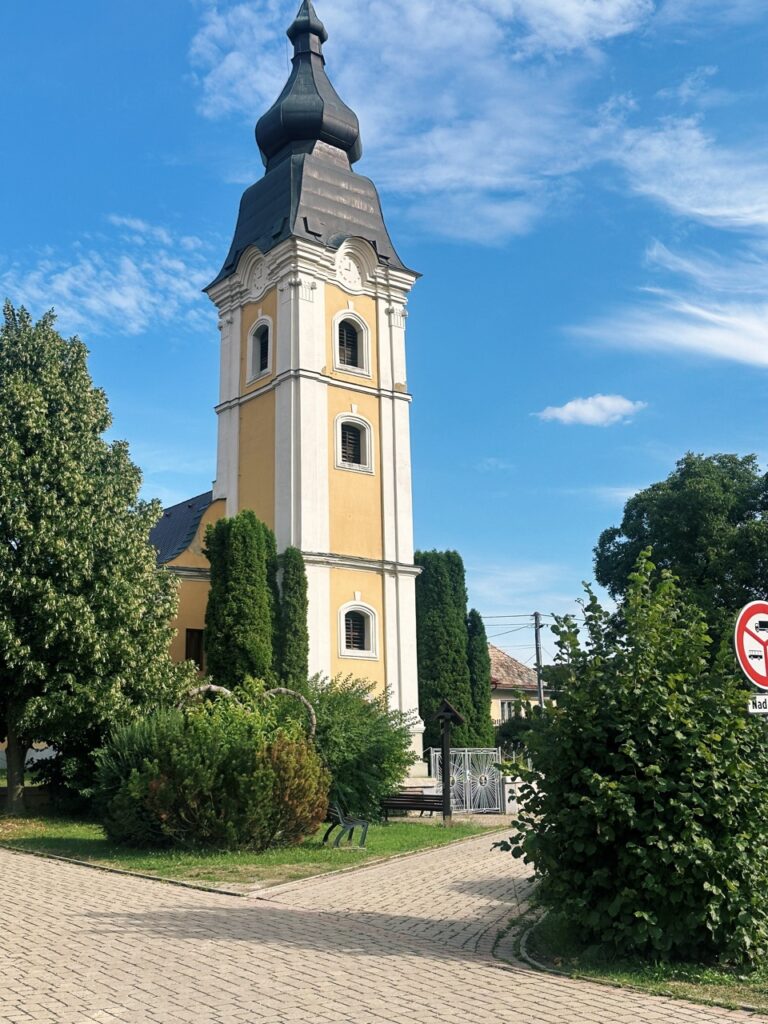
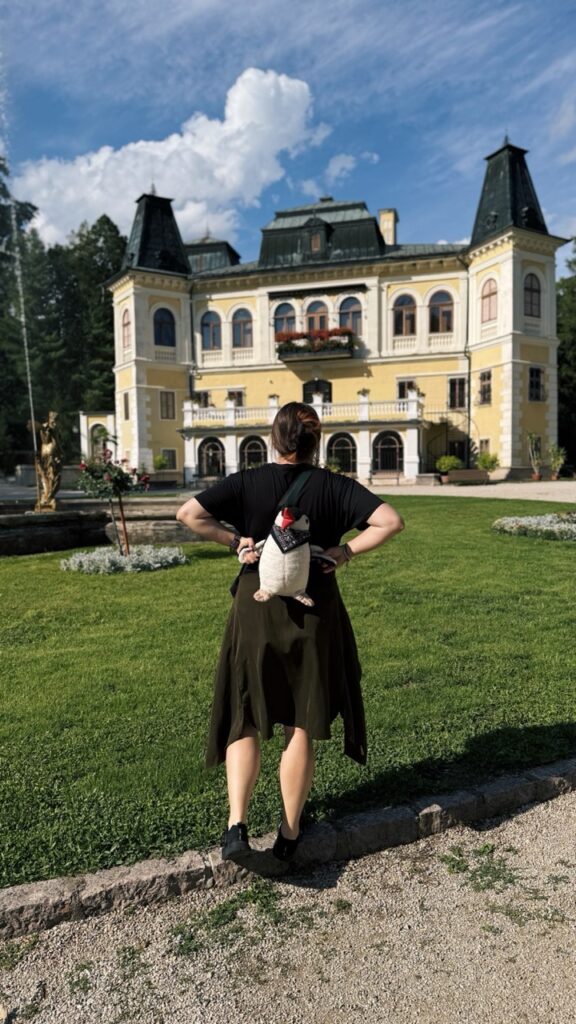
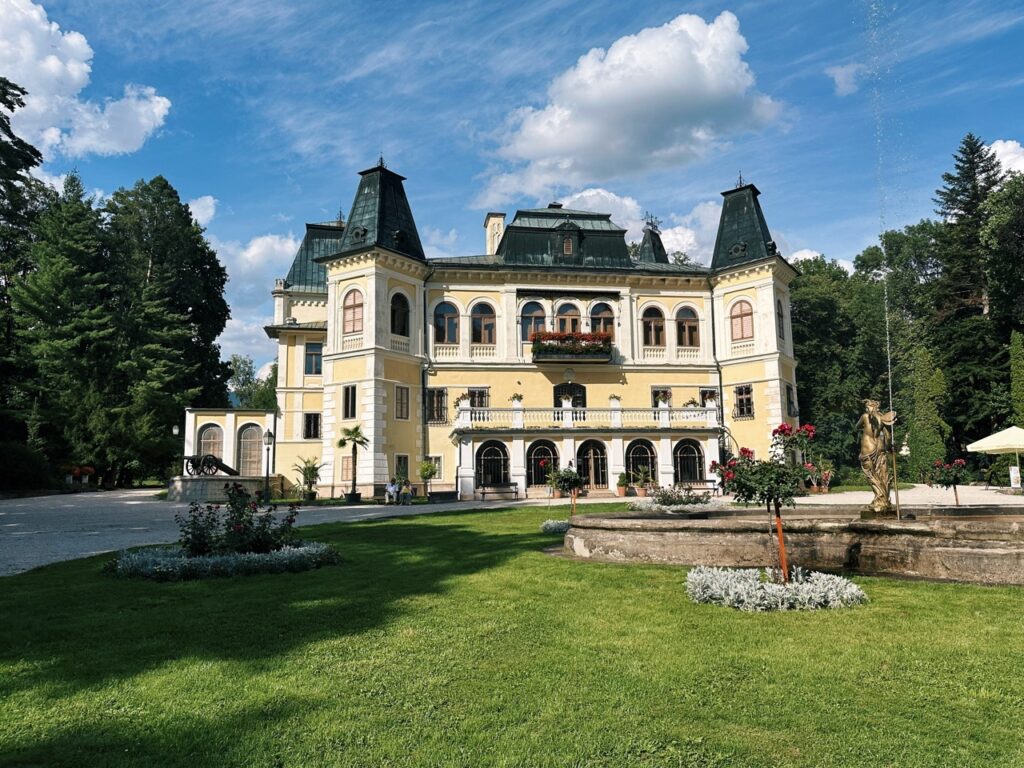
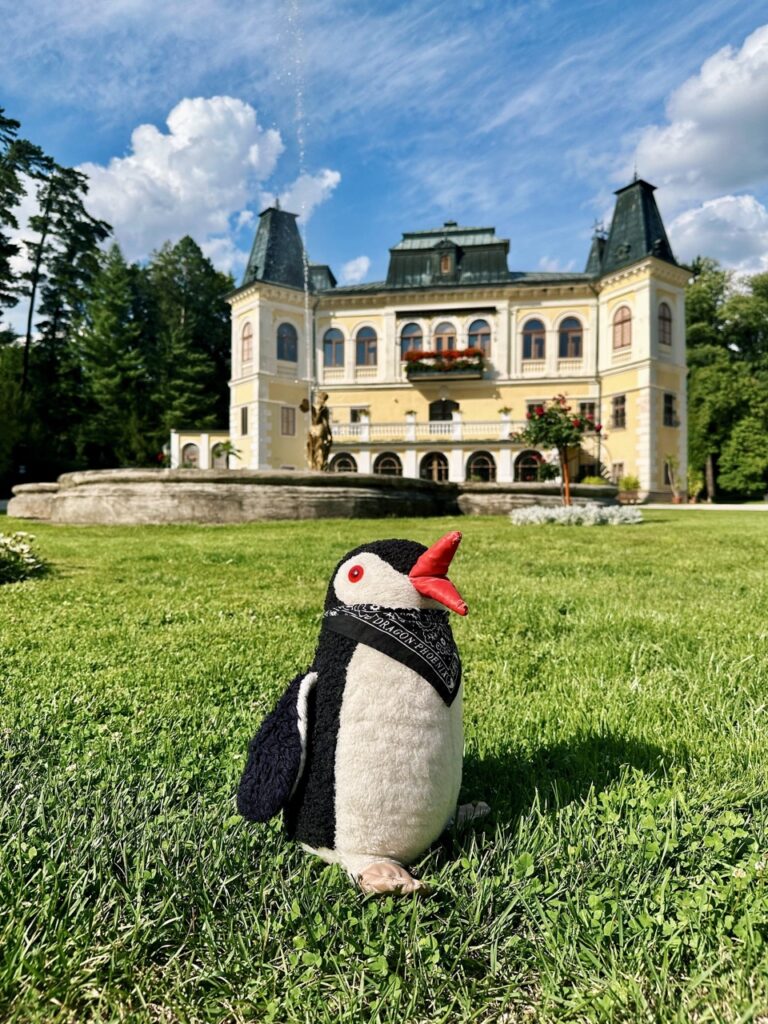
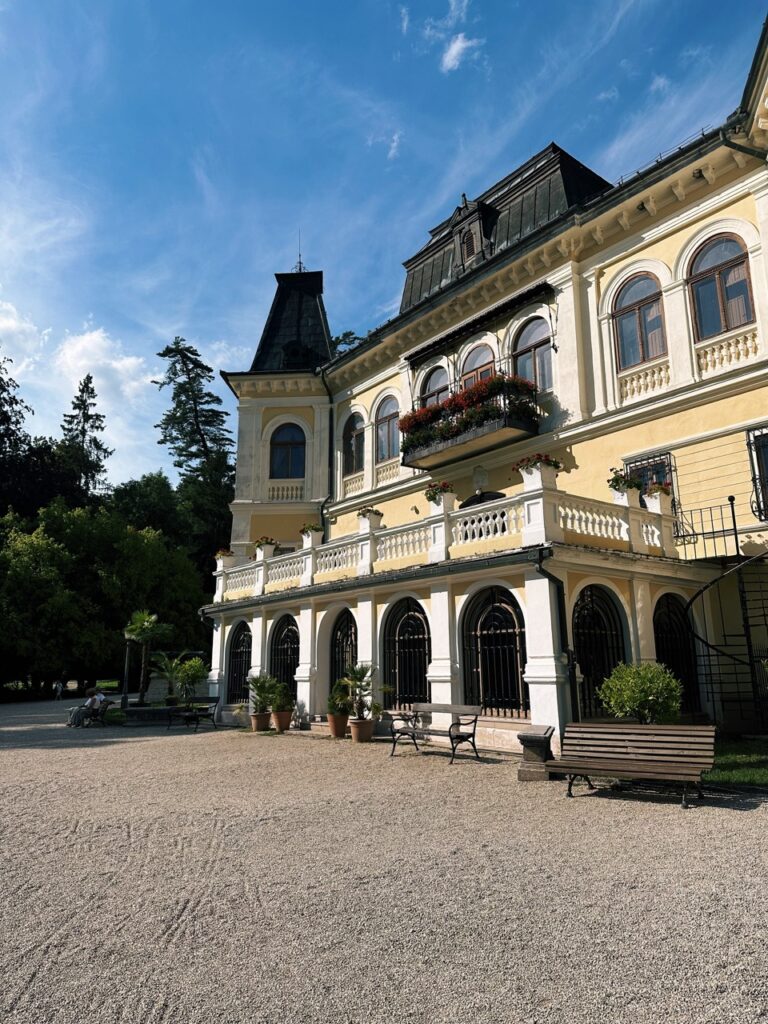
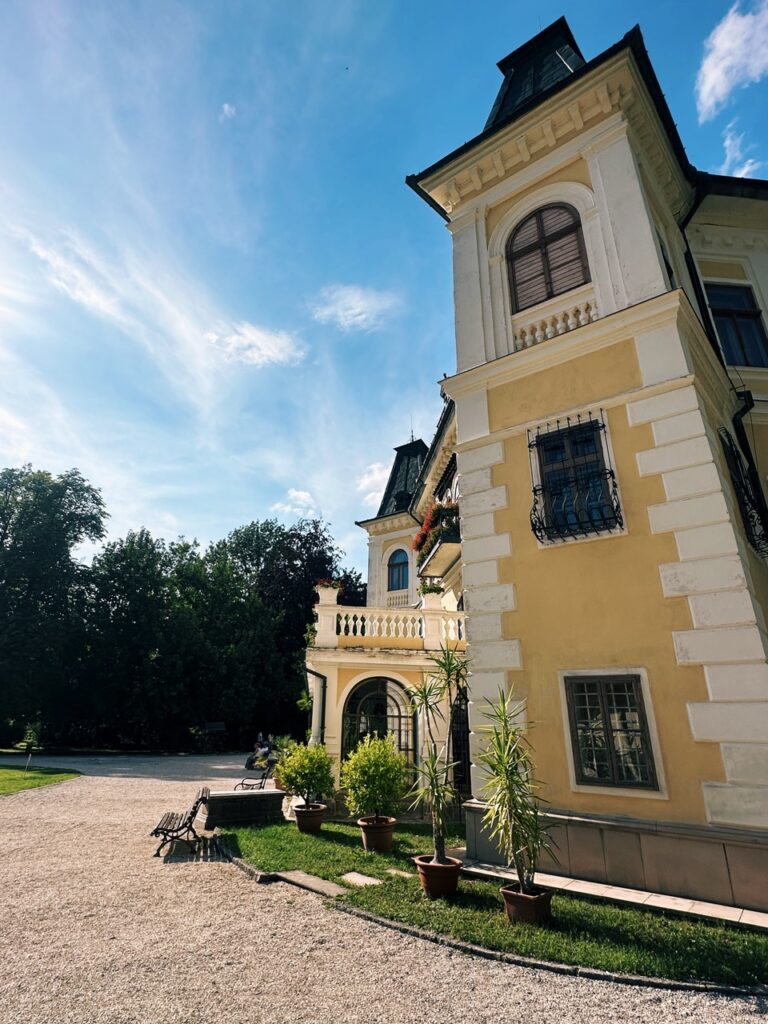
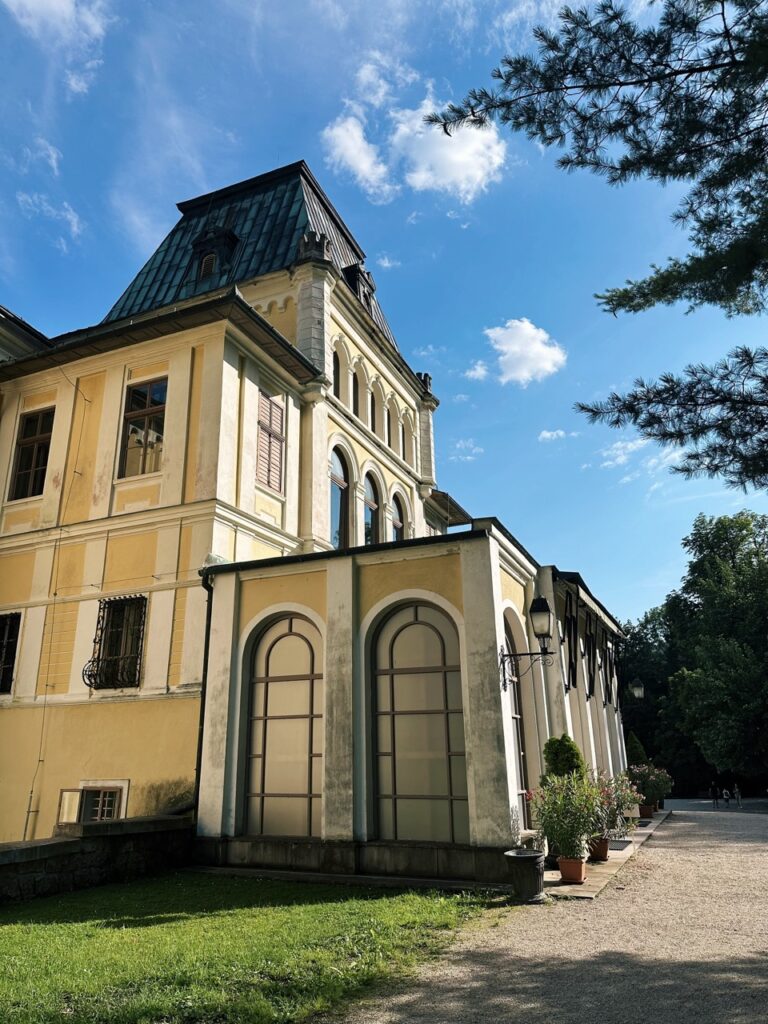
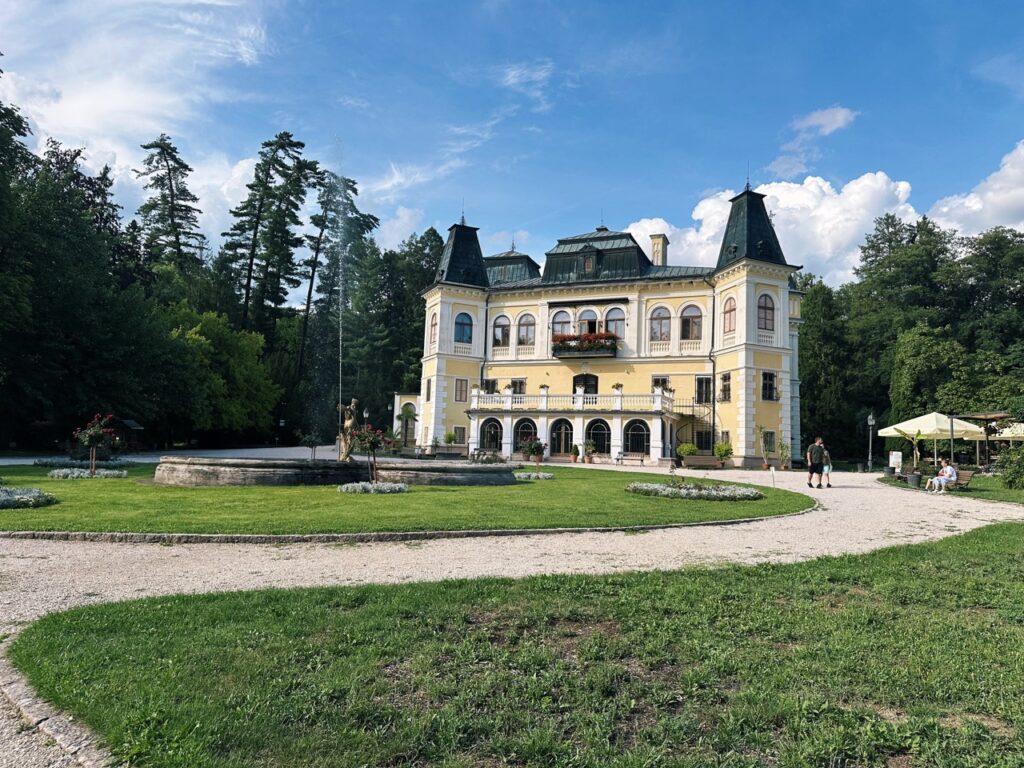
Even though we didn’t make it inside the manor this time, we don’t regret the visit one bit. The exterior alone is stunning, the symmetry, the soft detailing, the way it rises out of the garden like it’s always belonged there. And the English Garden? Peaceful, atmospheric, and full of little surprises around every turn. If you’re in the area, it’s worth stopping by even just to waddle around the grounds, soak in the scenery, and imagine what life might’ve been like behind those grand windows. Sometimes, the outside view is just as memorable.
We hope you enjoy your visit.

This post contains affiliate links. If you click and buy, I might earn a tiny commission, enough to help a penguin keep up its globe-trotting lifestyle. No extra cost to you, just more fish for me. Thank you for supporting the adventure!