Plan your perfect day at Györ Zoo: Hours, Tickets, Animals & Insider Tips
We had Györ Zoo on our checklist for a while. Not because it’s flashy or world-famous, but because we kept hearing from others about how surprisingly good it is. On our latest trip, we finally made it happen. And honestly, it was better than expected. Györ Zoo, officially called Xantus János Zoo, sits right on the edge of one of Hungary’s most underrated cities. It’s a sweet stopover if you’re moving between Budapest and Vienna or crossing over from Czechia. The vibe is calm. The animals are active. And you don’t need a whole day to feel like you’ve seen something great. This is your go-to guide for visiting Györ Zoo, including what to see, admission costs, the best times to visit, and a few tips for making the most of your experience.
Where is Györ Zoo
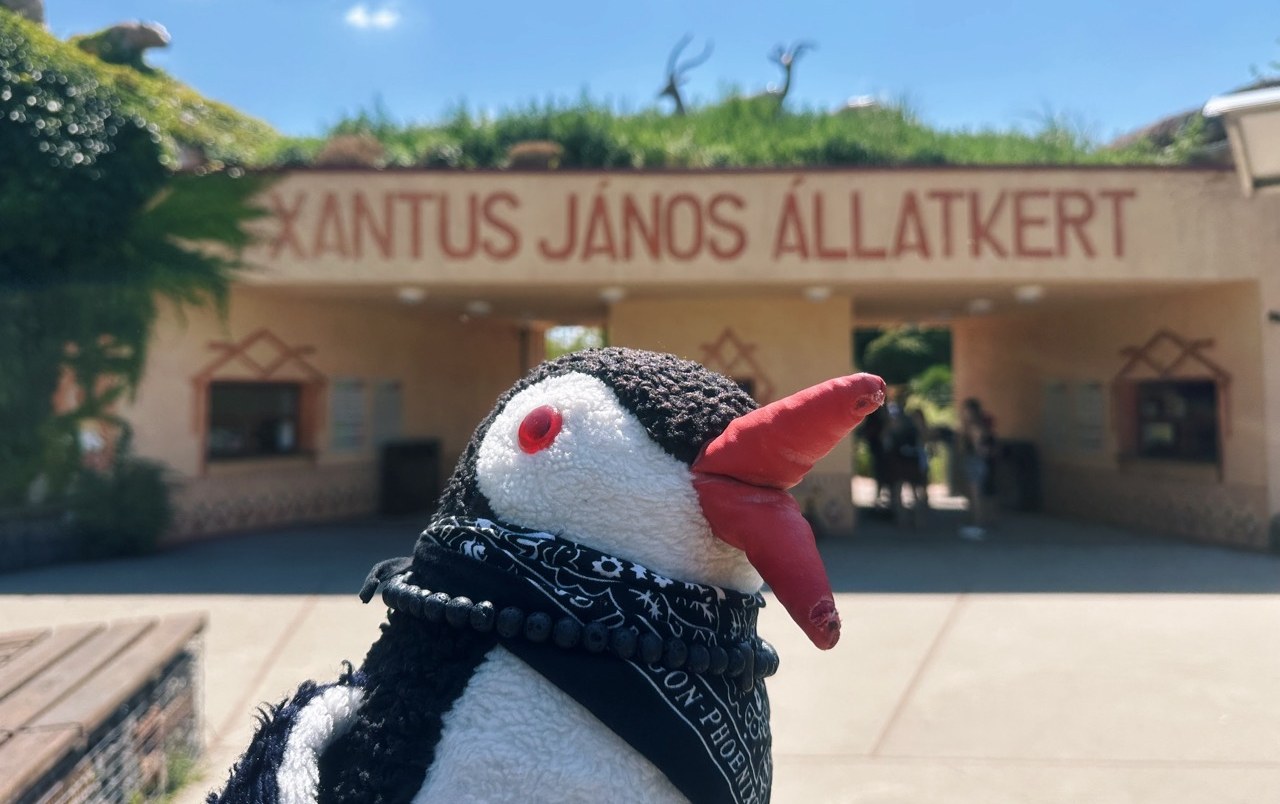
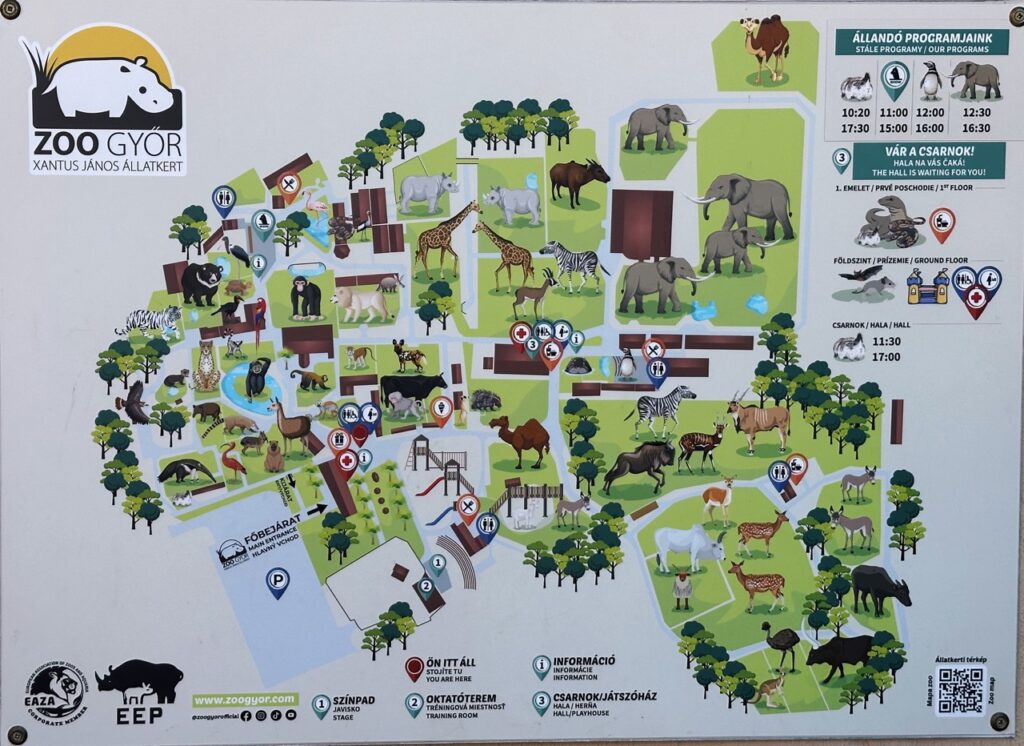
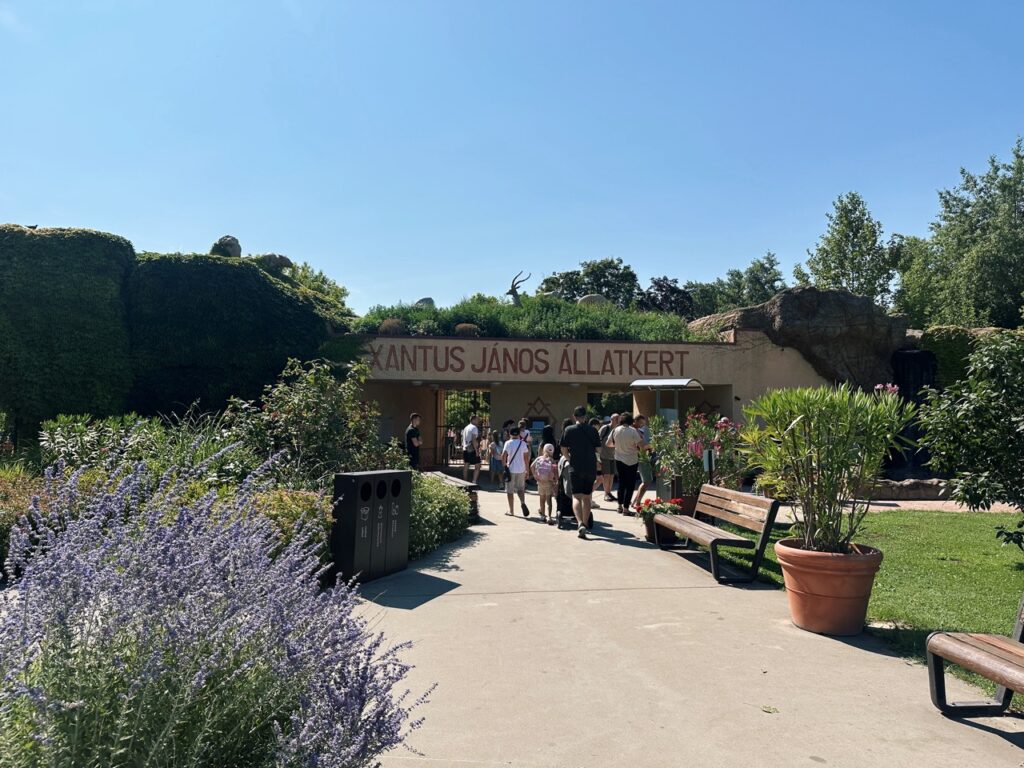
Györ Zoo is right on the edge of Györ, Hungary’s sixth-largest city. You’ll find it near the residential area of Nádorváros, just a quick 10-minute drive from downtown. There’s decent signage and plenty of parking. GPS makes it simple. Just type in “Xantus János Állatkert” and follow the lion paw prints.
How to Get to Györ Zoo
Reaching Györ Zoo is easy, whether you’re traveling by car, train, bus, or private transfer. It’s well-connected to major cities like Vienna, Bratislava, and Budapest, making it a perfect stop on any Central European route.
Getting There by Car
- From Vienna. You drive south on the A4 toward Hungary, switch to the M1 at the border, and follow signs to Győr. The trip typically takes approximately 1 hour and 45 minutes, assuming good traffic conditions.
- From Bratislava. You take the E58/M15 route, then follow the M1 into Hungary. It’s around a 1-hour drive and a straightforward path.
- From Budapest. You head northwest on the M1 or Route 1, take the Győr–Ménfőcsanak exit, and follow local roads to the zoo. Expect about a 1 hour and 15 minutes drive, depending on traffic.
Where to Park at Györ Zoo
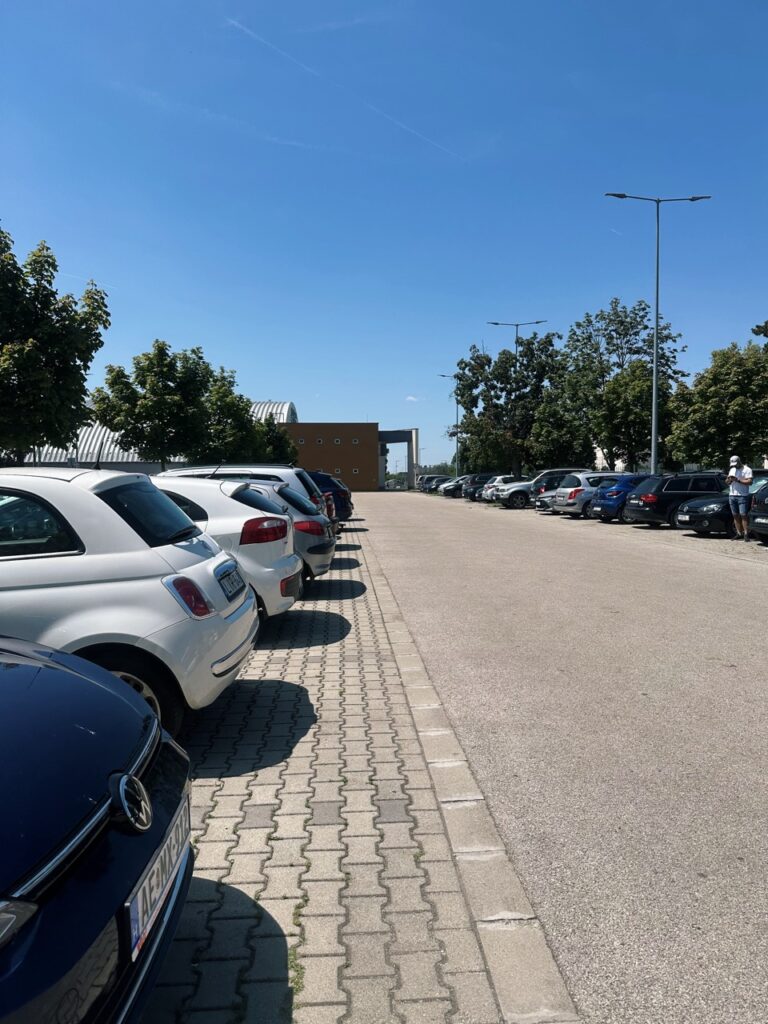
Finding a spot near the zoo is easy and free of charge. The main parking lot sits directly in front of the zoo entrance, and it’s free for visitors. It’s typically not crowded early in the day or later in the afternoon. We used this one and it was perfect.
If the lot is full, street parking is available nearby. Head left at the roundabout from the main entrance, and you’ll spot informal spaces along the road.
For a more secure option, consider the ETO Park garage, located just a 5–7 minute waddle from the zoo. It offers over 2,000 spaces with 3 hours of free parking, then charges 200 HUF/hour (~€0.55), and it even features EV charging stations.



Getting There by Train
You board an international train from Vienna, Bratislava, or Budapest to Győr. Frequent regional and intercity trains service this route. From Győr’s central station, local buses (lines 7 or 13) run to the zoo every 15–20 minutes. You can also hop in a taxi for a 10-minute trip from the station.
Getting There by Bus
Direct bus options run from Bratislava and Vienna to Győr city center. Buses arrive at the main terminal near the train station. From there, you catch a local line or taxi to the zoo. Expect a total travel time of about 2 hours from Vienna or Bratislava, including a transfer in Győr.
Train and bus tickets from OmioShows Omio’s own box, which can set Omio cookies.
Private Transfers
Private shuttle companies and ride services operate between major cities and the Györ Zoo. You book online in advance, and a driver picks you up at your hotel or airport. Door-to-door service means no waiting at stations. It’s the easiest, though priciest option when traveling in groups or with kids.
Opening Hours & Ticket Prices for Györ Zoo
Here’s everything you need to know about when the zoo is open and what it costs to get in:
Opening Hours
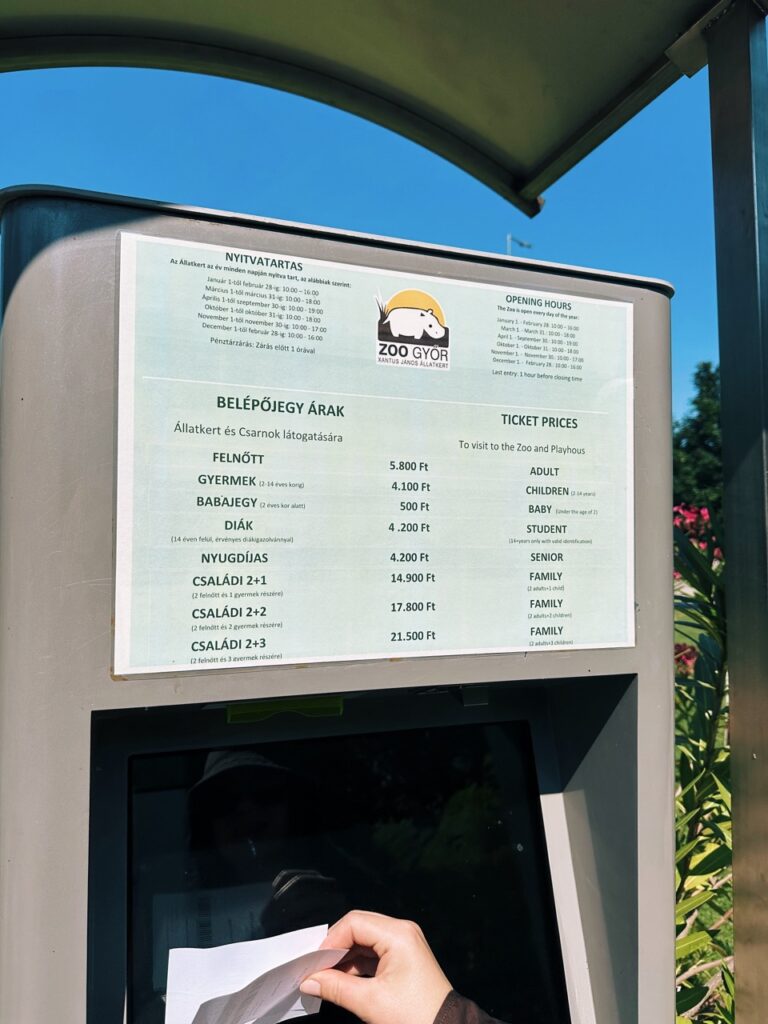
- January, February, December: 10:00 – 16:00
- March: 10:00 – 18:00
- April to September: 10:00 – 19:00 daily
- Zoo hall & indoor playhouse remain open later, until 19:00, even when the outdoor zoo closes earlier.
The last entry is usually one hour before closing.
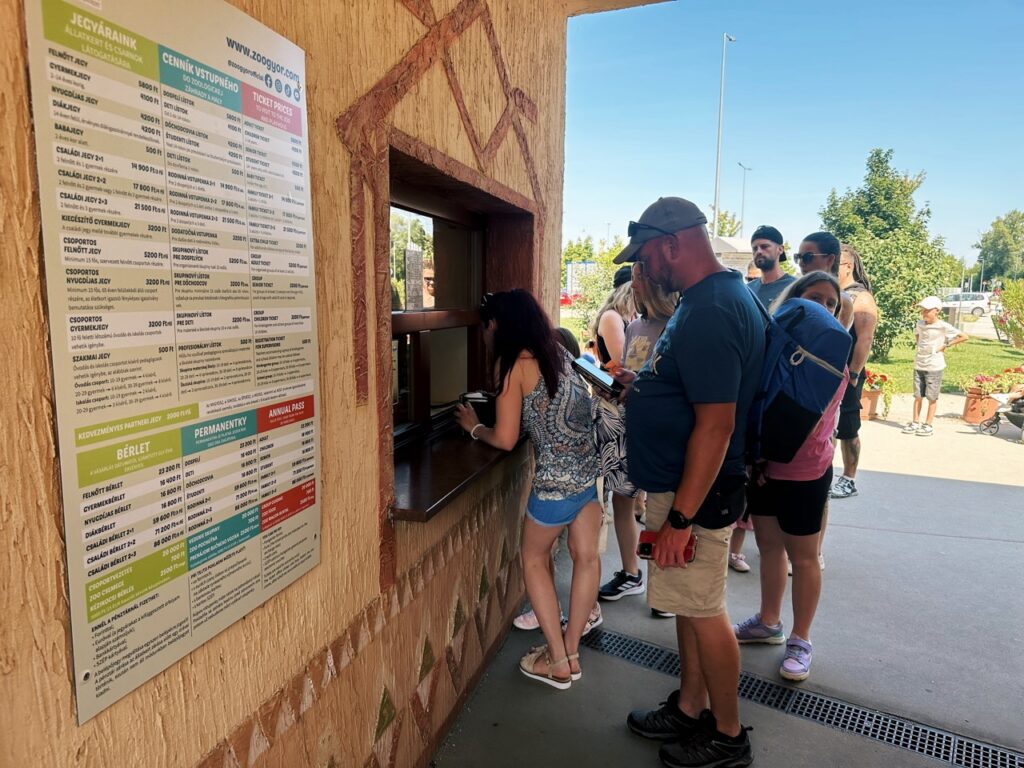
Ticket Prices
- Adults (18–64): ~2,600–2,700 HUF
- Children (2–14): ~1,800 HUF
- Students / Seniors: ~2,000 HUF
- Under 2 years: Free entry
- Penguins: Free entry
- Family ticket (2 adults + 2 children): ~8,200 HUF
Always check the official websites for updates on changes in opening hours or ticket prices.
Facilities & Amenities
- Interactive playground. A large Sahara-themed play area for kids, inspired by desert explorer László Almásy, offers slides, climbing structures, and pit stops that blend seamlessly with the zoo landscape.
- Indoor children’s hall. A cozy indoor play and learning space with educational displays, perfect for rainy days or cooler months.
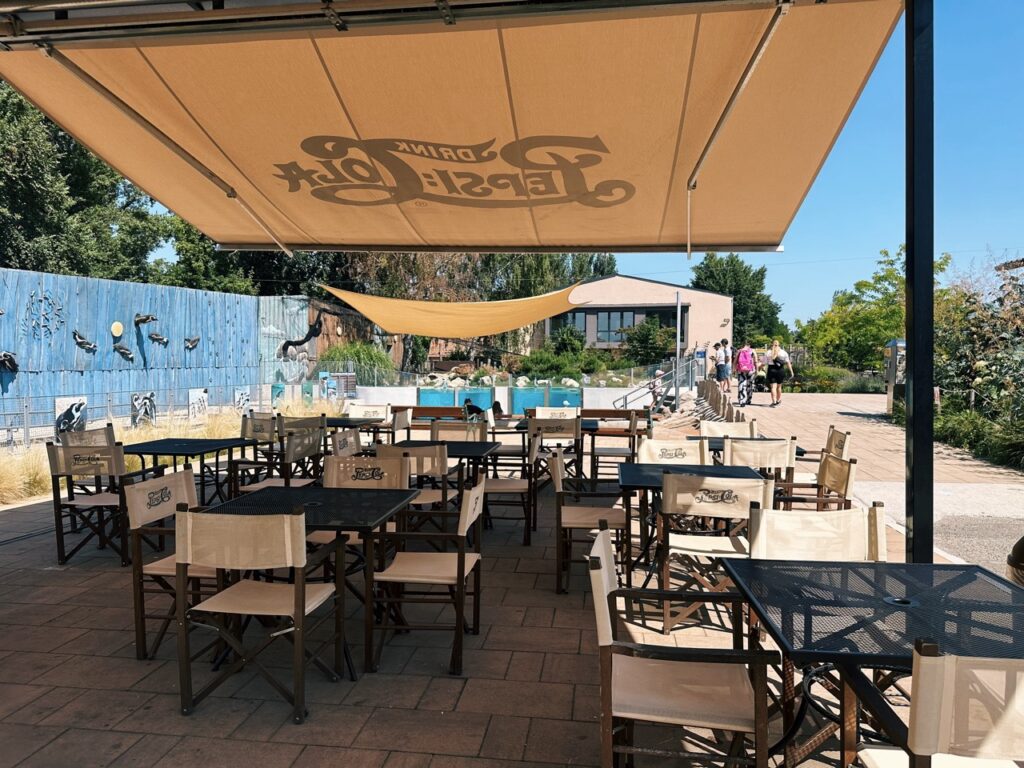
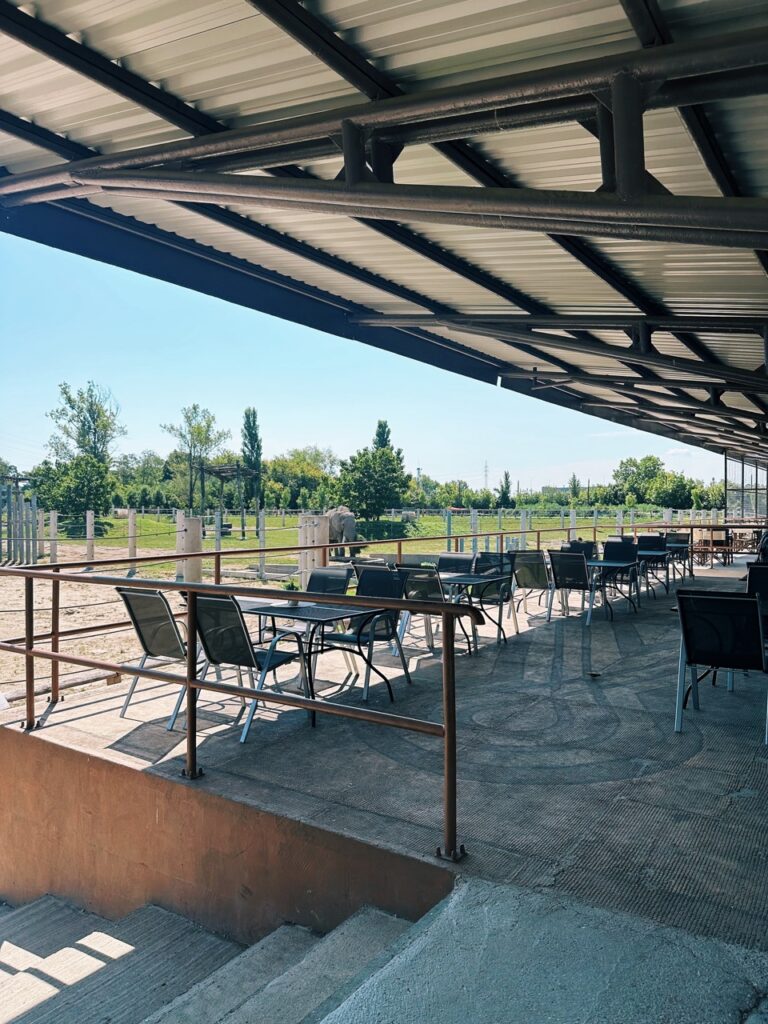
- Café and snack bar. A small but well-stocked spot near the center of the zoo, offering sandwiches, coffee, soft drinks, ice cream, and packaged snacks. Tables and shaded seating make it easy to pause for lunch or a refreshment.
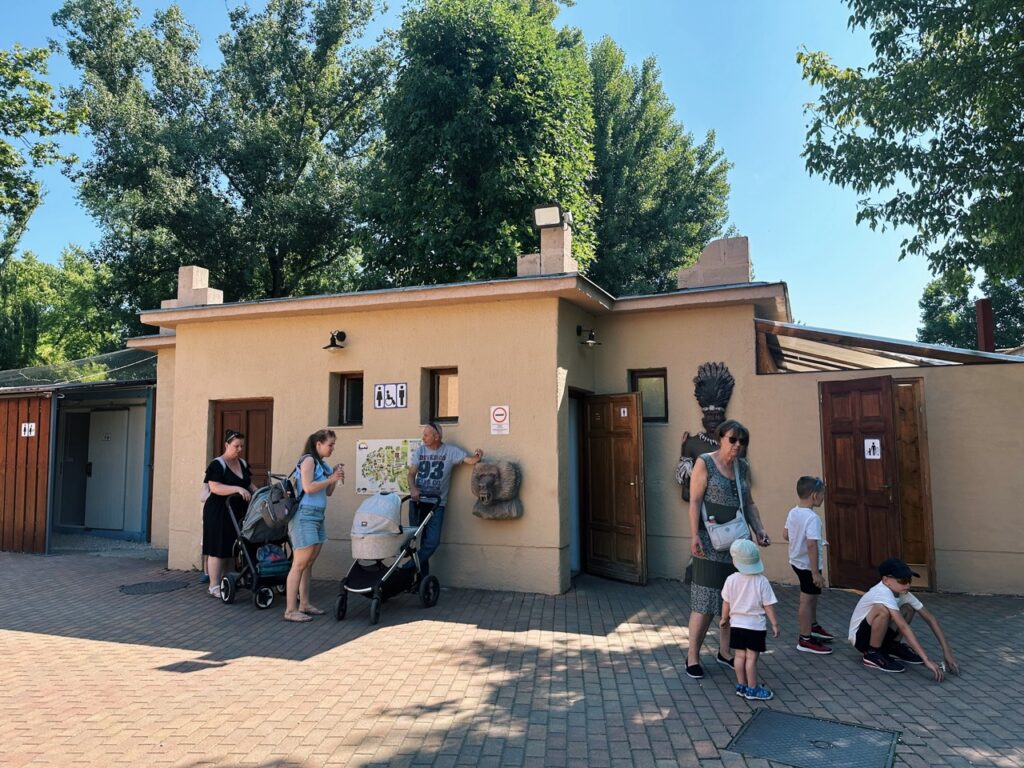
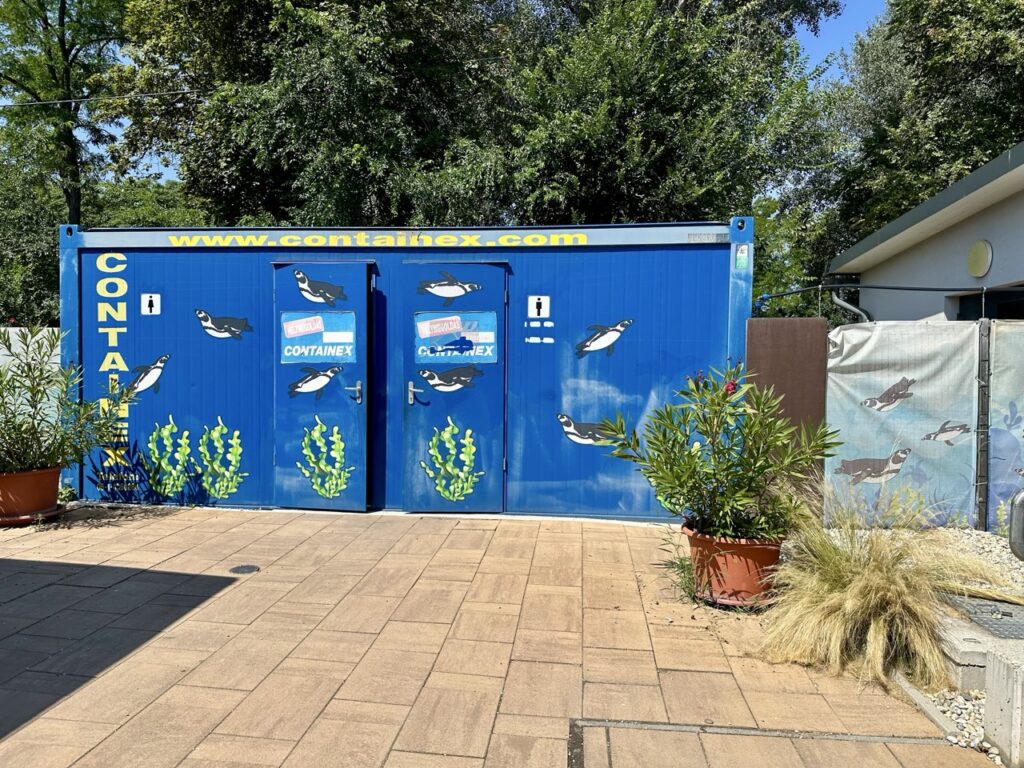
- Restrooms. Clean toilets are located near the entrance and midway through the zoo.
- Gift shop. Located by the exit, it offers plush toys, magnets, eco-friendly bags, and simple educational souvenirs themed around zoo animals and conservation.
- Animal feeding areas. Stations where visitors can buy feed and interact with deer, giraffes, and other friendly species are a highlight for families with kids.
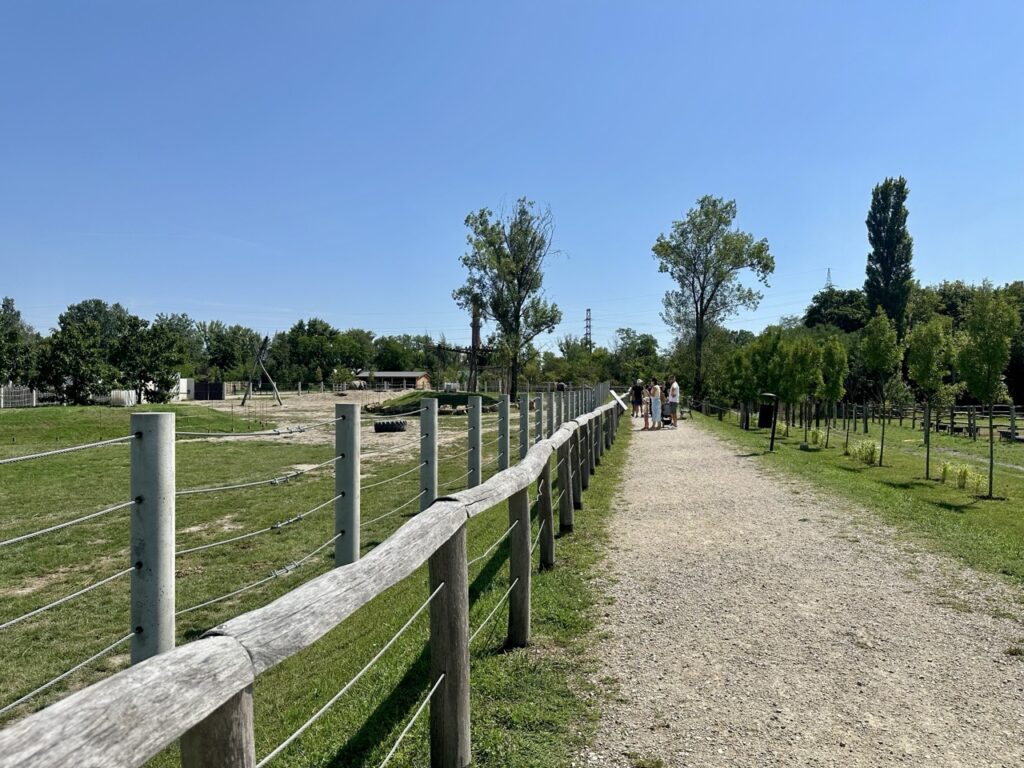
- Flat, stroller-friendly pathways. Most paths are level and wide, making them accessible to strollers and wheelchairs. A few areas may have a slight slope, but overall, it’s easy to navigate.
History of Györ Zoo
- 1962 – Started as a small wildlife park in Püspökerdő forest near Győr, showcasing local animals.
- 1966 – A major flood destroyed the original animal enclosures; most of the collection was lost.
- 1967 – Officially reopened on a new, safer site as “May 1 Culture Park,” featuring animals and an amusement area.
- 1970s–1980s – Introduction of exotic species, construction of an aquarium and terrarium, and new enclosures for big cats.
- 1985 – Received official zoo status and became part of the Győr Leisure and Sports Center.
- 1997 – Rebranded as “János Xantus Zoo,” named after the 19th-century Hungarian zoologist and explorer.
- 2007 – Celebrated its 40th anniversary with major renovations and modernized enclosures.
- 2009 – Became a nonprofit LLC focusing on conservation, education, and visitor experience.
- Today – Home to over 700 animals from more than 100 species, including lions, giraffes, monkeys, and reptiles.
Who Was Xantus János, and Why Does the Zoo Honor Him
Xantus János, also known by his English name John Xantus de Vesey, was a Hungarian zoologist, ethnographer, and explorer. Born in 1825 in southern Hungary, he joined the 1848–49 revolution before fleeing to the U.S. as an exile. There, he worked as an army hospital steward and began collecting specimens for the Smithsonian and other institutions. His naturalist career flourished with extensive fieldwork across North America and Asia, including an Austro-Hungarian expedition in Southeast Asia. In 1866, he returned home to become the director of the Budapest Zoo and later the curator of ethnography at the Hungarian National Museum. He published travel narratives, described numerous new species (many of which bear his name), and reshaped museum and zoo science in Hungary. Naming the zoo after him recognizes his legacy as the country’s first significant zoo director, a scientific collector, and a pioneer in conservation and public education.
Fun & Fascinating Facts About Györ Zoo
- Officially called the Xantus János Zoo, it is named after the renowned Hungarian zoologist.
- Covers about 4 hectares of land (around 10 acres)
- Home to around 700 animals
- Represents over 100 species from five continents
- Actively involved in European breeding and conservation programs
- Hosts big cats like lions, tigers, leopards, and jaguars
- Features a large petting zoo and animal feeding zones
- Indoor exhibits include a tropical house, reptile pavilion, and aquarium
- Also has an indoor playroom and a desert-themed playground
- The entire zoo is wheelchair and stroller accessible
- Great in all weather, many animals are indoors during winter or rain
- Shaded paths and benches make it ideal for slow travel days
Best Time to Visit Györ Zoo
If you ask any zoo-loving traveler, they’ll almost always say the early hours are the best, and Györ Zoo proves it. Arriving just after opening (around 9 AM in summer or 10 AM in winter) gives you three key benefits:
- Animals Are at Their Peak. Early in the morning, many species are energetic and curious. You’ll see lions pacing along their enclosure, monkeys swinging and screeching, and giraffes eagerly eating, especially during feeding times that often occur mid-morning.
- Cooler Temperatures = Happier Animals. During the hotter months (April–September), animals tend to retreat indoors as the midday heat rises. A morning visit means you catch them roaming outdoors, basking in the fresh air, showing more natural behaviors—and giving you better photo opportunities.
- Shorter Lines, More Peace. Families, tour groups, and day-trippers tend to arrive in the mid-to-late morning or after lunch. By coming early, you beat the crowds, secure the best parking spots, and enjoy wide-open walkways, essentially having the zoo to yourself.
Our Waddle of Györ Zoo
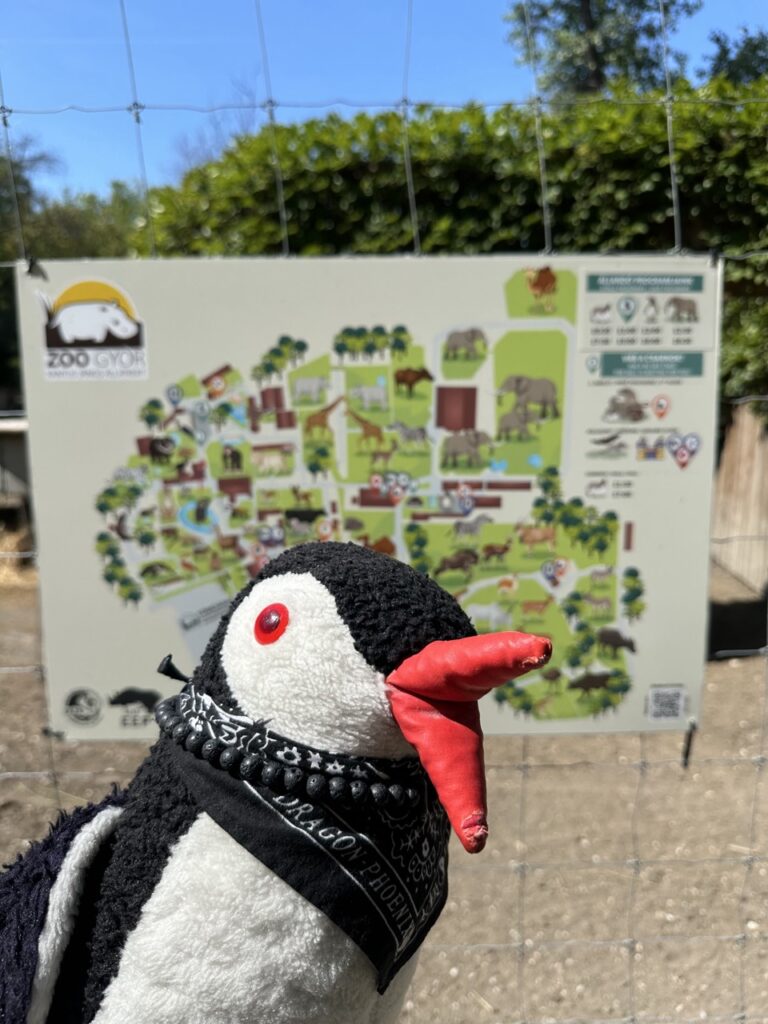
We arrived by car just before 10 AM, right on time for the zoo’s opening. The parking lot out front was already filling up fast, and there was a small crowd gathered around the ticket office, families with strollers, grandparents on a stroll, and a few early-rising animal lovers like us.
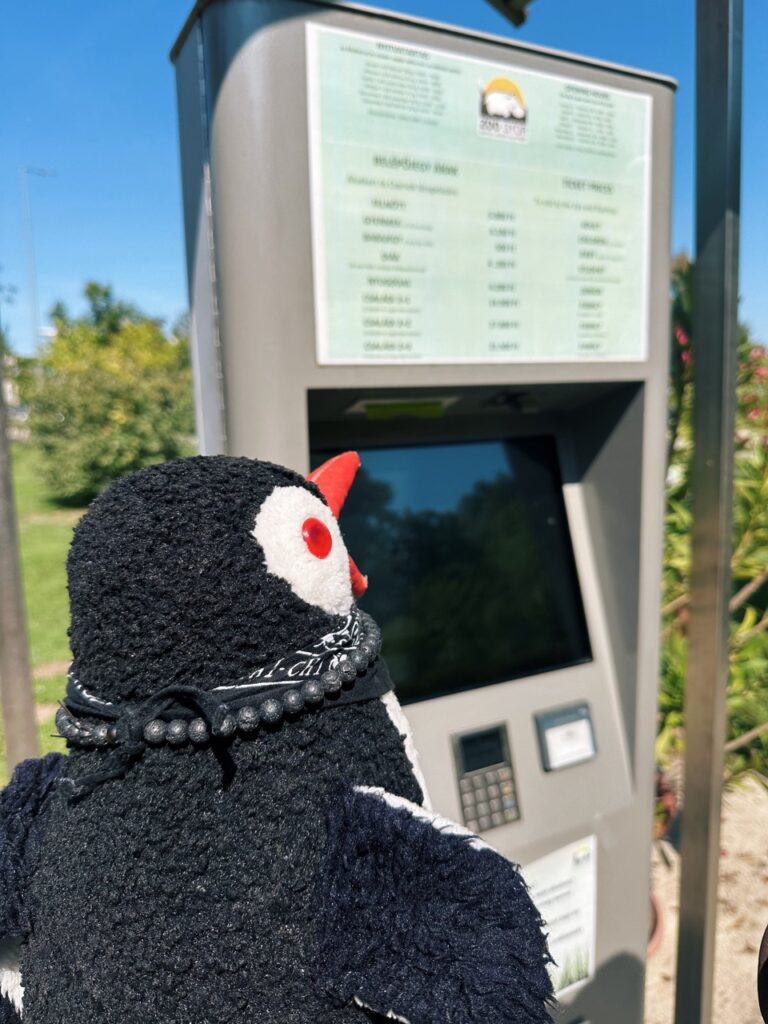
Instead of waiting in line, we spotted an automatic ticket machine tucked off to the side. It took cards, which was a win, and the whole process took less than a minute. Select tickets, tap card, done. Super smooth.
Right after buying them, we walked over to the entrance where a staff member checked our tickets with a friendly nod, and we were in.
Starting with Camels, Deer, and the First Enclosures
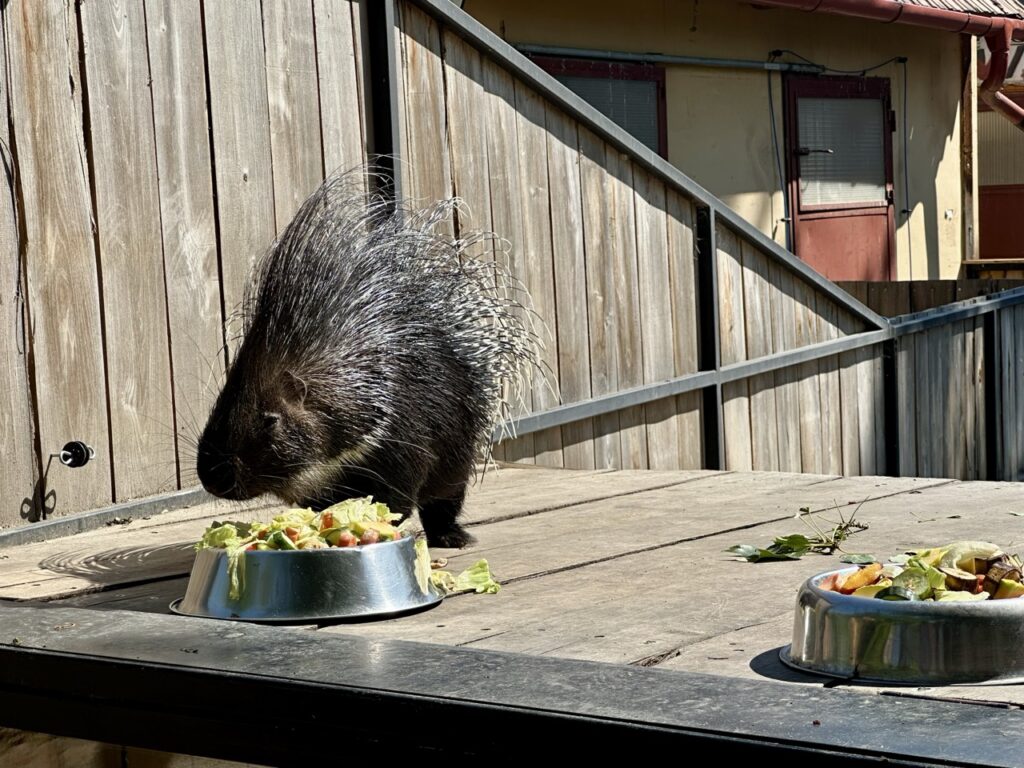
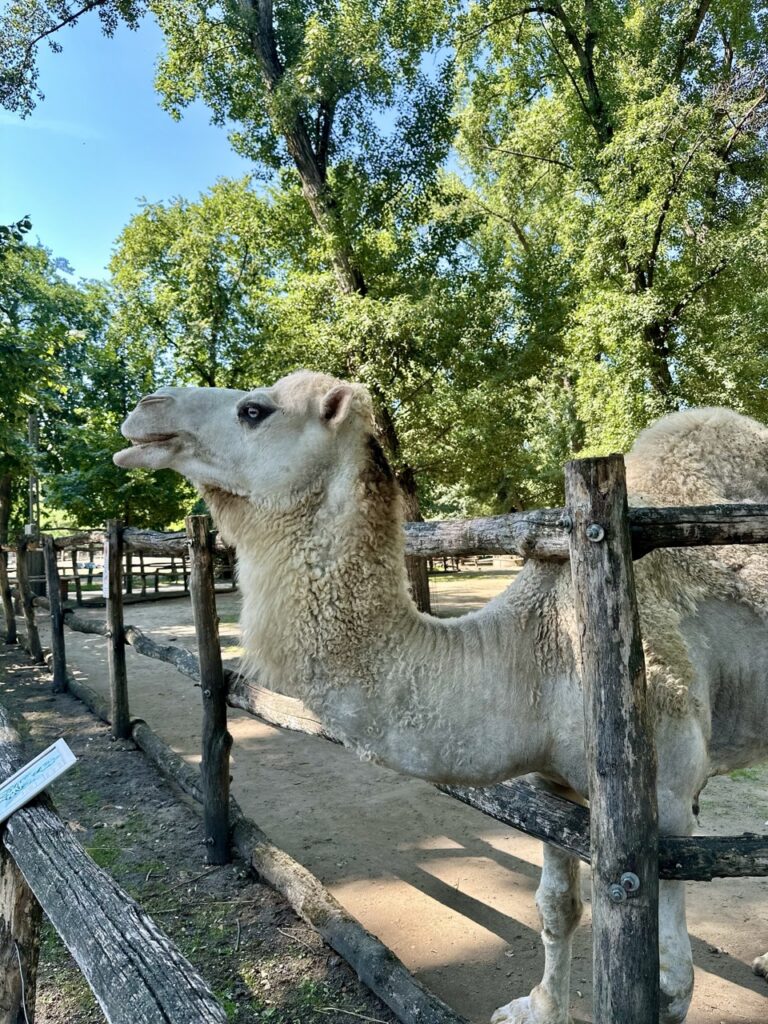
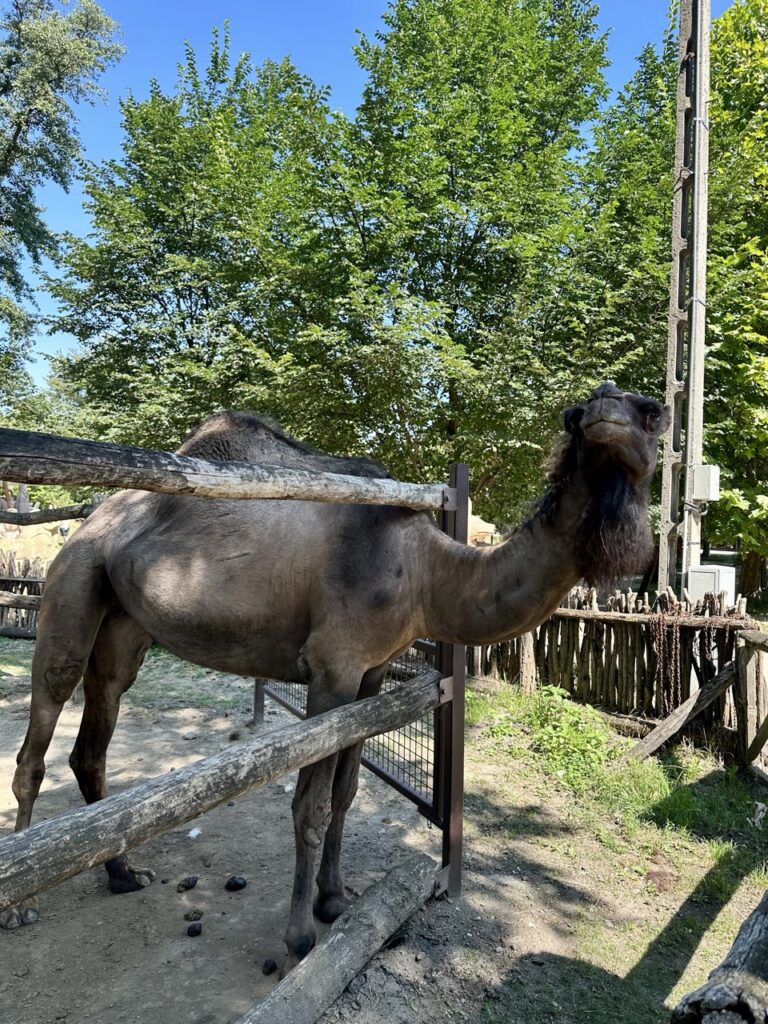
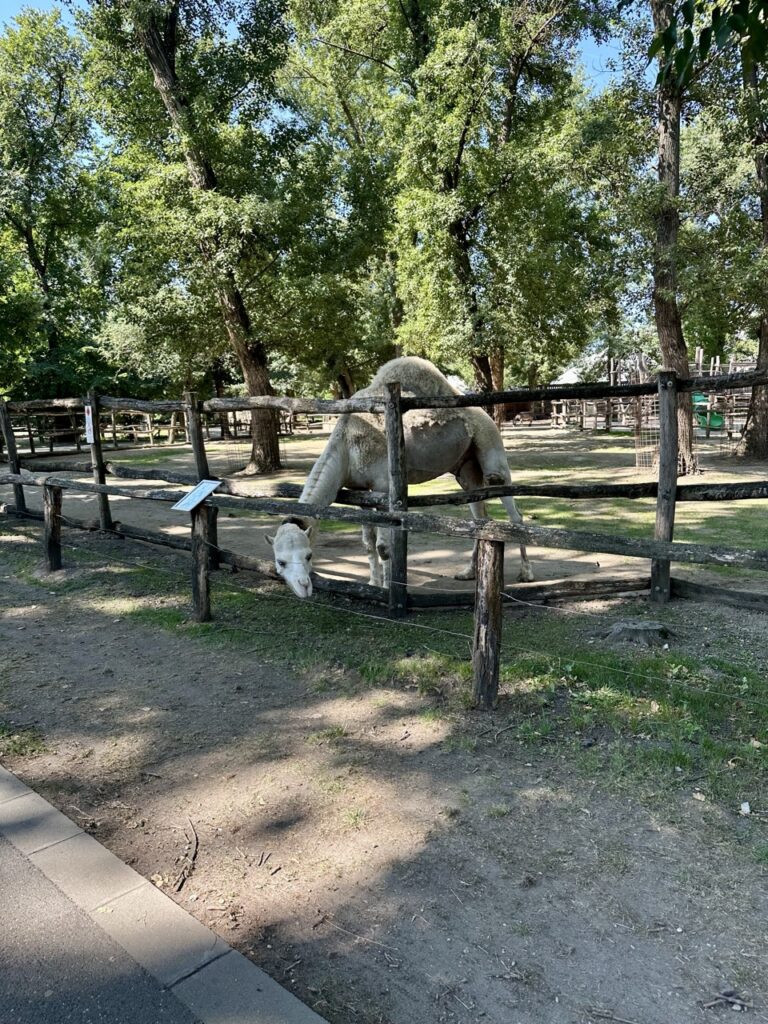
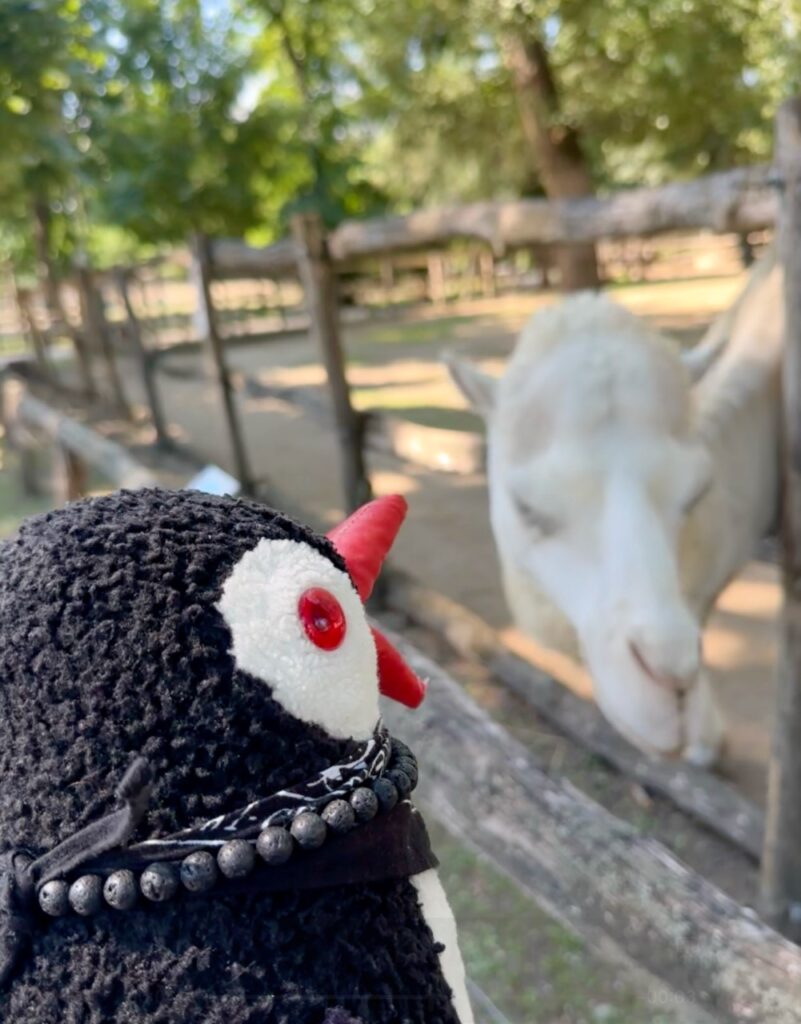
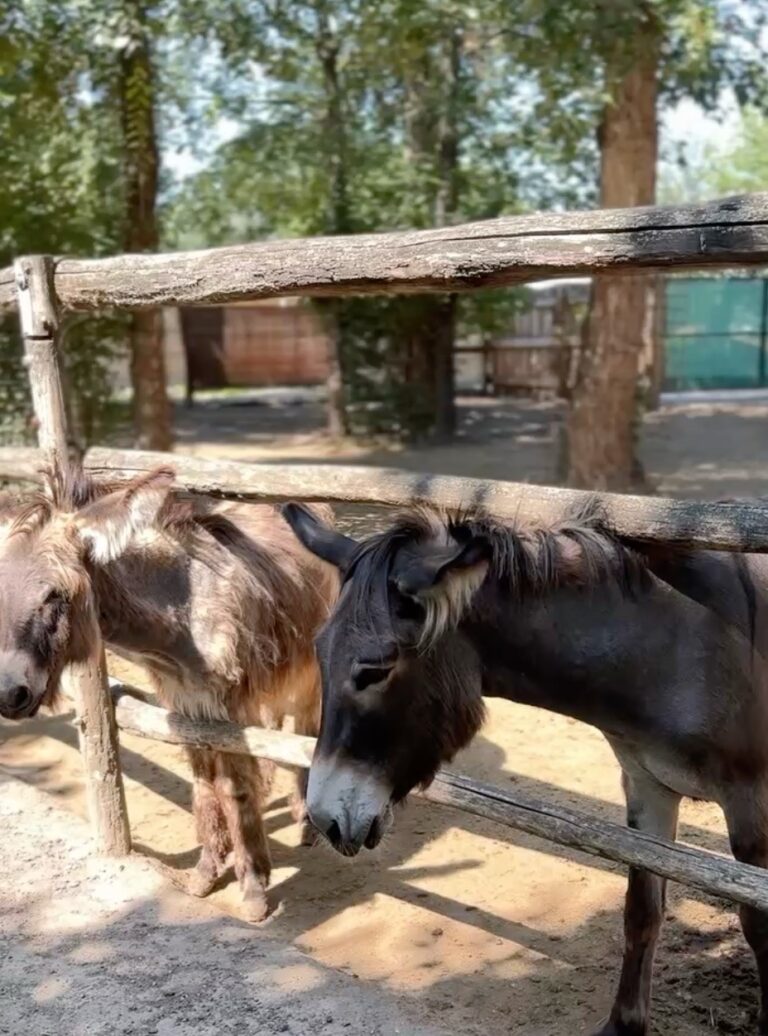
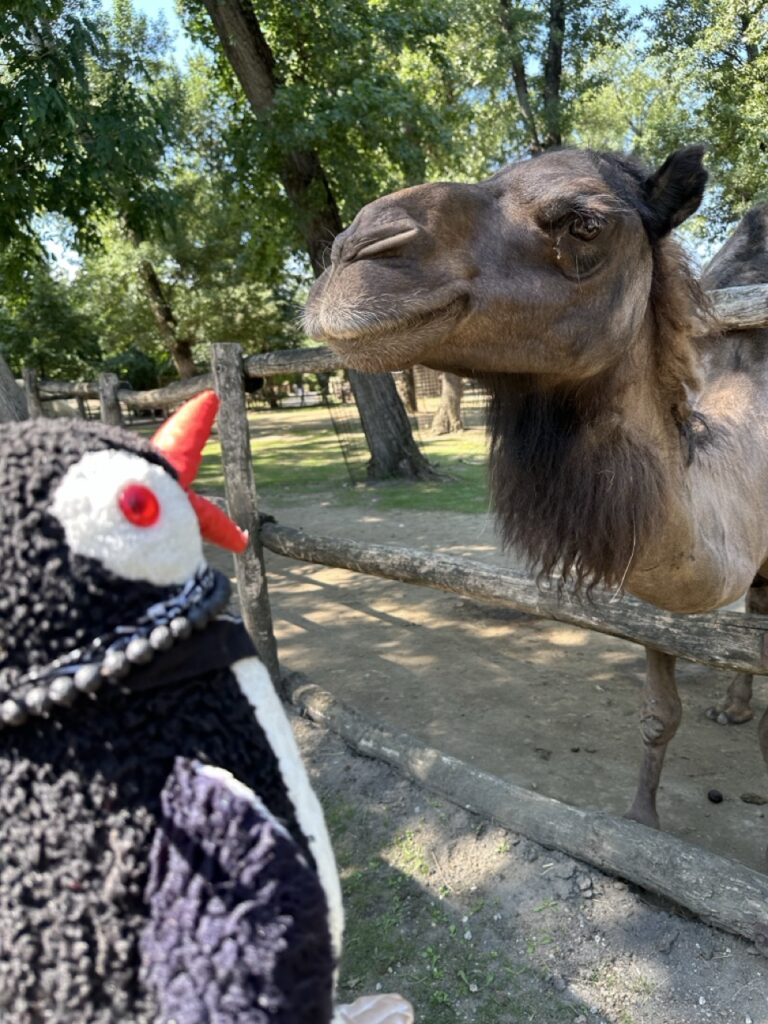
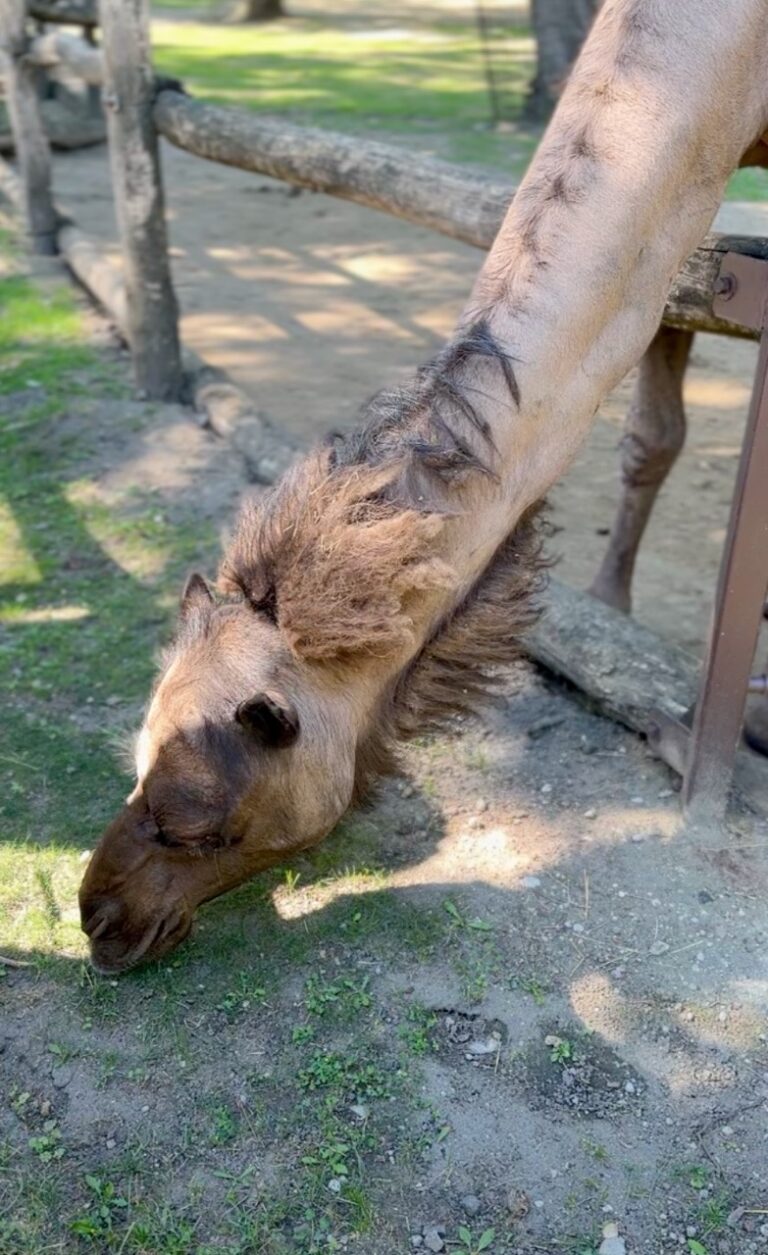
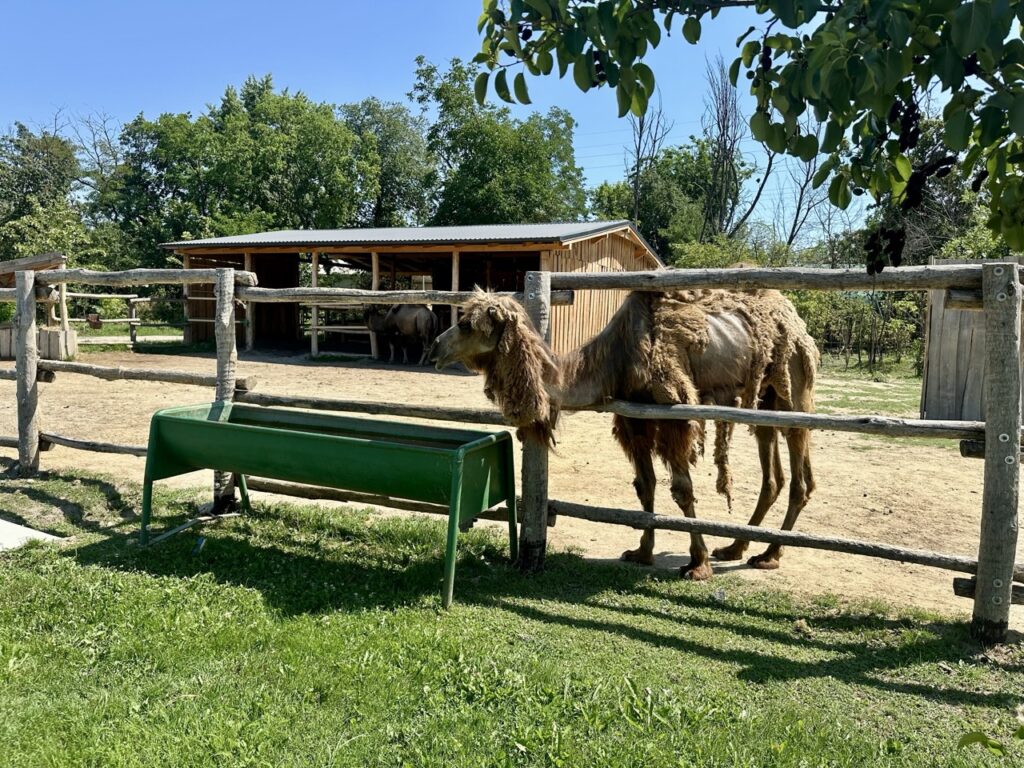
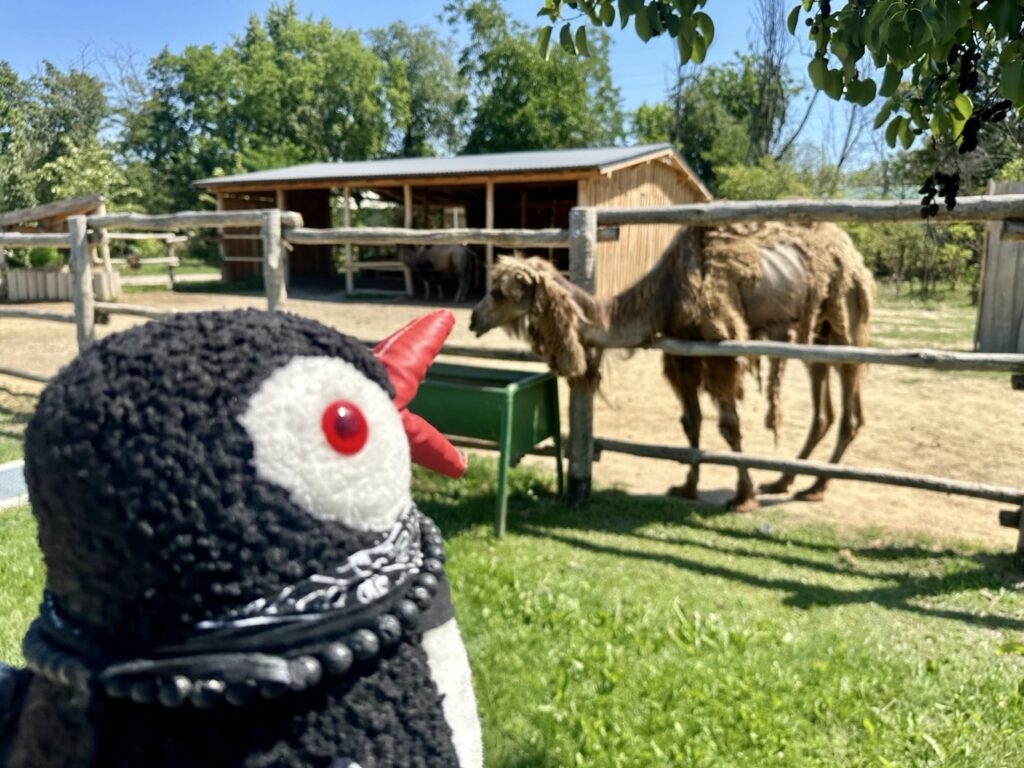
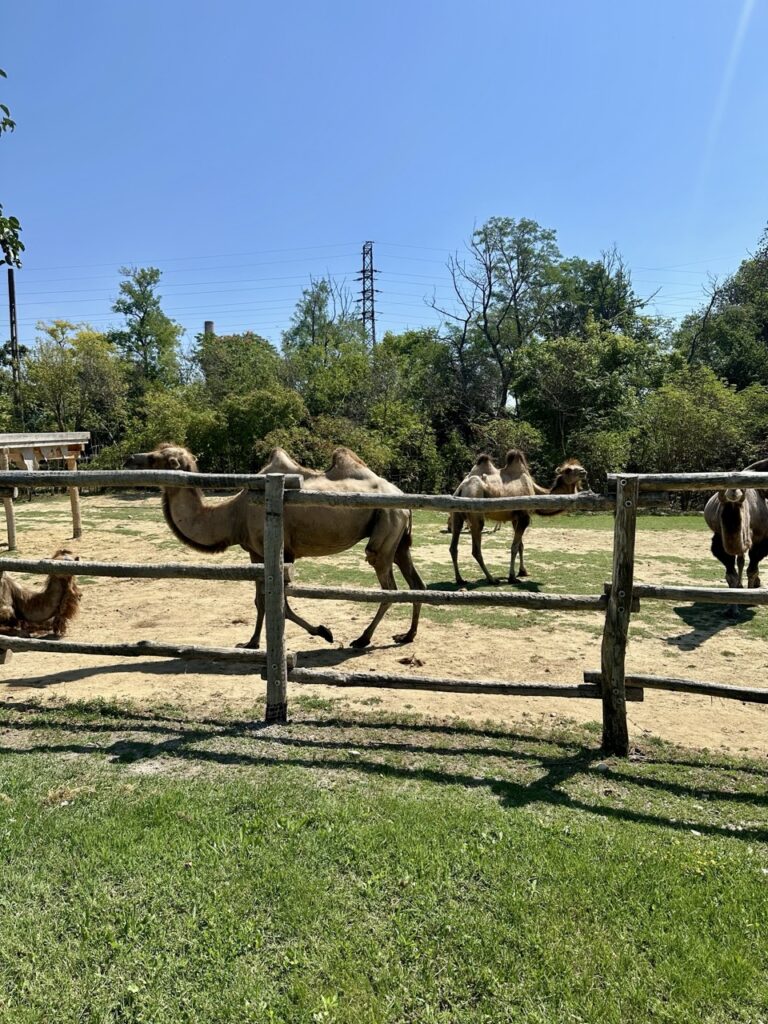
As soon as we entered, we veered left and found ourselves face-to-face with a pair of very chill camels. They were already up and moving, slowly chewing and occasionally glancing our way like they were sizing us up. Their enclosure is open and surrounded by wooden fencing, but you can still feed and pet the camels. Or in our case, you can get a kiss from a camel.
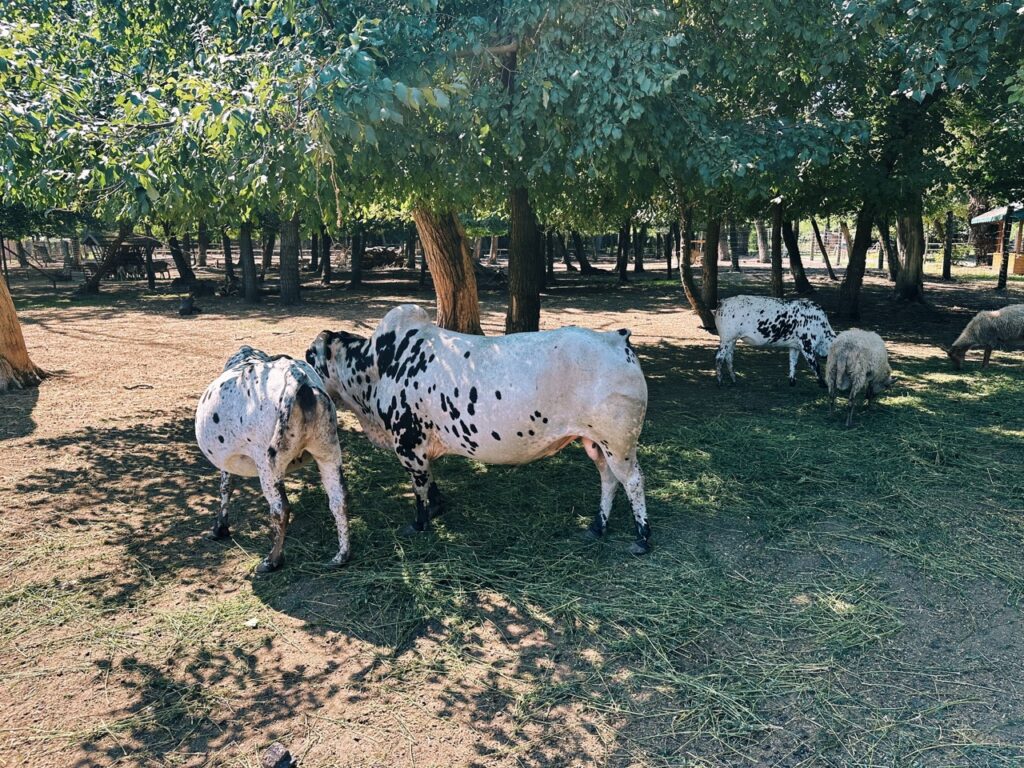
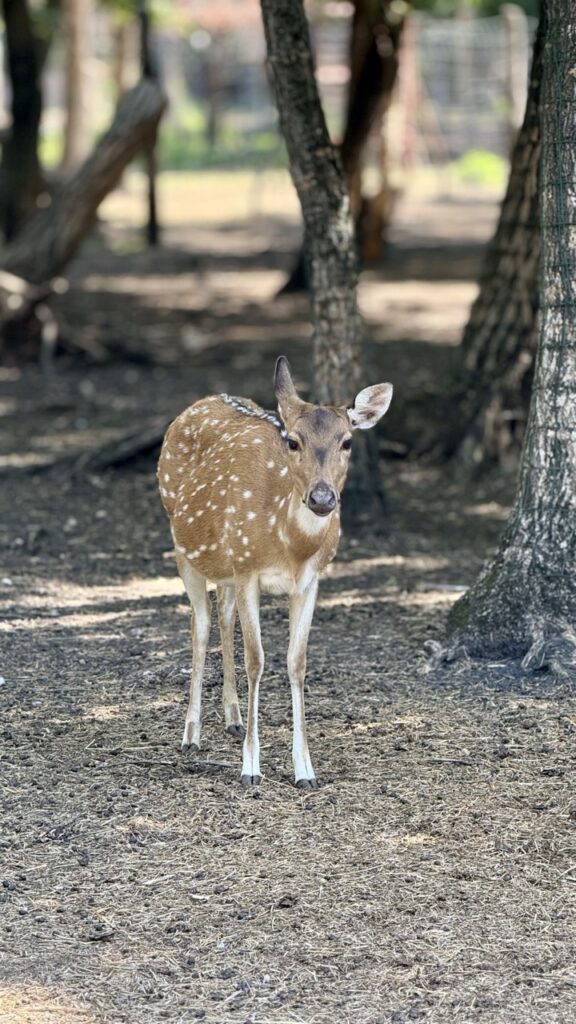
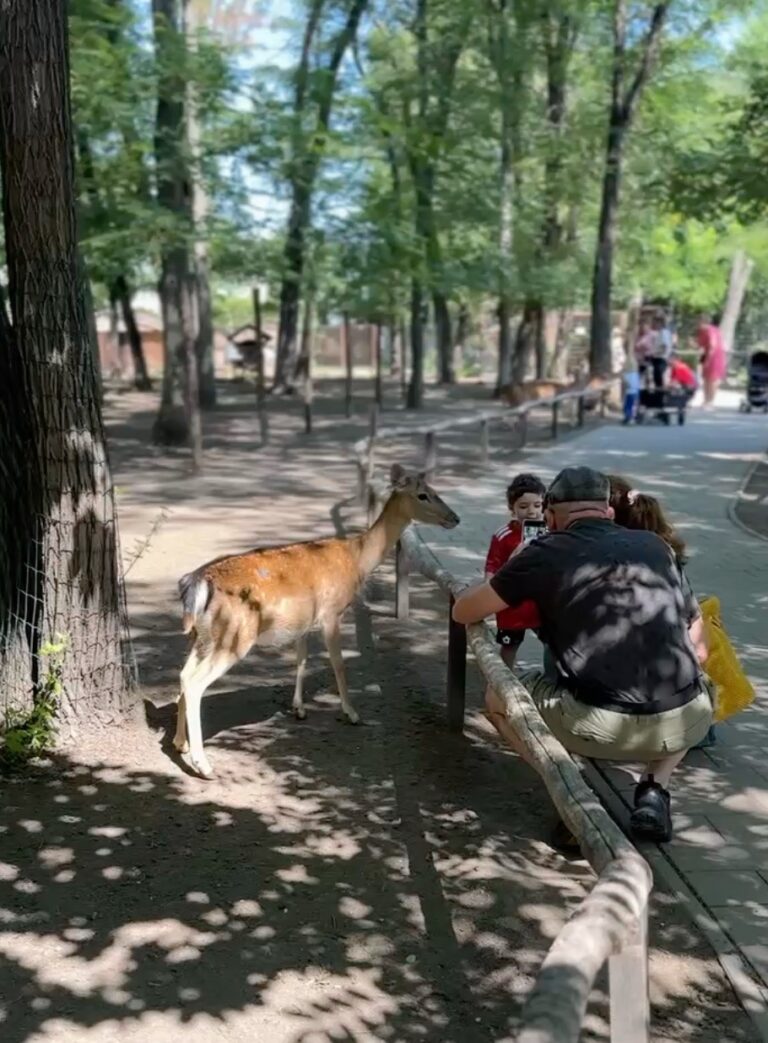
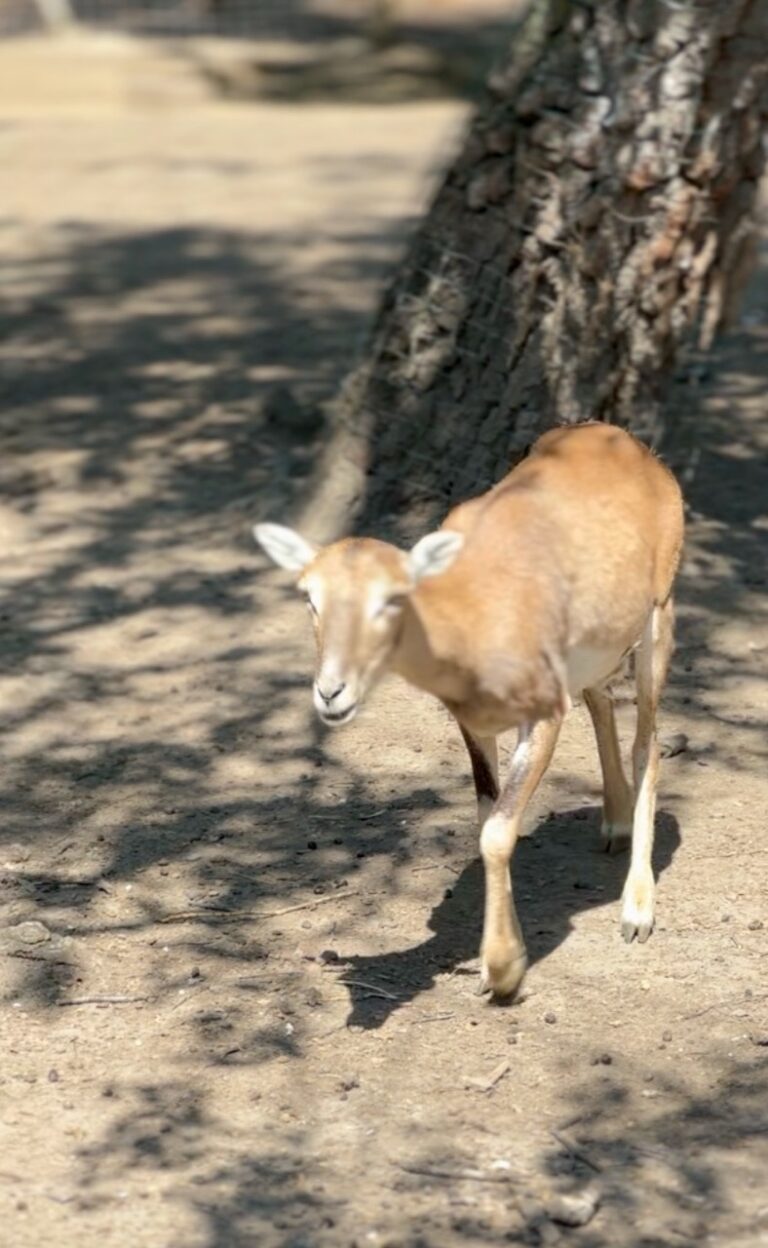
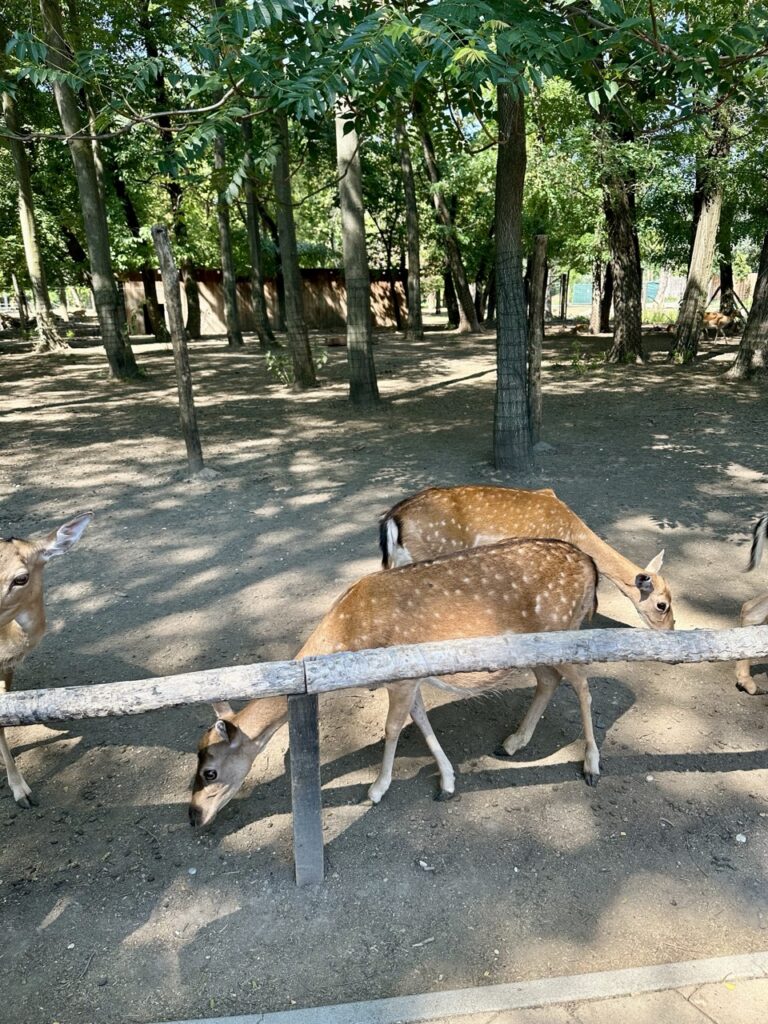
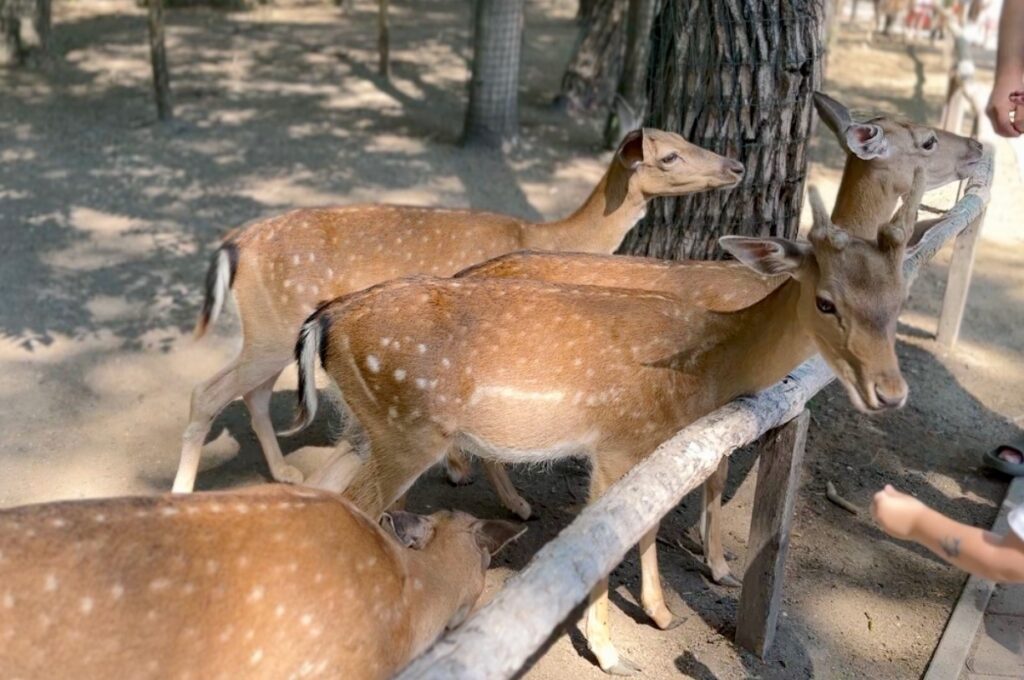
Next door were fallow deer and mouflon, grazing together in a peaceful wooded area that feels more like a forest edge than a typical zoo pen. You can waddle right up to the fence, and many people (us included) stopped to watch them munch on leaves or trot through the grass. There’s something calm about this part of the zoo; the animals aren’t putting on a show, they’re just… being animals. And it works.
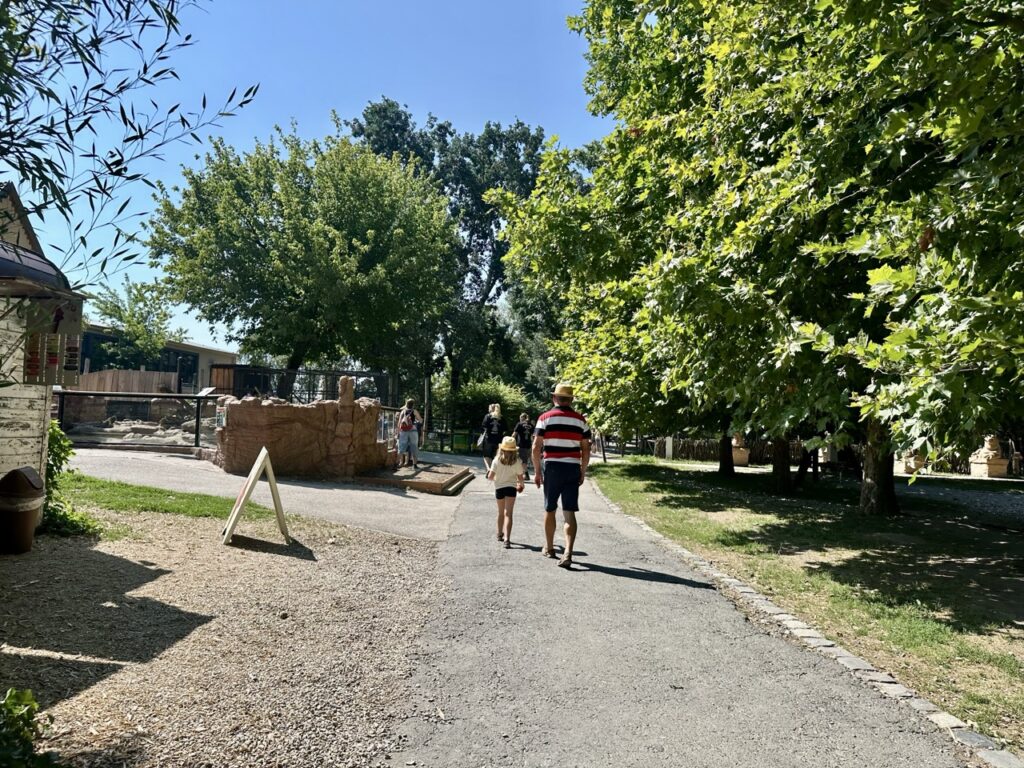
The path winds gently around these habitats, giving you a quiet intro before the louder and wilder residents start stealing the spotlight.
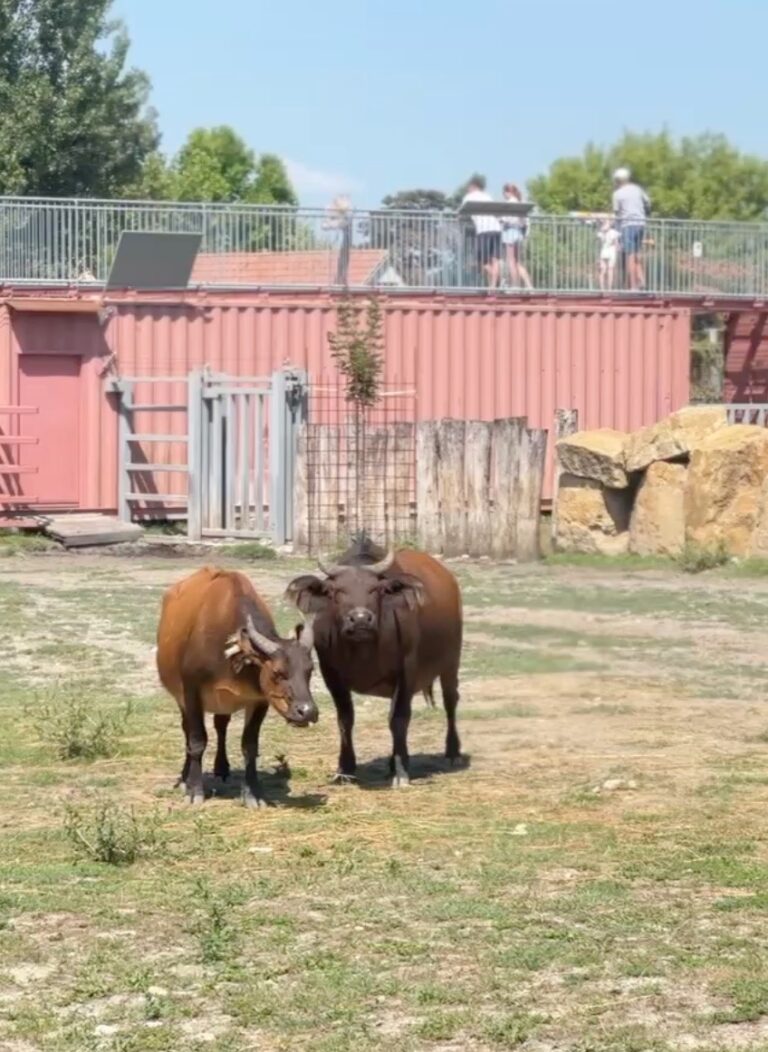
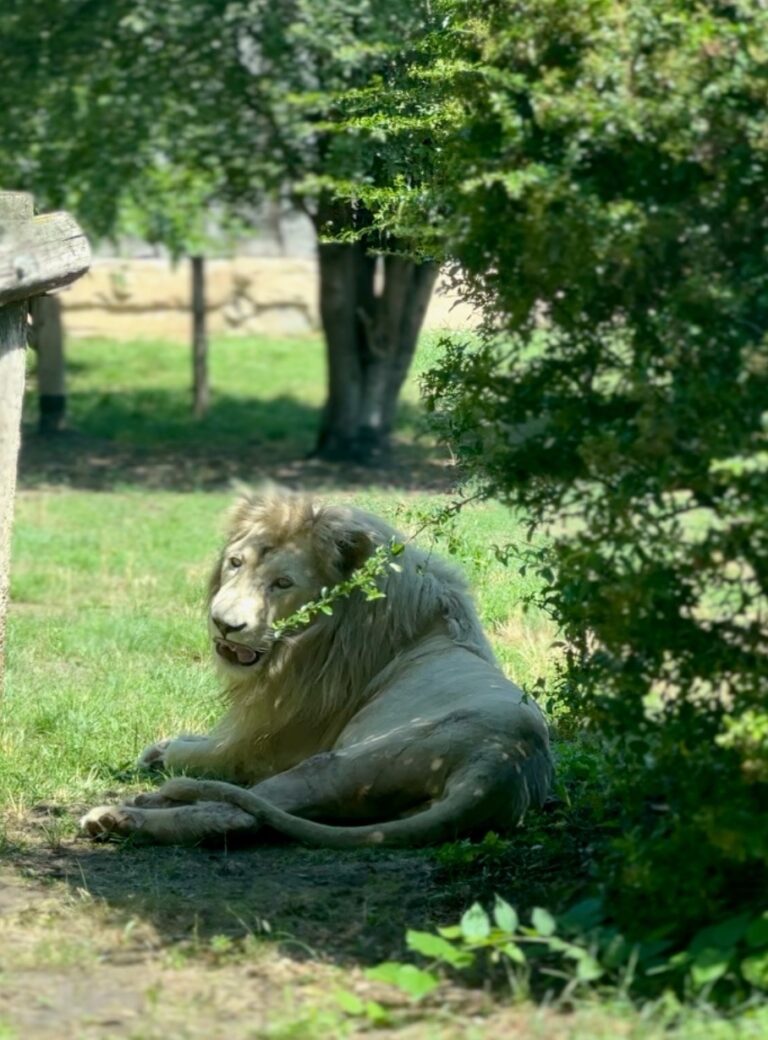
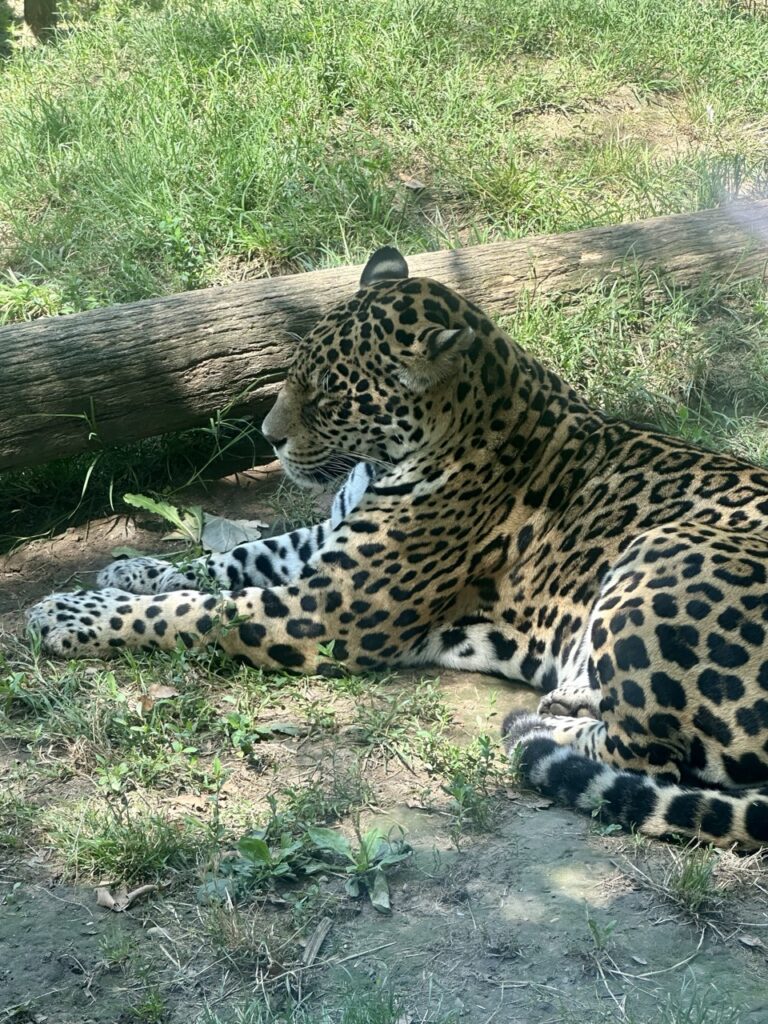
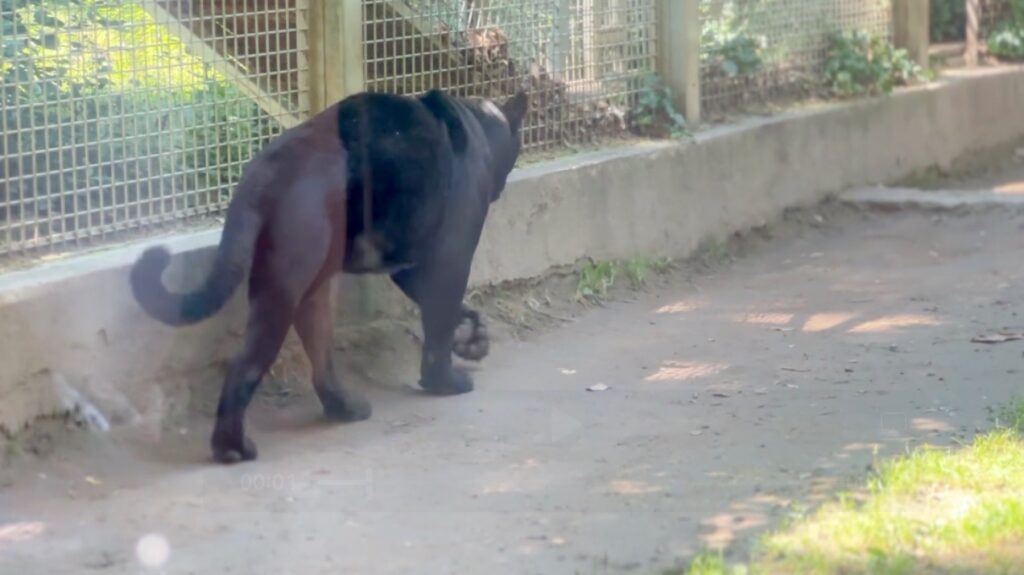
After the camels and deer, the energy picked up fast. One of our favorite moments came near the big cat enclosures. The lions were already stretching and pacing, their roars echoing low and deep across the zoo. You’re separated by thick glass and fencing, but you still feel the power up close. Right next to them, a tiger was casually lounging on a raised platform like it owned the place — which, to be honest, it probably did.
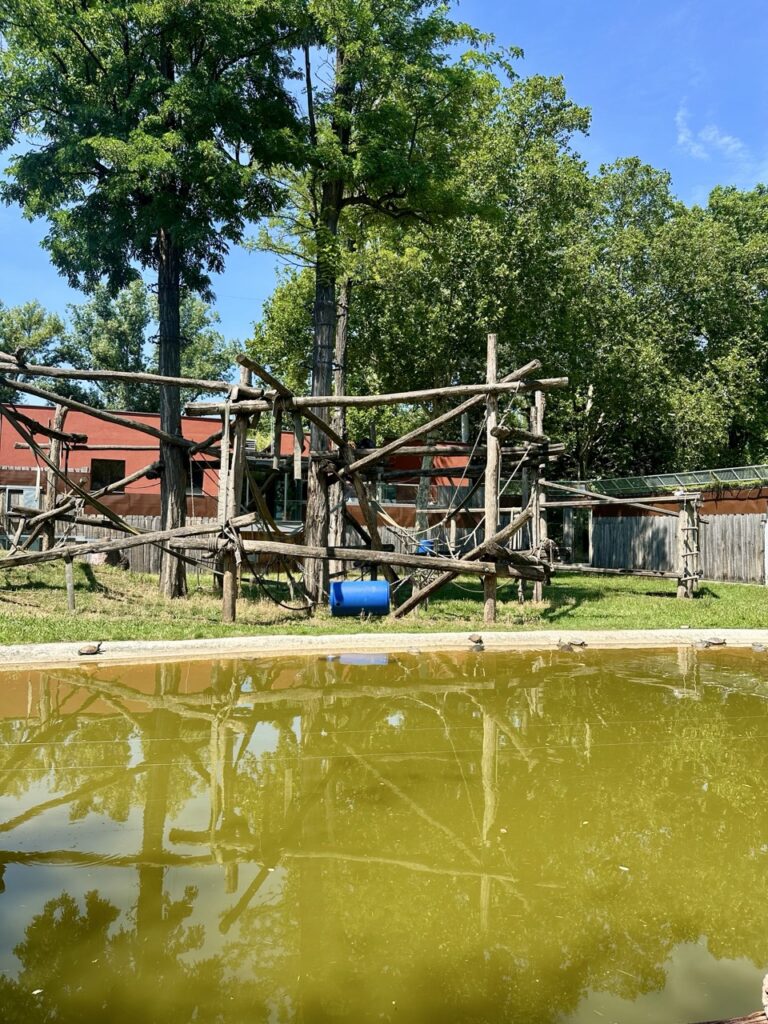
We wandered on to the monkey and chimpanzee area, where the real show was happening. A few younger chimps were engaged in a full-blown wrestling match, while the older ones watched from their platforms, unimpressed. The outdoor space is spacious, featuring climbing ropes, trees, and shaded areas. It felt like an actual hangout zone rather than a cage, and it was one of the loudest spots in the zoo, in the best way.
The lemur walk-through might have been the highlight. You walk into a fenced space, and the lemurs are just there — jumping between logs, running across the path, or hanging out just an arm’s length away (no touching, obviously). It’s not something you expect in a small-city zoo, and it made us linger longer than planned.
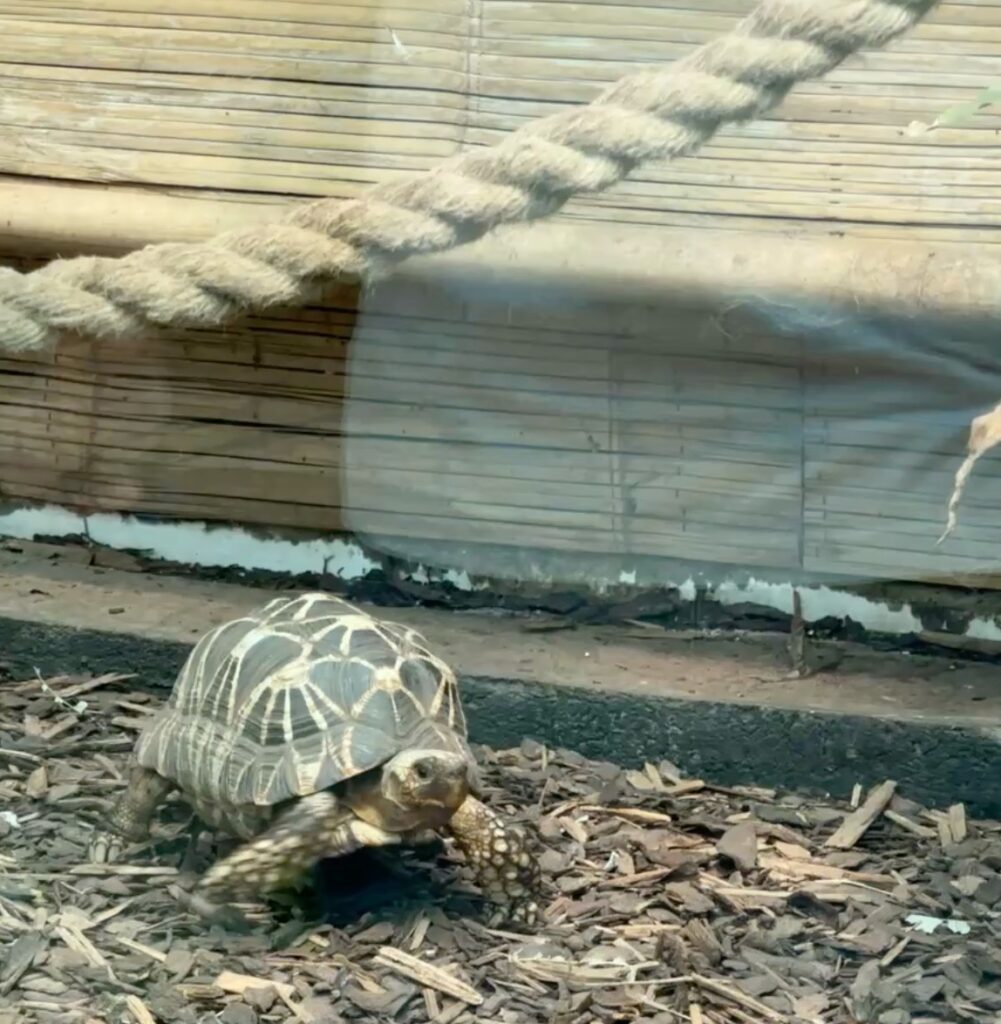
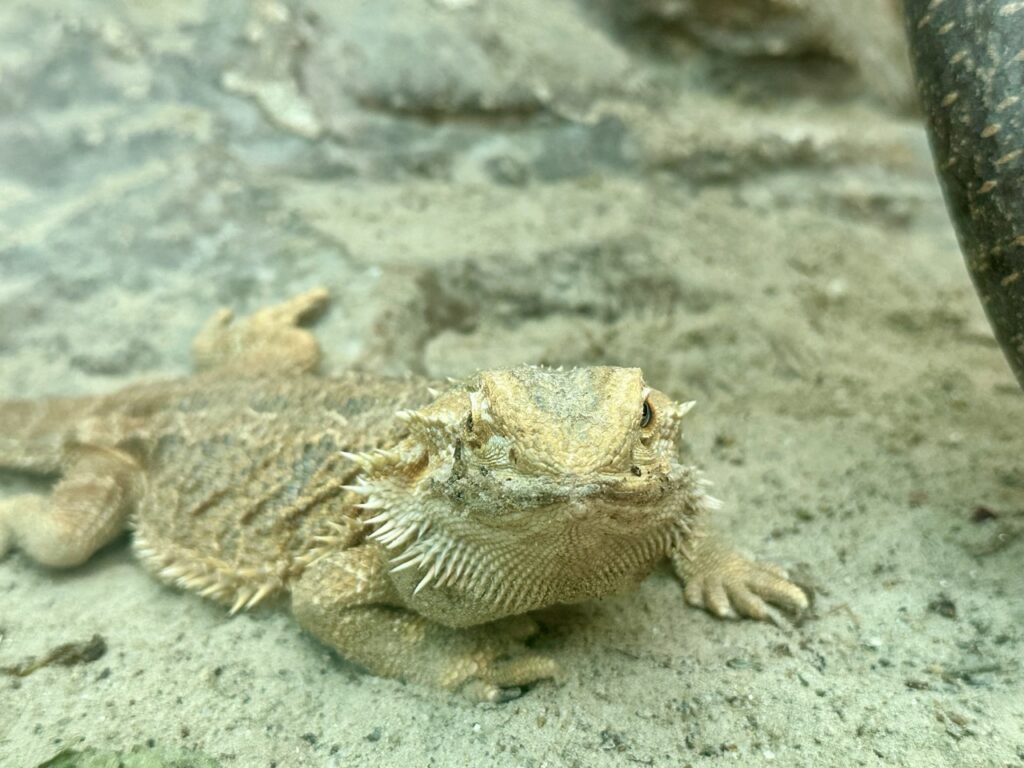
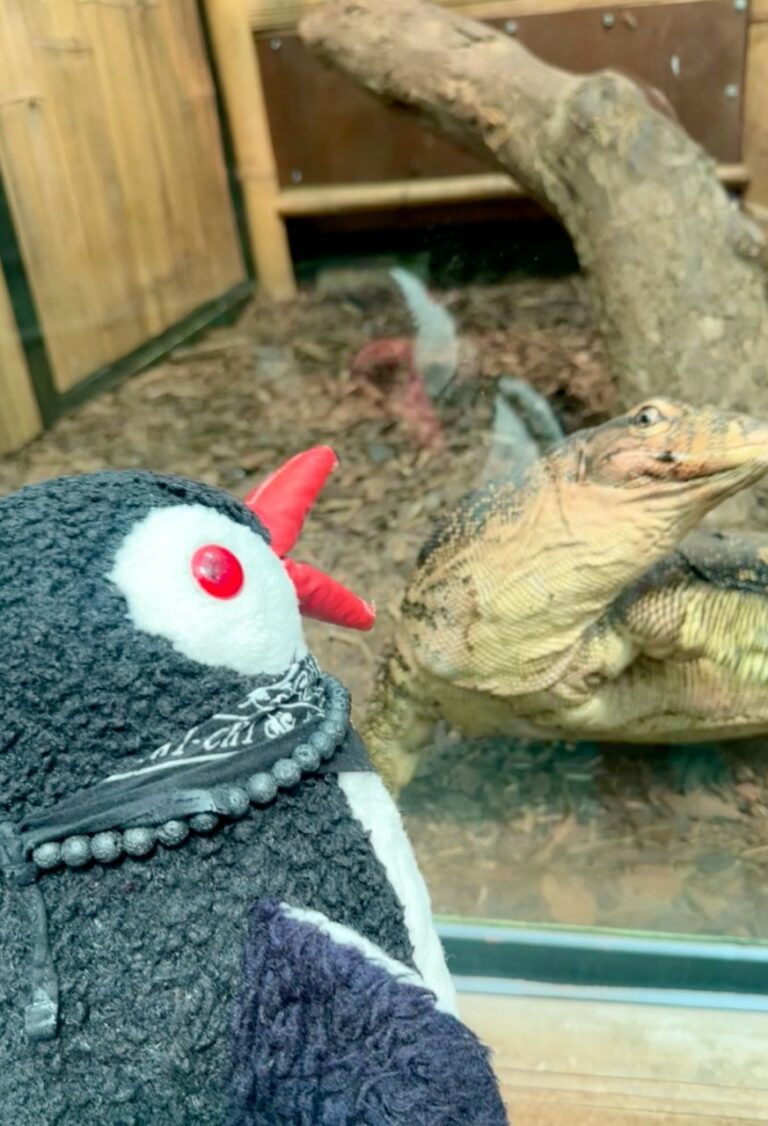
We also stopped by the reptile house, where the temperature soared and everything became still and steamy. There were snakes coiled in corners, lizards on warm rocks, and a sleepy crocodile half-submerged under a fake waterfall. It’s dark, humid, and strangely peaceful — the kind of place you can lose track of time in.
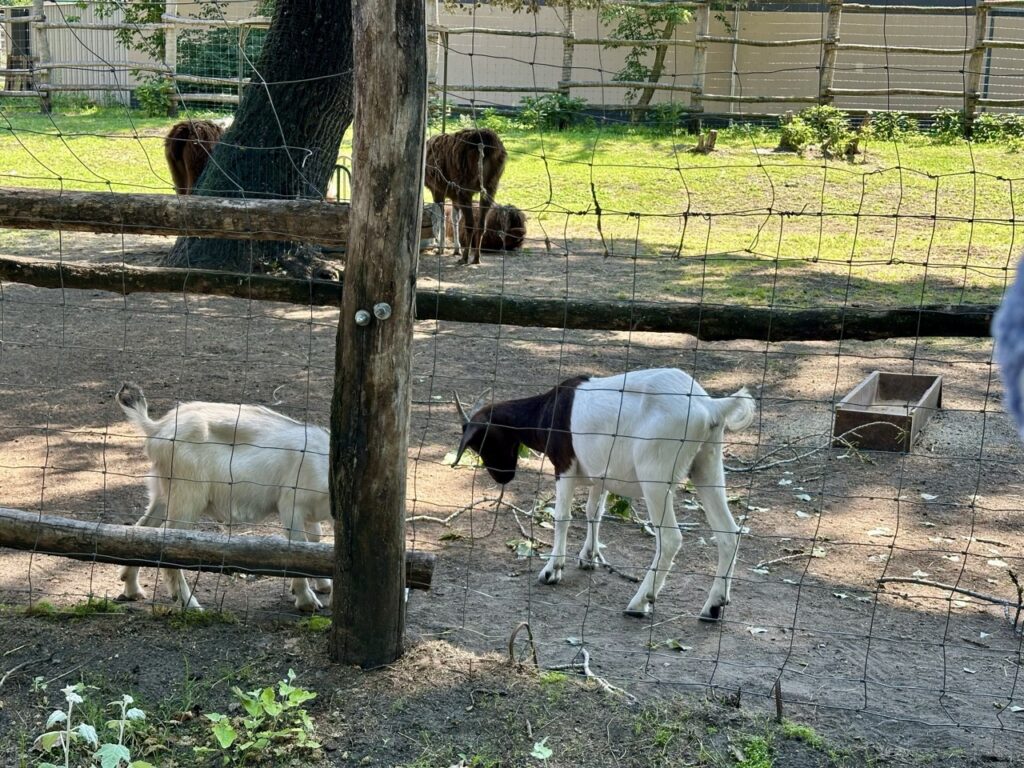
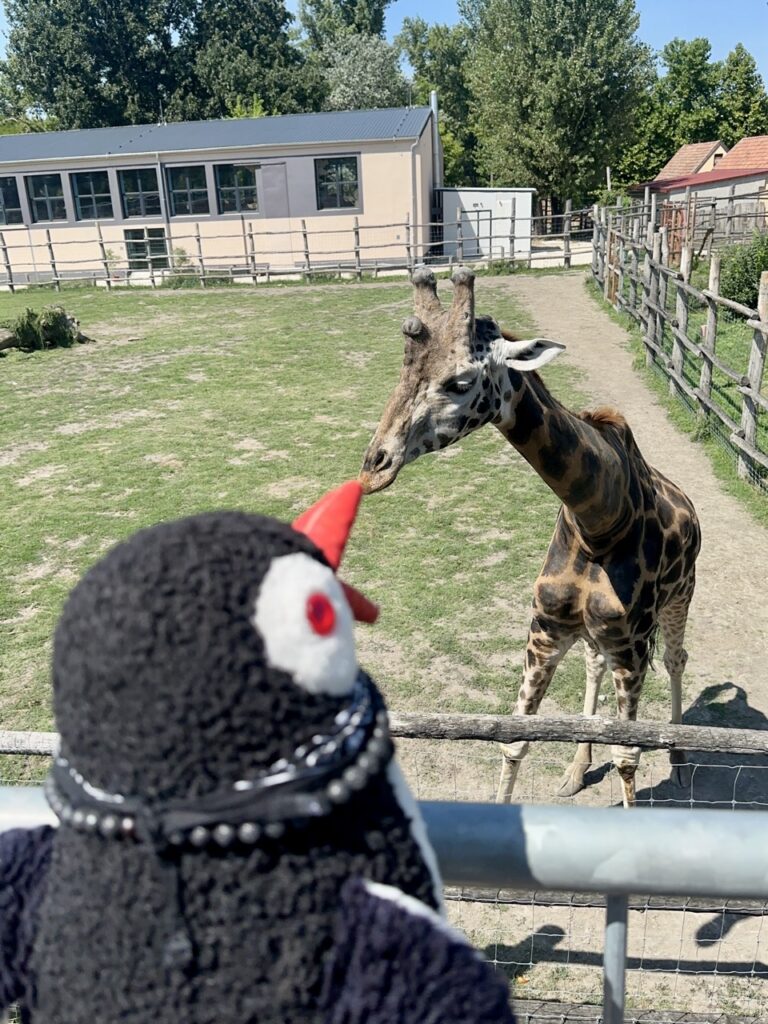
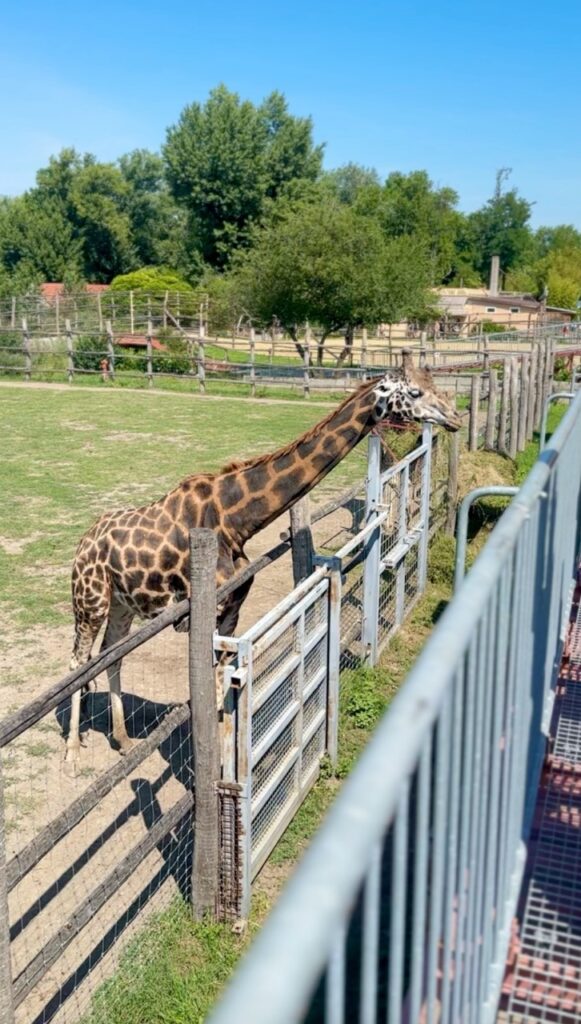
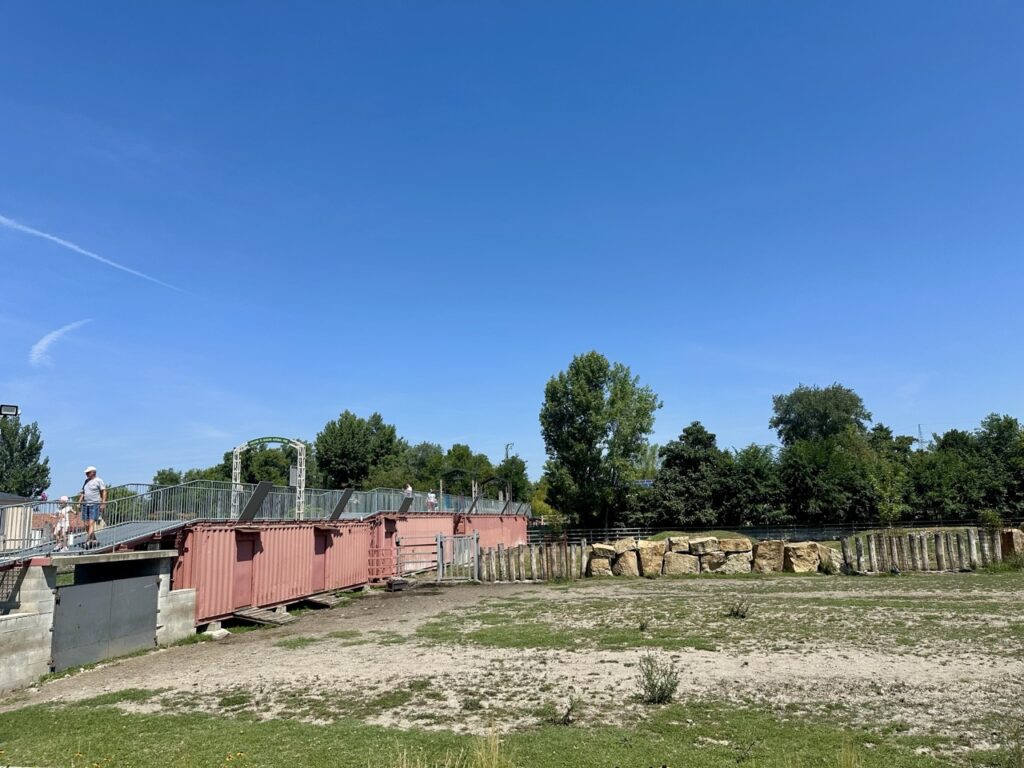
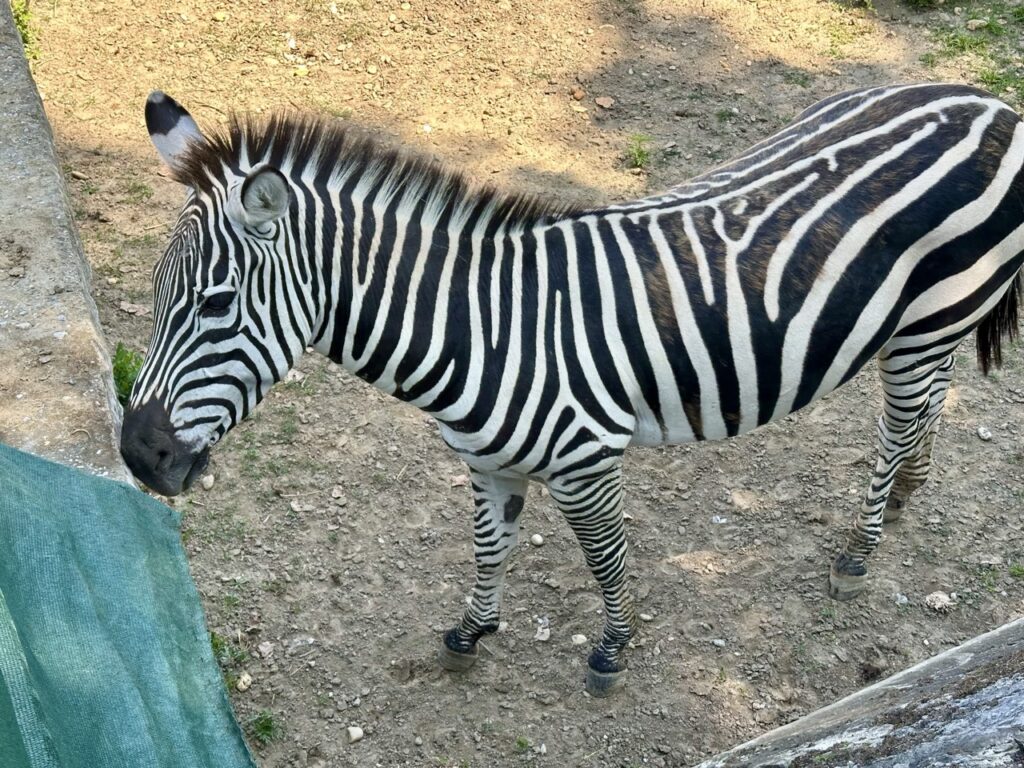
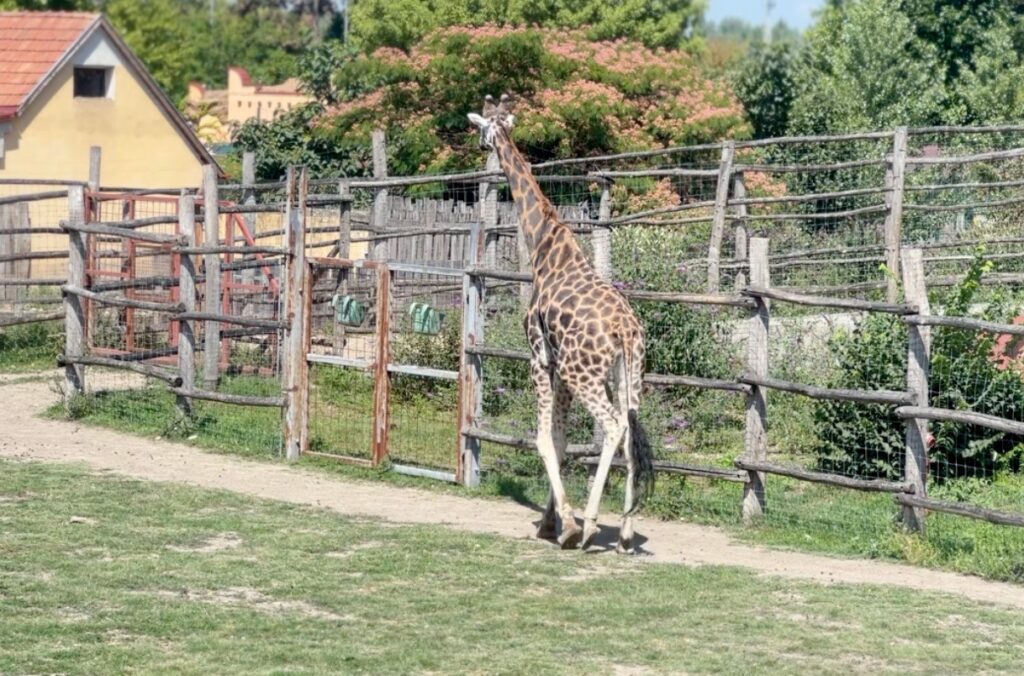
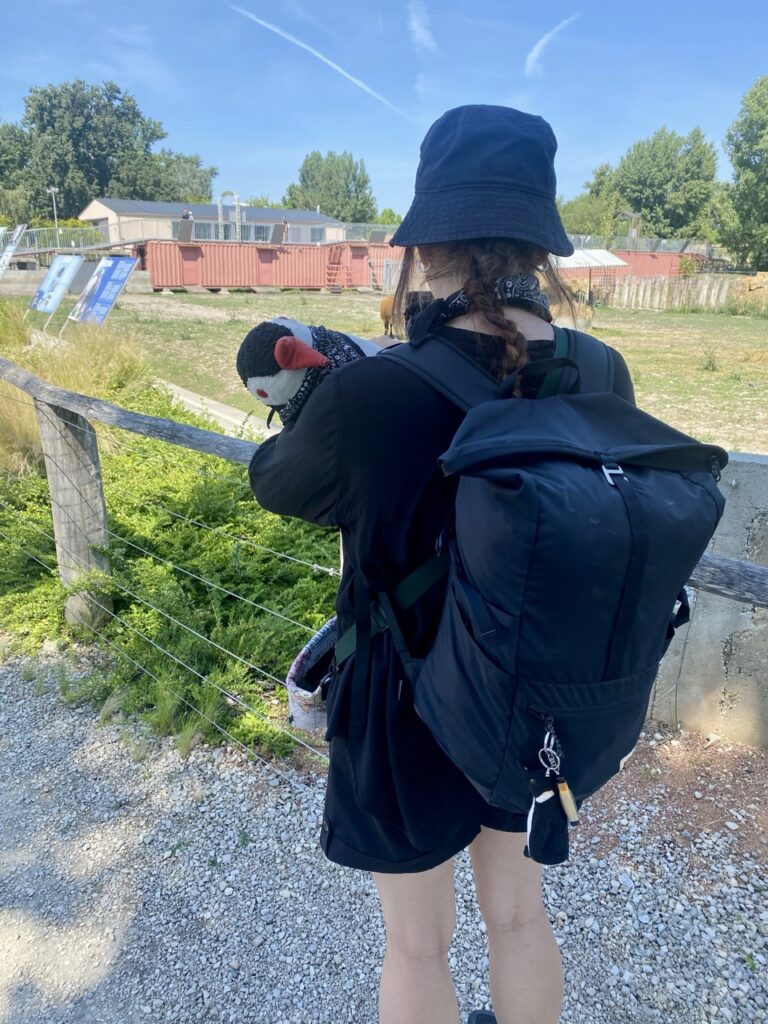
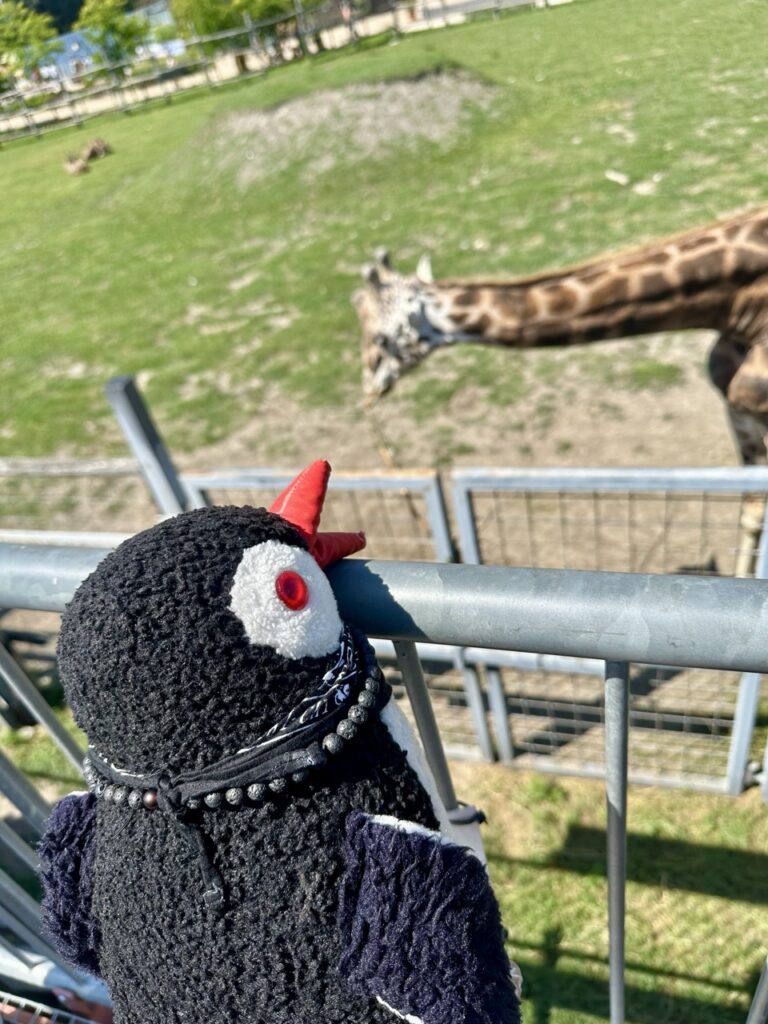
Outside again, we found the giraffes stretching their necks out toward a raised feeding deck. A few visitors had already bought food pellets and were offering them up, and the giraffes didn’t need convincing. Their slow, deliberate movements and long lashes made them feel oddly elegant, even when they drooled a little. Right nearby were zebras, goats, and alpacas, all in adjoining enclosures with clear lines of sight, perfect for kids and photo ops.
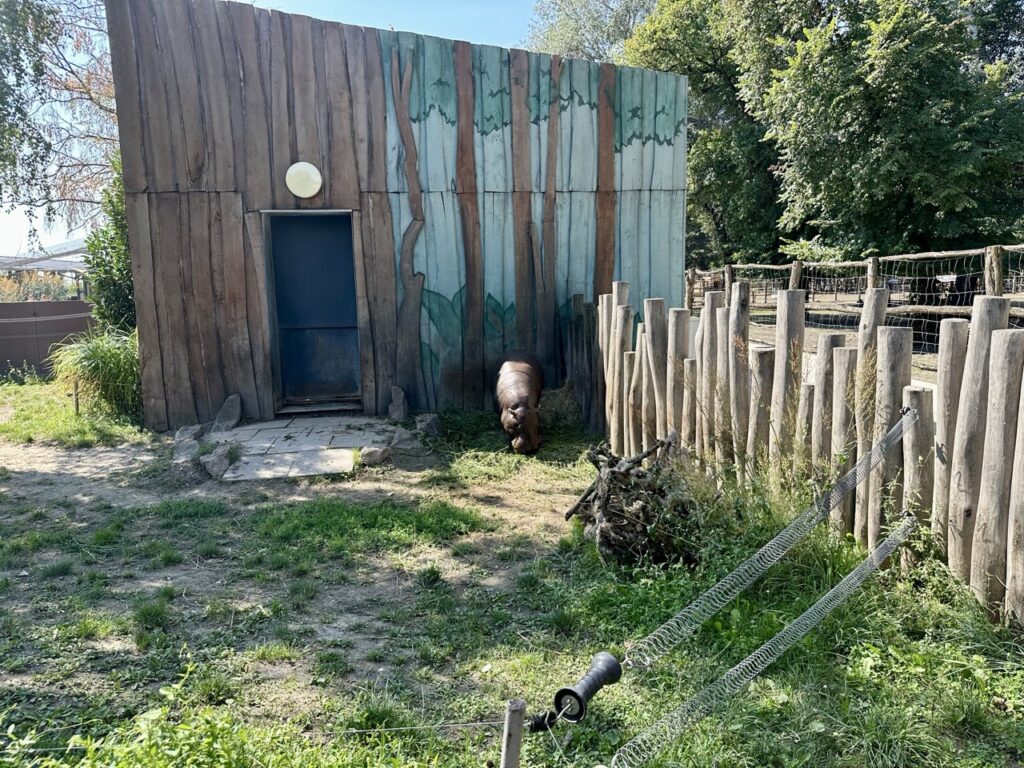
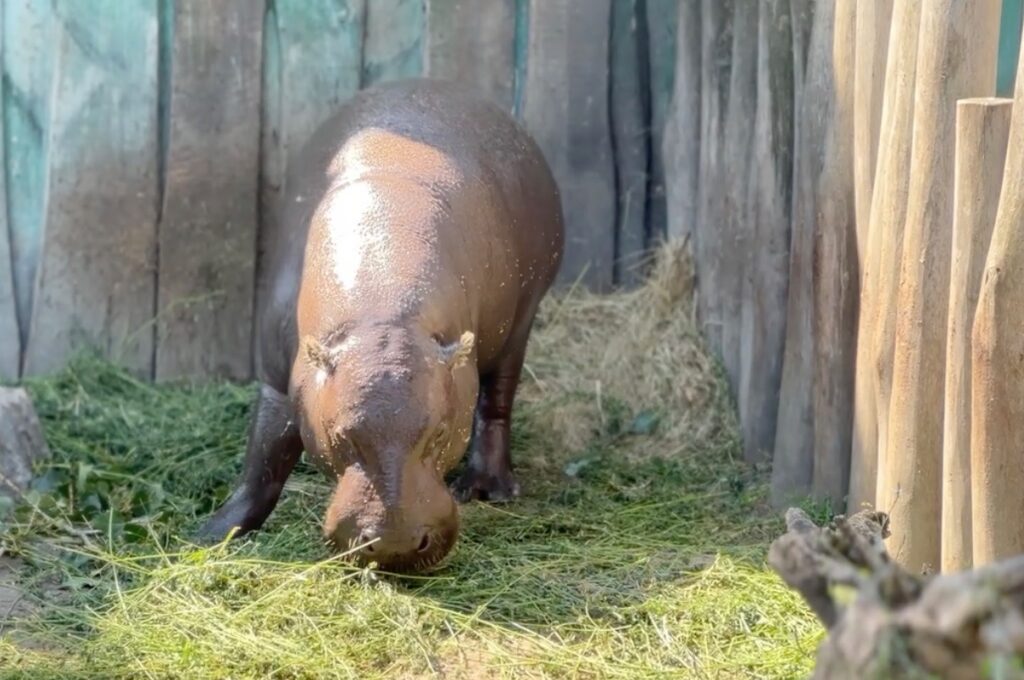
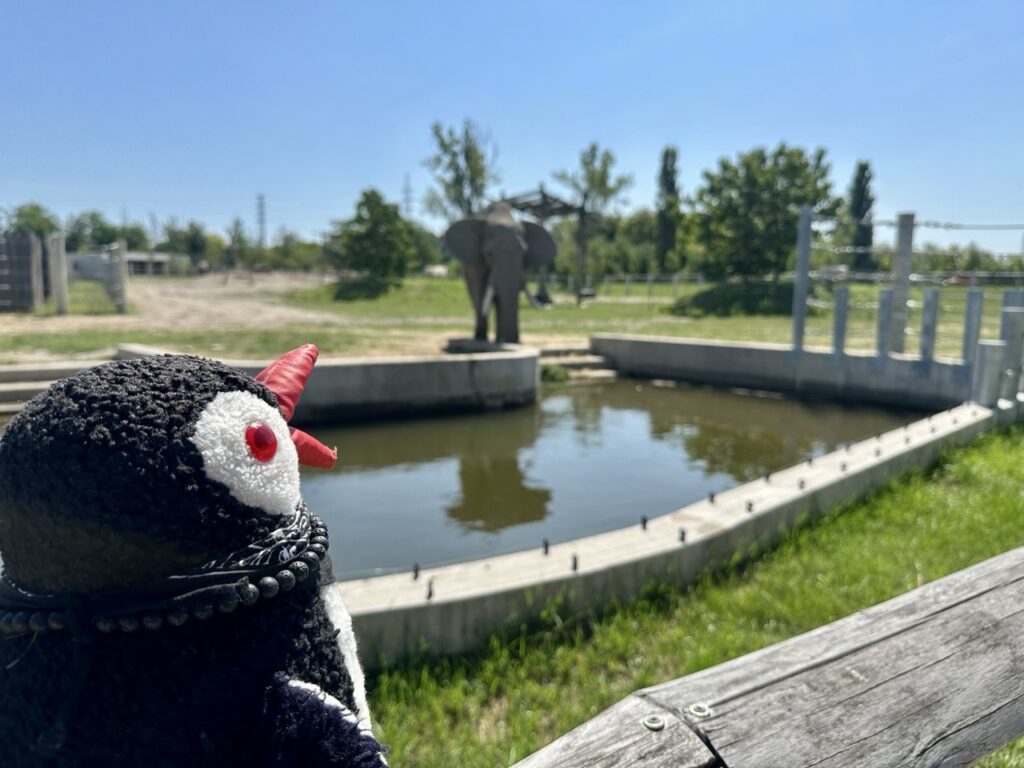
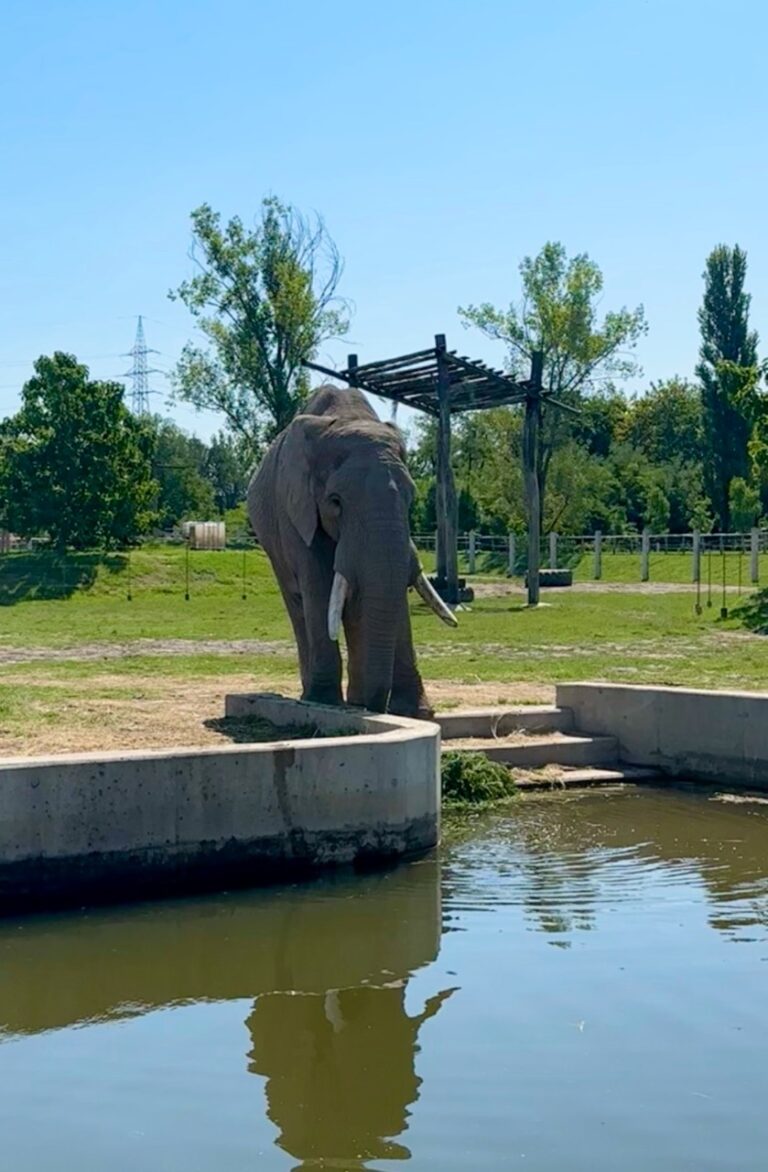
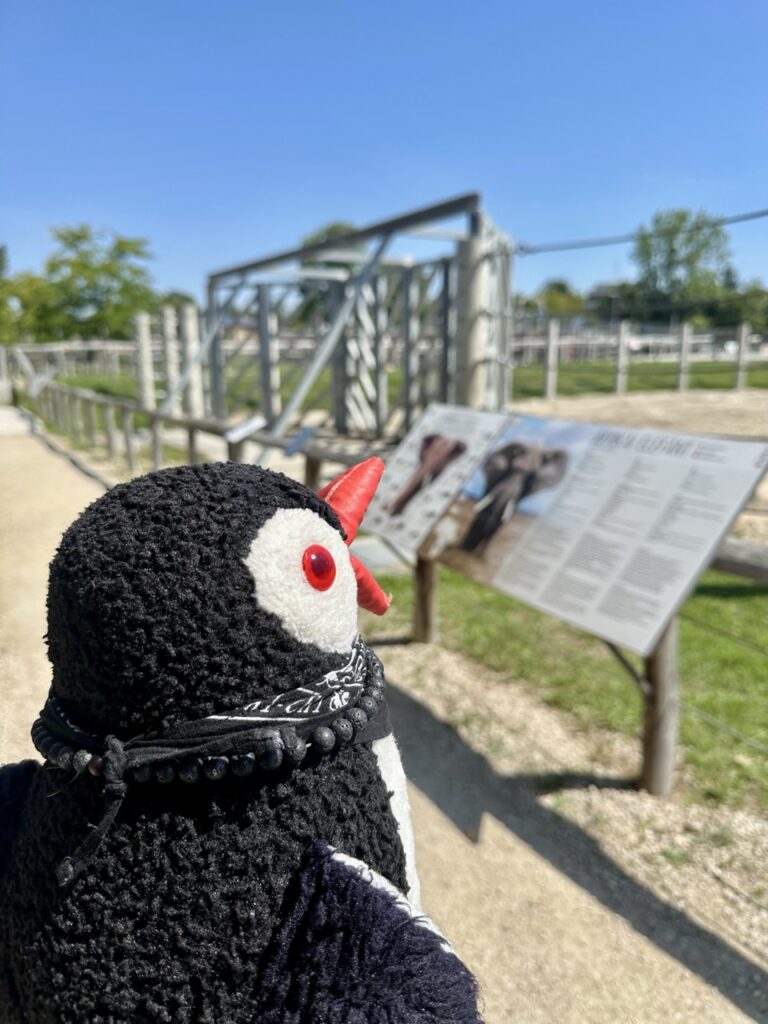
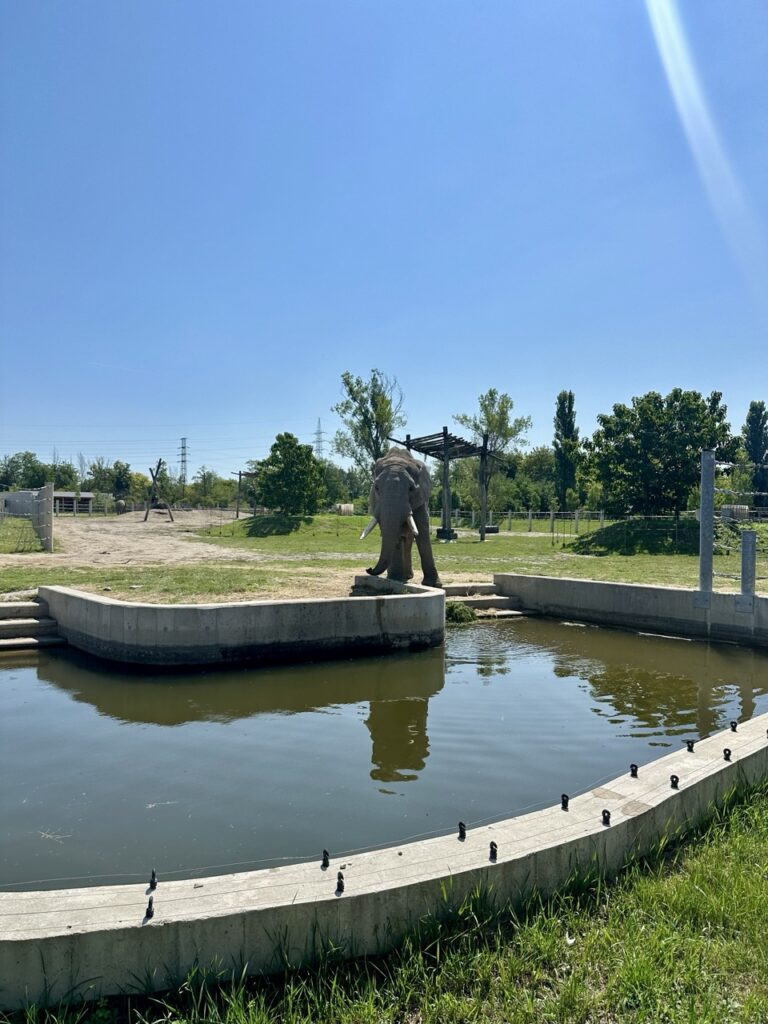
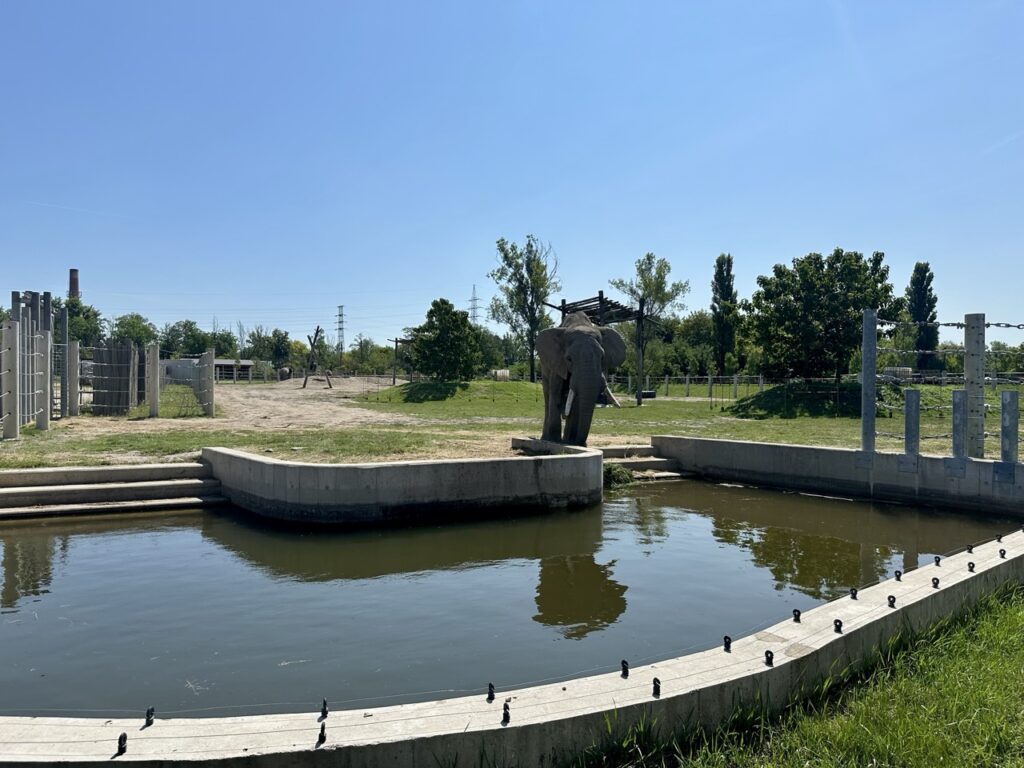
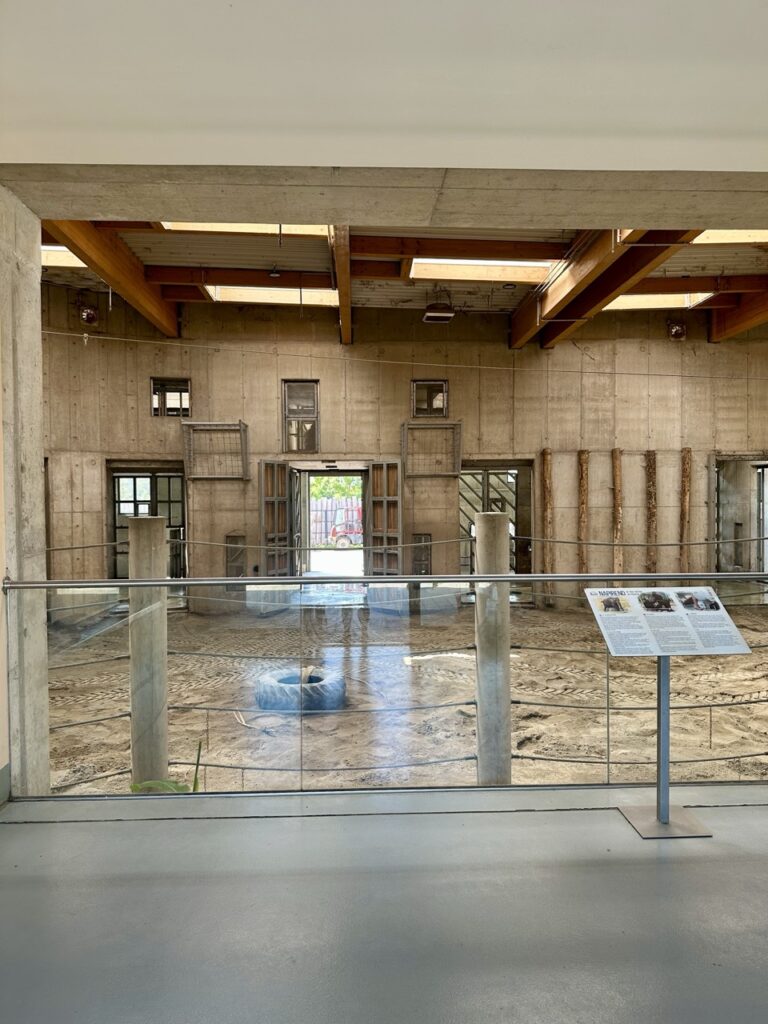
Györ Zoo is home to three elephants, and they’re one of the main highlights of the visit. Their enclosure is large, with open space to roam, a mud pit for bathing, shaded areas, and a modern indoor shelter they use when the weather turns. It feels natural and well-maintained, and there’s a clear viewing area where you can watch them up close.
During our visit, all three elephants were outside, flapping their ears and tossing hay to one another. If you plan it right, you might catch the public feeding sessions. Staff offer fruits and vegetables, and the elephants aren’t shy about showing off their personalities.
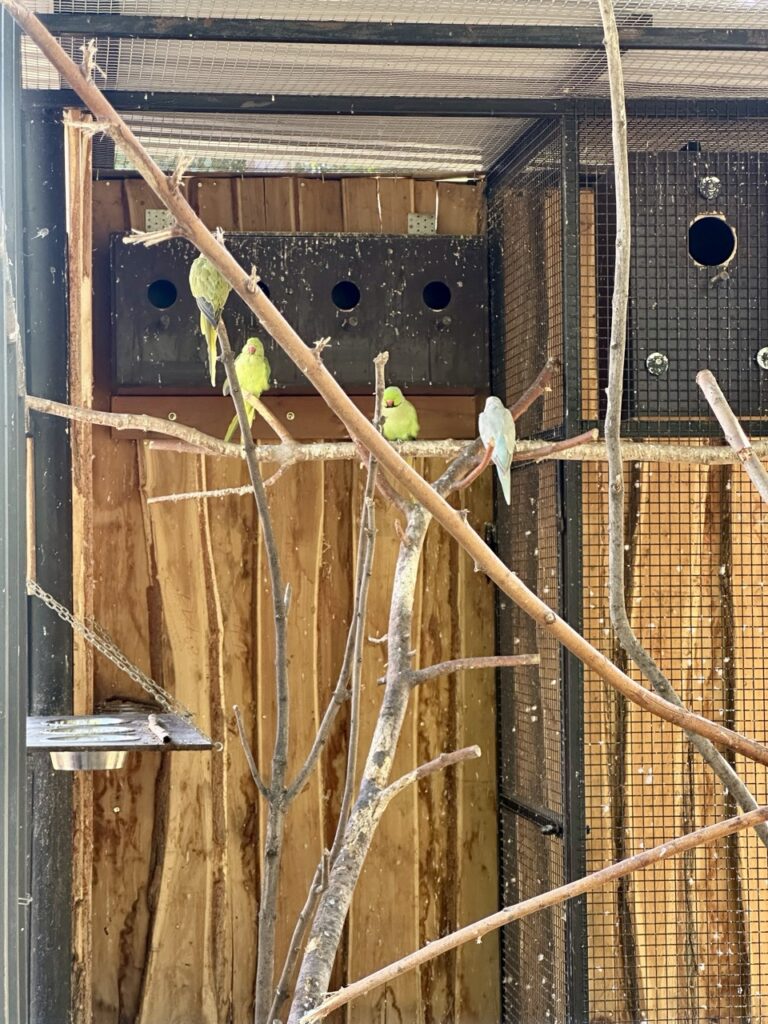
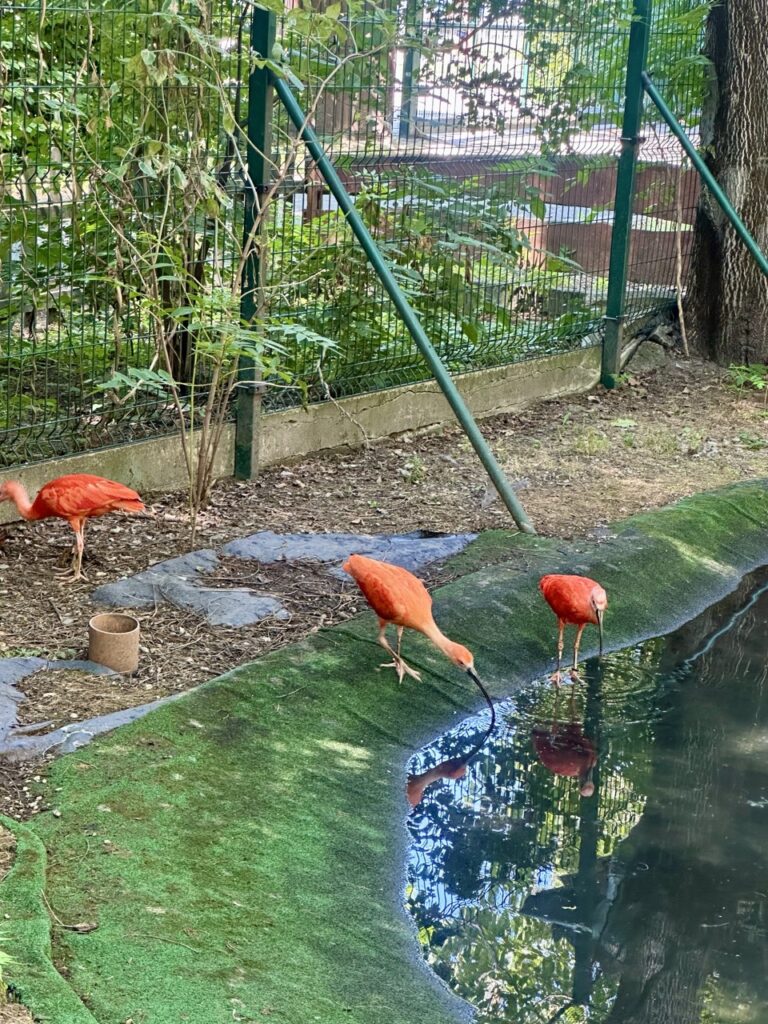
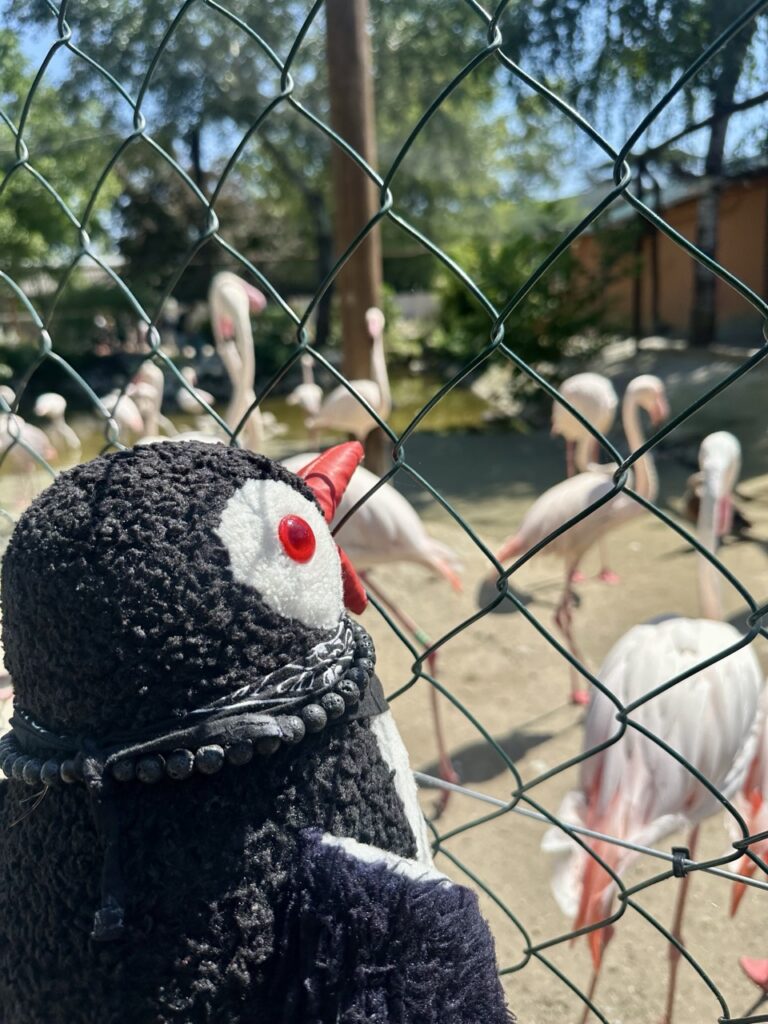
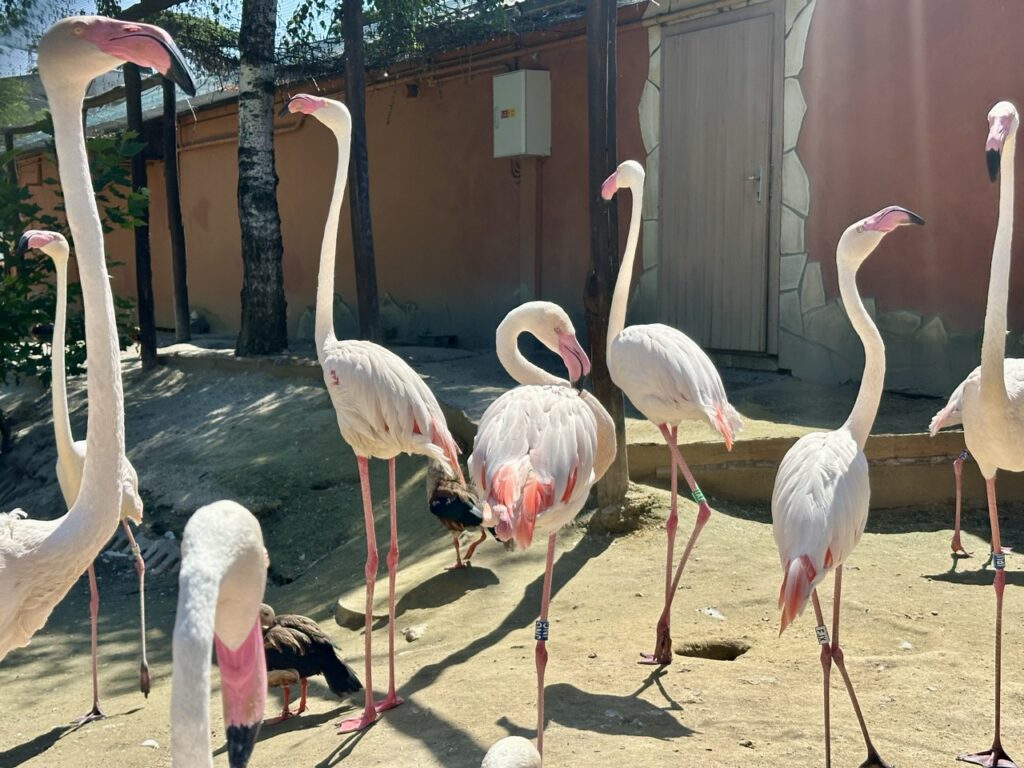
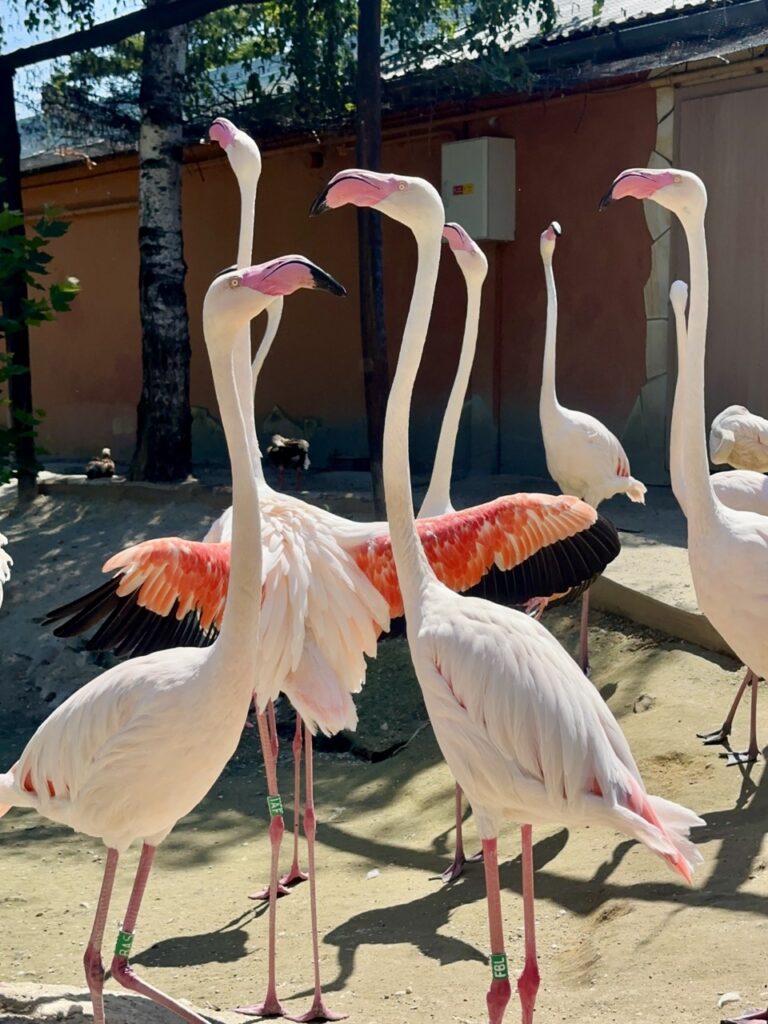
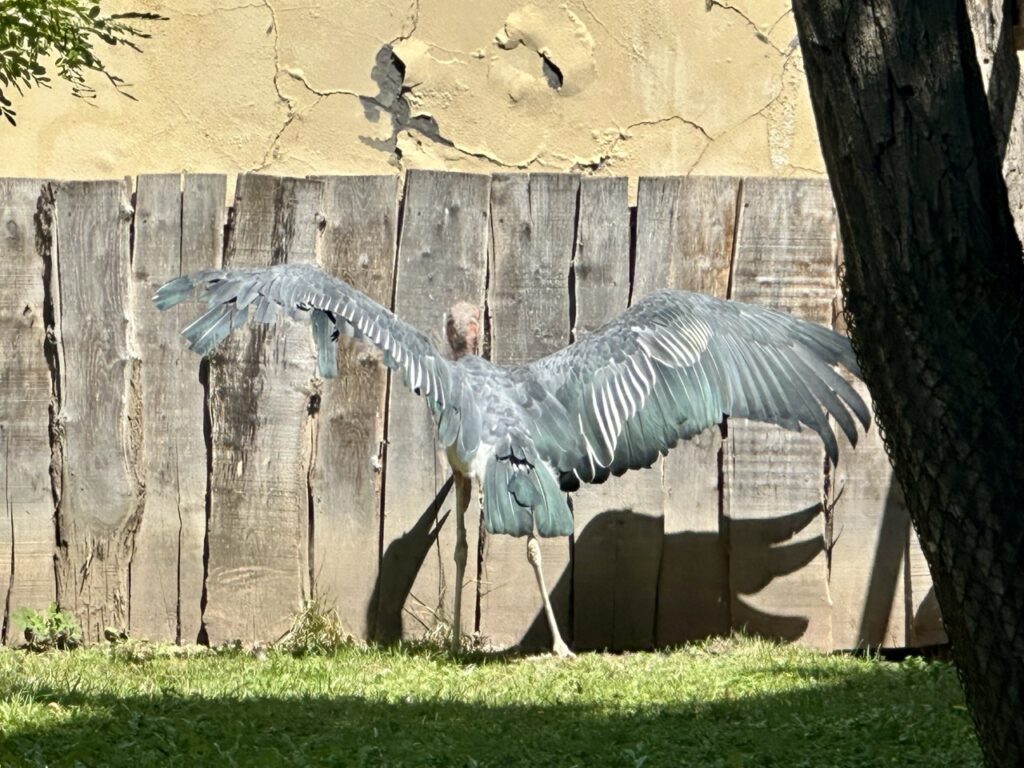
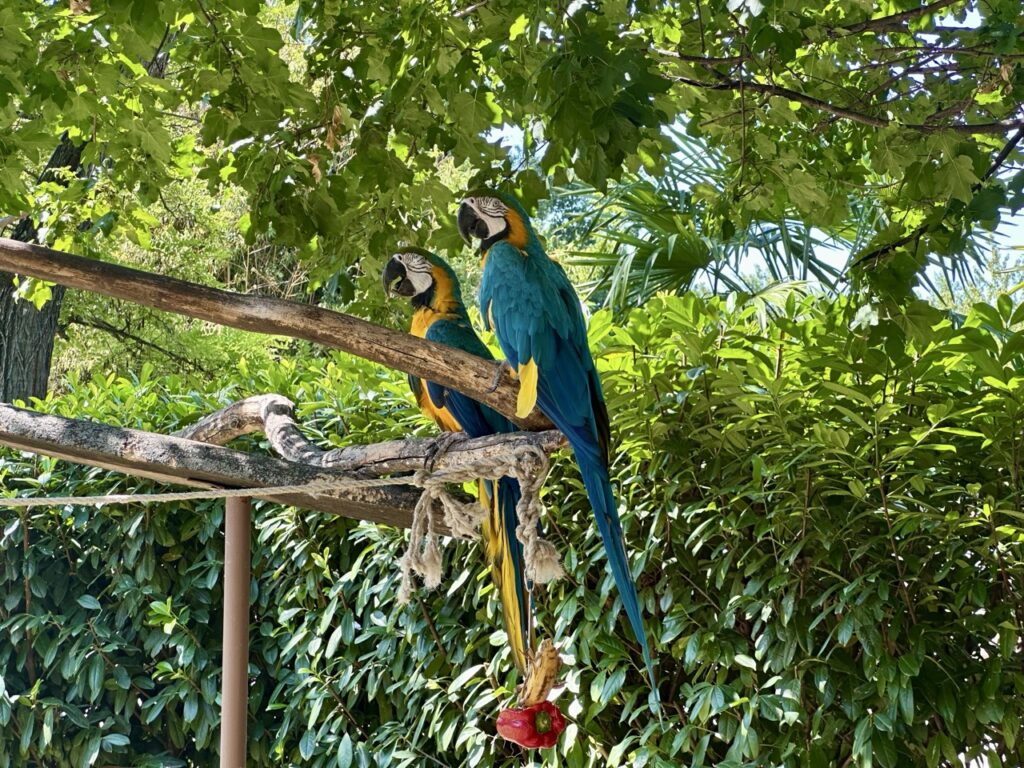
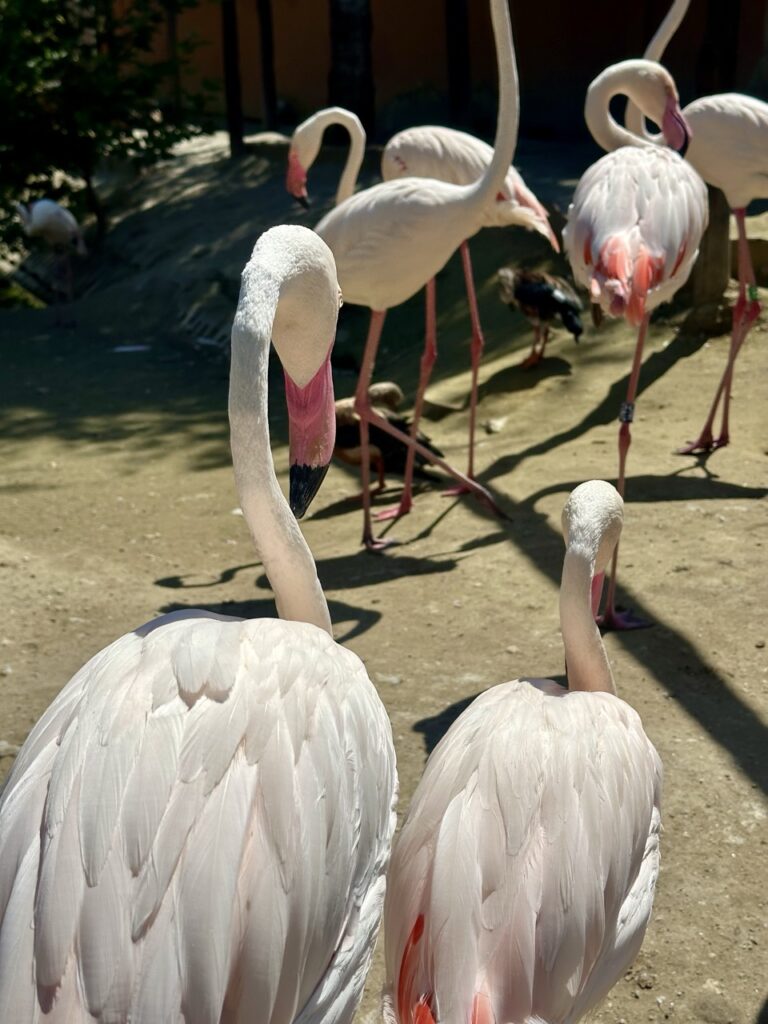
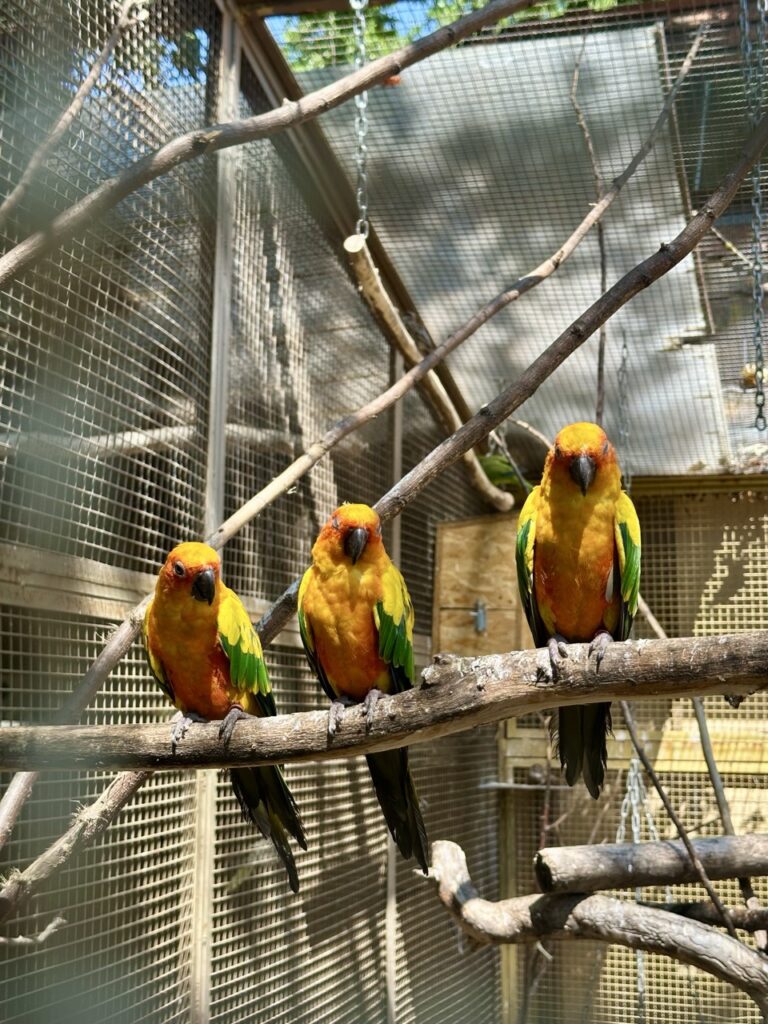
If you love birds, Györ Zoo delivers more than you’d expect. The first splash of color often comes from the flamingos, standing tall and perfectly still in their pond like living lawn ornaments, until one randomly honks and the whole flock joins in. Not far from them, the parrot enclosures are full of sound and personality. Bright macaws, cockatoos, and other tropical species call out, climb ropes, and sometimes mimic sounds or words. There’s also a walk-through aviary where smaller birds zip past at eye level, and a few larger birds like owls and storks perched quietly in shaded areas. Whether you’re into colorful feathers, quirky calls, or just want a peaceful spot to watch nature do its thing, the bird zones are worth lingering in.
Penguin Parade Our Personal Highlight
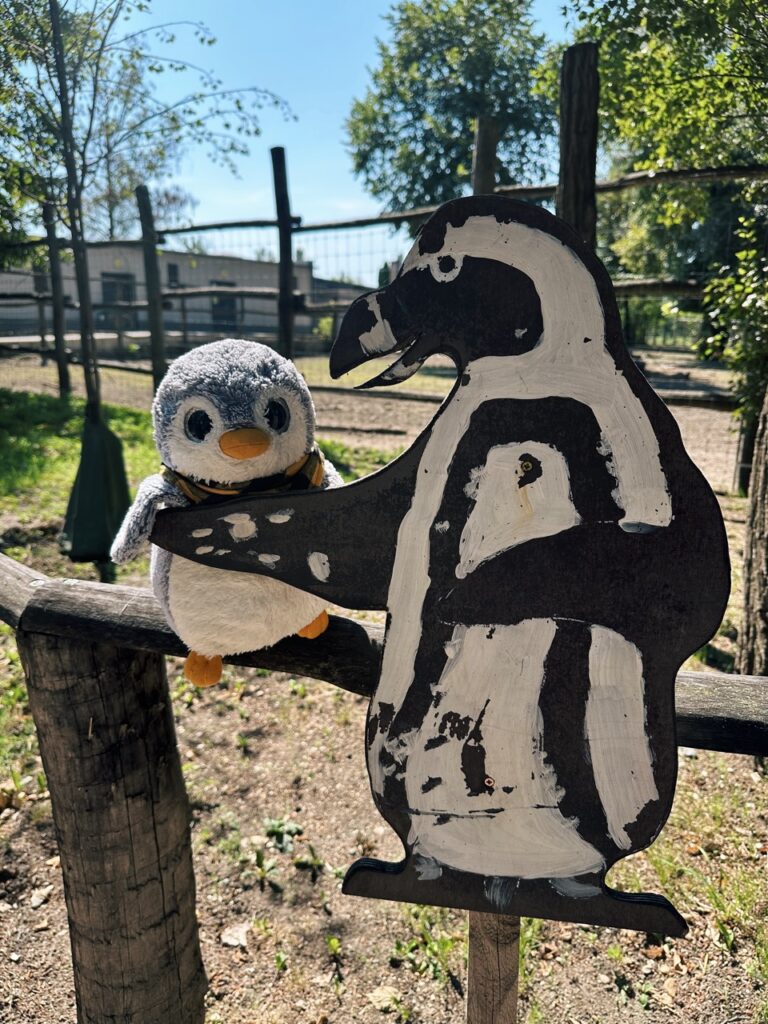
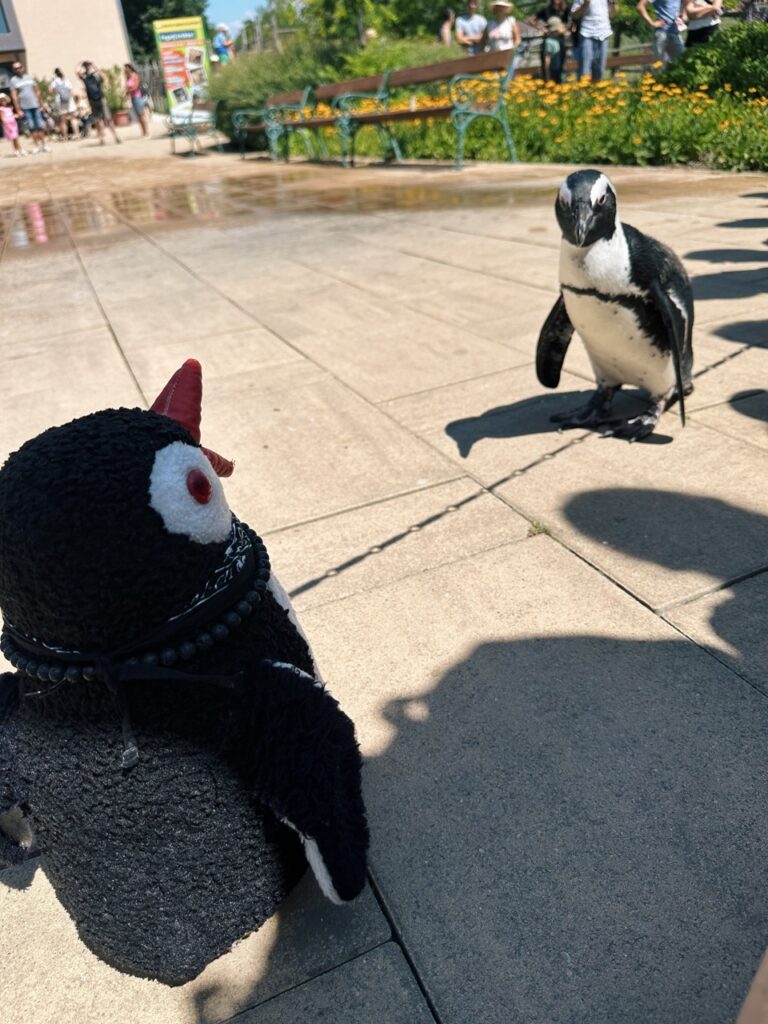
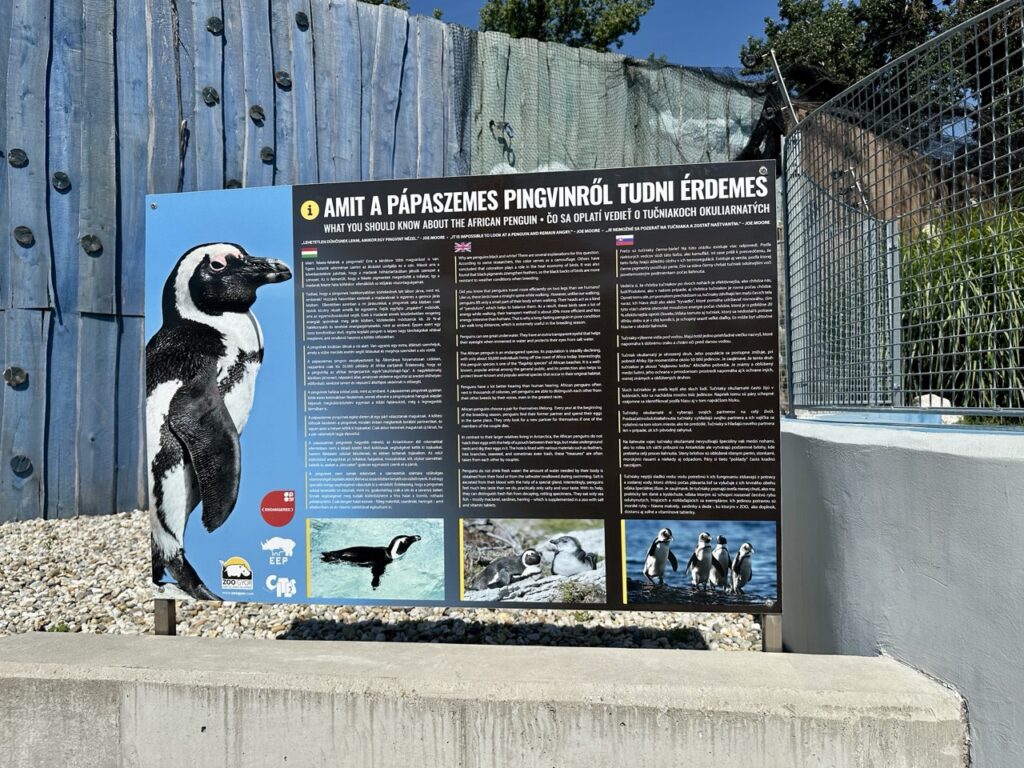
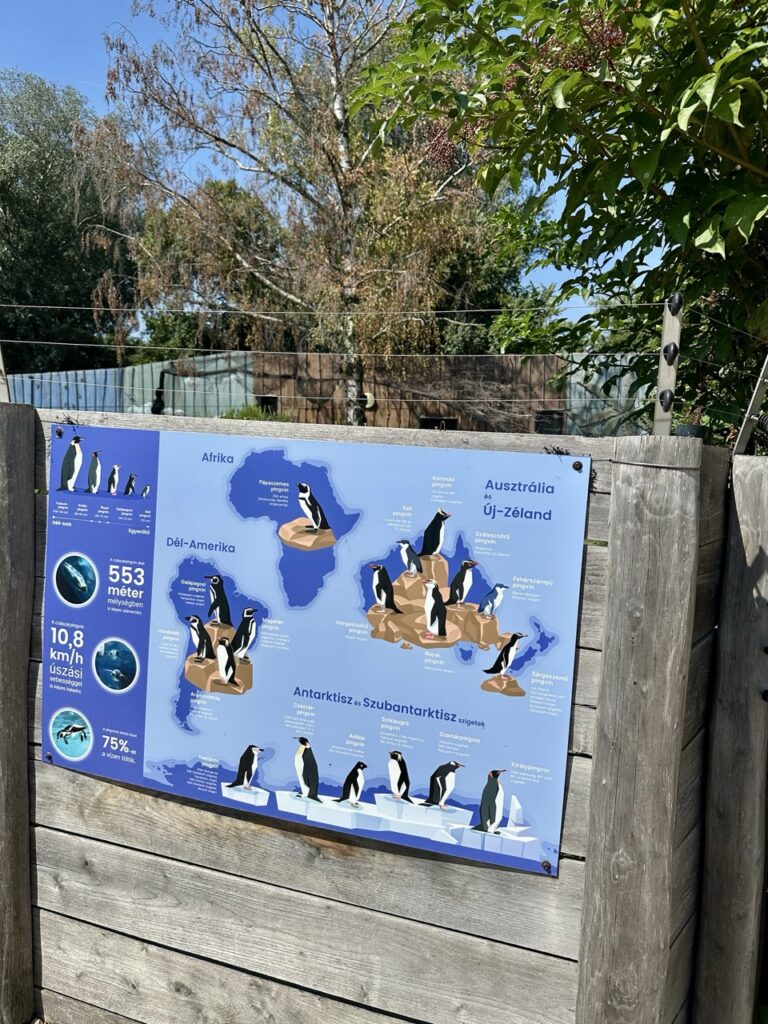
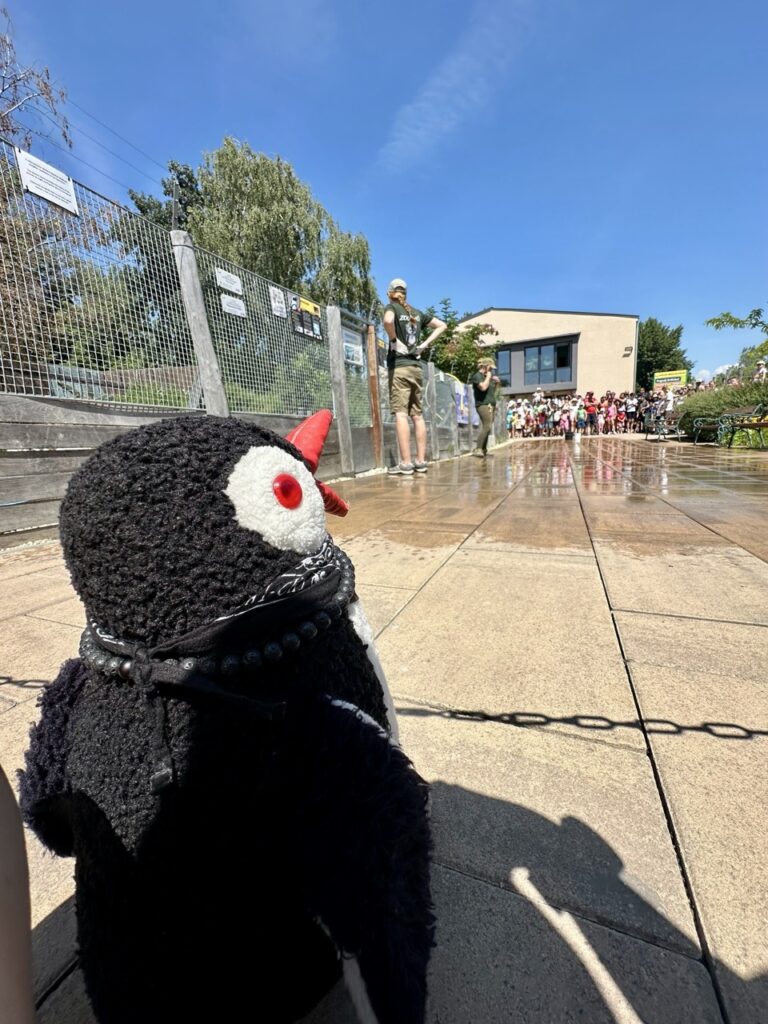
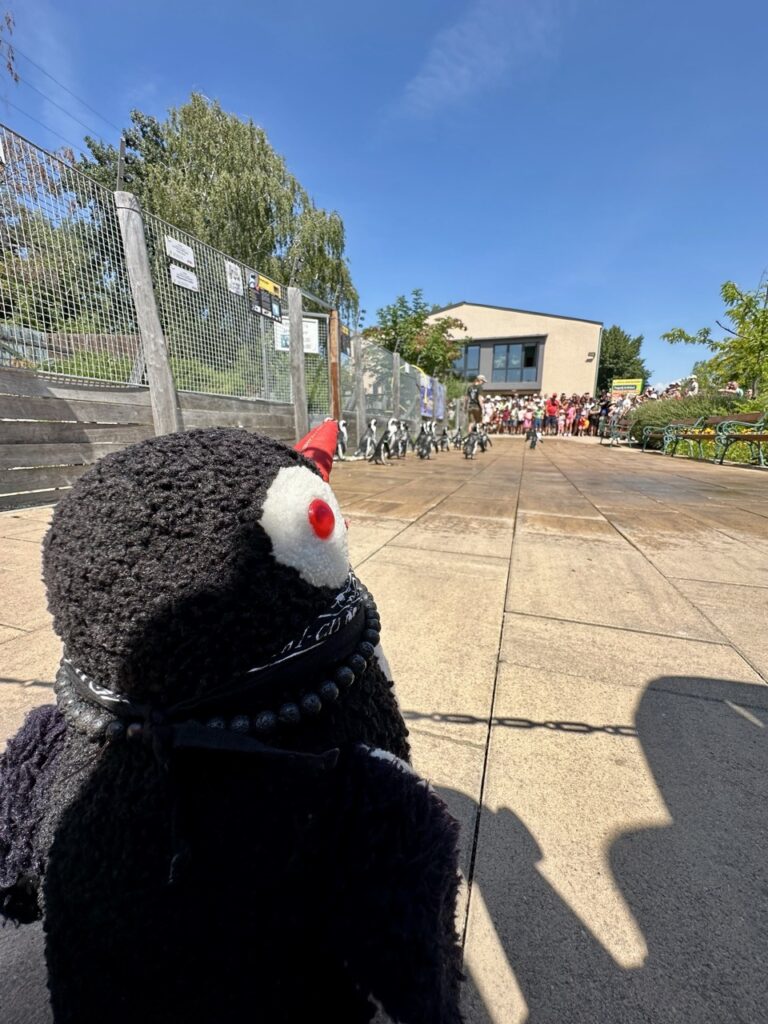
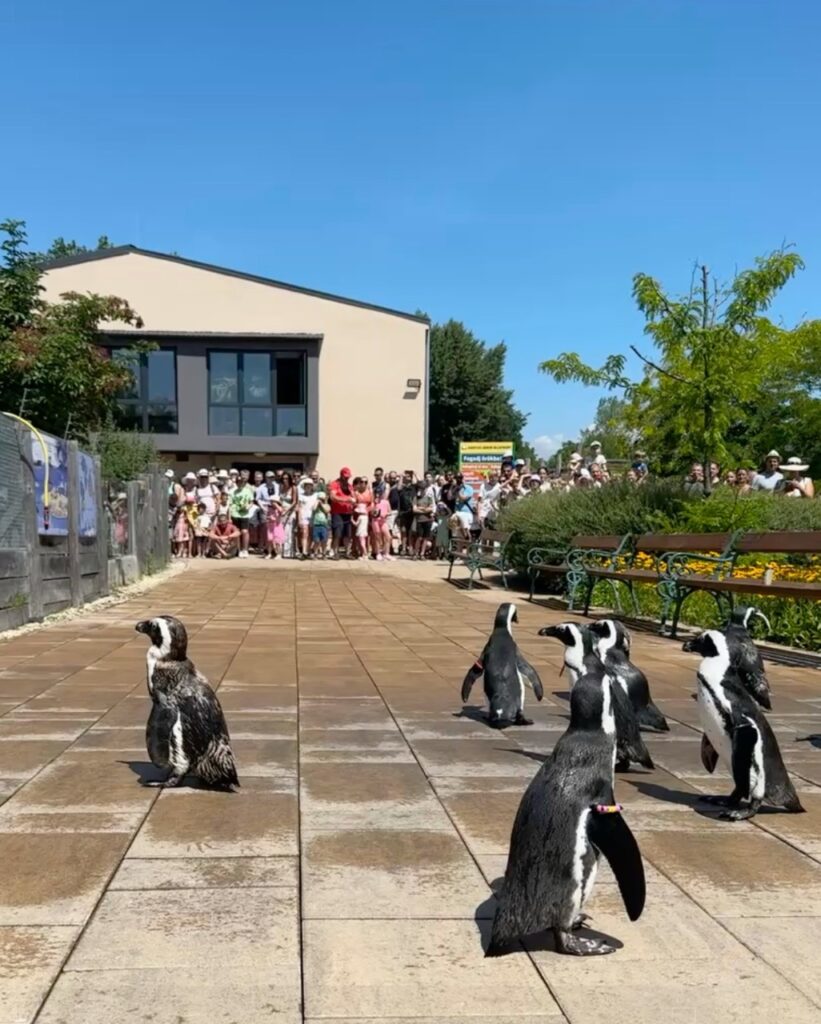
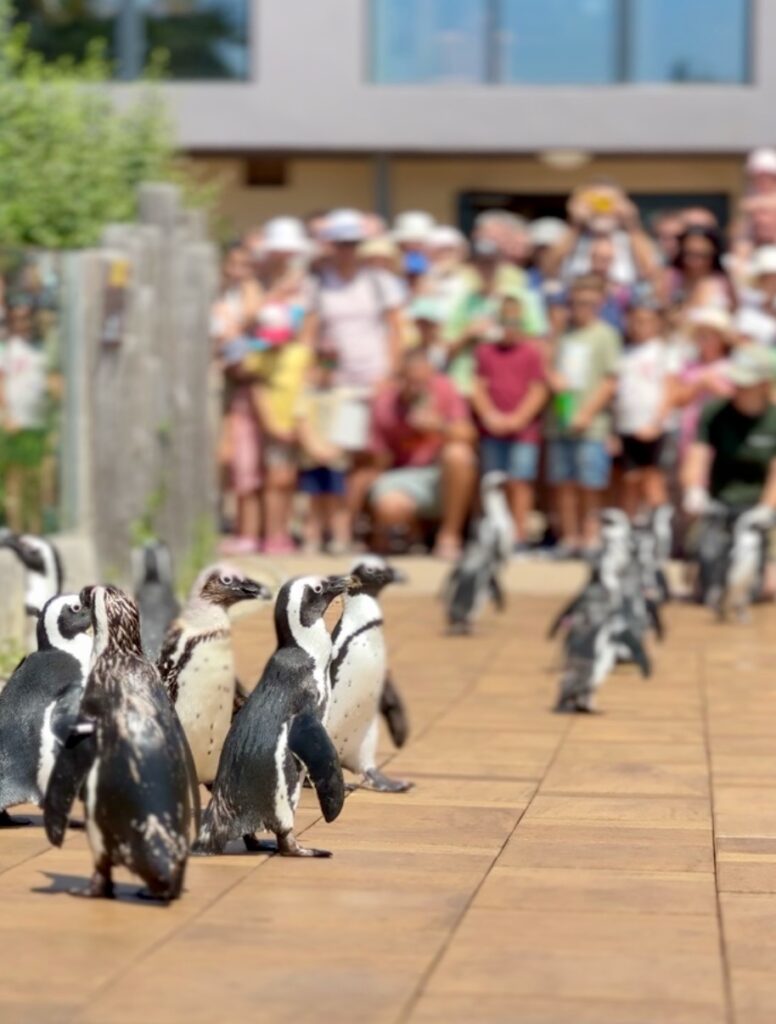
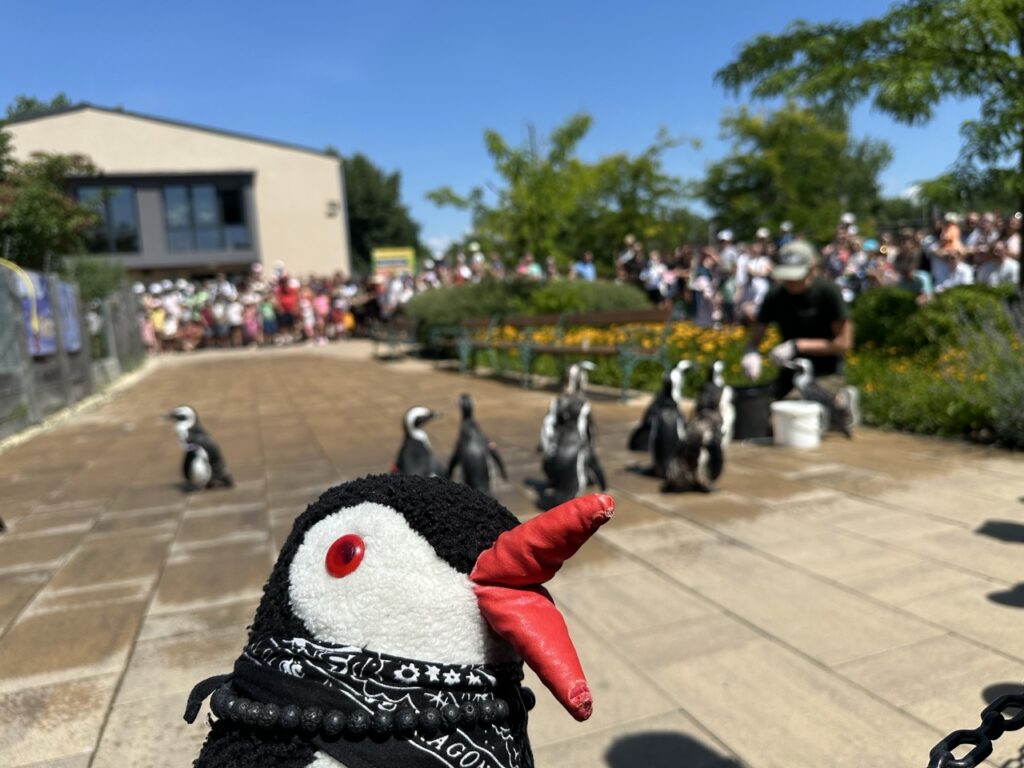
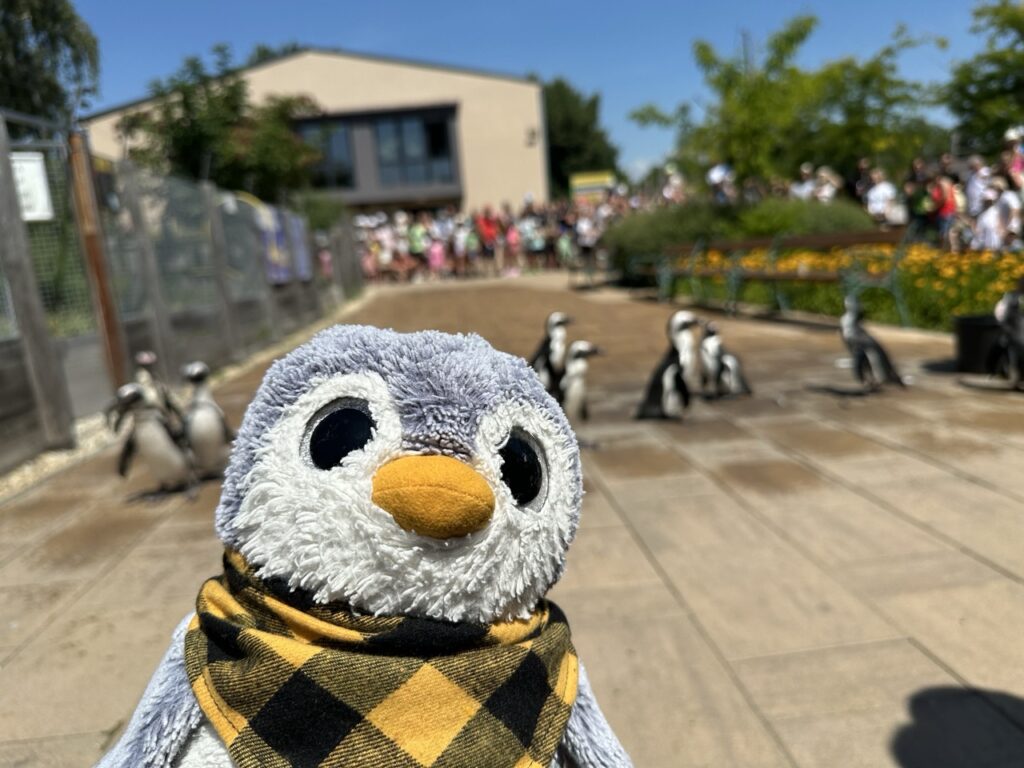
Yes! Of course, they have penguins here; that’s why we came. One of the absolute highlights of our visit was seeing them, and not just because we’re naturally biased in their favor. Györ Zoo is home to a small but lively colony of Humboldt penguins, a South American coastal species known for their spotted bellies and pink patches around the eyes. There were around ten to twelve of them when we visited, all housed in a spacious outdoor pool area with rocks, shaded spots, and a glass wall for clear viewing.
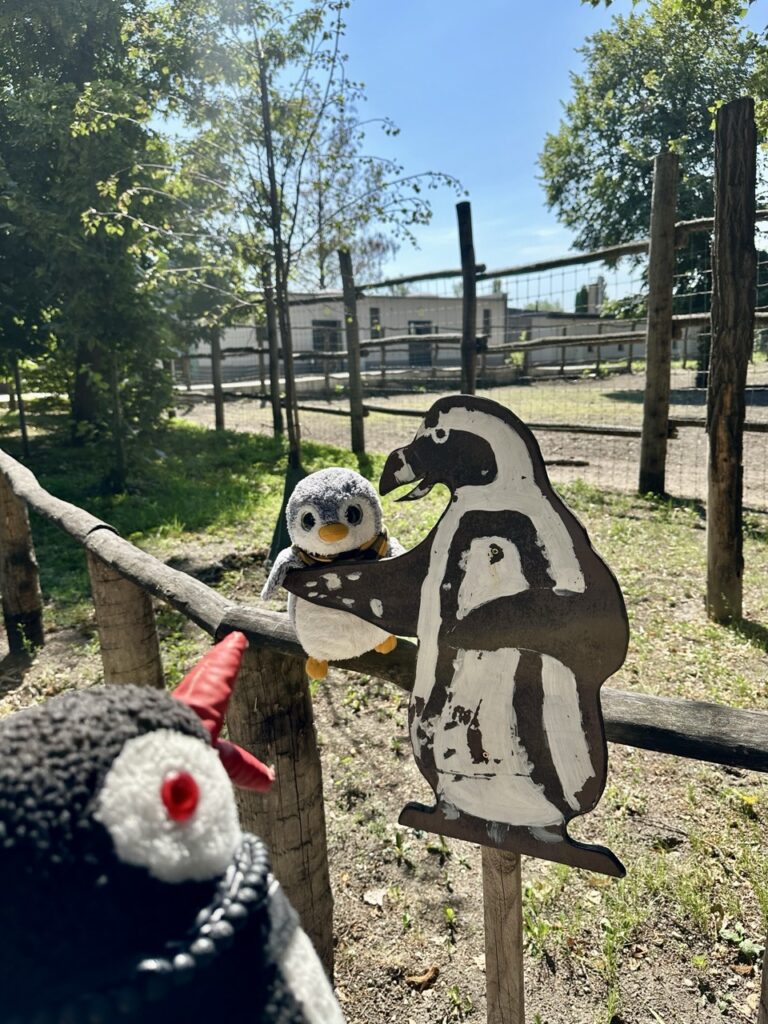
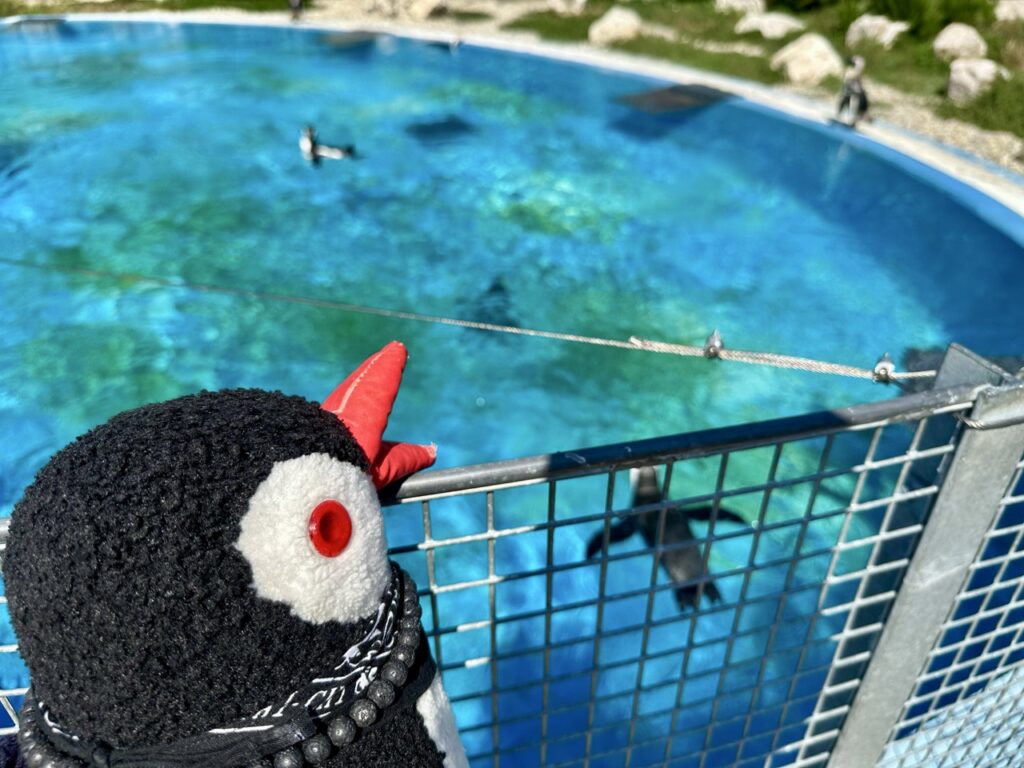
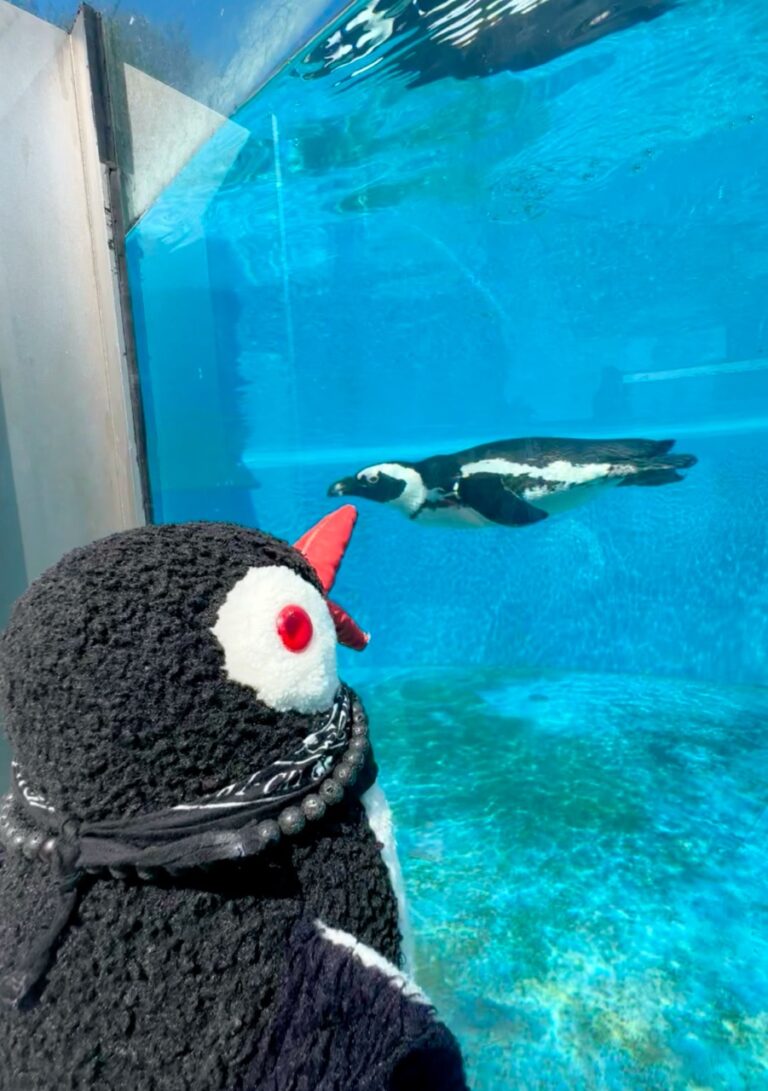
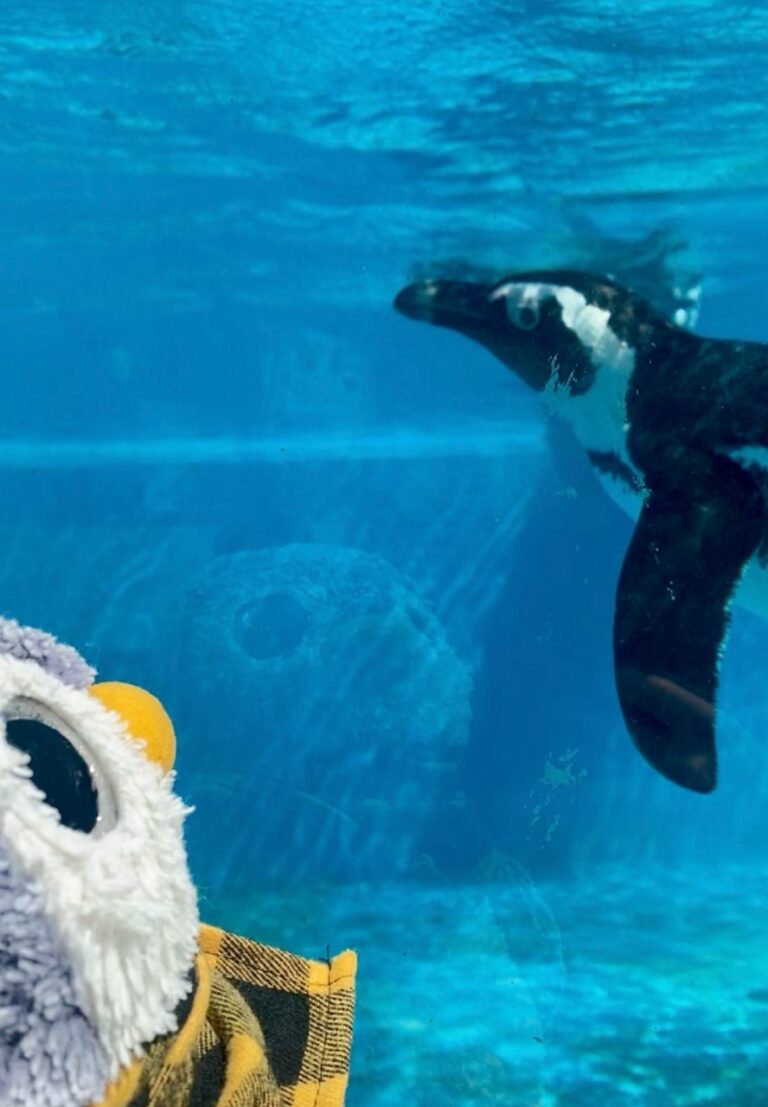
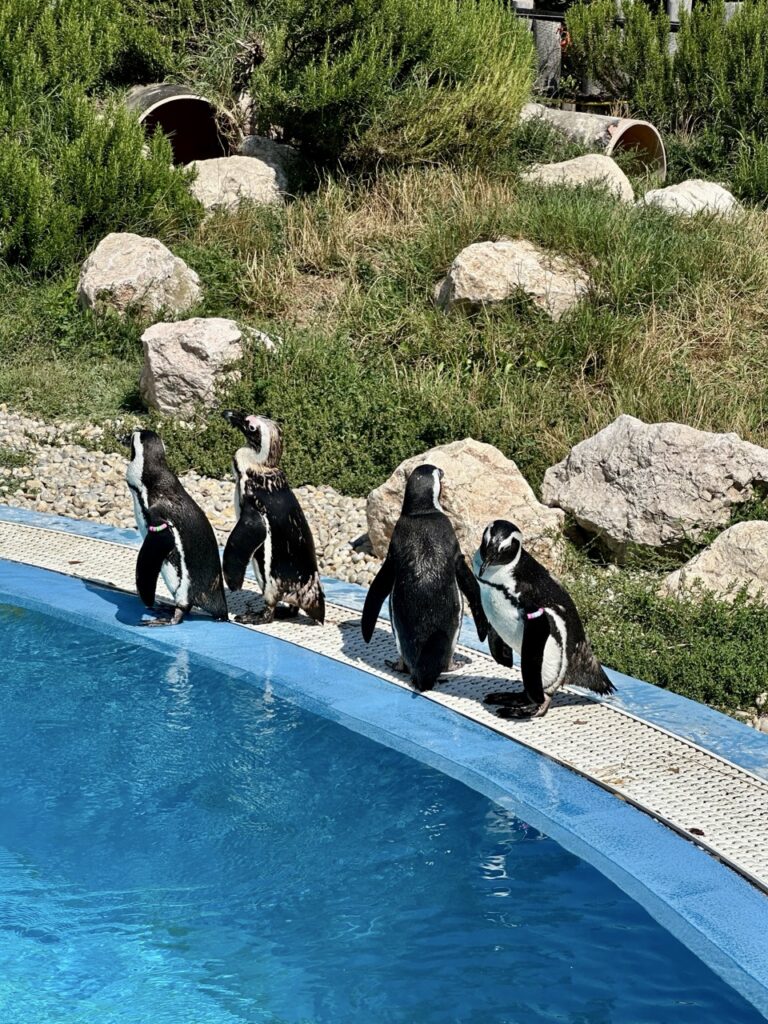
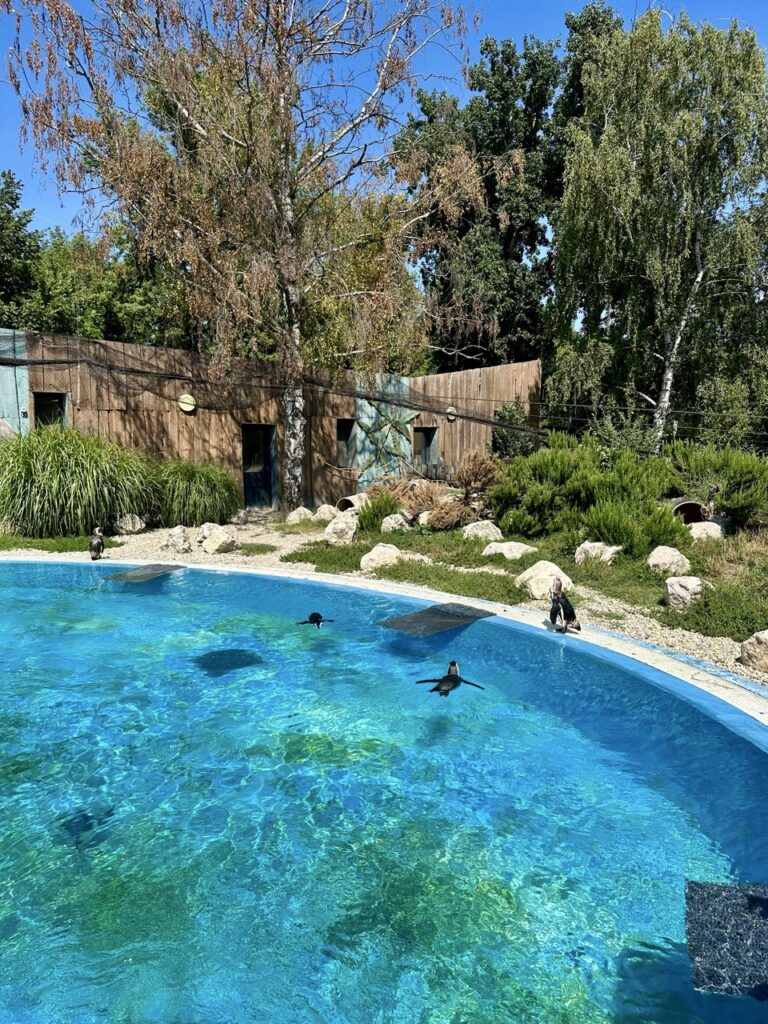
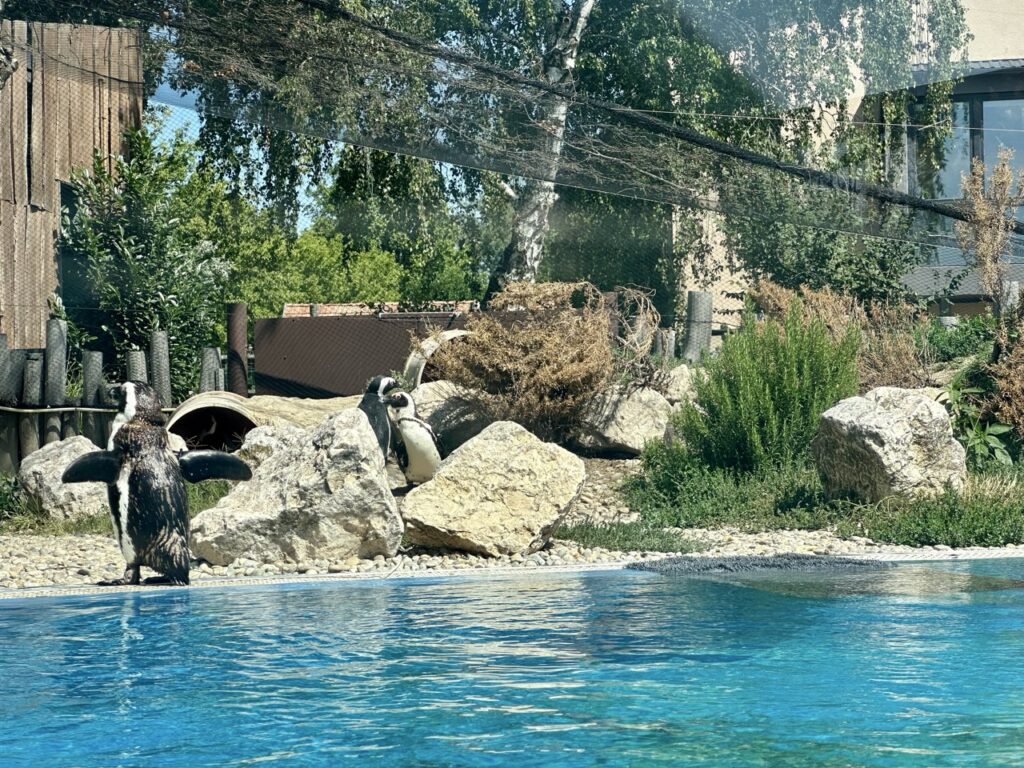
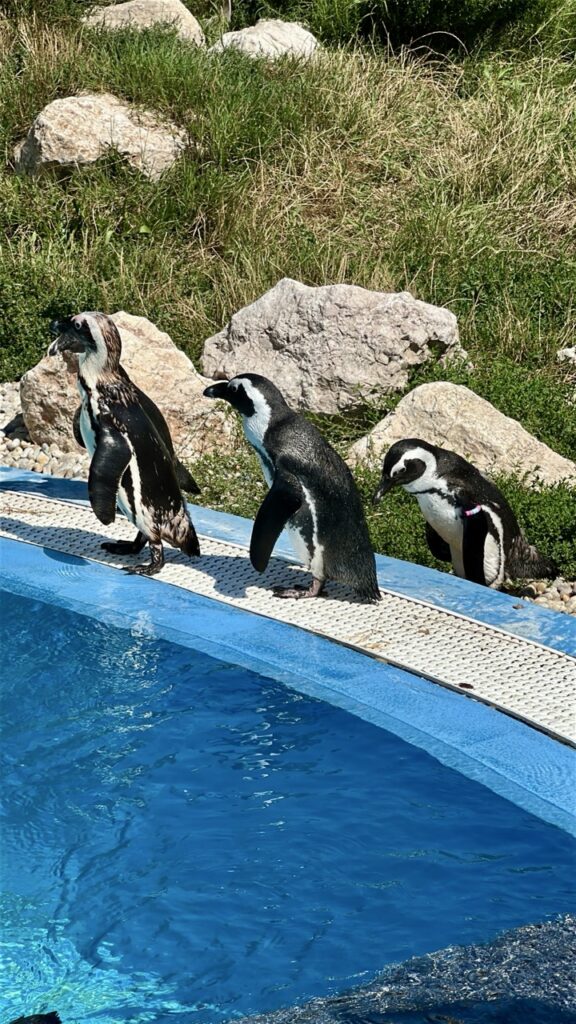
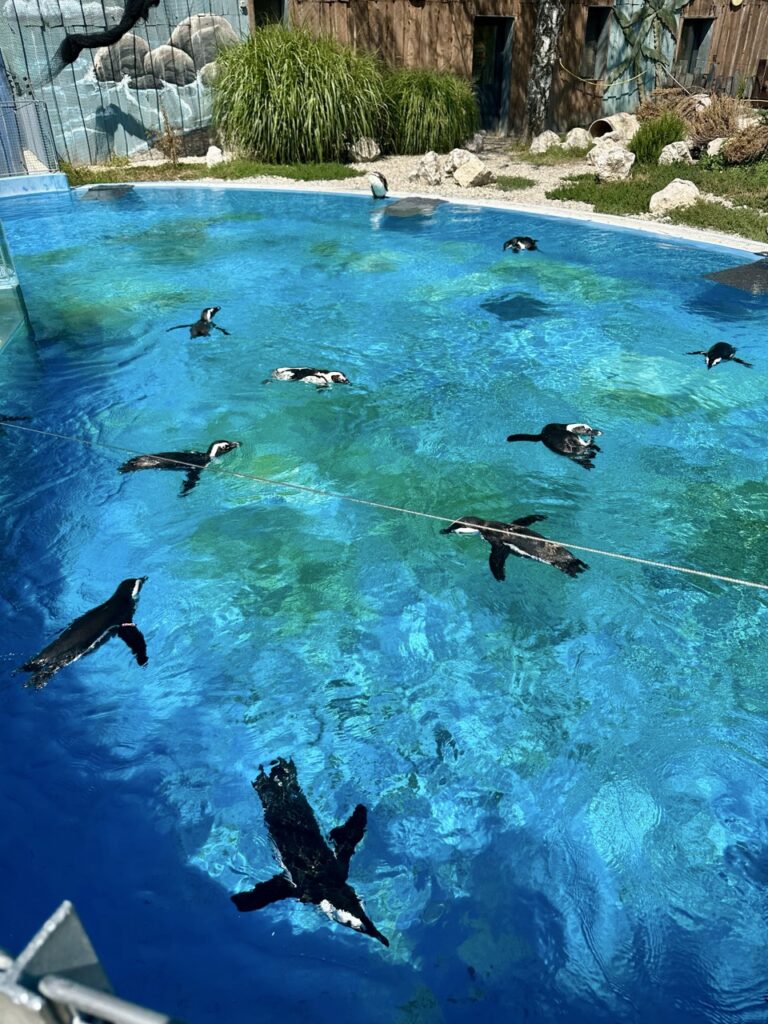
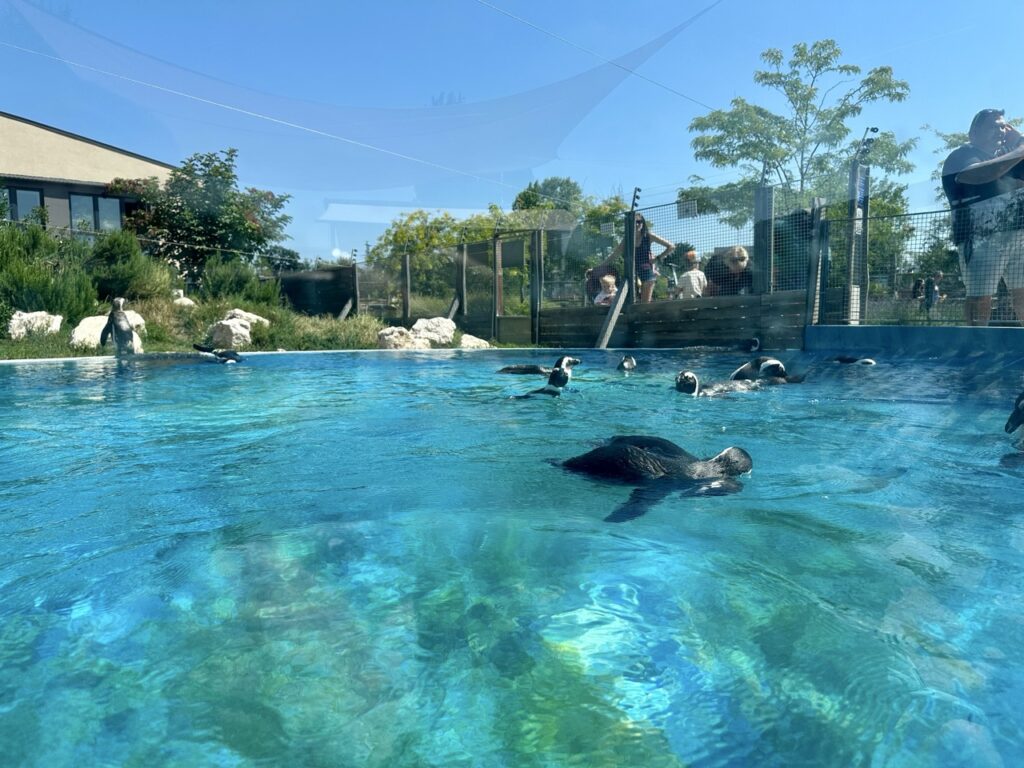
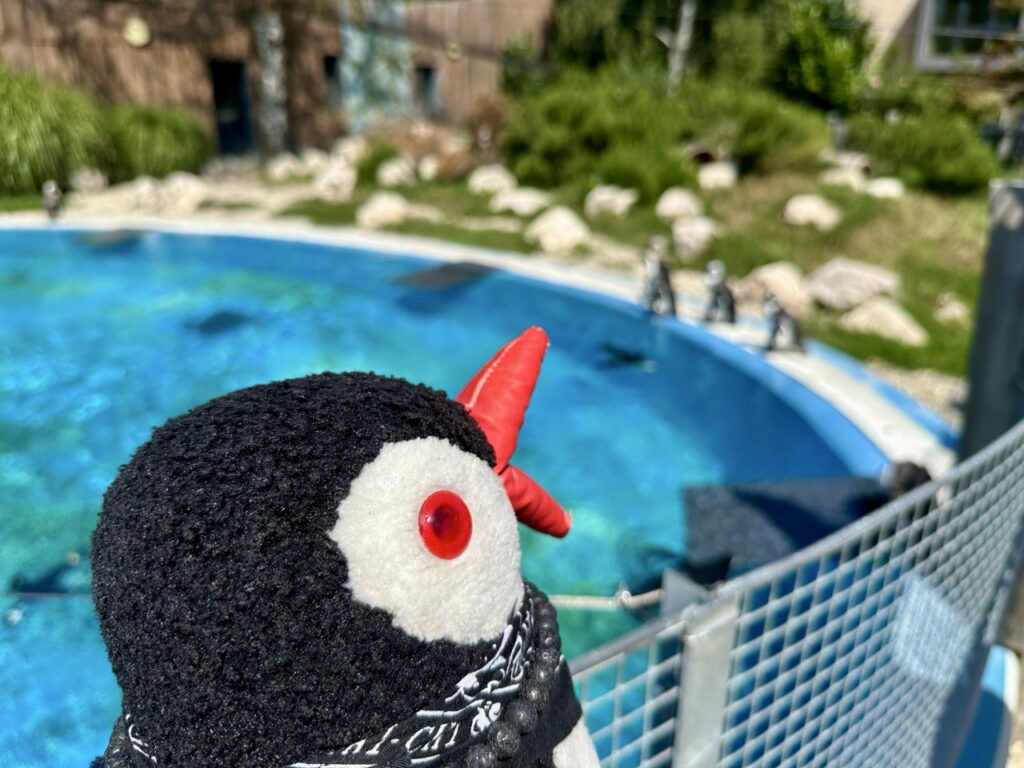
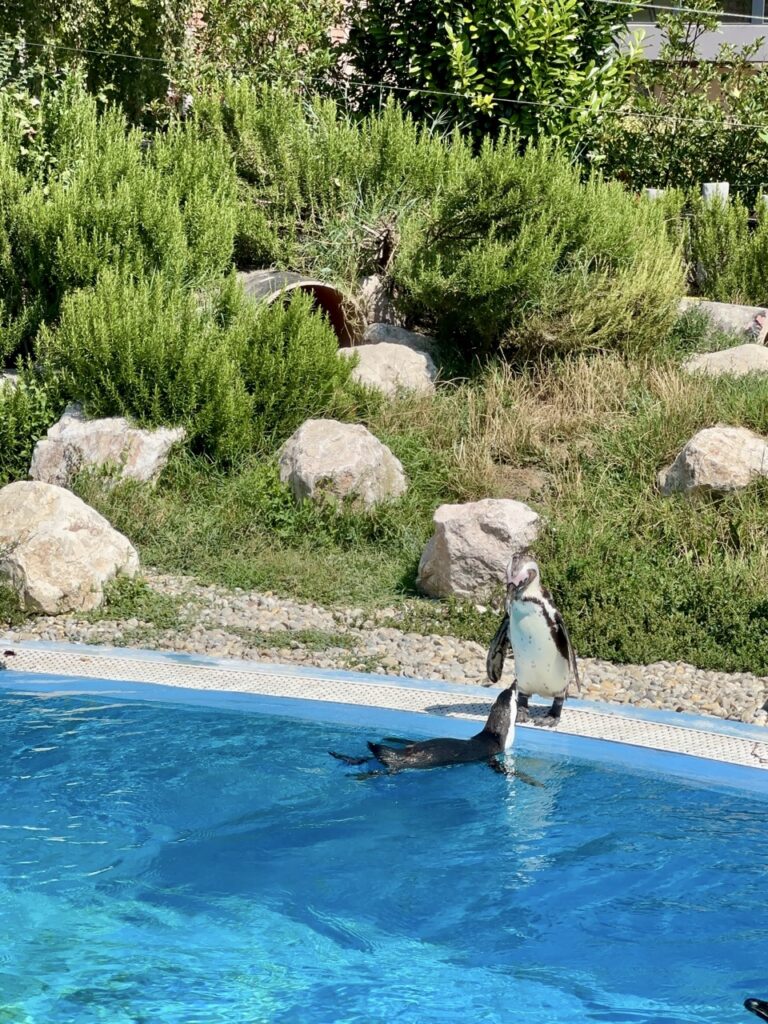
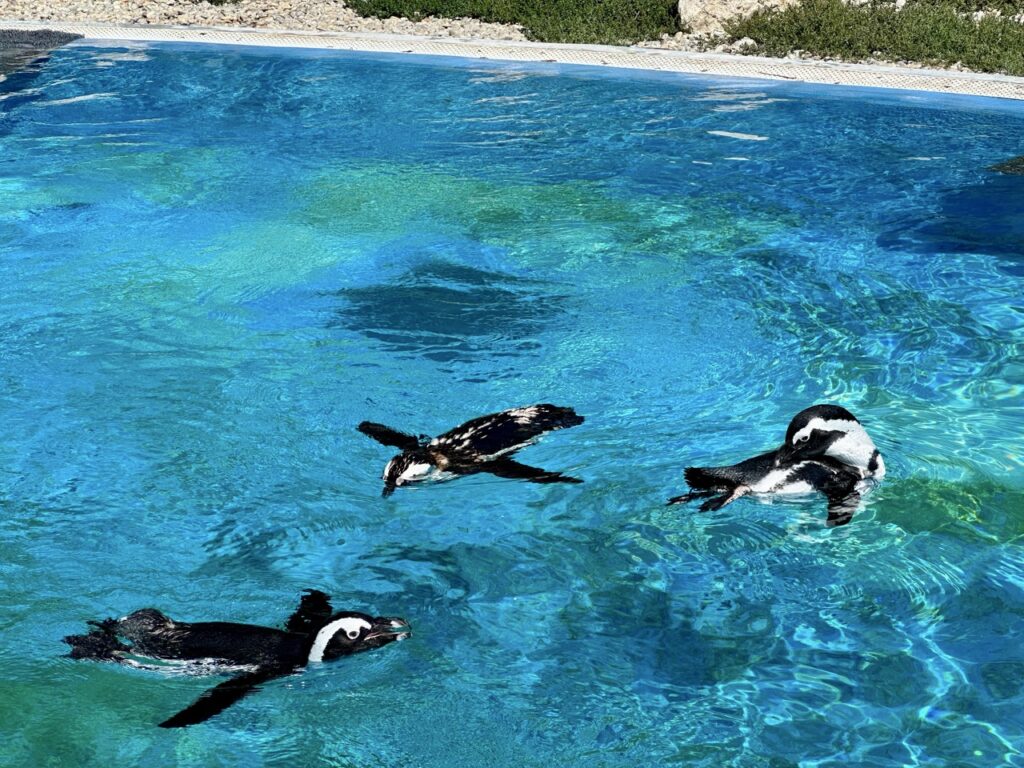
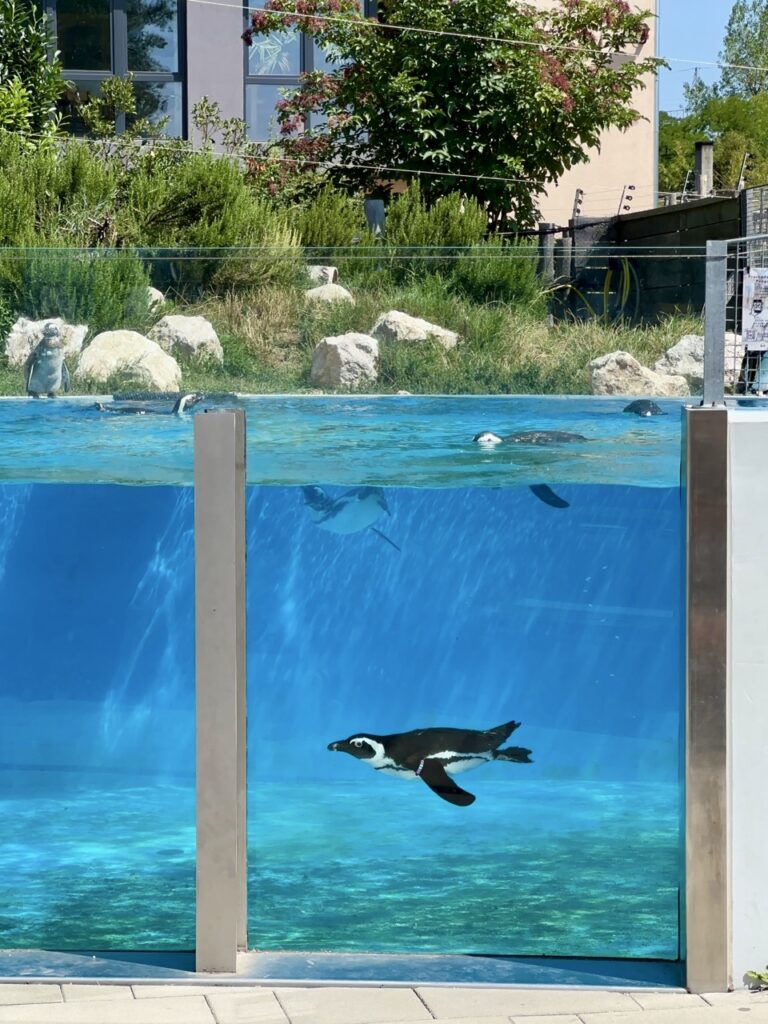
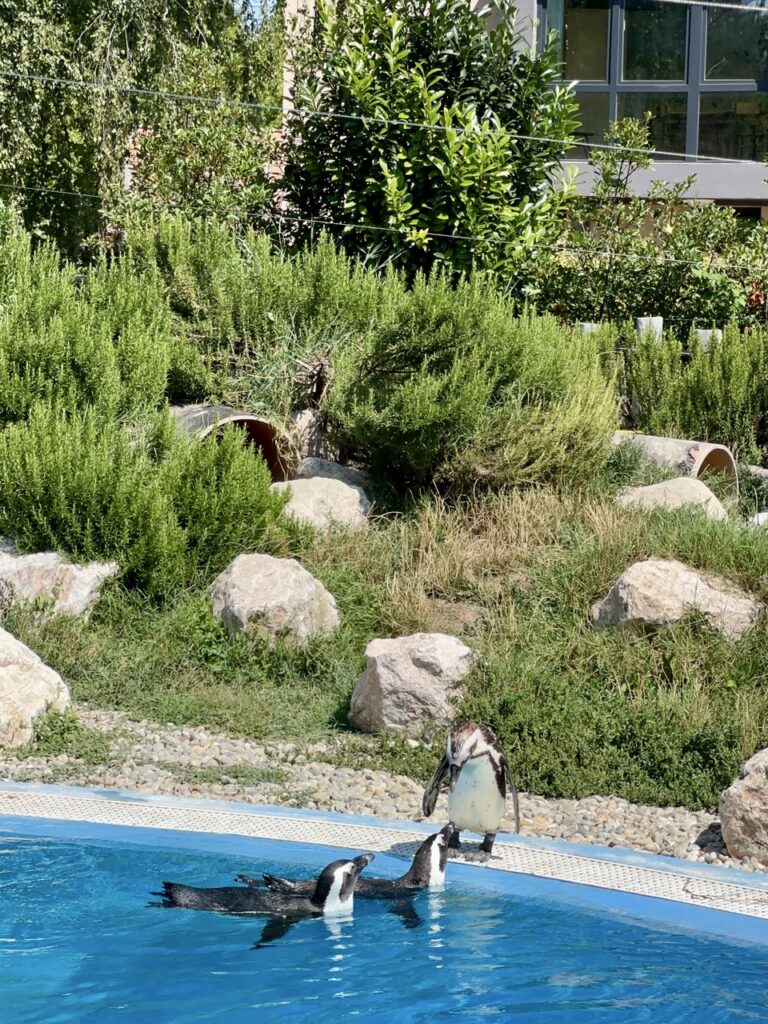
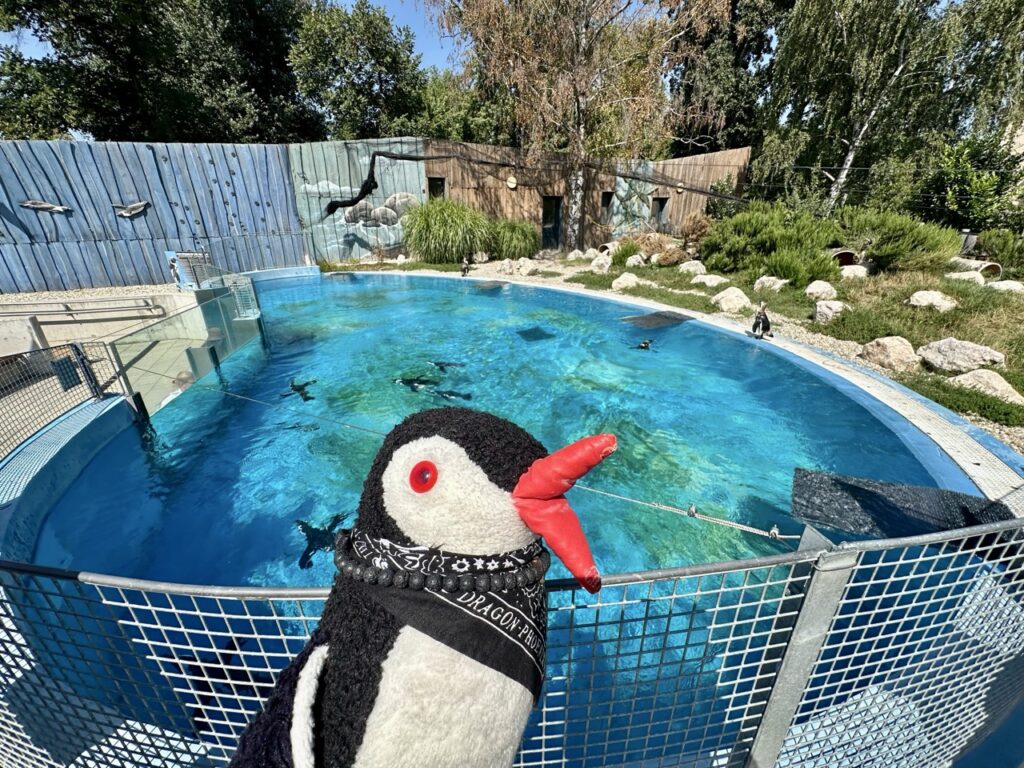
We timed it just right and caught their feeding session. A zookeeper arrived with a bucket of fish, and suddenly the sleepy penguins turned into little torpedoes. They waddled over in a line, some squawking, some jostling for position, all laser-focused on snack time. One even did a small hop, clearly the eager type.
It was such a fun moment, watching them interact, splash into the water, dart after fish, then waddle right back out like it was no big deal. The feeding was done right in front of us, no barriers or stage setups, just you, the penguins, and a few flying fish. You can get close to them. But note, no touching.
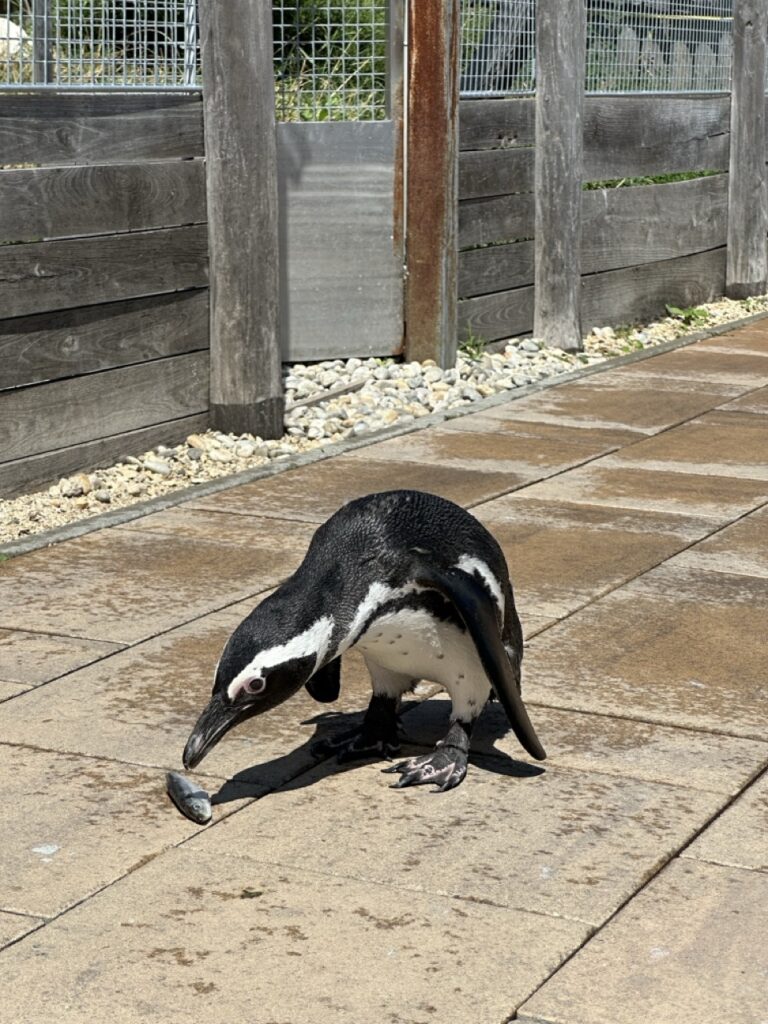
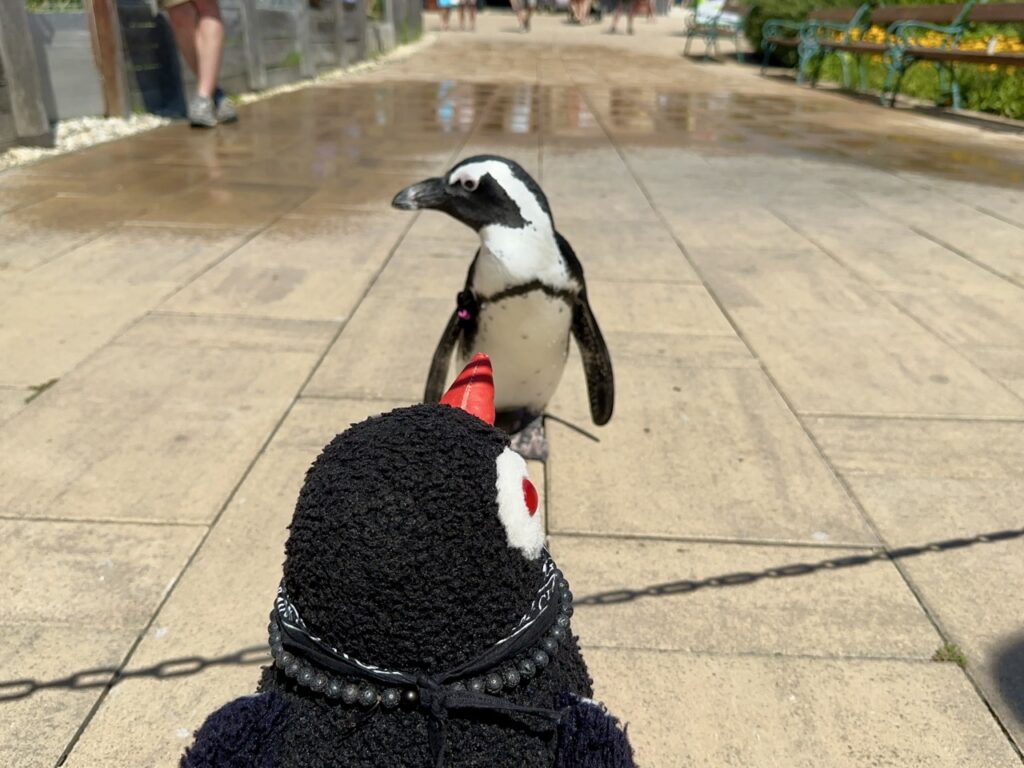
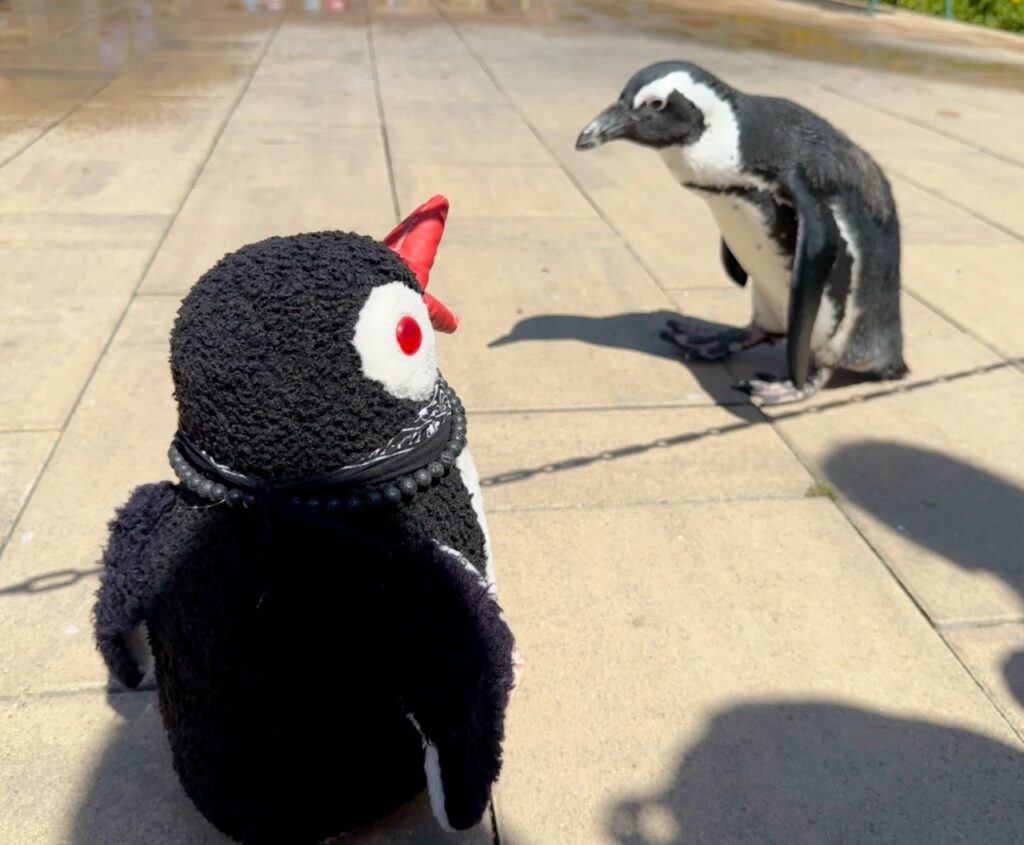
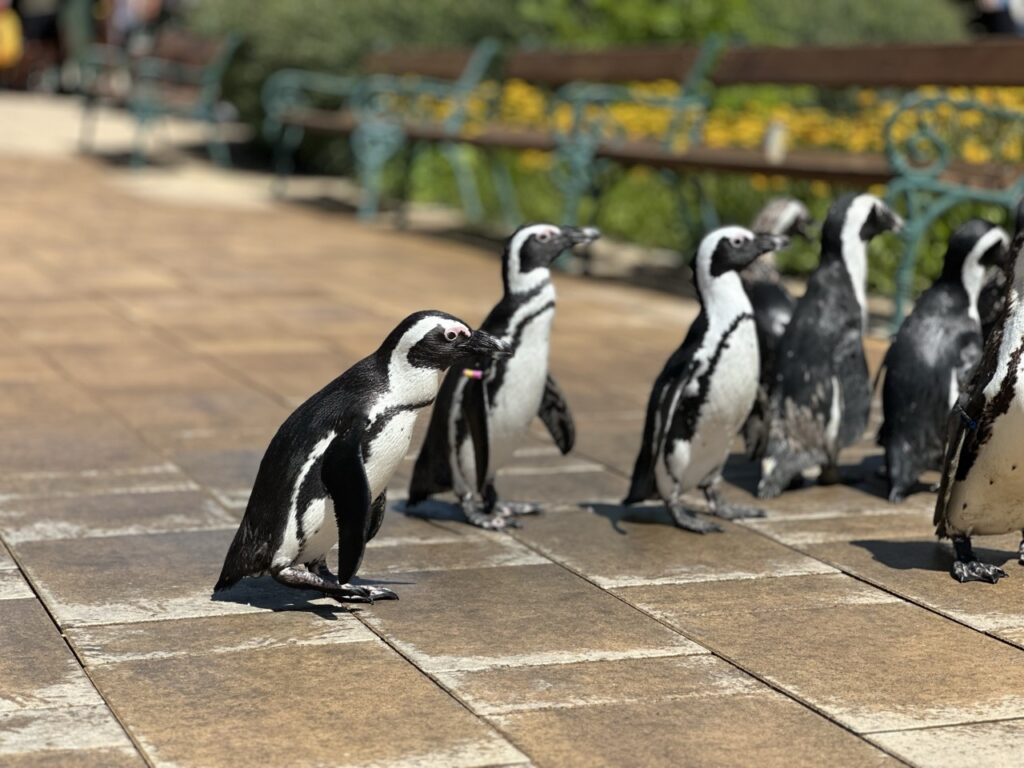
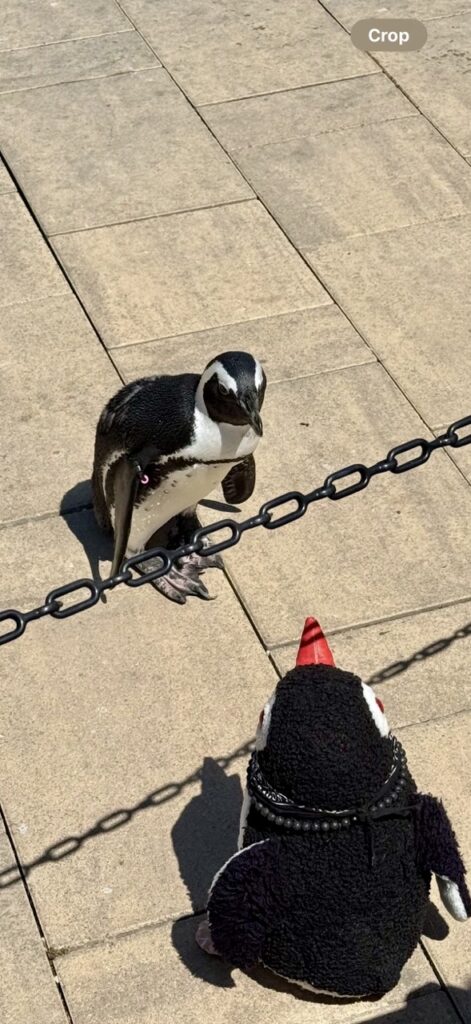
It was truly the highlight of our visit. The Penguin Walk.

What Program You Can Expect: Zoo Shows & Animal Encounters
Zoo Show (Animal Training Showcase)
- High season (Mar 15 – Oct 31): Daily at 11:00 & 15:00 at the Arena
- From Sep 1: Weekends & holidays only at 11:00 & 15:00
- Winter (Nov – Mar): Daily at 11:00 & 15:00 at the Playground House
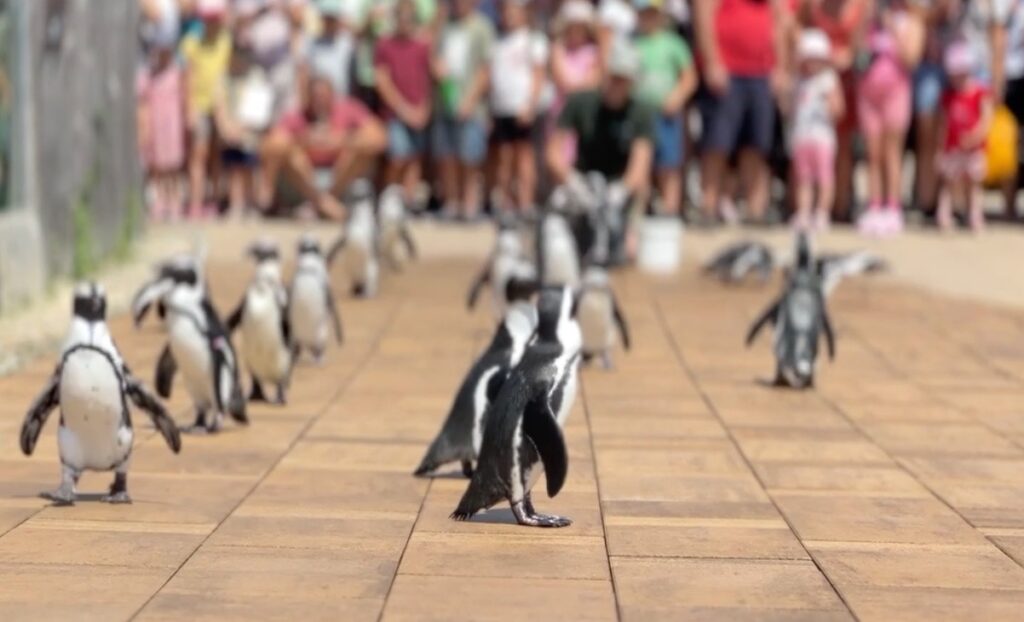
Penguin Walk
- High season: Daily at 12:00 & 16:00 at the penguin enclosure
- Winter: Daily at 12:00
- Penguins leave the enclosure and explore. Watch them play, chase shadows, or even sneak into strollers.

Elephant Training
- High season: Daily at 12:30 & 16:30 at the elephant training wall
- Winter: Daily at 12:30 (outside or inside depending on weather)
- Watch elephants train for health checks and transport prep
Guinea Pig Train
- High season: Daily at 10:20 & 17:30 (outdoor enclosure, weather permitting)
- From Sep 1: Weekends & holidays only at 10:20 & 17:30
- All year: Daily at 11:30 & 17:00 at the Indoor Playhouse (runs in all weather)
- Guinea pigs run through elevated tracks in a cute mini train
Feeding Sessions
- Held daily in summer and on weekends/holidays in spring and fall
- Watch lions and tigers feed
- Visitors can feed giraffes, deer, and even a snouted bear
- Times vary, check info boards or the zoo’s Facebook page
Petting Zones
- Goat Petting Area: Get close to hungry goats (zoo treats available on-site)
- Indoor Playhouse: Handle or observe animals like snakes, tarantulas, agamas, frogs, rats

Is Györ Zoo Worth It?
Absolutely. Györ Zoo surprised us in the best way, relaxed, walkable, and full of moments that stick with you. From watching penguins waddle right past your feet to seeing elephants up close during training, it’s the kind of place that blends education with genuine fun. Whether you’re passing through on a road trip or making Győr a base for a few days, this spot is more than just a detour. It’s a proper experience. And if you time it right, with a coffee in one hand and a giraffe reaching down for a snack in front of you, you’ll see why we’re already talking about going back.
What we loved most about our visit (apart from the penguins) was how active the animals were and how close you can get to them. The enclosures feel open, and many feature glass viewing panels or walk-through areas that allow you to see the animals without fences obstructing your view.
Pack your bag and get ready to explore!

This post contains affiliate links. If you click and buy, I might earn a tiny commission, enough to help a penguin keep up its globe-trotting lifestyle. No extra cost to you, just more fish for me. Thank you for supporting the adventure!