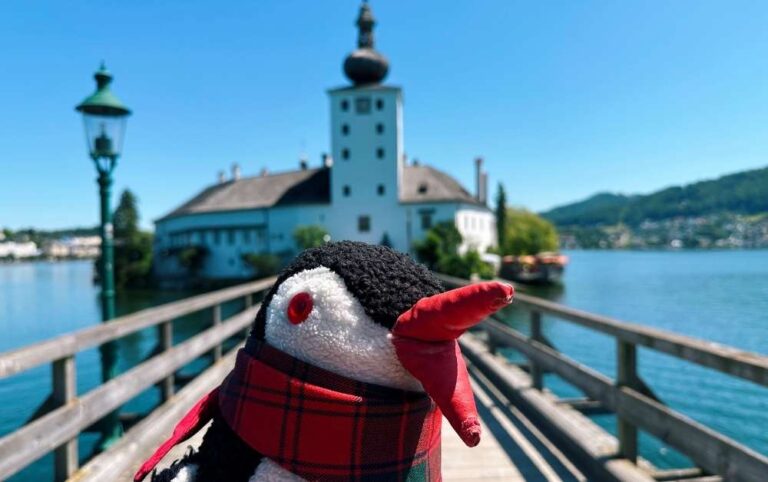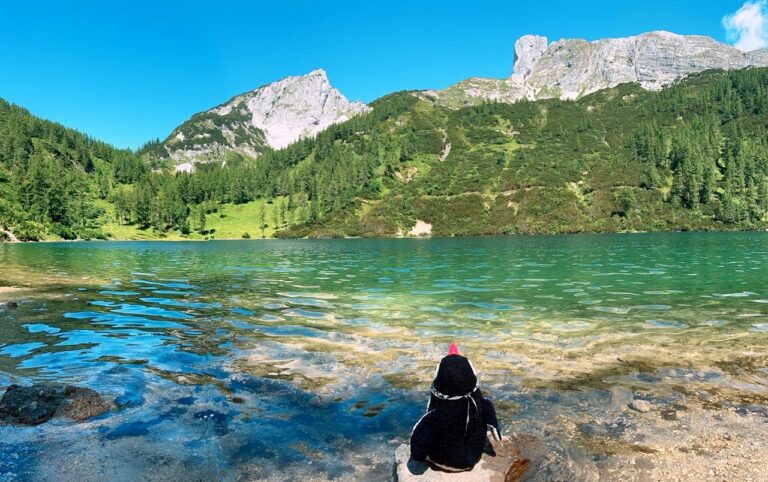

Things to Do in Hallstatt: Austria’s Fairytale Lake Village
We’d had Hallstatt on our bucket list for years. And long before it was famous. It’s one of those places that shows up in postcards, travel magazines, and every dreamy Instagram feed now. We’d always wanted to see it for ourselves, and only now that it’s world-famous, we finally made it here. And don’t get us wrong: it’s beautiful. The kind of place that almost looks unreal when you first arrive. A glassy alpine lake reflects centuries-old wooden houses. The mountains shoot straight up from the shoreline. But here’s the truth: it’s also crowded. Tour buses roll in early. Selfie sticks are everywhere. The quiet charm we imagined? It takes some work to find. Still, we did, and that’s what made our visit worth it. We discovered peaceful trails, sat on benches with no one in sight, and took in views that felt completely untouched. This guide isn’t just about the highlights you already know; it’s also about where to go when you want to step off the main path. Whether you’re here for iconic photos, hidden spots, cultural history, or outdoor adventure, keep reading. We’ll help you explore the best of Hallstatt, Austria, without losing the magic to the crowd.


Why is Hallstatt in Austria So Famous
Hallstatt is famous for its breathtaking lakeside scenery, rich history of ancient salt mining, and charming village atmosphere. Located between Lake Hallstatt and the Dachstein Alps, it’s often called one of the most beautiful towns in Europe. You can also find here the world’s oldest salt mine, which gave rise to a prehistoric civilization so significant that archaeologists named an entire era after it—the Hallstatt Culture.
However, what really put Hallstatt on the global map is a combination of its postcard-perfect views, which skyrocketed thanks to global media. In 2006, it gained a wave of attention after appearing in a popular South Korean drama, Spring Waltz, which introduced the town’s dreamy lakeside setting to K-pop and K-drama fans across Asia. This led to a significant influx of Korean tourists and helped put Hallstatt in the international spotlight.
Then came 2012, when a Chinese developer built a full-scale replica of Hallstatt in Guangdong Province, down to the church, fountains, and village square. While it sparked controversy in Austria, it also confirmed the village’s iconic status. How many places are considered so picturesque that they get cloned? If they fake you, you are famous. Below pictured from the Chinese Xeroxed Village, which is apparently a replica of Hallstatt.
Is Hallstatt in Austria Worth Visiting
Yes, Hallstatt in Austria is absolutely worth visiting. Even with all the hype, the tour groups, and the social media crowds, the village still manages to deliver an experience that feels genuinely special.
Sure, it’s busy, especially during peak season. By mid-morning, the narrow streets fill up fast, and the iconic photo spots get swarmed with people holding cameras and tripods. But here’s the thing: Hallstatt still takes your breath away. The setting is that beautiful. Lake Hallstatt mirrors the mountains with glassy perfection, swans glide across the water, and the town itself looks like it’s been frozen in time.
What makes it worth it is knowing how to look beyond the obvious. Wander early in the morning or stay past sunset, and you’ll find a completely different side of Hallstatt. Quiet trails lead into the forest, the upper village offers views with no crowds, and benches tucked along the lakefront become your personal postcard scene. Even in the middle of tourist season, it’s possible to carve out moments of stillness, just you, the lake, and the mountains.
So yes, it’s famous. Yes, it’s popular. But beneath all that, Hallstatt holds onto what made it magical in the first place. If you’re willing to explore a little deeper, you’ll see why it continues to capture hearts around the world.
Tours and tickets from ViatorShows Viator’s own box, which can set Viator cookies.
What was filmed in Hallstatt, Austria
Hallstatt’s breathtaking scenery has made it a favorite for filmmakers, advertisers, and animators. Here are the key productions and inspirations linked to Hallstatt.
- Spring Waltz (2006, South Korea). A popular K-drama filmed several scenes in Hallstatt. Showcased the village’s lakeside charm and mountain views. Sparked a major tourism boom from Korean fans.
- Asian Travel Shows & Commercials. Hallstatt frequently appears in Korean and Chinese travel programs. Also used in commercials promoting European tours, romance, and luxury getaways. Known for its instantly recognizable visuals.
- Frozen (2013, Disney – Inspired). Hallstatt inspired the design of Arendelle, the fictional kingdom in Frozen. Disney animators used its alpine setting and steep lakeside buildings as visual references. The film’s success led to even more visitors seeking out the real-life “Frozen village.”
- John Wick spin-off Ballerina (released June 6, 2025). Filmmakers shot emotional, quiet scenes in Hallstatt using its serene lakeside and alpine charm as a backdrop for reflective moments in the story.
Best Time to Visit Hallstatt
As always, the best month to visit Hallstatt depends on what you’re looking for: weather, crowd levels, photography, or seasonal activities. Here’s a breakdown to help you make a choice.
- April to Early June (Spring) – Best for Mild Weather + Fewer Crowds. Snow melts, flowers bloom, and trails reopen. The village feels quiet and fresh, with fewer tour groups. Perfect for photography, hiking, and lakeside walks without the summer rush.
- July & August (Summer) – Best for Activities + Long Days. Peak tourist season. Everything’s open: boats, salt mine tours, skywalk, and museums. Days are warm, views are clear, and you get the full energy of the town. But: expect crowds and higher accommodation prices.
- September & October (Autumn) – Best for Fall Colors + Balanced Vibes. The weather stays pleasant, especially in September. Fall foliage adds golden tones to already stunning landscapes. Fewer tourists than in summer, but restaurants and attractions are still open.
- December to February (Winter) – Best for Snowy Scenes + Christmas Markets. Magical snowy backdrop, especially in December. Hallstatt feels like a snow globe, and the Christmas market adds charm. Great for quiet walks and cozy cafés, but some outdoor activities and trails may be closed.
Penguin Tip: Best All-Around Month is Late September
Fall colors are in full swing. Mild weather. Fewer tourists. Everything is still open. If you want the views without the crowds, late September or early June gives you the best of both worlds.
How to get to Hallstatt in Austria
Getting to Hallstatt is part of the adventure, and the views along the way are worth the trip alone. While major airports or highways don’t directly serve this tiny lakeside village, it’s surprisingly accessible with a bit of planning. Here are the main ways to reach Hallstatt, depending on where you’re coming from.
By Air: Nearest Airports
- Salzburg Airport (SZG) – Closest major airport (75 km / ~1.5 hours by car or 2.5–3 hours by public transport)
- Vienna International Airport (VIE) – Larger airport with more international flights (~3.5–4.5 hours to Hallstatt by train)
- Munich Airport (MUC) – Good alternative if visiting Germany too (~4–5 hours to Hallstatt)
By Train + Ferry (Most Scenic Route)
- Take a train to Attnang-Puchheim (from Vienna, Salzburg, or Linz).
- Transfer to a local train toward Obertraun and get off at Hallstatt station (this station is across the lake from the village).
- Waddle down to the ferry dock (just outside the station) and board the short ferry across Lake Hallstatt. You’ll approach the village by water, with the iconic view unfolding in front of you.
By Bus (Budget Option but Slower)
- Regional buses connect from Bad Ischl or Obertraun to Hallstatt.
- Often used in combination with train travel, it is less direct and slower, but scenic.
- Good option for day trips from nearby towns if you’re not renting a car.
By Car (Flexible, but Parking is Limited)
- You can drive to Hallstatt via the B166 or B145 roads from Salzburg or Vienna.
- Driving gives you flexibility and access to nearby towns, but parking is very limited in Hallstatt itself.
- You must park outside the village in designated lots (P1, P2, or P3), then waddle or take a shuttle into the town center.
If you’re not staying overnight in Hallstatt, a day trip is possible from cities like Salzburg, Vienna, Linz, and even Munich. From Salzburg, the journey takes about 2.5 to 3 hours one way by train and ferry, making it a comfortable full-day trip. From Vienna, it’s a bit longer, around 3.5 to 4.5 hours each way, so starting early is key.
Where to park in Hallstatt
You cannot reserve a regular car parking spot in Hallstatt; all parking areas (P1, P2, P3, P4) operate on a first-come, first-served basis. Arriving early in the morning gives you the best chance of snagging a spot; lots typically fill up by around 9–10 AM during peak season.
Hallstatt offers four main public parking lots (P1, P2, P3, and P4) with the first 15 minutes are free, then it’s €5 for 1 hour, €9 for 2 hours, €10 for 3–4 hours, €11 for 5–6 hours, €12 up to 12 hours, and €18 for a full day; a lost ticket costs €36. P1 (approximately 300 spaces) and P2 (around 140 spaces) are located near the lake and the salt mine cable car, respectively. Meanwhile, P3 and P4 (with fewer spots) cater to buses, campers, or those planning longer stays.


Penguin Pro Tips To Secure a Spot
- Arrive before 9 AM, especially in summer, to beat the crowds.
- If the lots are full, consider parking in Obertraun or Bad Goisern, and then take the scenic train and ferry to Hallstatt.
Our Waddle Through Hallstatt, Austria
Arriving in Hallstatt: First Impressions
We arrived in Hallstatt by car, winding through alpine roads with the lake occasionally flashing between the trees. Just before the village, we pulled into P2, one of the main public parking areas. Luckily, we found a spot without much trouble. Early morning is the way to go. At the entrance, a small machine dispensed a plastic chip, which looks like a coin. That chip is your parking ticket, and you’ll need it when you leave, so don’t lose it (seriously, a lost chip means a much higher fee).
From the lot, we immediately spotted the cable car leading up toward the salt mine and skywalk, a hint of the adventure ahead. But instead of heading straight up, we started wandering down toward the village on foot. The path winds gently, revealing glimpses of the lake through the trees. It’s quiet at first until the rooftops start to appear and Hallstatt slowly unfolds below. Even with everything we’d seen online, the first in-person view still took us by surprise.


Before embarking on our adventure, we needed fuel, so we stopped at a cozy little bakery to grab a coffee and a pastry. The smell of fresh bread pulled us in instantly. We picked up a cinnamon roll or maybe two, still warm from the oven, and sat on a bench by the lake to enjoy it. Simple, quiet, and exactly what we needed to start the day.


We took in the calm, glassy lake for a moment, watching swans drift by and mountain reflections ripple in the water, then continued waddling toward Marktplatz, the town’s central square. It’s small but full of charm, surrounded by pastel-colored buildings, flower-filled balconies, and narrow alleys branching off in every direction. One of the standout features is the Holy Trinity Column, built in the 18th century as a symbol of gratitude for surviving war and plague. The buildings that line the square once belonged to wealthy salt merchants, and many date back to the 16th and 17th centuries. Today, they house cafés, souvenir shops, and guesthouses, but they’ve kept their old-world façades. Locals still decorate them with window boxes overflowing with geraniums in summer. It’s the kind of place where you stop for a coffee and end up staying longer than planned, just watching the scene quietly unfold around you.


From the square, we continued waddling through the village’s narrow lanes, past wooden balconies and climbing ivy, until we reached the main and most famous viewpoint, the one you’ve probably seen a hundred times on Instagram. It’s located just a short walk north of the center, along Gosaumühlstraße, where the road curves slightly and opens up to that iconic shot: the Lutheran church spire rising above the rooftops, backed by steep mountain slopes and mirrored perfectly in the lake. Despite the crowd gathered there with cameras and phones in hand, the view stops you in your tracks. It’s surreal seeing it in real life after years of scrolling past it online. We stood there for a while, letting the scene settle in, before taking our photo because you have to. Please be respectful, though, as people are living here.


Our Quest to Find Lesser Crowds in Hallstatt, Austria
From there, we embarked on a quest to find quieter, more intimate spots. We headed uphill toward Pfarrkirche Mariä Himmelfahrt, also known as Maria am Berg, a Catholic parish church perched above the village. The short walk up takes you through narrow stone paths and offers changing views over the rooftops and the lake below. When we reached the top, the scene completely shifted. The cemetery beside the church turned out to be one of the most beautiful we’ve ever seen, small, peaceful, with neatly kept graves and hand-painted wooden crosses, many of which were decorated with flowers. It felt serene, almost suspended in time. The church itself is simple but elegant, with Gothic touches and centuries of local history in its walls. From the terrace beside it, we found one of the most underrated views in Hallstatt.


We made sure to visit the famed Bone House (Beinhaus) within St. Michael’s Chapel cemetery, a truly unforgettable stop. For a modest €2 entrance fee, you can step inside and behold over 1,200 human skulls, with around 610 of them beautifully hand-painted and inscribed with names and dates. Painted skulls date back to 1720 and even include the most recent addition from 1995. This tradition arose simply because the graveyard ran out of space approximately every 10–15 years; bones were exhumed, cleaned, and artistically adorned by family members before being carefully stored in the ossuary. The result is a hauntingly beautiful display, a poignant reminder of mortality and the fragility of memory.


From the Bone House, we continued our ascent in search of those quiet, hidden-away spots, and we struck gold. We followed a trail that goes above Hallstatt, and of course, no one was there. It was only 1 km (0.62 miles) long (the part we did), and we came across the Hallstätter Wasserfall, also known as the Waldbachstrub Waterfall. It is one of the most impressive natural sights in the Hallstatt area. Located in the Echerntal valley, just a short hike from the village, this multi-tiered waterfall plunges nearly 90 meters down a rugged cliff face, fed by glacial waters from the Dachstein Mountains. We chilled here for a while (maybe even hid a penguin stone) and then continued back down to the village.


After that, we began making our way back down toward the village, legs a bit tired but spirits high. On the descent, we stumbled upon another incredible photo spot —a wide-open view of Hallstatt with the lake stretching out behind it, and not a single person in sight. It was one of those perfect, Instagram-worthy angles that somehow escape the usual crowd, and we stood there for a while just taking it all in. This was the Hallstatt we came to find, peaceful, real, and all ours for a moment.


Once we were back in the village, we headed toward the lake and made our way to the small island in Hallstatt, tucked just off the shoreline near the western edge of town. It’s a quiet little haven that most tourists overlook, perfect for a swim or some sunbathing on smooth, flat rocks. We found a secluded spot where you can slip into the cool alpine water and let the lake embrace you. It felt like a private escape, once again, no crowds, just the gentle lapping of the water and the warmth of the sun. Great spot with a beautiful view, and no crowds.


Here are some less‑crowded photo spots in Hallstatt we found and are well worth snapping:
-
- Above the Bone House (📍47.56391° N, 13.64888° E)
- Bench near the waterfall (📍47.56234° N, 13.64692° E)
- Stairs above Hallstatt (📍47.56158° N, 13.64751° E)
- Panoramic View of Hallstatt (📍47.56190° N, 13.64782° E)
- Bathing Island (Badeinsel) (📍47.55429° N, 13.65066° E)
That last peaceful stop at the Bathing Island (Badeinsel) wrapped up our Hallstatt adventure. After cooling our feet in the lake, some sun, and one final panoramic view of the lake, we knew it was time to head back. It felt like the perfect way to end the day, away from the selfie sticks and group tours, just us, the water, and the mountains. From the classic postcard shots to quiet forest trails and secret viewpoints, Hallstatt gave us more than just photos; it gave us space to slow down, explore, and connect. And with that, our visit came to a close, with tired legs, a full camera roll, and no regrets. We hope this inspires you to explore the lesser-known places in Hallstatt, Austria.
Amenities & Facilities in Hallstatt
Hallstatt may be a small village, but it offers all the key amenities and facilities you’ll need for a comfortable and well-organized visit. Here’s what we found here.
- Public Toilets. Available near the parking areas (P1 & P2), the market square, and the funicular station. Usually clean and well-maintained; a small coin fee may apply. They are very well distributed around the village.


- ATMs & Currency Exchange. ATMs are located near the square and several hotels. Most places accept cards, but having some euros on hand is also helpful.
- Tourist Information Center. Located near the market square, great for maps, trail info, and tips from local staff.
- Restaurants & Cafés. From lakeside terraces to tiny, hidden cafés, Hallstatt offers a diverse range of dining options, including Austrian, Italian, and vegetarian-friendly establishments.
- Shops & Souvenirs. Small boutiques and souvenir shops offer handmade crafts, salt products, ceramics, and local delicacies.
- Wi-Fi. Some public areas and most accommodations offer free Wi-Fi; however, please note that full coverage is not available throughout the village.
- Public Transportation Access. Ferry dock, bus stops, and train-ferry connections are well signposted and reliable.


How Long Do You Need in Hallstatt
You can see the main highlights of Hallstatt within half a day if you only want to walk through the village, see the lake views, and visit a few spots in the center. A full day gives you enough time to explore more slowly, take the funicular up to the Skywalk, visit the salt mine, enjoy a boat ride, or stop for food without rushing. Staying overnight feels completely different because the village becomes much quieter once the day-trip crowds leave.

Buy Me a Ko-fi
Small streets, lake views, mountains everywhere, and boats slowly moving across the water. Whether you come here for a few hours or stay overnight, it is the kind of place that stays in your camera roll for a very long time. We hope this guide helped you plan your own Hallstatt adventure and maybe convinced you to finally add it to your Austria bucket list.
Pack your bags and explore Hallstatt!

This post contains affiliate links. If you click and buy, I might earn a tiny commission, enough to help a penguin keep up its globe-trotting lifestyle. No extra cost to you, just more fish for me. Thank you for supporting the adventure!