Explore The World’s Most Beautiful Library
Austria pulls travelers in with imperial palaces, classical music, and alpine trails, but there’s one place most visitors miss. As we began our research for our road trip, we also sought out lesser-known places. Spots that most explorers miss, and thanks to one of us being a bookworm, we found Admont Abbey. You can find it in the quiet town of Admont, and it blends spiritual history, baroque design, and intellectual curiosity into one unforgettable experience. This Benedictine monastery isn’t just about faith. It invites you into a world of knowledge, art, and mountain views.
When travelers plan their Austria itinerary, Vienna and Salzburg often take center stage. Few venture far enough to discover the Styrian region and its less-traveled gems. That’s a missed opportunity. Let’s open the door to a place where the past lives alongside the present.


Is Admont Worth Visiting
As a bookworm, because of the library. But Admont is also more than that. It blends cultural richness, intellectual depth, and natural beauty, all without the crowds found in more popular Austrian destinations. At the heart of the town lies Admont Abbey, home to the world’s largest and most beautiful monastic library, a breathtaking space filled with ancient books, intricate frescoes, and a sense of reverence that transcends time. Beyond the library, the Abbey features a surprisingly modern museum with exhibits that bridge the past and present through art, natural history, and sacred relics. This is not just a historical site but a living monastery where Benedictine monks continue their daily rhythms, adding authenticity to the experience. The town itself sits on the edge of Gesäuse National Park, providing easy access to dramatic alpine landscapes, hiking trails, and serene natural escapes. Unlike tourist-heavy cities, Admont offers a slower, more intimate taste of Austria. Perfect if you are seeking meaning, beauty, and space to breathe. Its location between Salzburg and Graz also makes it an ideal stop on an Austrian road trip.
How to Get to Admont
Reaching Admont is easier than it seems and well worth the effort, whether you’re arriving from Vienna, Salzburg, or Graz. With efficient train and bus connections or scenic self-drive routes, reaching Admont Abbey can be a smooth and memorable part of your Austria itinerary. Here’s how to plan your journey, step by step.
From Vienna
- By Car (Fastest & Most Flexible). Driving from Vienna to Admont covers approximately 199 km and takes around 2¾ hours, depending on traffic, costing roughly €30–50 in fuel and tolls.
- By Train + Bus (Eco-Friendly Option). Regular ÖBB regional trains depart from Wien Hauptbahnhof or Westbahnhof and arrive at Admont Bahnhof or nearby Selzthal, with at least one direct train from Westbahnhof. Journey time is approximately 3 hours, and tickets cost between €40 and € 60. From the train station, it’s a 5–12 minute waddle or a short ride on bus lines (910, 912) to the Abbey.
From Graz
- By Car from Graz, it’s an even quicker 111 km journey than Vienna, taking about 1 hour 12 minutes and costing €19–27.
- By Train + Bus (Eco-Friendly Option). Take an ÖBB train from Graz Hauptbahnhof to Selzthal, which takes approximately 2 hours and 48 minutes and costs around €30. Then transfer to bus 910 (or similar) or catch a regional train to Admont. The entire trip takes about 3 hours in total.
From Salzburg
- By Car. Driving from Salzburg to Admont takes about two hours and covers roughly 143 km through some of Austria’s most scenic alpine landscapes. You follow the A10 Tauern Autobahn before exiting near Liezen and continuing on local roads to Admont.
- By Train + Bus (Eco-Friendly Option). ÖBB offers three daily connections, taking approximately 3 hours, with fares starting at €10–12 if booked in advance. You typically connect through Liezen, then hop on bus 910 to Admont.
Where to Park at Admont Abbey
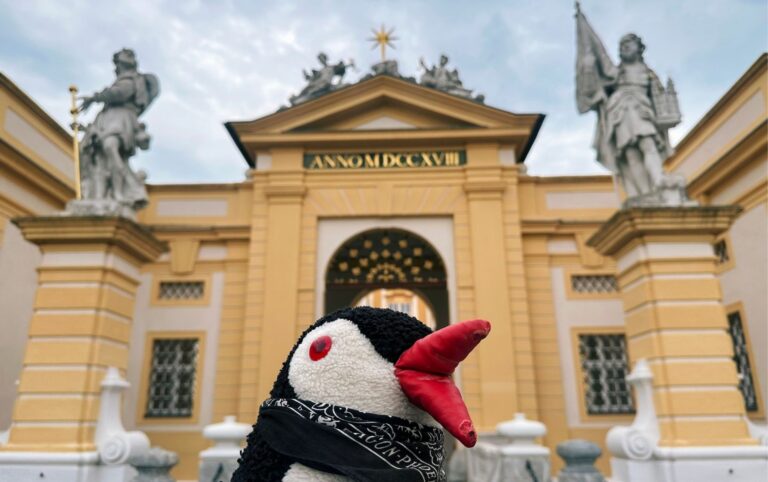
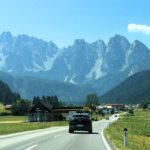
The Abbey offers a free parking lot just a short waddle from the main entrance, perfect for unloading and taking a moment to soak in the stunning façade before you head inside. If that lot is full, there’s an overflow parking area nearby, also free of charge, with clear signage guiding you back to the abbey grounds. Remember that during peak season, especially summer weekends and mid-morning, you may find the lots filling up quickly, so arriving early gives you the best chance of securing a spot.


Penguin Travel Tips
- Book early on Omio or the ÖBB app to save on tickets, especially for the route from Salzburg to Admont (€10–12).
- Check the ÖBB app for direct connections, especially from Vienna Westbahnhof (they run less frequently).
- After arriving at Admont Bahnhof or Selzthal, you can waddle (5–12 min) or use a local bus (910, 912, even 436/915) to get to the Abbey.
Admont Abbey Opening Hours & Ticket Prices
Below is some practical stuff about Admont Abbey before you visit.
Opening Hours
- March 19–May + October–November: Wednesday–Sunday, 10:30 a.m.–3:30 p.m.
- June–September: Tuesday–Sunday, 10:00 a.m.–5:00 p.m. (closed Mondays)
- December 15–January 1: Closed.
Library Guided Tours
- Daily at 11:00 a.m. and 2:00 p.m. (approx. 30–40 min, in German).
- No advance booking for individual visitors; admission is first‑come, first‑served.
But there is no need to get a guided tour; you can also explore the Abbey freely, including the library.


Tickets & Entry Fees
- General museum + library
- Adults: €19.50
- Seniors: €18
- Youth 6–15, students: €13.5
- Penguins: free entry
- Family ticket: €42 (2 adults + kids)
- Library tour: €3 (excl. entry),
- Museum area tour: €5 each (excl. entry),
- Audio guide: €4
Always check their official website before you visit in case of any changes.


Other things good to know:
- Photography Policy. Allowed for personal use without flash or tripod. Tripod or professional shoots require prior written registration (3–5 working days in advance)
- Accessibility & Facilities. Wheelchairs are accessible in the main museum and library areas. On-site facilities: restrooms, café, gift shop
- Payment Methods. Accepts cash, debit, and credit cards (Mastercard, Visa).
Amenities at Admont Abbey
Admont Abbey is well-prepared for a comfortable visit, with thoughtful amenities that make your experience smooth and enjoyable.
- Restaurant/Café. Located just beside the museum entrance, the Abbey’s café offers warm meals, light snacks, coffee, and traditional Austrian desserts.
- Toilets. Clean and modern restrooms are conveniently located near the museum ticket area and are accessible throughout your visit.
- Lockers. Free lockers are provided near the entrance, where you can safely store backpacks, jackets, or personal items during your tour.
- Gift Shop. A well-stocked shop offers a diverse selection of books, postcards, locally made products, and souvenirs inspired by the library’s art and architecture.
- Baby Facilities. A baby-changing station is available, and the main museum areas are accessible to strollers.
- Free Wi-Fi. Complimentary internet access is available around the museum and café areas.
- Seating Areas. Benches and quiet corners are scattered throughout the museum for those who want to rest or reflect between exhibits.
🐧 Penguin Pro Tips 🐧
- Avoid Mondays (closed) and early December to early January (closed).
- Arrive a bit before tour times to secure a spot, as individuals can’t reserve in advance.
- Audio guides save time and add intrigue in multiple languages.
- For larger groups or themed visits (e.g., “Library by Night”), plan ahead by contacting the museum.
The History of Admont Abbey
- Founded in 1074 by Archbishop Gebhard of Salzburg as a Benedictine monastery in the Enns Valley, Styria, Austria.
- First, Benedictine monks came from St. Peter’s Abbey in Salzburg, bringing monastic traditions and scholarship to the region.
- The early medieval period saw the Abbey become a key center for education, agriculture, and religious life in central Austria.
- The 12th–15th centuries marked growth in the Abbey’s scriptorium and library; monks copied and preserved important manuscripts.
- Architectural expansions took place during the Gothic and Baroque periods, including new chapels and living quarters.
- A major fire in 1865 destroyed large parts of the Abbey, including its original library and archives.
- The baroque library hall was rebuilt in 1776, designed by architect Josef Hueber, with frescoes by Bartolomeo Altomonte—still intact today.
- Library restoration after the fire preserved its iconic interior and book collection, thanks to swift action and careful rebuilding.
- 20th-century modernization included establishing the abbey museum and expanding its role in art, science, and community work.
- Today, Admont Abbey functions as both a religious community and a cultural institution, known globally for its library and museum complex.
A Medieval Romance and a Cursed Library Chamber
As usual, we also found a local legend shared by local storytellers. It’s about a noblewoman from who Admont falls deeply in love with a knight departing for the Crusades. While he fights far away, she grows lonely and is rumored to have taken a secret lover. When the knight returns and uncovers her betrayal, he curses the Abbey’s library, declaring that any future lies spoken within its halls will be trapped and heard in whispers among the ancient manuscripts. Ever since, some visitors claim they hear faint, indecipherable murmurs as they pass the baroque shelves. Locals tell it’s the misplaced words and secrets echoing forever, hidden in the pages. We didn’t hear anything while waddling around, but you might.
Our Waddle Through Admont Abbey
We parked the car in the main lot just outside the abbey gates; it was surprisingly empty for a late morning in summer, which instantly set a relaxed tone. No circling for a spot, no parking drama. Just space, quiet, and the distant silhouette of the mountains. From there, we waddled toward the entrance. The ticket counter sits right inside the main museum building, and we had no problem buying tickets on the spot. No reservations, no waiting, just a quick tap of the card, and we were in. Within minutes, we stepped into the first hallway.


The ground floor of Admont Abbey’s museum offers a smooth introduction to the Abbey’s wide-ranging collection. It feels more like waddling through a thoughtfully curated cultural space than a traditional monastery. Here, you’ll find Gothic sculptures, medieval religious art, and some of the earliest artifacts tied to monastic life in the region. One room flows into the next, moving from quiet chapels to exhibit halls filled with centuries-old objects—altarpieces, chalices, and intricately carved saints. The lighting stays soft, the halls cool, and the atmosphere surprisingly modern. Even if you’re not deeply into religious art, the craftsmanship on display is hard to ignore. The layout encourages slow wandering, with subtle signage that lets you explore at your own rhythm.


The Abbey holds one of Austria’s most important collections of medieval sculpture. Look out for expressive wooden figures of saints, angels, and apostles from the 12th to 15th centuries. You’ll see reliquaries, altarpieces, vestments, and chalices that once served in the Abbey’s liturgical life. One particular highlight is the Admont Cross, a gem-studded processional cross believed to date back to the 11th or 12th century.


The second floor of Admont Abbey houses the Museum of Contemporary Art, and it’s one of the most unexpected and refreshing surprises in the entire complex. After waddling through centuries-old artifacts downstairs, stepping into this space feels like crossing into a bold new chapter. The rooms are open, bright, and minimalist, letting the works breathe. The museum features rotating exhibitions, as well as permanent pieces from the Abbey’s collection, including works by renowned Austrian artists such as Erwin Wurm and Lois Renner. Admont Abbey is the only monastery in Europe with a contemporary art museum integrated into its monastic structure. That’s not just unique; it’s visionary. The monks believe that art shouldn’t be stuck in the past, and this space proves that faith and creativity still evolve together. The exhibits often explore spiritual themes, identity, transformation, and human vulnerability, offering something to feel as well as observe. You will find here a collection of over 1,500 individual works by more than 160 artists, all thoughtfully integrated into the monastic space.
You will also find here short movies about the history of the abbey and more.


Then, we explored the Natural History Museum. It is one of the largest of its kind housed within a monastery in Europe. Founded in 1866 by Father Gabriel Strobl, a Benedictine monk and trained scientist, the museum reflects the Abbey’slong-standing curiosity about the natural world. Over the decades, Father Strobl personally collected, identified, and cataloged more than 250,000 insects, particularly flies and beetles, many of which remain the backbone of the museum’s collection today. In total, the museum now holds over 500,000 specimens, including fossils, birds, minerals, mammals, and preserved aquatic creatures. You will find dramatic dioramas featuring taxidermy birds in mid-flight, carefully reconstructed Alpine ecosystems, and even exotic species from Africa and Asia—collected through scientific exchange. One room is entirely dedicated to butterflies, their wings arranged in dazzling rows by color and species. Another house features detailed geological exhibits, showcasing the mineral richness of the surrounding Styrian mountains. What makes this museum stand out is not just its size but its origin: it was born from a monk’s passion for science, not from royal collections or state funding.


There is also a collection of stuffed animals, carefully preserved and displayed in life-like poses. You’ll find everything from Alpine ibex and lynx to exotic species like antelope and tropical birds, each showcased in detailed dioramas that recreate their natural habitats.


The museum also features a unique apple exhibition, where dozens of apple varieties from the Styrian region are carefully displayed side by side. You can see the full range of colors, shapes, and sizes, some familiar, others rare or nearly forgotten. It’s a simple but visually striking showcase that highlights the agricultural richness of the area and the diversity of apples traditionally grown in Austrian orchards.


The Library: Heart of Admont Abbey
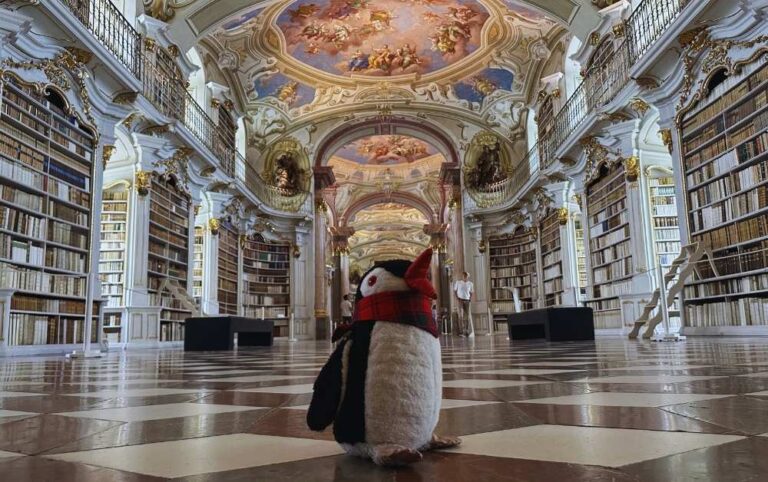
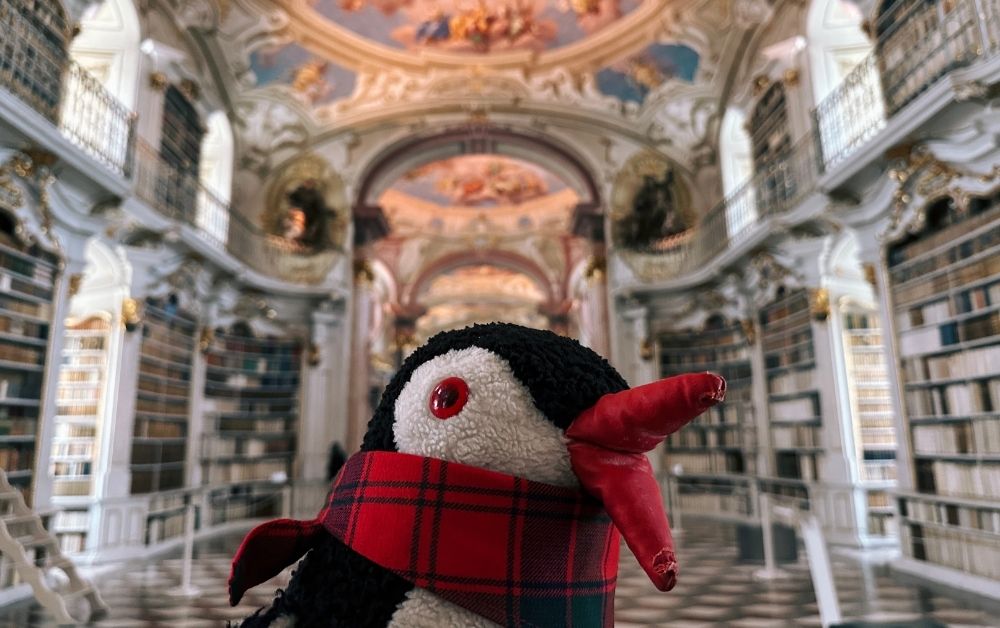
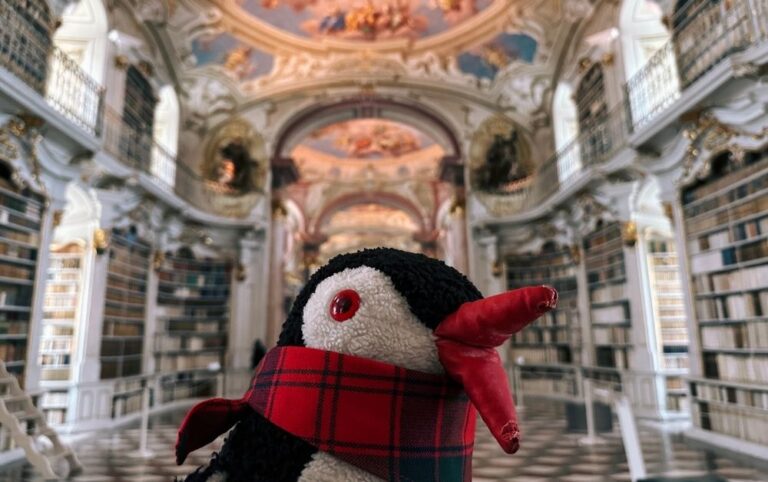
We left the library for last—the crown jewel of Admont Abbey. Also the most surprising room. The monastic library is the largest of its kind in the world and one of the most breathtaking cultural spaces in Europe. Completed in 1776, the library stretches 70 meters in length and houses over 70,000 volumes on site (with the full archive exceeding 200,000 works stored elsewhere in the Abbey). Designed by architect Josef Hueber, the library blends Enlightenment ideals with baroque aesthetics, intended to represent the unity of faith and knowledge. The ceiling is stunning, featuring seven frescoes painted by Bartolomeo Altomonte, which depict the stages of human learning, ranging from divine revelation to the natural sciences. Ornate white and gold columns guide your eye upward, while hidden secret doors, cleverly disguised as bookshelves, once allowed the monks to move discreetly between rooms.
Among the rarest treasures are medieval manuscripts, 15th-century incunabula, and scientific works collected by the monks over centuries. The library’s design isn’t just beautiful; it’s functional and symbolic, built to reflect a worldview where reason, art, and spirituality coexist. Waddling into it feels less like entering a room and more like stepping into an idea that’s still alive.


Before heading into the church, we took some time to just waddle around and relax in the Abbey’s peaceful park. The grounds are open, green, and surprisingly quiet, with benches tucked under trees and well-kept paths that loop gently through the space. It’s the kind of place where you don’t need a plan—you just stroll, sit, and let the surroundings settle in. It was the perfect pause between the buzz of the museum and the stillness of the church.


St. Blaise’s Church: The Spiritual Core of Admont Abbey
St. Blaise’s Church, the centerpiece of Admont Abbey’s spiritual life, stands just steps from the library and museum, yet it carries its sense of weight and history. Built in 1074 alongside the founding of the abbey, the church has undergone several rebuilds and expansions, most notably after a fire in the 19th century. Today’s structure combines elements of Neo-Gothic architecture with traces of its original Romanesque roots. The church honors St. Blaise, a 4th-century physician and bishop known for healing and protection, making him a fitting patron for a community built around care, knowledge, and service. Inside, soaring arches, intricate stained glass, and softly echoing acoustics create a space that feels both grand and deeply grounded. While the library stuns with its intellect, the church offers quiet, an unspoken invitation to pause, reflect, and reconnect.


Visiting Admont Abbey will leave a lasting impression, not because it demands attention, but because it quietly earns it. From the vast, light-filled library to the intricate museum collections and peaceful alpine setting, every corner invites reflection, curiosity, and a deeper appreciation for knowledge and tradition. It’s not the loudest or most famous stop in Austria, but it might just be the one you remember most. To be honest, it was our favorite stop on our road trip.
Where to Grab Lunch While in Admont
After exploring the Abbey and taking a moment in the church, we were more than ready for lunch. Instead of heading to the on-site restaurant, we took a short waddle to Parkcafé, located just outside the abbey grounds near the church’s side exit. It turned out to be the perfect choice. The café boasts a relaxed, local vibe with outdoor seating that offers a picturesque view of the park and surrounding mountains. The service was genuinely warm, fast, friendly, and welcoming without feeling rushed and the food hit the spot. Classic Styrian dishes, fresh ingredients, and a few unexpected menu twists made it a real highlight. It is less a tourist stop and more a place locals actually go. If you’re visiting Admont, skip the Abbey’s inner restaurant and head straight to Parkcafé for a more authentic, affordable, and satisfying lunch experience.


Things to See in Admont (Beyond the Abbey)
While Admont Abbey is the main attraction, the surrounding town and landscape offer more to explore if you have time to wander. Here are some highlights worth checking out:
- Gesäuse National Park. Just minutes from town, this stunning alpine park offers hiking trails, stunning river views, and dramatic limestone peaks, making it perfect for nature lovers and photographers.
- Admont Town Center. It is a small but charming area with cafés, local shops, a quiet main square, and traditional Styrian architecture.
- Enns River Walks. Peaceful walking paths along the river with benches, scenic viewpoints, and a chance to see the surrounding landscape from a different angle.
- Admont Local Heritage Museum (Heimatmuseum). A small but informative museum showcasing rural Styrian culture, tools, clothing, and local crafts.
- Outdoor Sculpture Trail. Scattered throughout the town and near the park are several modern and religious-themed sculptures that blend nature with art.
- Farm Shops and Markets (Seasonal). Depending on the time of year, you might catch small farmers’ stalls selling local cheese, honey, schnapps, and apples.
- Cycling Routes. For the more active, Admont is connected to regional bike paths that lead through the Enns Valley and into the surrounding hills.
Pack your bag and explore the most beautiful library in the world!

This post contains affiliate links. If you click and buy, I might earn a tiny commission, enough to help a penguin keep up its globe-trotting lifestyle. No extra cost to you, just more fish for me. Thank you for supporting the adventure!